权益投资

Search documents
海富通基金江勇:权益潜在回报可期 “固收+”布局正当时
Zhong Guo Zheng Quan Bao· 2025-08-11 00:18
Core Viewpoint - The "fixed income +" strategy has emerged as a safe haven for funds in a volatile market, driven by investor demand for stable returns and trust in fund managers' capabilities [1] Group 1: Market Outlook - The potential return rate in the equity market is viewed optimistically for at least the next two to three years [1] - The current market shows strong characteristics, with opportunities for rotation in undervalued sectors that have long-term growth potential [4] - The valuation of many quality leading companies has dropped to a price-to-earnings ratio of 15-20 times, indicating significant potential for price appreciation if market confidence returns [4] Group 2: Investment Strategy - The fund manager has successfully captured beta trends in the market, particularly by increasing exposure to Hong Kong stocks and convertible bonds at opportune moments [2] - A balanced and diversified portfolio is maintained, with no single industry exceeding 10% of the total allocation, and a focus on stocks with high return on equity (ROE) and stable growth [2] - In fixed income investments, the strategy emphasizes the unity of safety, yield, and liquidity, primarily focusing on high-grade credit bonds with a short to medium duration [3] Group 3: Fund Performance - The fund managed by the company has achieved positive returns for three consecutive years since its inception in the second half of 2021 [2] - The recent quarterly reports indicate a systematic increase in equity positions while significantly reducing convertible bond allocations, reflecting the manager's market expectations [4] Group 4: Defensive Positioning - The current bond portfolio has a lower duration compared to the previous year, indicating a defensive stance in response to low absolute yields and tight credit spreads [5]
中国太平旗下私募公司获批,险资“国家队”加速布局长线投资
Nan Fang Du Shi Bao· 2025-08-08 10:41
Group 1 - The core viewpoint of the news is that China Taiping has received approval to establish a private securities investment fund management company, aiming to enhance long-term investment in the capital market and support the national economy [2][3]. - China Taiping's asset management subsidiary, established in 2006, has over 1.5 trillion yuan in assets under management as of the end of 2024, indicating a strong investment performance [2]. - The establishment of the private fund management company aligns with regulatory efforts to encourage insurance funds to increase equity investments through private securities funds, with a total scale of 222 billion yuan for long-term stock investment trials [3]. Group 2 - Industry experts believe that the establishment of private securities investment funds by insurance asset management companies will facilitate direct participation of insurance funds in the capital market, leveraging their long-term investment advantages [4]. - The diversification of alternative investments, such as private equity, venture capital, and real estate, is seen as beneficial for enhancing overall portfolio returns and mitigating risks in a low-interest-rate environment [5].


16只同日冲锋 新型浮动费率基金闪击
Zhong Guo Zheng Quan Bao· 2025-08-08 07:18
Core Insights - The launch of the first batch of floating rate funds on May 27 marks a significant transformation in the public fund industry, with 16 products being released simultaneously, just two trading days after receiving regulatory approval [1][2] Fund Launch Details - A total of 16 floating rate funds were launched, including products from various fund companies such as E Fund, Oriental Red, and Harvest, among others [2] - The initial sales were robust, with reports indicating that some products achieved subscription scales exceeding several hundred million yuan on the first day [3] Fund Management and Strategy - Fund companies are emphasizing the importance of this launch, with full participation from sales to back-office teams, and some companies are investing their own funds into their products to align interests with investors [3] - The appointed fund managers for these products are generally experienced and have a strong track record, with many managing over 10 billion yuan in assets [3] Performance Benchmarks - The new floating rate funds have chosen various performance benchmarks, including major indices like CSI 300 and CSI 500, reflecting the fund managers' market style predictions [4] - Eight funds benchmarked against the CSI 300, while others targeted mid-cap indices or growth-oriented indices, indicating a diverse investment strategy [4] Operational Efficiency - The floating rate funds require precise tracking of each fund share's holding period and return, posing new challenges for fund companies in terms of management capabilities and data processing systems [5] - Companies like Jinzheng Co. and Huaxia Fund have upgraded their systems to support the dynamic fee structure and ensure efficient operations [6] Market Context - The current market environment is seen as a "golden window" for equity investments, with improving external factors and relatively low valuations in both A-share and Hong Kong markets [6]
上半年理财规模增长两极分化 部分城商行理财子增速超20%
2 1 Shi Ji Jing Ji Bao Dao· 2025-08-08 00:35
Core Insights - The growth of wealth management subsidiaries of city commercial banks has been significant, with some achieving over 20% growth compared to the beginning of the year, while others are facing pressure due to slower growth rates [1][3] Group 1: City Commercial Banks' Performance - Ningyin Wealth Management leads with over 600 billion yuan in scale, growing by over 25% [1] - Suyin Wealth Management remains the largest among city commercial banks at nearly 750 billion yuan, with a growth of nearly 20% [1] - Other notable growth includes Hangyin Wealth Management at around 17% and Nanyin Wealth Management at nearly 15% [1] - The top five city commercial banks in terms of scale are all from the Yangtze River Delta region [1] Group 2: Performance of Joint-Stock Banks - Joint-stock banks have shown stable growth, with notable increases from Huaxia Wealth Management at around 19% [3] - However, some joint-stock banks like Zhaoyin Wealth Management have seen a decline in scale [3] - The overall wealth management market has seen a total scale of 27.48 trillion yuan, an increase of 4.44% from the beginning of the year [2] Group 3: Market Trends and Investment Strategies - The growth in wealth management scale is driven by a recovery in equity markets, with significant increases in indices such as the Shanghai Composite Index [5][6] - City commercial banks have shifted towards equity investments, with a notable increase in the number of equity and mixed products [6][7] - The performance of wealth management products is influenced by market conditions, with increased equity exposure leading to higher volatility in returns [9][10] Group 4: Distribution Channels - Successful wealth management subsidiaries have high proportions of external distribution channels, with some exceeding 50% [8] - The expansion of distribution channels is crucial for growth, particularly in large joint-stock banks and city commercial banks [10]
要积极勇敢地把钱投出去!睿郡王晓明最新详谈地产、科技与持仓:权益投资的机会成本依然很低……
聪明投资者· 2025-08-07 11:04
Core Views - The opportunity cost of equity investment remains low, with a downward trend in interest rates since September last year, enhancing the attractiveness of stock investments compared to other asset classes [2][78]. - The real estate risks that began to unfold in 2021 have not yet fully stabilized, indicating that the adjustment in the national real estate market is still ongoing [2][11]. - China has a comparable gap with the US in the AI technology revolution, with advantages in application, potentially outperforming any other country in practical implementation [2][51]. - Chinese companies must transition to a phase where they gain more added value through branding and enhance the technological content of their products [2][66]. - The view on technology stocks is still cautious, described as a "game for the brave," emphasizing the need for risk awareness and contingency plans [2][90]. Economic Growth Model - China's past economic growth model is becoming ineffective, necessitating reforms, particularly the transition from an investment-driven government to a service-oriented government [4][19]. - The challenges in this transition include high levels of local government debt and the inefficiency of past investments, which have led to diminishing returns [21][23]. - The future direction of economic growth will likely rely more on consumption to drive growth, with a significant focus on the service sector to address employment issues [26][29]. Real Estate Sector - Since 1998, approximately 500 billion square meters of commercial housing stock has been accumulated, with a significant portion of household wealth tied up in real estate [11]. - The average national price of real estate is around 10,000 yuan per square meter, indicating that the wealth of households in real estate amounts to approximately 500 trillion yuan [11]. - The real estate market is still facing downward pressure, with sales volumes declining from a peak of 1.56 billion square meters in 2021 to over 800 million square meters in 2024 [38][39]. - The rental yield is a crucial factor in stabilizing real estate prices, with a target yield of around 2% being necessary for long-term stability [42][43]. Technology Sector - The technology sector has shown significant growth since 2018, particularly in the context of US-China decoupling, necessitating self-reliance in technology development [12][15]. - The biopharmaceutical sector has been a standout performer, with Chinese companies increasingly contributing to global drug development [48][49]. - Despite challenges, China's manufacturing sector remains robust, with a strong supply chain and cost advantages that are difficult for other countries to replicate [17][71]. Manufacturing Sector - Manufacturing is considered the foundation of China's economic strength, with historical examples showing that countries that neglect manufacturing tend to decline [16]. - The focus for Chinese manufacturers should shift towards increasing product value through R&D and branding, moving away from a volume-driven model [66]. - The impact of tariffs on manufacturing is manageable for many companies, with strategies in place to mitigate costs and maintain competitiveness [70]. Investment Strategy - The current investment strategy emphasizes maintaining a high allocation in equities, particularly in dividend-paying stocks and technology, while being cautious about market conditions [76][89]. - The portfolio is diversified, with approximately 40% in dividend assets, 30% in technology stocks, and over 20% in manufacturing [92][98]. - The focus on Hong Kong stocks is driven by their relative affordability and the broader range of investment opportunities available compared to the domestic market [83][84].
上半年理财规模增长两级分化 部分城商行理财子增速超20%
2 1 Shi Ji Jing Ji Bao Dao· 2025-08-07 10:42
Core Insights - The growth of wealth management subsidiaries of city commercial banks has been significant in the first half of the year, with some achieving over 20% growth compared to the beginning of the year [1][2][3] - The top city commercial banks in terms of scale growth are primarily located in the Yangtze River Delta region, with Ningyin Wealth Management leading at over 600 billion yuan, followed by Suyin Wealth Management at 745.38 billion yuan [1][2] - The overall wealth management market has seen a total product count of 27.48 trillion yuan, reflecting a 4.44% increase since the beginning of the year [2] City Commercial Banks Performance - Ningyin Wealth Management reported a 26.94% increase in scale, reaching over 600 billion yuan, while Suyin Wealth Management grew by 17.72% to 745.38 billion yuan [1] - Other notable growth includes Hangyin Wealth Management at 17.28% and Nanyin Wealth Management at 14.75% [1] - The competition among city commercial banks is intense, particularly between Nanyin and Hangyin Wealth Management, both of which are in the 500 billion yuan range [2] Wealth Management Market Trends - The growth in wealth management scale is primarily driven by top city commercial banks and some joint-stock banks, while major state-owned banks have seen significant declines [3][4] - For instance, ICBC Wealth Management saw a decrease of approximately 180 billion yuan, while Agricultural Bank of China Wealth Management declined by 220 billion yuan [3] - Conversely, some smaller city rural commercial banks also experienced scale declines, indicating a mixed performance across the sector [3] Investment Strategies and Market Conditions - The increase in scale for wealth management subsidiaries is linked to their equity investments and favorable returns from assets like USD, gold, and US stocks [5][6] - The equity market has rebounded, with significant increases in major indices, which has positively impacted the performance of wealth management products [6] - City commercial banks have shifted from conservative investment styles to include more equity investments in response to changing customer demands [6][7] Distribution Channels and Challenges - A common characteristic among wealth management subsidiaries with significant growth is a high proportion of external distribution channels [8] - For example, Xinyin Wealth Management and Xinyin Wealth Management have nearly 40% of their sales through external channels, while others like Guangda Wealth Management and Huaxia Wealth Management exceed 50% [8] - However, increasing equity positions can lead to greater volatility in product returns, posing challenges for maintaining customer trust, especially among conservative investors [9][10]
上半年苏银、宁银理财规模增千亿,建信降两千亿
2 1 Shi Ji Jing Ji Bao Dao· 2025-08-07 10:18
Core Insights - The report highlights significant growth in the asset management scale of city commercial banks' wealth management subsidiaries in the first half of the year, with some achieving over 20% growth compared to the beginning of the year [1][2][3] - The growth is primarily driven by leading city commercial banks and some joint-stock banks, while major state-owned banks are experiencing a decline in scale [3][4] Group 1: Growth Performance - Ningyin Wealth Management leads with a scale of 601.09 billion yuan, a growth of 26.94% from the beginning of the year [1] - Suyin Wealth Management remains the largest at 745.38 billion yuan, with a growth of 17.72% [1] - Other notable growth includes Hangyin Wealth Management at 514.39 billion yuan (17.28% growth) and Nanyin Wealth Management at 543.26 billion yuan (14.75% growth) [1] Group 2: Market Trends - The overall wealth management market saw a total of 27.48 trillion yuan in assets under management, an increase of 4.44% from the beginning of the year [2] - The report indicates a stark contrast in growth, with leading city commercial banks thriving while major state-owned banks like ICBC and ABC saw declines of approximately 180 billion yuan and 220 billion yuan, respectively [3][4] Group 3: Investment Strategies - The growth in asset management scale is attributed to a favorable equity market, with significant increases in indices such as the Shanghai Composite Index (up 8.42%) and the Hang Seng Index (up 24.18%) [6] - City commercial banks have shifted towards equity investments, with a notable increase in the number of equity and mixed products offered [7][8] Group 4: Distribution Channels - High external distribution channel ratios are common among the wealth management subsidiaries experiencing significant growth, with some exceeding 50% [8] - The expansion of distribution channels is crucial, especially in targeting large joint-stock banks and regional rural banks, which have substantial customer resources [9][10]
21独家|上半年苏银、宁银理财规模增千亿,建信降两千亿
2 1 Shi Ji Jing Ji Bao Dao· 2025-08-07 10:16
Core Insights - The report highlights significant growth in the asset management scale of city commercial banks' wealth management subsidiaries in the first half of the year, with some achieving over 20% growth compared to the beginning of the year [1][2][3] - The growth is primarily driven by leading city commercial banks and some joint-stock banks, while major state-owned banks have seen a decline in their asset management scales [3][4] Group 1: Growth Metrics - Ningyin Wealth Management reported the highest growth, reaching 601.09 billion yuan, a 26.94% increase from the start of the year [1] - Suyin Wealth Management remains the largest among city commercial banks at 745.38 billion yuan, with a growth of 17.72% [1] - Other notable growth includes Hangyin Wealth Management at 514.39 billion yuan (17.28% increase), Nanyin Wealth Management at 543.26 billion yuan (14.75% increase), and Beiyin Wealth Management at 417.49 billion yuan (11.79% increase) [1] Group 2: Market Dynamics - The top four city commercial banks in terms of scale are all from the Yangtze River Delta region, indicating a regional concentration of growth [2] - The overall wealth management market saw a total of 27.48 trillion yuan in assets under management, reflecting a 4.44% increase from the beginning of the year [2] - The report indicates a stark contrast in growth, with leading city commercial banks thriving while major state-owned banks like ICBC and ABC experienced significant declines in their asset management scales [3][4] Group 3: Investment Strategies - The growth in asset management scale is attributed to a favorable performance in equity markets, with significant returns from investments in stocks, gold, and U.S. markets [5][6] - The report notes that city commercial banks have shifted towards more aggressive equity investments, which were previously conservative, in response to changing client demands [6][7] - The number of equity and mixed-asset products has increased significantly among the top-performing city commercial banks, with Suyin Wealth Management offering 51 such products [7] Group 4: Distribution Channels - High external distribution channel ratios have been identified as a common factor among wealth management subsidiaries with significant growth, with some exceeding 50% [8] - The expansion of distribution channels is crucial for driving sales, particularly in large joint-stock banks and regional rural banks [9][10] - However, the increased equity exposure poses risks, as it can lead to greater volatility in product returns, which may not align with the conservative preferences of some clients [9]
调仓!百余“基金买手”出手
天天基金网· 2025-08-07 05:02
Core Viewpoint - The article highlights the increasing trend of equity fund advisors actively adjusting their portfolios, favoring growth sectors like technology, despite recent market fluctuations [3][4]. Group 1: Fund Performance and Adjustments - Over 100 fund advisory combinations have completed adjustments since the second half of the year, with a notable increase in equity asset allocations [3]. - In July, the average return of stock advisory products reached 5.12%, outperforming the CSI 300 index's 3.54% [3]. - Many advisory combinations have seen year-to-date gains exceeding 20%, with specific examples like the Jiashi Bailin All-Weather Strategy and China Europe Advantage Industry All-Star [3]. Group 2: Portfolio Strategies - Fund advisors are increasingly replacing passive funds with active management funds due to improved performance in active equity funds [4]. - For instance, the ICBC Credit Suisse Balanced Allocation Combination reduced its index fund holdings by 15 percentage points while increasing its allocation to mixed funds [4]. - The article notes a shift in focus towards sectors such as pharmaceuticals, cyclical industries, and technology, while reducing exposure to consumer sectors [6]. Group 3: Tactical Adjustments - Some advisory combinations are optimizing their portfolio structures by taking profits and reallocating funds to more promising sectors [8]. - The "交银全明星" combination adjusted its holdings by decreasing the weight of value funds and increasing its offensive positioning [8]. - Advisors maintain a positive outlook on the A-share market's upward trend, suggesting that short-term adjustments should be leveraged for strategic accumulation in sectors with stable long-term fundamentals [8].

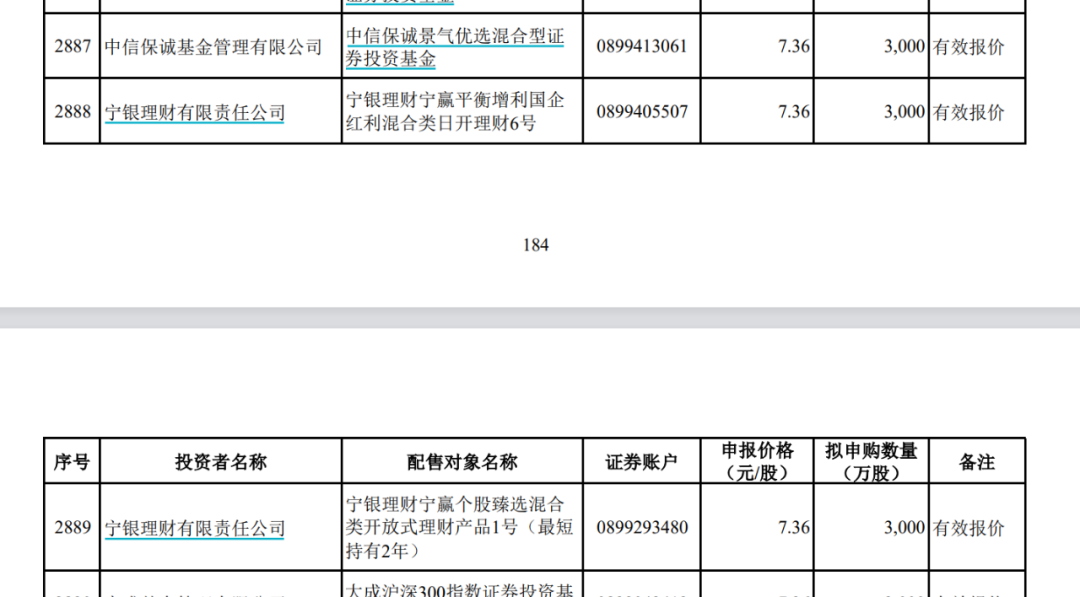
网下打新,这家银行理财公司动作频频
Zhong Guo Zheng Quan Bao - Zhong Zheng Wang· 2025-08-06 16:03
Core Viewpoint - Hansang Technology officially listed on the Shenzhen Stock Exchange's Growth Enterprise Market with an initial price of 28.91 CNY per share, closing at 82.89 CNY, a rise of 186.72% [1] Group 1: Company Overview - Hansang Technology is a comprehensive supplier of high-end audio products and technology solutions [1] - The company’s stock price reached a peak of 110 CNY during trading on its debut day [1] Group 2: Investment Participation - Two financial products from Ningyin Wealth Management participated in the offline subscription for Hansang Technology's IPO, each applying for 9 million shares at 29.30 CNY per share [1] - Ningyin Wealth Management has been actively participating in the equity market through various methods such as IPO subscriptions, private placements, and dividend investments [1][5] Group 3: Market Trends - The trend of financial companies participating in the equity market is driven by ongoing policy support and the need for enhanced returns in a low-interest-rate environment [5] - In January, a policy was introduced to treat bank wealth management products on par with public funds in terms of participating in new stock subscriptions and private placements [5] - The continuous decline in interest rates has prompted asset management institutions to diversify their asset allocation to enhance product returns [5] Group 4: Performance of Participating Products - Financial companies are adopting absolute return strategies, focusing on high-quality assets with predictable returns and controllable volatility [6] - Recent IPOs, such as Sanhua Intelligent Controls and IFBH, have shown significant price increases post-listing, indicating successful participation by wealth management products [6]