
自由贸易

Search documents
世界经济的韧性与底气
Jing Ji Wang· 2025-12-25 02:17
Core Insights - The global economy in 2025 demonstrated impressive resilience amidst multiple shocks, characterized by enhanced risk prevention, self-correction capabilities, and increased policy predictability [3][4] - Emerging markets and developing economies are expected to be the main contributors to global growth in 2025, with a projected global economic growth rate of 3.2% for 2025 and 2.9% for 2026 [3][6] - China is positioned as a "stabilizing anchor" for the world economy, showcasing strong resilience and vitality despite external challenges [2][11] Group 1: Economic Performance in 2025 - The world economy exhibited remarkable resilience in 2025, with a moderate growth rate driven by emerging markets and developing economies [3][6] - The OECD projected global economic growth rates of 3.2% for 2025 and 2.9% for 2026, supported by expansionary macro policies and positive expectations for new technologies [3][6] - The IMF noted a resilient start to 2025, although signs of a gradual slowdown in growth were emerging as supportive factors began to fade [3][5] Group 2: Factors Influencing Economic Resilience - Key reasons for the resilience of the global economy include China's resistance to U.S. tariffs, the elasticity of global supply chains, and proactive fiscal and monetary policies from multiple countries [5][10] - The impact of artificial intelligence (AI) on trade and investment is significant, contributing to the overall economic dynamism [5][10] - The global economy is facing challenges from geopolitical tensions and trade policies, yet the anticipated recession has not materialized, leading to better-than-expected economic performance [5][6] Group 3: Outlook for 2026 - The global economy is expected to experience a stable transition in 2026, with growth projected at 2.8%, supported by loose monetary policies and stabilizing global trade [7][8] - Experts agree that the growth rate will stabilize between 3.1% and 3.2%, with a focus on structural adjustments rather than cyclical recovery [8][10] - The transition will be influenced by technological advancements and free trade, with AI posing both opportunities and uncertainties for productivity and employment [8][10] Group 4: China's Role in Global Economy - China is anticipated to play a crucial role in global economic growth, providing supply, demand, technology transfer, and support for sustainable development [11][12] - The "15th Five-Year Plan" emphasizes high-level openness and a commitment to global economic growth, reflecting China's responsibility in the global economy [12][14] - China's focus on quality economic growth, particularly in high-tech manufacturing and green development, is expected to dominate its export landscape [14]
封关不是关门,中国甩出王炸,全球格局要变天
Sou Hu Cai Jing· 2025-12-20 11:10
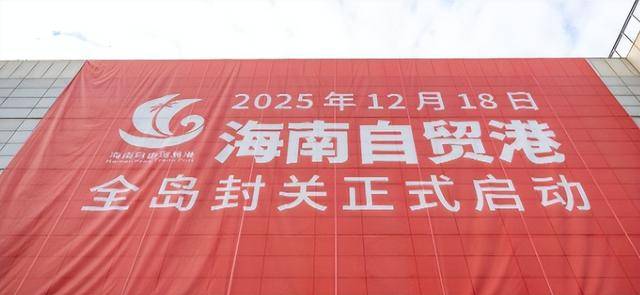
Core Viewpoint - Hainan's announcement of full island closure operation on December 18, 2025, represents a strategic move by China to counter global containment efforts, emphasizing openness rather than isolation [1][8][22] Group 1: Policy and Economic Implications - The concept of "closure" in Hainan does not imply isolation but rather a model of "open first, control second," allowing international access while regulating domestic channels [3][6] - Hainan will operate as a special zone with zero tariffs and simplified approvals for international goods, effectively becoming a "domestic outside" area in terms of trade rules [3][6] - The unique policy of "30% value-added processing for domestic sales exempt from tariffs" provides a significant competitive advantage for businesses, allowing them to import raw materials duty-free and sell processed goods to the mainland without tariffs [11][13] Group 2: Strategic Positioning - Hainan is not intended to replace Hong Kong or Singapore; instead, it aims to leverage its vast land and natural resources to focus on sectors like agriculture, deep-sea exploration, aerospace, and high-end manufacturing [15][17] - The region is positioned as a "testbed" for advanced medical devices and data flow, facilitating early access for domestic patients and exploring cross-border digital economy cooperation [19][21] Group 3: Global Context and Future Outlook - Hainan's closure is seen as a significant step comparable to China's WTO accession in 2001, marking a shift from product-level to institutional-level openness, allowing China to participate in international rule-making [22] - The initiative aims to attract global capital, talent, and technology to Hainan, countering efforts to isolate China and reinforcing the country's commitment to globalization [21][22]

欧盟与南美这项重大贸易协定推迟,“冯德莱恩遭遇明显挫折”
第一财经· 2025-12-19 15:43
2025.12. 19 本文字数:2042,阅读时长大约4分钟 作者 | 第一财经 冯迪凡 "我已经明确表示,如果我们现在不最终敲定这项协议,巴西在我任期内就不会再寻求这项贸易协 议。"卢拉17日在巴西利亚举行的一次内阁会议上表示。 卢拉将这项协议视为加强南方共同市场和实现贸易伙伴多元化的核心举措,他对包括意大利总理梅洛 尼和法国总统马克龙在内的欧洲领导人表示失望,尽管他与马克龙一直保持着良好的关系。 欧盟委员会主席冯德莱恩原计划于12月20日前往巴西与南方共同市场(Mercosur)成员国签署这 项自由贸易协议,若正式签署,这将创建一个覆盖约7.7亿人口的全球性自由贸易区,且这有望成为 欧盟有史以来达成的最大贸易协定。 而就在近期,欧盟成员国内部因该协议的签订发生"对峙",然而签署上述协定必须在本周内获得欧 盟成员国的事先批准。 据报道,当地时间18日,欧盟委员会主席冯德莱恩在欧盟峰会上向成员国领导人表示,欧盟与南方 共同市场自由贸易协定将不会按原计划于本周六(20日)签署,而是推迟至明年1月。 据知情人士透露,官员们的目标是将新的签署日期定在1月12日。此次冯德莱恩没能在沟通中消除法 国等国在农业利益等方 ...

外媒:海南自贸港成为中国高水平开放的新里程碑
Zhong Guo Qing Nian Bao· 2025-12-19 08:11
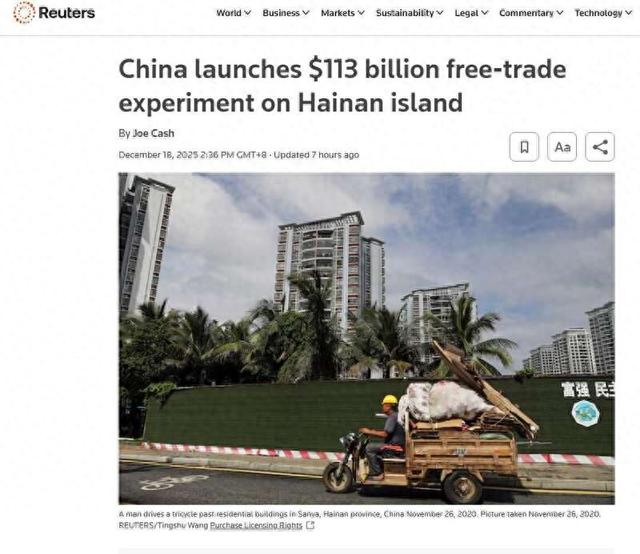
中国青年报客户端北京12月19日电(中青报·中青网记者 王梓)12月18日,海南自由贸易港正式启动全 岛封关,8个对外开放口岸及10个"二线口岸"监管设施全部启用,海南岛正式成为海关监管特殊区域。 德国"德国之声"电台、菲律宾《马尼拉时报》、英国路透社等多家外媒称,在全球保护主义升温的背景 下,中国这一举措被广泛视为在全球化逆流中推进自由贸易、扩大制度型开放的重要里程碑。 "海南试图在全球贸易保护主义抬头的背景下,成为中国高水平对外开放的新高地。"德国"德国之声"电 台报道称。 "德国之声"和路透社采访的经济学家认为,封关带来的超低关税将显著带动线下实体消费的增长,特别 是对冬季前往海南避寒的庞大游客群体而言;更重要的是,这一举措能吸引外资、促进制造业升级,海 南作为连接东南亚的物流枢纽的地位也将进一步提升。 "中国海南在全球供应链中扮演的角色日益重要。"俄塔社写道。 "值得注意的是,封关日期12月18日恰逢1978年中国开启改革开放路线的纪念日。""德国之声"分析称, 海南是中国最早的特区之一,如今在医疗、教育等服务领域进一步放宽了外资准入。在地区局势升温的 背景下,海南的战略地位愈发凸显。 来源:中国青年 ...

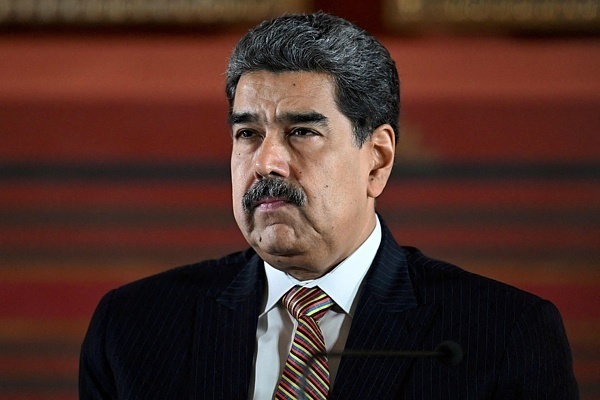
马杜罗重申国家经济主权 将继续进行国际贸易
Yang Shi Xin Wen· 2025-12-19 06:27
当地时间12月18日,委内瑞拉总统马杜罗发表讲话,重申国家经济主权,并强调独立、自由、主权、领 土完整和民族自决等历史权利不可放弃。 马杜罗强调,所有在委内瑞拉销售的产品都将继续进入国际市场,因为委内瑞拉是一个自由的国家,并 将保障委内瑞拉、加勒比地区乃至整个南美洲的自由贸易。 他还再次谴责美国政府"劫持委内瑞拉油轮"的行为,称其为"海盗行径",并指出,"海盗行为"是海上严 重犯罪,也是违反国际公法和所有国家必须遵守条约的严重犯罪。 美国总统特朗普12月10日宣布美军在委内瑞拉附近海域扣押一艘油轮,并称将"留下"油轮所载石油。16 日,特朗普下令对所有进出委内瑞拉的受美国制裁油轮实施"全面彻底的封锁"。对此,委内瑞拉国防部 长洛佩斯回应,加勒比海域本是合作、自由贸易、自由航行的空间,而非服务于美国利益的封闭海域。 (总台记者 马天静) △委内瑞拉总统马杜罗(资料图) ...
同济大学发布蓝皮书《德国发展报告(2025)》
Xin Hua Wang· 2025-12-19 05:26
蓝皮书认为,整体来看,安全与防务、经济与贸易、气候与能源是当前德国外交的重点领域;欧洲、非 洲、中东和所谓"印太地区"是德国外交的重点地区;德法关系、德美关系与中德关系则是对德国而言至 关重要的几组双边关系。 新华网北京12月19日电 近日,同济大学德国研究中心与社会科学文献出版社联合发布德国蓝皮书《德 国发展报告(2025) 政治"右转"背景下的德国》。 蓝皮书指出,时代转折的背景推动德国开启了外交与安全政策的深度转型与调整。与此同时,德国外交 政策保持了一定程度的路径依赖,仍旧坚持多边主义、自由贸易、可持续发展和协商对话等传统原则和 理念。 据悉,《德国发展报告》(德国蓝皮书)由同济大学德国研究中心牵头研创,中心主任郑春荣担任主 编。报告聚焦德国政治、经济、社会文化、外交等领域发展态势,逐年开展跟踪分析与深度解读,为各 界了解和研究德国提供前沿动态、趋势预判及学者观点参考等,迄今已连续发布14部。 (文章来源:新华网) ...
国会夺权记!美国贸易政策,如何从总统主导变成行政立法拔河
Sou Hu Cai Jing· 2025-12-19 05:01
Core Viewpoint - The article discusses the subtle shift in U.S. trade policy from promoting free trade to implementing protectionist measures during the 1950s, driven by domestic economic interests and international pressures [1][19]. Group 1: Historical Context - In the 1950s, U.S. trade policy appeared stable, but underlying changes were occurring as the U.S. began to set barriers on domestic industries despite previously advocating for free trade [1]. - The political landscape made it difficult to distinguish between the Democratic and Republican parties regarding trade policy, as both parties shifted their positions on tariffs and trade agreements [3]. Group 2: Regional Economic Shifts - The Southern U.S. economy transitioned from relying on cotton exports to developing labor-intensive industries like textiles, leading to a demand for higher tariffs to protect local production [5][6]. - By 1947, three-quarters of U.S. textiles were produced in the South, prompting Southern Democratic lawmakers to ally with Republican protectionists to support higher tariffs [6]. Group 3: International Trade Dynamics - The U.S. faced challenges in international trade as European nations formed trade alliances that created barriers for American goods, countering the initial intentions of the Marshall Plan [10][11]. - The establishment of the European Economic Community and the European Free Trade Association in the late 1950s complicated U.S. access to European markets, leading to regret over earlier U.S. policies [10][11]. Group 4: Policy Evolution - The 1959 introduction of the Mandatory Oil Import Quota aimed to protect the U.S. oil industry but inadvertently led to higher prices due to OPEC's formation, illustrating the long-term consequences of short-term protectionist measures [13]. - President Kennedy's Trade Expansion Act of 1962 was framed as a response to international competition but included provisions that allowed for protectionist measures under the guise of national security [15][17]. Group 5: Legacy of Trade Policy - The Trade Expansion Act became a foundational element of U.S. trade protectionism, allowing future administrations to impose tariffs under the pretext of national security, a practice that continues today [17][19]. - The article concludes that the trade policies of the 1950s laid the groundwork for current global trade tensions, highlighting the long-lasting impact of historical decisions on present circumstances [21].
共话中国经济新机遇丨综述:海南自贸港封关在即 国际商界看好中国市场新引力
Xin Hua She· 2025-12-18 08:14
新华社贝尔格莱德12月17日电 综述:海南自贸港封关在即 国际商界看好中国市场新引力 毕马威中国与穆迪达维特联合发布的《海南自贸港旅游零售白皮书2025版》分析认为,随着封关制度逐 步落地,税务改革和双轨零售格局将推动市场继续发展,并为境内外零售商创造更多参与机会。 查代日认为,对已与中国签订中塞自贸协定的塞尔维亚而言,海南自贸港全面封关运作是接触中国消费 者的新机会,也是建立新的投资和技术伙伴关系的新机会,"我们将与中国商会的同事们共同打造这一 伙伴关系"。 海南自贸港封关运作后,将实施以"'一线'放开、'二线'管住、岛内自由"为基本特征的自由化便利化政 策制度。查代日表示,这是中国坚持扩大对外开放的重要一步,表明中国愿意拓展自由贸易空间,稳定 全球供应链,为构建开放型世界经济作出积极贡献。 总部设在阿联酋迪拜、成员涵盖140多个国家和地区1600多家机构的世界自由区组织主席穆罕默德·阿扎 鲁尼认为,海南自贸港的成功实践向世界展示了制度创新、绿色经济、数字化转型以及全球合作的重要 性,充分展现了其发展潜力。 《金融时报》旗下专业媒体《外国直接投资情报杂志》刊发分析文章指出,海南自贸港将成为"试点推 动进出口 ...
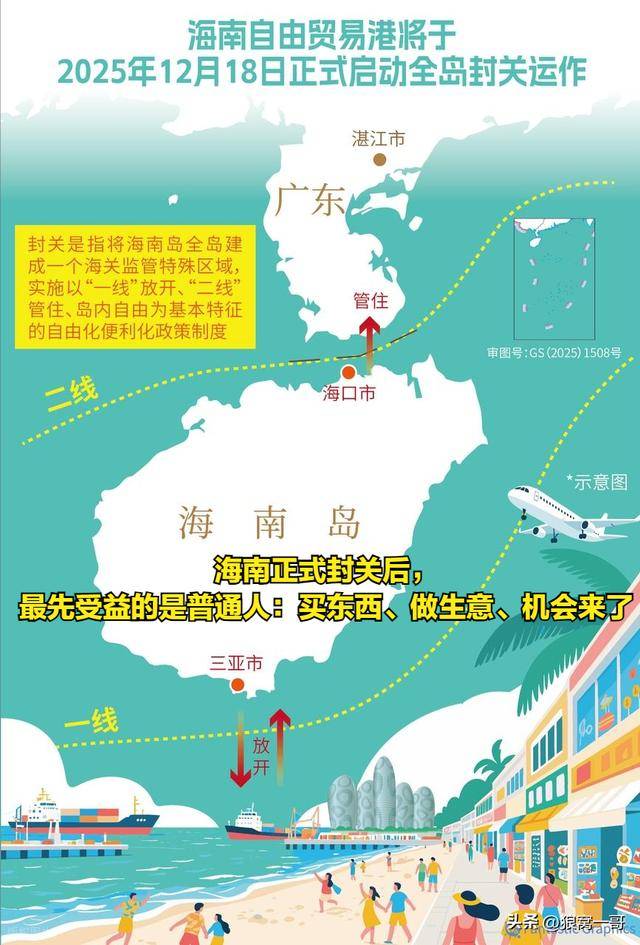
海南正式封关后,最先受益的是普通人:买东西、做生意、机会来了
Sou Hu Cai Jing· 2025-12-17 22:51
Core Viewpoint - The recent "closure" of Hainan is not a restriction but a strategic move to enhance its role as an international trade hub, facilitating greater openness and integration with global markets [6][8]. Group 1: Hainan's Role in China's Economic Strategy - Hainan is being transformed into an "international interface" for China, allowing it to connect with global markets while maintaining ties with the mainland [8][12]. - The closure is designed to create a "class international market" in Hainan, enabling global resources to enter China more efficiently and at lower costs [16][18]. - Hainan's development aims to ensure national security while promoting economic growth, making it a pivotal point for international trade [16][18]. Group 2: Consumer Benefits - Hainan is evolving into a "domestic international duty-free zone," where consumers can expect lower prices, a wider variety of goods, and greater convenience [18][25]. - The tax structure in Hainan will simplify the import process, allowing goods to enter without initial tariffs, thus reducing costs for consumers [25][28]. - The consumer experience in Hainan will shift from being a tourism add-on to a genuine "international consumption center" [28][29]. Group 3: Business Opportunities - Hainan is positioned as a "low-friction zone" for businesses, particularly benefiting small and medium enterprises, cross-border e-commerce, and service-oriented entrepreneurs [29][31]. - The region will serve as a domestic distribution center for international goods, including luxury items, high-end medical equipment, and new consumer products [29][31]. - The regulatory environment in Hainan will allow businesses to operate with fewer compliance costs, enabling them to innovate and adapt more rapidly [32][33]. Group 4: Regional Economic Integration - Southeast Asian countries are increasingly viewing Hainan as a strategic entry point into the Chinese market, leveraging its proximity and favorable conditions [35][37]. - Hainan's unique geographical position will facilitate the establishment of a new "southward economic circle," connecting it to major markets in Southeast Asia and beyond [41][46]. - The region is expected to become a key node for tourism, shipping, and trade, evolving into a comprehensive center for international commerce [49][51]. Group 5: Long-term Implications - The closure of Hainan signifies a long-term strategic initiative rather than a temporary measure, indicating a significant shift in China's approach to global trade [52][53]. - The transformation of Hainan is part of a broader trend where regions are positioned on the "mainstream of the era," impacting the livelihoods of ordinary people [51][55]. - Hainan is set to become a crucial anchor point for China's deeper engagement with global markets, marking the beginning of a new economic wave [54][55].
海南自贸港封关在即 国际商界看好中国市场新引力
Xin Hua She· 2025-12-17 14:10
总部设在阿联酋迪拜、成员涵盖140多个国家和地区1600多家机构的世界自由区组织主席穆罕默德· 阿扎鲁尼认为,海南自贸港的成功实践向世界展示了制度创新、绿色经济、数字化转型以及全球合作的 重要性,充分展现了其发展潜力。 《金融时报》旗下专业媒体《外国直接投资情报杂志》刊发分析文章指出,海南自贸港将成为"试 点推动进出口、投资、人才、数据自由化的桥梁和试验区",其目标是成为外资公司进入中国、拓展中 国市场的桥梁。 新华社贝尔格莱德12月17日电 综述:海南自贸港封关在即 国际商界看好中国市场新引力 新华社记者 金丹依 海南自由贸易港启动全岛封关运作在即,这一中国扩大高水平对外开放的标志性举措正引发全球商 界广泛关注。近日,多家国际行业组织、商业和金融机构分别从市场与行业等不同维度,热议海南自贸 港封关带来的机遇。 塞尔维亚工商会主席查代日近日接受新华社记者采访时表示,海南自贸港通过明确的政策支持和长 期的税收激励,致力于推动消费、服务和创新发展,以吸引更多国内外资源。海南自贸港全岛封关运 作,积极影响是全方位的。 查代日认为,对已与中国签订中塞自贸协定的塞尔维亚而言,海南自贸港全面封关运作是接触中国 消费者的新 ...