
AI眼镜

Search documents
AI眼镜大战开启下半场
3 6 Ke· 2025-12-01 01:43
Core Insights - The AI glasses are seen as a revolutionary step in human-machine interaction, marking the beginning of the AI era [1][3] - Major companies like Google, XREAL, and Li Auto are entering the AI glasses market, indicating a competitive landscape [1][2] - The global market for AI and AR smart glasses is projected to grow significantly, with potential sales reaching approximately 1.4 billion units by the time the industry matures [3][4] Company Developments - Google and XREAL are collaborating on Project Aura, the first flagship AR glasses designed for the Android XR platform, expected to launch in late 2025 [1] - Li Auto is set to unveil its AI glasses, Livis, on December 3, featuring capabilities like object recognition and remote vehicle control [2] - Alibaba's Quark AI glasses have quickly topped sales charts, showcasing strong market demand for AI-integrated eyewear [2] Industry Trends - The AI glasses market is characterized by a low current penetration rate of AI technologies, suggesting substantial growth potential [3] - The integration of AR display functions is transforming smart glasses from basic audio and photography devices to more advanced AI+AR products [4] - Analysts predict that the future of AI glasses will likely combine AR optical displays with AI services, indicating a shift in technological complexity [4][5] Market Projections - By 2030, the AI+AR smart glasses industry is expected to enter a high growth phase, driven by the gradual replacement of traditional eyewear [3] - Wellsenn XR forecasts that global sales of AI+AR smart glasses could reach around 1.4 billion units, corresponding to a penetration rate of about 70% [3] Cost Structure - The primary cost components for AI glasses are anticipated to be the computing chip, optical module, and display screen [5] - In the case of Xiaomi's smart glasses, the chip accounts for over 25% of the total cost across various versions [5]
直击空间计算产业关键挑战,万有引力以专用芯片和全栈方案推动产业升级
Huan Qiu Wang· 2025-11-30 11:47
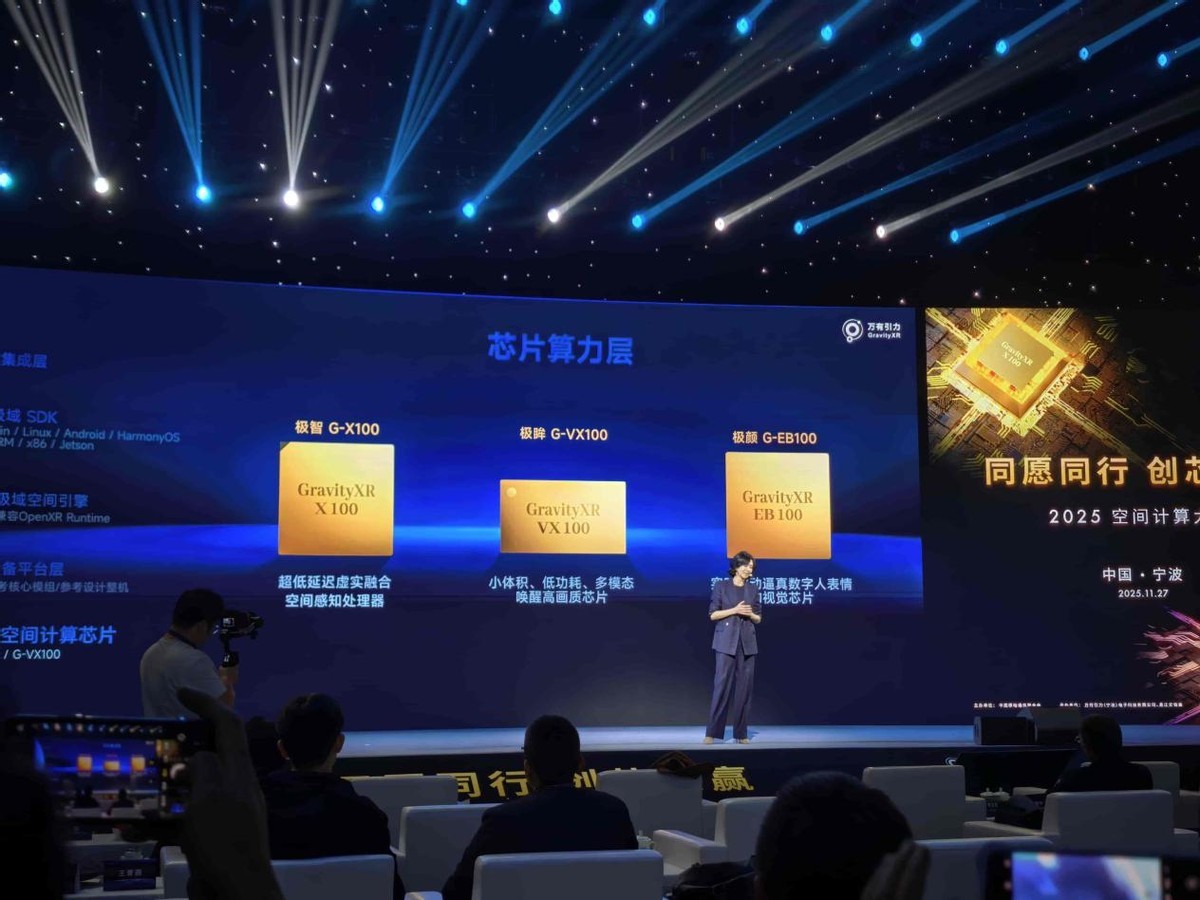
Core Insights - The launch of the "Extreme Intelligence G-X100" MR chip marks a significant advancement in China's space computing industry, utilizing a 5nm process and achieving an end-to-end latency as low as 9ms [1] - The "Extreme Domain" solution represents a comprehensive stack that integrates chips, device platforms, spatial engines, SDK toolchains, and ecosystem layers, facilitating rapid productization and mass production for partners [1][4] Industry Challenges - Space computing is evolving from basic functionality to enhanced usability, with a growing need for specialized chips to address challenges in power consumption, system integration efficiency, and long-term stability [3][4] - The current reliance on general-purpose chips is insufficient as the industry demands more robust solutions for multi-sensor processing and real-time 3D environment understanding [3] Technological Development - The company has developed three proprietary space computing chips: Extreme Intelligence G-X100 for MR computing, Extreme Eye G-VX100 for AI/AR processing, and Extreme Face G-EB100 for 3D rendering, focusing on different core scenarios [4][6] - The "Extreme Domain" solution aims to create a stable, reusable, and sustainable capability base for future space computing applications, combining chip and platform capabilities [6] Market Trends - The rise of AI glasses is seen as a key driver for space computing's mainstream adoption, with a focus on achieving a balance in weight, clarity, and responsiveness [7][9] - The demand for AI glasses is particularly high in the Asia-Pacific region, where the prevalence of myopia makes traditional glasses a familiar product for consumers [7] Strategic Vision - The company emphasizes an open architecture for its software system, allowing hardware manufacturers to customize applications based on their strengths, contrasting with closed ecosystems [6] - The company aims to act as a "paving stone" for the industry, fostering collaboration with partners to facilitate the practical application of space computing technologies in various real-world scenarios [9]

AI眼镜新品不断,夸克之后还有谷歌AR眼镜,明年将迎来新一轮产业高潮
Xuan Gu Bao· 2025-11-28 10:11
Group 1: Google AR Glasses Release - Google, in collaboration with XREAL, plans to officially release the AR glasses Project Aura in December 2025, with a market launch expected in 2026. This device will be the first official AR terminal equipped with the Android XR system and will integrate Google's Gemini AI technology for enhanced environmental semantic understanding and intelligent interaction [1][2] - Google has initiated two AI glasses projects, which are currently in the POC (Proof of Concept) stage, focusing on selection and ID design. The hardware manufacturing is being handled by Foxconn, with reference designs from Samsung and chips supplied by Qualcomm [1] Group 2: Competitors in the AI Glasses Market - Alibaba has launched its first AI glasses powered by its self-developed Qianwen model, entering the consumer-grade AI wearable market. The glasses are priced at 1899 yuan and are deeply integrated with Alibaba's ecosystem, including services like Alipay and Taobao [3] - Baidu introduced its first Xiaodu AI glasses, weighing only 45 grams, featuring first-person shooting and audio-visual translation capabilities, with a standby time of 56 hours. These glasses are expected to be priced above 2000 yuan and launched in the first half of 2026 [3] - Samsung announced plans for AI glasses, collaborating with Google and fashion eyewear brands. The smart glasses are expected to debut in early 2026, featuring capabilities to display digital content and recognize user actions [3] Group 3: Market Potential and Forecasts - Tianfeng Securities highlighted the vast global user base for glasses as a natural market for the intelligent upgrade of AI glasses, combined with the current low penetration rate of AI, indicating significant growth potential for the AI glasses market. Wellsenn XR predicts that global AI+AR smart glasses sales could reach approximately 1.4 billion units, corresponding to a 70% penetration rate at maturity [5] - Omdia forecasts that the shipment of AI glasses, driven by companies like Google and Xiaomi, will reach 10 million units for the first time next year [6] Group 4: Historical Performance of Industry Leaders - Oakley, a well-known eyewear brand, has partnered with tech giant Meta to develop smart glasses, with the results expected to be announced on June 20, 2025. This collaboration has positively impacted the smart glasses concept sector, leading to stock price increases for companies like Inpai and Jierong Technology [7]




AI眼镜:谷歌画饼10年,夸克能否在中国引领破局?
Guan Cha Zhe Wang· 2025-11-28 04:15
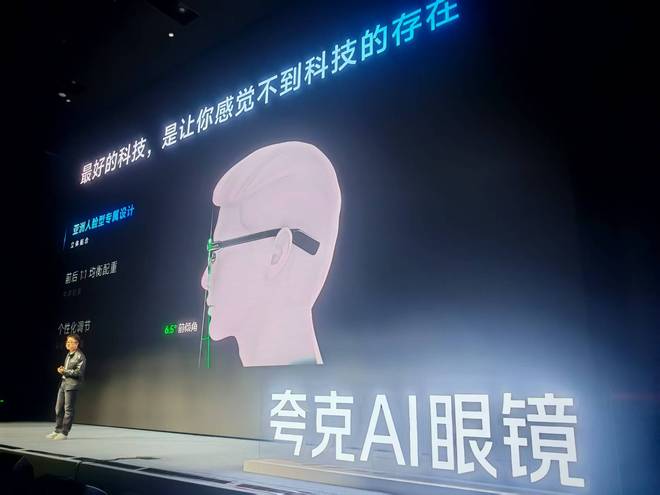
Core Insights - The launch of Alibaba's Quark AI glasses marks a significant advancement in the AI glasses market, focusing on comfort, battery life, and integration with Alibaba's ecosystem [2][4][10] - The industry has faced challenges such as short battery life, discomfort, and slow response times, which have hindered widespread adoption [5][9][19] - Quark AI glasses aim to address these pain points with innovative features like a dual battery swap solution and a proprietary AI model optimized for user experience [9][10][15] Product Features - Quark AI glasses are designed with a focus on comfort, featuring a lightweight structure and a rear-weighted design to enhance wearability [5][7] - The glasses utilize a dual battery system that allows for quick battery replacement, eliminating the need for long charging times [9][10] - Enhanced functionalities include rapid photo capture, high-definition video output, and integration with Alibaba's services for seamless user interaction [9][10][11] Competitive Landscape - The entry of Quark AI glasses shifts the competition from hardware specifications to a focus on ecosystem integration and user experience [15][16] - Competitors like XREAL and Rokid emphasize ecosystem compatibility and display technology, while Meta targets the high-end market with advanced VR/AR capabilities [16][17] - Quark's unique selling proposition lies in its combination of comfort, battery life, and a tailored AI ecosystem, setting it apart from other brands [15][16] Industry Challenges - The AI glasses market faces significant hurdles, including improving interaction efficiency, expanding content ecosystems, and overcoming hardware limitations [17][19][22] - Current interaction methods, such as voice and gesture controls, struggle with complex tasks, highlighting the need for more intuitive user interfaces [19][21] - Hardware challenges include the need for high-density batteries and transparent display materials, which are essential for enhancing user experience [22][24] Future Outlook - The industry anticipates a shift towards AI glasses becoming essential personal devices, with the potential to replace smartphones as primary computing platforms [15][24] - Continuous innovation in hardware and AI capabilities is crucial for meeting user demands and achieving widespread adoption [24]
“果链女王”王来春评夸克AI眼镜:轻量化、续航突破行业天花板
Cai Jing Wang· 2025-11-28 03:44
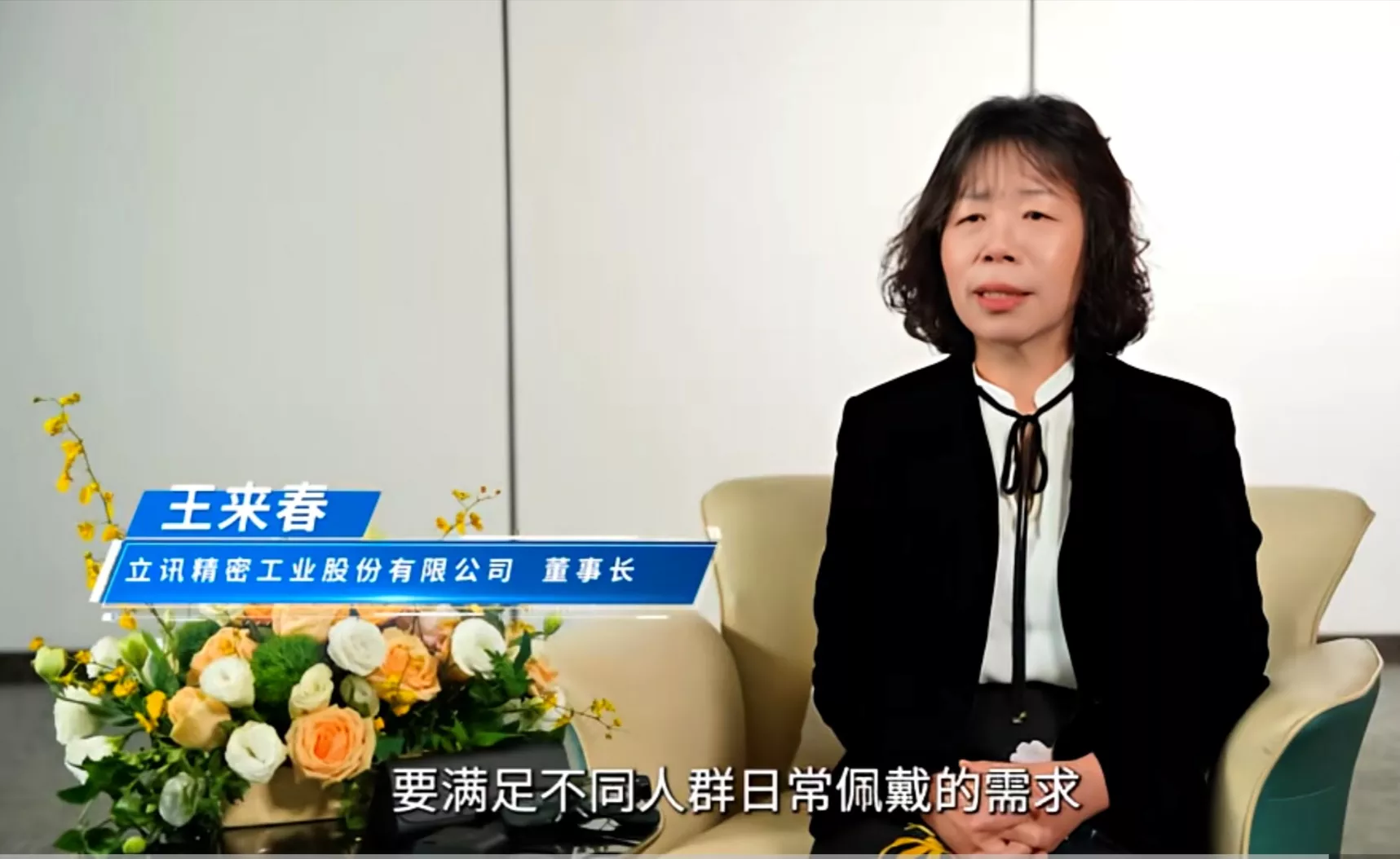
Core Insights - The year 2025 is anticipated to be the "Year of AI Glasses," prompting major domestic and international companies to enter the market [1] - Wang Laichun, Chairman of Luxshare Precision, praised the Quark AI glasses for their lightweight design and battery life, calling them the most comfortable AI glasses currently available in China [1][3] Industry Overview - AI glasses must prioritize comfort for daily wear while integrating AI and other functionalities [3] - The Quark AI glasses focus on lightweight design and aesthetics, overcoming long-standing industry challenges related to weight and battery life [3] Company Collaboration - The partnership between Luxshare Precision and Alibaba is seen as crucial, leveraging Luxshare's hardware integration capabilities and Alibaba's advanced AI models and ecosystem [3] Market Potential - There is optimism regarding the future of AI glasses, with expectations that they, along with headphones, will become core consumer products capable of achieving sales in the millions [3] - The industry is encouraged to focus on high-frequency usage scenarios to reduce reliance on smartphones and become essential in consumers' daily lives [3]

企业加速布局AI眼镜赛道,科创100指数ETF(588030)涨近1%,强势冲击5连涨
Xin Lang Cai Jing· 2025-11-28 03:37
Group 1 - The core viewpoint of the articles highlights the strong performance of the Sci-Tech Innovation Board 100 Index and its ETF, indicating a growing interest and investment in the technology sector, particularly in AI-related products [1][2] - The Sci-Tech Innovation Board 100 Index saw a significant increase of 1.05%, with notable individual stocks like MicroGuide Nano rising by 11.86% and ChipSource Micro increasing by 5.06% [1] - The recent launch of Alibaba's self-developed AI glasses marks a pivotal moment in the AI glasses market, with major tech companies and traditional eyewear brands rapidly entering this space, suggesting a potential for substantial growth in this consumer electronics category [1] Group 2 - The Sci-Tech Innovation Board 100 Index ETF experienced a notable increase in scale, growing by 1.04 billion yuan over the past week, indicating strong investor interest [2] - The ETF's share count increased by 1.02 million shares in the last two weeks, reflecting a significant uptick in market participation [2] - The top ten weighted stocks in the Sci-Tech Innovation Board 100 Index account for 25.77% of the index, with companies like Huahong Semiconductor and GuoDun Quantum leading the list [2]
阿里正式加入AI眼镜“修罗场”
Jing Ji Guan Cha Wang· 2025-11-28 02:43
Core Viewpoint - Alibaba's Quark AI glasses are positioned as a significant player in the AI glasses market, emphasizing their potential to challenge smartphones as the next major human-computer interaction device [1][2]. Group 1: Product Launch and Features - The launch event for Quark AI glasses was attended by around 500 industry professionals, highlighting the importance of the product within the AI glasses ecosystem [1]. - Quark released six models of AI glasses, priced between 1999 yuan and 3999 yuan, with the flagship model S1 featuring near-eye recognition capabilities for displaying information like translation and navigation [2]. - The glasses weigh 51 grams, which is over double the weight of traditional glasses at 20 grams, indicating a need for improvement in comfort [2]. Group 2: Market Position and Competition - The AI glasses market is highly competitive, with nearly 70 companies involved, including major tech firms and traditional eyewear manufacturers [3]. - Quark differentiates itself through its ecosystem, collaborating with other Alibaba companies to create tailored applications for the glasses, such as navigation and price comparison features [3]. Group 3: Pricing Strategy and Consumer Reception - Quark's pricing is considered mid-to-high range compared to competitors, with Xiaomi and Huawei offering lower-priced alternatives [4]. - Initial consumer reactions to the pricing were mixed, with some expressing that the glasses were too expensive, while others noted that the pricing could protect the sales of other brands [4]. - As of the report, Quark AI glasses had sold over 6000 units on Tmall and around 600 units on JD.com [5].
夸克眼镜补全AI to C硬件入口 阿里“全栈AI”战略形成闭环|聚焦
Sou Hu Cai Jing· 2025-11-28 02:15
Core Viewpoint - The launch of Alibaba's Quark AI glasses marks a significant step in the company's AI to C strategy, integrating hardware into its ecosystem and positioning itself in the growing AI glasses market [1][3][20]. Product Launch and Sales Performance - Quark AI glasses were officially released on November 27, with over 7,000 units sold on Tmall and over 500 units on JD.com by November 28, achieving top sales rankings in their respective categories [1]. - The glasses are the first smart hardware to feature the Qianwen assistant, which is part of Alibaba's broader strategy to create an AI ecosystem [6]. Supply Chain and Technology - The glasses are supported by a strong supply chain, including companies like Luxshare Precision, Qualcomm, and JBD, which contributed advanced technologies such as a compact AR light engine and high-performance chips [3][5]. - The dual-chip design, featuring Qualcomm's AR1 and Hengxuan's BES2800, allows for optimized performance and power efficiency, addressing the need for both high-load and lightweight tasks [5]. Market Outlook and Strategic Positioning - Alibaba's leadership expressed optimism about the AI glasses market, predicting that AI glasses will become essential for everyone, potentially transforming human-computer interaction [8]. - The global market for glasses exceeds 1.5 billion units annually, with a shorter replacement cycle compared to smartphones, indicating a significant opportunity for growth in the AI glasses segment [8]. Ecosystem Integration - Quark AI glasses integrate various Alibaba services such as Alipay, Gaode Map, and Taobao, enhancing their utility and user experience [9]. - Future developments will focus on expanding the glasses' capabilities in areas like identity verification, health monitoring, and online learning, aiming to create a comprehensive smart ecosystem [17]. Challenges and Industry Dynamics - The AI glasses industry faces challenges in balancing performance, weight, and battery life, with ongoing efforts to improve materials and chip technology [18][19]. - The competitive landscape is intensifying as major players like Alibaba, Baidu, and Xiaomi enter the market, driving rapid advancements in product features and applications [21].
阿里入“镜”,夸克AI眼镜发布
Bei Jing Ri Bao Ke Hu Duan· 2025-11-28 02:09
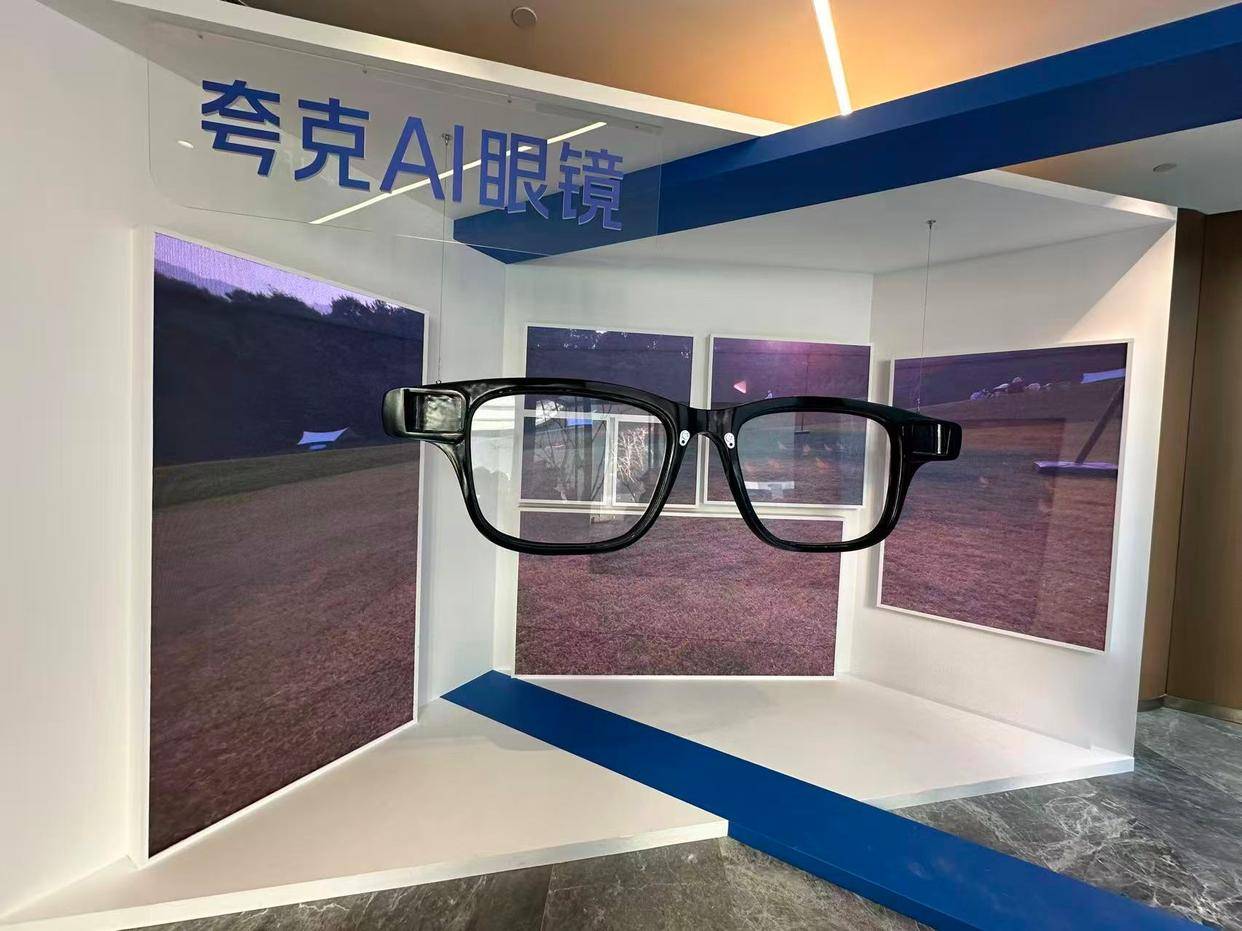
Core Insights - Alibaba has entered the AI glasses market with the launch of six models of Quark AI glasses, starting at a price of 1899 yuan, aiming to address the current limitations of AI glasses in terms of functionality and user experience [1][2] Group 1: Product Features - Quark AI glasses are equipped with the Qianwen AI assistant, offering features such as navigation, payment, price recognition, local inquiries, music, podcasts, travel reminders, AI voice Q&A, image Q&A, translation, and child communication [1] - The glasses introduce a dual battery design that allows users to quickly replace batteries by detaching the temple, addressing the common issue of battery life in AI glasses [1] Group 2: Market Positioning and Strategy - Alibaba aims to leverage Quark AI glasses as a new smart hardware entry point, integrating various services from its ecosystem, including search, navigation, payment, and business travel [2] - The glasses feature a customized near-eye navigation system and taxi information display through Gaode Map, along with direct QR code payment via Alipay and product search through Taobao [2] - Partnerships with third-party platforms like NetEase Cloud Music, QQ Music, and Flight Manager enhance the glasses' capabilities in music and travel information services [2] Group 3: Vision for AI Glasses - Alibaba's CEO emphasizes that the greatest potential of AI lies beyond mobile screens, suggesting that AI glasses could transform human interaction with the digital and physical worlds [2] - The company envisions AI glasses as the next generation of human-computer interaction, with the belief that every pair of glasses will eventually be AI-enabled [2]
阿里千问发力硬件产品,发布号称“市面上最好AI眼镜”
Xuan Gu Bao· 2025-11-27 23:36
Group 1 - Alibaba has launched its first AI glasses powered by its self-developed Qianwen model, marking its entry into the consumer-grade AI wearable device market, priced at 1899 yuan [1] - The glasses are integrated with Alibaba's ecosystem, including Alipay, Gaode Map, Taobao, Feizhu, and Alibaba Business Travel, enhancing their functionality [1] - Tianfeng Securities highlights the vast global user base for glasses and the low current AI penetration rate as key factors for the growth potential in the AI glasses market, predicting sales could reach approximately 1.4 billion units with a 70% penetration rate at maturity [1] Group 2 - The future form of AI glasses is expected to be a combination of AI and AR, with optical display and AI services being key components [2] - Cost analysis of AR glasses indicates that optical modules and screens represent the largest expenses, while chips are the highest cost in smart glasses [2] Group 3 - Hengxuan Technology's new generation of smart wearable chip, BES2800, has been widely adopted in products like TWS earphones, smartwatches, and smart glasses, including the Alibaba Quark AI glasses [3] - Nanchip Technology has provided a power chip solution for the Quark AI glasses, ensuring long battery life and stable power supply through its battery balancing IC [3]