
创新药

Search documents
创新药龙头率先盈利,资金布局医药板块,生物医药ETF(512290)连续4日迎净流入
Sou Hu Cai Jing· 2025-11-07 06:10
Core Viewpoint - The leading innovative pharmaceutical companies are achieving profitability ahead of schedule, driven by multiple favorable factors that support value recovery [1] Industry Summary - Several innovative pharmaceutical companies are experiencing significant commercialization growth in their core products, with sales of key drugs like Zebutinib and Furmetinib exceeding expectations [1] - The performance improvement of these companies is accompanied by marginal profit enhancement [1] - Long-term support policies for the innovative pharmaceutical industry are being further refined, with ongoing optimization in payment and hospital admission processes, which may resolve existing development bottlenecks [1] - A global trend of interest rate cuts by major central banks is expected to benefit the long-term valuation of innovative pharmaceutical companies [1] Company Summary - The Biopharmaceutical ETF (512290) tracks the CS Biomedicine Index (930726), which selects listed companies involved in biotechnology, pharmaceuticals, medical devices, and services from the Shanghai and Shenzhen markets to reflect the overall performance of related securities [1]
一品红跌2.01%,成交额2.03亿元,主力资金净流入247.23万元
Xin Lang Zheng Quan· 2025-11-07 06:00
Core Viewpoint - Yipinhong's stock price has experienced significant fluctuations, with a year-to-date increase of 186.34% but a recent decline of 12.67% over the past five trading days [1] Financial Performance - For the period from January to September 2025, Yipinhong reported revenue of 814 million yuan, a year-on-year decrease of 34.35%, while the net profit attributable to shareholders was -136 million yuan, an increase of 44.80% year-on-year [2] Stock Market Activity - As of November 7, Yipinhong's stock price was 48.85 yuan per share, with a total market capitalization of 22.065 billion yuan. The stock has seen a trading volume of 203 million yuan and a turnover rate of 0.99% [1] - The stock has appeared on the "龙虎榜" (a list of stocks with significant trading activity) five times this year, with the most recent appearance on July 21, where it recorded a net purchase of 65.576 million yuan [1] Shareholder Information - As of October 31, Yipinhong had 20,700 shareholders, an increase of 9.42% from the previous period, with an average of 20,156 circulating shares per shareholder, a decrease of 8.61% [2] - Notable new institutional shareholders include Hong Kong Central Clearing Limited and Guangfa Healthcare Stock A, which are now among the top ten circulating shareholders [3] Business Overview - Yipinhong Pharmaceutical Group Co., Ltd. specializes in the research, production, and sales of its own pharmaceuticals, with a revenue composition of 61.12% from pediatric drugs, 22.71% from chronic disease medications, and 16.17% from other products [1] - The company is classified under the pharmaceutical and biological industry, specifically in chemical pharmaceuticals and formulations, and is involved in several concept sectors including AI medicine and vaccines [2] Dividend Information - Since its A-share listing, Yipinhong has distributed a total of 335 million yuan in dividends, with 151 million yuan distributed over the past three years [3]

地方政策助力创新药产业,借道场内T+0,恒生创新药ETF(520500)助力把握板块新一轮发展机遇
Mei Ri Jing Ji Xin Wen· 2025-11-07 05:48
Group 1 - The core viewpoint of the news highlights the recent policy initiatives in the innovative drug industry, particularly the measures introduced by the Chongqing Municipal Government to support high-quality development in this sector [1] - The policy aims to achieve the approval of 1 to 3 innovative drugs annually by 2027, with a target of reaching a total of 10 innovative drugs, alongside the establishment of 3 comprehensive innovation industry complexes and high-level innovation platforms [1] - The comprehensive nature of the policy covers various aspects from R&D subsidies to clinical acceleration and international cooperation, indicating a significant boost for the biopharmaceutical industry in Chongqing and potentially influencing the national innovative drug industry [1] Group 2 - In terms of product layout, the innovative drug sector is experiencing positive capital inflow, particularly into the Hang Seng Innovative Drug ETF (520500), which has seen net inflows for six consecutive trading days [2] - The latest scale of the Hang Seng Innovative Drug ETF has reached 1.872 billion, with an average daily trading volume of 1.197 billion over the past five trading days, showcasing its substantial size and liquidity advantages [2] - The ETF focuses on companies in the Hong Kong market involved in the research, development, and production of innovative drugs, emphasizing firms with strong R&D capabilities and growth potential [2] Group 3 - The innovative drug industry is also benefiting from internationalization and advancements in R&D pipelines, which are expected to further enhance the industry's fundamentals [3] - Factors such as the rising international status of innovative drugs, explosive growth in business development (BD) overseas, and the transition to profitability are positioning innovative drugs as a key investment theme for 2026 [3] - The Hang Seng Innovative Drug ETF (520500) facilitates T+0 trading, providing a convenient tool for investors looking to capitalize on opportunities in the innovative drug sector [3]
热景生物跌2.01%,成交额1.82亿元,主力资金净流入1209.56万元
Xin Lang Zheng Quan· 2025-11-07 05:39
Core Viewpoint - The stock of Hotgen Biotech experienced a decline of 2.01% on November 7, with a current price of 136.99 CNY per share and a total market capitalization of 12.7 billion CNY. The company has seen a significant increase in stock price of 121.52% year-to-date, but has faced recent declines over various time frames [1][2]. Financial Performance - For the period from January to September 2025, Hotgen Biotech reported a revenue of 310 million CNY, representing a year-on-year decrease of 19.80%. The net profit attributable to shareholders was -109 million CNY, a significant decline of 168.12% compared to the previous year [2]. - Cumulative cash dividends since the A-share listing amount to 440 million CNY, with 17.34 million CNY distributed over the past three years [3]. Shareholder Information - As of September 30, 2025, the number of shareholders for Hotgen Biotech increased by 12.90% to 7,833, while the average circulating shares per person decreased by 11.43% to 11,835 shares [2]. - The top ten circulating shareholders include various funds, with notable changes in holdings: Huatai-PineBridge Innovation Medicine Mixed Fund reduced its holdings by 12.53%, while ICBC Frontier Medical Stock A increased its holdings by 50.00% [3]. Market Activity - The stock has been active on the trading board, appearing five times this year, with the most recent net purchase on July 4 amounting to 47.83 million CNY, accounting for 25.69% of total trading volume [1]. - The stock has experienced a decline of 14.38% over the last five trading days, 15.44% over the last 20 days, and 42.20% over the last 60 days [1]. Business Overview - Hotgen Biotech, established on June 23, 2005, and listed on September 30, 2019, specializes in the research, development, production, and sales of in vitro diagnostic reagents and instruments. The revenue composition includes 70.87% from testing reagents, 19.79% from testing instruments, 8.17% from other sources, and 1.17% from biological raw materials [1]. - The company operates within the pharmaceutical and biotechnology sector, specifically in medical devices and in vitro diagnostics, with involvement in concepts such as Alzheimer's, innovative drugs, antigen testing, and monkeypox [2].

艾迪药业跌2.04%,成交额3563.25万元,主力资金净流出283.24万元
Xin Lang Cai Jing· 2025-11-07 05:30
Core Viewpoint - Eddie Pharmaceuticals experienced a stock price decline of 2.04% on November 7, 2023, with a current price of 14.37 CNY per share and a market capitalization of 6.047 billion CNY [1] Financial Performance - For the period from January to September 2025, Eddie Pharmaceuticals achieved a revenue of 552 million CNY, representing a year-on-year growth of 84.83% [2] - The company reported a net profit attributable to shareholders of -6.8405 million CNY, showing an increase of 88.78% year-on-year [2] Stock and Shareholder Information - As of September 30, 2025, the number of shareholders for Eddie Pharmaceuticals was 12,100, an increase of 1.55% from the previous period [2] - The average circulating shares per shareholder decreased by 1.53% to 34,709 shares [2] - Since its A-share listing, the company has distributed a total of 20.16 million CNY in dividends, with no dividends paid in the last three years [3] Institutional Holdings - As of September 30, 2025, notable institutional shareholders include: - Xingquan Commercial Model Mixed Fund (LOF) A, holding 6.229 million shares, ranked as the fifth largest circulating shareholder and a new entrant [3] - Huatai-PineBridge Healthcare Mixed Fund, holding 4.6607 million shares, ranked seventh and also a new entrant [3] - Penghua Medical Technology Stock A, holding 4.1255 million shares, ranked ninth, with a reduction of 2.68 million shares compared to the previous period [3] - Two funds,招商行业精选股票 and 广发价值核心混合 A, have exited the top ten circulating shareholders list [3] Business Overview - Eddie Pharmaceuticals, established on December 15, 2009, and listed on July 20, 2020, is based in Yangzhou, Jiangsu Province [1] - The company's main business involves the exploration, research, and sales of innovative chemical drugs and human-derived protein products, with revenue composition as follows: - Human-derived protein: 41.11% - New drugs: 35.69% - Diagnostic equipment, reagents, and others: 13.62% - Generic drugs: 9.47% - Others (supplementary): 0.11% [1]

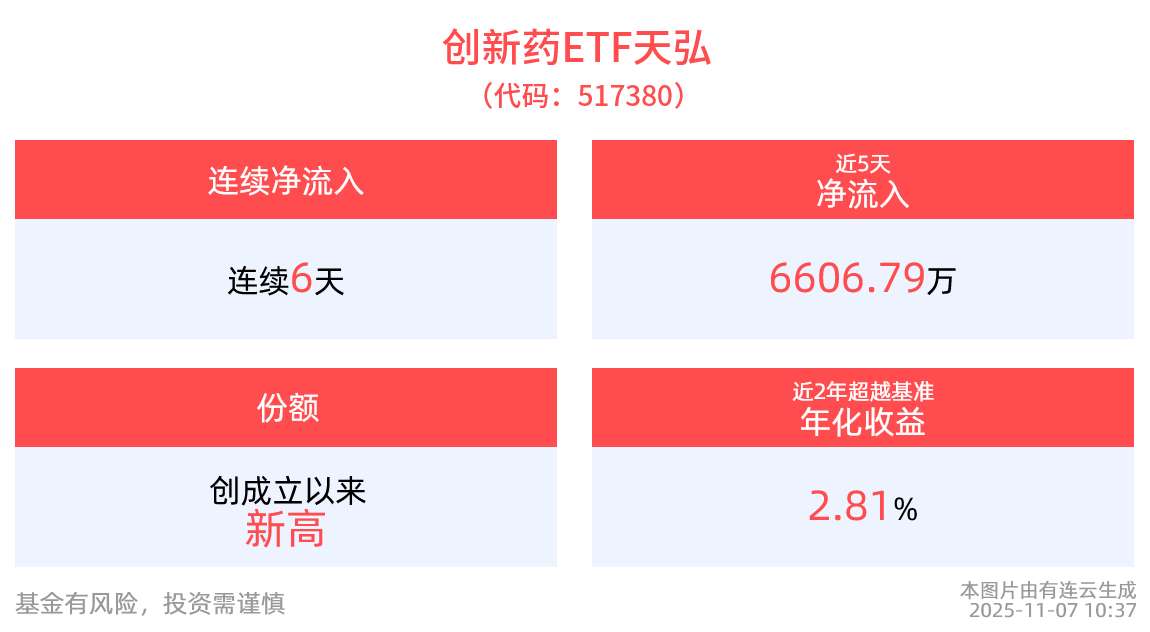
最高千万奖励!重庆印发创新药发展新政,创新药ETF天弘(517380)、生物医药ETF(159859)近6日连续净流入合计近3亿!
Xin Lang Cai Jing· 2025-11-07 05:07
Core Insights - The innovative drug ETF Tianhong (517380) has seen significant trading activity, with a transaction volume of 7.76 million yuan as of November 7, 2025, and a record high of 1.74 billion shares outstanding [2] - The biopharmaceutical ETF (159859) has also experienced strong performance, with a recent increase of 20.23% over the past six months, ranking first among comparable funds [3] Fund Performance - The innovative drug ETF Tianhong (517380) has achieved a net inflow of 78.80 million yuan over the past six days, with a peak single-day inflow of 22.82 million yuan [3] - The biopharmaceutical ETF (159859) has recorded a total net inflow of 199 million yuan in the same period, with a maximum single-day inflow of 61.78 million yuan [3] Policy Developments - Chongqing has introduced new policies to support the development of innovative drugs, offering rewards of up to 10 million yuan for the cultivation of industrial clusters [4] - The policy aims to approve 1 to 3 innovative drugs annually by 2027, with a target of reaching a total of 10 innovative drugs [4] Industry Outlook - The pharmaceutical sector showed signs of recovery in Q3 2025, with revenue and net profit growth turning positive, particularly in the medical research outsourcing sector, which saw revenue and net profit growth rates of 10.9% and 47.9%, respectively [5] - The investment sentiment in the innovation-related pharmaceutical chain, including chemical drugs and biopharmaceuticals, is expected to stabilize due to improving performance and potential policy benefits [5]

新开源涨2.12%,成交额1.57亿元,主力资金净流入571.05万元
Xin Lang Cai Jing· 2025-11-07 03:32
Core Insights - New Source's stock price increased by 2.12% on November 7, reaching 18.31 CNY per share, with a total market capitalization of 8.9 billion CNY [1] - The company has seen a year-to-date stock price increase of 16.62%, with a 10.37% rise over the last five trading days [1] Financial Performance - For the period from January to September 2025, New Source reported revenue of 951 million CNY, a year-on-year decrease of 14.36%, and a net profit attributable to shareholders of 201 million CNY, down 35.39% year-on-year [2] - Cumulative cash dividends since the company's A-share listing amount to 900 million CNY, with 607 million CNY distributed over the last three years [3] Business Overview - New Source, established on March 13, 2003, and listed on August 25, 2010, is located in Jiaozuo City, Henan Province, and specializes in the R&D, production, and sales of PVP series products, high-value pharmaceutical excipients, and in vitro diagnostic services [1] - The company's revenue composition includes: 39.57% from other PVP products, 28.35% from PVPK30 powder, 14.80% from the Oruisi series, and smaller contributions from precision medical services and early cancer diagnosis [1] Shareholder Information - As of October 20, New Source had 19,900 shareholders, a decrease of 1.49% from the previous period, with an average of 22,604 circulating shares per shareholder, an increase of 1.51% [2] Industry Classification - New Source belongs to the Shenwan industry classification of basic chemicals, specifically in the category of other chemical products, and is associated with concepts such as cancer treatment, innovative drugs, medical devices, biomedicine, and in vitro diagnostics [2]

诺思格跌2.14%,成交额7394.28万元,主力资金净流入135.34万元
Xin Lang Cai Jing· 2025-11-07 03:30
Core Points - The stock price of Norska dropped by 2.14% on November 7, trading at 63.21 CNY per share with a market capitalization of 6.105 billion CNY [1] - Norska's stock has increased by 26.85% year-to-date, but has seen a decline of 7.84% over the last five trading days [1] - The company has been listed on the stock market since August 2, 2022, and specializes in clinical trial operation services and related fields [1] Financial Performance - For the period from January to September 2025, Norska reported a revenue of 607 million CNY, reflecting a year-on-year growth of 8.09% [2] - The net profit attributable to shareholders for the same period was 95.5668 million CNY, marking a year-on-year increase of 13.21% [2] - Cumulative cash dividends since the A-share listing amount to 49.4969 million CNY [2] Shareholder Information - As of September 30, 2025, the number of shareholders decreased by 16.18% to 8,734 [2] - The average number of circulating shares per shareholder increased by 19.30% to 6,545 shares [2] - Notable changes in institutional holdings include the entry of Nuoan Pioneer Mixed A as the sixth largest shareholder with 1.6796 million shares [2]

“创新药一哥”绩后逆市上涨!第三季度营收突破百亿,上调全年业绩指引!机构:积极把握创新药调整后的机会
Xin Lang Ji Jin· 2025-11-07 03:07
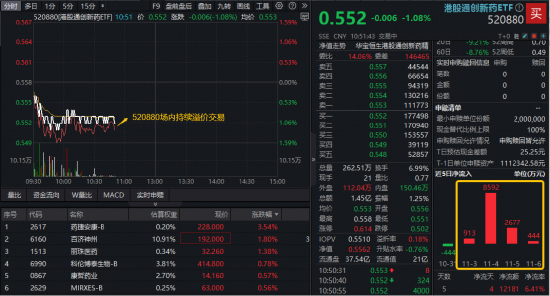
Group 1: Company Performance - BeiGene reported a significant revenue increase, with Q3 revenue reaching 10.077 billion yuan, a year-on-year growth of 41.1% [1] - For the first three quarters, BeiGene's revenue totaled 27.595 billion yuan, up 44.2% year-on-year, surpassing the total revenue of the previous year [1] - The net profit attributable to shareholders for the first three quarters was 1.139 billion yuan, with product revenue growing by 43.9% to 27.314 billion yuan, driving the overall revenue growth [1] Group 2: Financial Guidance and Market Reaction - BeiGene raised its financial guidance for 2025, projecting annual revenue between 36.2 billion yuan and 38.1 billion yuan, an increase of 400 million yuan from previous estimates [1] - Following the earnings report, BeiGene's stock opened higher on November 7, showing resilience in a generally declining market for innovative drug stocks [1] Group 3: Market Trends and Investment Opportunities - The Hong Kong Stock Connect innovative drug sector has seen recent adjustments, attracting low-buying funds, with over 1.25 billion yuan flowing into the ETF over four consecutive days [3] - Analysts suggest that the current stock price levels are more reasonable after a period of adjustment, indicating potential investment opportunities in the innovative drug sector [3] Group 4: ETF Overview - The Hong Kong Stock Connect Innovative Drug ETF (520880) tracks the Hang Seng Hong Kong Stock Connect Innovative Drug Select Index, which includes only pure innovative drug companies [4][5] - The top ten innovative drug leaders account for over 71% of the ETF's weight, highlighting the strength of leading companies in the sector [5][7] - As of November 3, the ETF's scale surpassed 2 billion yuan, making it the largest and most liquid ETF tracking this index [8]
机构称2026年创新药仍将是投资主线,聚焦恒生医药ETF(159892)布局机会
Mei Ri Jing Ji Xin Wen· 2025-11-07 03:04
Core Viewpoint - The Hong Kong stock market opened lower, with the Hang Seng Index down 0.51% and the Hang Seng Tech Index down 0.83%. Notable stocks like Hua Hong Semiconductor and BeiGene showed mixed performance, while the market anticipates a positive long-term outlook for innovative drugs despite recent adjustments in the healthcare insurance directory [1]. Market Performance - The Hang Seng Index opened down 0.51% and the Hang Seng Tech Index down 0.83% [1]. - Hua Hong Semiconductor opened down 3.87%, reporting Q3 sales revenue of $635 million, a year-on-year increase of 20.7% [1]. - BeiGene opened up 3.02%, with total revenue for the first nine months approximately $3.845 billion, a year-on-year increase of 43% [1]. - The Hang Seng Biotech Index opened lower but showed narrow fluctuations, with the Hang Seng Pharmaceutical ETF experiencing a slight decline [1]. Healthcare Insurance Directory Adjustment - This year marks the 8th adjustment of the healthcare insurance directory since the establishment of the National Healthcare Security Administration, with the notable addition of a commercial health insurance innovative drug directory [1]. Innovative Drug Market Outlook - The innovative drug sector has experienced a significant correction over the past three months, but the market expectations have lowered without impacting the fundamentals [1]. - There are multiple catalysts expected in the short term, including continued growth in Q3 performance and ongoing business development (BD) opportunities [1]. - Long-term prospects for innovative drug companies are expected to improve, maintaining a high level of enthusiasm for overseas expansion [1]. Investment Thesis - Dongwu Securities believes that innovative drugs will remain a key investment theme through 2026 due to their rising international status, explosive growth in overseas business development, significant market capitalization potential, and a transition to profitability [1]. - Key focus areas for innovative drugs include the next generation of ADC+2.0 IO and small nucleic acids [1].