
可持续发展

Search documents
Singapore's largest industrial district cooling system begins operations to support STMicroelectronics' decarbonization strategy
Globenewswire· 2025-10-21 06:00
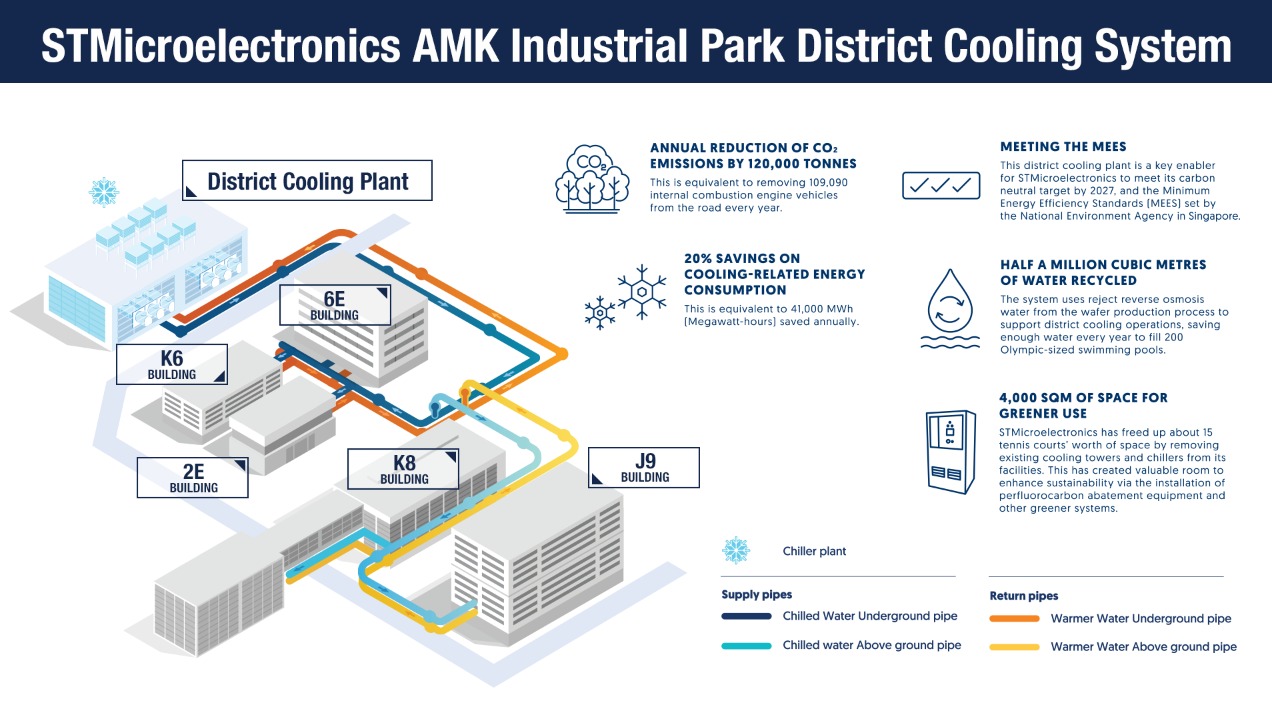
Core Insights - STMicroelectronics and SP Group have launched Singapore's largest industrial district cooling system at Ang Mo Kio TechnoPark to support decarbonization efforts [2][3] - The system aims to reduce carbon emissions by up to 120,000 tonnes annually and achieve a 20% reduction in cooling-related electricity consumption [3][8] - This initiative aligns with STMicroelectronics' commitment to becoming carbon neutral by 2027 [3][4] Company Initiatives - The district cooling system has an installed capacity of 36,000 refrigeration tonnes and serves an area of approximately 90,000 square meters [5][8] - The project has achieved over 2 million accident-free man hours during construction and received the Green Mark Platinum Super Low Energy certification [10] - STMicroelectronics is also upgrading the cooling system at its Toa Payoh site under a 20-year agreement with SP Group, aiming to reduce carbon emissions by approximately 2,140 tonnes annually [11] Technological Advancements - The cooling system utilizes advanced technologies, including a centralized closed-loop pipe network, to enhance energy efficiency and reliability [5][6] - The partnership includes the deployment of an energy management information system with 2,400 smart electricity meters to monitor energy consumption [12] - Smart water meters have been implemented to track water inflow, improving water efficiency in wafer fabrication operations [13] Environmental Impact - The new cooling system will repurpose over half a million cubic meters of water annually, contributing to resource conservation [3][8] - The project has reduced embodied carbon by about 44% compared to industrial benchmarks through optimized material choices [10] - STMicroelectronics is on track to achieve 100% renewable electricity sourcing by the end of 2027 [14]

Singapore’s largest industrial district cooling system begins operations to support STMicroelectronics’ decarbonization strategy
Globenewswire· 2025-10-21 06:00
Core Insights - STMicroelectronics and SP Group have launched Singapore's largest industrial district cooling system at Ang Mo Kio TechnoPark, supporting ST's decarbonization strategy and sustainability goals [1][2][3] Environmental Impact - The new cooling system is projected to reduce carbon emissions by up to 120,000 tonnes annually and achieve a 20% reduction in cooling-related electricity consumption [2][15] - It will repurpose over half a million cubic meters of water each year by utilizing reject reverse osmosis water from ST's cooling towers [2][15] System Specifications - The district cooling system has an installed capacity of up to 36,000 refrigeration tonnes (RT) and serves an area of approximately 90,000 square meters through a centralized closed-loop pipe network [4][15] - The system employs chillers in a series counterflow configuration to enhance energy efficiency and ensure reliable 24/7 operation [5] Safety and Certification - The project achieved over 2 million accident-free man hours during construction and received the Green Mark Platinum Super Low Energy certification for its energy efficiency and sustainable design [7] Future Collaborations - STMicroelectronics and SP Group are collaborating on upgrading the cooling system at ST's Toa Payoh site, aiming to reduce carbon emissions by approximately 2,140 tonnes annually under a 20-year chilled-water-as-a-service agreement [8] - The partnership also includes the implementation of an energy management information system (EMIS) and smart water meters to enhance energy and water efficiency across ST's campuses [9][10]

金融践行“两山”理念 星展银行(中国)洪诚明:低碳转型已成企业国际化“必修课”
Zhong Guo Jing Ying Bao· 2025-10-21 05:06
中经记者 郝亚娟 夏欣 上海 北京报道 2025年是"绿水青山就是金山银山"理念提出二十周年。作为"五篇大文章"之一,绿色金融正成为银行业 创新的重点方向。 近日,中国人民银行发布2025年二季度金融机构贷款投向统计报告显示,我国绿色贷款增加较多。数据 显示,截至2025年二季度末,本外币绿色贷款余额42.39万亿元,比年初增长14.4%。 全国温室气体自愿减排交易市场(CCER)重启对银行意味着哪些机遇?如何看待转型金融的前景? 《中国经营报》记者专访了星展银行(中国)副行长(待核准)、企业及机构银行部主管洪诚明。 探索低碳转型新路径 《中国经营报》:在推进绿色金融的过程中,银行如何在可持续发展目标与自身盈利需求之间实现平 衡?目前贵行重点支持的绿色金融领域有哪些? 作为亚洲领先的金融机构,我们独具优势,能助力全球跨国企业实现其在亚洲业务的低碳转型。同时, 对于志在"走出去"的中国企业,我们也能为其全球化战略提供坚实的可持续发展支持。近年来,我们进 一步深化了与企业客户的合作,积极支持其向低碳商业模式转型。截至2024年年底,星展银行已承诺提 供890亿新元的可持续融资(扣除还款后净额)。星展银行重点布局绿 ...
CREATING POSITIVE IMPACT IN SUSTAINABILITY
Globenewswire· 2025-10-21 05:00
Core Insights - Sika is enhancing its sustainability strategy through the launch of the Sika® Carbon Compass, an automated platform for calculating Product Carbon Footprints (PCF) that is independently verified and aligns with international standards [1][2][4] Group 1: Sustainability Strategy - The Sika® Carbon Compass provides reliable carbon emissions data, enabling customers to make informed, climate-conscious decisions [1][2] - The platform simplifies reporting and enhances competitiveness in tenders, thereby increasing credibility across sustainable value chains [2][3] - It supports customers in meeting current sustainability standards and prepares them for future regulations like the Ecodesign for Sustainable Products Regulation (ESPR) and the Construction Product Regulation (CPR) [2][4] Group 2: Company Profile - Sika is a leading specialty chemicals company focused on bonding, sealing, damping, reinforcing, and protection in the construction and industrial sectors [5] - The company operates in 102 countries with over 400 factories, employing more than 34,000 individuals and generating sales of CHF 11.76 billion in 2024 [5]
共谱绿色金融篇章 长城基金亮相2025可持续全球领导者大会
Zheng Quan Shi Bao Wang· 2025-10-21 03:33
10月16日,2025可持续全球领导者大会在上海黄浦世博园区盛大启幕。作为参展商,长城基金携手长城 证券亮相大会配套的"绿色产业与可持续消费博览会",集中展示在绿色金融领域的实践成果,彰显资管 机构助力绿色产业升级、推动可持续发展的责任担当。 本届大会获上海市黄浦区人民政府支持,以"携手应对挑战:全球行动、创新与可持续增长"为核心主 题,邀请500位中外嘉宾,汇聚全球智慧力量,共探可持续发展新路径,为全球可持续治理注入澎湃 的"中国动能"。作为大会核心配套活动,"绿色产业与可持续消费博览会"紧扣"绿色产业、可持续消 费、科技创新"主线,集中展示全球前沿绿色科技与产业成果。 活动期间,长城基金重点展示公司在绿色金融领域的业务布局与实践路径,提供公募基金以专业力量赋 能实体经济、共绘绿色金融篇章的落地样本,向外界积极传递企业承诺与行动。 在可持续治理层面,长城基金通过持续完善绿色金融治理架构、优化全流程制度体系、加强内外部理念 宣贯等举措,将可持续发展理念深度融入公司经营决策与风险管理流程,为公司稳健经营与绿色业务拓 展提供坚实制度保障,为各项业务的可持续发展明确方向、筑牢根基。 可持续投资领域,公司将可持续发展 ...
济南何以成城市综合发展“优等生”
Qi Lu Wan Bao· 2025-10-21 02:31
Core Insights - The report titled "Urban Comprehensive Development Index Report (2025)" ranks Jinan fifth among Chinese cities, surpassing traditional economic powerhouses like Tianjin and Guangzhou, which has sparked widespread discussion [1][2] - The report evaluates cities based on six dimensions: innovation, livability, beauty, resilience, civilization, and intelligence, using 90 specific indicators to measure overall development quality [1][2] Group 1: Jinan's Ranking and Evaluation - Jinan's rise in ranking is attributed to a shift away from GDP-centric evaluations, focusing instead on comprehensive development metrics [2] - The city has shown significant improvements in various dimensions, particularly in livability, where it ranks second, and resilience, where it ranks sixth [2][3] Group 2: Livability and Public Investment - Jinan achieved a high score of 84.28 in the livability category, second only to Beijing, due to effective initiatives in old community renovations and public housing supply [3][4] - From 2016 to 2020, Jinan's fiscal spending on social and livelihood projects grew annually by 11.4%, with the proportion of such spending increasing from 75.2% to 79.5%, and projected to reach 80.3% in 2024 [4] Group 3: Resilience and Innovation - Jinan ranks sixth in resilience and ninth in smart city metrics, indicating a strong capacity to handle risks and challenges [5][6] - The city has made significant strides in technological innovation, ranking 31st in the global research city list and maintaining a 15th position in national innovation capability [6] Group 4: Cultural and Social Aspects - Jinan's cultural heritage and community warmth contribute to its soft power, enhancing its overall attractiveness as a city [7][8] - The city has been recognized as a model of civilization, continuously injecting new vitality into its cultural landscape and enhancing residents' sense of belonging and happiness [8]

问鼎EFQM全球奖“七钻”认证,五粮液树立卓越绩效新标杆
Zhong Jin Zai Xian· 2025-10-21 02:08
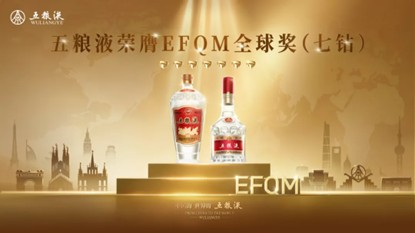
Core Viewpoint - Wuliangye has been awarded the EFQM Global Award (Seven Diamonds) for its outstanding sustainable practices in economic, environmental, and social aspects, marking the highest score for a Chinese company since the award's inception [3][10]. Group 1: Awards and Recognition - Wuliangye received the highest certification of global excellence performance, the EFQM Global Award (Seven Diamonds), and also won the "United Nations Sustainable Development Goals Implementation and Corporate Performance Excellence Award" [3][6]. - The EFQM Global Award is recognized as one of the highest honors in the field of excellence performance, with only 14 out of over 200 companies evaluated this year achieving such recognition [8][10]. Group 2: Sustainable Development Practices - Wuliangye integrates sustainable development deeply into its corporate strategy, focusing on a high-quality development path characterized by "ecology, quality, culture, digitalization, and transparency" [5][11]. - The company emphasizes a collaborative approach to economic, environmental, and social development, establishing a unique sustainable development framework [8][11]. - Wuliangye has implemented a comprehensive lifecycle quality control system, enhancing product quality and promoting steady growth in capacity, brand, and economic benefits [13]. Group 3: Industry Leadership - As a leading representative of Chinese liquor, Wuliangye aims to set a benchmark for sustainable development in the industry, showcasing its commitment to excellence in management and sustainable practices [10][11]. - The company aspires to align with world-class standards, driving management innovation and industry upgrades, while contributing to the sustainable development of the Chinese liquor industry [13].

银行如何扛起“可持续”大旗?多位大咖齐聚这场大会,共话行业新方向
Xin Lang Cai Jing· 2025-10-21 00:46
Group 1: Conference Overview - The 2025 Sustainable Global Leaders Conference was held from October 16 to 18 in Shanghai, focusing on "Collaborating to Address Challenges: Global Action, Innovation, and Sustainable Growth" [1] - The conference gathered prominent figures from the banking industry, including leaders from the People's Bank of China and major banks, to discuss core issues related to sustainable development [1] Group 2: Central Bank Insights - The global sustainable development process is slower and more complex than anticipated, with significant challenges remaining in various sectors, such as hunger and access to safe drinking water [2] - China’s experience in green transformation, which combines economic growth with environmental protection, is highlighted as a model for other developing countries [2][3] - As of last year, China's renewable energy installed capacity accounted for 35% of the global total, demonstrating a significant reduction in energy consumption per unit of GDP [2] Group 3: Sustainable Finance Discussion - Sustainable finance has made significant progress globally and is now a focal point for financial innovation, but it faces challenges such as market mechanism deficiencies and information asymmetry [4] - The need for collaboration among governments and enterprises is emphasized to address the challenges in sustainable finance [4] Group 4: Banking Sector Perspectives - Several executives from joint-stock banks discussed the importance of sustainable finance, emphasizing that it is a long-term journey requiring cooperation from all sectors of society [5][6] - The commitment to green finance is reflected in the strategic positioning of banks, with a focus on supporting low-carbon transitions and enhancing green financial services [6][7][8] Group 5: Digital Technology in Banking - Digital technology is seen as a key driver for the sustainable development of private banks, with significant efficiency advantages reported [10][11] - The use of digital technology has enabled banks to provide substantial green credit, supporting various sustainable projects [10][11] Group 6: International Bank Contributions - Morgan Stanley has been actively involved in supporting China's green transformation, assisting clients in issuing nearly $59.8 billion in green bonds since 2015 [12] - The bank has set a goal of $1 trillion in green financing as part of a broader $2.5 trillion sustainable development target, with significant progress reported by the end of 2024 [12]


吴庆文会见新加坡科研局总裁马健德
Su Zhou Ri Bao· 2025-10-21 00:39
Group 1 - The meeting between Wu Qingwen, the Mayor of Suzhou, and Ma Jiande, President of the Singapore Science and Technology Agency, highlights the importance of collaboration in advancing economic and social development through scientific innovation [1][2] - The Singapore Science and Technology Agency has been instrumental in assisting 37 Singaporean tech companies to enter the Suzhou Industrial Park since the establishment of the new research enterprise cooperation center in 2019 [1] - Wu Qingwen emphasized the alignment of key focus areas such as advanced manufacturing, health and wellness, digital economy, and sustainable development between the agency and Suzhou's industrial direction, indicating significant potential for future cooperation [1] Group 2 - Ma Jiande expressed confidence in the future collaboration, aiming to deepen cooperation and expand areas of partnership, leveraging the new research enterprise cooperation center to attract more Singaporean companies to Suzhou [2] - The goal is to help Suzhou build an international and open innovation system, positioning it as a pioneer in open innovation cooperation between China and Singapore [2]
回望“十四五”| 数说“十四五” ESG笔墨绘就企业发展新底色
Zhong Guo Zheng Quan Bao· 2025-10-21 00:27
Group 1: ESG Reporting and Development - The disclosure rate of ESG reports among A-share listed companies has increased significantly, with 2,521 companies publishing reports for the 2024 fiscal year, representing 46.83% of all listed companies, marking a 71% increase from 2021 [2] - The quality of ESG development has improved, with 342 companies in the Shanghai Stock Exchange included in MSCI ESG ratings, and 100 companies receiving upgrades in their ratings [2] - ESG has evolved from a conceptual framework to a key dimension for measuring corporate competitiveness, aligning with national development goals for green growth and harmony with nature [2][4] Group 2: Green Energy and Low-Carbon Initiatives - The share of renewable energy in power generation capacity has risen from 40% to approximately 60% during the "14th Five-Year Plan" period, with nearly 60% of new power generation coming from non-fossil energy sources [6] - A zero-carbon intelligent manufacturing base in Jiangsu has been established, generating over 600 million kWh of clean electricity annually and achieving net-zero emissions [5] - Significant reductions in energy consumption per unit of GDP have been achieved, with an 11.6% decrease over four years, equating to a reduction of 1.1 billion tons of CO2 emissions [6] Group 3: Corporate Social Responsibility and Community Engagement - A majority of listed companies are actively engaging in community services and educational support, with 67.16% involved in community service and 66.67% providing educational assistance [8] - The third industry has seen an increase in employment capacity, with 35.866 million people employed by the end of 2024, marking a 1.1 percentage point increase in its share of total employment [8] - Significant progress has been made in housing projects, with over 240,000 urban old residential areas renovated, benefiting over 40 million households [9] Group 4: Agricultural and Rural Development - Companies are integrating ESG practices with rural revitalization strategies, with over 6,000 enterprises supporting poverty alleviation efforts [12] - The contribution rate of agricultural technology has reached 63.2%, with over 75% of crop farming being mechanized by the end of 2024 [12] - Initiatives like the "MAP modern agricultural assistance model" have helped increase agricultural output and income for farmers [12]
