
碳中和

Search documents
碳中和ETF南方(159639)逆市上涨近1%,政策密集落地,绿色低碳行业长期增长确定性提升
Xin Lang Cai Jing· 2025-10-30 02:23
Group 1 - The carbon-neutral ETF Southern (159639) increased by 0.77%, with trading volume expanding rapidly. The index it tracks, the China Shanghai Environmental Exchange Carbon Neutral Index, rose by 0.50% [1] - Key constituent stocks such as Arctech (up 10.65%), Hangyang (up 7.12%), Sungrow (up 5.17%), Hunan Yueneng (up 4.20%), and Jiangxi Copper (up 4.17%) showed significant gains [1] - The Ministry of Ecology and Environment held a press conference on October 29, announcing the implementation of the first central document in China's carbon market, aimed at accelerating the construction of a national carbon market [1] Group 2 - Guotai Junan Securities highlighted the release of the "Energy Conservation and New Energy Vehicle Technology Roadmap 3.0," predicting high growth in domestic new energy vehicle sales by 2025, which will drive demand for batteries and materials [1] - The solid-state battery industry is progressing, with XINWANDA launching a new generation polymer all-solid-state battery with an energy density of 400 Wh/kg [1] - In the photovoltaic sector, the investment theme remains focused on "anti-involution," with expectations that domestic high-power modules will drive an increase in module prices [1] Group 3 - The National Development and Reform Commission's draft implementation plan for renewable energy consumption targets includes non-electric renewable energy, marking a shift towards multi-energy collaborative consumption [2] - This policy creates a regulatory market space for the green hydrogen, ammonia, and alcohol industries, enhancing the certainty and long-term expectations for industry development [2] - The carbon-neutral ETF Southern closely tracks the China Shanghai Environmental Exchange Carbon Neutral Index, which includes 100 listed companies with significant contributions to carbon neutrality [2]





机构风向标 | 步科股份(688160)2025年三季度已披露前十大机构持股比例合计下跌6.24个百分点
Xin Lang Cai Jing· 2025-10-30 01:35
Group 1 - The core viewpoint of the news is that Buke Co., Ltd. (688160.SH) reported a decrease in institutional investor holdings in its third-quarter report for 2025, with a total of 8 institutional investors holding 52.8333 million shares, representing 58.17% of the total share capital, a decline of 6.24 percentage points from the previous quarter [1] Group 2 - In the public fund sector, there were 3 funds that increased their holdings compared to the previous period, with an increase rate of 1.10% [2] - Conversely, 2 public funds reduced their holdings, with a decrease rate of 0.92% [2] - A total of 85 public funds did not disclose their holdings this period, including several notable funds such as AVIC Trend Leading Mixed Fund and Penghua New Energy Mixed Fund [2]

腾讯“碳寻计划”二期全球50强名单发布,以全球方案解决全球问题
Cai Jing Wang· 2025-10-29 17:02
Core Insights - Tencent's "Carbon Seeking Plan" has launched its second phase, identifying 50 global teams from 12 countries and regions that are exploring diverse technological solutions to address the climate crisis [1][3] - The initiative aims to support promising early-stage climate technology solutions and facilitate their application [3] Group 1: Technological Innovations - Andes, a company focusing on soil microorganisms, has discovered a cutting-edge carbon sequestration technology called microbial carbon mineralization, which converts atmospheric CO2 into minerals, enhancing soil fertility and crop yield while storing carbon for thousands of years [1] - China University of Mining and Technology and the Wuhan Institute of Rock and Soil Mechanics are developing an adsorbent using basalt and diatomite, which captures CO2 directly from the air and injects it into underground basalt for permanent storage [1] Group 2: Program Expansion and Evaluation - The second phase of the "Carbon Seeking Plan" has expanded its selection criteria globally, receiving over 660 climate innovation proposals from 54 countries and regions, with nearly half of the evaluators being from overseas [3] - The evaluation process is based solely on technology, application, and commercial viability, resulting in a list of 50 leading low-carbon technology teams, with over 40% of the teams coming from China [3] Group 3: Funding and Support - The selected 50 climate innovation teams are competing for a total of 200 million RMB in catalytic funding, with the winning teams gaining access to Tencent's industrial and expert resources [3] - The initiative aims to help these cutting-edge low-carbon technologies transition from laboratory settings to practical applications, addressing the "valley of death" in technology commercialization [3]

阳光电源:储能市场已形成全球全面开花局面,数据中心场景应用价值大
Zheng Quan Shi Bao Wang· 2025-10-29 14:43
Core Viewpoint - Yangguang Power (300274) has demonstrated strong growth in its performance for the first three quarters of 2025, with revenue reaching 66.4 billion and a net profit of 11.88 billion, reflecting year-on-year increases of 33% and 56% respectively [1] Group 1: Financial Performance - For the first three quarters of 2025, Yangguang Power reported a revenue of 66.4 billion, a 33% increase year-on-year, and a net profit of 11.88 billion, up 56% year-on-year [1] - The main contributors to profitability were the photovoltaic inverter and energy storage businesses, with inverter revenue growing approximately 6% year-on-year [1] - The gross margin improved due to a shift in market structure, with domestic shipments decreasing from 48% to 40% compared to the same period last year [1] Group 2: Energy Storage Business Outlook - Yangguang Power anticipates a global energy storage market growth rate of 40%-50% next year, driven by increasing demand for renewable energy storage and the aging of overseas power grids [2] - The company aims to achieve a storage shipment target of 40-50 GWh for this year, with next year's targets still under discussion [2] - The shift from a mandatory storage market to a value-driven market in China is expected to drive an additional 130 GWh of new installations this year, with projections of 150-200 GWh for next year [3] Group 3: Market Dynamics - In Europe, the growth of energy storage is driven by high penetration of renewable energy, safety requirements for aging power grids, and the development of spot and capacity markets [3] - Yangguang Power expects a 50% growth rate in large-scale energy storage projects in Europe over the next three years, with significant growth in commercial storage driven by dynamic pricing policies [3] - The Americas, particularly the US and Chile, are experiencing growth due to increased electricity demand driven by AI developments, while the Middle East and Africa are also seeing rapid growth [4] Group 4: Data Center Applications - The company highlights the value of energy storage in data centers, which require high reliability and can benefit from load balancing and cost reduction strategies [5] - Energy storage can help data centers manage capacity issues, support peak load demands, and optimize electricity costs through peak and off-peak pricing strategies [5]

2025年联合国中国青少年环境大会在港举行
Xin Hua She· 2025-10-29 14:27
Core Points - The "Beautiful China, Zero Carbon Action" 2025 United Nations China Youth Environmental Conference was held in Hong Kong, showcasing China's ecological civilization education achievements and youth stories in promoting a beautiful China [1][2] - The event emphasized Hong Kong's unique role as a bridge in ecological protection and international cooperation within the Guangdong-Hong Kong-Macao Greater Bay Area [1] - The conference gathered around 150 participants, including representatives from mainland and Hong Kong-Macao environmental and educational departments, researchers, and youth [2] Group 1 - The conference featured keynote speeches, practical sharing, and results display to promote ecological education [1] - The Ministry of Ecology and Environment highlighted the increased cooperation with Hong Kong and Macao in climate change, marine ecological protection, and green low-carbon technology [1] - The Hong Kong government is committed to achieving carbon neutrality by 2050, contributing to the national "dual carbon" goals [1] Group 2 - Discussions included themes such as youth green low-carbon actions, interdisciplinary sustainable development education, and climate education innovations [2] - The Ministry of Ecology and Environment released a report on excellent climate change cases from a low-carbon perspective to guide youth practices [2] - Youth representatives initiated a climate action initiative, calling for societal engagement in low-carbon principles [2]
ETF日报:A股今天站稳4000点关口,市场情绪在短期内显得比较积极
Xin Lang Ji Jin· 2025-10-29 12:42
Core Viewpoint - The A-share market is showing a steady upward trend, with the Shanghai Composite Index rising by 0.70% to 4016.33 points, and the Shenzhen Component Index increasing by 1.95% [1] Market Performance - The trading volume in the Shanghai and Shenzhen markets reached approximately 22560.3 billion yuan, an increase of about 1081.7 billion yuan compared to the previous trading day [1] - The market sentiment appears relatively positive in the short term, with 2672 stocks rising and 2621 stocks falling, indicating a balanced performance [1] Sector Analysis - Strong performance is noted in sectors related to anti-involution, such as photovoltaic, carbon neutrality, and new energy vehicles, while traditional sectors like consumer goods are underperforming [1][2] - The TMT sector is shifting focus from light modules and PCBs to domestic computing and consumer electronics, indicating a rotation of funds within sectors [2] Economic Outlook - The macroeconomic environment is characterized by pressure on total demand, with weak consumption and investment, and a decline in government spending expected in the fourth quarter [2][12] - Financial data shows that social financing is primarily supported by government bonds, while internal credit growth remains weak, indicating a potential "double weakness" in government and market credit [2][12] Investment Strategy - The current investment strategy suggests focusing on sectors with high growth potential, such as photovoltaic and new energy vehicles, while being cautious about traditional consumer sectors that are not showing signs of recovery [2][8] - Institutional investors are increasingly favoring technology and growth sectors, with a notable shift away from traditional consumer sectors like food and beverage [8][9] Policy Implications - The "14th Five-Year Plan" emphasizes expanding domestic demand and enhancing profits in mature industries, which aligns with the current market focus on technology and growth sectors [8] - The People's Bank of China has resumed government bond trading, which may signal a more accommodative monetary policy moving forward [12]

媒体报道︱CCUS分论坛 技术创新与规模应用引领全球碳中和实践
国家能源局· 2025-10-29 09:24
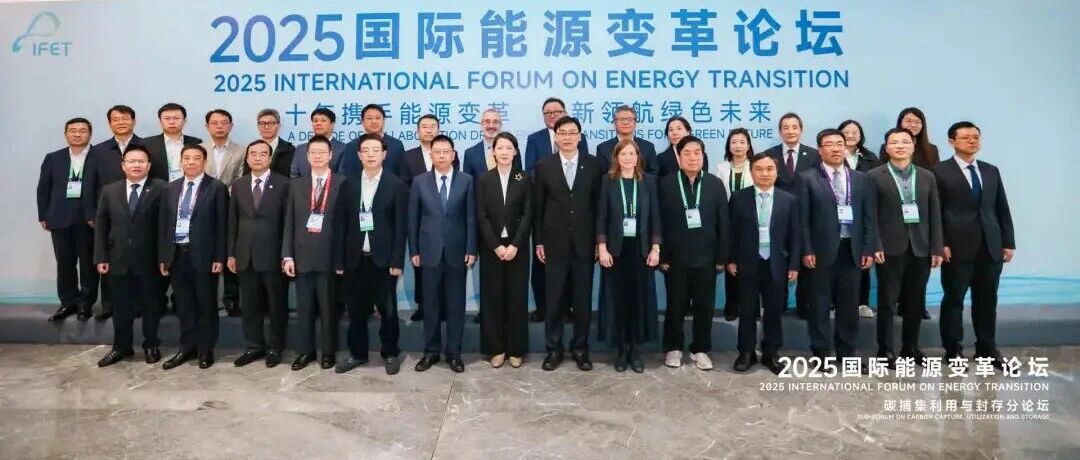
Core Viewpoint - The forum emphasized that achieving carbon peak and carbon neutrality is a profound systemic transformation, with CCUS technology being a strategic underpinning for deep decarbonization of fossil energy and ensuring national energy security [2][3] Group 1: CCUS Technology and Policy - CCUS technology is transitioning from demonstration exploration to large-scale application, highlighting the need for governments to strengthen policy guidance and provide stable, transparent, and predictable incentives [2] - The forum featured discussions on China's CCUS policy framework, opportunities and challenges in CCUS technology innovation, and the strategic role of CCUS in global carbon neutrality goals [3] Group 2: International Collaboration and Development - Experts shared insights on CCUS technology innovation and talent cultivation in the oil and gas sector, as well as progress in CCUS clusters and industrialization in Germany and the United States [3] - A roundtable dialogue focused on key issues such as technological bottlenecks, policy and business models, and international cooperation, aiming to inject new momentum into practical collaboration in the international CCUS field [3] Group 3: Reports and Future Directions - The forum released several reports, including the "China Carbon Capture, Utilization and Storage Technology Development Roadmap (2025)" and the "China Carbon Dioxide Capture, Utilization and Storage Annual Report (2025)," showcasing CCUS construction progress and planning [3] - These reports aim to deepen international exchanges and cooperation in the CCUS field, serving as a knowledge-sharing bridge [3]
湖南湘林绿碳科技开发有限公司成立 注册资本200万人民币
Sou Hu Cai Jing· 2025-10-29 07:23
Core Viewpoint - Hunan Xianglin Green Carbon Technology Development Co., Ltd. has been established with a registered capital of 2 million RMB, focusing on various carbon-related technologies and services [1] Company Summary - The company is legally represented by Zhou Yun and has a registered capital of 2 million RMB [1] - The business scope includes research and development in carbon reduction, carbon conversion, carbon capture, and carbon storage technologies [1] - Additional services offered encompass technical services, consulting, software development, and the recycling of carbon fiber [1] Industry Summary - The company is positioned within the emerging energy sector, emphasizing new energy technology research and development [1] - It also focuses on environmental protection and resource recycling, indicating a commitment to sustainable practices [1] - The range of services includes energy management, urban greening management, and biomass energy technology services, reflecting a comprehensive approach to environmental sustainability [1]
碳中和50ETF(159861)涨超6%,基本面提振电力设备板块预期
Mei Ri Jing Ji Xin Wen· 2025-10-29 06:35
Group 1 - The core viewpoint of the article indicates that in 2024, the national newly installed photovoltaic capacity is expected to reach 277.98 GW, representing a year-on-year growth of 28.7%, with December alone contributing 71.68 GW, a 37.5% increase year-on-year [1] - In the context of a reversed supply-demand relationship, prices across the entire industry chain are declining, leading to losses in most segments, prompting associations and major manufacturers to actively pursue supply-side reforms [1] - Under the pressure of profitability in the downstream sector, cost-effective technologies such as 0BB, POLY-Finger, and significantly improved BC technology are expected to benefit [1] Group 2 - The Carbon Neutrality 50 ETF (159861) tracks the Environmental Protection 50 Index (930614), which selects listed companies involved in clean energy, energy conservation, and environmental protection from the Shanghai and Shenzhen markets to reflect the overall performance of the environmental industry [1] - This index exhibits high growth potential and policy orientation characteristics, effectively reflecting the development trends of China's environmental industry [1]

光伏50ETF(159864)午后涨超7%,加快经济社会发展全面绿色转型
Sou Hu Cai Jing· 2025-10-29 05:52
Core Insights - The 20th Central Committee's Fourth Plenary Session emphasizes accelerating the comprehensive green transformation of economic and social development, highlighting "carbon peak," "carbon neutrality," and "expanding green" initiatives [1] - The National Development and Reform Commission (NDRC) aims to accelerate the green and low-carbon transition of energy, implementing carbon assessment and management systems, which may further increase the demand for green electricity [1] Industry Overview - A new energy system is required to ensure that green electricity is generated, the grid can accommodate it, and it is effectively utilized at the end-user level [1] - Renewable energy is expected to enhance its quality as a power source through an integrated model of wind, solar, and storage [1] Investment Opportunity - The Photovoltaic 50 ETF (159864) tracks the photovoltaic industry index (931151), which selects listed companies across the entire solar photovoltaic power generation value chain, including upstream raw materials, midstream manufacturing, and downstream applications [1] - This index reflects the overall performance and development trends of listed companies in the photovoltaic industry, showcasing significant growth potential and a technology-driven characteristic [1]