
资产配置

Search documents
多只产品涨超2%,这类资产止跌回升
Zhong Guo Zheng Quan Bao· 2025-09-04 23:09
Core Viewpoint - The public REITs market has shown signs of recovery after a period of decline, with several funds experiencing significant gains, indicating a potential stabilization in the market [1][2]. Market Performance - On September 4, the CSI REITs All Return Index rose by 0.42%, with multiple public REITs gaining over 2%, including a 3.1% increase in the China Merchants Fund Shekou Rental Housing REIT [1][2]. - The previous week (August 25-29), the index recorded a 1.06% increase, closing at 1073.33 points [2]. - There is a noticeable differentiation within public REITs, with property-type REITs increasing by 1.55% and franchise-type REITs by 0.87% [2]. Year-to-Date Performance - As of September 4, 54 out of 58 listed REITs have achieved positive returns this year, with the Jia Shi Wu Mei Consumption REIT exceeding a 50% increase [3]. - Other notable performers include the Huaxia Dayuecheng Commercial REIT and the Bosera Tian Kai Industrial Park REIT, both with gains over 40% [3]. Market Challenges - The REITs market is currently under short-term pressure due to a high sentiment in the equity market and reduced liquidity, leading to significant index corrections [4]. - Among 47 public REITs, many have reported negative returns over the past 60 trading days, with four REITs experiencing declines exceeding 10% [4]. Financial Performance - For the first half of 2025, the overall revenue of REITs showed a slight increase of 0.6%, while net profit declined by 7.5% [6]. - The average cash distribution rate fell to 2.36%, a decrease of 50 basis points year-on-year, and the average dividend rate dropped to 2.26%, down 146 basis points [6]. Long-term Investment Perspective - The current market conditions may present good long-term investment opportunities in public REITs, particularly in resilient sectors such as rental housing and consumption [8][9]. - Investors are encouraged to adopt a long-term holding strategy to achieve better returns through reasonable asset allocation [9].
公募REITs市场回暖 长期配置价值凸显
Zhong Guo Zheng Quan Bao· 2025-09-04 21:37
Core Viewpoint - The public REITs market has shown signs of recovery after a period of decline, with several funds experiencing significant gains, indicating a potential for further market stabilization and investment opportunities [1][2][5]. Market Performance - On September 4, the CSI REITs All Return Index increased by 0.42%, with multiple public REITs rising over 2%, notably the招商基金蛇口租赁住房REIT which rose by 3.1% [1][2]. - From August 25 to August 29, the CSI REITs All Return Index recorded a gain of 1.06%, outperforming the CSI Dividend Index by 2.16 percentage points [1][2]. - As of September 4, among the 58 REITs listed before January 1, 2025, 54 have achieved positive returns this year, with 40 REITs increasing by over 10% [3]. Sector Analysis - There is a noticeable differentiation within public REITs, with property-type REITs rising by 1.55% and concession-type REITs by 0.87% last week [2]. - Sectors such as consumption, affordable housing, warehousing logistics, and data centers have shown relatively strong performance [2][4]. Financial Metrics - The overall revenue of REITs in the first half of 2025 saw a slight increase of 0.6% year-on-year, while net profit decreased by 7.5% [4]. - The distributable income decreased by 4.3%, and the actual dividend amount dropped by 26%, leading to an average cash distribution rate of 2.36%, down 50 basis points year-on-year [4]. Investment Strategy - The market sentiment indicates a potential for further recovery in the REITs sector, especially if investor risk appetite continues to contract [5][6]. - Investment opportunities are suggested in high-quality projects, particularly in sectors with strong fundamental expectations such as affordable housing and consumption [6]. - Long-term holding and reasonable allocation are emphasized as strategies for achieving better investment returns in public REITs [1][6].

金价创新高后,黄金理财“热浪”再起
2 1 Shi Ji Jing Ji Bao Dao· 2025-09-04 13:18
Core Viewpoint - The recent surge in gold prices has prompted banks to launch gold-linked financial products, reflecting increased investor interest and demand for gold as a hedge against risk [1][2][3]. Group 1: Gold Price Trends - Gold prices have reached new highs, with London gold hitting $3546.9 per ounce on September 3, surpassing the critical $3500 mark [1]. - The price of gold has shown a consistent upward trend this year, driven by factors such as rising expectations of interest rate cuts by the Federal Reserve and increased gold purchases by global central banks [3][6]. - After a period of steady increase, gold prices experienced a correction starting in May, dropping to $3328.16 per ounce by May 31, with many investors taking profits [4]. Group 2: Financial Products and Investment Strategies - Banks are offering two main types of gold-linked financial products: "fixed income plus" products, which typically allocate around 5% to gold-related assets, and structured products linked to gold derivatives [1][2]. - As of now, there are 16 gold-linked financial products available in the market, indicating a growing trend among financial institutions to incorporate gold into their offerings [1]. - Despite the recent price increases, financial institutions maintain a cautious stance, suggesting that while gold remains a valuable asset for long-term investment, there is no immediate urgency to buy at current high levels [8]. Group 3: Long-term Outlook for Gold - Analysts predict that gold will continue to appreciate in the long term due to factors such as the declining status of the US dollar as a global reserve currency and ongoing central bank purchases of gold [8]. - UBS Wealth Management has raised its gold price forecasts for 2026, indicating a bullish outlook with target prices of $3600 and $3700 per ounce for March and June 2026, respectively [5]. - The current high level of actual US interest rates, close to 2%, suggests that gold's return potential may be limited in the short term, but its role as a risk-hedging asset will remain significant [8].
黄金涨疯了,但多数人已提前下车
Sou Hu Cai Jing· 2025-09-04 12:03
Core Insights - Bridgewater's products have achieved a remarkable return of 47% from early 2023 to the end of 2024, significantly outperforming the Shanghai Composite Index, which only rose by 7.3% during the same period [1] - Gold has played a crucial role in Bridgewater's all-weather strategy, contributing significantly to its performance amid rising inflation and low growth [2] Group 1: Bridgewater Fund Performance - Bridgewater's Chinese products have seen substantial returns, with gold contributing at least 21.62% to the fund's performance from mid-2022 to the end of 2023, while the Shanghai Composite Index fell by 12.51% [4] - The fund's gold holdings reached 14% in its recently listed ETF, serving as a hedge against inflation and economic downturns [4][5] Group 2: Gold Investment Trends - The global demand for gold investment surged, with a 118% year-on-year increase in total investment demand, reaching 1,029 tons in the first half of the year [15] - In China, gold bar and coin sales reached 239 tons, marking the strongest performance since 2013, while gold ETFs saw a significant increase of 86.02 tons [16] Group 3: Asset Allocation Strategies - A growing number of domestic asset management institutions are incorporating gold into their investment strategies, with nearly 45% of FOF products holding gold ETFs [10] - Insurance companies are also beginning to allocate funds to gold, with some private products allocating up to 30% to gold [11][12] Group 4: Market Outlook - UBS has raised its gold price forecast for mid-2026 from $3,500 to $3,700 per ounce, citing lower opportunity costs for holding gold amid U.S. inflation and interest rate expectations [19] - The long-term annualized return of gold over the past 20 years is approximately 10%, influenced by global GDP and wealth growth [8]

特朗普连续炮轰鲍威尔,资产配置中的黄金地位稳如泰山
Sou Hu Cai Jing· 2025-09-04 11:56
Market Overview - A-shares experienced a broad decline, with the ChiNext index dropping significantly after a brief period of resilience [1] - Consumer, technology, and new energy sectors faced sharp declines, while high-dividend stocks also struggled [1] Investment Opportunities - The Red Chip State-Owned Enterprise ETF (510720) showed resilience, rising against the market trend [2] - Investors noted that dividend-paying stocks are appealing during bear markets, highlighting the importance of stable cash flow [2] Gold as a Safe Haven - After a period of volatility, gold is expected to present new allocation opportunities due to global concerns over insufficient safe-haven assets and doubts about the independence of the Federal Reserve [4] - Gold has historically performed well during times of economic uncertainty, with significant price increases observed during past crises [9] Asset Allocation Strategy - A diversified asset strategy demonstrated its effectiveness, with gold acting as a stabilizer during market downturns [4] - The "sandwich principle" for asset allocation suggests maintaining a balanced portfolio that includes high-risk assets, cash flow assets, and gold as a safety net [18][21] Market Sentiment and Federal Reserve Influence - Recent comments from Federal Reserve officials have influenced market expectations regarding interest rate cuts, but gold's response has been muted [10][12] - The ongoing criticism of the Federal Reserve by political figures raises concerns about its independence, which could impact gold prices [12][17] Long-term Perspective on Gold - Gold is viewed as a long-term asset that provides stability rather than a quick profit, emphasizing its role in a well-rounded investment strategy [22] - The historical performance of gold during economic downturns reinforces its value as a protective asset in uncertain times [9][22]
黄金涨疯了,但多数人已提前下车
华尔街见闻· 2025-09-04 10:19
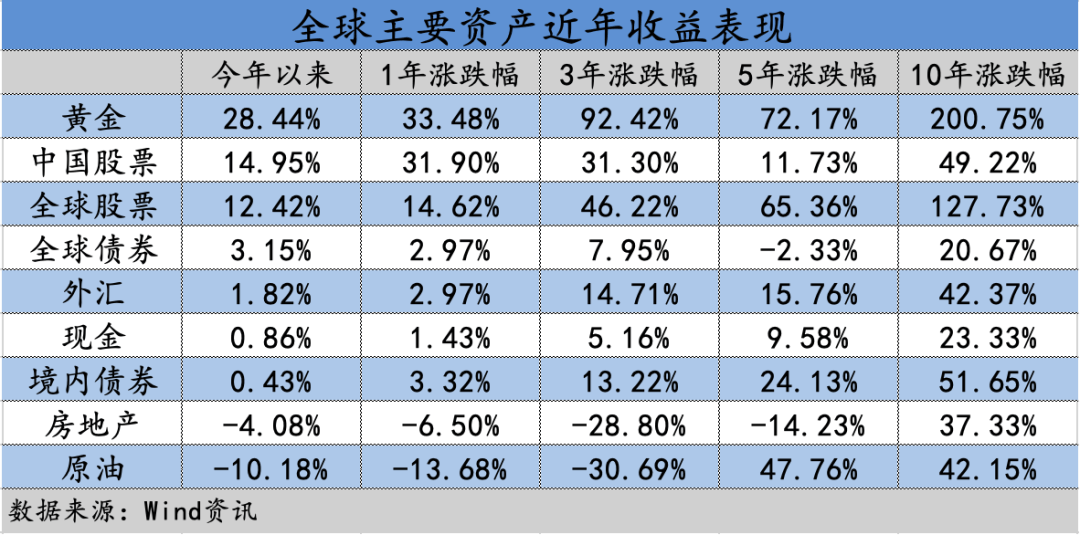
Core Viewpoint - The article highlights the significant performance of Bridgewater's fund products, particularly in the context of rising gold prices, which have contributed to their outperformance against the market. The article emphasizes the growing interest in gold as a strategic asset for both institutional and individual investors amid economic uncertainties and inflation concerns [3][4][8]. Group 1: Bridgewater Fund Performance - Bridgewater's China products achieved a return of 47% from early 2023 to the end of 2024, significantly outperforming the Shanghai Composite Index, which rose only 7.3% during the same period [3]. - Gold played a crucial role in Bridgewater's all-weather strategy, with domestic gold prices increasing by 49.6%, contributing to the fund's strong performance [4]. - From mid-2022 to the end of 2023, gold allocation contributed at least 21.62% to Bridgewater's product returns, while the Shanghai Composite Index fell by 12.51% [8]. Group 2: Gold as an Investment - The World Gold Council suggests that gold should transition from a short-term tactical tool to a long-term strategic asset, recommending a "gold+" strategy with over 5% allocation to stabilize short-term volatility and enhance long-term returns [7]. - Gold has outperformed most asset classes since 2023, with returns of 17% in 2023, 28% in 2024, and 26% in 2025 (as of August 19) [9]. - The global demand for gold surged, with investment demand reaching 1,029 tons in the first half of the year, a year-on-year increase of 118% [20]. Group 3: Institutional Interest in Gold - Increasingly, domestic asset management institutions are recognizing the importance of gold in asset allocation, with nearly 45% of 515 FOF products holding gold ETFs [14]. - Insurance asset management companies are also incorporating gold into their portfolios, with some allocating up to 30% to gold [15]. - The anticipated policy changes could bring approximately 200 billion yuan into the gold market from insurance companies, given their total asset scale of around 20 trillion yuan [16]. Group 4: Market Dynamics and Future Outlook - The article notes that gold has risen by 200% over the past decade, with a 92% increase since 2023, driven by geopolitical risks, declining global interest rates, and a weakening dollar [10][11]. - UBS has raised its gold price forecast for June 2026 from $3,500 to $3,700 per ounce, citing lower opportunity costs for holding gold amid inflation and interest rate expectations [24]. - The article suggests that investors should consider a 5% allocation to gold in their portfolios to enhance diversification and hedge against risks [24].

震荡慢牛行情,以“底仓”思维布局长期阿尔法
Zhong Guo Ji Jin Bao· 2025-09-04 10:18
Group 1 - The core viewpoint of the articles emphasizes the importance of equity allocation and the necessity of constructing a diversified investment portfolio to balance risk and return in a volatile market environment [1][2][5] - Since the A-share market began its rebound on September 24 last year, major indices like the Shanghai Composite Index and CSI 300 have seen significant increases of 40.34% and 39.97% respectively, while growth-style indices such as the STAR 50 and ChiNext Index have surged by 108.59% and 88.83% [1] - Despite the positive performance, many brokerage reports indicate that the pace of fundamental recovery is slow, and the inflow of funds from various market participants may decelerate, leading to increased market volatility in the future [1][2] Group 2 - The articles highlight that equity markets are essential for ordinary investors to share in the growth dividends of quality companies and achieve asset preservation and appreciation [2][5] - Historical data shows that while the A-share market experiences cyclical volatility, equity-based fund indices have delivered considerable long-term returns, significantly outperforming most traditional financial products [2] - The concept of "bottom warehouse thinking" is emphasized, suggesting that investors should maintain a certain allocation to stable, low-volatility funds that do not chase single themes or market hotspots [3][4] Group 3 - The introduction of "bottom warehouse funds" by various public fund companies, such as Guohai Franklin Fund, reflects a growing emphasis on risk management in response to increased market volatility [4] - Specific examples of bottom warehouse funds, like Guofu Xinghai Return and Guofu Fundamental Selection, have shown impressive performance, with three-year returns of 43.27% and 41.22%, significantly outperforming the mixed equity fund index [4] - The articles suggest that a well-constructed investment portfolio should include both bottom warehouse funds for stability and high-risk products for potential growth, tailored to the investor's risk tolerance [4][5]
震荡慢牛行情,以“底仓”思维布局长期阿尔法
中国基金报· 2025-09-04 10:18
Core Viewpoint - The article emphasizes the importance of equity allocation in investment strategies, particularly in the context of the current market environment, which has seen significant volatility and the need for a balanced approach to risk and return [2][4]. Group 1: Market Performance and Trends - Since the rebound began on September 24 last year, the Shanghai Composite Index and CSI 300 have risen by 40.34% and 39.97% respectively, while the growth-style indices represented by the STAR 50 and ChiNext have shown even stronger performance with increases of 108.59% and 88.83% [2]. - Despite the ongoing slow recovery of the fundamentals and potential slowdown in capital inflows, the market is expected to experience increased volatility, as evidenced by significant fluctuations in major indices on September 4 [2]. Group 2: Importance of Equity Assets - Equity markets are crucial for ordinary investors to share in the growth dividends of quality companies and achieve asset preservation and appreciation [4]. - Historical data indicates that, despite cyclical volatility in the A-share market, equity-oriented fund indices have delivered considerable long-term returns, significantly outperforming most traditional financial products [4]. Group 3: Investment Strategy and Portfolio Construction - Investors are advised against blindly chasing market hotspots or single high-volatility sectors, as significant drawdowns can lead to substantial losses [4][7]. - The core objective of constructing an investment portfolio is to manage uncertainty by diversifying across various assets with different risk-return profiles, aiming for risk dispersion and smoother fluctuations [4][7]. Group 4: Bottom Positioning in Bull Markets - In a bull market, it is essential to emphasize a "bottom position" mindset, reserving a portion of the portfolio for stable "bottom-position" funds that do not chase single themes or market hotspots [6][8]. - Bottom-position funds typically exhibit strong risk control through balanced industry allocation and diversified holdings, avoiding high exposure to any single industry or stock [7]. Group 5: Performance of Bottom-Position Funds - Data shows that bottom-position funds may not perform outstandingly in the short term but tend to excel in the medium to long term, characterized by low volatility and drawdown [7][8]. - For instance, two funds managed by Zhao Xiaodong have achieved returns of 43.27% and 41.22% over the past three years, significantly outperforming the Wind mixed equity fund index, which only rose by 5.03% during the same period [8]. Group 6: Strategic Allocation Recommendations - Investors are encouraged to scientifically allocate between bottom-position funds and high-volatility products based on their risk tolerance and investment goals [9]. - It is crucial for investors to maintain a long-term investment philosophy and avoid altering their strategies due to short-term market fluctuations to achieve sustainable returns over time [9].

4点几星级,有一笔钱该如何配置?|第403期精品课程
银行螺丝钉· 2025-09-04 04:01
Core Viewpoint - The article discusses the current investment landscape in the A-share market, emphasizing that while the market has recently dropped to a 4.3-star rating, there are still investment opportunities available, particularly in undervalued stocks and through strategic asset allocation [4][11][55]. Group 1: Market Performance - The A-share market has seen a significant rise since 2022, with the longest bear market occurring from 2022 to 2024, during which several 5-star investment opportunities were available [6][54]. - As of August 2025, the market is at a 4.3-star level, indicating a relatively cheap investment phase [37]. Group 2: Investment Strategy - Investors are advised to assess whether their funds are long-term and not needed for at least 3-5 years before investing in stocks [12]. - The recommended stock-bond allocation for long-term funds at a 4-star level is to follow the formula "100 - age," ensuring a balanced risk profile [15]. - There are still undervalued stock assets available, particularly in certain value-style index funds [16]. Group 3: Investment Products - The article highlights several investment products suitable for the current market phase, including the "Active Preferred Investment Advisory Portfolio" and "Monthly Treasure Portfolio," which maintain a balanced stock-bond ratio [21][30]. - The "Monthly Treasure Portfolio" has undergone rebalancing to maintain a 40:60 stock-bond ratio, adapting to market conditions [31][34]. Group 4: Future Outlook - If the market continues to rise to a 3-star level, traditional stock funds may become less suitable for investment, prompting a reevaluation of investment strategies [41]. - The article notes that long-term bonds currently do not offer attractive yields, with 10-year government bond yields around 1.7%-1.8% [42].

黄金大涨突破新高:十年走势与驱动因素深度解析
Sou Hu Cai Jing· 2025-09-04 03:59
Group 1 - The core viewpoint is that the gold market has experienced a significant upward trend over the past decade, driven by various economic and geopolitical factors [1][2][4] - From 2015 to 2018, gold prices were suppressed by the Federal Reserve's interest rate hikes, but geopolitical events like Brexit led to a rebound in gold prices [1][2] - The period from 2019 to 2020 saw a surge in gold prices due to the COVID-19 pandemic and subsequent monetary easing, with gold reaching a historical high of $2070 [1][2] Group 2 - From 2021 to 2025, geopolitical conflicts and the trend of "de-dollarization" are expected to push gold prices higher, with projections indicating gold could exceed $3000 by 2025 [2][3] - Geopolitical risks, such as the Russia-Ukraine conflict and tensions in the Middle East, are driving increased demand for gold as a safe-haven asset [3] - The supply-demand dynamics are shifting, with global gold reserves dwindling and production costs rising, leading to a structural support for gold prices [3] Group 3 - Inflation hedging and asset allocation needs are increasing, with gold being favored in high inflation environments, showing a significant relative performance compared to equities [3] - The future outlook suggests that gold will continue to serve as a crucial risk hedging tool amid market volatility, with the potential for further price increases [4]