产城融合

Search documents
上海宝山南大智慧城打造升级版的“中国建造”标杆
Zhong Guo Jing Ji Wang· 2025-10-16 15:49
Core Viewpoint - The transformation of Baoshan South Big Smart City from an old industrial area into a hub for digital economy and innovation industries is highlighted, showcasing a model for urban renewal in China through integrated planning, construction, and operation [1][2]. Group 1: Urban Development and Planning - Baoshan South Big Smart City aims to become a globally leading innovation district, with planning standards set to be no lower than those along the Huangpu River, incorporating international design from SOM and integrating 23 specialized plans into a three-dimensional development framework [2]. - The project is characterized by a collaborative approach between Baoshan District Government and Lingang Group, focusing on the integration of industry and city, leading to the establishment of the Smart South Big Industrial Park with over 530 enterprises [2]. Group 2: Construction and Technology - The construction phase involves major companies such as China Wuyi, China Twenty Metallurgy, and Huajian Group, utilizing advanced technologies like 5G smart towers and floating isolation platforms, with the Lingang Group spearheading the creation of a landmark building that incorporates innovative construction techniques [2]. - The project has implemented a "four certificates issued simultaneously" model to streamline the approval process, reducing the development cycle by 30% [2]. Group 3: Community and Quality of Life - The development emphasizes a shift from mere construction to community building, focusing on creating a warm and inclusive environment with a balanced work-live setup and a 15-minute living circle, achieving a per capita green space of 39.38 square meters, three times the average in Shanghai [3]. - Future plans for Baoshan South Big Smart City include continuing the "Four Good" construction approach to enhance the integration of industry and city, ecological empowerment, and smart governance, aiming to establish a modern urban environment in northern Shanghai [3].

“以乡镇级的成本,提供都市级的服务” 丹阳吕城以新材料产业园撬动高质量发展
Zhen Jiang Ri Bao· 2025-10-15 23:21
Core Insights - The development of the new materials industrial park in Lucheng Town is driving economic growth and project construction in the region [1][2] - The town has attracted significant investment and is focused on enhancing its business environment to support local enterprises [2][3] Group 1: Project Development - Lucheng Town's new materials industrial park has seen the completion of a high-end equipment precision component production line project with a total investment of 250 million yuan, expected to generate 800 million yuan in taxable sales [1] - Since 2022, the industrial park has welcomed 48 enterprises, with 10 achieving annual sales exceeding 100 million yuan, covering sectors such as new materials and high-end equipment manufacturing [1] Group 2: Investment and Business Environment - In the first half of the year, Lucheng Town conducted 25 investment promotion activities, attracting 45 batches of external merchants and signing six projects with a total investment of 4.295 billion yuan [1] - The town aims to complete a total investment target of 6.1 billion yuan by the end of the year, with plans for two more promotional activities [1] Group 3: Land and Infrastructure Development - Lucheng Town has initiated a comprehensive land remediation plan, freeing up 249 acres of land for project development through demolition and optimization of land use [2] - The town's plan includes a three-year project cycle aimed at improving living conditions, enhancing industrial capabilities, and transforming ecological value [2] Group 4: Service and Support for Enterprises - Lucheng Town is committed to providing high-quality services to enterprises, aiming to resolve issues related to labor and financing while promoting local business upgrades [2] - The town plans to enhance its infrastructure and support mechanisms for technology and talent to attract more quality enterprises in the new materials sector [3]
长三角议事厅·周报|宠物经济崛起,长三角构筑全产业链优势
Xin Lang Cai Jing· 2025-10-13 12:32
Core Insights - The pet industry in China has reached a scale of over 300 billion yuan, with the number of pet dogs and cats surpassing 140 million, indicating a significant rise in the "pet economy" and emotional consumption trends [1] - The Yangtze River Delta (YRD) region is identified as the core growth area for this trend, with cities like Shanghai, Hangzhou, and Nanjing showing higher pet consumption levels than the national average [1] Upstream - The YRD has established itself as the largest pet product manufacturing base in China, with over 1,200 companies in regions like Nantong and Huai'an [2] - In the first half of this year, Huai'an's pet product exports reached 58.38 million yuan, a 40.2% increase year-on-year [2] - Anhui's Hefei is developing large-scale industrial parks to provide stable, low-cost supplies for brand and channel partners, with an expected annual output value of 6 billion yuan [2] Midstream - Zhejiang enterprises are leveraging e-commerce to transform "YRD manufacturing" into "global consumption," with Yiwu's pet product sales reaching 3 billion yuan, accounting for about 15% of national exports [3] - Companies like Petty and Tianyuan Pet are achieving dual growth through online and offline integration, social e-commerce, and IP marketing [3] - During the 2024 "Double 11" shopping festival, Petty's brand "Jueyan" achieved over 10 million yuan in sales within the first four hours [3] Downstream - Shanghai's pet consumption market is valued between 23 billion to 25 billion yuan, growing at an annual rate of 10% to 15%, representing nearly 8% of the national market [4] - The number of new pet stores on Meituan's platform exceeded 25,000 in 2023, with order volume increasing by over 60% year-on-year [4] - The pet technology market is projected to exceed 30 billion yuan in 2024, with a penetration rate expected to reach 30% by 2025 [4] Challenges - Despite rapid growth, the YRD faces issues such as regional structural mismatches, lack of industry standards, and lagging urban governance [5] - The pet industry exhibits a weak brand presence and service chain inefficiencies, with many manufacturers relying on OEM production and lacking high-end pricing capabilities [6] - There is a significant regulatory gap in areas like pet healthcare and insurance, with a pet insurance penetration rate below 5%, compared to 25% in Japan and 30% in Europe and the U.S. [7] Recommendations - To enhance the pet economy's sustainability, it is suggested to establish a collaborative mechanism for pet economy and animal welfare within the YRD, focusing on standardization across various sectors [8] - The development of "pet-friendly demonstration communities" is recommended to integrate pet services into urban planning, enhancing convenience for pet owners [8] - A "YRD Pet Industry Innovation Fund" is proposed to support the development of pet healthcare devices and services, aiming to improve market efficiency and insurance penetration [9]
重庆:推动实物更新与数字孪生有机结合,打造城市数字孪生系统
Zheng Quan Shi Bao Wang· 2025-10-13 09:45
Core Insights - The Chongqing Municipal Government has issued a three-year action plan (2025-2027) to promote urban renewal, focusing on integrating physical updates with digital twin technology to create a city digital twin system [2] Group 1: Urban Infrastructure Development - The plan emphasizes the construction of new smart infrastructure and the renovation of municipal facilities [2] - It aims to accelerate the installation of digital twin and IoT sensing devices for water, electricity, gas, communication, roads, bridges, tunnels, and railways to enhance urban safety and risk management capabilities [2] Group 2: Urban Safety and Risk Management - The initiative includes improving the City Information Model (CIM) platform and establishing digital archives for building safety hazards along with mechanisms for hazard elimination [2] - The focus is on enhancing urban resilience and risk warning systems through advanced technology [2] Group 3: Smart Community Development - The plan promotes the intelligent transformation of urban micro-units such as neighborhoods, business districts, and communities to create smart residential areas and improve urban service capabilities [2] - It aims to stimulate digital vitality and integrate urban renewal with the development of smart connected new energy vehicles and low-altitude economy [2] Group 4: AI and Governance - The action plan includes accelerating the exploration of AI application scenarios and the development of intelligent agents [2] - It leverages a three-tier governance center and a grassroots intelligent governance platform to create a series of AI-integrated comprehensive scenarios [2]
上海低效产业用地盘活,未来趋势究竟走向何方?
Guo Ji Jin Rong Bao· 2025-10-13 06:50
Core Insights - The increasing urban population density and accelerated industrial restructuring have highlighted the contradiction of limited land resources, making the revitalization of inefficient land and existing assets a key driver for high-quality urban development [1][2] Group 1: Shanghai's Strategy - Shanghai has introduced a strategy called "Two Evaluations, One List, One Revitalization" to address the challenge of revitalizing inefficient industrial land, which will officially launch in April 2024 [2] - The strategy involves comprehensive performance and value assessments of industrial land, creating a categorized list to guide revitalization efforts based on different support levels [2] - As of now, Shanghai has revitalized 45 square kilometers of inefficient industrial land, with an additional 30 square kilometers planned for renewal by 2025, focusing on key areas like "Greater Hongqiao" and "Greater Wusong" [2] Group 2: Systematic Revitalization Strategies - A white paper by Savills outlines systematic revitalization strategies that include industry-oriented design and spatial restructuring to upgrade industries towards higher added value [3] - The approach emphasizes the need for collaboration among government, market, and society to create a comprehensive solution covering planning, industry, ecology, and capital for sustainable land value regeneration [3] Group 3: Industrial Land Transformation - The transformation of industrial land is shifting from "point renovation" to "systematic renewal," with industrial cluster planning seen as a core strategy to attract quality enterprises and enhance tax revenue [4] - Successful examples, such as the Zhangjiang Hi-Tech Park, demonstrate how industrial clusters can lead to significant economic growth and operational efficiency [4][5] - The new design philosophy integrates industrial functional needs into spatial design, moving away from traditional models of construction followed by leasing [4] Group 4: 15-Minute Industrial Living Circle - The "15-minute industrial living circle" concept promotes a new spatial organization model that balances production, research, and living services within a 1-kilometer radius [6] - This model enhances operational efficiency and reduces commuting costs while fostering a social ecosystem that encourages industry collaboration and talent retention [6] Group 5: Investment and ESG Considerations - The "industrial building up" model increases space efficiency but also raises project costs, necessitating a balanced investment approach using policy tools and financial innovations [7] - ESG factors are increasingly influencing the long-term value of inefficient industrial land, with ecological improvements potentially leading to higher rental and asset valuations [7][8] - Future upgrades of inefficient industrial land should focus on innovative space utilization, environmental restoration, and the integration of economic performance with environmental responsibility [8]

精彩出街!威海智慧谷T16街区双节欢动创造消费新场景
Sou Hu Cai Jing· 2025-10-12 11:30
Core Insights - The T16 Cultural and Creative Vitality Block in the Wehai Smart Valley has become a new commercial landmark, attracting 600,000 visitors during the eight-day holiday, with a peak of 150,000 on October 1, significantly boosting regional consumption [1][6][24] - The transformation from idle factories to a modern industrial community exemplifies the integration of production, city, and people, with 621 quality enterprises and over 8,000 new residents contributing to a vibrant ecosystem [3][6][20] - The T16 block features 138 brands across various sectors, with 55% being new entrants, catering to diverse consumer needs and enhancing the area's lifestyle offerings [13][17] Urban Development - The Smart Valley serves as a model for urban renewal in Shandong, successfully revitalizing underutilized land and integrating living, working, and ecological spaces [6][24] - The area has established a comprehensive support system for events, ensuring a seamless experience for visitors through effective coordination among various departments [20][22] Cultural and Commercial Integration - The T16 block has hosted numerous events during the holiday, including music festivals and cultural performances, positioning itself as a one-stop destination for culture, commerce, and tourism [14][24] - The integration of commercial spaces with lifestyle amenities reflects a strategic approach to attract both local residents and tourists, enhancing the overall appeal of the area [7][20] Future Prospects - The ongoing development in the Smart Valley aims to further enhance the synergy between industry, commerce, culture, and tourism, providing a replicable model for urban development in other regions [24]

惠山高新区枢纽片区城市更新赋能产城融合
Xin Hua Ri Bao· 2025-10-11 06:29
Core Points - The Wanshou River Wetland Park in Wuxi has been included in the third batch of open shared urban green spaces in Jiangsu, covering an area of approximately 68,000 square meters, making it the largest urban green space in Wuxi city center [1] - The park serves around 15,000 residents and the future 10,000 students and faculty of the newly constructed Nanjing University of Posts and Telecommunications Wuxi campus [1] - The park integrates urban functions with Jiangnan water town culture, acting as a "green lung" for the surrounding population [1] Group 1 - The park was designed by a professional landscaping company according to urban comprehensive park standards, featuring recreational, educational, and fitness elements, and was completed after six months of construction [2] - It incorporates natural ecological elements such as rain gardens and grassed ditches, functioning as a "sponge park" that effectively absorbs rainwater [2] - The park is divided into five distinct zones and twelve scenic spots, with amenities like a winding rainbow walkway, numerous resting benches, and a newly built parking lot with 80 spaces to alleviate parking issues [2] Group 2 - The area surrounding the park is developing rapidly, with the construction of the Nanjing University of Posts and Telecommunications Wuxi campus expected to significantly increase the local population [2] - The park enhances the quality of life in the Huishan High-tech Zone, providing a friendly living environment for all ages and contributing to the area's leisure and business offerings [3] - It is part of a broader initiative to meet the public's demand for improved living conditions and to share the benefits of development with the community [3]
芜湖挂出梦溪路以东4#地块,起始价3.56亿,助力产城融合!
Sou Hu Cai Jing· 2025-10-10 09:52
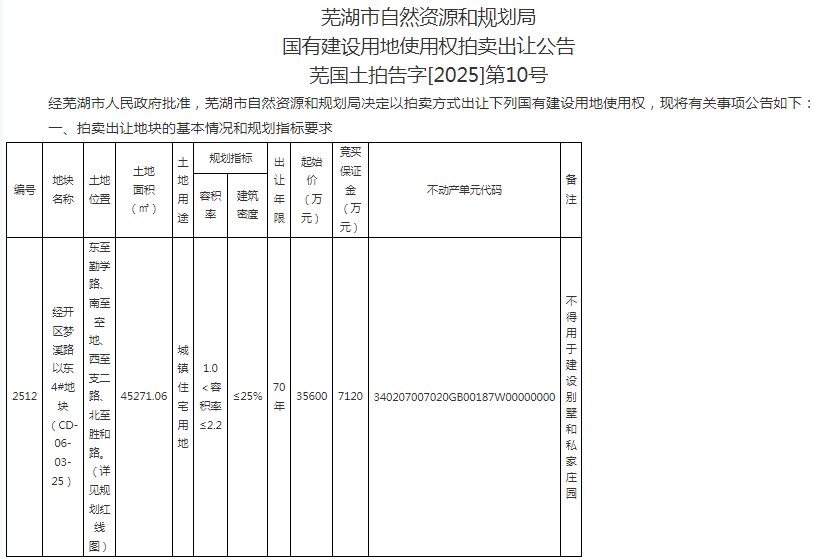
2025年9月30日,芜湖市自然资源和规划局发布本年度第10号土地拍卖公告,推出经开区梦溪路以东4# 地块。该地块面积约4.53万平方米,起始价3.56亿 元,为城镇住宅用地,容积率1.0-2.2。此举标志着芜湖2025年度土地供应计划进入实质性阶段,也为城市未来发展注入新动力。 | 能 | 规划指标 | 起始 | 士 | ਜੀ | 保証 | 土地 | 让 | 地 | 地块 | 土地 | 价 | 富 | | | | | | | | --- | --- | --- | --- | --- | --- | --- | --- | --- | --- | --- | --- | --- | --- | --- | --- | --- | --- | --- | | 潟号 | 面积 | ਵੇ | 不动产单元代码 | 建筑 | 容积 | 用 | 名称 | 付晋 | 年 | (万 | 注 | (万 | ( m³ ) | 家 | 容度 | 送 | 元) | 喂 | | 元) | 东至 | | | | | | | | | | | | | | | | | | | 制学 | 路、 | | | | | | | | | | | | ...
北京海淀:“八大学院”美食嘉年华举办
Bei Jing Shang Bao· 2025-10-09 11:11
北京商报讯(记者 张茜琦)10月5日至7日,北京海淀区在京张铁路遗址公园举办"八大学院美食嘉年 华"活动,旨在传承"八大学院"文化,升腾地区烟火气,促进高校特色资源外溢街区、社区,构建校地 共建、产城融合的创新交流平台。 据了解,此次活动以高校美食文化为核心,汇聚多元风味与特色体验,为市民游客打造了一场兼具怀旧 氛围与烟火气息的秋日美食盛宴。本次活动依托京张铁路遗址公园的历史底蕴,集中呈现"八大学院"特 色美食及周边地域风味,现场不仅有高校食堂经典菜品复刻,还设有创意美食工坊、校园文创展示等板 块。游客在品尝美食的同时,可漫步铁路遗址,感受历史与现代美食文化的碰撞,开幕首日便吸引众多 市民驻足打卡,成为京城秋日休闲新选择。 ...
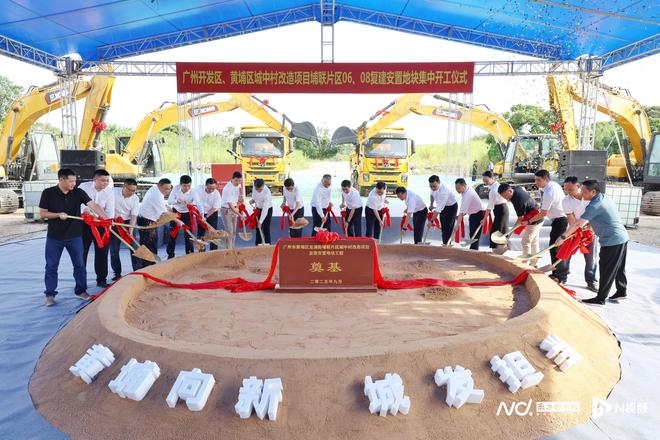
获717亿专款!黄埔今年新建安置房2万多套,居广州首位
Nan Fang Du Shi Bao· 2025-09-30 07:51
Core Insights - Guangzhou Huangpu has successfully included a second batch of urban village renovation projects into its annual plan, with a total of 717 billion yuan in special loan quotas approved for urban village renovation projects [1][3] - The total renovation funding has exceeded 800 billion yuan through various sources, including special bonds and central subsidies [1][3] - The Pu Lian area renovation project has commenced, with a total construction area of 370,000 square meters and plans to build 2,316 resettlement housing units, scheduled for completion in March 2028 [3][4] Funding and Financial Structure - Two policy banks have disbursed 69 billion yuan, leading the city in loan amounts [1] - The Huangpu District has utilized multiple funding sources, including special loans, corporate self-financing, and central budget funds, to secure renovation financing [1][3] Project Details and Objectives - The Pu Lian area renovation aims to create a benchmark livable community, optimizing land layout and improving transportation networks and infrastructure [3][4] - The project will also focus on the preservation and enhancement of historical buildings within the renovation area [3][4] Urban Integration and Development Strategy - Huangpu is exploring new paths for industrial-city integration, urban-rural integration, and technology-industry integration, aiming to provide efficient integrated spaces and more job opportunities for residents [4] - The district has initiated a comprehensive planning scheme for the Xinlong Town area, consolidating six urban village renovation projects to enhance land use and urban structure [6] Performance Metrics - As of now, Huangpu has opened 3.04 million square meters and 30,000 resettlement housing units under the new model projects, leading the city in construction volume [6] - The urban renewal projects have achieved a fixed asset investment of 36.4 billion yuan from January to August, marking a 6% year-on-year increase [6]