
现代化产业体系

Search documents
四部门联合发布,信息量巨大
Zhong Guo Ji Jin Bao· 2026-01-12 05:51
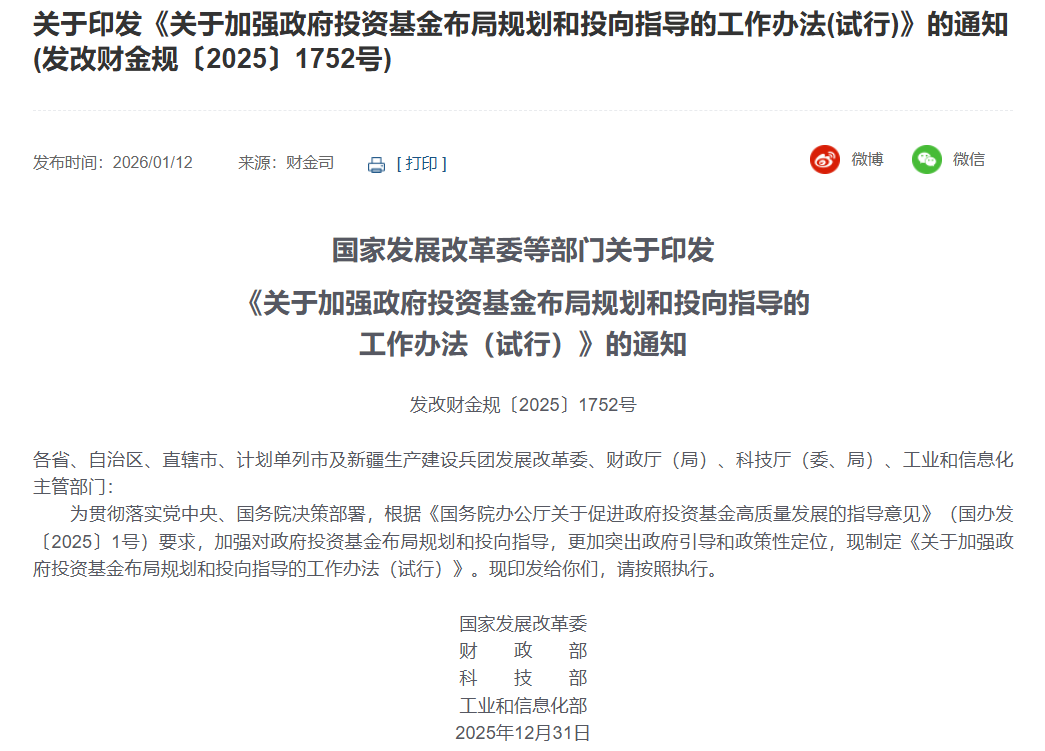
【导读】事关政府投资基金,国家发展改革委等四部门联合发布 重磅文件来了,事关政府投资基金! 1月12日,国家发展改革委、财政部、科技部、工业和信息化部联合发布《关于加强政府投资基金布局规划和投向指导的工作办法(试行)》(以下 简称《工作办法》),旨在加强政府投资基金布局规划和投向指导。 此外,国家发展改革委还同步出台了《政府投资基金投向评价管理办法》(以下简称《管理办法》),按照"正面引导与负面约束相结合"的思路, 建立覆盖基金运营管理全过程、定量与定性相结合的投向评价体系,进一步强化政策导向和规范管理。 国家发展改革委相关负责人表示,这是首次在国家层面对政府投资基金的布局和投向作出系统规范。 《工作办法》提出14项政策举措 具体来看,《工作办法》围绕政府投资基金"投向哪、怎么投、谁来管"三方面,提出14项政策举措。 在优化基金布局方面,要求基金支持重大战略、重点领域和市场不能充分发挥作用的薄弱环节,推动科技创新和产业创新深度融合,优化生产力布 局,加快培育发展新质生产力,促进传统产业改造升级,培育壮大新兴产业和未来产业,着力打造新兴支柱产业,支持科技创新,着力投早、投 小、投长期、投硬科技。 在加强投向指导 ...

夯实基本盘培育新动能 奋力开创新型工业化新局面——访工业和信息化部党组书记、部长李乐成
智通财经网· 2026-01-12 03:28
新华社北京1月12日电 新华社记者周圆 "十五五"规划建议将"建设现代化产业体系,巩固壮大实体经济根基"摆在战略任务的首位。近期召开的 中央经济工作会议围绕推进新型工业化,作出一系列部署。 2026年是"十五五"开局之年。如何确保工业经济平稳增长?怎样加快推动科技创新和产业创新深度融 合?新华社记者采访了工业和信息化部党组书记、部长李乐成。 四方面发力,推动工业经济行稳致远 问:2026年将采取哪些措施保持工业经济平稳增长? "稳"就是要稳定重点行业和重点地区增长。重点行业和地区的工业增加值都占到工业总量的80%。我们 将充分发挥重点行业规模大、产业链长、带动强的优势,深入实施新一轮钢铁、有色金属、石化等十大 重点行业稳增长工作方案,继续支持工业大省挑大梁,强化政策支持和要素保障。 "扩"就是要挖潜扩大有效需求。我们将加强供需适配,积极推广柔性制造,加快人工智能等新技术新模 式创新应用,分行业分领域建设中国消费名品方阵,引导企业加大适销对路产品生产。加快启动"十五 五"重大工程项目,加强工贸政策协同。 "创"就是要促进价值创造、以质取胜。我们将统筹实施传统产业焕新行动和发展壮大新兴产业打造新动 能行动,深入推 ...
金观平:坚持把实体经济作为发展着力点
Jing Ji Ri Bao· 2026-01-12 02:00
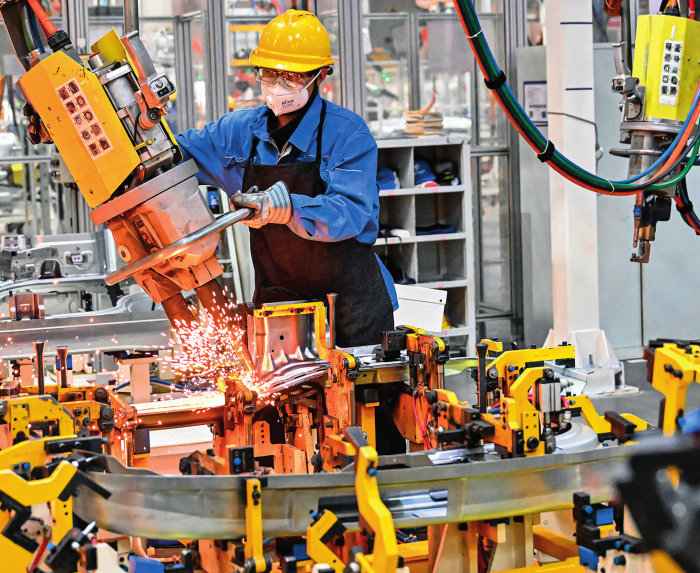
实体经济是国民经济的命脉与国家竞争力的基石。最新发表的习近平总书记重要文章《学习好贯彻好党 的二十届四中全会精神》指出,坚持把发展经济的着力点放在实体经济上,优化提升传统产业,培育壮 大新兴产业和未来产业,促进服务业优质高效发展,构建以先进制造业为骨干的现代化产业体系。这一 重要论述既强调了实体经济作为发展着力点的重要地位,又指明了"十五五"时期壮大实体经济的实践路 径。 巩固壮大实体经济根基,还要注重服务业优质高效发展。服务业是实体经济的重要组成部分,其优质高 效发展既能推动制造业转型升级,降低生产流通成本,还能丰富消费供给、吸纳就业。一方面,聚焦生 产性服务业,推动研发设计、物流金融与制造业深度融合;另一方面,升级生活性服务业,发展养老育 幼、文旅康养等高品质业态。 巩固壮大实体经济根基,归根结底是要构建起以先进制造业为骨干的现代化产业体系。要统筹好国内国 际两个市场两种资源,坚持智能化、绿色化、融合化方向,协同推进传统产业、新兴产业和未来产业发 展,推动中国制造向中国创造转变、中国速度向中国质量转变、中国产品向中国品牌转变。(本文来 源:经济日报 作者:金观平) 与此同时,我国实体经济发展也面临不少困难 ...
瞭望·第一学习丨坚持把发展经济的着力点放在实体经济上
Xin Hua Wang· 2026-01-12 01:23
Core Viewpoint - The development of the real economy is essential for national strength and people's happiness, as emphasized by the Communist Party of China in its strategic planning for the 14th Five-Year Plan [3][4]. Group 1: Importance of the Real Economy - The real economy is the foundation of a country's economic strength and social productivity, and it is crucial for achieving high-quality economic development during the 14th Five-Year Plan period [3][4]. - The emphasis on the real economy reflects its fundamental role in addressing complex economic challenges and ensuring stable and rapid economic growth [4][6]. Group 2: Modern Industrial System - The construction of a modern industrial system supported by the real economy is necessary for gaining strategic advantages in future development and international competition [6][7]. - The manufacturing sector, as the backbone of the modern industrial system, has seen significant growth, with total industrial added value increasing from 31.3 trillion yuan to 40.5 trillion yuan, and manufacturing added value rising from 26.6 trillion yuan to 33.6 trillion yuan over recent years [7]. Group 3: Market Economy System - A high-level socialist market economy system is essential for optimizing resource allocation and enhancing the vitality of the real economy [8][9]. - The integration of various market elements, such as land, capital, labor, and technology, is crucial for establishing a unified national market that supports the real economy [9]. Group 4: Domestic Demand and Economic Growth - The development of the real economy is a key strategy for addressing insufficient domestic demand and stimulating economic growth through increased consumption and investment [11][12]. - The interaction between the real economy and domestic demand is mutually beneficial, with the real economy relying on a robust domestic market while also driving demand through improved supply [12]. Group 5: Challenges and Solutions for Enterprises - Enterprises face numerous challenges, including rising operational costs and uncertainties in the global economy, making the development of the real economy a vital means to alleviate these difficulties [14][15]. - Technological innovation is identified as a core driver for revitalizing enterprises, with investments in advanced technologies expected to enhance competitiveness and market positioning [15]. Group 6: Employment and Income Growth - The real economy plays a significant role in job creation and income growth, with traditional industries and emerging sectors providing diverse employment opportunities [16][17]. - The growth of the real economy is closely linked to increases in residents' income, with projections indicating substantial growth in wage and net operating income as the economy stabilizes [16].
坚持把实体经济作为发展着力点
Xin Lang Cai Jing· 2026-01-11 22:25
巩固壮大实体经济根基,发展新兴产业和未来产业尤为重要。作为新质生产力的重要载体,培育壮大新 兴产业和未来产业,可以带动产业链上下游协同升级,创造新需求,为经济高质量发展注入新动力,还 有利于抢占全球产业竞争制高点。要强化国家战略科技力量,引导资本与人才向重点领域集聚;深化产 学研用协同创新,推动创新成果快速转化落地;吸引全球优质资源,构建开放合作生态。 巩固壮大实体经济根基,还要注重服务业优质高效发展。服务业是实体经济的重要组成部分,其优质高 效发展既能推动制造业转型升级,降低生产流通成本,还能丰富消费供给、吸纳就业。一方面,聚焦生 产性服务业,推动研发设计、物流金融与制造业深度融合;另一方面,升级生活性服务业,发展养老育 幼、文旅康养等高品质业态。 巩固壮大实体经济根基,归根结底是要构建起以先进制造业为骨干的现代化产业体系。要统筹好国内国 际两个市场两种资源,坚持智能化、绿色化、融合化方向,协同推进传统产业、新兴产业和未来产业发 展,推动中国制造向中国创造转变、中国速度向中国质量转变、中国产品向中国品牌转变。 实体经济是国民经济的命脉与国家竞争力的基石。最新发表的习近平总书记重要文章《学习好贯彻好党 的二十 ...
从中长期视角看中国经济前景依然光明
Xin Lang Cai Jing· 2026-01-11 20:19
Core Viewpoint - The Chinese economy faces both strategic opportunities and risks during the 14th Five-Year Plan period, with a long-term positive trend remaining intact despite short-term challenges [4]. Group 1: Economic Challenges and Opportunities - Current economic pressures stem from cyclical factors due to insufficient demand, external environment impacts, and structural factors leading to a decline in traditional growth drivers [4]. - Structural factors include the diminishing returns from traditional growth drivers such as reform dividends, globalization, demographic advantages, and industrialization, which contribute to a lower potential growth rate [4]. Group 2: New Growth Drivers - New growth drivers can be cultivated through deepening reforms and structural transformations, which are essential for high-quality economic development [4]. - Key new growth drivers identified include: - **Technological Innovation**: The rise of market-oriented technological innovations from small and medium-sized enterprises, particularly in regions like Hangzhou, is expected to become a new growth engine [4]. - **Deep Urbanization**: The integration of urban clusters such as the Yangtze River Delta and the Greater Bay Area can significantly boost GDP growth, with a 1% increase in urbanization rate potentially leading to a 1.8% GDP growth [5]. - **Consumption Upgrade**: Improving consumption rates and quality through reforms in income distribution and fiscal policies can drive economic growth [5]. - **Structural Reform Dividends**: Continued structural reforms, including state-owned enterprise reforms and market unification, can release economic vitality and promote growth [5]. - **Quality of Labor**: The transition towards higher-quality labor, particularly in technology sectors, presents a cost advantage that can enhance productivity [6][7]. Group 3: Growth Projections - While growth rates may not reach the optimistic 8% forecasted by some, achieving a growth rate of 5%-6% during the 14th and 15th Five-Year Plans is feasible if new growth drivers are effectively stimulated [8]. - The goal of reaching a per capita GDP of around $20,000 by 2035 requires an average annual growth rate of approximately 4.72% from 2020 to 2035 [8]. Group 4: Modern Industrial System - Constructing a modern industrial system is crucial for transforming growth drivers, with a focus on optimizing traditional industries and fostering strategic emerging industries [9]. - The integration of innovation with industry and the digital economy with the real economy is essential for developing a modern industrial framework [9]. Group 5: Role of Institutional Innovation - Institutional innovation is necessary to support technological advancements and provide effective protection for intellectual property, which is vital for the integration of innovation and industry [10]. - Comprehensive reforms to establish a high-level socialist market economy are critical for driving high-quality development [10].
点读云南丨抓项目 拼项目
Xin Lang Cai Jing· 2026-01-11 10:02
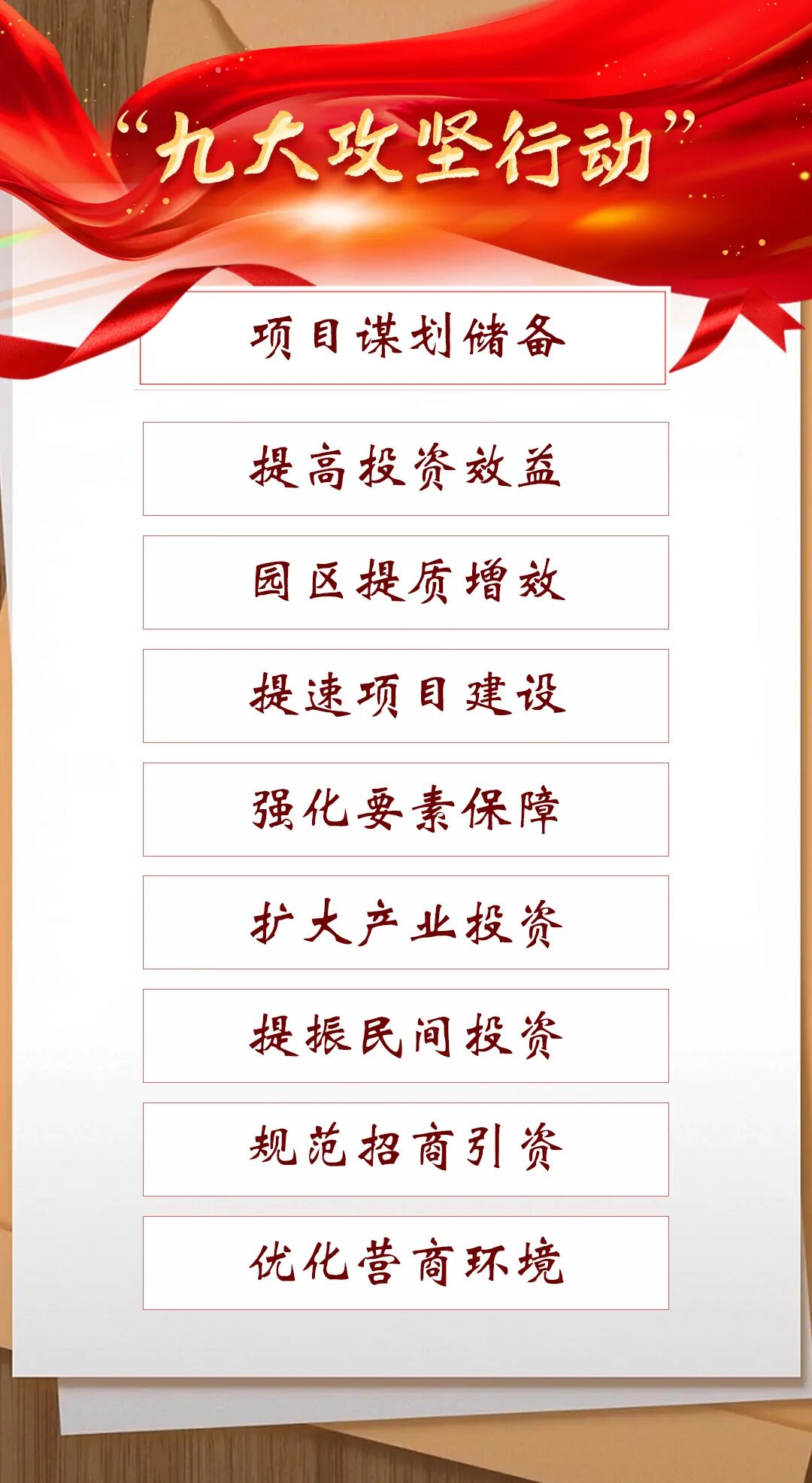
Economic Development and Key Industries - Yunnan Province emphasizes high-quality development and project work to drive economic growth, focusing on nine major initiatives [1] - Since the 14th Five-Year Plan, Yunnan has held 16 consecutive quarterly meetings to promote major industrial projects, leading to significant investment and project completion [4] - The province achieved a 39.22% support rate for overall investment, with private enterprise projects completing 86.36% of their annual investment plans [6] Project Implementation and Investment - Yunnan has successfully completed 102.67% of the annual investment plan for 72 key projects and 104.08% for 832 infrastructure projects [6] - The provincial government is concentrating on project-driven growth to enhance the real economy and establish a modern industrial system with Yunnan characteristics [8] Social Welfare and Insurance Initiatives - Yunnan is implementing a long-term care insurance system to support individuals with disabilities, with varying fund payment ratios based on employment status [11][13] - The province has announced an increase in living and care subsidies for disabled individuals, effective January 1, 2026, raising monthly support for certain categories of disabilities [16] Industry-Specific Developments - The nut industry in Yun County is projected to exceed 820 million yuan in output by 2025, with significant growth in planting area and production [23] - A national-level biopharmaceutical pilot platform has been launched in Kunming to enhance the biopharmaceutical industry's capabilities [25] - The first water asset securitization project in Qujing has been successfully established, marking a significant financial innovation in the region [26] - The first complete cost insurance for coffee cultivation has been implemented in Pu'er, providing substantial risk coverage for local farmers [27]
广西出台重大项目管理办法
Guang Xi Ri Bao· 2026-01-11 02:03
近日,自治区政府印发《广西重大项目管理办法》,为规范和加强重大项目从谋划到投产的全生命 周期管理提供了有力的制度保障。 《管理办法》的出台有利于充分发挥自治区重大项目的牵引带动作用,优化投资结构,提高投资效 益,扩大有效投资,推动经济社会高质量发展。下一步,自治区发展改革委将制订重大项目遴选、退出 等配套文件,进一步完善项目推进管理机制,精准高效保障重大项目顺利实施。(郭亚琼 崔洪瀚) 《管理办法》明确了自治区重大项目的定义,即符合遴选标准并按该办法规定的程序确定,对国民 经济和社会发展有重大影响的产业发展、科技创新、基础设施、生态环保、社会民生等领域的固定资产 投资项目。《管理办法》紧密围绕我区国民经济和社会发展第十五个五年规划建议中的工作思路和重 点,在项目遴选范围上突出战略性新兴产业、未来产业等先进制造业,以"人工智能+"赋能千行百业, 培育发展新质生产力,促进构建现代化产业体系。 《管理办法》着力强化对重大项目全生命周期一体化支持推进,根据项目前期工作情况和建设进度 计划,将自治区重大项目分为预备、新开工、续建、竣工(投产)等四个阶段,并明确项目滚动管理、 协调服务等支持举措,加快推动各类要素更加科学 ...
泰州紧抓存量企业培大育强
Xin Hua Ri Bao· 2026-01-11 00:23
Core Viewpoint - The city of Taizhou is focusing on supporting existing enterprises to enhance their growth and development, emphasizing the importance of these enterprises as key drivers of economic stability and growth in the new year [1][2]. Group 1: Key Initiatives - Taizhou has launched a series of initiatives to encourage existing enterprises to increase investment and expand production, aiming for a strong start in the first quarter of the year [1]. - The city plans to open a "green channel" for investment expansion projects, ensuring robust support for these initiatives [1]. - A total of 438 industrial investment expansion projects are planned for 2026, with a total investment of 189.24 billion yuan, and an expected completion of 64.88 billion yuan in that year [2]. Group 2: Goals and Targets - By 2025, Taizhou aims to have 4,038 industrial enterprises above designated size, achieving an industrial output value exceeding 840 billion yuan [2]. - The "Taizhou Large Enterprise Cultivation and Leapfrog Doubling Plan (2025-2030)" targets to have over 400 large enterprises with an output value of 1 billion yuan or more by 2030, aiming for a "double increase" in numbers [2]. - The city is categorizing enterprises into different tiers based on their output value, with targeted support for each category to enhance their growth [2].
奋进“十五五”开局起好步|扩大高水平对外开放 构建现代化产业体系
Xin Lang Cai Jing· 2026-01-10 22:40
Group 1: Economic Development Goals - The core viewpoint emphasizes the comprehensive implementation of the Central Committee's decisions to accelerate the construction of "Six Longjiang" and promote "Eight Revitalizations," establishing a target system and task list for the province's economic work by 2026 [1] - The Black River City aims to integrate into the provincial framework, transforming the provincial "planning map" into actionable "construction maps" and "real scene maps" to contribute to the modernization of Longjiang [1] Group 2: High-Level Opening and Quality Development - The focus is on expanding high-level opening and enhancing quality development, including upgrading the Black River Free Trade Zone and applying for a comprehensive bonded zone [2] - Key areas for cooperation with Russia include energy resources, agricultural products, and equipment manufacturing, with plans for strategic projects [2] - The development of cross-border transportation infrastructure is prioritized, including the completion of the China-Russia cross-border cableway and improvements in customs efficiency [2] Group 3: Modern Industrial System - The establishment of a modern industrial system characterized by distinctive advantages is highlighted, with a focus on developing new productive forces and enhancing the industrial chain [2] - The strategy includes targeted investment attraction and project construction to support high-quality development [2] - Emphasis is placed on technological innovation in key sectors such as soybean breeding and cold climate testing to drive industrial upgrades [2] Group 4: Consumer Market Expansion - The initiative aims to enhance consumer quality and expand the market, including the construction of a "15-minute convenient living circle" and the development of professional service industries [3] - Plans to create quality consumption scenarios and promote cultural and sports events to increase international influence are outlined [3] - The strategy includes improving tourism services and experiences to position Black River as a preferred destination for cross-border tourism [3] Group 5: Green and Low-Carbon Development - The commitment to green and low-carbon development is reinforced, focusing on ecological civilization and environmental protection [3] - Projects related to forestry carbon sinks and the development of a winter sports economy are prioritized [3] - The establishment of a low-temperature testing facility and hosting of international winter sports events are part of the strategy to enhance brand influence [3] Group 6: Improving Quality of Life - The focus on improving people's quality of life includes implementing an employment-first strategy and enhancing social security systems [4] - Public service quality is to be improved through the development of healthcare and educational facilities [4] - Infrastructure development and urban renewal initiatives are emphasized to create smart cities and ensure safety and stability [4]