
电动自行车新国标

Search documents
电动自行车新国标落地:价格受关注,将倒逼企业升级生产条件
Nan Fang Du Shi Bao· 2025-09-04 08:41
Core Viewpoint - The implementation of the new national standard for electric bicycles (GB 17761—2024) introduces higher safety requirements and opportunities for industry integration and technological upgrades, despite short-term challenges in pricing and design [1][23]. Industry Impact - The new standard requires a mandatory power cut-off mechanism and a "three-in-one" anti-tampering design for battery packs, controllers, and speed limiters, enhancing safety and reducing modification risks [1][21]. - The new regulations impose a hard limit on the total weight of plastic components in electric bicycles, which must not exceed 5.5% of the total vehicle weight, aiming to lower fire risks [1][21]. - The transition period allows for the sale of old standard vehicles until the end of 2025, but many companies are preparing to launch new standard models by November or December 2023 [17][23]. Consumer Insights - Consumers are primarily concerned about the pricing and safety features of new standard electric bicycles, with expectations that prices will start at around 3000 yuan, significantly higher than old standard models [4][9]. - The new models are expected to have a simpler design and may utilize materials like magnesium-aluminum alloy, which could further increase costs but enhance safety [13][21]. Company Strategies - Companies like Nine and Xiaoniu are focusing on technological innovation and strategic partnerships to enhance their product offerings and meet the new standards [18][19]. - Nine plans to gradually phase out old standard models and has established a comprehensive anti-tampering technology system to comply with the new regulations [17][19]. - Xiaoniu is investing in battery technology and smart features to align with the new safety and intelligence requirements, aiming to maintain a competitive edge in the market [18][19]. Market Dynamics - The new standard is expected to lead to a market reshuffle, with smaller companies that cannot meet the new production requirements likely to exit the market, thereby increasing market share for larger, more capable manufacturers [23]. - The increased costs associated with compliance, such as mandatory 4G and Beidou modules, will likely be passed on to consumers, affecting pricing strategies across the industry [23].

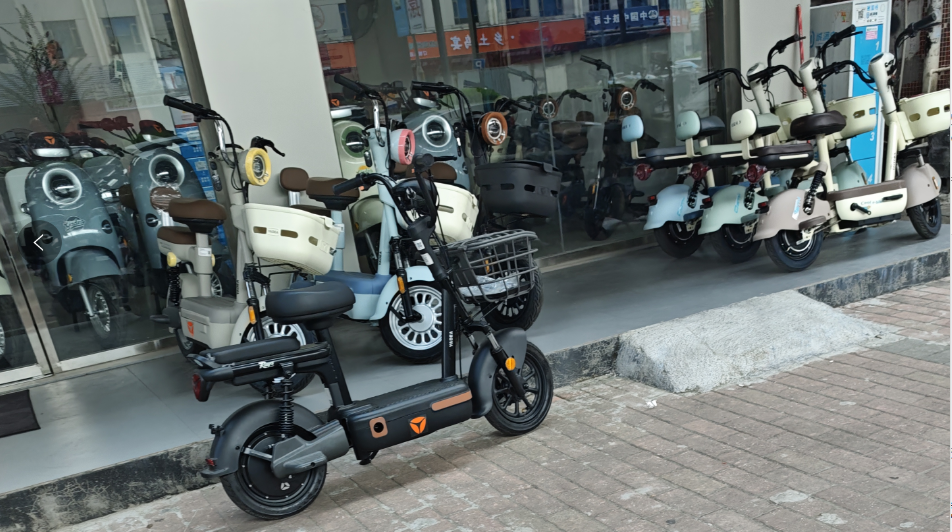
“小电驴”新国标实施后 “旧车”还能骑吗?
Xin Hua Wang· 2025-09-04 07:59
Core Points - The new national standard for electric bicycles (GB 17761—2024) was officially implemented on September 1, 2024, introducing stricter technical requirements in areas such as fire resistance, plastic composition, anti-tampering, and braking performance [1] - The transition period allows for the sale of old standard vehicles until November 30, 2024, after which only new standard electric bicycles will be permitted for sale [1] - Many stores in Beijing are still selling old standard bicycles, as new standard models have not yet arrived [1] - Companies are preparing to recycle unsold old standard vehicles after the transition period to ensure a smooth switch to new models [3] Market Dynamics - The production cost of electric bicycles is expected to increase by 600 to 900 yuan due to the new technical requirements, which may lead to higher retail prices [7] - Consumers are concerned about the potential price increase of new standard electric bicycles [7] - The new standard emphasizes battery safety, prompting companies to accelerate technological advancements in battery management systems and overall product performance [9] Consumer Policies - The "old-for-new" policy will be implemented to encourage consumers to upgrade their old electric bicycles, with specific subsidy schemes announced in various regions [3][5] - In Shenzhen, consumers can receive a subsidy of 500 yuan when trading in an old electric bicycle for a new one priced at 1500 yuan or more, valid from January 1, 2025, to December 31, 2025 [6]


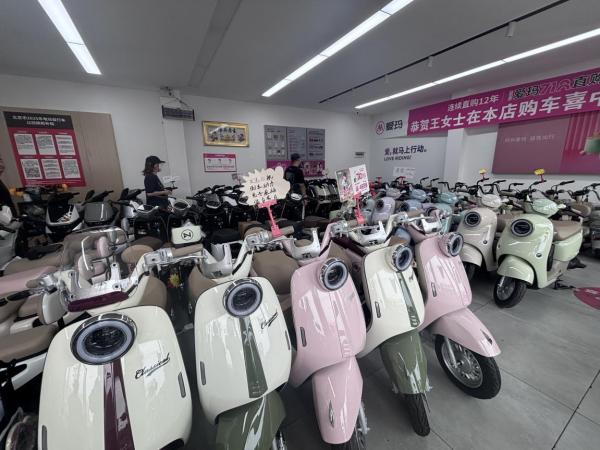
“小电驴”新国标实施后,“旧车”还能骑吗?
Xin Hua Wang· 2025-09-04 07:13
新华网北京9月4日电(记者 游苏杭 陈凯茵 闫雨昕)9月1日,强制性国家标准《电动自行车安全技术规范》(GB 17761—2024)(以下简称新国标)在 全国正式实施。 相较于此前版本,新国标在车辆防火阻燃、塑料占比、防篡改、制动性能等关键领域提出了更严格的技术要求。 新国标后,"旧车"(非"新国标车")还能正常上路吗?"新国标车"价格会更贵吗? "新国标车"到货了吗? 近日,记者走访北京市多家电动自行车销售门店发现,新旧政策交替下销售热潮显现,有不少前来咨询购买"小电驴"的消费者。 此次新国标明确了两个关键时间节点,分别对应生产与销售环节:9月1日起,企业新生产的电动自行车必须完全符合新国标要求;而8月31日前按旧标 准生产的车辆,仍可延续销售至11月30日,自12月1日起,市面上将仅允许销售新国标电动自行车。 2025年3月28日,天津市北辰区居民在活动现场选购电动自行车。新华社记者 李然 摄 以浙江为例,根据《2025年浙江省推动大规模设备更新和消费品以旧换新实施方案》,对个人消费者交售用于报废的老旧电动自行车并换购合格新车 的,按照新车销售价格的40%给予补贴,最高不超过1200元/辆,每名消费者可补 ...
新能源及有色金属日报:下游仍以刚需采购为主,铅价陷震荡格局-20250904
Hua Tai Qi Huo· 2025-09-04 06:00
1. Report Industry Investment Rating - The investment rating for the lead industry is neutral [4] 2. Report's Core View - The lead market currently shows a pattern of weak supply and demand. The supply side is affected by the continuous decline in TC prices and an increase in smelter maintenance. On the demand side, dealers' inventory reduction is slow, and their procurement willingness is low, with some enterprises accumulating finished - product inventory. With the upcoming implementation of the new national standard for electric bicycles in September and the Middle East tariff policy, the impact on consumption is uncertain. Therefore, the lead price is expected to remain in a volatile pattern, with the volatility range likely between 16,300 yuan/ton and 17,050 yuan/ton [4] 3. Summary by Related Catalogs Market News and Important Data Spot - On December 19, 2024, the LME lead spot premium was -$31.73/ton. The SMM1 lead ingot spot price remained unchanged at 16,700 yuan/ton compared to the previous trading day. The SMM Shanghai lead spot premium changed by -50 yuan/ton to 50.00 yuan/ton. The SMM Guangdong lead price remained unchanged at 16,950 yuan/ton, the SMM Henan lead price changed by -75 yuan/ton to 16,725 yuan/ton, and the SMM Tianjin lead spot premium changed by -25 yuan/ton to 16,650 yuan/ton. The lead concentrate - scrap price difference remained unchanged at 50 yuan/ton. The price of waste electric vehicle batteries changed by -50 yuan/ton to 9,925 yuan/ton, the price of waste white - shell batteries changed by -50 yuan/ton to 9,525 yuan/ton, and the price of waste black - shell batteries changed by -50 yuan/ton to 9,975 yuan/ton [1] Futures - On December 19, 2024, the main contract of Shanghai lead opened at 16,795 yuan/ton, closed at 16,730 yuan/ton, unchanged from the previous trading day. The trading volume was 28,827 lots, a decrease of 11,102 lots from the previous trading day, and the position was 43,709 lots, a decrease of 3,629 lots. The intraday price fluctuated, with a high of 16,810 yuan/ton and a low of 16,660 yuan/ton. In the night session, the main contract of Shanghai lead opened at 16,865 yuan/ton and closed at 16,860 yuan/ton, a decrease of 5 yuan/ton from the afternoon close. According to SMM, the SMM1 lead price rose by 25 yuan/ton compared to the previous trading day. In the Henan region, holders quoted at par with the SMM1 lead average price or at a discount of 140 - 120 yuan/ton to the SHFE 2510 contract. In the Hunan region, most lead smelters quoted at a discount of 50 - 30 yuan/ton to the SMM1 lead, and some holders quoted at a discount of 160 - 150 yuan/ton to the SHFE 2510 contract. In the Yunnan region, holders quoted at a discount of over 200 yuan/ton to the SMM1 lead. Although the lead futures price strengthened slightly, downstream buyers mainly made purchases based on rigid demand, and the overall trading in the spot market was weak [2] Inventory - On December 19, 2024, the total SMM lead ingot inventory was 48,000 tons, a decrease of 4,600 tons compared to the same period last week. As of September 3, the LME lead inventory was 234,700 tons, unchanged from the previous trading day [3] Strategy - The recommended option strategy is to sell a wide - straddle [4]
“小电驴”新国标实施,塑料改铁!经销商:贵六七百块钱
Bei Jing Shang Bao· 2025-09-04 05:29
一家门店的店主称"你要是想买速度快的,就得现在买。12月1日之后我们就只能卖新车了,不好解限速了。" 电动自行车新国标已于9月1日正式实施,但北京日报记者走访多家电动自行车门店发现,目前售卖的电动自行车,都是库存的"老标准"电动自行车,暂时 还没有新车上市。 "我们商家有三个月的过渡期,店里这些车可以卖到11月30日,之后就不让卖了。"朝阳门南小街的一家电动自行车专卖店,店主林涛表示,近几天来咨询 新车的消费者不少,但门店现在还没收到消息,不知道新车多久才能上市。 "我现在买车,会不会骑几个月就不让骑了?"一位顾客问道。林涛表示,正在售卖的车,只要是在11月30日前购买的,都是可以正常上牌和骑行的,不用 担心。 电动自行车新规的调整内容很多,其中比较受关注的一项是"完善电池组、控制器、限速器的防篡改要求"。简单来说,电池组必须与充电器匹配后才能充 电,与整车匹配后才能骑行。在速度方面,依据新规生产出来的电动自行车,因为防篡改功能的存在,是无法解限速的,最大速度就是国标规定的25公 里/小时。 由于电动自行车新规对于技术防控手段的要求更加严格,解限速、改装电池等非法行为,在新车上将会更加难以实现。不法商家想要在 ...

电动自行车新国标落地 强化安全要求推动行业升级
2 1 Shi Ji Jing Ji Bao Dao· 2025-09-03 23:07
Core Viewpoint - The implementation of the new national standard (GB 17761—2024) for electric bicycles aims to enhance safety and address significant risks such as fire hazards and illegal modifications, while also promoting industry upgrades and market reshuffling [1][2][5]. Group 1: Safety Requirements - The new standard introduces stricter safety measures in response to rising safety concerns, particularly regarding fire and traffic accidents associated with electric bicycles [2][3]. - It includes enhanced flame-retardant requirements for non-metal materials and limits the plastic content of the vehicle to no more than 5.5% to mitigate fire risks [2]. - The new regulation mandates automatic power cut-off for bicycles exceeding a speed of 25 km/h, addressing the issue of illegal modifications and speeding [1][3][4]. Group 2: Market Dynamics - The electric bicycle market in China is substantial, with a total of 380 million bicycles, indicating a high penetration rate [1]. - The market is characterized by a mix of traditional brands like Yadea, Aima, and Tailg, which collectively hold over 50% market share, and emerging brands that are rapidly gaining traction [5][6]. - The new standard is expected to accelerate the elimination of outdated production capacities and promote the intelligent upgrade of the industry [1][5]. Group 3: Industry Upgrades - Compliance with the new standards may increase production costs by 600 to 900 yuan, potentially raising retail prices [6]. - The new regulations are anticipated to enhance product quality and safety, leading to a more competitive market landscape [6][7]. - The transition period allows for the sale of bicycles produced under the old standard until November 30, 2025, providing a buffer for manufacturers and consumers [6]. Group 4: Consumer Preferences - The new standard allows for an increase in the weight limit for lead-acid battery bicycles to 63 kg, which is expected to improve range and practicality for users [7]. - Consumer preferences indicate that range is a critical factor, with 60 km being the ideal single-range for users, reflecting a demand for practical usability over extreme performance [7].
电动自行车新国标实施 时速超25公里自动断电
Yang Shi Wang· 2025-09-03 06:22
Core Viewpoint - The implementation of the new national standard for electric bicycles in China aims to enhance safety and performance, impacting the industry significantly [1] Group 1: Industry Overview - Electric bicycles are an important mode of transportation for short-distance travel in China, with a total social ownership of approximately 380 million units [1] - The new mandatory national standard, "Safety Technical Specifications for Electric Bicycles," was revised by five departments including the Ministry of Industry and Information Technology and took effect on September 1 [1] Group 2: Key Regulations - The new standard specifies that the maximum speed of electric bicycles cannot exceed 25 kilometers per hour, with an automatic power cut-off feature if this limit is exceeded [1] - The standard also optimizes fire prevention and flame-retardant technical indicators, limiting the plastic weight ratio to below 5.5% of the total vehicle weight, which helps to slow down fire spread and reduce combustion intensity [1]
“史上最严”新国标正式实施 新国标如何护航“小电驴”安全?
Ke Ji Ri Bao· 2025-09-03 05:07
Core Viewpoint - The new mandatory national standard for electric bicycles (GB 17761—2024) has been implemented since September 1, 2024, aiming to enhance safety and quality in the electric bicycle industry, which has approximately 380 million units in circulation in China, equating to one electric bicycle for every four people [1]. Group 1: Safety and Compliance - The new standard mandates that electric bicycles must not exceed a maximum speed of 25 kilometers per hour, with automatic power cut-off for violations [2]. - To combat illegal modifications, the standard introduces technical specifications for battery packs, controllers, and speed limiters, along with a traceable identification system linking vehicles, batteries, and chargers through a unique QR code [2]. Group 2: Technological Enhancements - The new standard incorporates advanced features such as BeiDou positioning, communication, and dynamic safety monitoring, allowing consumers to receive real-time safety alerts regarding their electric bicycles [3]. - The communication module will upload vehicle data to management platforms, ensuring prompt alerts for any detected safety hazards, while adhering to national information security standards [3]. Group 3: Transition for Existing Vehicles - Electric bicycles produced under the old standard will have a three-month sales transition period until November 30, 2025, after which all sales must comply with the new standard [4]. - Consumers with existing non-compliant vehicles will not be forced to replace them immediately, as local governments may implement policies to facilitate upgrades [4].
新国标如何护航“小电驴”安全?
Ke Ji Ri Bao· 2025-09-03 00:50
Core Viewpoint - The new mandatory national standard for electric bicycles (GB 17761—2024) has been implemented since September 1, 2024, aiming to enhance safety and quality in the electric bicycle industry, which has approximately 380 million units in circulation in China, equating to one electric bicycle for every four people [1]. Group 1: New Standards and Regulations - The new standard imposes clear requirements on vehicle markings, safety, mechanical safety, fire resistance, and dynamic safety monitoring, including a maximum speed limit of 25 km/h for electric bicycles [1]. - To prevent illegal modifications, the new standard introduces technical specifications for battery packs, controllers, and speed limiters, raising the threshold for modifications and promoting a "one vehicle, one battery, one charger, one code" system for traceability [1][2]. Group 2: Enhanced Safety Features - The new standard incorporates intelligent features such as Beidou positioning, communication, and dynamic safety monitoring, allowing consumers to receive real-time safety information and alerts for issues like theft or battery overheating [3]. - The communication module will upload dynamic information to management platforms, which will alert users and companies of any detected safety hazards, ensuring compliance with national information security standards [3]. Group 3: Transition for Existing Vehicles - New electric bicycles produced after September 1, 2024, must comply with the new standards and obtain mandatory product certification before leaving the factory [4]. - A three-month sales transition period is granted for electric bicycles produced under the old standard, allowing sales until November 30, 2025, while existing non-compliant vehicles will not be forcibly eliminated but may be updated through local government policies [4].
电动自行车新国标落地 每经记者走访杭州市场:新车型还没到门店 有老国标车型已涨价
Mei Ri Jing Ji Xin Wen· 2025-09-02 14:23
Core Points - The new mandatory national standard for electric bicycles (GB17761-2024) officially took effect on September 1, 2023, with a transition period until November 30, 2023 [1] - The market is experiencing a chain reaction due to the new standard, including price increases for old standard models, inventory clearance by dealers, and consumer challenges regarding speed limits and model choices [1] Group 1: New Standard Implementation - The new standard aims to combat illegal modifications, setting technical requirements to increase the difficulty of such alterations [2] - The weight limit for electric bicycles using lead-acid batteries has been raised from 55 kg to 63 kg, potentially increasing the range by approximately 20 km [3] - The new standard emphasizes fire safety, limiting the weight of plastic components to no more than 5.5% of the total vehicle weight and enhancing fire resistance requirements for non-metal materials [3] Group 2: Market Reactions - Dealers are experiencing inventory shortages of old standard models, with prices increasing due to high demand and limited production [4][5] - The transition period allows for the sale of old standard models until December 1, 2023, after which all production of non-compliant bicycles must cease [5] Group 3: Industry Concerns and Suggestions - There are calls within the industry to reconsider the speed limit of 25 km/h, with suggestions to increase it to 35 km/h for better commuting efficiency [6] - Concerns have been raised regarding the weight limit adjustments, with some dealers suggesting that the increase may not be sufficient for larger models [6] - The new fire safety requirements are generally accepted, but some dealers express concerns about the strict limitations on plastic components potentially raising production costs [7]