雪球三分法

Search documents
节前红包来了!牛市旗手猛拉,4500亿券商龙头一度冲击涨停!黄金续创历史新高!突破3800美元/盎司!
雪球· 2025-09-29 07:47
Market Overview - The A-share market showed a strong upward trend, with the Shanghai Composite Index rising by 0.90%, the Shenzhen Component Index by 2.05%, and the ChiNext Index by 2.74% on the second-to-last trading day before the National Day holiday [2][4] - The total trading volume in the Shanghai and Shenzhen markets reached 2.16 trillion yuan, an increase of 146 billion yuan compared to the previous trading day [2] Securities Sector Performance - The securities sector experienced significant gains, with CITIC Securities hitting a peak increase of 5.88% and other firms like Huatai Securities and Guangfa Securities also reaching their daily limit [4][6] - A report from Huaxi Securities projected that 45 listed securities firms would achieve adjusted revenue of 158.1 billion yuan in Q3 2025, a year-on-year increase of 50% and a quarter-on-quarter increase of 21% [6] Precious Metals Market - Gold prices reached a new high, surpassing $3,800 per ounce, marking a year-to-date increase of over 40% [8] - The A-share gold sector saw collective gains, with stocks like Zhaojin Mining rising by 6.88% and Zijin Mining by 5% [8] Solid-State Battery and Energy Storage Sector - The solid-state battery and energy storage sectors experienced a surge, with CATL's stock rising by 4.46%, pushing its market capitalization above 1.8 trillion yuan [12] - A significant breakthrough in polymer electrolyte research for lithium batteries was reported, which could enhance the development of solid-state battery products [12][13] Economic and Policy Context - The People's Bank of China emphasized the importance of structural monetary policy tools to support technology innovation, consumption, small and micro enterprises, and stabilize foreign trade [6] - The market sentiment remains cautious ahead of the National Day holiday, with potential volatility in high-tech sectors, but long-term investment sentiment remains positive due to low valuations in the financial sector [6]




市场天天在变,但左右你收益的这点从没变过
雪球· 2025-09-29 07:47
Core Viewpoint - The article discusses the cyclical nature of market fluctuations and emphasizes that despite the unique triggers for each crisis, the underlying principles of investing remain consistent. It highlights the importance of maintaining a long-term perspective and sticking to a well-defined investment plan rather than reacting to market noise [5][10]. Group 1: Market Behavior and Investor Psychology - Historical market crises, such as the 1973-1974 stock market crash and the 2020 pandemic, illustrate that investors often perceive each crisis as unprecedented, leading to panic and irrational behavior [5][10]. - The author, Nick Murray, argues that the most significant factor affecting investor returns is not economic conditions or market trends, but rather the behavior of the investors themselves [8][9]. - A key insight is that human nature often leads investors to act against their best interests, particularly in the context of price movements and perceived value [9][10]. Group 2: Investment Planning and Strategy - Establishing a clear financial plan is crucial for investors, which includes understanding core financial goals and creating a pathway to achieve them [8][12]. - The article stresses the importance of constructing an investment portfolio aimed at long-term returns, ensuring that it aligns with the established financial plan [8][12]. - Investors should focus on executing their plans consistently, rather than being swayed by market fluctuations or current events [11][12]. Group 3: Role of Investment Advisors - Investment advisors should guide clients to resist the urge to react to market volatility and instead concentrate on long-term goals and strategies [11][12]. - The article suggests that a significant portion of an advisor's role is to help clients overcome behavioral biases that can hinder their investment success [9][13]. - Advisors are encouraged to minimize discussions about current market events, as these can distract from the core investment strategy and lead to unnecessary anxiety [11][12].

谁是这轮行情最悲催的人?
雪球· 2025-09-28 07:13
Core Viewpoint - The article emphasizes that younger investors should avoid competing in the same investment arena as older investors, particularly in traditional sectors, and instead focus on emerging industries that older investors may not understand [2][3][9]. Group 1: Investment Strategies - Older investors, referred to as "老登," have benefited from previous market trends, particularly in sectors like liquor and consumer goods, but may miss out on new technology trends [2][3]. - Younger investors should seek opportunities in industries that are not yet recognized by older investors, as this could provide a chance for significant returns [3][9]. Group 2: Case Study of Kweichow Moutai - Kweichow Moutai's stock price increased from approximately 4 yuan at its IPO in 2001 to a peak of around 2342 yuan in 2021, representing a growth of over 580 times [4]. - The company's revenue grew from 1.618 billion yuan in 2001 to 109.5 billion yuan in 2021, an increase of about 68 times [6][7]. - To replicate its past success, Kweichow Moutai would need to achieve a revenue of approximately 11.8 trillion yuan in 20 years, which is nearly 15 times the current size of the entire liquor industry [8]. Group 3: Investment Considerations - Investing in traditional industry leaders like Kweichow Moutai may only be suitable for those with substantial capital, as the potential for high returns diminishes for smaller investors [8][9]. - The article suggests that younger investors would be better off focusing on their careers rather than spending time in the stock market, as the opportunity cost may be higher [9].


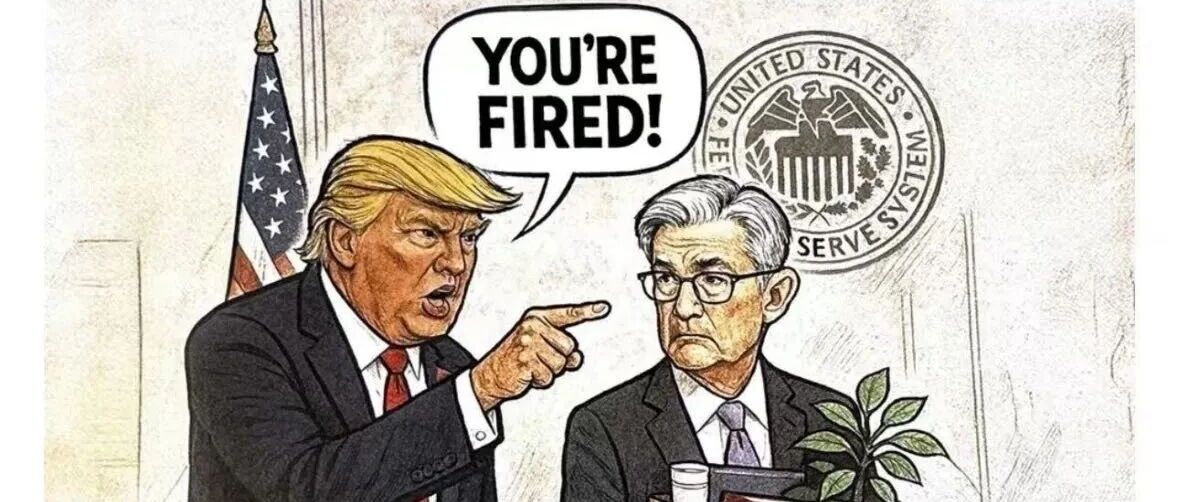
王炸!特朗普炸裂消息:出兵!必要时可动用全部武力!并再次开炮鲍威尔:你被解雇了!
雪球· 2025-09-28 07:13
↑点击上面图片 加雪球核心交流群 ↑ 周末的市场休息,本来还是很平淡,但这周末,特朗普又带来了王炸消息! 01 辟谣!摩尔线程上市! 先看一下周五大家比较关注的科技板块的一个小作文,周五科技板块,半导体,芯片,算力出现了调整,冲高回落,而且收盘时跌幅也是比较大 的。 在周五盘中传出了一则小作文的消息:25号摩尔线程在交易所的状态为"暂缓审核",上市被卡。也是周五芯片半导体板块下跌的一个原因。 但在昨天,就被马上辟谣,上海证券交易所上市委审议通过了摩尔线程智能科技(北京)股份有限公司的首发申请。从6月30日上市申请获受理到 成功过会,摩尔线程仅用时88天,创下科创板审核周期的最快纪录。 此次IPO, 摩尔线程计划募资80亿元人民币,是年内A股过会项目中募资规模最大的项目,同时也是年内半导体领域最大规模的IPO。 02 又要开战? 再来看看这个周末的重磅消息,周末市场休息,但是特朗普不休。来看一下周末这两天关于特朗普的消息。 据美煤日报道,4名消息人士透露, 美国军方官员正在制定针对委内瑞拉境内"贩毒分子"的行动方案,并可能在几周内开始对该国境内目标的打 击。 值得一提的是, 委内瑞拉 是世界重要石油生产与出口国 ...
没想到!这样配置居然能跑赢99%的散户!
雪球· 2025-09-27 13:01
Core Viewpoint - The article emphasizes the importance of a diversified, long-term investment strategy, particularly through a "permanent investment strategy" that balances various asset classes to achieve stable returns while minimizing risk [4][5][12]. Group 1: Investment Strategy - The author advocates for a global multi-asset allocation approach, suggesting that investors should not overly concentrate on high-valuation sectors [4][5]. - A sample permanent investment portfolio is proposed, consisting of 12.5% in Nasdaq 100, 12.5% in S&P 500, 25% in gold, 25% in Chinese bonds, and 25% in U.S. bonds [6][12]. - Historical backtesting of this strategy shows a three-year return of 70.74%, outperforming the CSI 300's 18.41% and slightly lagging behind the S&P 500's 83.51% [9][12]. Group 2: Risk and Performance Metrics - The maximum drawdown for the permanent strategy is reported at 9.19%, significantly lower than the CSI 300's 24.8% and the S&P 500's 18.62% [9][12]. - The Sharpe ratio for the permanent strategy is calculated at 0.12, compared to 0.02 for the CSI 300 and 0.08 for the S&P 500, indicating better risk-adjusted returns [9][12]. - The strategy's positive return days are at 55.14%, slightly higher than the CSI 300's 49%, suggesting that while the strategy does not yield daily profits, it benefits from lower volatility [9][12]. Group 3: Long-term Performance - Over five years, the permanent strategy achieved a return of 79.1%, while the CSI 300 only returned 0.07% and the S&P 500 returned 115.36% [13]. - The article notes that rebalancing the portfolio over five years resulted in a decrease in performance from 76.3% to 66.6%, attributed to the strong upward trends in U.S. stocks and gold [17]. - The author argues that long-term rebalancing can enhance returns during market downturns by locking in profits and allowing for reinvestment at lower prices [17]. Group 4: Asset Correlation - The correlation between S&P 500 and Nasdaq 100 is very high at 0.97, indicating limited diversification benefits between these two assets [20]. - In contrast, the correlation between S&P 500 and gold is only 0.01, and between S&P 500 and U.S. bonds is 0.09, highlighting the importance of including low-correlation assets in a diversified portfolio [20]. - The article suggests that the current market is heavily concentrated in large-cap tech stocks, which may pose risks if the broader economy weakens [21].

关税又有变数,白宫最新发声!贵金属深夜拉涨,白银创14年新高,年内涨幅达59%
雪球· 2025-09-27 04:02
Group 1: US Tariff Policy Changes - The latest US tariff measures on pharmaceuticals will not apply to countries that have trade agreements with the US, such as the EU and Japan, which will continue to adhere to the agreed 15% tariff cap [2][5] - The UK, however, will face a 100% tariff on pharmaceutical exports to the US, as negotiations on drug-related tax rates are still ongoing [5] Group 2: Market Reactions and Economic Data - Following the announcement of the tariff changes, the Asia-Pacific pharmaceutical stocks experienced declines, with companies like BeiGene down 4% and Sumitomo Pharma down over 3% [2] - On September 26, US stock indices saw gains, with the Dow Jones up 0.65% and the S&P 500 up 0.59%, driven by inflation data that raised expectations for interest rate cuts [6][12] - The Michigan Consumer Sentiment Index for September was reported at 55.1, slightly lower than the preliminary value, while the core PCE price index showed a year-on-year increase of 2.9%, aligning with market expectations [13] Group 3: Precious Metals Market - The precious metals market experienced a significant rally, with COMEX gold futures rising 0.5% to $3789.8 per ounce and silver futures up 2.77% to $46.365 per ounce, marking a 14-year high for silver [15][16] - Over the past six months, silver has seen a cumulative increase of over 30%, outperforming most commodities, with a year-to-date rise of 59%, compared to gold's 43% [17] - The current gold-silver ratio indicates that silver is undervalued relative to historical averages, suggesting potential for price correction [18]

坚持红利股,还是加入科技股,我的真实想法
雪球· 2025-09-26 08:27
Core Viewpoint - The article discusses the significant shift in market trends since early July, highlighting the underperformance of bank stocks compared to technology sectors like communications and semiconductors, which have seen substantial gains [3]. Group 1: Market Performance - Before July, bank stocks had the highest gains among all sectors, with a peak increase of over 22%, but have since dropped to a 6.8% increase [3]. - The author reflects on the missed opportunity of reallocating investments from bank stocks to technology stocks during this period, which could have resulted in higher returns [5][6]. Group 2: Investment Philosophy - The article emphasizes the importance of a dividend and equity mindset, suggesting that during bear markets, dividend stocks serve as a safer investment, experiencing smaller declines compared to growth stocks [8][10]. - It advocates for a long-term investment strategy that includes buying undervalued companies with high dividends, ensuring a safety margin and consistent income [12][14]. Group 3: Investment Strategies - The author contrasts two investment approaches: dividend stock investment, which prioritizes safety and stable returns, and technology stock investment, which seeks high returns but comes with higher risks [17][18]. - The article suggests that investors should consider their understanding of technology stocks and their long-term profitability before making investment decisions, using Warren Buffett's approach as a guiding principle [20].


罕见!10倍股连拉20CM涨停,年内已经暴涨1892%!创业板创3年多新高,突破3200点...
雪球· 2025-09-25 08:08
Core Viewpoint - The article highlights the strong performance of the ChiNext index, which has reached a three-year high, driven by significant movements in specific stocks and sectors, particularly in the gaming, AI applications, and solid-state battery industries. Group 1: Company Highlights - The stock of Upwind New Materials surged by 20%, reaching 132.1 CNY per share, with a total market capitalization of 53.3 billion CNY, marking it as the top performer in the A-share market this year with an astonishing annual increase of 1892% [3][6]. - Upwind New Materials underwent a significant ownership change, with Zhiyuan Robotics acquiring a 29.99% stake, making it the new controlling shareholder, and plans to further acquire 37% of the shares at a price of 7.78 CNY per share, requiring up to 1.16 billion CNY [6][7][8]. - The acquisition is seen as a strategic move to integrate the supply chain, focusing on the application of composite materials in lightweight robotic structures, rather than a shell listing [9]. Group 2: Industry Trends - The solid-state battery sector is gaining momentum, with companies like Ningde Times reaching a market cap of 1.79 trillion CNY, driven by advancements in solid-state battery technology and a recent conference discussing its future [10][13]. - The copper industry saw a rise in stock prices due to a fatal landslide at Freeport McMoRan's Grasberg mine, which accounts for about 3% of global copper supply, leading to concerns over supply disruptions and supporting copper prices [15][18]. - The gaming sector is experiencing a resurgence, with several stocks hitting new highs following the approval of 145 domestic games and 11 imported games by the National Press and Publication Administration, reflecting a 25% year-on-year increase in game approvals [19][22].



赚钱最锋利的矛,也会成为让你亏钱的毒药
雪球· 2025-09-22 13:01
Core Viewpoint - The article discusses the significant market differentiation observed in 2023, highlighting the contrasting performances of the food and beverage sector, which has seen a decline of 0.87%, versus the technology sector, which has experienced gains exceeding 40% in indices like the Shenwan Communications and Shenwan Electronics [5][6]. Group 1: Thematic Investing - The concept of "thematic investing" involves selecting a specific investment theme and identifying companies that support this theme, ultimately constructing an investment portfolio around these companies [8]. - While many investors believe that choosing the right theme guarantees profits, the reality is that missteps can lead to substantial losses, as evidenced by the contrasting fortunes of "old" and "new" asset classes in previous market cycles [9][10]. - Historical data shows that many investors in thematic funds have not recouped their investments, particularly those who entered at market peaks [10]. Group 2: Conditions for Successful Thematic Investment - To profit from thematic funds, three conditions must be met: identifying long-term winning themes, selecting funds that can capitalize on these themes, and entering the market at undervalued times [19][24]. - A reliable investment theme should be supported by solid logic, such as industry policy support or technological breakthroughs, rather than mere speculation [20]. - The timing of investment is crucial; entering a popular theme after it has already gained traction can lead to missed opportunities and potential losses [25]. Group 3: Role of Thematic Funds in Portfolios - For most ordinary investors, thematic funds are not essential for achieving steady profits, as they do not significantly diversify risk compared to other asset classes [27]. - The correlation between thematic funds and major market indices has remained high, suggesting that adding thematic funds to a portfolio with index funds may not provide substantial risk diversification [28]. - Thematic funds are better suited as "satellite holdings" rather than "core allocations" within an investment portfolio, and their proportion should be strictly controlled to mitigate potential losses during market fluctuations [30][33].

《海龟交易法则》的作者破产,从赚取亿万到流落街头,投资到底靠什么才能走远?
雪球· 2025-09-21 13:01
Core Viewpoint - The article reflects on the downfall of Curtis Faith, the author of the "Turtle Trading Rules," highlighting the contrast between his past success as a trader and his current state of bankruptcy and homelessness, emphasizing the unpredictability of life and the importance of discipline in trading [3][4][18]. Group 1: Turtle Trading Rules - The Turtle Trading Rules, developed in the 1980s by Richard Dennis and William Eckhardt, is a well-known mechanical trading system that proved trading can be taught [5][6]. - The system is based on trend-following principles, where traders buy when prices break above certain levels and sell when they fall below others, focusing on capturing market trends [7][10]. - Key components of the system include entry signals based on price breakouts, risk management by limiting exposure to 1% of account funds per trade, and strict stop-loss rules to cut losses [7][10]. Group 2: Curtis Faith's Journey - Curtis Faith was one of the youngest Turtle Traders, achieving significant profits early in his career, reportedly earning over $10 million for his fund [15][17]. - After leaving the Turtle program, he attempted various ventures, including startups in IT and blockchain, but faced numerous failures, leading to financial ruin [19][25]. - His recent legal troubles and homelessness serve as a cautionary tale about the volatility of trading success and the risks of overextending in speculative ventures [13][28]. Group 3: Lessons Learned - The article emphasizes the importance of skepticism towards trading gurus, suggesting that even successful traders can face significant failures, as demonstrated by Faith's experience [30][32]. - It warns against excessive risk-taking and highlights the need for disciplined investment strategies, contrasting trend-following with value investing approaches [34][37]. - The narrative concludes with a reflection on the long-term nature of successful investing, advocating for diversified asset allocation as a means to withstand market fluctuations [50].