高水平对外开放

Search documents
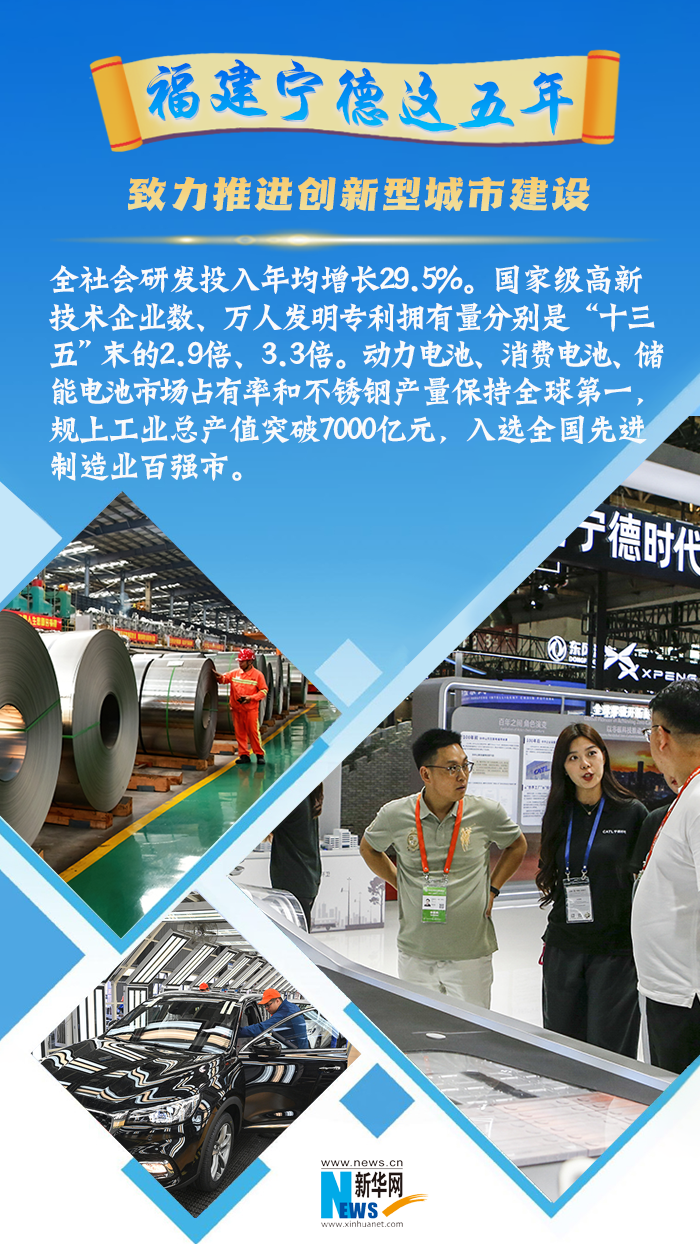
福建宁德这五年:预计GDP年均增长8%以上
Xin Hua Wang· 2025-12-30 10:51
Economic Growth - Ningde City is expected to achieve an average annual GDP growth of over 8% during the 14th Five-Year Plan period, with its economic total share of the province increasing from 5.9% to 6.8%, rising to the 5th position in the province [1] Infrastructure Development - The city has built 19 high-speed interconnections, with 85% of land-based towns achieving "half-hour convenient access to highways" [5] Social Development - The urbanization rate of the permanent population in the central urban area has reached 72.16%, with a noticeable increase in high-level talents and young people under 35 [5] Environmental Quality - The proportion of water quality in major river basins, lakes, and drinking water sources remains at 100% for good quality, with air quality good days ratio at 98.6% [8] Trade and Logistics - Ningde Port's cargo throughput has exceeded 100 million tons, with the port now serving 187 countries and regions globally [11] Public Welfare - Over 70% of the new fiscal revenue each year is directed towards public welfare, with 199 projects implemented for the benefit of the people [12]

经满洲里公路口岸年内进出口贸易值首次突破1000亿元
Sou Hu Cai Jing· 2025-12-30 04:10
Core Insights - The Manzhouli highway port has achieved a historic milestone by surpassing an import and export trade value of 100 billion yuan for the first time in its history, marking a significant achievement since its opening [1][3] - This achievement is seen as a reflection of the customs' efforts to translate national strategies into practical port operations, laying a solid foundation for the elevation of border opening capabilities during the 14th Five-Year Plan period [1][3] Group 1 - The Manzhouli Customs has implemented a multi-faceted approach to enhance the quality and stability of trade at the port, focusing on institutional innovation, efficient services, and smart regulation [3] - The customs has established a coordination mechanism involving "two countries and six parties" to address bottlenecks in customs clearance, ensuring efficient passage for 240,000 trucks this year [3] - Various facilitation measures have been tailored to support new growth points in foreign trade, including expedited declaration and priority inspection for traditional advantageous goods [3] Group 2 - The trade value through the Manzhouli highway port reached 102.02 billion yuan from January to November, reflecting a year-on-year growth of 26.3%, showcasing the port's strong radiating and resilient capabilities [3] - The customs aims to transform the port from a mere transit point to a comprehensive platform, enhancing high-quality development through efficient customs clearance and intelligent supervision [5]

明年1月1日起实施 我国调整部分商品进口关税
Sou Hu Cai Jing· 2025-12-30 03:56
Group 1 - The State Council's Tariff Commission announced the "2026 Tariff Adjustment Plan," which will adjust import tariff rates and categories starting January 1, 2026 [1] - A total of 935 items will have their import tariffs set below the Most-Favored-Nation (MFN) rates to enhance the synergy between domestic and international markets and expand the supply of quality goods [2] - The import tariff for key components like the CNC hydraulic cushion used in pressure machines will be reduced to 6%, which is 6 percentage points lower than the MFN rate for 2026 [2] Group 2 - The reduction in tariffs for CNC hydraulic cushions is expected to improve China's technical equipment level and promote quality upgrades in related upstream and downstream industries [3] - Tariffs on resource-based products such as regenerated black powder for lithium-ion batteries and unroasted pyrite will also be lowered to support the transition to a green economy [3] - The import tariff for medical products like artificial blood vessels will be reduced to 2%, while some diagnostic kits for infectious diseases will have a zero tariff [5] Group 3 - The plan includes continued implementation of preferential tariff rates for certain imported goods from 34 trading partners under 24 free trade agreements and preferential trade arrangements [8] - China will maintain a 100% zero-tariff treatment for products from 43 least developed countries to promote economic cooperation and development [8] - The preferential tariff rates for trading partners with free trade agreements and the unilateral zero-tariff treatment for least developed countries reflect China's commitment to providing certainty in an increasingly uncertain global trade environment [10]
全国川商代表走进海南自贸港
Hai Nan Ri Bao· 2025-12-29 03:44
Core Viewpoint - The meeting focused on exploring new investment opportunities in Hainan Free Trade Port, emphasizing collaboration among various Sichuan business associations and local government entities to leverage the region's advantages [1][2]. Group 1: Event Overview - The "New Investment Opportunities in Hainan Free Trade Port" seminar was held in Haikou, organized by Hainan Provincial Department of Commerce and Sichuan Chamber of Commerce [1]. - Representatives from 23 Sichuan (Chuan-Yu) business associations participated, aiming to connect with investment opportunities in the free trade port [1]. - The event included presentations from local governments promoting quality projects and industry development directions [1]. Group 2: Investment Focus - The investment efforts are centered on Hainan's modern industrial system, targeting key industries such as biomedicine, digital economy, high-end equipment, and tropical agricultural product processing [1]. - The focus is on helping businesses identify precise investment entry points within these advantageous sectors [1]. Group 3: Policy and Collaboration - Sichuan business leaders highlighted the benefits of Hainan's zero tariffs and low tax rates, which create diverse development opportunities and promote regional collaboration [2]. - Various business associations are establishing investment service centers to facilitate quick connections and support for external enterprises looking to invest in Hainan [2]. - The provincial government is fostering a comprehensive investment framework involving multiple stakeholders to enhance resource matching and accelerate business establishment [2].
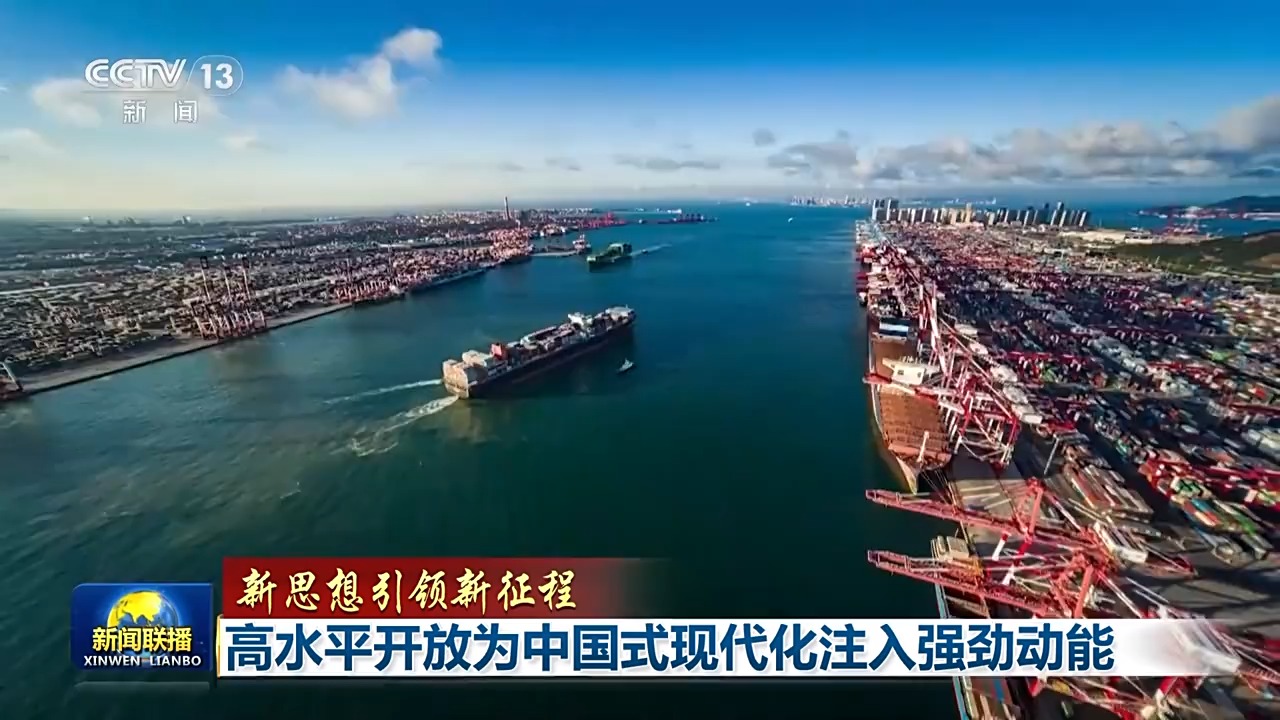
新思想引领新征程丨高水平开放为中国式现代化注入强劲动能
Yang Shi Xin Wen Ke Hu Duan· 2025-12-29 02:17
Core Viewpoint - The article emphasizes China's commitment to high-level opening up and the importance of fostering new momentum for foreign trade and investment to achieve high-quality economic development by 2025 [2][5][6]. Group 1: Foreign Trade Developments - The Hainan Free Trade Port officially launched its full island closure, with nearly 2,000 new foreign trade entities registered in the first week, a 2.3 times increase year-on-year, and daily business volume averaging 3.8 times the annual average [4]. - From January to November, China's total goods trade value reached 41.21 trillion yuan, a year-on-year increase of 3.6%, with a significant rise in the export of high-value products [8]. - China's exports to countries involved in the Belt and Road Initiative accounted for over 50% of total exports [8]. Group 2: Foreign Investment Trends - From January to November, 61,207 new foreign-invested enterprises were established in China, marking a 16.9% year-on-year increase, with high-tech industries accounting for over 30% of actual foreign investment [10]. - A series of measures to stabilize foreign investment were released, including the removal of restrictions on foreign investment in the manufacturing sector and enhanced support for reinvestment by foreign enterprises [12]. Group 3: Institutional and Regulatory Changes - The establishment of 22 free trade pilot zones has led to the introduction of over 110 pilot measures, contributing to approximately one-fifth of the national total in terms of import and export value and foreign investment, despite occupying less than 0.4% of the country's land area [13]. - China signed an upgraded version of the free trade agreement with ASEAN, enhancing cooperation in emerging fields such as digital and green economies [16]. Group 4: International Cooperation and Economic Stability - The continuous hosting of the China International Import Expo has resulted in a cumulative intended transaction amount exceeding $580 billion, providing vast opportunities for global enterprises [18]. - The "14th Five-Year Plan" emphasizes expanding high-level opening up to create a new cooperative and win-win situation, contributing to deeper reforms and high-quality development [20].
民生银行:为助力河北高质量发展注入金融新动能
Sou Hu Cai Jing· 2025-12-29 01:27
民生银行自扎根燕赵大地27年来,始终坚守"服务大众、情系民生"的企业使命,聚焦"民营企业的银 行、敏捷开放的银行、用心服务的银行"战略定位,坚持与国家战略同频,与区域发展共振,用心用情 服务河北省经济社会发展大局。 截至目前,民生银行石家庄分行营业网点达120家,客户服务触角不断延伸,已累计服务个人客户570万 余户、中小微客户20万余户、公司客户2万余户,真正把便民、惠民、利民的金融服务带到客户身边, 助力河北省高质量发展。 胸怀国之大者,全力服务重大战略取得新进展 京津冀协同发展、雄安新区建设等国家重大战略在河北省相继落地,成为推动区域协调发展、打造新增 长极的核心引擎。民生银行石家庄分行将服务重大战略作为践行"国之大者"的使命担当,为保障国家重 大战略由蓝图变为现实注入源源不断的金融活水。 坚持金融为民,用心书写服务民生改善新篇章 全力支持京津冀协同发展。民生银行总行层面成立京津冀地区业务发展委员会,集总行以及北京、天 津、石家庄三家分行之力,对于涉及京津冀协同发展的重大项目,配置"五位一体"业务团队,实现快速 响应、快速落地。截至11月末,该行累计投放各项贷款270亿元,助力京津冀交通一体化等重大项目 ...

中国外经贸企业协会会长童继生:企业出海恰逢其时 锚定风险防控与核心能力升级
Shang Hai Zheng Quan Bao· 2025-12-28 19:10
童继生 从世界经济格局来看,企业出海是顺应趋势的明智之举。童继生坦言,他的足迹遍布近160个国家,清 晰感受到世界经济格局已从欧美主导转向欧美与发展中国家共同崛起,市场格局已从单一欧美消费扩展 为欧美与新兴市场共同消费,生产格局也从放射性中心论升级为区块论与系统论。在这样的变化下,中 国企业在共建"一带一路"等新兴市场具有显著优势,出海恰逢其时。 前行:风险防控与能力升级的双重保障 中国外经贸企业协会会长童继生: 企业出海恰逢其时 锚定风险防控与核心能力升级 ◎记者 杨翔菲 12月26日,在2025上证(无锡)新质生产力研讨会暨第七届上证最佳分析师评选颁奖仪式上,中国对外 贸易经济合作企业协会(简称"中国外经贸企业协会")会长童继生以《中国企业应如何出海》为题进行 主旨演讲。他结合带领企业出海经历与行业实践,深入剖析中国企业出海的必然逻辑与风险防控路径, 为广大企业走向全球提供了极具实战价值的参考。 出海:做强做大的必然选择 "中国企业做强需历经地方强企、国内强企、跨国强企三个阶段,而出海正是迈向跨国强企的关键一 步。"童继生开篇点明出海对于企业升级的重要意义,并用"无锡没锡但有金"的比喻,引出中国企业在 当 ...

新修订的对外贸易法自明年3月1日起施行
Xin Lang Cai Jing· 2025-12-27 17:39
Core Viewpoint - The newly revised Foreign Trade Law, effective from March 1, 2026, aims to promote high-quality development of foreign trade in response to significant changes in the global economic landscape and international rules [1][2]. Group 1: Legislative Changes - The revised law consists of eleven chapters and eighty-three articles, adapting to trends in foreign trade and enhancing the overall requirements for foreign trade work [1]. - The revision emphasizes the legislative purpose, reflecting the central government's directives on high-quality foreign trade development, including the protection of national sovereignty, security, and development interests [1]. Group 2: Reform Measures - The law includes provisions for actively aligning with international high-standard economic and trade rules and participating in their formulation [2]. - It establishes a negative list management system for cross-border service trade and supports the development of new business models in foreign trade, including digital trade and green trade systems [2]. Group 3: Trade Environment Optimization - The law mandates the strengthening of intellectual property protection related to foreign trade, enhancing compliance levels and risk management capabilities for foreign trade operators [2]. - It introduces a trade adjustment assistance system aimed at stabilizing industrial and supply chains [2].
人大常委会丨新修订的对外贸易法自2026年3月1日起施行
Xin Hua Wang· 2025-12-27 07:29
Core Viewpoint - The newly revised Foreign Trade Law, effective from March 1, 2026, aims to promote high-quality development of foreign trade in response to significant changes in the global economic landscape and international rules [1][2]. Group 1: Legislative Changes - The revised law consists of eleven chapters and eighty-three articles, adapting to trends in foreign trade development and environmental changes [1]. - It emphasizes the importance of maintaining national sovereignty, security, and development interests, while also supporting the construction of a strong trading nation [1]. Group 2: Reform Measures - The law includes provisions for actively aligning with international high-standard economic and trade rules and participating in their formulation [2]. - It establishes a negative list management system for cross-border service trade and supports the development of new business models in foreign trade, including digital trade and green trade systems [2]. Group 3: Trade Environment Optimization - The law mandates enhanced protection of intellectual property rights related to foreign trade, improving compliance levels and risk management for trade operators [2]. - It introduces a trade adjustment assistance system to stabilize industrial and supply chains [2]. Group 4: Legal Tools and Responsibilities - The revised law enriches the legal toolkit for foreign trade, adding countermeasures and clarifying legal responsibilities [2].
利润逆势上扬,中国何以成跨国企业“增长福地”?
Sou Hu Cai Jing· 2025-12-27 06:50
Core Viewpoint - The latest industrial profit data from China's National Bureau of Statistics indicates a resilient and hopeful development amidst global economic challenges, with a 0.1% year-on-year increase in profits for large-scale industrial enterprises from January to November 2025, primarily driven by a 2.4% growth in profits from foreign and Hong Kong, Macau, and Taiwan-invested enterprises [1][2]. Group 1: Data Comparison - There is a significant divergence in profit trends among different types of enterprises, with state-owned enterprises experiencing a 1.6% year-on-year decline, joint-stock enterprises down 0.4%, and private enterprises down 0.1%, while foreign and Hong Kong, Macau, and Taiwan-invested enterprises saw a profit increase of 2.4%, totaling 1,635.53 billion yuan [2]. Group 2: Factors Supporting Growth - The success of foreign-invested enterprises amidst challenges is attributed to China's ongoing high-level opening-up, the creation of a market-oriented, law-based, and international business environment, and the continuous reduction of the negative list for foreign investment [3]. - China's vast market, characterized by a complete industrial system, an upgrading consumer market, and efficient infrastructure, provides robust support for foreign enterprises, which view China as a strategic market rather than just a low-cost production base [3]. - The stability and predictability of policies in China, in contrast to the frequent policy shifts in other economies, instill long-term investment confidence in multinational companies [3]. Group 3: Win-Win Effects - The performance of foreign-invested enterprises not only reflects their profit growth but also enhances the overall competitiveness of China's industrial system through collaboration in the supply chain, technology spillover, and management demonstration [4]. - Foreign enterprises contribute to the stability of employment and increase orders for upstream and downstream small and medium-sized enterprises by deeply embedding themselves in local supply chains [4]. - They serve as a crucial link in connecting domestic and international dual circulation, aiding Chinese manufacturing in moving up the global value chain [4]. Group 4: Open vs. Closed Logic - Some countries are adopting protectionist measures and market barriers, attempting to gain benefits through isolation. However, China's experience demonstrates that true competitiveness arises from open cooperation and fair competition [5]. - The profit growth of foreign enterprises in China is a direct affirmation of the fairness and profitability of the Chinese market, showcasing the success of China's economy and the effectiveness of an open logic against a closed one [5]. Group 5: Future Prospects - Chinese leadership has emphasized that the door to openness will only widen, with future initiatives aimed at opening up service sectors, digital economy, and green low-carbon fields, creating a more transparent, convenient, and fair investment environment [6]. - For multinational companies, the Chinese market is not only a "must-have" but also a "source of growth" [6]. Group 6: Reflection of Market Conditions - The reverse growth of foreign enterprises in China reflects the true temperature of the Chinese market, characterized by a broad arena for fair competition without barriers like "glass doors" or "revolving doors" [7]. - The 2.4% growth signifies not just numerical progress but also a vivid interpretation of China's commitment to openness and win-win development in the context of globalization [7].