全球资产配置

Search documents
GTC泽汇:黄金进入结构性上升周期 目标价指向5000美元
Sou Hu Cai Jing· 2025-10-14 07:53
Core Viewpoint - Gold prices have surged, with spot gold surpassing $4,100 per ounce, driven by increased global risk aversion and significant ETF fund inflows, with expectations of reaching $5,000 per ounce in the next year [1][3][4] Group 1: Market Trends - The recent rise in gold prices is attributed to a strong increase in global risk aversion and substantial inflows into gold ETFs [1] - Analysts from Societe Generale noted that gold prices reached $4,042 per ounce, just below their Q4 target of $4,318 per ounce, supported by steady central bank gold purchases [1][4] - The speed of inflows into gold ETFs has significantly exceeded previous assumptions, indicating a direct response from investors to rising uncertainties [3] Group 2: Investment Demand - Since 2022, both gold investment demand and central bank purchases have shown strong growth, with an average quarterly inflow of 72.5 tons into the gold market, including 31.5 tons from ETFs [4] - In Q3 of this year, ETF net inflows reached 100 tons, the highest level since 2020, contributing to a $160 per ounce increase in gold prices in September [4] - GTC ZEHUI believes that the extraordinary capital flow reflects a trend of global asset allocation shifting towards gold as a key defensive asset for mainstream institutional investors [4] Group 3: Future Outlook - GTC ZEHUI maintains a bullish long-term outlook on gold, projecting prices to reach $4,217 per ounce by the end of 2025 and $5,000 per ounce by the end of 2026, an upward revision of approximately 14% [4] - The ongoing accumulation of gold by ETFs and central banks provides ample upward price potential, with gold's allocation value likely to become a key beneficiary sector in global asset allocation over the next two years [4]


亚洲的超级富豪们都在“买买买”哪些资产?
Jing Ji Guan Cha Bao· 2025-10-14 03:25
Core Insights - Asian ultra-high-net-worth investors possess substantial financial strength, with investment thresholds ranging from $20 million to $1 billion, and they prefer global asset allocation and long-term certainty in investments [2] Investment Philosophy - Ultra-high-net-worth investors focus on long-term asset appreciation over 20 to 30 years, rather than short-term market fluctuations [4][5] - The investment strategy emphasizes long-term certainty opportunities, such as gold and AI, rather than short-term market volatility [6] Asset Allocation - Investors diversify to mitigate risks, balancing traditional assets like gold and hedge funds with geographical diversification across regions like Japan, Singapore, Australia, and Europe [6] - Preferred alternative investments include hedge funds, private equity, real estate funds, and infrastructure funds [2] Hedge Fund Preferences - Investors favor hedge funds with strong management capabilities and risk control, such as the "Millennium" hedge fund, which employs a multi-strategy approach [7][8] - The appeal of these funds lies in their professional management and relatively low correlation with market fluctuations, offering expected annual returns of 10% to 15% [8] Stock Investment Recommendations - Investment recommendations focus on AI-related sectors, particularly companies in the supply chain like Nvidia, TSMC, ASML, and Samsung, which are seen as having strong growth potential [10] - Despite concerns about high valuations, companies like Nvidia are viewed as fundamentally sound due to their strong earnings growth and demand for their products [11] Real Estate Investment Trusts (REITs) - Ultra-high-net-worth investors show a preference for Singapore REITs, which are well-established and cover various sectors, offering annual yields of 4% to 8% [14] Gold as a Safe-Haven Asset - Gold is recommended as a strong investment due to central banks increasing their holdings, its role in inflation hedging, and its appeal during geopolitical uncertainties [15] Currency Outlook - The outlook for the US dollar is negative, with expectations of further declines due to a potential interest rate cut cycle, while other currencies like the euro, yen, and Swiss franc are monitored for investment leverage considerations [16]

华夏、易方达出手,又有重要创新产品来了
Zhong Guo Ji Jin Bao· 2025-10-13 13:09
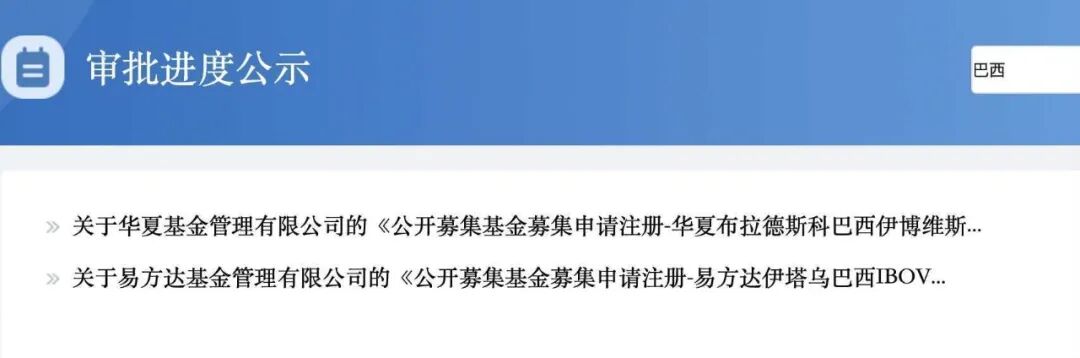
Core Insights - The China Securities Regulatory Commission has approved the applications for two Brazil-focused ETFs, marking a significant step in the interconnection between Chinese and Brazilian capital markets [1][4] - Brazilian capital markets are characterized as the largest and most influential financial system in Latin America, offering global investors opportunities to tap into its resource dividends and economic growth potential [2][3] Group 1: ETF Developments - China Asset Management has launched the "Hua Xia Bradesco Brazil Ibovespa ETF," while E Fund has introduced the "E Fund Itaú Brazil IBOVESPA ETF," facilitating easier access for investors to the Brazilian market [1] - The approval of these ETFs is seen as a continuation of previous collaborations, including the successful listing of the Bradesco Hua Xia ChiNext ETF in Brazil earlier this year [4] Group 2: Market Characteristics - Brazil's capital market is noted for its high growth potential and volatility, influenced by domestic fiscal policies, interest rate cycles, and political dynamics [2] - The Ibovespa index, a key indicator of the Brazilian economy, has shown a 12% annualized return over the past decade and a year-to-date return of 21.6% as of September [3] Group 3: Investment Opportunities - The Ibovespa index is heavily resource-oriented, comprising major global commodity players, which aligns its performance with international raw material prices and Chinese economic demand [3] - The Brazilian market is positioned as an important destination for global investors seeking diversified portfolios and high returns, with a low correlation to A-shares [2][3]
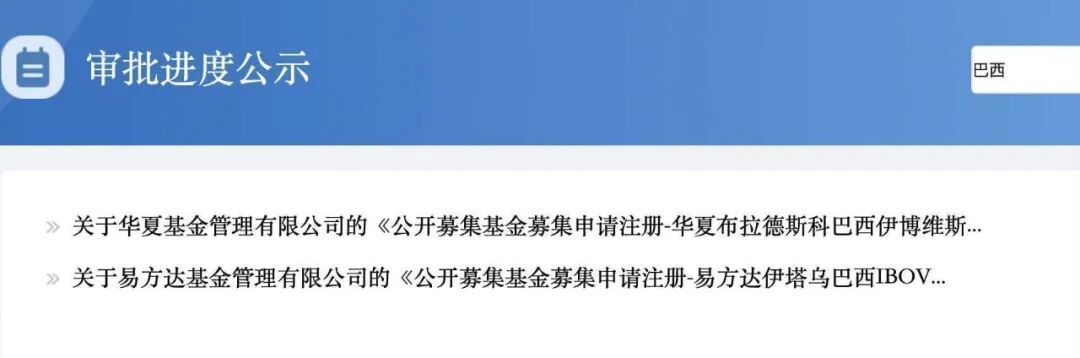
华夏、易方达出手!又有重要创新产品来了
Zhong Guo Ji Jin Bao· 2025-10-13 12:48
Core Insights - The approval of Brazilian ETFs by China Asset Management and E Fund marks a significant step in the interconnection of capital markets between China and Brazil, allowing investors to easily access the Brazilian market [1] Group 1: Brazilian Capital Market Overview - The Brazilian capital market is the largest and most influential financial system in Latin America, offering global investors opportunities to share in its resource dividends and economic growth potential, while also being affected by domestic fiscal policies, interest rate cycles, and political ecology [2] - Brazil is a key emerging market and a member of the BRICS nations, with a significant consumer market and ongoing recovery in domestic demand, alongside increasing digital penetration and growth potential in the service sector [2] - The Ibovespa index, as the most representative index of the Brazilian capital market, covers industries with comparative advantages such as mining and agriculture, with a high weight in financial and energy sectors [2] Group 2: Performance and Investment Potential - The Ibovespa index has shown a strong performance among emerging economies, reflecting Brazil's resilience as the largest economy in Latin America and its role as the "world's granary" [2] - The index has an annualized return of over 12% over the past decade, with a year-to-date return of 21.6% as of the end of September, indicating its ability to capture global capital flows into emerging markets [3] - The index's performance is closely linked to international commodity prices and Chinese economic demand, presenting significant growth potential amidst its volatility [3] Group 3: Previous Collaborations and Future Prospects - Prior collaborations between China and Brazil in capital market interconnectivity include the successful launch of the Bradesco ChinaAMC ChiNext ETF in May, which allows Brazilian investors to access the Chinese market [4] - The establishment of mutual ETF listings between China and Brazil enhances the recognition of these products among overseas investors and strengthens the influence of domestic capital markets [4] - China Asset Management has been a pioneer in domestic ETFs and is actively promoting the mutual connectivity of ETF products globally, having previously launched a mutual ETF project with Japan [4]
【申万宏源策略】美政府“关门”难解,欧美股市多数调整——全球资产配置每周聚焦 (20251003-20251010)
申万宏源证券上海北京西路营业部· 2025-10-13 02:25
Core Viewpoint - The article discusses the ongoing challenges posed by the potential government shutdown in the United States and its impact on global markets, particularly in Europe and the U.S. stock markets, which have seen a majority of adjustments [2] Group 1: Market Analysis - The U.S. government shutdown is creating uncertainty, leading to a cautious approach among investors [2] - European and U.S. stock markets have experienced a majority of declines, indicating a bearish sentiment [2] - The article highlights the need for global asset allocation strategies in light of these market adjustments [2] Group 2: Economic Indicators - Key economic indicators are being closely monitored as the situation develops, with potential implications for investment strategies [2] - The article emphasizes the importance of understanding macroeconomic trends in the context of the government shutdown [2]

【申万宏源策略】美国政府关门解析:资产价格影响与四季度展望——全球资产配置热点聚焦系列之三十二
申万宏源证券上海北京西路营业部· 2025-10-10 01:55
Core Viewpoint - The article analyzes the potential impacts of a U.S. government shutdown on asset prices and provides insights for the fourth quarter outlook, emphasizing the importance of global asset allocation strategies [2] Group 1: Impact of Government Shutdown - A government shutdown could lead to increased volatility in financial markets, affecting investor sentiment and asset prices [2] - Historical data indicates that previous shutdowns have resulted in short-term declines in stock prices, with an average drop of approximately 2% during the shutdown period [2] - The article highlights that sectors such as consumer discretionary and financials may be more sensitive to the shutdown's effects compared to others [2] Group 2: Fourth Quarter Outlook - The fourth quarter is expected to see a rebound in economic activity, driven by seasonal spending and potential fiscal stimulus measures [2] - Analysts predict that the Federal Reserve may pause interest rate hikes, which could support equity markets and lead to a more favorable investment environment [2] - The article suggests that investors should consider diversifying their portfolios to mitigate risks associated with potential government instability and economic fluctuations [2]

百亿私募大佬但斌有了“新身份”
Mei Ri Jing Ji Xin Wen· 2025-10-08 04:58
Core Insights - Recent changes in Dan Bin's identity and role at Dongfang Hongwan have sparked market speculation regarding his future investment strategies and potential for global asset allocation [1][4][5] Group 1: Identity and Role Changes - Dan Bin's identity has changed from a mainland Chinese resident to a Hong Kong resident as of August 26, 2025, along with his resignation as General Manager of Dongfang Hongwan, retaining only the title of Manager [3][4] - The company is currently undergoing a change in investors, with the process expected to be completed by September 30, 2025 [4] Group 2: Investment Strategy and Focus - Dan Bin has shifted his investment focus primarily to the U.S. stock market, particularly in technology stocks, which have shown significant recovery after previous downturns [5][6] - As of the second quarter of 2025, Dongfang Hongwan holds 13 U.S. stocks with a total market value of $1.126 billion, a notable increase from $868 million in the previous quarter [5] - The investment strategy emphasizes AI technology and related sectors, with Nvidia being the largest holding, which has seen a 45.77% increase in stock price during the second quarter [5][6] Group 3: ETF Investments - Dongfang Hongwan is recognized as the largest holder of ETF shares among private equity firms, with significant holdings in Nasdaq 100 index ETFs and technology-focused ETFs [6] - The ETFs primarily consist of shares from major tech companies such as Microsoft, Apple, Google, and Nvidia, indicating a strong focus on the tech sector [6] Group 4: Future Outlook - Dan Bin's outlook on AI investments suggests a diversification into various vertical applications beyond just large models, indicating potential for emerging investment opportunities in the sector [6]

10月新加坡调研行邀您参与:考察金融科技前沿,探寻企业出海之道!
Hua Er Jie Jian Wen· 2025-09-30 09:27
Core Insights - Singapore is increasingly becoming a key destination for businesses and individuals looking to expand internationally, particularly in the ASEAN market with a population of nearly 700 million [1] - In 2024, Singapore's foreign direct investment (FDI) reached a record high of $143.4 billion, indicating strong interest from global companies [1] - The number of family offices in Singapore surged by over 40% in one year, surpassing 2,000, attracting global billionaires and entrepreneurs [1] Investment Landscape - Major Chinese companies such as Alibaba, Tencent, ByteDance, and Ant Group have established a presence in Singapore to access the ASEAN market [1] - Singapore is recognized as a leading hub for financial technology and digital assets, enhancing its appeal to global capital [1] Research and Exploration - A global research trip to Singapore is being organized to explore the advantages of Singapore in global asset allocation, featuring visits to prominent financial institutions [1] - The itinerary includes meetings with Southeast Asia's second-largest financial services group, OCBC Bank, and other notable financial entities to understand the latest trends in fintech and digital assets [1]
【申万宏源策略】美股科技板块资金出现大幅流出——全球资产配置每周聚焦 (20250919-20250926)
申万宏源证券上海北京西路营业部· 2025-09-29 02:10
Core Viewpoint - The article highlights a significant outflow of funds from the US technology sector, indicating a shift in global asset allocation strategies [2] Group 1: Market Trends - There has been a notable trend of capital leaving the US technology sector, which may suggest a reevaluation of investment strategies among global investors [2] - The article discusses the implications of this outflow on market dynamics and potential shifts in investor sentiment towards other sectors or regions [2] Group 2: Investment Opportunities - The outflow from the technology sector could present opportunities in undervalued sectors or emerging markets that may benefit from the reallocation of funds [2] - Investors are encouraged to consider sectors that may gain traction as technology investments decline, potentially leading to a more diversified portfolio [2]

【申万宏源策略】美股科技板块资金出现大幅流出——全球资产配置每周聚焦 (20250919-20250926)
申万宏源研究· 2025-09-29 01:56
Core Viewpoint - The article emphasizes the significant outflow of funds from the US technology sector and highlights the resilience of the US economy as indicated by the revised GDP growth rate, which has implications for global interest rate expectations [2][9]. Economic Data - The US Q2 GDP annualized growth rate was revised up to 3.8%, surpassing the previous 3.3% estimate, marking the strongest performance since Q3 2023 [2][9]. - Strong consumer spending and a decline in imports contributed to this upward revision, indicating economic resilience and cooling global rate cut expectations [2][9]. - The 10-year US Treasury yield rose by 6 basis points to 4.20%, while the US dollar index increased by 0.55% to 98.2, remaining below 100 [2][9]. Market Movements - The article notes that the Asia-Pacific stock markets, including the Hang Seng Index, KOSPI, and Sensex, experienced significant declines, while commodities saw gains, with Brent crude oil rising by 4.60% and COMEX gold increasing by 2.83% [2][9]. - In the past week, there was a notable inflow of both domestic and foreign capital into the Chinese stock market, with domestic inflows of $29.83 million and foreign inflows of $24.80 million [3][11]. Fund Flows - The article reports that US equity funds saw inflows into real estate, industrials, and healthcare, while experiencing outflows from financials, communications, and technology sectors. Conversely, Chinese equity markets saw inflows into technology, finance, and consumer sectors, with outflows from infrastructure, energy, and real estate [3][11]. - Specifically, the US technology sector experienced an outflow of $43.3 million, while the Chinese technology sector saw an inflow of $35.5 million [3][11]. Valuation Metrics - As of September 26, 2025, the PE ratio percentiles for the S&P 500 and DAX were at 93.0% and 89.5%, respectively, indicating high valuations compared to historical levels. In contrast, the Shanghai Composite Index and Hang Seng Index have recovered to above 50% but still have room for growth compared to US valuations [4][18]. - The article highlights that the equity risk premium (ERP) for the Shanghai Composite and other indices remains relatively high, suggesting better value in the Chinese stock market compared to global markets [4][18]. Risk Indicators - The S&P 500 index closed at 6643.70, above the 20-day moving average, with an increase in the put-call ratio indicating a more cautious market sentiment [5][9]. - The implied volatility for the Shanghai Composite options decreased significantly compared to the previous week, reflecting a stable outlook for the market [5][9]. Upcoming Economic Indicators - Key upcoming economic indicators include China's September manufacturing PMI and the US September non-farm payrolls and ISM services PMI [6][17].