
智能驾驶

Search documents
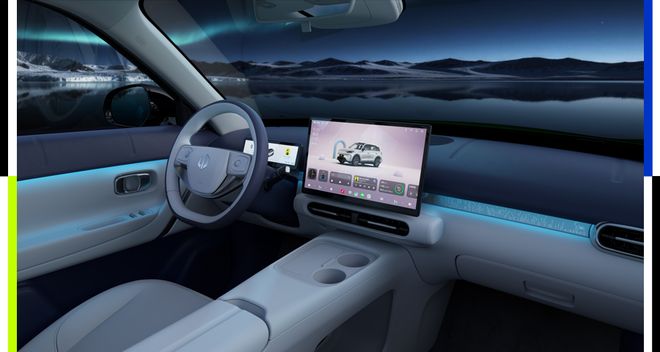
2026开年第一枪:零跑A10提前锁定年轻家庭市场爆款
3 6 Ke· 2026-02-27 13:43
Core Viewpoint - The emergence of the Leap A10 aims to redefine the perception of entry-level electric SUVs by integrating higher-end features and technology into the 100,000 RMB price segment, targeting young families as a primary vehicle choice [3][4][6]. Group 1: Market Changes - The 100,000 RMB electric SUV market is evolving, with increasing consumer expectations for comfort, family usability, and smart driving experiences [6]. - Leap A10 introduces features traditionally found in mid to high-end models, challenging the long-standing notion that lower-priced vehicles must compromise on quality and technology [6][12]. Group 2: Product Features - The A10 maximizes interior space efficiency with an 88.1% effective room rate, offering innovative storage solutions and a comfortable cabin experience [8]. - The vehicle incorporates advanced materials and design elements, such as OEKO-TEX certified seating and eco-friendly interior materials, aligning with global health and sustainability standards [8][9]. Group 3: Technological Advancements - Leap A10 is equipped with high-performance components, including laser radar and Qualcomm 8650 chips, which are typically reserved for higher-priced models, enhancing its smart driving capabilities [11][12]. - The vehicle's intelligent driving features provide seamless navigation and parking assistance, significantly reducing driver fatigue and improving safety in complex scenarios [12][13]. Group 4: Global Strategy - The A10 is designed for global markets, adhering to international regulations and standards, which positions it for scalability and adaptability across different regions [13][16]. - The launch of the A10 at international events, such as the Brussels Motor Show, underscores Leap's commitment to establishing a global presence and redefining value standards in the compact SUV market [13][17]. Group 5: Market Potential - The A10 is expected to become a best-selling model in the 100,000 RMB electric SUV segment, driven by its competitive pricing and enhanced technological offerings [17]. - The vehicle represents a shift in market dynamics, where success will depend on delivering higher technical density and comprehensive user experiences rather than merely competing on price [17].

华依科技(688071.SH)业绩快报:2025年净亏损5751.24万元
Ge Long Hui A P P· 2026-02-27 10:59
Core Viewpoint - The company reported a revenue of 517 million yuan for the fiscal year 2025, marking a year-on-year increase of 21.99%, but faced a net loss attributable to shareholders of 57.51 million yuan [1] Financial Performance - The total assets of the company reached 2.34 billion yuan, reflecting a growth of 7.00% compared to the beginning of the reporting period [1] - The equity attributable to shareholders of the parent company was 1.026 billion yuan, which is an increase of 4.34% from the start of the reporting period [1] Operational Factors - The growth in revenue was primarily driven by the expansion of the company's new energy powertrain testing services and the gradual ramp-up of income from the intelligent driving business [1] - Initial high fixed costs due to new testing and production equipment investments, along with increased market development and management costs, contributed to the profit not meeting expectations [1] - The company anticipates that as production and testing scales increase, the unit fixed costs will continue to dilute, leading to potential future profitability [1] Research and Financial Costs - The company maintained its research and development expenses during the reporting period [1] - Financial expenses decreased compared to the previous period due to foreign exchange gains and losses, but the impact of poor sales collections on profits was significant [1]

汽车行业双周报(2026、2、13-2026、2、26):今年春节假期新能源汽车出行创新高-20260227
Dongguan Securities· 2026-02-27 08:59
Investment Rating - The report maintains an "Overweight" rating for the automotive industry, expecting the industry index to outperform the market index by more than 10% in the next six months [47]. Core Insights - The automotive sector has shown resilience, with the Shenyin Wanguo Automotive Index rising by 0.72% over the past two weeks, outperforming the CSI 300 Index by 0.56 percentage points. Year-to-date, the automotive sector has increased by 3.38%, also surpassing the CSI 300 Index by 1.28 percentage points [12][18]. - January saw a stabilization in automotive production and sales, with production at 2.45 million units (flat year-on-year) and sales at 2.436 million units (down 3.2% year-on-year). Exports, however, surged by 44.9% year-on-year to 681,000 units [20][28]. - The report highlights a positive outlook for the domestic automotive market post-Spring Festival, driven by new vehicle launches and government incentives for vehicle trade-ins [41]. Summary by Sections Automotive Industry Trends and Valuation Review - The Shenyin Wanguo Automotive Index has ranked 17th among 31 industries over the past two weeks, with a year-to-date performance ranking of 22nd [12][18]. - The automotive sector's current PE (TTM) stands at 27.05 times, with sub-sectors like automotive services at 33.60 times and automotive parts at 31.43 times [19][16]. Industry Data Tracking - In January, automotive production was 2.45 million units, with sales at 2.436 million units, reflecting a month-on-month decline of 25.7% and 28.3%, respectively. Exports reached 681,000 units, marking a 44.9% increase year-on-year [20][28]. Industry News - The China Association of Automobile Manufacturers reported a 32.1% month-on-month decline in sales of domestic passenger cars in January [28]. - New government policies in Henan and Fujian provide subsidies for vehicle trade-ins, with maximum amounts of 20,000 and 15,000 yuan, respectively [29][30]. - The Spring Festival saw record high usage of new energy vehicles, with charging sessions reaching 602.1 million times [31]. Corporate News - Geely Automobile announced a share buyback of 384,100 shares for approximately 63.12 million HKD [34]. - GAC Group has established a new robotics company, Huijun Technology, focusing on intelligent robotics [35]. - BYD has introduced a financing policy with low-interest rates for its vehicles, enhancing its market competitiveness [36]. Investment Recommendations - The report suggests focusing on companies like BYD and Seres, which are expanding in overseas markets, and those in the intelligent driving supply chain, such as Fuyao Glass and Joyson Electronics [41][42].





【联合发布】2025年12月汽车智能网联洞察报告
乘联分会· 2026-02-27 08:36
Core Viewpoint - The article discusses the current state and trends of the Chinese electric vehicle (EV) market, highlighting sales figures, market structure, and advancements in intelligent driving technologies. Group 1: Market Trends - In January 2026, the sales of electric vehicles reached 945,000 units, showing a month-on-month decline of 44.8% but a year-on-year growth of 0.1%, with a penetration rate of 40.3% [5] - Sales of new energy passenger vehicles were 878,000 units, down 2.4% year-on-year, while new energy commercial vehicles saw a significant increase of 52.5%, totaling 67,000 units sold [6] Group 2: Market Structure - In January 2026, the market share of new energy sedans was 34.4%, a decrease of 9.2 percentage points compared to the same period last year, while the share of new energy SUVs rose to 53.9%, an increase of 6.7 percentage points [8] Group 3: Intelligent Driving Features - The installation rate of L2 and above auxiliary driving functions in new energy passenger vehicles reached 87.0% in 2025, indicating a growing acceptance of intelligent driving technologies [11] - The overall installation rate of Automatic Emergency Braking (AEB) in passenger vehicles was 68.2%, with a higher rate of 76.4% in the new energy passenger vehicle segment, highlighting AEB as a core technology for active safety [13] - The installation rate of Full-Speed Adaptive Cruise Control (ACC) in the overall passenger vehicle market was 64%, while it reached 72.8% in the new energy passenger vehicle market, indicating its importance in intelligent driving [18] Group 4: Laser Radar Technology - The development of laser radar has evolved from military applications to civilian use, with advancements in technology leading to improved performance and reduced costs, facilitating rapid growth in autonomous driving and smart city applications [28] - Laser radar outperforms millimeter-wave radar and ultrasonic radar in detection distance, accuracy, and angular resolution, although it is currently more expensive [30] - Major laser radar companies include Hesai Technology, Huawei, and RoboSense, with various automotive manufacturers adopting their technologies [32] Group 5: Future Directions - The future of laser radar technology is expected to focus on chip integration, digitalization, and performance enhancement, despite challenges related to cost, environmental factors, and standardization [36]
地平线机器人-W:HSD将在2026年明显放量,L3落地在即提升智驾需求,建议“买进”-20260227
CSC SECURITIES (HK) LTD· 2026-02-27 08:24
Investment Rating - The report assigns a "Buy" rating for the company, indicating a potential upside of 15% to 35% [4][11]. Core Insights - The company is expected to see significant growth in HSD (High-level Driving System) in 2026, with the demand for Level 3 (L3) autonomous driving solutions anticipated to increase, suggesting a strong market opportunity [7][9]. - The company has a robust product portfolio that includes multiple solutions for mid to high-level autonomous driving, actively expanding its partnerships with automotive manufacturers [7][9]. - The report forecasts net profits for the company to reach -57.7 million RMB in 2025, -29 million RMB in 2026, 2 million RMB in 2027, and 21 million RMB in 2028, with corresponding EPS of -0.39, -0.20, 0.01, and 0.14 RMB respectively [9][10]. Summary by Sections Company Overview - The company operates in the machinery and equipment industry, with a current H-share price of 8.16 HKD as of February 26, 2026, and a market capitalization of 0 billion [3]. Recent Ratings - The last rating update was on June 24, 2025, with a closing price of 6.37 HKD and a "Buy" recommendation [4]. Financial Projections - The projected net profit for 2024 is 2,347 million RMB, with subsequent years showing a decline into losses before returning to profitability in 2027 and 2028 [10]. - Revenue from product sales is expected to grow from 2,384 million RMB in 2024 to 18,543 million RMB in 2028, indicating a strong upward trend in sales [12]. Market Trends - The report highlights that the penetration rate of vehicles equipped with urban NOA (Navigation on Autopilot) reached 15.1% in 2025, up by 5.6 percentage points from 2024, reflecting a growing acceptance of advanced driving technologies [9]. - The commercial rollout of L3 autonomous driving technology is expected to accelerate, with a projected market size for autonomous driving chips exceeding 100 billion RMB [9].
地平线机器人-W(09660):HSD将在2026年明显放量,L3落地在即提升智驾需求,建议“买进”
CSC SECURITIES (HK) LTD· 2026-02-27 08:20
Investment Rating - The report assigns a "Buy" rating for the company, indicating a potential upside of 15% to 35% [4][11]. Core Insights - The company is expected to see significant growth in HSD (High-level Smart Driving) in 2026, with the launch of L3 autonomous driving technology enhancing demand for smart driving solutions. The report suggests a "Buy" recommendation based on these developments [7][9]. - The company has a strong product portfolio that includes multiple solutions for mid to high-level smart driving, actively expanding its customer base among automotive manufacturers and providing development services based on its chips [7][9]. - The report anticipates a rapid increase in high-level NOA (Navigation on Autopilot) demand, projecting over 50% growth in the next two years, with the smart driving chip market expected to exceed 100 billion [9]. Financial Summary - The company’s projected net profits for 2025, 2026, 2027, and 2028 are estimated at -57.7 billion, -29.2 billion, 2 billion, and 21 billion respectively, with corresponding EPS of -0.39, -0.2, 0.01, and 0.14 [9][10]. - Revenue from product sales is expected to grow from 2.384 billion in 2024 to 18.543 billion by 2028, with a significant increase in sales costs and R&D expenses over the same period [12]. - The projected P/S ratios for 2026, 2027, and 2028 are 19, 9.7, and 6.5 respectively, indicating a favorable valuation trend as the company moves towards profitability [9][10].
华金证券:线控底盘迈入放量周期 市场规模将进一步扩张
智通财经网· 2026-02-27 06:40
Core Viewpoint - The report from Huajin Securities indicates that the smart chassis market for passenger cars in China is expected to reach 46.6 billion yuan by 2025 and 117.1 billion yuan by 2030, with a CAGR of 20.24% from 2025 to 2030, showing rapid penetration [1][2]. Group 1: Market Growth and Trends - The smart chassis is a crucial technology for achieving advanced intelligent driving, facilitating the transition from mechanical to drive-by-wire systems, which enhances performance beyond traditional mechanical chassis [2]. - The market penetration of drive-by-wire systems is currently low, but it is anticipated to accelerate due to advancements in intelligent driving technologies, leading to further market expansion [1][6]. Group 2: Key Technologies in Drive-by-Wire Systems - Within the drive-by-wire systems, significant attention is focused on brake and steering technologies, where foreign companies currently dominate due to high development complexity [3]. - The electric brake system (EHB One-box) is the mainstream solution, meeting the stringent requirements for L4+ level autonomous driving, with mass production expected to accelerate following new regulations in 2025 [4]. Group 3: Competitive Landscape - The steering-by-wire (SBW) system is set to replace the widely used EPS system, offering faster response times and greater flexibility, which are essential for higher safety levels and full-scenario intelligent driving [5]. - Several domestic suppliers are in the R&D phase, with some, like Nexperia, making significant progress towards mass production [5]. Group 4: Investment Recommendations - The industry is entering a critical phase of industrialization for drive-by-wire systems in 2026, with companies that have platform capabilities and are involved in the drive-by-wire product chain expected to benefit, including Bertley, Nexperia, and others [6].
智能驾驶专题系列(一):线控底盘:解锁高阶智驾,迈入放量周期
Huajin Securities· 2026-02-27 06:03
Investment Rating - The report maintains an "Outperform" rating for the industry [1]. Core Insights - The steer-by-wire chassis is essential for achieving advanced intelligent driving, with significant market growth expected as it transitions from mechanical to electronic control [2][4]. - The Chinese passenger vehicle smart chassis market is projected to reach CNY 46.6 billion by 2025 and CNY 117.1 billion by 2030, with a CAGR of 20.24% from 2025 to 2030 [2][27]. - Key focus areas within steer-by-wire systems include brake and steering control, with foreign companies currently dominating the market [2][21]. Summary by Sections Steer-by-Wire Chassis - The steer-by-wire chassis is a critical technology for high-level intelligent driving, enabling a shift from mechanical to electronic control, enhancing performance and safety [2][14]. - The steer-by-wire system allows for real-time sensing and dynamic decision-making, providing precise execution capabilities for advanced driving scenarios [2][14]. Brake Control - The EMB (Electric Motor Brake) system is becoming mainstream, with regulations supporting its production, expected to accelerate by 2025 [2][21]. - The EMB system meets the stringent requirements for L4+ level autonomous driving, offering improved response speed and control precision compared to traditional systems [2][21]. Steering Control - The SBW (Steer-by-Wire) system is designed for L3 and above autonomous driving, eliminating mechanical connections for enhanced responsiveness and flexibility [2][21]. - The transition from EPS (Electric Power Steering) to SBW is driven by the need for higher safety standards and full-scene intelligent driving capabilities [2][21]. Investment Recommendations - The report suggests focusing on companies within the industry chain that are developing steer-by-wire products and have platform capabilities, such as Bertel, Nissin, Zhejiang Shibao, and others [2][31].


特斯拉无人车下线加速智驾产业落地!资金悄然布局智能驾驶ETF(516520)
Xin Lang Cai Jing· 2026-02-27 05:09
Core Insights - The intelligent driving sector has made significant progress with Tesla's first Cybercab rolling off the production line in Texas, marking the transition of the world's first original driverless taxi without a steering wheel or pedals into the mass production preparatory stage, indicating that L4-level and above autonomous driving commercialization is moving from vision to reality [1][4] Industry Developments - Since 2026, the global intelligent driving industry has accelerated due to policy support, technological breakthroughs, and practical applications. National standards such as "Safety Requirements for Autonomous Driving Systems of Intelligent Connected Vehicles" provide regulatory support for the large-scale application of high-level autonomous driving [1][4] - As of February 24, 2026, over 50 intelligent driving stocks in the A-share market have released performance reports for 2025, with more than 20 companies reporting a net profit attributable to shareholders exceeding 100 million yuan, indicating a steady improvement in the overall profitability of the industry [1][4] Market Sentiment - The continuous improvement in the industry's fundamentals has boosted market willingness to allocate resources to this high-growth sector. The intelligent driving ETF (516520) has attracted significant capital since 2026, accumulating 590 million yuan, which is 1.8 times its total net inflow for the entire year of 2025 [5] - The sustained influx of funds has driven the fund's scale and shares to new highs since its inception, reaching 1.257 billion yuan and 936 million shares, making it the only ETF in the intelligent automotive sector with a scale exceeding 800 million yuan [5] ETF Overview - The intelligent driving ETF (516520) closely tracks the CSI Intelligent Automotive Theme Index, which includes companies providing terminal perception and platform applications for smart vehicles, as well as other representative companies benefiting from the intelligent automotive sector. The top five secondary industries include semiconductors (23.0%), automotive parts (22.5%), passenger vehicles (12.6%), software development (12.3%), and communication equipment (7.0%) [2][5] - The index's price-to-earnings ratio is currently 32.44, which is within the lower historical percentile range of 7.48% over the past five years [6] - The fund manager, Huatai-PB Fund, is one of the first ETF managers in China, committed to providing transparent, convenient, and low-cost index tool products for investors. Its two major ETF products, Huatai-PB CSI 300 ETF (510300) and Huatai-PB A500 ETF (563360), are popular in the market, with the lowest management fee rate of 0.15% per year and a custody fee rate of 0.05% per year among similar funds [6]
特斯拉无人车下线加速智驾产业落地!资金悄然布局智能驾驶ETF
Xin Lang Cai Jing· 2026-02-27 04:58
Group 1 - Tesla's first Cybercab has officially rolled off the production line at its Texas Gigafactory, marking the transition of the world's first original driverless taxi without a steering wheel or pedals into the mass production preparation phase, indicating that L4-level and above autonomous driving commercialization is moving from vision to reality [1] - Since 2026, the global smart driving industry has been accelerating due to policy support, technological breakthroughs, and application implementation, with over 50 smart driving stocks in the A-share market reporting 2025 performance, and more than 20 of these stocks achieving a net profit of over 100 million yuan [1] - The continuous improvement of the industry fundamentals has boosted market confidence in this high-growth sector, with the smart driving ETF (516520) attracting 590 million yuan in funds since 2026, which is 1.8 times its total net inflow for the entire year of 2025 [1] Group 2 - The smart driving ETF (516520) closely tracks the CSI Smart Automotive Theme Index, which reflects the overall performance of companies in the smart automotive industry, with the top five secondary industries being semiconductors (23.0%), automotive parts (22.5%), passenger vehicles (12.6%), software development (12.3%), and communication equipment (7.0%) [2] - The index's price-to-earnings ratio is currently 32.44, which is within the lower historical percentile range of 7.48% over the past five years [2] - The fund manager of the smart driving ETF, Huatai-PB Fund, is one of the first ETF managers in China, providing transparent, convenient, and low-cost index products, with its two major ETF products being well-received in the market [2]