碳减排

Search documents
始祖鸟烟花秀升级成“炸山”惹众怒,品牌环保人设与实际行动脱节
Sou Hu Cai Jing· 2025-09-22 11:11
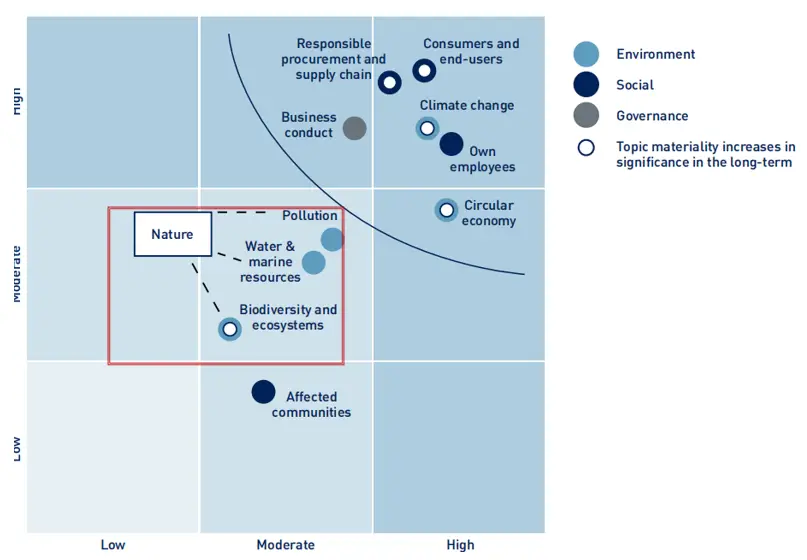
Core Viewpoint - The recent fireworks marketing event by Arc'teryx, named "Ascend Dragon," has sparked a trust crisis regarding the brand's environmental commitments, despite claims of using biodegradable materials and compliance with ecological protection measures [1][3]. Group 1: Sustainability Commitments - Arc'teryx has established a "Sustainability Steering Committee" led by the CEO, meeting bi-monthly to address key sustainability issues [1]. - The brand aims to reduce operational emissions by 90% and indirect value chain emissions by 42% by 2030, based on 2022 levels [2]. - The company plans to eliminate coal usage by 2025 and increase the proportion of products made with green electricity to 50% by 2030 [2]. Group 2: Community Responsibility - Arc'teryx promotes environmental concepts at the grassroots level by funding local organizations and forming strategic partnerships [3]. - The latest sustainability report is from 2022, highlighting a disconnect between the company's sustainability commitments and actual business practices [3]. Group 3: Corporate Structure and Performance - Arc'teryx is a high-end outdoor technical apparel brand under Amer Sports, which was acquired by Anta Group in 2019 [4]. - Amer Sports' 2024 sustainability report indicates that five out of ten key ESG issues are environment-related, with increasing importance on climate change and biodiversity [4]. - In 2024, Amer Sports reported total revenue of $5.2 billion, with Arc'teryx contributing over $2 billion, accounting for nearly 40% of total revenue [6]. - The company achieved a revenue growth of 14.14% in the first half of 2024, with Arc'teryx showing stronger growth than other categories [6].

青海:生态项目贷款有了绿色通道
Ren Min Ri Bao· 2025-09-22 04:30
Core Insights - As of the end of Q2, the balance of green loans in Qinghai Province exceeded 213.1 billion yuan, accounting for 26.82% of total loans, with an increase of 9.936 billion yuan since the beginning of the year [4] Group 1: Green Loan Initiatives - The People's Bank of China Qinghai Branch has developed a "carbon account" system for enterprises, which includes six core indicators related to carbon emissions and green electricity usage, guiding financial institutions to incorporate this data into credit decisions [1] - By the end of July, 921 key enterprises in Qinghai had established "carbon accounts," with financial institutions issuing loans linked to these accounts totaling 32.169 billion yuan, saving enterprises 243 million yuan in interest [2] Group 2: Financial Support for Clean Energy - The National Development Bank Qinghai Branch provided comprehensive financial support for the construction of the Yangqu Hydropower Station, utilizing various loan products throughout the project's lifecycle [3] - Credit balances in the clean energy sector, including equipment manufacturing, facility construction, and pumped storage power station construction, increased by 40.5%, 22.1%, and 34.7% year-on-year, respectively [3] Group 3: Ecological Product Financing - In 2024, the People's Bank of China Qinghai Branch will implement a financial service system for ecological products, establishing a green channel for ecological project loans [4] - Innovative financial products have been developed, such as using future receivables from tourism as collateral, resulting in 20 loans totaling 1.177 billion yuan for companies like Qinghai Lake Tourism Group [4]
航运行业支持碳减排 国际贸易和可持续高度相关
Xin Lang Cai Jing· 2025-09-22 02:15
Core Viewpoint - The international shipping industry is crucial for global trade, with 90% of goods traded by sea, representing 60% of the total trade value, approximately $40 trillion [1] Group 1: Importance of Shipping Industry - The shipping industry consists of around 10,000 companies and 60,000 to 70,000 vessels, with 60% of shipping capacity serving developing economies [1] - Simon Bennett emphasized the need for public awareness of the shipping industry's significance, likening its importance to that of the International Air Transport Association (IATA) [1] Group 2: International Trade Rules - Simon Bennett stated that shipping is a high-cost industry, with a large container ship potentially incurring fuel costs of up to $25 million annually, excluding crew and insurance costs [2] - Stable trade systems and predictable trade policies are essential for the industry's development, especially given the volatility in freight rates due to global economic conditions [2] - Tan Hung Seng highlighted Singapore's role as a major trade hub, with a projected cargo throughput of 622 million tons in 2024, 90% of which will be for transshipment [2] Group 3: Carbon Emission Regulations - The unification of carbon taxes and regulatory frameworks is a significant concern for the shipping industry [3] - Tan Hung Seng discussed the EU's Carbon Border Adjustment Mechanism (CBAM) and the need for an international framework to support carbon reduction without imposing excessive burdens on businesses [4] Group 4: Supply Chain Diversification and Technology - Marie-Caroline Laurent noted that many clients are diversifying their supply chains, which reflects a restructuring rather than a decrease in globalization [5] - The shipping industry is leveraging digitalization and technological advancements to improve efficiency, potentially reducing fuel consumption by 10% to 20% [5] - Automation and technological innovations are also being utilized to alleviate port congestion, a persistent issue in the industry [5]
生态项目贷款有了绿色通道
Ren Min Ri Bao· 2025-09-21 22:41
Group 1 - The "carbon account" system in Qinghai Province is designed to help enterprises manage their carbon emissions and green electricity usage, providing a clear overview of their carbon footprint [1] - As of the end of July this year, 921 key enterprises in Qinghai have established "carbon accounts," leading to a total of 32.169 billion yuan in loans linked to these accounts, saving enterprises 243 million yuan in interest expenses [1] - The People's Bank of China in Qinghai has implemented a green financial service system to support enterprises in their transition to low-carbon operations, enhancing their access to financial services [2] Group 2 - The National Development Bank's Qinghai branch has provided comprehensive financial support for the construction of the Yangqu Hydropower Station, utilizing various loan products throughout the project's lifecycle [2] - By the end of the second quarter, the credit balance in the clean energy sector, including equipment manufacturing and construction, has seen significant year-on-year growth of 40.5%, 22.1%, and 34.7% respectively [2] - The People's Bank of China in Qinghai is focusing on building a financial service system for ecological products, including innovative financing models for tourism projects [3] Group 3 - As of the end of the second quarter, the green loan balance in Qinghai reached 213.105 billion yuan, accounting for 26.82% of total loans, with an increase of 9.936 billion yuan since the beginning of the year [3] - The bank is enhancing its green financial policy framework and incentive mechanisms to support the transformation of traditional industries and the development of clean energy and ecological products [3]
截至二季度末,青海省绿色贷款余额超两千一百亿元 生态项目贷款有了绿色通道
Ren Min Ri Bao· 2025-09-21 22:02
Core Insights - The establishment of "carbon accounts" in enterprises within the Nanchuan Industrial Park in Xining, Qinghai Province, is a significant step towards carbon emission management and reduction, allowing for precise tracking of carbon emissions and green electricity usage [1][2] - The People's Bank of China Qinghai Branch has tailored financial services to support enterprises with carbon accounts, providing preferential loan terms for those demonstrating significant carbon reduction efforts [1][3] - The Qinghai Province has seen substantial growth in green loans, with a total balance of 213.1 billion yuan, accounting for 26.82% of all loans, reflecting a strong commitment to green finance and sustainable development [3] Financial Support Initiatives - The Qinghai Branch of the National Development Bank has provided comprehensive financial support for the construction of the Yangqu Hydropower Station, utilizing various loan products throughout the project's lifecycle [2] - Financial institutions have organized multiple matchmaking events to connect banks with clean energy and green computing enterprises, promoting the use of diverse financial products to support these sectors [2] - The Qinghai Province has experienced significant year-on-year growth in credit balances across clean energy sectors, with increases of 40.5% in equipment manufacturing, 22.1% in facility construction, and 34.7% in pumped storage power station construction [2] Green Financial Products - The People's Bank of China Qinghai Branch has introduced an ecological product financial service system, facilitating green project loans and innovative financial products, such as using future receivables from tourism as collateral [3] - A total of 20 loans amounting to 1.177 billion yuan have been provided to enterprises like the Qinghai Lake Tourism Group, showcasing the effectiveness of the new financial models [3] - The bank is actively enhancing the green financial policy framework and incentive mechanisms to support the transformation of traditional industries and the development of clean energy and ecological products [3]
科莱恩为SYPOX供应定制型催化剂
Zhong Guo Hua Gong Bao· 2025-09-19 02:34
Core Insights - Clariant has announced a supply agreement with SYPOX to produce and deliver catalysts for the world's largest electric heating steam methane reforming (e-SMR) facility, which aims to reduce carbon emissions by up to 40% [1] Group 1: Project Overview - The innovative project combines SYPOX's advanced electric heating conversion furnace technology with Clariant's expertise to produce synthesis gas with significantly lower carbon emissions [1] - The project is set to commence operations in 2026, utilizing 10 megawatts of renewable electricity to produce approximately 150 tons of synthesis gas per day [1] Group 2: Technology Comparison - Traditional steam methane reforming (SMR) relies on the combustion of fossil fuels for heating, resulting in high energy consumption and emissions [1] - SYPOX's conversion furnace innovatively electrifies the chemical conversion process within the reactor, reducing the system's size by nearly 100 times [1] - This technology enhances economic efficiency and sustainability while greatly simplifying the operation of the facility [1] Group 3: Market Implications - SYPOX's flexible design can cater to both small modular applications and large industrial installations, indicating a broad market applicability [1] - Clariant's global vice president of specialty catalysts expressed enthusiasm for optimizing and producing high-performance catalysts for the first 10 megawatt electric heating steam methane reforming facility, which is expected to be the largest of its kind to enter commercial operation [1]
直击世贸组织公共论坛|航运行业支持碳减排 国际贸易和可持续高度相关
Xin Lang Cai Jing· 2025-09-18 23:36
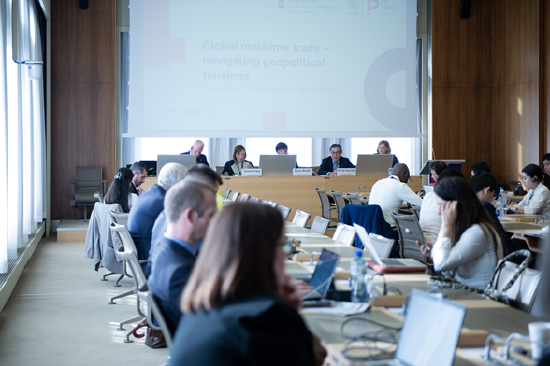
Core Viewpoint - The international shipping industry is crucial for global trade, with 90% of goods transported by sea, highlighting the need for stable international trade rules and regulations [3][5]. Group 1: Importance of Shipping Industry - In 2024, 12.6 billion tons of global goods will be transported via container shipping, accounting for 90% of global trade volume and 60% of trade value, approximately $40 trillion [3]. - The shipping industry consists of around 10,000 shipping companies and 60,000 to 70,000 vessels, with 60% of shipping capacity serving developing economies [3][5]. Group 2: Need for International Trade Rules - The shipping industry faces high operational costs, with a large container ship potentially incurring fuel costs of up to $25 million annually, excluding crew and insurance costs [5]. - A stable trade system and predictable trade policies are essential for the industry's development, especially given the volatility in freight rates due to global economic conditions [5]. Group 3: Role of Singapore in Global Trade - Singapore is a major trade hub, with its port projected to handle 622 million tons of cargo in 2024, 90% of which will be for transshipment [5]. - The economy of Singapore heavily relies on imports, with import trade accounting for 300% of its GDP, making the global trade system vital for its economic health [5]. Group 4: Carbon Tax and Regulatory Framework - The shipping industry is concerned about the unification of carbon tax and regulatory frameworks, with the EU's Carbon Border Adjustment Mechanism (CBAM) being a significant topic [6][7]. - A unified international framework for carbon reduction is necessary to avoid multiple carbon tax charges and ensure compatibility with WTO rules, preventing increased burdens on businesses [7]. Group 5: Supply Chain Diversification and Digitalization - Companies are diversifying their supply chains in response to new international trade dynamics, indicating a restructuring rather than a decrease in globalization [8]. - Digitalization and technological advancements are enhancing efficiency in the shipping industry, potentially reducing fuel consumption by 10% to 20% and alleviating port congestion through automation [10].
沪产绿色甲醇拿下全流程双认证 10万吨级项目年底投产
Jie Fang Ri Bao· 2025-09-17 09:47
Core Insights - Shanghai's 100,000-ton green methanol project has achieved significant milestones by obtaining ISCC EU and PLUS certifications, marking it as the first local green methanol production capacity project in Shanghai and the largest in China for producing green methanol from biogas [1][2] Group 1: Project Overview - The project is a collaboration among four state-owned enterprises: Sheneng Group, Chengdu Investment Group, Huayi Group, and Shanghai Port Group [1] - It utilizes biomass methanol production routes, sourcing raw materials from urban wet waste and livestock manure, and incorporates green electricity generated from wind power [1] - The project boasts an 80% reduction in average carbon emissions compared to conventional fossil fuel methanol production methods, supporting the green fuel needs of international shipping at Shanghai Port [1] Group 2: Certification Importance - The ISCC EU certification is mandatory for green products entering the EU energy market, while ISCC PLUS certification is recognized globally for various energy and chemical products [2] - Achieving both certifications allows the green methanol produced to enter the EU market, helping Shanghai Port mitigate trade risks and participate in carbon reduction trading [2] - The project is set to be completed by the end of this year, with plans to conduct the first local green methanol refueling at Shanghai Port before the 2026 Spring Festival [2]
湖北沐阳能碳技术服务有限公司成立 注册资本20万人民币
Sou Hu Cai Jing· 2025-09-16 04:17
Core Viewpoint - The establishment of Hubei Muyang Carbon Technology Service Co., Ltd. indicates a growing focus on emerging energy technologies and carbon management solutions in the industry [1] Company Summary - Hubei Muyang Carbon Technology Service Co., Ltd. has been recently founded with a registered capital of 200,000 RMB [1] - The legal representative of the company is Zhang Liang [1] Business Scope - The company’s business scope includes: - Research and development of emerging energy technologies - Manufacturing of transformers, rectifiers, and inductors - Leasing of photovoltaic power generation equipment - Sales of photovoltaic equipment and components - Manufacturing and sales of power distribution switch control equipment - Manufacturing and sales of power electronic components - Information system integration services - Development and consulting in carbon reduction, conversion, capture, and storage technologies - Management services and rapid charging station establishment - Manufacturing and sales of micro-special motors and components - Sales of solar thermal utilization products and equipment [1]
安铁成:建议在智能网联、碳减排等领域提出“中国方案”
Yang Shi Wang· 2025-09-13 11:35
Core Insights - The development of intelligent connected new energy vehicles is crucial for China's transition from a "big automotive country" to a "strong automotive country," serving as a key driver for industrial transformation and integration into the global industrial system [1] Group 1: Strategic Recommendations for 2025 - The year 2025 is pivotal for the automotive industry, marking the end of the 14th Five-Year Plan and the beginning of the 15th, focusing on high-quality development and new energy vehicle integration [3] - Emphasis on enhancing independent innovation capabilities and developing new production forces by focusing on high-end automotive chips, new energy power systems, and advanced chassis architectures [3] - The integration of artificial intelligence, big data, and edge computing into the entire lifecycle of automotive development, manufacturing, and service is essential for technological breakthroughs and enhancing core competitiveness [3] Group 2: Transitioning to New Energy Vehicles - A dual approach of optimizing new energy vehicle growth while revitalizing existing fuel vehicle markets is necessary for a smooth transition [4] - The promotion of low-carbon transformation of traditional fuel vehicles through technological upgrades and supply chain restructuring is critical [4] - The establishment of a comprehensive regulatory framework for intelligent connected vehicles, including standards and policies, will support the commercialization of L3 and above autonomous vehicles [4] Group 3: International Cooperation and Globalization - Strengthening international collaboration and research is vital for enhancing the global presence of Chinese automotive enterprises [5] - Active participation in global governance and standard-setting in areas like intelligent connectivity and carbon reduction will improve China's contribution to global automotive governance [5] - Supporting leading companies in establishing R&D centers and manufacturing bases overseas will facilitate the localization of production and innovation [5]