网络安全

Search documents
破发股亚信安全扣非连亏3年 2022年上市即巅峰募12亿
Zhong Guo Jing Ji Wang· 2026-01-23 06:31
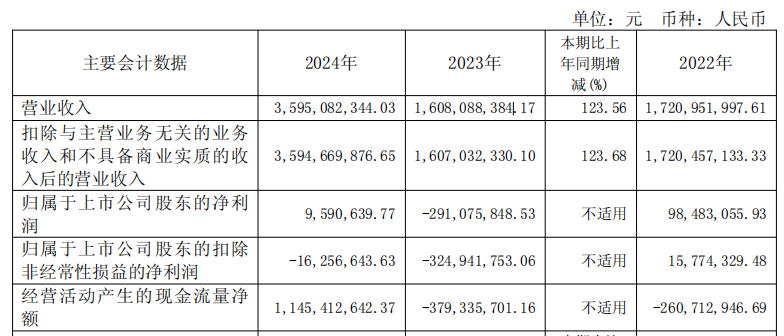
Core Viewpoint - AsiaInfo Security (688225.SH) has projected a significant increase in revenue for 2025, but anticipates a net loss compared to the previous year [1] Financial Performance - For 2025, AsiaInfo Security expects revenue between 740 million to 800 million yuan, an increase of 380.49 million to 440.49 million yuan year-on-year [1] - The company forecasts a net loss attributable to shareholders of 50 million to 38 million yuan for 2025, a decrease of 38.96 million to 50.96 million yuan compared to the previous year [1] - The projected net profit excluding non-recurring gains and losses for 2025 is expected to be between -40 million to -29 million yuan, down by 27.37 million to 38.37 million yuan year-on-year [1] - In 2024, AsiaInfo Security reported revenue of 3.595 billion yuan, a year-on-year increase of 123.56% [2] - The net profit attributable to shareholders in 2024 was 9.59 million yuan, recovering from a loss of 291.08 million yuan in the previous year [2] - The net profit excluding non-recurring gains and losses for 2024 was -16.26 million yuan, an improvement from -32.49 million yuan in 2023 [2] - The net cash flow from operating activities for 2024 was 1.145 billion yuan, a significant recovery from -379.34 million yuan in 2023 [2] IPO and Fundraising - AsiaInfo Security was listed on the Sci-Tech Innovation Board on February 9, 2022, with an initial public offering of 40.01 million shares at a price of 30.51 yuan per share [2] - The total amount raised from the IPO was 1.221 billion yuan, with a net amount of 1.123 billion yuan, which was 85.06 million yuan less than originally planned [3] - The funds raised are intended for various projects including cloud security operations, smart security products, and 5G cloud network security products [3] - The total issuance costs for the IPO were 98.19 million yuan, with underwriting fees amounting to 73.24 million yuan [4]


南兴股份涨2.07%,成交额1.48亿元,主力资金净流入425.38万元
Xin Lang Cai Jing· 2026-01-23 02:19
Core Viewpoint - Nanshing Co., Ltd. has shown a mixed performance in stock price and financial results, with a notable increase in stock price year-to-date but a decline in revenue and net profit for the recent period [1][2]. Group 1: Stock Performance - On January 23, Nanshing's stock price increased by 2.07%, reaching 20.68 CNY per share, with a trading volume of 1.48 billion CNY and a turnover rate of 2.57%, resulting in a total market capitalization of 6.11 billion CNY [1]. - Year-to-date, Nanshing's stock price has risen by 6.21%, but it has decreased by 3.36% over the last five trading days, while it has increased by 30.47% over the last 20 days and 21.36% over the last 60 days [1]. - The company has appeared on the "龙虎榜" (a stock trading list) five times this year, with the most recent appearance on January 19 [1]. Group 2: Financial Performance - For the period from January to September 2025, Nanshing reported a revenue of 2.426 billion CNY, representing a year-on-year decrease of 5.80%, and a net profit attributable to shareholders of 91.82 million CNY, down 55.69% year-on-year [2]. - Since its A-share listing, Nanshing has distributed a total of 904 million CNY in dividends, with 517 million CNY distributed over the last three years [3]. Group 3: Shareholder Information - As of September 30, 2025, Nanshing had 49,300 shareholders, a decrease of 3.96% from the previous period, with an average of 5,725 circulating shares per shareholder, an increase of 4.12% [2]. - Among the top ten circulating shareholders, Hong Kong Central Clearing Limited is the third-largest shareholder with 2.7268 million shares, marking its entry as a new shareholder [3].

机构发布2026年AI与网络安全预测 平台化部署成为全新防御方式
Zhong Guo Jing Ying Bao· 2026-01-22 16:25
Core Insights - The integration of artificial intelligence (AI) into the global economy is fundamentally changing the cybersecurity landscape, creating both risks and opportunities for defense mechanisms [1][2] - Palo Alto Networks has identified 2026 as a pivotal year for cybersecurity, emphasizing the need for a systemic transformation in security architecture to adapt to AI advancements [2][3] Group 1: Predictions and Trends - The report outlines six major trends for AI and cybersecurity by 2026, starting with the threat of AI identity spoofing, which could lead to a crisis of authenticity due to the high ratio of autonomous AI agents to humans [3][4] - The introduction of autonomous AI agents is expected to address the global shortage of 4.8 million cybersecurity professionals, but these agents will also become prime targets for attackers, necessitating a "controlled autonomy" defense system [4][5] - Data poisoning is anticipated to become a new frontier in cyberattacks, where attackers will covertly alter AI training data, leading to a fundamental "data trust crisis" [5][6] Group 2: Legal and Operational Challenges - The rapid adoption of AI technologies is outpacing the development of security strategies, with only 6% of companies having a comprehensive AI security plan, which could lead to significant legal liabilities for executives [5][6] - The emergence of quantum computing is expected to create a "retrospective insecurity" crisis, compelling companies to transition to post-quantum cryptography systems [5][6] - Browsers are evolving from information aggregation tools to intelligent agent platforms, necessitating the adoption of integrated cloud-native security architectures to implement zero-trust security measures [5][6]

欧盟将部分中国企业列为关键领域高风险供应商,商务部回应
Nan Fang Du Shi Bao· 2026-01-22 11:05
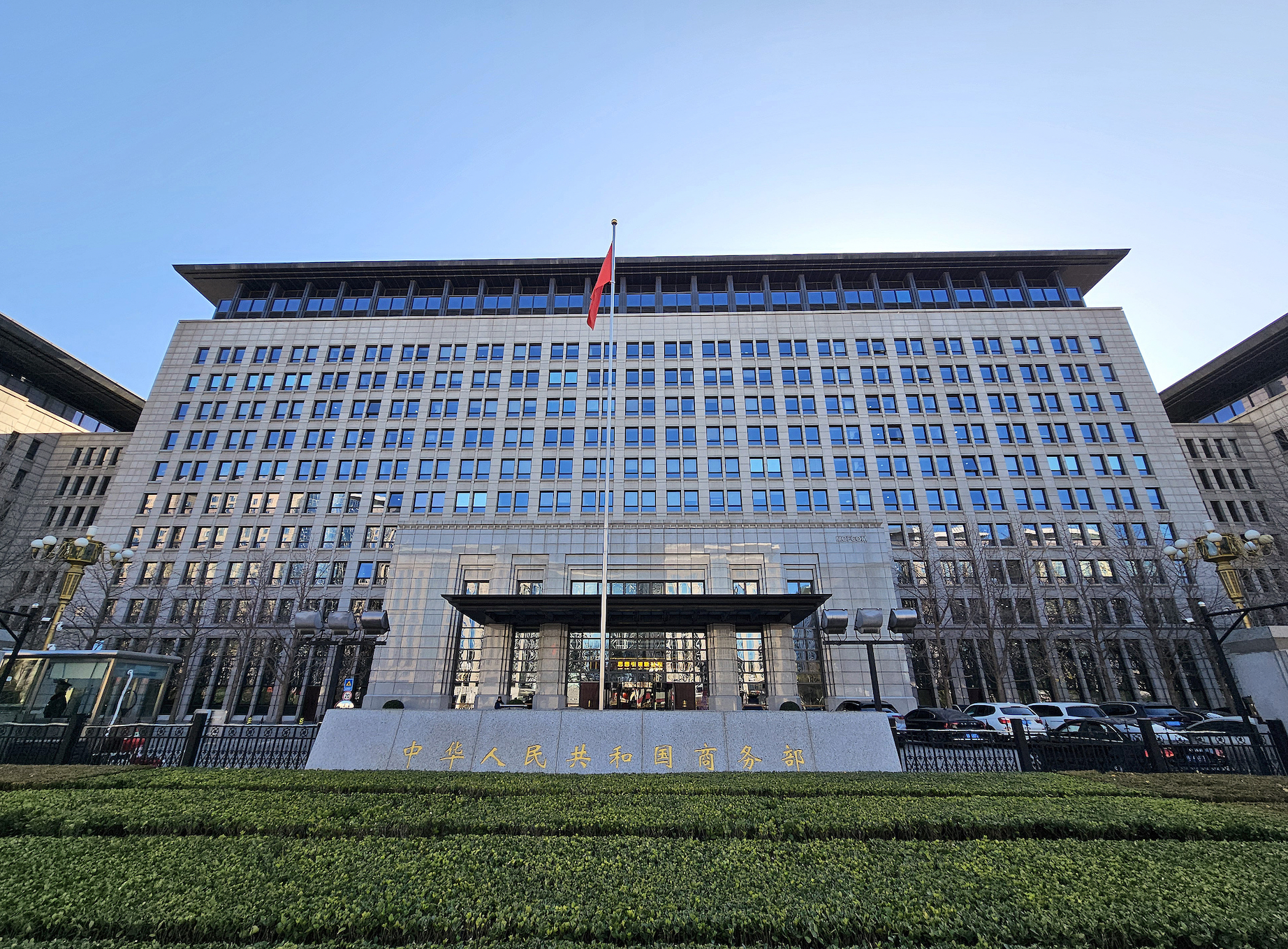
Core Viewpoint - The Chinese government expresses serious concern over the European Union's classification of certain Chinese companies as high-risk suppliers, which restricts their participation in 5G infrastructure development [1][2] Group 1: EU's Actions - The European Commission proposed a new amendment to the Cybersecurity Act on January 20, aiming to phase out components and equipment from high-risk suppliers in critical infrastructure [1] - The EU's requirement for member states to exclude high-risk suppliers from 18 key industries, including energy, transportation, and ICT services, is viewed as a direct action against Chinese companies [1] Group 2: China's Response - The Chinese government emphasizes that its companies have been operating in Europe in compliance with local laws, providing quality products and services that contribute to the development of the European telecommunications and digital industries [1] - The Chinese government firmly opposes the EU's discriminatory actions against Chinese companies and the politicization of economic issues [1] Group 3: Market Implications - The use of non-technical standards by the EU to restrict or prohibit market access is seen as a significant distortion of fair competition, which could harm both parties and create risks in the digital supply chain [1] - The Chinese government urges the EU to adhere to the principle of technological neutrality in cybersecurity and avoid excessive security measures that could hinder normal economic cooperation between China and the EU [2]
人工智能训练数据清洗安全指南
全国网络安全标准化技术委员会· 2026-01-22 11:02
Investment Rating - The report does not provide a specific investment rating for the industry. Core Insights - The document outlines the importance of training data cleansing as a critical step in ensuring the quality of AI model training, emphasizing the need to eliminate content that violates core socialist values, discriminatory content, and any illegal or infringing information [8][11]. - It presents safety principles for training data cleansing, including safety control, diversity of data sources, transparency, and continuous iteration [17]. - The report identifies various risks associated with training data, such as data quality risks, risks of violating socialist core values, discriminatory content risks, commercial legal risks, and risks of infringing on others' legal rights [18][20][21][23][24]. Summary by Sections 1. Scope - The document provides guidelines applicable to all entities involved in training data cleansing, including AI model developers and data suppliers [11]. 2. Terminology Definitions - Key terms are defined, including "training data," "training data cleansing activities," and "security of training data cleansing process," which are essential for understanding the context of the guidelines [12][13]. 3. Safety Principles for Training Data Cleansing - The principles include: - Safety and control: Ensuring data legality and content safety [17]. - Diversity: Considering various data sources and scenarios [17]. - Transparency: Documenting rules and decisions for auditability [17]. - Continuous iteration: Adapting strategies based on feedback and changes [17]. 4. Risk Identification Dimensions - The report categorizes risks into several dimensions, including: - Data quality risks: Issues like incompleteness, inaccuracies, and outdated data [18]. - Violations of socialist core values: Content that could negatively impact society [20]. - Discriminatory content risks: Systematic biases against specific groups [21]. - Commercial legal risks: Risks associated with intellectual property violations [23]. - Infringement of legal rights: Risks related to personal information and other rights [24]. 5. Cleansing Methods - Various methods for data cleansing are outlined, including: - Data quality processing: Addressing completeness, accuracy, timeliness, usability, and redundancy [31]. - Source control: Ensuring data comes from reliable and verified sources [33]. - Content safety review: Implementing filtering rules and models for harmful content [35]. - Personal information protection: Techniques for anonymization and de-identification [36]. - Bias mitigation: Strategies to balance representation in training data [38]. 6. Implementation Process - The report details a structured process for implementing data cleansing, including: - Data collection and source review: Defining the scope and purpose of data collection [41][42]. - Initial data quality processing: Checking for completeness, accuracy, and relevance [43][44]. - Risk identification and cleansing strategy formulation: Using statistical and technical methods for risk assessment [48][49]. - Data cleansing execution: Following established methods to cleanse data [51]. - Secondary risk assessment: Evaluating the effectiveness of cleansing methods [52][53][54][55][56]. - Continuous monitoring and iterative optimization: Establishing feedback mechanisms and regular reviews [62][64].
亚信安全(688225.SH)发预亏,预计2025年度归母净亏损3.8亿元至5亿元
智通财经网· 2026-01-22 09:28
Core Viewpoint - AsiaInfo Security (688225.SH) anticipates a net loss attributable to shareholders of the parent company for the year 2025, estimated between 380 million to 500 million yuan compared to the previous year [1] Financial Performance - The company expects a significant decline in net profit for 2025, projecting a loss of 380 million to 500 million yuan [1] - The increase in interest expenses for 2025 is estimated to be around 30 million yuan compared to 2024 [1] Business Operations - The network security business has not experienced significant changes, with the company continuing to focus on high-value customer segments and optimizing product structure [1] - There has been a slight growth in the operator industry solutions business during the reporting period [1] Impact Factors - The primary reasons for the profit fluctuation include non-cash fair value loss and increased interest expenses from acquisition loans [1] - The company recognized a fair value loss of approximately 124 million yuan related to equity assets of associated companies [1]
亚信安全发预亏,预计2025年度归母净亏损3.8亿元至5亿元
Zhi Tong Cai Jing· 2026-01-22 09:24
Core Viewpoint - AsiaInfo Security (688225.SH) anticipates a net loss attributable to shareholders of the parent company for the fiscal year 2025, projecting a loss between 380 million to 500 million yuan compared to the previous year [1] Group 1: Financial Performance - The company expects a net loss of 380 million to 500 million yuan for 2025, indicating a significant decline compared to the previous year's statutory disclosure data [1] - The increase in interest expenses for 2025 is estimated to be around 30 million yuan compared to 2024 [1] Group 2: Business Operations - The network security business has not experienced significant changes, with the company continuing to focus on high-value customer segments and optimizing product structure [1] - There has been a slight growth in the operator industry solution business during the reporting period [1] Group 3: Impact Factors - The primary reasons for the profit fluctuation include non-cash fair value change losses and increased interest expenses from acquisition loans [1] - The company recognized a fair value change loss of approximately 124 million yuan related to equity assets of associated companies, adhering to financial prudence principles [1]
事关欧方限制中企、对日出口管制、中加经贸磋商,商务部回应
Di Yi Cai Jing· 2026-01-22 08:34
Group 1 - The Chinese government firmly opposes the EU's discriminatory actions against Chinese companies and the politicization of economic and trade issues [1][2] - The EU's new cybersecurity legislation, which aims to exclude "high-risk suppliers" from critical infrastructure, is viewed as targeting Chinese firms, raising serious concerns from China [2] - China emphasizes that its companies have operated in Europe in compliance with laws and regulations, contributing positively to the development of the European telecommunications and digital industries [2] - The Chinese government urges the EU to adhere to technical neutrality in cybersecurity and avoid excessive security concerns that hinder normal economic cooperation between China and the EU [2] Group 2 - China has implemented export controls on dual-use items to Japan, requiring additional documentation to prevent military use, which is seen as a legitimate measure to counter Japan's militarization efforts [4] - The Chinese government remains committed to maintaining global supply chain stability and will approve export applications that meet civil use conditions [4] Group 3 - During Canadian Prime Minister Carney's recent visit to China, both countries reached a consensus on deepening economic cooperation and signed the "China-Canada Economic Cooperation Roadmap" [5] - Canada will provide an annual quota of 49,000 electric vehicles from China, with a reduced Most-Favored-Nation tariff rate of 6.1%, eliminating the previous 100% additional tax, with quotas expected to increase annually [5] - China aims to resolve trade differences through dialogue and will consider Canada's reasonable requests within a regulatory framework, which is expected to enhance trade and industrial cooperation between the two nations [5]

商务部回应欧盟“高风险供应商”政策:反对欧方对中企的歧视行为
Xin Lang Cai Jing· 2026-01-22 07:38
Core Viewpoint - The European Union (EU) has mandated its member states to exclude "high-risk suppliers" in 18 critical industries, raising serious concerns from China regarding discrimination against Chinese companies and the politicization of economic issues [1][5]. Group 1: EU's New Regulations - The EU Commission announced a draft revision of the EU Cybersecurity Law on January 20, which aims to phase out components and equipment from "high-risk suppliers" in key sectors such as 5G communication, semiconductors, power systems, autonomous driving, and medical devices [1][5]. - The new measures will apply to 18 identified critical industries, including detection equipment, connected and autonomous vehicles, power supply and storage systems, water supply systems, drones, cloud services, medical devices, surveillance equipment, aerospace services, and semiconductors [1][5]. Group 2: China's Response - Chinese officials expressed serious concerns over the EU's actions, emphasizing that Chinese companies have operated in Europe in compliance with laws and have contributed positively to the development of the European telecommunications and digital industries [1][5]. - The Chinese Ministry of Foreign Affairs urged the EU to avoid further protectionist measures, warning that such actions could hinder technological progress and economic development within the EU, as well as damage the EU's image of market openness and investor confidence [4][8]. - The EU Chamber of Commerce in China also voiced strong opposition to the EU's proposed measures, highlighting the potential negative impact on business relations [4][8].
滚动更新丨A股三大指数集体高开,龙旗科技港股上市高开12.90%
Di Yi Cai Jing· 2026-01-22 01:40
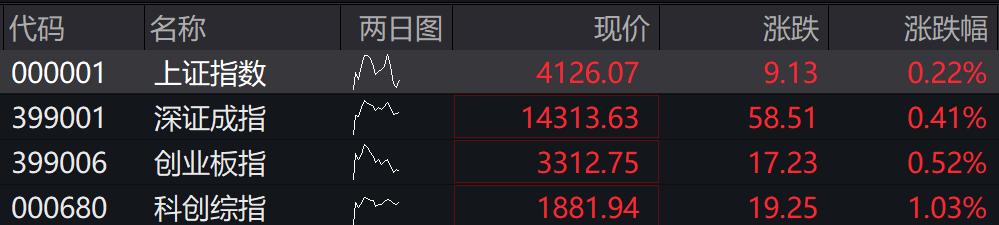
Market Performance - The A-share market opened with all three major indices rising: Shanghai Composite Index increased by 0.22% to 4126.07, Shenzhen Component Index rose by 0.41% to 14313.63, and ChiNext Index gained 0.52% to 3312.75 [2][3] - The Hong Kong stock market also opened positively, with the Hang Seng Index up by 0.62% to 26750.51 and the Hang Seng Tech Index rising by 0.85% to 5795.00 [4][5] Sector Highlights - The semiconductor and AI computing industry chains showed strong performance, particularly in memory and automotive chip sectors [1][3] - Other active sectors included AI mobile phones, stablecoins, duty-free shops, and cybersecurity [3] Company News - Longqi Technology's Hong Kong stock opened 12.90% higher, with a global offering of 52.2591 million H-shares priced at HKD 31.00 per share, raising approximately HKD 1.52 billion [5][6] - The company is establishing a dual capital platform with listings in both A-shares and H-shares, having already listed in A-shares in 2024 [5] Currency and Monetary Policy - The People's Bank of China conducted a reverse repurchase operation of CNY 210.2 billion for 7-day terms at an interest rate of 1.40%, with CNY 179.3 billion of reverse repos maturing today [7] - The RMB to USD central parity rate was reported at 7.0019, depreciating by 5 basis points from the previous day's rate of 7.0014 [8]