
虚拟现实

Search documents
11月28日晚间央视新闻联播要闻集锦
Yang Shi Xin Wen Ke Hu Duan· 2025-11-28 14:02
今日摘要 中共中央政治局召开会议,审议《关于二十届中央巡视省(自治区、直辖市)情况的综合报告》。中共 中央总书记习近平主持会议。 习近平致信祝贺中国志愿服务联合会第三届会员代表大会召开强调,大力弘扬志愿精神传递真善美传播 正能量,为强国建设民族复兴伟业贡献志愿服务力量。 《习近平外交思想学习纲要(2025年版)》出版发行。 党的二十届四中全会主要文件外文版和民族文版出版发行。 系列报道【学习贯彻四中全会精神在基层】今天来看,天津、山西加快实施城市更新,提升人民生活品 质。 今年前10个月我国交通运输经济运行稳中有进,货运量、跨区域人员流动量保持增长。 国际人士指出,日本首相高市早苗的错误言论释放出危险的信号。 党的二十届四中全会主要文件外文版和民族文版出版发行 俄罗斯方面表示,俄军在各战线态势积极,推进速度显著提升。乌克兰方面称,乌军击退俄军数十次进 攻。 内容速览 中共中央政治局召开会议 审议《关于二十届中央巡视省(自治区、直辖市)情况的综合报告》 中共中 央总书记习近平主持会议 中共中央政治局11月28日召开会议,审议《关于二十届中央巡视省(自治区、直辖市)情况的综合报 告》。中共中央总书记习近平主持会议 ...
科技赋能 重构文旅消费新体验
Yang Shi Wang· 2025-11-28 12:19
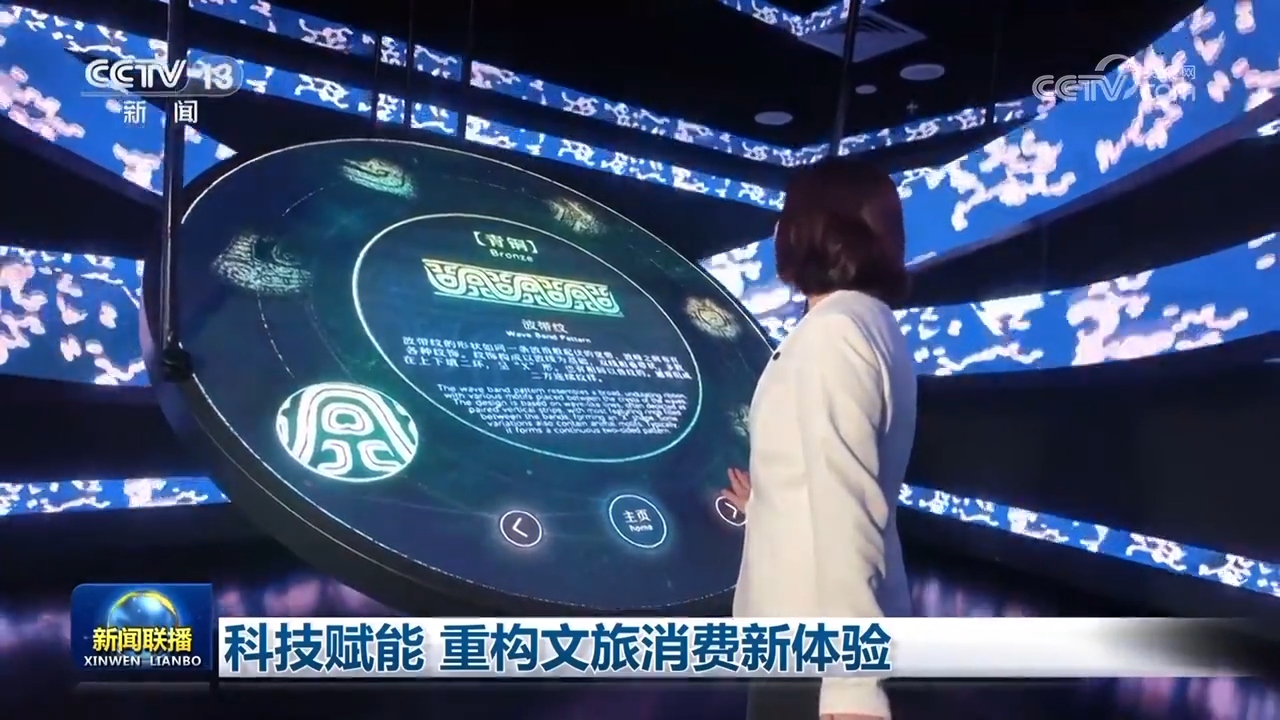
Group 1 - The core viewpoint is that digital technology is fundamentally reshaping the tourism experience during the "14th Five-Year Plan" period, with AI and VR technologies creating immersive experiences and new cultural tourism consumption scenarios [1][5][7] - Traditional culture is being revitalized through technology, as seen in Beijing's Wangfujing, where digital art and interactive spaces showcase cultural patterns using AI and VR [1][3] - The Samsung Dui Museum offers a large-scale VR immersive experience that allows visitors to explore a reconstructed archaeological site, breaking down temporal barriers and enabling interaction with cultural relics [3] Group 2 - In Hangzhou, the VR experience "Seeking Dunhuang" allows audiences to virtually explore the mysterious caves of Dunhuang, bridging physical distances and connecting viewers with historical art [5] - The integration of technology in cultural tourism has led to a chain reaction in consumption, exemplified by the nighttime drone performances in Wuxi, which have boosted local hospitality and tourism [5] - Local cultural tourism departments are accelerating the application of digital technologies, focusing on integrating various digital experiences such as digital performances, smart guides, and virtual browsing into new tourism scenarios [7]

摩比斯创始人黄鹤:“别人来找资金,我更多是来找项目的”
2 1 Shi Ji Jing Ji Bao Dao· 2025-11-28 08:47
Industry Overview - The AR/VR market in China is expected to maintain rapid growth from 2024 to 2029, with a compound annual growth rate (CAGR) of over 40% according to IDC and other institutions [1] - The cultural industry ultimately revolves around content, which is a strength of the company, enabling it to bridge various scenarios through content creation [2] Company Insights - Mobis, founded by Huang He, focuses on VR filming and large VR spaces, providing immersive digital experience solutions across multiple scenarios such as cultural tourism, education, and commercial applications [1] - The company has successfully captured over 1,000 hours of VR 360-degree footage on the northern slope of Mount Everest, creating the first VR documentary film that records the entire climbing process [1] - Mobis aims to explore various IP monetization opportunities using VR technology, with a focus on creating a cost-effective VR space of 30 square meters, which enhances replicability and adaptability [1] Strategic Goals - The company is entering a co-creation phase with demand-side partners, planning to upgrade and transform larger IPs while enhancing its content quality [2] - Huang He expressed the desire to acquire more IP resources and expand the team, emphasizing the need for additional resources and collaboration to achieve these goals [2]
21评论丨重估平台电商:如何实现以AI促消费
2 1 Shi Ji Jing Ji Bao Dao· 2025-11-27 23:32
Core Viewpoint - The implementation plan aims to enhance the adaptability of supply and demand in consumer goods, leading to industrial upgrades through consumption upgrades, and achieving a higher level of dynamic balance between supply and demand [1] Group 1: Policy and Strategic Direction - The plan emphasizes the value of platform consumption and encourages the orderly development of new business models such as live e-commerce, instant retail, and circular e-commerce [3] - It supports platform enterprises in utilizing artificial intelligence to explore user needs and match products and services accordingly [3][4] - The policy highlights the need to reassess the strategic value of platform consumption in the context of the deepening digital economy [3] Group 2: Technological Integration and Consumer Experience - Platforms are evolving from simple transaction facilitators to intelligent supply-demand configuration hubs, leveraging AI to capture consumer needs more effectively [4] - The plan supports the application of technologies like virtual reality and the metaverse to create immersive shopping experiences, responding to consumer demand for enhanced experience and personalization [4][5] - The integration of AI in platforms not only benefits the platforms themselves but also serves as an incubator for AI innovation, impacting various sectors such as manufacturing and logistics [5] Group 3: Compliance and Sustainable Growth - The plan emphasizes the importance of legal compliance in the use of AI for consumer engagement, ensuring data security and privacy protection [5] - Establishing trust through responsible technology application is crucial for sustainable growth in the industry [5][6] - The policy aims to unleash the potential of platforms, leading to a new era of consumption powered by AI, which will contribute to high-quality economic development in China [6]

重估平台电商:如何实现以AI促消费
2 1 Shi Ji Jing Ji Bao Dao· 2025-11-27 23:10
Core Viewpoint - The implementation plan aims to enhance the adaptability of supply and demand in consumer goods, leading to industrial upgrades and better meeting diverse consumer needs, marking the first consumer promotion policy document issued after the 20th National Congress of the Communist Party of China [1] Group 1: Policy Framework - The plan emphasizes the orderly development of new business models such as live e-commerce, instant retail, and circular e-commerce, encouraging platform enterprises to utilize AI technology to explore user needs and match products and services [3][4] - It highlights the strategic value of platform consumption in the context of the deepening digital economy, recognizing platforms as key hubs connecting consumption promotion and AI application innovation [3] Group 2: Technological Integration - The plan encourages the use of AI to capture consumer demands, addressing the pain points of consumption upgrades where supply often lags behind demand [4] - Platforms are evolving from simple transaction facilitators to intelligent supply-demand configuration centers, leveraging big data and deep learning to enhance matching efficiency [4][5] Group 3: Consumer Experience Enhancement - The support for technologies like virtual reality and the metaverse aims to create immersive shopping experiences, appealing particularly to younger consumers and stimulating new types of consumption [5] - Platforms serve not only as beneficiaries of AI technology but also as incubators for AI innovation, utilizing vast amounts of interaction data to train and refine AI models [5] Group 4: Compliance and Sustainability - The plan stresses the importance of legal compliance in AI utilization, requiring platforms to adhere to data security and personal privacy protections to avoid damaging consumer rights and industry reputation [6] Group 5: Economic Impact - With strong policy guidance, the potential for a new consumption era powered by AI is anticipated, which will achieve a higher level of dynamic balance between supply and demand, injecting robust technological momentum and consumer confidence into China's high-quality economic development [7]

中文名向钱学森致敬!Nature子刊(IF=50):上海交大团队打造AI+VR运动新系统,助力减重,更提升心理健康!
GLP1减重宝典· 2025-11-27 14:44
Core Insights - The article discusses the latest advancements in AI applications within the medical and health sectors, highlighting its potential to assist in disease diagnosis and treatment, including innovative methods such as using earwax to detect Parkinson's disease [3]. Group 1: AI in Weight Management - The Shanghai Jiao Tong University team published a study on June 23, 2025, in Nature Medicine, introducing the REVERIE system, an AI-based virtual reality sports system aimed at helping overweight adolescents lose weight through a randomized controlled trial [3][4]. - REVERIE combines deep reinforcement learning and Transformer architecture, featuring a virtual coach that provides personalized guidance, achieving metabolic effects comparable to real exercise while enhancing cognitive and motivational aspects [4][7]. - The study demonstrated that VR exercise is as effective as real exercise in fat reduction and metabolic improvement, while also significantly enhancing psychological health and cognitive abilities [7]. Group 2: AI in Precision Medicine - On July 14, 2025, a collaborative study by Imperial College London and Spanish scientists published in Nature Communications introduced AIDA, an AI-driven gastric inflammation diagnostic assistant that achieved a 94.1% eradication rate for Helicobacter pylori, surpassing traditional methods [8][11]. - AIDA integrates clinical, molecular, and imaging data to create a patient-centered decision-making system, facilitating personalized follow-up and treatment recommendations [11]. - The project involves collaboration among 15 European centers, ensuring compliance with scientific, ethical, and legal standards, thereby enhancing the tool's reliability [11]. Group 3: AI in Endoscopic Diagnosis - A study published on June 20, 2025, by Fudan University in Lancet Digital Health focused on an AI model for detecting nasopharyngeal carcinoma in endoscopic images, significantly improving diagnostic accuracy for ENT specialists [12][14]. - The AI model increased diagnostic accuracy from 83.4% to 91.2% and reduced the time taken to analyze images, demonstrating high clinical applicability [14][15]. - The model was trained on a large dataset from 42 hospitals across 24 provinces, showcasing its robustness and potential for widespread application in similar diagnostic scenarios [15]. Group 4: AI in Prognostic Modeling - On July 2, 2025, a team from University College London published a study in Lancet Digital Health validating a multimodal AI-derived prognostic model for advanced prostate cancer patients, utilizing data from four phase 3 clinical trials [16][18]. - The AI model, MMAI, demonstrated a significant correlation with prostate cancer-specific mortality rates, providing detailed stratification of patient risk levels [18]. - MMAI enhances the accuracy of prognostic assessments for advanced prostate cancer, offering a practical tool for patient management and treatment decision-making without requiring additional tests [18].

怀柔科学城、国际会都、中国影都,怀柔区擦亮三张名片
Xin Jing Bao· 2025-11-27 13:19
Core Viewpoint - Huairou District is accelerating the construction of an internationally first-class strategic technology integration development demonstration zone, focusing on creating highlands for strategic facilities, innovation ecology, technology achievement transformation, talent development, and international cooperation [1][2]. Industry Development - Huairou District is positioned as an important bearer of capital functions and an ecological conservation area, with an average annual GDP growth of 5.7% since the 14th Five-Year Plan, maintaining a high-quality development index among the top in the city [2][3]. - The district is enhancing its modern service industry, with technology and information service sectors achieving double-digit annual revenue growth, and modern service industries contributing over 80% to GDP growth in the first three quarters of the year [3][4]. Innovation Opportunities - Huairou Science City has become one of the most concentrated areas for major global scientific infrastructure, housing numerous high-level research institutions and attracting top-tier scientists for cutting-edge research [5][6]. - The district is implementing policies to create a favorable environment for young talents, with nearly 2,000 young talents benefiting from initiatives aimed at entrepreneurship, housing, and financing [6]. Cultural Industry - Huairou District has established a comprehensive mechanism for coordinating various sectors, aiming to develop a unique cultural tourism landscape, with an expected reception of 10.3 million tourists annually [8][9]. - The district is focusing on building a vibrant film and cultural industry cluster, with 1.3 million film-related enterprises and a significant share of national box office revenue [8][9]. Post-Disaster Reconstruction - Following severe flooding, Huairou District has completed repairs on 260 houses and is actively working on the reconstruction of damaged properties, ensuring that affected residents have safe and warm housing for the winter [10].
佳创视讯:公司在2025青岛虚拟现实创新大会上展出了三款XR代表作
Zheng Quan Ri Bao· 2025-11-27 09:35
Core Viewpoint - The company showcased three XR representative works at the 2025 Qingdao Virtual Reality Innovation Conference, indicating its active engagement in the XR industry and commitment to innovation [2] Company Summary - The company,佳创视讯, presented three XR projects: "Mountain and Sea Space," "Dinosaur Park," and a demo version of "The Legend of Sword and Fairy" at the conference [2]

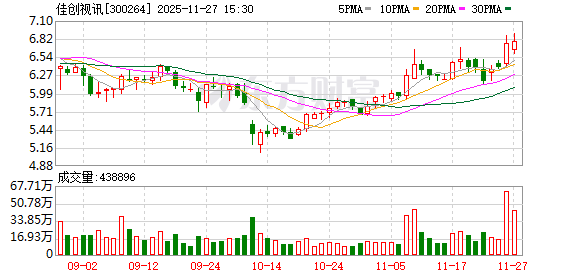
泰晶科技跌2.02%,成交额2.78亿元,主力资金净流出873.17万元
Xin Lang Cai Jing· 2025-11-27 06:35
Core Viewpoint - The stock of Taijing Technology has experienced fluctuations, with a recent decline of 2.02%, and the company shows mixed financial performance with revenue growth but a significant drop in net profit [1][2]. Financial Performance - For the period from January to September 2025, Taijing Technology achieved a revenue of 718 million yuan, representing a year-on-year growth of 16.22% [2]. - The net profit attributable to shareholders was 35.02 million yuan, which reflects a year-on-year decrease of 58.51% [2]. Stock Market Activity - As of November 27, Taijing Technology's stock price was 15.97 yuan per share, with a total market capitalization of 6.163 billion yuan [1]. - The stock has increased by 7.17% year-to-date, with a 1.59% rise over the last five trading days [1]. Shareholder Information - As of September 30, 2025, the number of shareholders increased to 41,600, up by 2.31% from the previous period [2]. - The average number of circulating shares per shareholder decreased by 2.26% to 9,358 shares [2]. Dividend Distribution - Since its A-share listing, Taijing Technology has distributed a total of 342 million yuan in dividends, with 120 million yuan distributed over the last three years [3]. Institutional Holdings - As of September 30, 2025, Hong Kong Central Clearing Limited was the seventh largest circulating shareholder, holding 4.0769 million shares as a new shareholder [3].

VR产业千亿规模背后的喜与忧
Ke Ji Ri Bao· 2025-11-27 00:10
Core Insights - The VR industry in China has reached a scale of over 100 billion yuan, with Jiangxi province alone generating over 110 billion yuan in revenue in 2024 [1] - The industry is currently in a critical growth phase, with a projected compound annual growth rate of 43.8% from 2022 to 2025, making it the fastest-growing VR market globally [2] - The rapid increase in the number of VR-related companies, exceeding 35,000, is driven by supportive government policies and a favorable investment environment [3] Industry Development - The VR industry is experiencing significant technological breakthroughs, expansion in applications, and increased capital investment [2] - Major regions for VR development in China include Beijing, Jiangxi, Guangdong, and the Yangtze River Delta, forming a core area for VR industry growth [2] - The government has set a target for the VR industry to exceed 350 billion yuan by 2026, indicating strong policy support for the sector [3] User Experience Challenges - Current VR devices face criticism for being heavy and uncomfortable, leading to issues such as dizziness and poor visual quality [5][6] - The industry struggles with a lack of high-quality content and natural interaction, which hampers user experience and limits market growth [6][7] - The high cost of VR devices, typically over 3,000 yuan, makes them less appealing to average consumers, restricting widespread adoption [5] Technological Limitations - The VR industry is hindered by reliance on imported key components, such as high-definition micro-OLED screens and specialized chips, which limits domestic innovation [7][8] - There is a pressing need for breakthroughs in technology to improve user experience and reduce the weight and cost of VR devices [7][10] - The industry is transitioning from a focus on hardware to a more integrated ecosystem that includes content and user experience [9][10] Future Outlook - The industry anticipates a significant growth spurt akin to the smartphone boom, with companies investing heavily in production capabilities [9] - Innovations in lightweight design and enhanced interaction capabilities are expected to drive the next generation of VR devices [10] - The establishment of experience points in urban areas is suggested to enhance public engagement and dispel misconceptions about VR technology [11]