
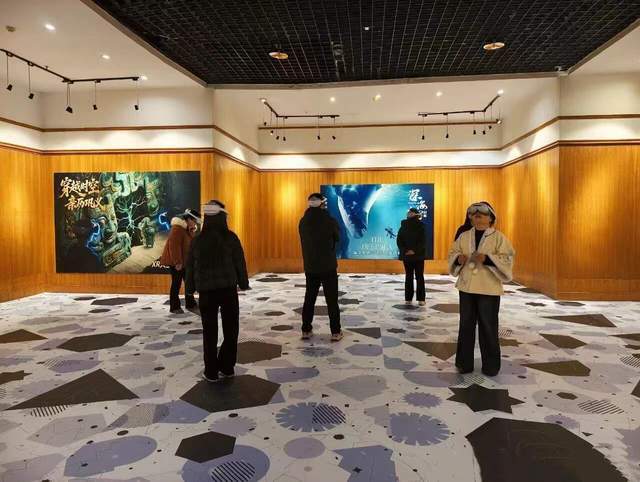
VR大空间

Search documents
探访北京-雄安人才科创走廊先行区
Zhong Guo Xin Wen Wang· 2026-02-24 14:31
Core Viewpoint - The "Qingchuang Village" in Beijing's Fengtai District is a key initiative for fostering innovation and entrepreneurship, serving as a vital starting point for the Beijing-Xiong'an Talent and Technology Corridor, and aims to enhance the collaborative development of the Beijing-Tianjin-Hebei region [1][3]. Group 1: Development of Qingchuang Village - Qingchuang Village has transformed old factories into a vibrant entrepreneurial community, integrating design and technology, and serves as a hub for young entrepreneurs [3][4]. - The area has revitalized over 150,000 square meters of industrial space, attracting 329 high-quality enterprises focused on technological innovation and cultural creativity, generating an annual tax revenue of over 170 million yuan [4]. - By 2030, Qingchuang Village aims to gather 10,000 innovative talents, nurture 1,000 quality enterprises, and create a production value of 10 billion yuan, positioning itself as a core engine for innovation-driven development in Fengtai and southwestern Beijing [4]. Group 2: Ecosystem and Talent Development - Fengtai District is implementing a comprehensive strategy to integrate education, technology, and talent development, establishing ten industry promotion centers to enhance the synergy between innovation, industry, finance, and talent [7]. - The "Qingchuang Belt" links various innovation resources along the Beijing Subway Line 10, fostering a collaborative environment for young talents and providing platforms for innovation and entrepreneurship [8]. - The district's initiatives aim to create a youth-friendly ecosystem, enhancing the attractiveness and cohesion for young people from both Beijing and Xiong'an [8][9]. Group 3: Industrial Collaboration and Growth - The Zhongguancun Fengtai Park has become a significant growth area for technology innovation, housing over 24,000 enterprises and generating substantial revenue, while focusing on key industries such as rail transit and aerospace [11]. - Companies like China Tonghao are leveraging their expertise in rail transit to expand into low-altitude technology, addressing industry challenges and enhancing regional collaboration [12][13]. - The district is also fostering digital technology applications in Xiong'an, with companies like Han Monkey Technology establishing a presence to support smart infrastructure development [14][15].



“VR已死”?2026年是否还应该入行?
Sou Hu Cai Jing· 2026-02-10 07:50
Core Insights - The VR large space industry is experiencing a paradox where technological advancements have lowered hardware costs and barriers to entry, yet profitability remains elusive, leading to a cycle of projects failing to recoup investments and a narrative of "VR is dead" gaining traction [1][3] Group 1: Industry Dynamics - The reduction of technical barriers has led to chaotic growth in the industry, with lightweight hardware and wireless streaming technology improving user experience but also resulting in subpar business models, such as using VR to fill vacant commercial spaces [3][6] - The market is witnessing a three-tier differentiation, where low-end brands are flooding the market with cheap, low-quality offerings, while mid-tier domestic manufacturers face high production costs and weak promotional channels [6][8] - Government initiatives, including subsidies and regulatory policies, are emerging to support quality content development, indicating a shift towards a more sustainable industry environment [6][8] Group 2: Operational Challenges - High operational costs, particularly rent and labor, are significant challenges, with many businesses struggling to maintain profitability outside peak periods, highlighting the need for diversified revenue models [8][9] - Successful case studies in regions like Jiangsu and Zhejiang demonstrate that combining multiple business models, such as partnerships with cafes and corporate events, can enhance operational efficiency [8][9] Group 3: Content and Ecosystem Development - Pure content creators face survival challenges as low barriers to entry allow others to dominate the market, while high production costs hinder the sustainability of quality content [11] - The emergence of integrated operational platforms aims to connect various stakeholders in the industry, facilitating better content promotion and operational management [11] - The integration of VR in cultural and educational contexts is expanding its application beyond entertainment, creating new revenue opportunities [11][15] Group 4: Future Outlook - The industry is undergoing a cleansing process, where only those committed to quality content and sustainable operations will thrive, while speculative players are being eliminated [15] - The year 2026 presents opportunities for new entrants who focus on quality and avoid pitfalls associated with quick-profit schemes, aligning with evolving policies and industry standards [15]
江西省南昌市红谷滩区 VR+AI赋能数智转型 借势筑强数字经济产业高地
Jing Ji Ri Bao· 2025-12-02 22:09
Core Insights - Nanchang's Honggutan District is leveraging opportunities in the digital economy, focusing on the virtual reality (VR) industry as a key driver for high-quality development [1][4] - The district has established itself as a core area for VR in Jiangxi Province, attracting top companies and fostering innovation across various sectors [1][2] Group 1: Industry Development - The VR industry in Honggutan has seen significant growth, with the number of digital economy core enterprises increasing from 4,002 in 2021 to 6,198 in 2024, marking a substantial rise [2] - The district has gathered 7 of the national top 50 VR companies, creating a comprehensive innovation ecosystem that covers technology research, application, and results transformation [1][2][4] Group 2: Investment and Projects - During the 2025 World VR Industry Conference, 13 projects were signed with a total investment of 2.32 billion yuan, focusing on key areas such as VR optical display and AI algorithms [2] - Major projects like the Jiangxi Artificial Intelligence Computing Center and the National Virtual Reality Innovation Center are enhancing the region's innovation capabilities and industry chain [6][9] Group 3: Policy and Environment - Honggutan District has implemented supportive policies, including a 19.5% increase in digital economy policy funding to 23.9 million yuan for 2025, aimed at fostering enterprise innovation and expansion [3] - The district emphasizes a high-quality business environment as essential for industry development, establishing a service system that integrates online and offline support for enterprises [3][4] Group 4: Talent and Education - The National Vocational Education Virtual Simulation Demonstration Training Base has trained 3,000 individuals and hosted 7,000 visitors, contributing to the development of skilled talent for the industry [7] - Local companies are thriving under supportive policies, with firms like Lingxing Information and Xiaohutao Technology making significant strides in VR education and gaming [4][6] Group 5: Future Outlook - The Future Science City is being developed to integrate industry and urban growth, attracting major digital economy enterprises and enhancing the region's competitive edge [8][9] - Honggutan aims to become a global VR industry hub, supported by a 3 billion yuan VR industry fund and high-standard infrastructure for AI and smart manufacturing [9][10]
摩比斯创始人黄鹤:“别人来找资金,我更多是来找项目的”
2 1 Shi Ji Jing Ji Bao Dao· 2025-11-28 08:47
Industry Overview - The AR/VR market in China is expected to maintain rapid growth from 2024 to 2029, with a compound annual growth rate (CAGR) of over 40% according to IDC and other institutions [1] - The cultural industry ultimately revolves around content, which is a strength of the company, enabling it to bridge various scenarios through content creation [2] Company Insights - Mobis, founded by Huang He, focuses on VR filming and large VR spaces, providing immersive digital experience solutions across multiple scenarios such as cultural tourism, education, and commercial applications [1] - The company has successfully captured over 1,000 hours of VR 360-degree footage on the northern slope of Mount Everest, creating the first VR documentary film that records the entire climbing process [1] - Mobis aims to explore various IP monetization opportunities using VR technology, with a focus on creating a cost-effective VR space of 30 square meters, which enhances replicability and adaptability [1] Strategic Goals - The company is entering a co-creation phase with demand-side partners, planning to upgrade and transform larger IPs while enhancing its content quality [2] - Huang He expressed the desire to acquire more IP resources and expand the team, emphasizing the need for additional resources and collaboration to achieve these goals [2]
江苏发布行动计划为文旅发展“划重点”
Jiang Nan Shi Bao· 2025-09-04 14:41
Core Viewpoint - Jiangsu Province is focusing on high-quality development of its cultural tourism industry through a three-year action plan, aiming to enhance product supply, expand consumer services, and optimize the market environment [1][2][4][6] Group 1: Action Plan Overview - The action plan includes six major actions and 22 key tasks to promote the cultural tourism industry [1] - Key actions involve improving product supply, expanding consumer services, and optimizing the market environment [1][6] Group 2: Leveraging Events for Tourism - The "Su Super" football league has attracted significant attendance and online viewership, with 149.4 million people attending matches and 13.3 billion online views [2] - The action plan proposes themed travel routes and creative products to convert sports event traffic into tourism revenue [2] Group 3: Museum and Night Tourism - Popular museums have seen a 25% increase in night-time consumption, prompting the plan to encourage extended hours and new night tourism projects [3] - The goal is to reach 150 million annual visitors to registered museums by 2027 [3] Group 4: Infrastructure and Technology - The plan emphasizes the development of cultural and ecological tourism corridors and the integration of modern technology in the tourism sector [4] - It encourages the creation of smart tourism experiences and supports technological advancements in the industry [4] Group 5: Industry Cluster Development - The action plan aims to cultivate high-quality cultural tourism enterprises and promote the growth of digital cultural companies, targeting over 3,000 digital cultural enterprises by 2027 [6] - The plan also seeks to establish national and provincial cultural and tourism industry demonstration zones [6] Group 6: Institutional Mechanisms - The plan proposes innovative mechanisms for public service enhancement and financial support for tourism enterprises [7] - It emphasizes the need for coordinated development of cultural tourism within the broader economic framework of the province [7]
江苏出台文件:发挥“苏超”撬动效应 策划“跟着‘苏超’去旅行”主题旅游线路
Zhong Guo Xin Wen Wang· 2025-09-04 07:04
Core Viewpoint - The Jiangsu Provincial Government has introduced a three-year action plan (2025-2027) aimed at promoting high-quality development in the cultural tourism industry, leveraging the "Su Super" football league to enhance tourism experiences and offerings [1][2]. Group 1: Action Plan Overview - The action plan includes six major actions with 22 key tasks, focusing on quality product supply, expanding consumer services, optimizing market environment, and providing policy support [1]. - The plan aims to enhance various tourism formats such as "performance + tourism," "exhibition + tourism," and "film + tourism," with a goal of increasing visitor numbers to registered museums to 150 million by 2027 [2]. Group 2: Economic Impact and Growth - In the first eight months of this year, Jiangsu Province saw a 10.43% increase in tourist numbers and a 9.94% rise in tourist spending, with UnionPay's off-site cultural tourism consumption growing by 14.86% [1]. - The action plan emphasizes the development of night economy initiatives, including night tours and cultural performances, which have already led to a 25% increase in nighttime consumption around popular museums [2][3]. Group 3: Cultural and Tourism Integration - The plan seeks to create themed travel routes linked to the "Su Super" league and develop unique cultural IPs based on local literature and history, such as "Dream of the Red Chamber" and "Journey to the West" [2]. - It also aims to enhance water-based leisure tourism by developing more boat and cruise tours, promoting the "Water Charm Jiangsu" cultural tourism brand [2]. Group 4: Technological Advancements - The action plan focuses on the development of new business formats in digital entertainment and smart tourism, including VR experiences and AI-driven services, to attract more visitors [3].
VR大空间要找到自己的艺术语言(坚持“两创”·关注新时代文艺)
Ren Min Ri Bao· 2025-07-03 21:46
Core Insights - The article highlights the potential of VR large spaces as a new medium that integrates content, evolving towards diverse directions in future tourism, cinema, gaming, and amusement parks [1][5]. Industry Development - Since the beginning of 2023, over 200 VR large space projects have been launched across various scenic spots, shopping malls, and cultural institutions in China, showcasing a significant growth in the application of VR technology in the tourism and entertainment sectors [1][2]. - VR large spaces are seen as a "potential stock" in the cultural tourism industry, leveraging digital technology to bring resources to life, allowing users to experience immersive environments without traditional interaction devices [2][3]. User Experience - The immersive experience of VR large spaces allows users to naturally walk through digital realms, witnessing historical events or exploring natural landscapes, enhancing the cultural experience [2][3]. - The simplicity of the "walk and see" format in VR can transcend mere tourism, evolving into various thematic journeys such as spiritual, legendary, investigative, growth, emotional, and educational experiences [5]. Challenges and Opportunities - Despite the positive growth, the industry faces challenges such as a tendency towards homogenization and formulaic projects, where some creators replicate existing models without innovation, leading to a lack of engagement [3][4]. - For VR large spaces to thrive, there is a need to explore narrative methods and fully utilize the potential of VR as a medium, creating meaningful experiences that resonate with users [4][5].
多家上市公司亮相第二十一届文博会
Zheng Quan Shi Bao Wang· 2025-05-25 10:16
Group 1 - The 21st China (Shenzhen) International Cultural Industries Fair (CICIF) is being held in Shenzhen for five days, concluding on May 26 [1] - Multiple listed companies are participating in the fair, showcasing their products and technologies across various sectors including film, media, publishing, artificial intelligence, robotics, gaming, and trendy toys [1] - AI and virtual reality technologies remain focal points at the fair, attracting numerous domestic and international visitors [1] Group 2 - Listed company Fantawild (301313) is participating in the fair, presenting its latest products such as VR large space, AI 3D reconstruction, virtual digital humans, AI knowledge graphs, and digital cultural creations [1] - Another listed company, Wankang Technology (300624), is showcasing its new video creative software and AI innovations at the fair [1] - Guoxing Optoelectronics (002449), part of the Guangsheng Holdings Group's electronic information sector, is presenting under the theme "Light Shows the Future" [1] Group 3 - The unique appeal of China's trendy toy IP has been highlighted, with the Hong Kong-listed company Pop Mart also participating in the fair [2] - Pop Mart is utilizing a dual exhibition model with "Beijing + Hong Kong" to showcase its popular products and enhance consumer experiences [2] - The company aims to stimulate urban cultural consumption and promote the deep integration and innovation of IP with urban cultural tourism [2]