货币政策正常化

Search documents
日本央行维持利率不变,将出售资产缩减宽松规模
Sou Hu Cai Jing· 2025-09-19 11:25
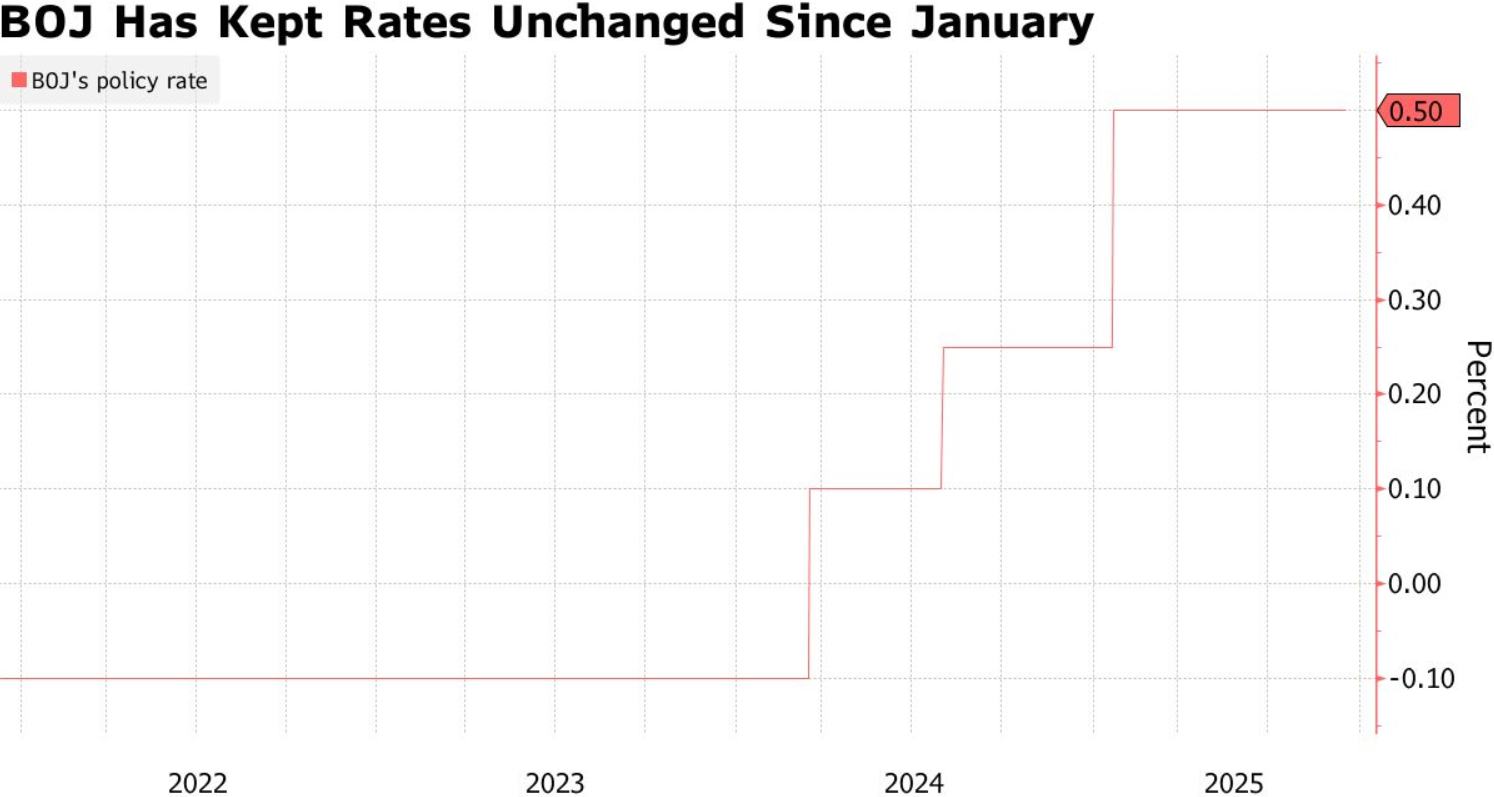
Core Viewpoint - The Bank of Japan has decided to maintain its current interest rate at around 0.5% while planning to gradually sell its financial assets to normalize monetary policy [1] Group 1: Monetary Policy Decisions - The Bank of Japan will keep the policy interest rate unchanged at approximately 0.5% [1] - Future plans include selectively selling its holdings of exchange-traded funds (ETFs) and real estate investment trusts (REITs) [1] Group 2: Asset Sales - The Bank of Japan plans to sell approximately 330 billion yen worth of ETFs and 5 billion yen worth of REITs annually, with the timing of sales yet to be determined [1] - The current market value of the 330 billion yen in ETFs is about 620 billion yen [1] Group 3: Historical Context - During the COVID-19 pandemic, the Bank of Japan expanded its asset purchase program to support the economy and markets [1] - In March of the previous year, the Bank of Japan ended its negative interest rate policy and began its first rate hike, ceasing purchases of ETFs and REITs [1]
日央行“意外放鹰”:两张“反对票”和减持ETF
Hua Er Jie Jian Wen· 2025-09-19 10:43
Group 1 - The Bank of Japan (BOJ) signaled a more hawkish stance than expected, with two committee members voting against maintaining the current interest rate, indicating a potential faster exit from monetary easing policies [1][2] - The BOJ decided to sell its ETF holdings at an annual rate of approximately 3.3 trillion yen (20 billion USD) and REITs at about 5 billion yen annually, marking a step towards normalizing monetary policy [1][3] - BOJ Governor Kazuo Ueda stated that further rate hikes could occur if economic and price forecasts are met, shifting market focus to the timing of the next rate increase [1][2] Group 2 - The internal dissent among BOJ committee members highlights increasing hawkish pressure, with some economists predicting a 25 basis point rate hike by the end of the year, although there is disagreement on the timing [2] - The decision to reduce ETF holdings, which accumulated to 37 trillion yen over 13 years, was announced earlier than market expectations, with a focus on avoiding excessive market disruption [3] - Political uncertainty surrounding the upcoming party leadership election may complicate the BOJ's ability to implement rate hikes, as the new leader's stance on monetary policy will be closely monitored [4][5]
日本央行维持利率不变 将出售资产缩减宽松规模
Sou Hu Cai Jing· 2025-09-19 10:40
Core Viewpoint - The Bank of Japan has decided to maintain its current interest rate at around 0.5% while planning to gradually sell its financial assets to normalize monetary policy [1] Group 1: Monetary Policy Decisions - The Bank of Japan will keep the policy interest rate unchanged at approximately 0.5% [1] - The central bank plans to sell its holdings of exchange-traded funds (ETFs) and real estate investment trusts (REITs) in the market at an appropriate time [1] Group 2: Asset Sales Plan - The Bank of Japan intends to sell ETFs with a book value of about 3.3 trillion yen (approximately 22.3 billion) and REITs with a book value of about 5 billion yen (approximately 33 million) annually, with the specific timing yet to be determined [1] - The current market value of the 3.3 trillion yen ETFs is approximately 6.2 trillion yen (about 41.5 billion) [1] Group 3: Historical Context - During the COVID-19 pandemic, the Bank of Japan significantly increased its monetary easing measures through expanded asset purchases to support the economy [1] - In March of the previous year, the Bank of Japan ended its negative interest rate policy and initiated its first interest rate hike, ceasing the purchase of ETFs and REITs [1]
日本央行维持利率不变 将出售资产缩减宽松规模
Xin Hua Wang· 2025-09-19 10:31
Core Points - The Bank of Japan (BOJ) has decided to maintain its current interest rate at around 0.5% after a two-day monetary policy meeting, indicating a future intention to sell financial assets to reduce the scale of monetary easing and normalize monetary policy [1] - The BOJ plans to sell approximately 3.3 trillion yen worth of ETFs and 5 billion yen worth of REITs annually, with the specific timing of these sales yet to be determined [1] - As of March 31, the BOJ's total ETF book value was 37 trillion yen, with a market value of approximately 70 trillion yen, indicating a significant asset holding that could impact market dynamics upon sale [1] Monetary Policy - The BOJ's decision to maintain the interest rate reflects a cautious approach to monetary policy normalization following extensive easing measures during the COVID-19 pandemic [1] - The central bank's asset purchase program was significantly expanded during the pandemic to support the economy, leading to the current large holdings of ETFs and REITs [1] Future Actions - The BOJ is actively seeking opportunities to sell its holdings of ETFs and REITs, marking a shift from its previous stance of asset accumulation to potential market impact through asset liquidation [1] - The planned annual sales of 3.3 trillion yen in ETFs, which currently have a market value of about 6.2 trillion yen, suggest a strategic move to gradually unwind its balance sheet [1]
日本飞出“黑天鹅”,影响有多大?
Zheng Quan Shi Bao· 2025-09-19 08:14
Group 1 - The Bank of Japan (BOJ) has decided to gradually start selling its holdings of domestic exchange-traded funds (ETFs), indicating a tightening of monetary policy despite maintaining the policy interest rate at 0.5% for the fifth consecutive meeting [3][6] - Following the BOJ's announcement, the Japanese yen strengthened significantly, leading to a drop in the Nikkei index by 1.6% and causing a ripple effect across Asian markets, including declines in the Hang Seng Tech Index and South Korean stock indices [1][3][4] - Analysts suggest that the BOJ's move marks a significant step away from the ultra-loose monetary policies of the Abe administration, potentially signaling an interest rate hike in October [6][8] Group 2 - The BOJ's hawkish stance has led to expectations of a potential interest rate increase, with a survey indicating that most observers anticipate a rate hike before January next year, and market expectations of a 58% chance of a rate increase by the end of the year [6][9] - The normalization of monetary policy, including interest rate hikes and balance sheet reduction, is expected to exert upward pressure on the yen, which could lead to the unwinding of carry trade positions [8][9] - Historical data shows that past reversals of yen-funded carry trades have led to yen appreciation, declines in U.S. Treasury yields, and upward pressure on gold prices, while putting pressure on equity and commodity markets [8][9]


【环球财经】日本央行决定维持利率不变 通过出售资产缩减宽松规模
Xin Hua Cai Jing· 2025-09-19 08:01
Core Points - The Bank of Japan (BOJ) has decided to maintain its current interest rate at around 0.5% and plans to sell its financial assets in the market to further reduce its monetary easing measures and normalize its monetary policy [1][2] - The BOJ plans to sell approximately 330 billion yen worth of ETFs and 5 billion yen worth of REITs annually, with the timing of these sales yet to be determined [1] - The market has been closely monitoring how the BOJ will manage its substantial holdings of financial assets, which include ETFs valued at approximately 37 trillion yen and REITs valued at around 6.5 trillion yen [2] Summary by Category Monetary Policy - The BOJ is maintaining its policy interest rate at around 0.5% and is preparing to sell its holdings of ETFs and REITs to reduce monetary easing [1] - The sales of financial assets are part of the BOJ's strategy to normalize its monetary policy after extensive easing during the COVID-19 pandemic [1] Financial Assets - The current market value of the 330 billion yen worth of ETFs is approximately 620 billion yen, while the total market value of the BOJ's ETF holdings is around 70 trillion yen [2] - The BOJ's REIT holdings have a book value of 650 billion yen and a market value of about 700 billion yen [2]
刚刚!“黑天鹅”,突袭!
券商中国· 2025-09-19 07:29
Core Viewpoint - The Bank of Japan's decision to gradually sell its holdings of domestic exchange-traded funds (ETFs) has led to significant market volatility, with the Nikkei index dropping 1.6% and impacting other Asian markets [3][4][6]. Group 1: Bank of Japan's Policy Changes - The Bank of Japan maintained its benchmark interest rate at 0.5%, marking the fifth consecutive meeting without changes, which was in line with market expectations [3]. - The announcement of selling domestic ETFs indicates a shift from the ultra-loose monetary policy era initiated during Abe's administration, suggesting a potential tightening of monetary policy [6]. - Analysts predict a 58% chance that the Bank of Japan will raise interest rates by the end of the year, with many expecting a rate hike before January [6][9]. Group 2: Market Reactions - Following the Bank of Japan's hawkish stance, the Japanese yen strengthened significantly, contributing to declines in equity markets across Asia [4][6]. - The dollar-yen exchange rate fell sharply, which was a major factor in the market turmoil [4]. - The Nikkei index's drop was mirrored by declines in other indices, including a 0.4% decrease in India's Nifty 50 and widespread losses in Southeast Asian markets [3]. Group 3: Economic Outlook - Despite some signs of weakness, the Japanese economy is on a path of moderate recovery, with stable trends in exports and production, and moderate growth in capital expenditure [6]. - There are concerns that trade policies may slow Japan's economic growth, but a rebound is expected thereafter [6]. - Historical data indicates that the reversal of carry trades involving the yen has occurred in the past, which could lead to further market pressures if similar conditions arise [8].

日本央行现鹰派异议 日元短线强势反弹
Jin Tou Wang· 2025-09-19 05:57
周五(9月19日)亚洲时段,日元强势反弹,美元兑日元短线下跌约40点,刷新日内低点至147.1800, 截止发稿前美元/日元报147.4400,跌幅0.37%,因两位日本央行官员提议加息25个基点。 两人均认为,应该加息25个基点至0.75%,因为随着价格上涨风险更加偏向于上行,央行应将政策利率 略微向中性利率靠近。 与此同时,日本央行还宣布开始出售其持有的ETF和REITs资产。受此鹰派意外刺激,日元汇率短线走 强超50点,日股涨幅回落,日本10年期国债延续跌势,收益率走高。 美元兑日元汇率昨日亚市开盘后延续上行,盘中收复第一阻力后续创日内新高,日线报收中阳线,收盘 位置触及前阻力区,突破后方可打开上升空间,从4H来看,布林中轨拐头向上,MACD零轴附近运 行,日内下方首要支撑147.60,第二支撑147.10,上方阻力148.50,149.00,保持在第一支撑上方短线有 望测试第一阻力。 日本央行在周五结束的为期两天的政策会议后,连续第五次会议将基准利率维持在约0.5%不变,此前 在1月份将利率上调至当前水平,作为在十年非常规宽松政策后努力恢复正常货币政策的举措。 日本央行此次决议公布时间较往常大幅延迟, ...
日本央行如期维持利率不变 但加息阵营崛起! 重磅官宣ETF抛售计划
智通财经网· 2025-09-19 04:52
Core Viewpoint - The Bank of Japan (BOJ) has decided to maintain its benchmark interest rate at 0.5% amid ongoing global economic uncertainties and domestic political instability, while also announcing plans to begin selling its holdings of exchange-traded funds (ETFs) [1][4]. Group 1: Interest Rate Decision - The BOJ's decision to keep the interest rate unchanged was reached with a 7-2 vote, marking the first time since the current governor took office that there were dissenting votes on this issue [1]. - The dissenting members argued for a 25 basis point increase to 0.75% due to rising inflation risks [1][4]. Group 2: ETF and J-REIT Sales - The BOJ plans to sell its ETF and Japanese Real Estate Investment Trusts (J-REITs) holdings at a pace of approximately 620 billion yen (around 4.2 billion USD) per year [4]. - This marks the first time the BOJ has mentioned plans to sell its ETF holdings, which are valued at approximately 37 trillion yen (about 251 billion USD) on a book value basis [4]. Group 3: Market Reactions - Following the announcement of the ETF sales, the Japanese stock market showed signs of weakness, with the Nikkei 225 index declining by as much as 1.8% [4]. - The yen strengthened against the dollar after the announcement, and the 10-year Japanese government bond yield rose slightly [4]. Group 4: Internal Dynamics and Future Outlook - The emergence of hawkish sentiments within the BOJ is indicated by the dissenting votes, suggesting a potential shift towards a more aggressive monetary policy stance [9]. - Analysts predict that the BOJ may begin to gradually sell off its ETF assets starting in the fiscal year 2026 to minimize potential losses and impacts on the Japanese stock market [8]. Group 5: Economic Context and Future Rate Hikes - Despite political uncertainties, there are indications that the BOJ may consider raising interest rates again by the end of the year if economic conditions remain favorable [10][11]. - A significant portion of market observers expect a potential rate hike in October, with many anticipating that the next increase could occur in January 2026 [11].
美联储降息后日韩股市创新高,非美货币冲高回落
2 1 Shi Ji Jing Ji Bao Dao· 2025-09-18 11:59
南方财经21世纪经济报道记者胡慧茵 美国东部时间9月17日,美国联邦储备委员会结束为期两天的货币政策会议,宣布将联邦基金利率目标区间下调25个基点到4.00%至4.25%之 间。这是美联储2025年第一次降息,也是继2024年三次降息后再次降息。 受美联储降息消息影响,亚太股市呈现分化走势,日韩股市一路上扬,并创出新高,而东南亚股市则以下跌为主。 渣打中国财富管理部首席投资策略师王昕杰向21世纪经济报道记者表示,美联储此次降息后,日韩股市上涨,可能源于利差缩小,资本有望回 流,从而推高这两国股市。另外,美联储在最新《经济预测摘要》中,相对于6月调高了美国经济预测,预计今年GDP将增长1.6%,明年GDP 将增长1.8%,预示着美国将在经济软着陆的情境下降低利率,从而利好经济,支撑需求,这对于以美国为重要出口市场的日韩经济体意义重 大。 王昕杰进一步表示,美联储降息路径明确,为包括日韩等在内的亚太主要经济体央行提供了更大的货币政策空间,从而维持较低利率水平支持 经济,同时利好股市。美联储鹰派降息刺激亚太股市分化 亚太股市盘初,美股三大指数期货集体上涨。另一边,亚太股中,日、韩股市一路上涨。 日经225指数开盘即 ...