金融科技

Search documents
持续锻造金融科技核心竞争力 龚正考察2025外滩大会展览
Jie Fang Ri Bao· 2025-09-12 01:45
Core Insights - The 2025 Bund Conference, held from September 10 to 13 in Shanghai, aims to showcase global technology innovation trends in the AI era and provide an open dialogue platform for the technology, finance, and industry sectors [1][2] - The conference's theme, "Reshaping Innovation Growth," emphasizes the need for Shanghai to leverage technological changes and accelerate the application of innovative technologies across various industries [1] Group 1 - The Shanghai government is focused on harnessing the transformative potential of AI and other frontier technologies, viewing this period as a golden opportunity for application and implementation [2] - There is a strong emphasis on converting the spillover effects of the Bund Conference into robust industrial development momentum, particularly in key sectors such as finance, manufacturing, and healthcare [2] - The city aims to create impactful benchmark application scenarios by utilizing its vast data resources and diverse environments to promote AI applications [2] Group 2 - Shanghai plans to leverage its policy integration and resource aggregation advantages to build a vibrant, open, and cross-disciplinary industrial ecosystem [2] - The city is committed to nurturing AI and fintech unicorns and attracting top global talent and innovative teams to enhance the global competitiveness of its industrial clusters [2] - There is a strategic focus on establishing a globally leading fintech center, tracking niche segments within fintech, and aligning application scales with Shanghai's status as an international financial center [2]
聚焦绿色金融创新 共话全球合作发展——中央财经大学绿色金融论坛暨研究院 2025 年会即将启幕
Jing Ji Guan Cha Bao· 2025-09-12 01:41
Core Viewpoint - The upcoming forum aims to enhance China's green finance system, focusing on innovation and cooperation in the context of global governance, particularly as 2025 marks a critical point for achieving carbon peak goals and solidifying green development foundations [1][2]. Group 1: Event Overview - The Central University of Finance and Economics will host the "Global Governance Framework for Green Finance Innovation and Cooperation Forum" on September 20, 2025 [1]. - The forum will serve as a high-level dialogue platform for discussing emerging topics in green finance, transition finance, and financial technology [1]. Group 2: Participants and Contributions - The event will feature leaders from relevant ministries, international experts, and business heads from financial institutions and enterprises, contributing insights for China's green development [2]. - The Central University of Finance and Economics Green Finance Institute will release annual core research findings, highlighting key breakthroughs and industry contributions over the past decade [2]. Group 3: Key Presentations and Discussions - Notable speakers include representatives from the National Committee of the Chinese People's Political Consultative Conference, the United Nations Development Programme, and the People's Bank of China [3]. - The forum will include strategic partner presentations showcasing collaborative achievements in green finance practices [3]. Group 4: Research Outcomes - Key research reports to be presented include studies on green bidding loans, financing transitions in the shipping industry, and biodiversity financial solutions in the Guangdong-Hong Kong-Macao Greater Bay Area [4]. - Additional topics will cover climate risk assessment methodologies and innovative insurance approaches to climate risk [4]. Group 5: Thematic Discussions - The forum will feature discussions on macro fiscal and financial policies supporting the new development philosophy and proposals for promoting green trade under the RCEP framework [5]. - A roundtable will address challenges and breakthroughs in the "30-60" target process related to industrial transformation and financial supply [5].
中国融资租赁金融科技行业深度分析及投资动向研究报告2025-2031年
Sou Hu Cai Jing· 2025-09-12 00:22
Core Insights - The report provides a comprehensive analysis of the Chinese financing leasing fintech industry, focusing on its development from 2025 to 2031, including market trends, investment opportunities, and challenges [1]. Group 1: Industry Overview - The financing leasing fintech industry is defined and categorized, with distinctions made between similar concepts [3][4]. - The report outlines the authoritative data sources and statistical standards used for the research [3]. Group 2: Macro Environment Analysis - A PEST analysis is conducted, examining the policy, economic, social, and technological environments affecting the financing leasing fintech industry in China [4]. - The regulatory framework and institutional structure governing the industry are detailed, including self-regulatory organizations and standardization efforts [4]. - The impact of national policies and planning on the industry's development is summarized [4]. Group 3: Global Market Insights - The report investigates the global financing leasing fintech industry's historical development and current state, including market size and regional dynamics [6]. - It highlights the competitive landscape and key players within the global market, along with merger and acquisition activities [6]. Group 4: Market Supply and Demand - An overview of the current state of the Chinese financing leasing fintech industry is provided, including the number of enterprises and market scale [4][5]. - The report identifies pain points in the industry and the influence of fintech on addressing these challenges [4][5]. Group 5: Competitive Landscape - The competitive dynamics within the Chinese financing leasing fintech industry are analyzed, including market concentration and the strategic positioning of key players [5]. - The report discusses the entry and exit barriers in the industry, along with investment trends and merger activities [5][6]. Group 6: Application of Fintech - The application of fintech in various business areas, such as customer acquisition, risk management, and business management, is explored [6][7]. - Trends in fintech applications within the financing leasing sector are identified, showcasing the industry's adaptation to technological advancements [6][7]. Group 7: Future Outlook - The report provides a SWOT analysis of the financing leasing fintech industry, assessing its development potential and forecasting trends for the next five years [9]. - It emphasizes the importance of regulatory compliance, risk management, and talent development for sustainable growth in the industry [9][10].


广发银行获评“2025中国银行业创新发展优秀案例”
Mei Ri Shang Bao· 2025-09-11 23:09
Group 1 - The core event was the "2025 Banker Forum" and the release of the "Top 200 Chinese Banks" ranking, hosted by Tsinghua University's Wudaokou School of Finance, where Guangfa Bank was recognized [1][3] - Guangfa Bank received the "Annual Contribution Bank for Regional Development" award and had two innovative cases selected as "Excellent Cases of Innovation and Development in the Chinese Banking Industry" [1][2] - The "Pay After Learning" funding supervision model was developed to address safety concerns in prepaid consumption, particularly in education and training sectors, ensuring funds are securely managed [1][2] Group 2 - The "Pay After Learning" model has been implemented in several provinces, serving over 2,000 institutions and safeguarding nearly 500 million yuan in customer prepaid funds [2] - In 2024, Guangfa Bank launched a new distributed core system for credit cards, featuring advanced technology to support high transaction volumes and ensure system reliability [2] - The ranking and awards are based on objective data and comprehensive performance evaluations, aimed at promoting high-quality development in the banking industry [3]

金融赋能 绘就经济新图景
Sou Hu Cai Jing· 2025-09-11 21:21
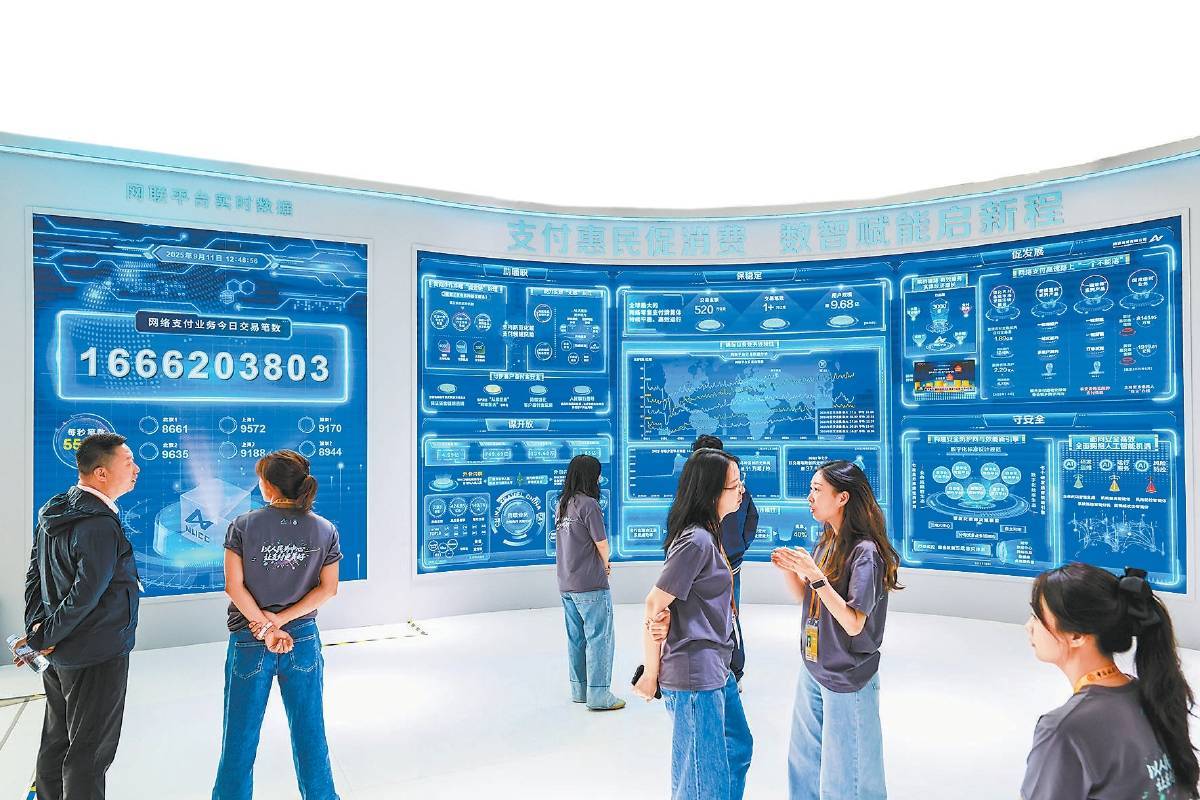
Group 1 - The financial services section of the 2025 Service Trade Fair focuses on "Digital Intelligence Driving Open Win-Win," providing a platform for global financial institutions to collaborate and showcase new trends in finance [1] - A total of 97 companies participated in the financial services section, with 51 domestic and 46 foreign institutions, resulting in an internationalization rate of 47.4% [10] - The event highlighted the importance of financial technology in promoting inclusive finance, with innovations such as voiceprint technology for elderly clients to facilitate transactions [10] Group 2 - The digital RMB was prominently featured, with various banks offering promotional activities to encourage its use, including a "red envelope rain" event [11][12] - Innovative applications of digital RMB were showcased, such as the collaboration between Industrial and Commercial Bank of China and Meituan to develop a digital RMB prepaid card [12] - The event also emphasized the value of investment, with companies like Galaxy Securities and Jianxin Fund using the fair to engage with a wide audience and promote their services [13][14]




科技筑基 稳中求进
Qi Huo Ri Bao Wang· 2025-09-11 18:42
Core Viewpoint - The futures companies such as Zhongtai Futures, Dongwu Futures, and Yong'an Futures are leveraging technology to build a solid foundation for development and support the real economy amidst "strong regulation, risk prevention, and promotion of high-quality development" [1] Group 1: Technological Foundations - Futures companies are prioritizing financial technology to enhance stability and efficiency in their operations [2] - Dongwu Futures has upgraded its app to improve customer satisfaction by integrating intelligent research and big data analysis [2] - Yong'an Futures has significantly improved business efficiency and reduced operational risks through technology-driven business restructuring and process automation [2][3] Group 2: Risk Management and Compliance - Yong'an Futures emphasizes that innovation should not compromise risk control, implementing AI models with human oversight to ensure compliance with regulatory requirements [3] - Zhongtai Futures focuses on internal service efficiency while ensuring compliance and control in technological innovations [3] - Zhongtai Futures has deployed over 270 RPA processes to enhance operational efficiency and service capabilities [3] Group 3: System Resilience and Performance Testing - The recent surge in trading volume has tested the stability and peak capacity of trading systems, serving as a "test stone" for technological capabilities [5] - Zhongtai Futures has established a three-tier mechanism for risk control, including pre-event simulations and real-time monitoring of system performance [5] - Yong'an Futures employs a closed-loop mechanism for system optimization, focusing on root cause analysis and iterative improvements [6] Group 4: Talent and Resource Challenges - The futures industry faces a significant talent gap, particularly for composite talent, which is in high demand but scarce [7] - System compatibility issues hinder technological development, as different systems require additional permissions for transactions [7] - The rising costs of technology investments, particularly in AI and big data, pose challenges for futures companies [7] Group 5: Future Directions - The three futures companies plan to continue innovating and leveraging financial technology to empower business development [8] - Dongwu Futures aims to deepen business transformation through AI, integrating industry cloud and third-party data resources [8] - Yong'an Futures intends to enhance data governance and application efficiency, targeting a 100% increase in data asset utilization and a 50% improvement in cross-departmental data sharing [8]

国泰海通|计算机:2025H1业绩实现高增,毛利率呈现上行趋势
国泰海通证券研究· 2025-09-11 14:05
Core Viewpoint - The computer industry is expected to maintain a positive growth trend, with significant revenue and profit increases in the first half of 2025, driven by six key sectors: data elements, autonomous driving, AI, cloud computing, fintech, and cybersecurity [1][2]. Summary by Sections Overall Performance - In H1 2025, the total revenue of the computer industry reached 619.68 billion yuan, representing a year-on-year increase of 11.24%. The net profit attributable to shareholders was 13.67 billion yuan, up 29.36% year-on-year, while the non-recurring net profit was 8.01 billion yuan, increasing by 31.01% [2]. - In Q2 2025, the total revenue was 333.77 billion yuan, showing a year-on-year growth of 7.85%. The net profit attributable to shareholders was 10.86 billion yuan, up 13.19%, and the non-recurring net profit was 7.97 billion yuan, reflecting a growth of 5.77% [2]. Margin and R&D - The gross profit margin increased in H1 2025, while the average net profit margin stabilized. The R&D expense ratio decreased, whereas sales and management expenses increased [2]. Sector Performance - The sectors with positive growth in both revenue and net profit include data elements, autonomous driving, AI, cloud computing, fintech, and cybersecurity [3]. - Large-cap companies (market value over 10 billion yuan) showed more stable performance compared to small and mid-cap companies. In H1 2025, large-cap companies had revenue, net profit, and non-recurring net profit growth rates of 17%, 27%, and 22%, respectively. In contrast, mid-cap companies (50-100 billion yuan) experienced declines in these metrics, with revenue down by 10% and net profit down by 607% [3]. - In Q2 2025, large-cap companies continued to perform well, with revenue growth of 13%, net profit growth of 15%, and non-recurring net profit growth of 6%. Mid-cap companies faced further declines, with revenue down by 12% and net profit down by 38% [3].

建行深圳市分行:科技让自助渠道服务更便捷
Zheng Quan Shi Bao Wang· 2025-09-11 13:14
Core Viewpoint - The article emphasizes the rapid transformation of the financial ecosystem through technology, highlighting the efforts of China Construction Bank's Shenzhen branch in enhancing banking services via digital channels and self-service innovations [1]. Group 1: Self-Service Channel Transformation - The bank is focusing on digital transformation of self-service channels to improve service efficiency and customer experience [1]. - The introduction of "Smart Teller Machines" (STM) allows customers to perform self-service transactions easily, receiving positive feedback for their simplicity and speed [2]. - The bank has implemented a one-stop service model, enabling customers to complete multiple transactions with a single confirmation, enhancing convenience [2]. Group 2: Comprehensive Services - The bank is expanding its "Smart Government" services, allowing customers to handle over a hundred government-related transactions through self-service machines, addressing common pain points in public service [3]. - The bank's outreach includes on-site services using intelligent devices to assist customers in various locations, ensuring financial services are accessible [3]. Group 3: Personalized Care - The bank has introduced a "Senior Care Version" of the smart teller machine, addressing the specific needs of elderly customers to improve their self-service experience [4]. - Services for cross-border customers have been expanded, allowing for various high-frequency transactions at key locations [4]. Group 4: Omnichannel Coordination - The bank promotes seamless integration between online and offline services, allowing customers to make appointments and manage transactions through multiple digital platforms [4]. - This omnichannel approach has led to over 500,000 customer interactions annually, indicating strong customer acceptance [4]. Group 5: Online Migration - The bank is prioritizing mobile services, enabling customers to perform high-frequency transactions through mobile banking applications, enhancing convenience [5]. Group 6: Smart Card Vault Innovation - The bank has introduced a "Smart Card Vault" to streamline the card issuance process, reducing the need for manual operations and improving customer service efficiency [6][7]. - The smart card system has processed over 400,000 transactions since its launch, significantly enhancing customer satisfaction and operational efficiency [8]. Group 7: Future Directions - The bank plans to continue leveraging advanced technologies such as big data, 5G, and artificial intelligence to further enhance its self-service channels and create a more inclusive and environmentally friendly banking experience [9].

王兴兴最新发声!实探2025外滩大会,科技与金融深度融合
券商中国· 2025-09-11 12:39
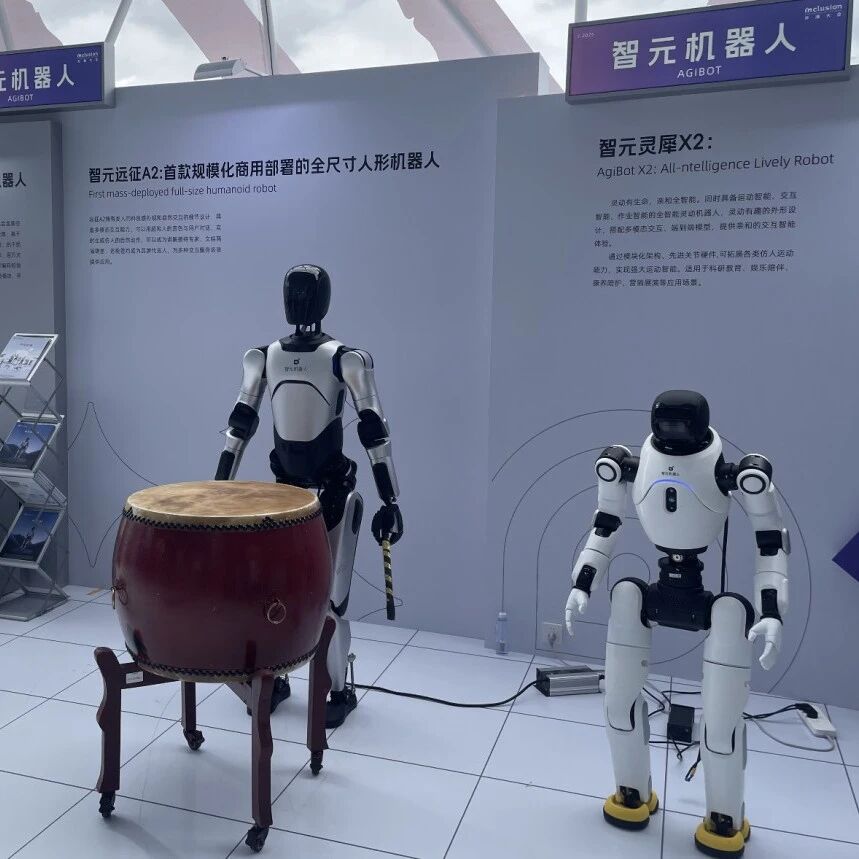
Core Viewpoint - The 2025 Inclusion Bund Conference in Shanghai focuses on "Reshaping Innovative Growth," showcasing the deep integration of technology and finance, with over 200 innovative companies presenting more than 30 cutting-edge technology products [1][8]. Group 1: Event Overview - The conference spans three days and is supported by the Shanghai Municipal Financial Regulatory Bureau and Huangpu District People's Government, emphasizing internationalization, professionalism, and cutting-edge developments [1]. - The exhibition area covers 15,000 square meters, including a 10,000 square meter technology-themed exhibition and a 5,000 square meter interactive technology market [1]. - Last year's event attracted 52,000 attendees, with expectations for this year's participation to set new records [1]. Group 2: Technological Innovations - The exhibition features a comprehensive display of human-machine collaboration ecosystems, showcasing companies from various sectors, including robotics and AI [2][4]. - Key areas of focus include general artificial intelligence, embodied intelligence, and various applications of AI in health, transportation, finance, and energy [4]. Group 3: Financial Technology Highlights - Ant Group introduced an enterprise-level full-stack financial intelligence platform leveraging AI and blockchain for credit risk assessment and investment optimization [5]. - Alipay's "AI Pay" debuted, allowing users to make purchases through natural language commands, enhancing user experience in various consumer scenarios [5]. - The AI employment assistant "Xiaoye" was launched to improve recruitment efficiency, showcasing the application of AI in enhancing job matching [5]. Group 4: Industry Perspectives - Ant Group's CEO emphasized the importance of grounding token economies in the real economy to unlock true value, advocating for compliance as a cornerstone of innovation [6][7]. - The conference serves as a platform for observing global technological advancements and highlights the synergy between technology and finance, contributing to Shanghai's status as an international financial center [8]. Group 5: Global Engagement - The conference attracted participation from nearly 20 countries, with over 8,000 teams and 20,000 tech enthusiasts, reflecting its international and youthful character [11]. - Notable speakers, including Richard Sutton, discussed the transition to an "experience era" in AI, emphasizing the need for continuous learning and adaptation in the industry [11].
十余家公募开启秋季校招!部分机构营销岗需求突出
Bei Jing Shang Bao· 2025-09-11 12:27
Group 1 - The autumn recruitment for public funds has begun, with over ten firms including E Fund, GF Fund, and others starting their hiring processes for the 2026 graduates as of September 11 [1][3] - The recruitment positions are mainly focused on investment research, financial technology, marketing, and functional roles, with some firms offering limited positions in financial technology [1][4] - There is a noticeable difference in the number of recruitment positions among firms of varying sizes, with larger firms like E Fund and GF Fund offering more than 20 positions each, while smaller firms have significantly fewer [8][9] Group 2 - Marketing roles are in high demand, with firms like Zhongou Fund and Penghua Fund showing a significant number of marketing positions compared to other categories [5][6] - The increase in marketing positions may be related to the competitive landscape of the public fund industry, which has shifted focus from product design to channel and customer acquisition [6][9] - Some firms are highlighting their employee benefits and growth opportunities in recruitment announcements, indicating a competitive approach to attract talent [4][6] Group 3 - The demand for financial technology talent has decreased, as the current workforce is deemed sufficient for operational needs, and the requirements for such roles have become more stringent [7] - Some firms have reported a year-on-year decrease in the number of recruitment positions, particularly among smaller public funds, while larger firms have seen an increase [8][9] - The overall hiring trend is influenced by market conditions, with firms adjusting their recruitment strategies based on their growth and revenue outlook [9]