人民币国际化

Search documents
8月外汇储备重回3.3万亿美元上方 增持黄金仍是大方向
Bei Jing Shang Bao· 2025-09-07 23:58
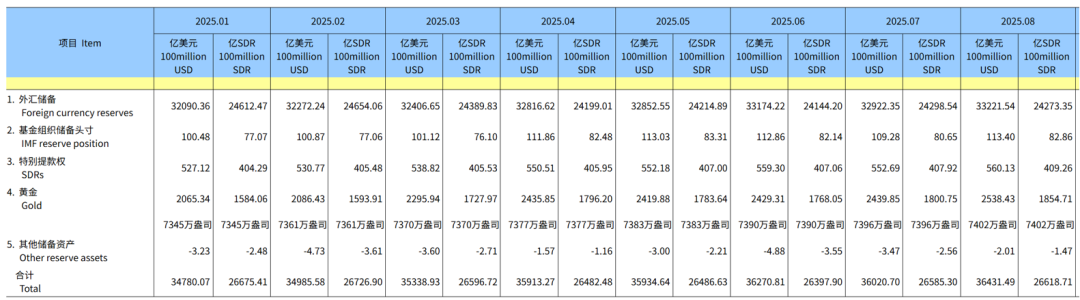
Group 1 - The central bank has increased its gold reserves for the tenth consecutive month, with the latest figure at 74.02 million ounces, up from 73.96 million ounces in July [4] - As of the end of August, China's foreign exchange reserves reached $3.322154 trillion, an increase of $29.9 billion or 0.91% from the end of July, marking the highest level since January 2016 [2] - Analysts expect gold prices to rise in the medium to long term, and the central bank is likely to continue its trend of purchasing gold [1][5] Group 2 - The increase in foreign exchange reserves is attributed to factors such as the decline in the US dollar index and rising global financial asset prices, influenced by expectations of interest rate cuts by the Federal Reserve [2][3] - The current level of foreign exchange reserves is considered to be at a moderately sufficient level, providing support for the stability of the RMB exchange rate amid external uncertainties [3] - The central bank's strategy includes optimizing the structure of international reserves by increasing gold holdings while potentially reducing US Treasury holdings [6] Group 3 - The recent surge in international gold prices, with spot gold reaching a high of $3,600.18 per ounce, reflects the impact of the Federal Reserve's interest rate cut expectations [4] - The demand for gold from central banks remains optimistic, with a reported increase of 166 tons in global official gold reserves in the second quarter of 2025 [4][5] - Analysts predict that gold prices will continue to perform well, with mid-year price targets ranging from $3,627 to $3,816 per ounce depending on market conditions [6]
外储再超3.3万亿美元 央行连续10个月增持黄金
Zheng Quan Shi Bao· 2025-09-07 18:20
Core Viewpoint - As of the end of August, China's foreign exchange reserves reached $33,222 billion, marking an increase of $299 billion from the end of July, with a growth rate of 0.91% [1] Group 1: Foreign Exchange Reserves - China's foreign exchange reserves have remained above $3.2 trillion for 21 consecutive months, indicating stable economic performance and resilience [2] - The increase in reserves is attributed to factors such as changes in major economies' monetary policies and macroeconomic data, leading to a decline in the US dollar index and an overall rise in global financial asset prices [1][2] Group 2: Economic Indicators - The decline in the US dollar index was influenced by weaker US economic data and heightened expectations for a Federal Reserve rate cut, following disappointing non-farm payroll numbers and stable inflation levels [1] - Despite rising expectations for a rate cut in September, uncertainties remain due to ongoing inflation increases and relatively low unemployment rates in the US [1] Group 3: Gold Reserves - As of the end of August, China's official gold reserves stood at 74.02 million ounces, with an increase of 60,000 ounces from the previous month, marking ten consecutive months of gold accumulation by the central bank [2] - The proportion of gold in China's official international reserves is significantly lower than the global average, suggesting a potential direction for future increases in gold holdings to optimize reserve structure and support the internationalization of the renminbi [2]
央行连续10个月增持黄金 外储规模创近十年新高
Sou Hu Cai Jing· 2025-09-07 16:35
Core Insights - Gold has surpassed the euro to become the second-largest international reserve asset after the US dollar, with global gold reserves exceeding US Treasury holdings for the first time since 1996, excluding the US [1][5] - As of the end of August, China's foreign exchange reserves reached $332.22 billion, marking a 0.91% increase from the end of July and the highest level since January 2016 [2][3] - The People's Bank of China has increased its gold reserves for ten consecutive months, with a net addition of 60,000 ounces in August, raising the proportion of gold in foreign reserves to a historical high of 7.64% [4][5] Foreign Exchange Reserves - China's foreign exchange reserves have seen a significant increase, with a total of $332.22 billion as of August, up by $29.92 billion from July [2][3] - The rise in reserves is attributed to multiple factors, including a decline in the US dollar index and an increase in global asset prices, which positively impacted the valuation of non-dollar assets held by China [2][3] - The foreign exchange reserves increased by $119.8 billion compared to the end of the previous year, indicating a stable outlook for future reserves [3] Gold Reserves - As of the end of August, China's official gold reserves stood at 7.402 million ounces, with a total value of $253.8 billion, reflecting a $9.9 billion increase [4][5] - The increase in gold reserves is part of a broader strategy to optimize the structure of international reserve assets, with gold now being a significant component [4][5] - The pace of gold accumulation has slowed, with the central bank managing costs amid rising international gold prices, which increased by 3.9% in August [5] Renminbi Exchange Rate - The renminbi has shown a strong upward trend, with the exchange rate against the US dollar reaching a yearly low of 7.126 in late August [6] - The appreciation of the renminbi is driven by both external factors, such as a weakening US dollar index, and internal factors, including strong domestic equity market performance [6][7] - Analysts expect the renminbi to maintain a strong performance in the near term, with potential support from continued demand for currency exchange as the year-end approaches [7]
陈翊庭详解香港如何迎来“资本盛宴”
Zhong Guo Ji Jin Bao· 2025-09-07 13:48
Core Insights - Hong Kong's IPO fundraising reached HKD 134.5 billion in the first eight months of 2025, a staggering increase of 579% year-on-year, with total fundraising amounting to HKD 368.8 billion, up 322% year-on-year [1][3]. Group 1: Market Dynamics - The shift from "anything but China" to "buy China" indicates a significant change in foreign investor sentiment towards Chinese assets, driven by a combination of value discovery and global asset reallocation [3]. - The turning point for Hong Kong's stock market occurred on September 24, 2024, following a series of supportive policies from the central government, leading to record trading volumes in the subsequent weeks [3][4]. - Foreign institutional investors, initially hesitant, began actively researching the Chinese market, recognizing the presence of high-quality companies and a well-structured supply chain [3][4]. Group 2: IPO Market Trends - The demand for IPOs is robust, fueled by global investors seeking to diversify their portfolios amid geopolitical uncertainties and high valuations in other asset classes [8]. - A notable example includes a Middle Eastern sovereign fund that subscribed to USD 500 million in a major tech IPO, highlighting the attractiveness of IPOs over secondary market purchases [8][9]. - The supply side remains strong, with over 200 listing applications currently being processed, nearly half of which are from technology companies [8][9]. Group 3: Investment Landscape - The proportion of foreign capital in IPO subscriptions is notably high, especially for high-tech companies, often reaching 70-80% [9]. - The market for refinancing is also active, with refinancing amounts exceeding IPO amounts by more than double this year [9]. - Long-term funds, such as sovereign and pension funds, are increasingly investing in Hong Kong stocks, attracted by the stability of Chinese policies compared to the volatility in the U.S. [4][6]. Group 4: Market Inclusivity and Future Outlook - The Hong Kong Stock Exchange emphasizes its inclusivity, welcoming a diverse range of companies, including startups and established giants, to list [10][12]. - Recent reforms have allowed companies without a history of profitability to go public, enhancing the market's appeal to innovative firms [12]. - The exchange is also exploring the establishment of LME-approved warehouses in Hong Kong to facilitate commodity trading, reflecting the growing demand for industrial metals [15]. Group 5: Product Development and Innovation - The Hong Kong Stock Exchange aims to enhance its product offerings in fixed income, currency, and commodities to compete more effectively with global markets [14]. - There is a focus on expanding the range of interconnectivity products, including bond products, to attract foreign investment and benefit domestic investors [16]. - Recent adjustments to the IPO allocation mechanism aim to attract more institutional investors, thereby stabilizing new stock pricing and reducing the risk of significant losses for retail investors [16].

我国外汇储备创近10年新高
21世纪经济报道· 2025-09-07 12:14
Group 1: Foreign Exchange Reserves - As of August 2025, China's foreign exchange reserves reached $3.3222 trillion, an increase of $29.9 billion from the end of July, marking a rise of 0.91% and the highest level since January 2016 [1][5] - The increase in foreign exchange reserves is attributed to the depreciation of the US dollar, lower US Treasury yields, and rising global stock indices, indicating a robust economic performance in China [1][5][6] - The current level of foreign reserves is considered "adequately abundant," providing essential support for maintaining the RMB exchange rate at a reasonable equilibrium and acting as a buffer against external shocks [1][5][6] Group 2: Gold Reserves - The People's Bank of China has increased its gold reserves for the tenth consecutive month, with reserves reaching 7.402 million ounces (approximately 2302.28 tons) as of August, an increase of 60,000 ounces [2][8] - The value of gold reserves rose by $9.858 billion to $253.843 billion, with the proportion of gold reserves in total foreign exchange reserves increasing to 7.64%, a historical high [2][8] - The trend of increasing gold reserves is driven by geopolitical uncertainties and the need to optimize the international reserve structure, with expectations that central banks globally will continue to increase their gold holdings [2][9][10]

央行连续10个月增持黄金,外储止跌回升创近十年新高
Di Yi Cai Jing· 2025-09-07 06:57
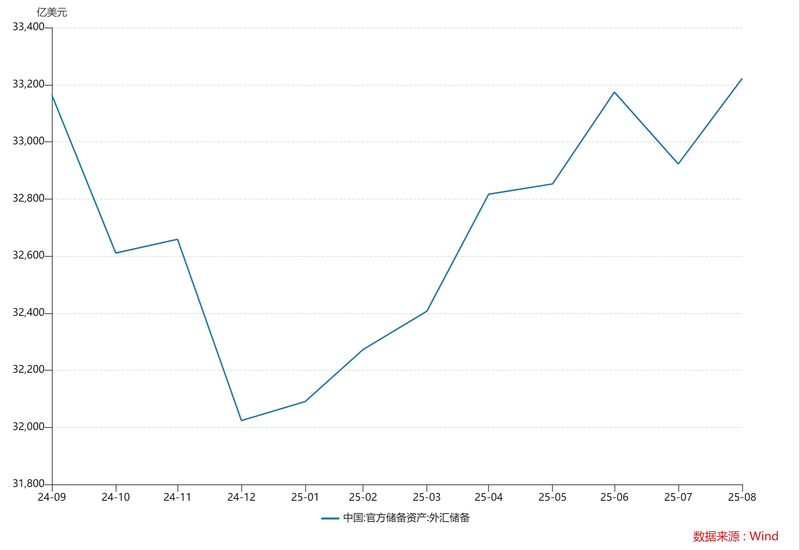
Core Insights - China's foreign exchange reserves reached a new high of $3.3 trillion as of August 2025, marking the highest level since January 2016 [1][3] - The increase in reserves is attributed to a combination of external factors, such as the weakening of the US dollar and rising global asset prices, as well as internal factors like a stable economic foundation and optimized reserve structure [2][5] Foreign Exchange Reserves - As of the end of August, China's foreign exchange reserves stood at $33,221.54 billion, an increase of $299.19 billion from the end of July, representing a growth rate of 0.91% [3] - The rise in reserves is driven by a 2.2% decline in the US dollar index, which has led to an increase in the value of non-dollar assets held in reserves [5][12] - The reserves have increased significantly by $1,198 billion compared to the end of the previous year, indicating a robust upward trend [5] Gold Reserves - China's gold reserves have been on a continuous rise, with a net increase of 60,000 ounces in August, bringing the total to 7.402 million ounces [7] - The proportion of gold reserves in relation to total foreign exchange reserves reached a historical high of 7.64%, reflecting an ongoing optimization of the reserve asset structure [7][10] - The increase in gold reserves is part of a broader strategy to enhance the credibility of the national currency and support the internationalization of the renminbi [10] Renminbi Exchange Rate - The renminbi has shown a strong upward trend, with the exchange rate against the US dollar reaching a low of 7.126, the lowest level of the year [11][12] - The strengthening of the renminbi is supported by a favorable external environment, including a 2.2% decline in the US dollar index, and strong domestic equity market performance attracting foreign investment [12] - Analysts expect the renminbi to maintain a strong performance in the near term, with potential for continued appreciation as year-end approaches [12]
21解读|我国外储重回3.3万亿美元大关 黄金储备“十连涨”
2 1 Shi Ji Jing Ji Bao Dao· 2025-09-07 06:50
Group 1: Foreign Exchange Reserves - As of August 2025, China's foreign exchange reserves reached $33,222 billion, an increase of $299 billion from the end of July, marking a rise of 0.91% and the highest level since January 2016 [1][3] - The increase in foreign exchange reserves is attributed to the depreciation of the US dollar, lower US Treasury yields, and rising global stock indices, which collectively contributed to a positive valuation effect [3][4] - The stable performance of China's economy provides strong support for maintaining a stable level of foreign exchange reserves, which is crucial for stabilizing the RMB exchange rate [1][5] Group 2: Gold Reserves - The People's Bank of China has increased its gold reserves for the tenth consecutive month, with reserves reaching 7,402 million ounces (approximately 2,302.28 tons) as of the end of August, an increase of 6,000 ounces [2][6] - The value of gold reserves rose by $98.58 billion to $253.84 billion, with the proportion of gold reserves to total foreign exchange reserves increasing to 7.64%, a historical high [2][6] - The ongoing increase in gold reserves is driven by the need to optimize the international reserve structure and respond to changes in the global political and economic landscape [6][7] Group 3: Market Trends and Economic Outlook - The decline in the US dollar index by 2.2% in August, along with the appreciation of non-US currencies, contributed to the increase in foreign exchange reserves due to favorable exchange rate effects [4][5] - Global asset prices rose, supported by expectations of interest rate cuts, with the S&P 500 index increasing by 1.9% and the Nikkei index rising by 4% [4][5] - Despite external uncertainties, China's economic fundamentals remain strong, with a diversified trade structure and increasing attractiveness of RMB assets to international capital [5][6]
我国外储重回3.3万亿美元大关 黄金储备“十连涨”
2 1 Shi Ji Jing Ji Bao Dao· 2025-09-07 06:39
9月7日,国家外汇管理局统计数据显示,截至2025年8月末,我国外汇储备规模为33222亿美元,较7月 末上升299亿美元,升幅为0.91%。这是我国外汇储备今年第二次站上3.3万亿美元大关,且创下2016年1 月以来新高。 国家外汇局表示,2025年8月,受主要经济体货币政策预期、宏观经济数据等因素影响,美元指数下 跌,全球金融资产价格总体上涨。汇率折算和资产价格变化等因素综合作用,当月外汇储备规模上升。 我国经济运行稳中有进,展现出强大韧性和活力,为外汇储备规模保持基本稳定提供支撑。 东方金诚首席宏观分析师王青解读称,8月外汇储备升高背后主要是年初以来美元大幅贬值,美债收益 率大幅走低,以及全球主要股指上涨带动。按不同标准测算,当前我国略高于3万亿美元的外储规模都 处于适度充裕水平。在外部环境波动加大的背景下,适度充裕的外储规模将为保持人民币汇率处于合理 均衡水平提供重要支撑,也能成为抵御各类潜在外部冲击的压舱石。 黄金储备方面,央行连续第10个月增持黄金。央行公布数据显示,8月末黄金储备报7402万盎司(约 2302.28吨),环比增加6万盎司(约1.86吨)。数据还显示,截至8月末,我国持有黄金储备余 ...
央行连续10个月增持黄金,持续增持成为常态
Sou Hu Cai Jing· 2025-09-07 05:00
Group 1 - The central bank's gold reserves increased to 74.02 million ounces by the end of August, marking a continuous increase for the 10th month, although the increment has been low for the last 6 months [1] - The increase in gold reserves is attributed to the expectation of rising international gold prices due to the current global political and economic conditions, leading to a decreased necessity to pause gold purchases [1][2] - As of August 2025, gold accounted for 7.3% of China's official international reserve assets, significantly lower than the global average of around 15%, indicating a need for continued gold accumulation to optimize reserve structure [1] Group 2 - As of the end of August 2025, China's foreign exchange reserves reached $33,221.54 million, an increase of $299.19 million from the end of July, reflecting a rise of 0.91% [4] - The increase in foreign exchange reserves is influenced by the depreciation of the US dollar index and the overall rise in global financial asset prices, supported by China's robust economic fundamentals and diverse trade structure [4] - Factors such as enhanced attractiveness of RMB assets to international capital and a stable international balance of payments contribute to maintaining the stability of foreign exchange reserves [4]

中国央行,增持黄金!连续第10个月
Zhong Guo Zheng Quan Bao· 2025-09-07 04:16
Core Insights - As of the end of August, China's foreign exchange reserves reached $332.22 billion, an increase of $29.9 billion from the end of July, marking a growth rate of 0.91% [1][3] - China's gold reserves stood at 7.402 million ounces at the end of August, with an increase of 60,000 ounces, representing the central bank's continuous accumulation of gold for the tenth consecutive month [1][4] Foreign Exchange Reserves - The increase in foreign exchange reserves is attributed to the depreciation of the US dollar index and the overall rise in global financial asset prices [3][5] - The foreign exchange reserves balance as of the end of August is the highest since January 2016, indicating improved capacity to withstand various shocks [3][5] - Current foreign exchange reserves are considered moderately sufficient, providing important support for maintaining the RMB exchange rate at a reasonable equilibrium level [3][5] Gold Reserves - In August, the expectation of interest rate cuts by the Federal Reserve led to a significant rebound in gold prices, with a cumulative increase of 3.9% for the month [5] - China's gold reserves increased by $9.9 billion to $253.8 billion, with the proportion of gold reserves to total foreign exchange reserves rising by 0.23 percentage points to 7.64%, setting a new historical high [5]