
AI大模型

Search documents
管理层真金白银力挺 一脉阳光(02522)并购+增持双轮驱动价值重估
智通财经网· 2025-06-25 02:12
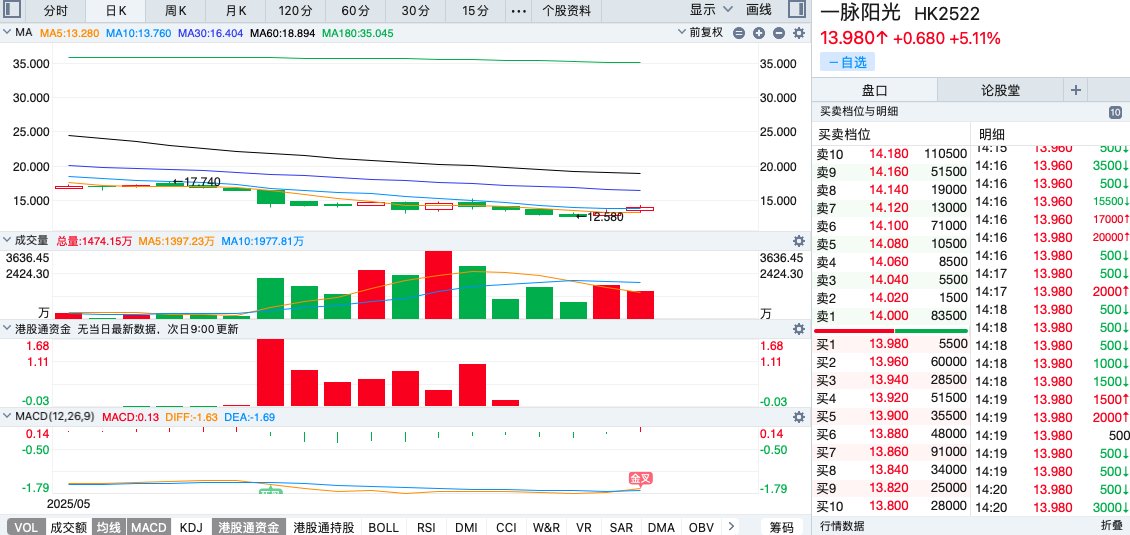
Core Viewpoint - The recent acquisition of 70% stake in Gao Mai Health by Yimai Yangguang (02522) is seen as a strategic move to enhance its position in the nuclear medicine sector, indicating a potential for value re-evaluation in the company and the industry as a whole [1][3][10]. Group 1: Company Developments - Yimai Yangguang has seen a significant increase in trading activity, with an average daily trading volume of approximately HKD 280 million over the past 12 trading days, indicating strong market interest [1]. - The company's management collectively purchased 208,000 H-shares, signaling confidence in the company's future and suggesting that the stock is undervalued [1]. - Following the acquisition announcement, the company's stock price surged over 10%, reflecting market recognition of the potential value creation from the deal [12]. Group 2: Strategic Positioning - The acquisition of Gao Mai Health completes a critical piece of Yimai Yangguang's nuclear medicine strategy, creating a full industry chain that integrates imaging services, nuclear medicine, and AI [3][4]. - The company aims to establish a "drug-service-data-AI" integrated business model, enhancing its market leadership and operational capabilities [4][5]. - The "One County, One Nuclear Medicine" policy is expected to accelerate the company's growth, as it leverages its unique resources and data assets to drive performance [1][4]. Group 3: Industry Trends - The third-party medical imaging industry is undergoing a significant transformation, with mergers and acquisitions expected to increase from HKD 2.8 billion in 2021 to HKD 9.2 billion by 2024, reflecting a compound annual growth rate of 48% [8]. - The industry is shifting from being a "supporting role" in healthcare to becoming a "core node" in the health industry, driven by policy, capital, and technological advancements [8][9]. - Yimai Yangguang's strategic positioning is seen as a benchmark for value re-evaluation in the third-party medical imaging sector, as it integrates technology, data, and business models [10][12].

特想聊聊快手这次的变化
Hu Xiu· 2025-06-25 00:48
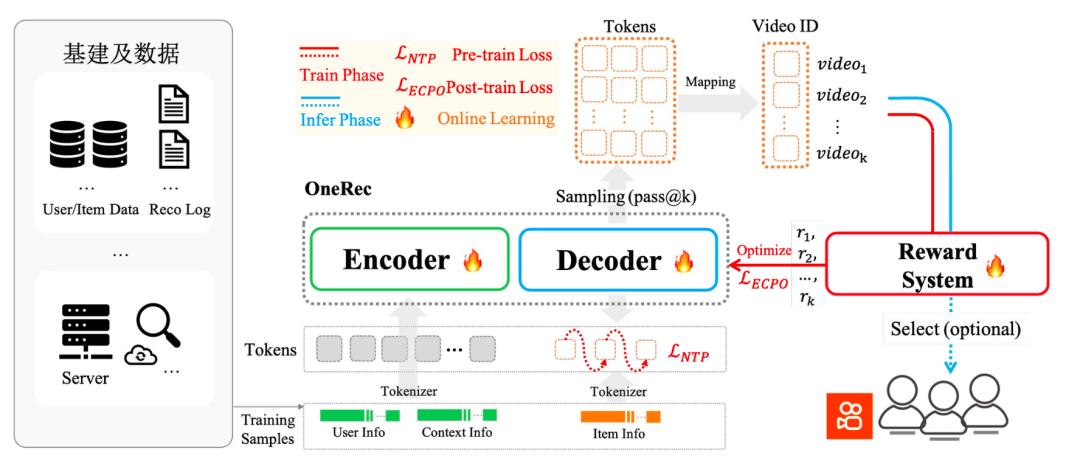
Core Viewpoint - Kuaishou has fully launched its AI model-driven recommendation system, OneRec, which is the first industrial-grade recommendation solution in the industry, setting a new standard globally [1][15]. Group 1: Technological Advancements - Kuaishou's technology has reached a top-tier level, particularly in video generation models [2]. - The company has made significant underlying technological advancements that surpass initial perceptions of it being merely a short video platform [3]. Group 2: Recommendation System Overview - Recommendation systems are a major technological innovation of the mobile internet era, utilized by popular platforms like Kuaishou, Douyin, and Pinduoduo [4]. - Traditional recommendation systems typically rely on user-based collaborative filtering and content-based collaborative filtering [4][6]. Group 3: Challenges in Traditional Systems - Traditional multi-stage recommendation systems face issues such as low overall GPU utilization and inefficiencies due to independent model operations [10][11]. - The complexity of user interests and the conflicting goals of increasing click-through rates while maintaining content diversity lead to decreased recommendation accuracy [9][10]. Group 4: OneRec's Innovations - OneRec shifts from a multi-stage filtering approach to an end-to-end model that directly generates a list of recommended videos based on user interests [16]. - The system employs a multi-modal semantic tokenizer to deeply understand video content beyond surface-level tags, enhancing content comprehension [21][24]. Group 5: User Modeling and Interest Tracking - OneRec integrates user behavior over time to create a comprehensive "interest sequence," allowing for more accurate recommendations that adapt to changing user preferences [28][30]. - The model uses deep neural networks to automatically learn complex interest changes from large datasets, improving recommendation accuracy [30]. Group 6: Recommendation Generation - The system utilizes an encoder-decoder structure, where the encoder compresses user interest trajectories into vectors, and the decoder generates a sequence of recommended content [32][33]. - The introduction of a Mixture of Experts (MoE) architecture enhances model capacity and efficiency, allowing for personalized recommendations while maintaining content diversity [34][36]. Group 7: Reinforcement Learning Integration - OneRec incorporates a reward mechanism using reinforcement learning to align user preferences with recommendation outcomes, enhancing the overall effectiveness of the system [38][44]. - The model's training includes various reward signals to ensure a balanced distribution of content types and to adapt to real-world business complexities [41][42]. Group 8: Performance Metrics - During the testing phase, OneRec demonstrated performance metrics comparable to existing complex systems, with user engagement metrics such as watch time and user lifecycle showing positive growth [46][47]. - In local life scenarios, OneRec achieved a 21% increase in GMV and significant growth in order volume and new customer acquisition [48]. Group 9: Future Considerations - Despite its advancements, OneRec still faces challenges related to inference speed, resource consumption, and further optimization of the reward mechanism [49]. - The introduction of OneRec marks a new phase in recommendation systems, aligning them with the latest advancements in AI and machine learning [49][50].

商业化进程提速 中国Robotaxi企业争相出海
Zhong Guo Zheng Quan Bao· 2025-06-24 20:23
Core Insights - The Robotaxi industry is transitioning from technology validation to commercialization, with new players entering the market and leading companies expanding internationally [1][3][6] - Haibo has officially entered the Robotaxi sector, backed by significant funding and a focus on L4 autonomous driving technology [2][4] New Players Entering the Market - Haibo, in collaboration with Ant Group and CATL, established "Shanghai Zhaofu Intelligent Technology Co., Ltd." with a registered capital of 1.288 billion yuan to focus on L4 autonomous driving technology [1][2] - Haibo's Robotaxi business has secured over 3 billion yuan in financing, indicating strong market confidence and a commitment to expanding its operations [2] Expansion of Leading Companies - Leading Chinese Robotaxi companies are actively pursuing international markets, with WeRide partnering with Uber and the Dubai Roads and Transport Authority to launch commercial Robotaxi services in Dubai [3][4] - WeRide plans to deploy Robotaxi services in 15 new cities over the next five years, emphasizing the Middle East as a strategic focus [3] - Pony.ai is also collaborating with Dubai authorities to test and eventually launch fully autonomous operations by 2026 [3][4] Industry Growth Projections - The Robotaxi market is projected to reach 200 billion yuan by 2030, with Robotaxi services expected to account for approximately 36% of B-end shared mobility [2] - The industry is anticipated to enter a phase of rapid growth from 2026 to 2030, driven by increasing commercialization [2] Innovation and Competitive Advantage - Chinese Robotaxi companies are leveraging their validated technologies and operational capabilities to enhance their global competitiveness [6] - The transition from "cost-effectiveness" to "technology premium" branding is seen as crucial for the Chinese automotive industry [6] - Companies are focusing on local market adaptation and safety system development to gain a competitive edge in international markets [6]
暴力催收VS天镜3.0:马上消费的科技外衣与讨债内核
Sou Hu Cai Jing· 2025-06-24 06:01
Core Insights - The financial industry's digital transformation has evolved from simple tool replacement to a more complex cognitive upgrade, indicating a competitive race towards financial intelligence that will shape the next decade [1] - The company, immediately consumer finance, has developed the first financial large model "Tianjing" in the country, and has iterated to Tianjing 3.0, showcasing its ambition to transform from a traditional consumer finance provider to a technology innovation engine [3][4] - The consumer finance sector is facing unprecedented challenges as it shifts from incremental expansion to stock competition, with declining consumer demand and increasing competition from small banks and internet platforms [4][5] Industry Challenges - Consumer demand for credit is weakening, with a reported reduction of 262.4 billion yuan in short-term household loans in the first five months of 2025, and a 12% year-on-year decline in the total balance of 31 consumer finance companies, estimated at 1.1 trillion yuan [4] - The number of consumer finance companies has increased to 35 in 2024, an 8% year-on-year growth, intensifying market competition [4] - The average interest rate for consumer loans has decreased from 8.5% in 2023 to 7.2% in 2024, compressing profit margins across the industry [4] Company Performance - The company's revenue for 2024 was 15.149 billion yuan, a decline of 4.09%, while its asset scale shrank from 71.28 billion yuan to 65.56 billion yuan, marking an 8.03% decrease [7] - To maintain cash flow and profitability, the company has increased its collection efforts, with collection fees rising from 2.82 billion yuan in 2023 to 3.128 billion yuan in 2024 [7] Compliance and Reputation Issues - The company has faced a surge in complaints related to aggressive collection practices, with 9,547 complaints in the last 30 days, accounting for 17.38% of total complaints [6][7] - Regulatory scrutiny has intensified, with new regulations mandating strict compliance in areas such as loan interest rates and collection practices, increasing operational costs and compliance pressures [7][8] International Expansion - The company is exploring overseas expansion, particularly targeting the Mexican market, which is the third-largest financial inclusion market globally [9] - However, significant challenges exist, including cultural differences, regulatory compliance risks, and competitive pressures from local players [11][12]

AI事实核查与伦理判断能力如何?新京报第三期大模型测评启动
Bei Ke Cai Jing· 2025-06-23 10:42
Core Insights - The report highlights the advancements in AI large models, particularly in enhancing media capabilities such as text generation, fact-checking, and information retrieval [1][2] - The third phase of the evaluation report will be released in July during the Beike Finance Summit, focusing on the effectiveness of large models in media work [2] Group 1: Evaluation Findings - The previous evaluation in January 2025 ranked large models' information gathering, translation, and long text summarization capabilities as the top three, while fact-checking and ethical judgment ranked lowest [1] - Compared to the first evaluation, the information gathering capability improved from third to first place, and long text summarization capability rose from last to third place, indicating significant progress in these areas [1] Group 2: Industry Developments - The emergence of DeepSeek has popularized deep thinking capabilities in large models, leading to the introduction of such features in most mainstream large model products [2] - The exponential growth of AI-generated content has led to issues with "hallucinated" content, which has affected the accuracy of results generated by large models during online searches [2]
新点软件(688232.SH):积极布局AI大模型,持续研发行业大模型
Ge Long Hui· 2025-06-23 09:42
Core Viewpoint - The company is actively developing AI large models to enhance its procurement, government affairs, and digital construction business processes, aiming for digital transformation in these sectors [1] Group 1: AI Large Model Development - The company has launched the AI large model product "Transaction Brain" for government applications, which includes features like AI-assisted review, intelligent transaction agents, and smart document preparation assistants [1] - Innovations in AI products such as AI material governance and AI supplier management are accelerating the digital transformation of state-owned enterprises in procurement [1] - The company is enhancing its AI customer service to improve service accuracy and reduce costs, while also focusing on the development of "AI + bidder services" to increase user value and market share [1] Group 2: Smart Government Initiatives - The company is aligning with the digital government development direction by upgrading AI products and developing cloud services [1] - It is leveraging foundational capabilities like government affairs databases and knowledge graphs to create government industry large models and innovative application scenarios [1] - The company is promoting AI innovation products in various government service areas, including intelligent customer service and virtual assistance [1] Group 3: Digital Construction Advancements - The company is accelerating the iteration and application of the "New Point Cost Model" to provide higher value services to the construction industry [1] - It aims to enhance user engagement and ensure sustainable business growth through new online subscription services [1] Group 4: Data Element Business Strategy - The company is planning a comprehensive approach to public and enterprise data supply and utilization [1] - It has secured several data governance projects with major clients and is developing products like trusted data spaces and intelligent inquiry [1] - The company is focusing on procurement data governance and supply chain control, successfully acquiring several leading clients in the process [1]

全国文化大数据交易中心国际声音资产交易平台上线
news flash· 2025-06-23 08:26
Core Viewpoint - The National Cultural Big Data Trading Center has launched an international sound asset trading platform, allowing for the registration and trading of sound assets such as performances of the Morin Khuur and Kunqu opera [1] Group 1: Platform Features - The platform currently focuses on state-owned sound assets, integrating and revitalizing sound heritage from institutions like the National Museum and National Library [1] - It includes sound artifacts and national intangible cultural heritage such as Kunqu and Qinqiang [1] Group 2: Future Plans - The platform plans to open to enterprises and individuals next year, enabling the registration and trading of sound-related data and digital assets [1] - The trading process will involve registration, copyright purchase, and other related rights, utilizing AI models to create new cultural products with sound elements [1]
异构智算产业生态联盟走进多模态跨尺度生物医学成像设施
Huan Qiu Wang Zi Xun· 2025-06-23 06:55
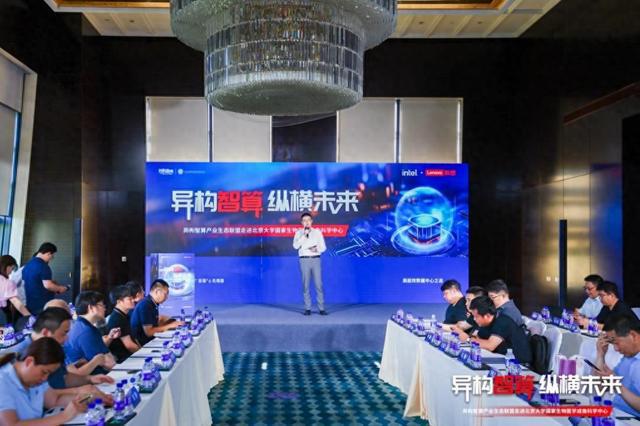
Group 1 - The event "Heterogeneous Intelligent Computing, Shaping the Future" focused on the deep integration of heterogeneous intelligent computing and AI large models, highlighting the advancements in AI technology and its applications across various sectors [1][3] - The emergence of DeepSeek represents a significant technological breakthrough in AI, particularly in low-computing training and high-efficiency model optimization, which is expected to enhance AI's penetration in fields such as healthcare, education, automotive, and finance [3][5] - The "Digital Life" major scientific plan initiated by Peking University aims to leverage multimodal cross-scale biomedical imaging facilities to visualize and measure life phenomena and disease mechanisms, addressing complex life science challenges [3][5] Group 2 - The integration of AI large models with life sciences is transforming drug development, with a shift towards intelligent pharmaceutical research that emphasizes precision, efficiency, and cost-effectiveness [5][6] - Lenovo's AI infrastructure strategy, particularly the Wanquan heterogeneous intelligent computing platform, aims to address the challenges of intelligent computing with advanced liquid cooling technology and high-precision interconnects, promoting industrial upgrades [6][7] - The Wanquan platform is designed to manage heterogeneous computing clusters efficiently, enabling seamless access to integrated, stable, and intelligent computing resources, and can support the full-speed operation of the DeepSeek R1 large model [6][7]
价格被打下来,AI眼镜就能上桌了?
创业邦· 2025-06-22 10:21
Core Viewpoint - The AI glasses market is experiencing a surge in product launches and consumer interest, but significant issues regarding user experience and product functionality remain unresolved [3][5][8]. Group 1: Market Dynamics - The AI glasses sector is witnessing intense competition, with major tech companies and startups launching new products to capture market share [3][19]. - Sales data from the 618 shopping festival indicates a dramatic increase in the AI glasses market, with transaction volumes rising over 800% year-on-year, and projections suggest a compound annual growth rate exceeding 60% from 2025 to 2029 [8][9][21]. - The market is expected to see a shipment of 2.75 million units in 2025, representing a staggering 107% increase compared to previous years, positioning China as the global leader in this segment [8][21]. Group 2: Consumer Feedback and Challenges - Consumer feedback highlights critical issues such as inadequate battery life, discomfort in wearing, and sound leakage, leading to a perception that many AI glasses are "flashy but impractical" [5][11][14]. - Despite the initial excitement, many users report that the actual performance of AI glasses does not meet their expectations, with common complaints about short battery life and complex operations [9][12][14]. - The weight of new AI glasses has improved, with most products now under 40 grams, but battery life remains a significant pain point, with many devices only lasting a few hours under active use [11][13][14]. Group 3: Industry Outlook - Industry experts suggest that many current AI glasses prioritize conceptual features over practical user needs, which may hinder their integration into daily life [11][24]. - The competitive landscape is characterized by rapid product launches, with companies focusing on establishing a foothold in the market before refining product quality [16][24][26]. - The AI glasses are viewed as a gateway to future smart device ecosystems, with companies aiming to create a comprehensive ecosystem to attract developers and users [25][26].

转债周策略:如何看近期转债信用面变动
Huafu Securities· 2025-06-22 08:35
Group 1 - The report highlights the recent intensive disclosure period for convertible bond rating adjustments, indicating that if ratings are downgraded, selling pressure on individual bonds may increase. However, after the adjustment period, if the credit quality of bonds not downgraded shows improvement for 2025, it could support a rise in bond prices [2][11] - A convertible bond credit scoring model has been constructed to track changes in credit conditions for Q1 2025, allowing for the observation of marginal optimizations in financial indicators and credit quality across individual bonds and industries [2][12] - The credit scoring model includes six dimensions: scale level, operational capability, profitability, economic conditions, leverage level, and profitability, with scores reflecting the relative strength of fundamentals among sampled entities [3][12] Group 2 - The report identifies the top five industries with weakened credit conditions as coal, light manufacturing, automotive, transportation, and household appliances, while the top five industries with improved credit conditions are agriculture, non-bank financials, oil and petrochemicals, media, and computers [3][12] - Specific examples from the model show that the coal industry has weakened in terms of debt repayment ability, economic conditions, and leverage, while the agriculture sector has shown improvements in economic conditions, profitability, and debt repayment ability [3][12] - The report suggests a credit digging strategy based on the model's results, indicating that bonds priced between 100 to 120 yuan have shown varying credit score changes, with those priced below 100 yuan showing a decline, while those in the 100-105 yuan range have shown significant improvement [3][13] Group 3 - The overall economic stability in China is noted, with limited downside potential in the stock market, likely leading to a structural market fluctuation. The financial and public utility sectors are expected to attract incremental capital due to their stable profitability [4][34] - The report recommends focusing on specific sectors such as AI models and robotics, which are expected to drive the high-end manufacturing industry's growth, and suggests monitoring companies like Lingyi, Dongcai, and Wentai [4][34] - It also highlights that the new energy and automotive parts sectors are anticipated to see a recovery in economic conditions in the second half of the year, recommending attention to companies like Mingli, Huayou, Qilin, and Yiwei [4][34]