全球治理

Search documents
塞尔维亚国民议会副议长:中国发展令人惊叹,塞中合作前景广阔
Xin Hua She· 2025-10-02 09:04
Core Viewpoint - Serbia's National Assembly Vice President, Ragush, highlights China's remarkable development over the past 76 years and its increasing role in global governance, emphasizing the strong cooperation potential between Serbia and China [1]. Group 1: China's Development Achievements - China has become the world's second-largest economy, achieving the United Nations' 2030 Sustainable Development Agenda poverty reduction goal ten years ahead of schedule [1]. - Shenzhen's transformation from a small fishing village to a major global technology and information center exemplifies China's development success [1]. Group 2: Global Governance and Cooperation - China provides valuable experience for global development and offers solutions for complex international issues through its four global initiatives and the concept of a community with a shared future for mankind [1]. - The cooperation between Serbia and China is deepening, with a free trade agreement signed and direct flights established between Belgrade and major Chinese cities, enhancing people-to-people exchanges and economic collaboration [1]. Group 3: Future Cooperation Potential - There is significant potential for future cooperation between Serbia and China, particularly in the fields of technological innovation and renewable energy [2].
普天同庆迎华诞,团结奋斗正当时
Huan Qiu Wang· 2025-10-01 07:24
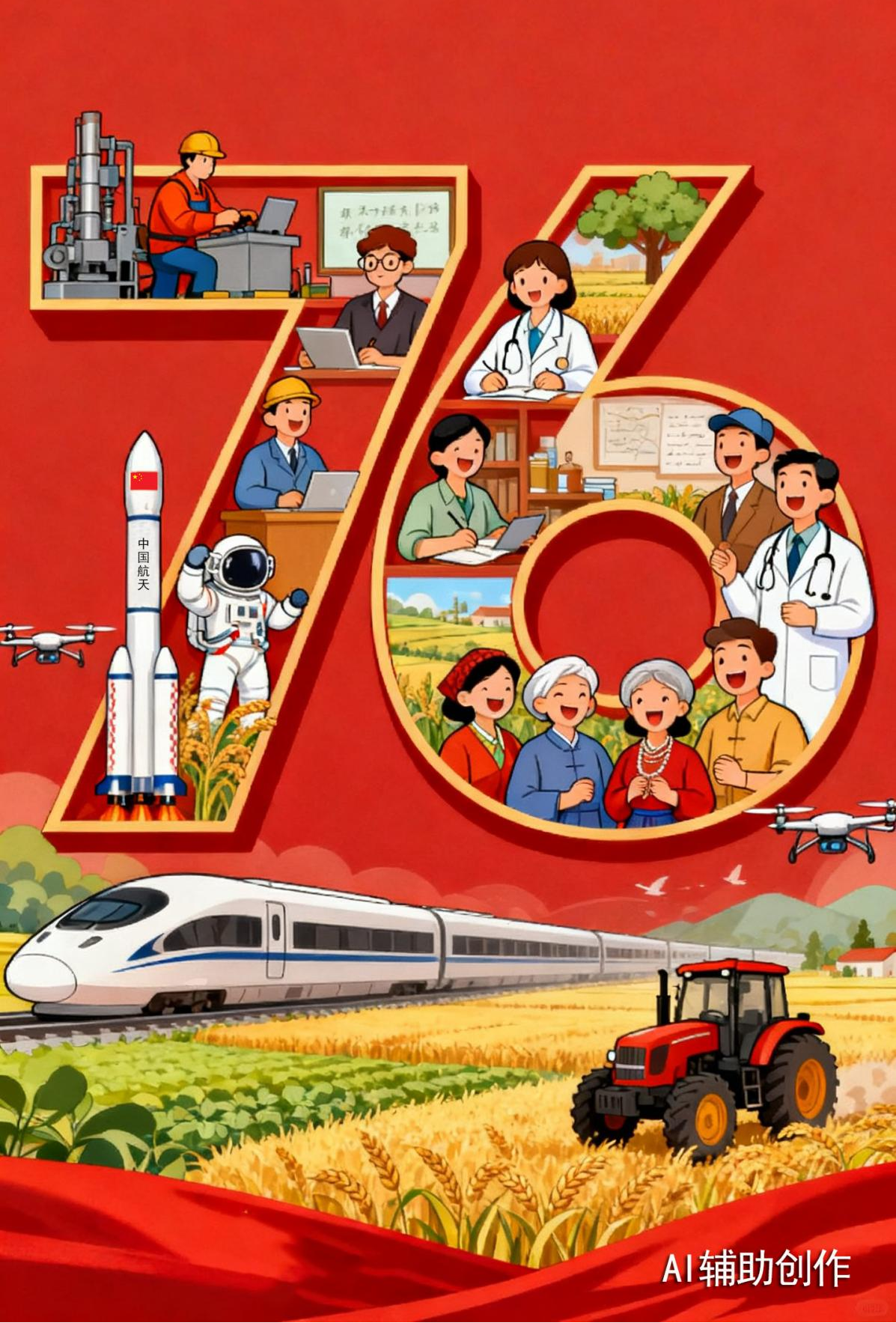
Core Viewpoint - The article emphasizes China's remarkable achievements over the past 76 years, highlighting the nation's journey from standing up to becoming prosperous and strong, driven by the spirit of hard work and innovation [2][3]. Group 1: Technological and Infrastructure Advancements - China has significantly improved its technological innovation capabilities, leading the world in fields such as 5G, artificial intelligence, and renewable energy [3]. - The country boasts the world's largest high-speed rail and highway networks, showcasing rapid advancements in infrastructure [3]. Group 2: Environmental and Social Progress - There are notable achievements in ecological civilization, with improvements in air and water quality, contributing to a more beautiful China [3]. - The article highlights the contributions of various professionals, including scientists, engineers, farmers, and teachers, who embody the spirit of hard work and dedication [3]. Group 3: Global Contribution and Stability - China actively participates in global governance, offering Chinese wisdom and solutions for world development, positioning itself as a stable and positive force in international affairs [3].

际观察丨联大内外,这些细节揭示世界之变
Xin Hua She· 2025-10-01 02:04
Group 1 - The 80th United Nations General Assembly highlighted the ongoing conflict in Gaza, with multiple Western countries recognizing Palestine, while leaders from Turkey and Iran condemned Israel's actions as genocide [2][6] - The assembly showcased a stark contrast between multilateral cooperation and unilateral hegemony, reflecting significant global changes since the UN's establishment 80 years ago [1][7] - China's leadership was emphasized during the assembly, with significant climate commitments and support for multilateral trade, contrasting with the protectionist tendencies of some nations [8][9] Group 2 - The assembly featured dramatic moments, such as Israeli Prime Minister Netanyahu's speech prompting mass walkouts from representatives, indicating widespread discontent with Israel's actions in Gaza [1][2] - U.S. President Trump's speech was marked by technical difficulties and a lack of engagement from the audience, reflecting growing concerns over his administration's impact on global trade and security [4][5] - Colombian President Gustavo Petro's strong stance against U.S. military actions and his criticism of unilateralism resonated with many leaders from the Global South, emphasizing the need for a more equitable international system [6][7]
联合国成立80周年:共同捍卫真正的多边主义
人民网-国际频道 原创稿· 2025-09-30 09:35
Core Points - The article emphasizes the importance of the United Nations in global governance and the need to reaffirm commitment to multilateralism and the principles of the UN Charter [1][2][3] - It highlights the challenges faced by global governance, including rising unilateralism and protectionism, and the need for reform in the global governance system [2][3] - The four global initiatives proposed by China aim to address deficits in peace, security, development, and governance, providing a systematic Chinese solution for global governance reform [4][5] Group 1 - The United Nations is recognized as a key institution for maintaining global integrity and is seen as irreplaceable in the current international order [1][2] - The UN's role as a coordinator rather than a substitute for nations is emphasized, particularly in the context of rising global challenges [2][3] - The global South is identified as an important force in the transformation of global governance, contributing to a more balanced international power structure [3][4] Group 2 - The four global initiatives proposed by China are interconnected and aim to promote modernization and reform in the global governance system for developing countries [4][5] - China's successful experience in modernization, particularly in poverty alleviation, serves as a model for other developing nations [4][5] - The initiatives also create platforms for cooperation and communication among global South countries, enhancing their influence in international affairs [5]
可持续的“造血式扶贫”
Ren Min Ri Bao· 2025-09-29 22:32
Core Points - The global development initiative proposed by President Xi Jinping emphasizes "development priority" and aims to implement the UN 2030 Sustainable Development Agenda, with a key focus on poverty alleviation [1] - The significance of poverty reduction cooperation between China and ASEAN countries lies in its role as a strategic measure for regional stability and common development, enhancing livelihoods and development capabilities [1][2] - China's poverty reduction cooperation with ASEAN is a concrete implementation of the "development priority" principle, leveraging China's experiences in targeted poverty alleviation, digital agriculture, and rural financial support to meet the development needs of ASEAN countries [1] Summary by Sections - **Poverty Alleviation Focus**: The global development initiative prioritizes poverty alleviation as a key area of cooperation, reflecting a commitment to sustainable development goals [1] - **Regional Cooperation**: The cooperation between China and ASEAN is not only an economic partnership but also a strategic initiative to foster regional stability and development [1][2] - **Practical Implementation**: China's approach to poverty alleviation includes sharing experiences, capacity building, and investment, serving as a model for other developing countries [2] - **Inclusive Development**: The cooperation exemplifies the initiative's emphasis on "inclusive and equitable" development, showcasing practical solutions for global governance [2]
新兴经济体研究会中青年论坛在国际关系学院举办
人民网-国际频道 原创稿· 2025-09-28 05:32
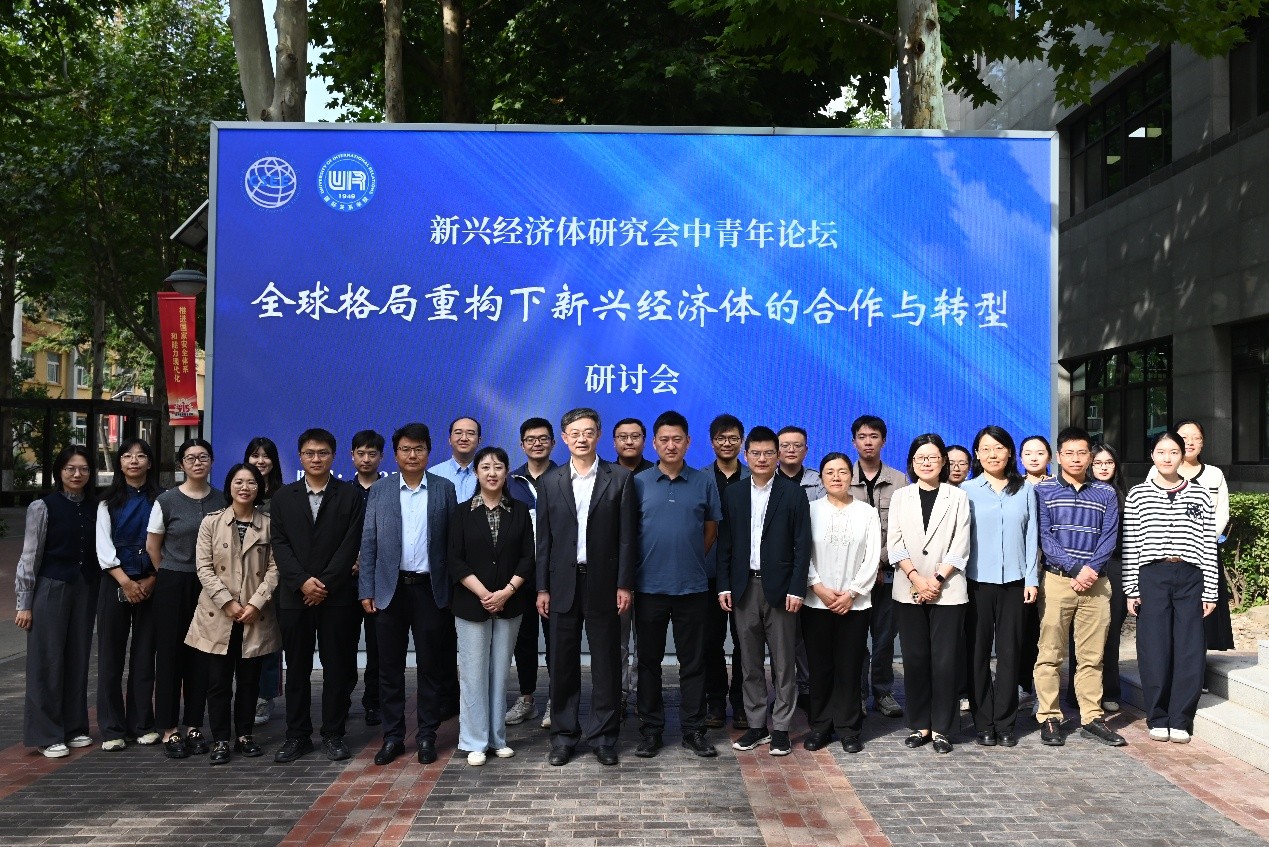
Core Viewpoint - The forum focused on the cooperation and transformation of emerging economies under the theme of "Global Restructuring" and highlighted the importance of these economies in global governance and development [1][2]. Group 1: Challenges and Opportunities - The forum discussed the development dilemmas and differentiation faced by emerging economies, emphasizing the need for sustainable development paths. Scholars noted that the ability of these economies to bear debt changes with their rising status in the global economy, and internal differentiation exists [3]. - The need to enhance the institutional discourse power of emerging economies and the Global South in the context of global governance reform was emphasized. The rise of unilateralism and protectionism poses challenges, and emerging economies are transitioning from passive participants to active shapers of global governance [3][4]. Group 2: Digital and Green Transformation - The forum addressed the challenges emerging economies face in digitalization and green transformation, highlighting the disparities caused by technological advancements like artificial intelligence. Strengthening South-South technological cooperation and sharing innovative outcomes is deemed crucial [4]. - Emerging economies are actively promoting development-oriented rules in digital trade but face challenges such as weak digital infrastructure and difficulties in coordinating international and domestic regulations [4].
新华时评丨以多边主义之光照亮全球治理新未来
Xin Hua Wang· 2025-09-28 00:50
Group 1 - The article emphasizes the need for a return to genuine multilateralism to address global challenges and maintain the authority of the United Nations [2][3] - It highlights the erosion of multilateralism due to geopolitical conflicts and unilateral actions, which have led to a weakened global governance system [1][2] - The article calls for increased representation and voice for developing countries in international affairs, acknowledging their significant contribution to global economic output [2][3] Group 2 - The concept of "pseudo-multilateralism" is criticized, as it serves specific geopolitical goals and undermines the fairness and effectiveness of international rules [3] - China's initiatives, such as the Belt and Road Initiative and various global governance proposals, are presented as efforts to enhance collective voice and development opportunities for the Global South [4] - The article asserts that multilateralism is deeply embedded in international relations and calls for a collective commitment to uphold the principles of the UN Charter [4]
促和平、反霸权、倡多边——联合国大会上的“全球南方强音”
Xin Hua Wang· 2025-09-27 07:04
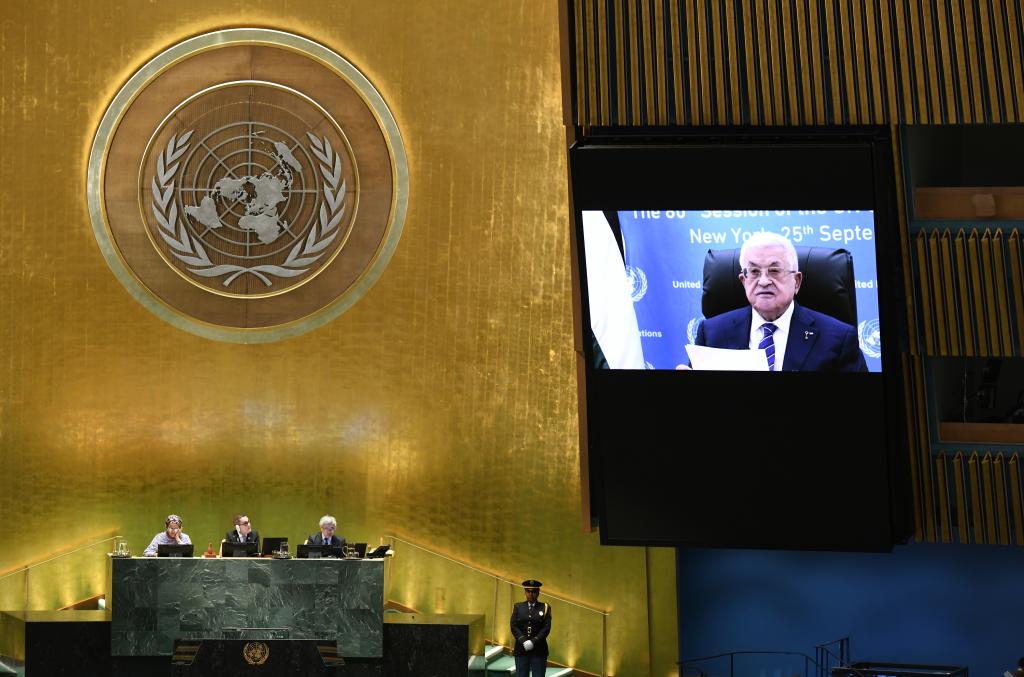
Group 1 - The 80th United Nations General Assembly is focusing on promoting peace, opposing hegemony, and advocating for multilateralism, with leaders from global South countries urging for conflict resolution and cooperation to address global challenges [1][8] - Palestinian President Abbas highlighted the humanitarian crisis in Gaza due to ongoing conflicts and called for international action to implement the "two-state solution" for peace and justice [2][4] - Iranian President Raisi criticized U.S. and Israeli military actions in the Middle East, emphasizing the need for diplomatic solutions and regional security [4] Group 2 - Brazilian President Lula condemned unilateral sanctions and interventions, asserting that Brazil's sovereignty and democracy should not be compromised [5][7] - Leaders from Latin American countries criticized U.S. military deployments in the Caribbean, warning against repeating past humanitarian disasters caused by military interventions [7] - South African President Ramaphosa pointed out the threats to multilateralism and international law from unilateral military actions and trade protectionism [7] Group 3 - Leaders from various global South nations stressed the importance of multilateralism in addressing global challenges such as regional conflicts, climate change, and economic disparities [8] - Kenyan President Ruto emphasized the urgent need for a credible multilateral system to achieve peace and development [8] - The UN Deputy Secretary-General noted the increasing leadership role of global South countries in the UN system, highlighting China's commitment to multilateralism and global governance [9]
国际观察丨促和平、反霸权、倡多边——联合国大会上的“全球南方强音”
Xin Hua Wang· 2025-09-27 02:55
Group 1 - The 80th United Nations General Assembly is focusing on the need for peace and the resolution of conflicts, with leaders from global South countries urging for multilateral cooperation and the maintenance of an international system centered around the UN [1][4][5] - Palestinian President Abbas highlighted the humanitarian crisis in Gaza due to ongoing conflicts and called for international action to implement the "two-state solution" for peace and justice [2][3] - Leaders from various countries criticized unilateralism and hegemonic interference, emphasizing the need for international fairness and justice in global governance [4][6] Group 2 - Multiple leaders from the global South stressed the importance of multilateralism in addressing global challenges such as regional conflicts, climate disasters, and economic disparities [5][6] - The UN Deputy Secretary-General noted the increasing leadership role of countries like China in the UN system, which is seen as a commitment to multilateralism and global governance initiatives [6]
21社论丨中国积极参与全球治理,彰显负责任的大国担当
21世纪经济报道· 2025-09-25 23:56
Group 1 - China's new round of Nationally Determined Contributions (NDCs) announced at the UN Climate Change Summit emphasizes its commitment to global climate governance and showcases its responsibility as a major power [1][2] - The scale of China's green low-carbon industry is approximately 11 trillion yuan, with over 2 million related enterprises, highlighting the growth in renewable energy, electric vehicles, and energy-saving industries [1] - By the end of 2024, China's installed capacity for wind power is expected to reach 520 million kilowatts, and solar power capacity is projected to reach 890 million kilowatts, both ranking among the highest globally [1] Group 2 - China asserts its role as a responsible major developing country by not seeking new special and differential treatment in WTO negotiations, reinforcing its commitment to multilateral trade systems [3] - The global governance initiative proposed by China aims to enhance and reform existing governance systems, reflecting its commitment to addressing global challenges effectively [2][4] - China's actions in promoting the dual carbon goals and participating in various international agreements demonstrate its leadership in global governance and commitment to sustainable development [3][4]