城乡融合发展

Search documents
以人为本为城镇注入灵魂
第一财经· 2025-12-05 00:24
Core Viewpoint - The article emphasizes the importance of a people-centered new urbanization strategy in China, aiming to enhance urbanization quality and unleash the potential of urban-rural integration for economic growth [2][3]. Group 1: New Urbanization Strategy - The new urbanization strategy focuses on improving the quality of urbanization by prioritizing human needs, which is seen as a shift from infrastructure-centric development to a more holistic approach that considers the well-being of individuals [2][3]. - The strategy aims to address the structural issues in China's economy, particularly the shortcomings in domestic demand and consumption, by fostering vibrant urban markets [3][5]. Group 2: Historical Context and Evolution - Urbanization has been a key driver of China's economic rise since the reform and opening up, with significant government-led initiatives contributing to urban development [2][3]. - The article highlights the transition from a focus on physical infrastructure ("seeing things") to a focus on human experiences and community engagement ("seeing people") as a necessary evolution in urbanization thinking [3][4]. Group 3: Implementation Challenges - To effectively implement the people-centered urbanization, it is crucial to overcome the traditional reliance on infrastructure expansion and instead focus on community involvement and public decision-making [4][5]. - The article stresses the need for reforms in the household registration system to facilitate population mobility and address long-standing gaps in public services provided by local governments [5][6]. Group 4: Future Outlook - The new urbanization strategy is positioned as a critical component of China's broader economic and social policies, aiming to create a more inclusive and resilient urban environment that reflects the diverse needs of its residents [4][6]. - By prioritizing human-centered development, the strategy seeks to enhance the overall quality of life in cities, making them more attractive and livable for all [4][6].


券继续下跌;惠誉将万科、万科香港“CCC-”主体评级列入负面观察名单,下调万科香港票据
Dong Fang Jin Cheng· 2025-12-05 00:05
1. Report Industry Investment Rating - No relevant content provided 2. Core Viewpoints of the Report - On December 3, the central bank continued to conduct net withdrawals in the open - market operations, but the liquidity remained stable with a slight easing trend. The bond market fluctuated narrowly, and most yields of interest - rate bonds increased. Some bonds of Vanke continued to decline, and Fitch placed Vanke and Vanke Hong Kong's "CCC -" issuer ratings on negative watch, downgrading Vanke Hong Kong's note rating to "CC". The convertible bond market followed the stock market and continued to decline. Overseas, the US ADP employment in November unexpectedly declined, and yields of major US Treasury bonds decreased across the board, while the yields of 10 - year government bonds in major European economies showed a divergent trend [1] 3. Summary by Relevant Catalogs 3.1 Bond Market News 3.1.1 Domestic News - On December 3, Premier Li Qiang emphasized during the 17th special study of the State Council that the huge potential of domestic demand in urban - rural integrated development should be fully unleashed. The Ministry of Finance will issue 7 billion yuan of RMB government bonds in Hong Kong on December 10 [3] - The China Federation of Logistics and Purchasing released data on December 3, showing that the China Logistics Prosperity Index in November was 50.9%, up 0.2 percentage points from the previous month. On the same day, the Ministry of Culture and Tourism and the Civil Aviation Administration of China jointly issued an action plan to promote the integration of culture, tourism, and the civil aviation industry [4] 3.1.2 International News - In November, the US private - sector employment decreased by 32,000, the largest decline since March 2023, far worse than the market expectation of an increase of 40,000 jobs. Small - scale enterprises were the hardest - hit area for layoffs. Futures traders expect the probability of the Fed cutting interest rates by 25 basis points to be close to 90% [6] - The US ISM Services PMI in November rose to 52.6, a nine - month high. The price - payment index dropped to a seven - month low, indicating that inflationary pressures have eased. The employment index rose to a six - month high, showing that the rate of employment decline has slowed down [7] 3.1.3 Commodities - On December 3, international crude oil futures prices turned up, with WTI January crude oil futures rising 0.53% to $58.95 per barrel and Brent February crude oil futures rising 0.35% to $62.67 per barrel. COMEX gold futures rose 0.44% to $4,239.30 per ounce, and NYMEX natural gas prices rose 3.83% to $5.010 per ounce [8] 3.2 Liquidity 3.2.1 Open - Market Operations - On December 3, the central bank conducted 79.3 billion yuan of 7 - day reverse repurchase operations at a fixed - rate and quantity - tender method, with an operating rate of 1.40%. With 213.3 billion yuan of reverse repurchases maturing on the same day, the net withdrawal was 134 billion yuan [10] 3.2.2 Funding Rates - On December 3, the liquidity at the beginning of the month remained stable with a slight easing trend. DR001 rose 0.19 basis points to 1.299%, and DR007 fell 0.01 basis points to 1.441%. Other major funding rates showed different degrees of changes [11][12] 3.3 Bond Market Dynamics 3.3.1 Interest - Rate Bonds - **Spot - Bond Yield Trends**: On December 3, the bond market fluctuated narrowly, and most yields of interest - rate bonds increased. The 30 - year ultra - long bonds were notably weak. For example, the yield of the 10 - year Treasury bond active bond 250016 rose 0.15 basis points to 1.8375%, and the yield of the 10 - year China Development Bank bond active bond 250215 rose 1.00 basis point to 1.9180% [15] - **Bond Tendering Situations**: Information on the tendering of several bonds such as 25 Discount Treasury Bond 75, 25 Discount Treasury Bond 76, 25 Agricultural Development Bond 31 (Increment 16), and 25 Agricultural Development Bond 30 (Increment 3) was provided, including their terms, issuance scales, winning yields, overall multiples, and marginal multiples [17][19] 3.3.2 Credit Bonds - **Secondary - Market Transaction Anomalies**: On December 3, the trading prices of 5 bonds deviated by more than 10%. Bonds such as "H0 Zhongnan 02" and "22 Vanke MTN005" declined significantly, while "23 Vanke 01" rose by more than 12% [19] - **Credit - Bond Events**: Rongqiao Group's subsidiary failed to repay a 40 - million - yuan debt to China Everbright Bank on schedule, and Rongqiao Group provided joint and several liability guarantee. Youa Co., Ltd. adjusted the redemption time of "20 Xiangyouyiapollo ZR001" again, with the remaining principal of 459 million yuan to be redeemed on December 26 [20][21] 3.3.3 Convertible Bonds - **Equity and Convertible - Bond Indexes**: On December 3, the three major A - share indexes closed down. The convertible - bond market followed the equity market and continued to decline. The CSI Convertible Bond Index, Shanghai Stock Exchange Convertible Bond Index, and Shenzhen Stock Exchange Convertible Bond Index fell 0.21%, 0.16%, and 0.27% respectively. The trading volume of the convertible - bond market was 54.11 billion yuan, an increase of 7.254 billion yuan from the previous trading day [22] - **Convertible - Bond Tracking**: Some companies made announcements, such as Jinlun Tian Di Holdings extending the deadline for its debt - restructuring plan to June 30 next year, and several convertible bonds having events such as approaching the trigger of the conversion - price downward - revision clause, early redemption announcements, etc. [24][30] 3.3.4 Overseas Bond Markets - **US Treasury Market**: On December 3, yields of US Treasury bonds of other maturities generally declined. The 2 - year US Treasury yield fell 2 basis points to 3.49%, and the 10 - year US Treasury yield fell 3 basis points to 4.06%. The yield spread between the 2 - year and 10 - year US Treasury bonds narrowed by 1 basis point to 57 basis points, and the yield spread between the 5 - year and 30 - year US Treasury bonds widened by 3 basis points to 111 basis points [26][27] - **European Bond Market**: On December 3, the yields of 10 - year government bonds in major European economies showed a divergent trend. The yield of the 10 - year German government bond remained unchanged at 2.75%, while the yields of 10 - year government bonds in Italy and the UK fell 2 basis points and 1 basis point respectively [29] - **Price Changes of Chinese - Issued US - Dollar Bonds**: As of the close on December 3, price changes of some Chinese - issued US - dollar bonds were provided, including companies such as Trip.com Group, Weibo, and Ideal Auto [31]

创新用地、多元融资,城市更新按下 “加速键”
2 1 Shi Ji Jing Ji Bao Dao· 2025-12-04 13:42
Core Viewpoint - The Chinese government is intensifying urban renewal policies to promote high-quality urban development, integrating these efforts with safety, housing market stability, and real estate quality improvement [1][9]. Group 1: Policy Framework - The State Council emphasized the importance of urban renewal in its recent study, linking it to safety and real estate market stability [1]. - A series of policies have been implemented this year, including the issuance of the "Opinions on Continuing to Promote Urban Renewal Actions," which outlines specific goals and measures for urban renewal [3]. - The Central Urban Work Conference identified high-quality urban renewal as a key task for future urban development [4]. Group 2: Implementation and Support - The Ministry of Housing and Urban-Rural Development has highlighted the need for comprehensive assessments and planning for urban renewal projects [4]. - Local governments are actively introducing supportive policies, such as the Tianjin Urban Renewal Regulations and the Chongqing Three-Year Action Plan for Urban Renewal [5]. - Financial mechanisms are being innovated to address funding challenges, including a competitive selection process for central financial support to 20 cities, with over 20 billion yuan planned for urban renewal actions [6]. Group 3: Financial Innovations - The introduction of REITs for urban renewal projects is expected to provide sustainable financing channels and enhance social capital participation [7]. - The government is exploring various financial support methods, including special bonds and innovative bank loan products tailored for urban renewal [7][8]. Group 4: Future Trends - Urban renewal policies are expected to focus on systemic, coordinated, and sustainable approaches in 2026, addressing challenges such as funding pressures and coordination difficulties [9][10]. - A multi-goal collaborative policy framework is anticipated, integrating urban renewal with safety, livelihood, and economic objectives [10]. - The establishment of a linkage mechanism between urban renewal and the real estate market is expected to drive structural reforms in housing supply [10].
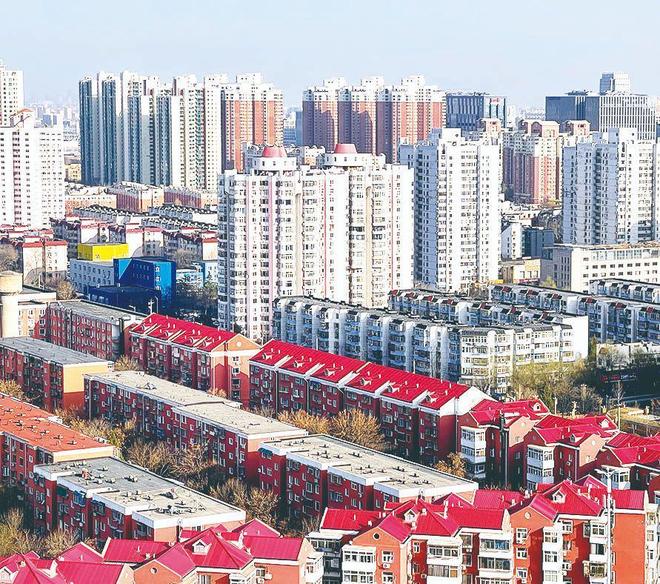
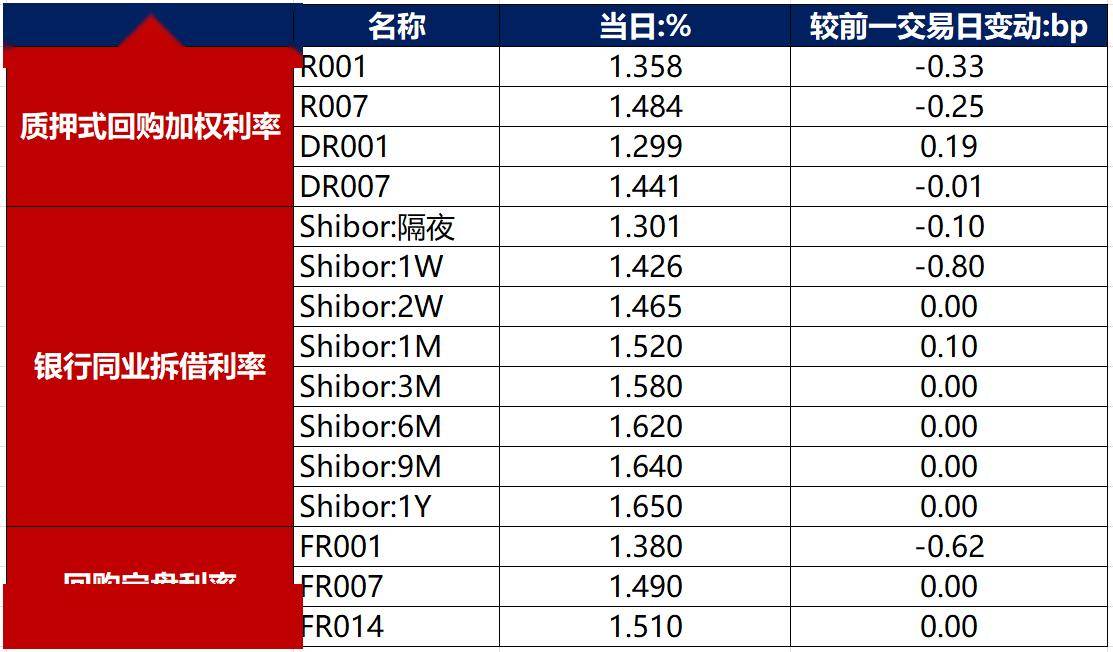
一财社论:以人为本为城镇注入灵魂
Di Yi Cai Jing· 2025-12-04 13:36
Core Viewpoint - The essence of the new urbanization is to prioritize people, emphasizing that urbanization should focus on human needs and experiences rather than merely infrastructure development [1][4]. Group 1: New Urbanization Strategy - The Chinese government is advancing a new urbanization strategy centered on human needs, aiming to enhance the quality of urbanization and unlock the potential of urban-rural integration to drive economic growth [2][3]. - This approach marks a shift in understanding urbanization from a focus on physical infrastructure ("seeing things") to a focus on people ("seeing people"), recognizing cities as places of opportunity and freedom for individuals [2][3]. Group 2: Economic Implications - The new urbanization strategy is crucial for addressing structural issues in the Chinese economy, particularly the shortcomings in domestic demand and consumption [3][5]. - By embedding a people-centered philosophy into urbanization, the strategy aims to stimulate market activity and economic vitality, which are essential for overcoming deep-seated economic challenges [3][4]. Group 3: Implementation Challenges - To effectively implement this people-centered urbanization, it is necessary to break away from traditional urbanization models that overly focus on infrastructure, ensuring that urban development genuinely reflects the needs and aspirations of residents [4][5]. - The strategy requires reforms in the household registration system to facilitate population mobility and address long-standing gaps in public services provided by local governments [5][6]. Group 4: Social and Public Services - Enhancing social security and public service equality is vital for providing citizens with a sense of security, which in turn encourages consumer confidence and spending [6]. - The new urbanization approach emphasizes the importance of open governance and public service that prioritizes human development, aiming to create a supportive environment for all residents [6].
释放新型城镇化巨大内需潜力,国务院部署四方面重点任务
Di Yi Cai Jing· 2025-12-04 08:08
Core Viewpoint - The Chinese government emphasizes the importance of human-centered new urbanization as a key strategy for expanding domestic demand during the 14th Five-Year Plan period, aiming to enhance urbanization quality and promote urban-rural integration [2][4]. Group 1: New Urbanization Strategy - The new urbanization is described as a systematic project that requires tailored planning and implementation based on local conditions, focusing on urban-rural integration and addressing the dual structure of urban and rural areas [2][6]. - The urbanization rate in China increased from 63.89% to 67% since the beginning of the 14th Five-Year Plan, with a target to reach nearly 70% by 2024 [4]. - It is estimated that a 1 percentage point increase in urbanization rate could generate over 200 billion in annual consumption demand and drive trillions in new investment [4]. Group 2: Agricultural Population Urbanization - The government aims to facilitate the urbanization of 170 million migrant workers and their families who have not yet settled in cities, addressing key issues such as employment, social security, housing, and education [7][8]. - The central government has established a financial incentive system to support the urbanization of agricultural migrants, encouraging local governments to create mechanisms that promote this process [8]. Group 3: Urban Renewal Initiatives - Urban renewal is highlighted as a critical component of the new urbanization strategy, aimed at improving urban quality and addressing safety hazards while stabilizing the real estate market [8]. - The government plans to invest over 5 trillion in urban renewal projects, including the construction and renovation of over 700,000 kilometers of underground pipelines during the 14th Five-Year Plan [8]. - The introduction of Real Estate Investment Trusts (REITs) for urban renewal projects marks a significant breakthrough in financing, allowing for the transformation of future revenues into tradable fund shares, thus enhancing the sustainability and professional management of urban renewal initiatives [9].

债市早报:央行公开市场继续净回笼,资金面稳中偏松,主要期限国债收益率多数上行
Sou Hu Cai Jing· 2025-12-04 05:50
Group 1: Domestic Market Developments - The People's Bank of China continued to net withdraw funds on December 3, with the main repo rates fluctuating at low levels, leading to a slight increase in the yield of long-term bonds [1][7] - Vanke's bonds continued to decline, and Fitch placed Vanke and Vanke Hong Kong's "CCC-" issuer rating on negative watch, downgrading Vanke Hong Kong's note rating to "CC" [1][14] - The logistics industry in China showed a slight recovery in November, with the logistics industry prosperity index at 50.9%, up 0.2 percentage points from the previous month [2] Group 2: International Market Insights - The U.S. ADP employment report for November showed an unexpected decline, with a loss of 32,000 jobs, marking the largest drop since March 2023, indicating increasing pressure on the labor market [4] - The ISM services index in the U.S. rose to 52.6 in November, the fastest expansion in nine months, supported by improved business activity and a decrease in price pressures [5] - In the international oil market, WTI crude oil futures rose by 0.53% to $58.95 per barrel, while natural gas prices increased by 3.83% to $5.010 per million British thermal units [6] Group 3: Bond Market Dynamics - The bond market experienced narrow fluctuations, with most interest rate bonds seeing an increase in yield, particularly the 30-year bonds which rose over 3 basis points [10] - In the secondary market, several bonds showed significant price deviations, with "H0中南02" dropping over 96% and various Vanke bonds declining by more than 13% [13] - The convertible bond market followed the downward trend of the equity market, with major indices declining and a total trading volume of 54.11 billion yuan [15]
一场村民与创客的双向奔赴
Ren Min Ri Bao Hai Wai Ban· 2025-12-04 03:16
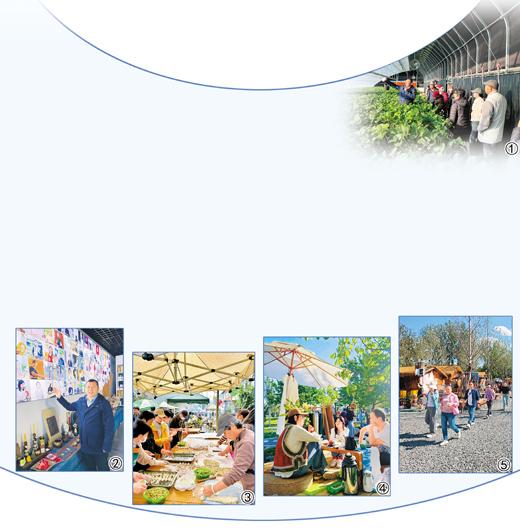
Core Insights - The article highlights the transformation of Xinzhang Village in Beijing's Changping District into a vibrant "creative village" and "internet celebrity village," attracting significant tourist traffic and showcasing successful rural revitalization efforts [5][8]. Group 1: Village Transformation - Xinzhang Village has evolved from an ordinary northern village to a popular destination, with an average weekend footfall exceeding 10,000 and peak daily visitors reaching 23,000 [8]. - The village's environment has improved significantly, with clean streets and effective waste management practices, which have been in place since 2016 [8][9]. - The introduction of the "Upward School," a private education institution, has attracted families from across the country, contributing to the village's economic and social vitality [8][10]. Group 2: Economic Development - The influx of new residents has brought over 1.2 billion yuan in social capital investment, enhancing the village's economy through rental income, job creation, and sales of local agricultural products [9][10]. - Xinzhang Village has implemented various projects under Beijing's "Hundred Villages Demonstration, Thousand Villages Revitalization" initiative, improving infrastructure and living conditions [10]. - The village has successfully integrated agriculture, culture, commerce, and tourism, creating a diverse economic landscape [10]. Group 3: Community Engagement - The village fosters a collaborative environment where new residents contribute to local culture and economy, while also benefiting from the village's resources and community support [11][12]. - Local initiatives, such as community events and workshops, promote interaction between long-time residents and newcomers, enhancing social cohesion [12]. - The village's development model serves as a microcosm of broader rural revitalization efforts in Beijing, demonstrating the potential for urban-rural integration [12].
大连金普新区党建“联合体”促融合发展
Liao Ning Ri Bao· 2025-12-04 02:00
金普新区打造"党委搭台、村社主导、国企助力、系统赋能"城乡融合发展平台,整合城区优质教育、医 疗、文化等公共服务资源,形成"家校社协同育人教联体""'医'心向党、'医'路同行"等6个党建项目,通 过结对帮扶、送教下乡、远程医疗等形式,向农村延伸覆盖,让农村居民在家门口就能享受到优质便捷 的公共服务。 金普新区实施组织联建、产业联合、文体联动等6类12个共建项目,构建全区189个村和179个社区资源 共享圈。配套推出"直播团购+产地直供",通过党员骨干和网格员精准对接,线上销量达十余万斤、销 售额260余万元。 责编:曹思洋 审核:刘立纲 本报讯 记者曲宏报道 大连金普新区坚持党建引领,积极探索以城带乡、以工促农、以企助力的城乡融 合发展新路径,构建工农互促、城乡互补、国企赋能、协调发展、共同繁荣的新型城乡格局。 金普新区以创建"幸福新社区"为牵引,以壮大村集体经济为切入点,推动城乡党建资源全面整合、深度 融合。建立组织部门牵头抓总、街道党工委推动、村社联建的纵向组织体系,从区级层面有代表性和影 响力的村、社区、国企中确定18个党组织作为初始成员单位,组织57家街道、机关事业单位、人民团 体、企业等不同领域党组 ...
李强主持国务院第十七次专题学习强调 充分释放城乡融合发展蕴藏的巨大内需潜力
Zheng Quan Shi Bao· 2025-12-03 22:21
北京12月3日电 12月3日,国务院以"深入推进以人为本的新型城镇化,着力构建城乡融合发展新格 局"为主题,进行第十七次专题学习。国务院总理李强在主持学习时强调,要认真学习贯彻习近平总书 记和党中央关于深入实施新型城镇化战略的决策部署,坚持以人为本提高城镇化质量水平,充分释放城 乡融合发展蕴藏的巨大内需潜力,为经济社会发展提供强劲动力。 李强指出,我国城镇化正从快速增长期转向稳定发展期,城市发展正从大规模增量扩张阶段转向存量提 质增效为主的阶段,人口结构、城镇体系、城乡格局等都在发生深刻变化,人工智能等新技术的应用也 对城市发展、治理带来新的机遇和挑战。要深刻认识新型城镇化的阶段性趋势性特征,进一步增强新型 城镇化工作的针对性有效性。 中国城市和小城镇改革发展中心主任高国力作讲解。国务院副总理丁薛祥、何立峰,国务委员王小洪作 交流发言。 李强强调,新型城镇化是个系统工程。要因地制宜实施好新型城镇化规划,坚持以规划为引领,进一步 优化"人、产、城"布局,并根据不同城市的情况实施分类指导。要科学有序推进农业转移人口市民化, 采取更有力度、更具针对性的举措,解决好农业转移人口的就业、社保、安居、子女教育等问题。要深 ...
李强主持国务院第十七次专题学习
证监会发布· 2025-12-03 12:21
新华社北京12月3日电 12月3日,国务院以"深入推进以人为本的新型城镇化,着力构建 城乡融合发展新格局"为主题,进行第十七次专题学习。国务院总理李强在主持学习时强调, 要认真学习贯彻习近平总书记和党中央关于深入实施新型城镇化战略的决策部署,坚持以人 为本提高城镇化质量水平,充分释放城乡融合发展蕴藏的巨大内需潜力,为经济社会发展提 供强劲动力。 来源:新华社 李强指出,我国城镇化正从快速增长期转向稳定发展期,城市发展正从大规模增量扩张 阶段转向存量提质增效为主的阶段,人口结构、城镇体系、城乡格局等都在发生深刻变化, 人工智能等新技术的应用也对城市发展、治理带来新的机遇和挑战。要深刻认识新型城镇化 的阶段性趋势性特征,进一步增强新型城镇化工作的针对性有效性。 李强强调,新型城镇化是个系统工程。要因地制宜实施好新型城镇化规划,坚持以规划 为引领,进一步优化"人、产、城"布局,并根据不同城市的情况实施分类指导。要科学有序推 进农业转移人口市民化,采取更有力度、更具针对性的举措,解决好农业转移人口的就业、 社保、安居、子女教育等问题。要深入实施城市更新行动,把城市更新和消除安全隐患、稳 楼市等工作结合起来,扎实推进好 ...