
大数据

Search documents
工信部等5部门:加强低空装备与低空信息通信的融合创新与设备研发
Hua Er Jie Jian Wen· 2026-02-10 07:34
Core Viewpoint - The implementation opinions aim to strengthen the capacity building of the information and communication industry to support the development of low-altitude infrastructure, which is crucial for the growth of the low-altitude economy [1][2]. Overall Requirements - The strategy is guided by the principles of socialism with Chinese characteristics, emphasizing the coordinated development of the information communication industry and low-altitude equipment manufacturing [2]. - The focus is on enhancing technical capabilities, industrial supply capacity, network support, and security assurance to facilitate the construction of low-altitude communication networks and intelligent network systems [2]. Key Tasks - **Low-altitude Communication Network Coverage**: Promote network coverage in low-altitude flight areas below 300 meters by utilizing existing 5G infrastructure and optimizing network technologies [4]. - **Multi-Detection Collaborative Service Capability**: Enhance detection and monitoring capabilities in key areas through the integration of various sensing technologies [4]. - **Navigation Precision Services**: Utilize the BeiDou system and 5G networks to improve the positioning speed and accuracy of low-altitude aircraft [4]. - **Intelligent Network System Construction**: Leverage new information technologies to support the development of low-altitude intelligent network systems [5]. - **Testing and Validation**: Conduct research and validation on key technologies and network deployment to create replicable solutions [6]. - **Industry Supply Capacity Enhancement**: Promote the development of 5G-A technology and reduce equipment costs while fostering innovation in low-altitude communication [6]. - **Collaborative and Standardized Construction**: Encourage resource sharing and the establishment of standards to support low-altitude technology development [7]. - **Industry Management Regulation**: Develop regulatory frameworks for telecommunications services and equipment management in low-altitude applications [7]. - **Network and Data Security Assurance**: Establish a security framework for information infrastructure to protect network and data integrity [7]. - **Frequency Supply Optimization**: Research and plan the allocation of radio frequency resources for low-altitude communication [7]. Organizational Assurance - Strengthen inter-departmental collaboration and local government engagement to ensure the effective implementation of network deployment, technical enhancement, and safety measures [8]. - Encourage the use of various funding channels to support the development of key technologies and infrastructure [8].
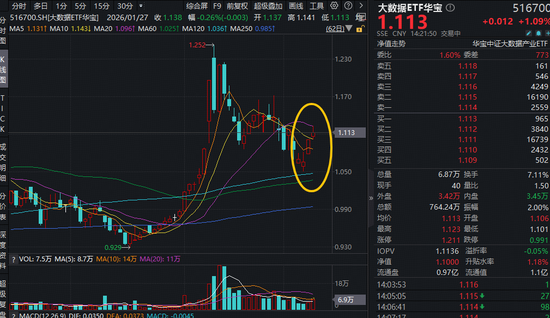
Seedance概念活跃,国投智能领涨超9%!大数据ETF(516700)盘中拉升1.8%,冲击4连阳!
Xin Lang Ji Jin· 2026-02-10 06:33
Group 1 - The core focus of the news is the significant rise of the Seedance concept, particularly in the domestic computing and AI application sectors, with the big data ETF Huabao (516700) experiencing a price increase of over 1.8% at one point and currently up by 1.09% [1] - The AI video generation model Seedance 2.0 from ByteDance has gained attention for its ability to generate high-quality videos from text and images, supporting video segments of 5 to 15 seconds with multi-angle shots and dialogue [1][3] - The domestic video generation field is becoming increasingly competitive, similar to the state of large language models in 2025, with companies focusing on differentiated development in specific application scenarios [3] Group 2 - The data center is identified as a core infrastructure for AI, with a high demand in the computing market driving steady growth in the IDC industry [3] - The Huabao big data ETF (516700) tracks the CSI big data industry index, with a significant weight of 40.91% in computing concepts and 37.43% in AI application concepts as of the end of 2025 [3][5] - Key stocks in the ETF include industry leaders such as Zhongke Shuguang, Keda Xunfei, and Inspur Information, with a focus on technology self-reliance and the acceleration of domestic substitution processes [5]


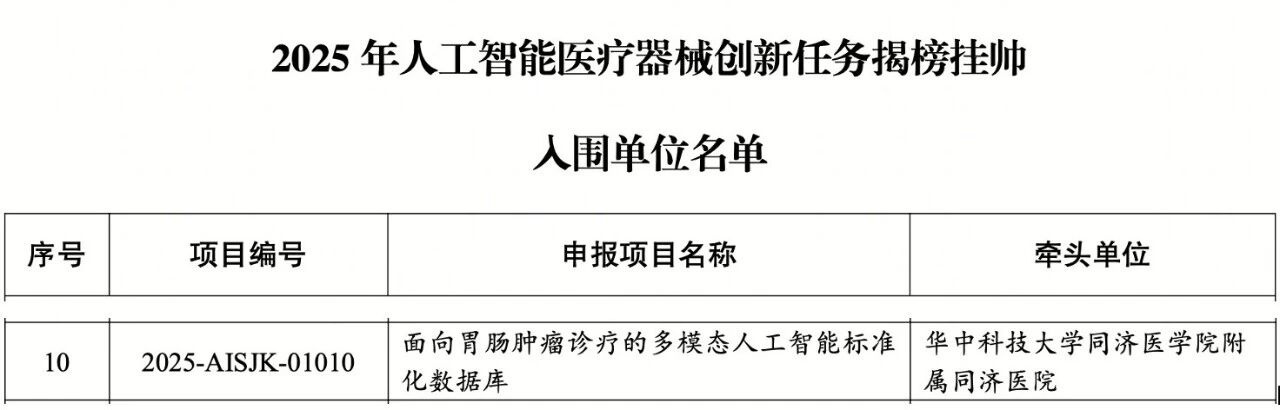
成功“揭榜”国家级任务!医渡科技携手同济医院攻关胃肠肿瘤AI诊疗
Zhi Tong Cai Jing· 2026-02-10 03:13
Core Insights - The project aims to establish a high-quality, standardized multimodal database for gastrointestinal tumors, focusing on enhancing early detection rates and treatment precision in China [2][3][4] Group 1: Project Overview - The initiative is led by Professor Liao Jiazhi from Tongji Hospital, with a core team comprising experts from various medical and data science fields [3] - The project will integrate diverse data types, including endoscopic images, pathology slides, genetic sequencing, and clinical follow-ups, to create a comprehensive data asset for gastrointestinal tumors [4] Group 2: Technological Framework - The core technology of the project revolves around "multimodal" and "standardization," aiming to improve the efficiency of AI product and technology development in gastrointestinal oncology [4] - The collaboration plans to gather and manage tens of thousands of high-quality case data during the project period, developing AI algorithms for early screening, precise classification, efficacy prediction, and recurrence risk assessment [4] Group 3: Industry Impact - The partnership between Yidu Technology and Tongji Hospital represents a practical application of the "clinical demand-driven, AI-powered research, and industry-academia collaboration" model, which is expected to enhance the overall diagnostic and treatment levels for gastrointestinal tumors in China [5] - Yidu Technology has extensive experience in data governance and multimodal analysis, having processed nearly 7 billion authorized medical records across over 10,000 hospital partnerships by September 30, 2025 [5]
“打磨”照亮细胞的荧光探针
Huan Qiu Wang Zi Xun· 2026-02-10 02:35
来源:科技日报 【创新火花】 ◎本报记者 王延斌 通讯员 巩 固 在探索生命奥秘的征途中,科学家们一直致力于实时、精准地洞察细胞内部的变化。在山东省环境自适 应智能化学品重点实验室里,实验室首席科学家、中国科学院院士唐波团队创制了新型小分子荧光探 针,这一成果成为深入认识细胞的科学工具。 正是由于团队在化学合成、光谱分析和细胞实验等方面的紧密协作,才得以持续推动探针性能不断迭代 升级。 活性氧被称为"细胞里的幽灵信号"。它转瞬即逝,还容易与其他物质混淆,学界长期以来对它"看不 见、分不清、测不准"。团队通过创制新型荧光探针和连续流分析仪器,成功攻克了这一难题。 唐波常对学生说,在实验室里,有两种能力比论文更为重要:一是"提出真问题"的洞察力,二是"解决 实际问题"的能力。他直言,尽管如今科研条件更加优越,获取信息的方法更为丰富,但以科学研究解 决真问题的导向不能改变,坚持不懈解决真问题的作风必须坚持。 "年轻人要充分利用人工智能、大数据等技术手段,创新科研范式,做到有组织、系统性地开展科研创 新。"唐波说,"我坚信,中国的科学家会攻克更多世界科研难题,在科学发展史上写下更多中国故 事。" 只要功夫深,铁杵磨成 ...
东方国信股价涨5.05%,华夏基金旗下1只基金位居十大流通股东,持有495.08万股浮盈赚取302万元
Xin Lang Cai Jing· 2026-02-10 02:05
Group 1 - The core viewpoint of the news is that Oriental国信's stock price increased by 5.05% to 12.68 yuan per share, with a trading volume of 988 million yuan and a turnover rate of 8.87%, resulting in a total market capitalization of 14.439 billion yuan [1] - Oriental国信, established on July 28, 1997, and listed on January 25, 2011, is based in Beijing and specializes in providing enterprise-level big data and cloud computing products, industrial internet platforms, and overall industry solutions [1] - The revenue composition of Oriental国信 includes 76.59% from custom software development and services, 16.14% from system integration, 5.60% from cloud computing, and 1.68% from software products [1] Group 2 - Among the top circulating shareholders of Oriental国信, 华夏基金's 华夏中证1000ETF (159845) reduced its holdings by 9,400 shares in the third quarter, now holding 4.9508 million shares, which accounts for 0.55% of the circulating shares [2] - The 华夏中证1000ETF (159845) was established on March 18, 2021, with a latest scale of 49.908 billion yuan, achieving a year-to-date return of 8.36% and a one-year return of 35.81% [2] - The fund manager, Zhao Zongting, has been in the position for 8 years and 302 days, with a total fund asset scale of 356.966 billion yuan, achieving the best fund return of 124.19% and the worst return of -32.63% during his tenure [2]

沪深北交易所推出重磅新政,最新解读来了!
天天基金网· 2026-02-10 01:14
Core Viewpoint - The article discusses a comprehensive set of policies introduced by the Shanghai, Shenzhen, and Beijing stock exchanges to optimize the refinancing system, aiming to enhance resource allocation efficiency and support quality listed companies and technological innovation [3]. Group 1: Policy Measures - The reform focuses on improving review efficiency and revising standards for "light assets and high R&D investment" [3]. - It supports raising funds for new industries, new business formats, and new technologies that align with the main business [3][4]. - The financing interval for unprofitable listed companies has been shortened from 18 months to 6 months, facilitating their long-term development [7][9]. Group 2: Support for Quality Companies - The principle of "supporting the strong and limiting the weak" is emphasized, directing resources towards high-quality listed companies [4]. - The exchanges aim to enhance the efficiency of refinancing for companies with good governance and information disclosure practices [4][5]. - Examples include manufacturing firms investing in smart factory systems and consumer companies developing digital marketing networks, which are seen as upgrades to core business capabilities [5]. Group 3: Support for Innovative Enterprises - The introduction of a "light asset, high R&D investment" standard for mainboard companies aims to provide stable funding for those with core technological capabilities [6]. - The criteria specify that "light assets" should not exceed 20% of total assets, and "high R&D investment" should be at least 15% of revenue over the last three years or a cumulative investment of at least 300 million yuan [6]. Group 4: Process Optimization - The exchanges are optimizing the refinancing process by simplifying disclosure requirements and allowing companies to use previously disclosed information in their applications [10]. - The requirement for companies to disclose the status of previous fundraising and future plans has been adjusted to enhance timely decision-making [10]. Group 5: Regulatory Environment - Despite the positive signals from the refinancing policies, the regulatory environment remains stringent, focusing on preventing excessive financing and ensuring the necessity and feasibility of fundraising [12]. - The exchanges emphasize the importance of accurate information disclosure and the responsibilities of listed companies and intermediaries [12].

2025中国宠物美容市场:洞察先机,蓄势腾飞
Sou Hu Cai Jing· 2026-02-10 00:40
Core Insights - The Chinese pet grooming market is experiencing rapid growth, with a compound annual growth rate (CAGR) of 22.3% from 2019 to 2023, reaching a market size of over 42 billion yuan in 2023. It is projected to exceed 62 billion yuan by 2025 and reach 120 billion yuan by 2030, indicating a promising future for the industry [1][2][10][12]. Group 1: Market Overview - The pet grooming industry in China is expanding significantly, driven by changes in social structure and family dynamics, with pets becoming integral to many households [1][2]. - The number of pets in China has surpassed 130 million, leading to an annual demand for over 80 million pet grooming services [2][14]. - The younger generation of pet owners is becoming the main consumer group, willing to pay premium prices for enhanced pet care services, which has diversified service offerings beyond basic grooming to include spa treatments and health management [2][14]. Group 2: Market Structure - The market exhibits significant regional stratification, with first-tier cities like Beijing, Shanghai, and Guangzhou accounting for approximately 55% of the market share, where average spending per service exceeds 500 yuan [3][19]. - Lower-tier cities contribute to 60% of market growth, focusing on cost-effective services, although customer loyalty and repeat purchase rates remain low, indicating potential for future growth [3][20]. - The competitive landscape is fragmented, with a low market concentration (CR5 market share of about 28%), featuring numerous small pet grooming shops alongside a few leading chains [3][22]. Group 3: Industry Challenges - The industry faces challenges such as the lack of standardized service protocols and certification systems, which affect service quality and credibility [3][4]. - There is a significant shortage of qualified pet groomers, with tens of thousands needed, and existing training programs often do not align with market demands [3][4]. Group 4: Future Trends - Technological innovation and business model transformation are expected to drive industry upgrades, with the integration of IoT, big data, and AI leading to the adoption of smart grooming equipment [4]. - Digital services like online booking and data analytics will help businesses better understand and meet customer needs [4]. - Companies are also looking to expand into overseas markets, particularly in Southeast Asia, while continuing to develop lower-tier markets through community-based and mobile service models [4].

上证时评 | 扶优、扶科 让好企业能用到好政策
Shang Hai Zheng Quan Bao· 2026-02-10 00:11
Core Viewpoint - The recent optimization measures for refinancing aim to enhance flexibility and convenience in the capital market, supporting the development of quality listed companies and optimizing resource allocation [1][2]. Group 1: Refinancing Measures - The new measures focus on allowing quality listed companies to raise funds for new industries, business models, and technologies that align with their main business, promoting a second growth curve [2][3]. - The policy emphasizes a "support the strong, limit the weak" approach, ensuring that only high-quality companies benefit from these refinancing opportunities [2][3]. Group 2: Support for Innovation - The adjustments are designed to meet the refinancing needs of technology-driven companies, particularly those with light asset structures and high R&D investments [3]. - By adopting standards from the Sci-Tech Innovation Board for the main board, the measures aim to facilitate the transformation of traditional industries and foster new productive forces [3]. Group 3: Capital Market Functionality - The core of the optimization is to institutionalize and streamline the reasonable financing needs of quality listed companies, enhancing review efficiency while strengthening effective regulation [3]. - The measures represent a significant step in upgrading the capital market's function to serve the real economy and establishing a new balance in capital market financing [3].
加大对优质上市公司支持力度!再融资新规来了
Di Yi Cai Jing· 2026-02-09 23:17
Group 1 - The core viewpoint of the news is the introduction of a comprehensive package of measures to optimize refinancing in the capital market, aimed at supporting high-quality listed companies and enhancing the adaptability for technology innovation enterprises [1][2] - The measures focus on increasing support for high-quality listed companies by optimizing refinancing reviews and improving efficiency, while maintaining a selective approach to ensure quality [2][3] - The new policies allow high-quality companies to direct raised funds towards new industries, new business formats, and new technologies that align with their main business, promoting a second growth curve [2][3] Group 2 - The introduction of a "light asset, high R&D investment" recognition standard for main board listed companies is part of the measures to better meet the refinancing needs of technology innovation enterprises [4][5] - The "light asset, high R&D investment" standard has already proven effective in the Sci-Tech Innovation Board, with 14 companies raising a total of 35.12 billion yuan, indicating its importance in supporting technology enterprises [4][5] - The expansion of this standard to the main board is seen as a key move to enhance refinancing flexibility and support companies with low fixed asset ratios and high intangible asset ratios [5] Group 3 - The refinancing interval for unprofitable companies has been clarified to six months, allowing technology innovation companies to better manage their financing schedules and support their R&D and business development [6][7] - The measures also include stricter regulations on refinancing related to changes in control, requiring companies to publicly commit to completing issuances within the validity period of approvals [8] - Enhanced supervision throughout the refinancing process aims to address issues such as financial fraud and misuse of raised funds, ensuring compliance and accountability [9]
金融支持消费重在精准落地
Xin Lang Cai Jing· 2026-02-09 22:25
Group 1 - The core viewpoint of the articles emphasizes the need for financial institutions to adapt to the evolving consumer landscape, particularly in the service consumption sector, which is increasingly important in China's economy [1][2] - The recent government initiatives, including the "Accelerating the Cultivation of New Growth Points in Service Consumption Work Plan," highlight the importance of financial support for consumption, aiming to translate policy intentions into tangible benefits for businesses and consumers [1][2] - The shift in consumer behavior towards service consumption, characterized by a rise in personalized and experiential demands, necessitates innovative financial services that are deeply integrated into consumption scenarios [1][2] Group 2 - Service consumption differs from traditional goods consumption due to its intangibility, strong experiential nature, and complex supply-demand matching, which challenges traditional risk management models based on collateral [2] - Financial institutions are increasingly focusing on data-driven approaches for risk assessment, utilizing information such as tax data and utility payment records to provide credit loans to small and micro enterprises [2] - Policy collaboration, including fiscal subsidies and tax incentives, is crucial for optimizing the consumption finance environment, with significant financial support already allocated to pilot cities to stimulate investment in new growth areas [2] Group 3 - A dynamic balance between risk prevention and innovation is essential for the healthy development of financial support in the consumption sector, requiring financial institutions to manage the relationship between business expansion and risk control [3] - The use of advanced technologies like big data and artificial intelligence is recommended to create multi-dimensional risk control models based on actual consumer capabilities and needs, preventing predatory lending practices [3] - The future of financial services should focus on precise integration into micro-consumption scenarios, enhancing the connection between financial mechanisms and consumer activities to foster a resilient and warm consumption ecosystem [3]