
工业AI

Search documents
能科科技(603859):公司事件点评报告:AI业务表现亮眼,持续深耕工业AI领域
Huaxin Securities· 2025-08-27 13:42
Investment Rating - The report maintains a "Buy" investment rating for the company [1]. Core Insights - The company has shown strong performance in its AI business, particularly in the industrial AI sector, with significant revenue growth driven by AI products and services [5][6]. - The company reported a revenue of 738 million yuan for H1 2025, representing a year-on-year increase of 4.91%, and a net profit of 111 million yuan, up 18.75% year-on-year [5]. - The company is strategically optimizing its business structure by reallocating resources towards high-margin AI products and reducing investment in less efficient areas [6][7]. - The company is focusing on the "AI + Industry" approach, enhancing its market promotion efforts and developing benchmark cases to drive the adoption of AI solutions [7][8]. - The company forecasts revenues of 1.768 billion yuan, 2.084 billion yuan, and 2.439 billion yuan for 2025, 2026, and 2027 respectively, with corresponding EPS of 1.06 yuan, 1.30 yuan, and 1.55 yuan [9]. Financial Performance - In Q2 2025, the company achieved a revenue of 401 million yuan, a year-on-year increase of 33.99%, and a net profit of 62 million yuan, up 64.64% year-on-year [5]. - The company's AI product and service revenue reached 211 million yuan in H1 2025, marking a substantial growth of 145.60% year-on-year [5]. - The gross margin for H1 2025 was reported at 52.40%, an increase of 4.22 percentage points year-on-year, while the net profit margin was 21.48%, up 4.13 percentage points year-on-year [5]. Strategic Focus - The company is committed to enhancing its AI product development capabilities, focusing on the integration of AI with self-developed industrial software [6][7]. - The company is actively developing new features for its AI products, aiming to provide flexible and efficient digital solutions for both new and existing customers [8].

华鑫证券:给予能科科技买入评级
Zheng Quan Zhi Xing· 2025-08-27 13:27
Core Viewpoint - The report highlights the strong performance of Nengke Technology's AI business, emphasizing its growth in the industrial AI sector and maintaining a "buy" rating for the company [1]. Financial Performance - In H1 2025, the company achieved revenue of 738 million yuan, a year-on-year increase of 4.91% - The net profit attributable to shareholders was 111 million yuan, up 18.75% year-on-year - The net profit after deducting non-recurring items was 101 million yuan, reflecting a 16.16% increase year-on-year - Contract liabilities reached 405 million yuan, a significant increase of 158.26% year-on-year - In Q2 2025, revenue was 401 million yuan, a year-on-year growth of 33.99% - The net profit attributable to shareholders in Q2 was 62 million yuan, up 64.64% year-on-year - The net profit after deducting non-recurring items in Q2 was 59 million yuan, a 76.91% increase year-on-year - AI products and services revenue in H1 2025 was 211 million yuan, a remarkable growth of 145.60% year-on-year - The gross margin for H1 2025 was 52.40%, an increase of 4.22 percentage points year-on-year, while the net profit margin was 21.48%, up 4.13 percentage points year-on-year [2]. Strategic Focus - The company is strategically optimizing its business structure, focusing on high-margin and high-growth areas - Resources are being reallocated from traditional software systems and services to AI product lines and high-margin industrial software segments - In H1 2025, the company increased R&D investment in AI products, enhancing capabilities in model development, agent development, data processing, and hardware-software adaptation [3]. - The company is expanding its product series around AI applications, including "AI + embodied product intelligence," "AI + industrial manufacturing intelligence," and "industrial software + AI intelligent assistant" [3]. Industrial AI Development - The company is concentrating on "AI + industrial" applications, emphasizing quantifiable, reusable, and high-value scenarios - It is actively promoting AI products and solutions to meet the needs of leading industry clients, creating benchmark cases, and achieving scale effects - Some AI products have shown good reuse across enterprises and industries, with significant progress in industrial applications - The company is accelerating the development and application of its "Le" series AI intelligent modules, enhancing the integration of AI with self-developed industrial software [4]. Earnings Forecast - The company forecasts revenues of 1.768 billion yuan, 2.084 billion yuan, and 2.439 billion yuan for 2025, 2026, and 2027 respectively - Earnings per share (EPS) are projected to be 1.06 yuan, 1.30 yuan, and 1.55 yuan for the same years - The current stock price corresponds to price-to-earnings (PE) ratios of 50.0, 40.8, and 34.2 times for 2025, 2026, and 2027 respectively, maintaining a "buy" investment rating [5].

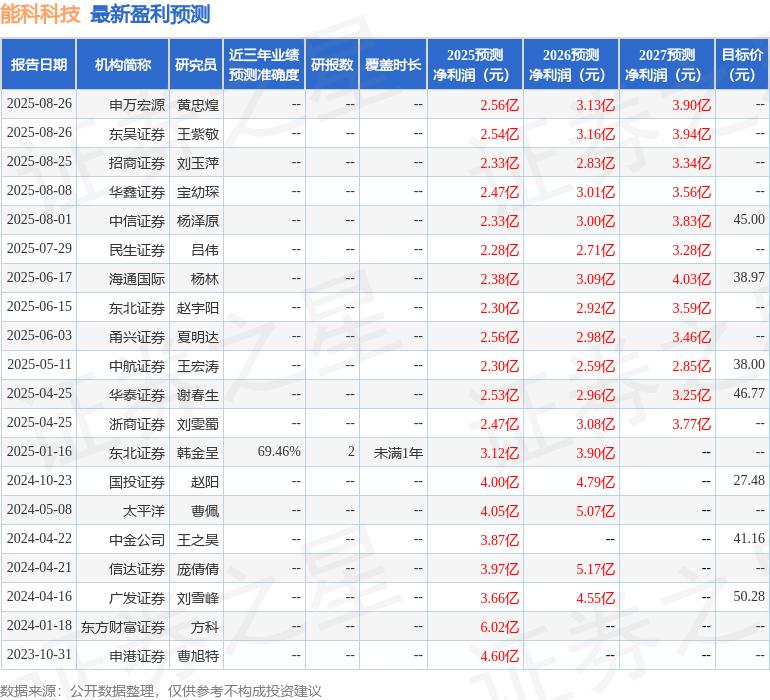
能科科技(603859):看好公司AIAGENT产品商业化提速
Xin Lang Cai Jing· 2025-08-27 08:28
Core Viewpoint - The company reported a revenue of 738 million yuan for H1 2025, representing a year-over-year increase of 4.91%, and a net profit attributable to shareholders of 111 million yuan, up 18.75% year-over-year, indicating strong financial performance driven by AI product commercialization [1][2]. Financial Performance - In Q2 2025, the company achieved a revenue of 401 million yuan, reflecting a year-over-year growth of 33.99% and a quarter-over-quarter increase of 19.19% [1]. - The gross profit margin for H1 2025 was 52.40%, an increase of 4.22 percentage points year-over-year, showcasing improved profitability [2]. - The net profit for Q2 2025 was 61.68 million yuan, which is a year-over-year increase of 64.64% and a quarter-over-quarter increase of 25.75% [1]. Strategic Focus - The company is strategically reducing its traditional business operations and reallocating resources towards high-value software business, which is expected to enhance the average gross margin [2]. - The company has significantly reduced sales and management expenses, with the sales expense ratio decreasing by 4.37 percentage points to 5.43% in Q2 2025, and the management expense ratio down by 2.40 percentage points to 5.64% [2]. AI Product Development - The company is experiencing rapid growth in its self-developed AI products, particularly the "Ling" series AI Agent products, which are driving significant revenue increases [3]. - The company reported a substantial increase in contract liabilities, reaching 405 million yuan in H1 2025, a year-over-year increase of 158.26%, indicating strong demand for its AI solutions [3]. R&D Investment - The company is increasing its investment in AI product development, enhancing capabilities in model development, agent development, data processing, and hardware-software adaptation [4]. - The "Ling" series products are being expanded to include various intelligent solutions, which are expected to provide flexible and efficient digital solutions for clients [4]. Earnings Forecast and Valuation - The company maintains its earnings per share (EPS) forecasts for 2025-2027 at 1.03, 1.21, and 1.33 yuan respectively, anticipating continued growth driven by the commercialization of AI Agent products [5]. - The target price has been raised to 57.37 yuan, based on a price-to-earnings (PE) ratio of 55.7x for 2025, reflecting confidence in the company's growth trajectory [5].
能科科技(603859):看好公司AIAgent产品商业化提速
HTSC· 2025-08-27 05:26
Investment Rating - The investment rating for the company is maintained as "Buy" with a target price of RMB 57.37 [1][5]. Core Views - The company is expected to accelerate the commercialization of its AI Agent products, which may lead to significant revenue growth [1][3]. - The strategic contraction of traditional business and effective cost control have improved the company's profitability, with a gross margin of 52.40% in H1 2025, up 4.22 percentage points year-on-year [2]. - The company's self-developed AI products are driving substantial growth in contract liabilities, with a 158.26% year-on-year increase in contract liabilities to RMB 4.05 billion in H1 2025 [3]. - Continuous investment in AI product development is leading to accelerated iterations of two major AI product lines, enhancing the company's offerings [4]. Summary by Sections Financial Performance - In H1 2025, the company achieved revenue of RMB 738 million, a year-on-year increase of 4.91%, and a net profit attributable to the parent company of RMB 111 million, up 18.75% year-on-year [1]. - Q2 2025 revenue reached RMB 401 million, representing a year-on-year growth of 33.99% and a quarter-on-quarter increase of 19.19% [1]. Cost Management - The company has effectively reduced sales and management expenses, with the sales expense ratio decreasing by 4.37 percentage points to 5.43% in Q2 2025, and the management expense ratio down by 2.40 percentage points to 5.64% [2]. Product Development - The company is enhancing its AI capabilities through the "Ling Series" and "Le Series" products, focusing on intelligent upgrades in industrial applications [4]. - The integration of AI with self-developed industrial software is being accelerated, providing flexible and efficient digital solutions for clients [4]. Earnings Forecast - The earnings per share (EPS) forecasts for 2025, 2026, and 2027 are RMB 1.03, RMB 1.21, and RMB 1.33 respectively, reflecting confidence in the ongoing commercialization of AI products [5][11].
中金:维持创新奇智(02121)跑赢行业评级 上调目标价至8.5港元
智通财经网· 2025-08-27 02:16
Core Viewpoint - Company Innovation Qizhi (02121) is experiencing a steady recovery in performance, leading to an upward revision of revenue expectations for 2025E/2026E by 12.2%/19.6% to 1.47 billion/1.73 billion yuan, and an increase in adjusted net profit estimates for the same years, maintaining an outperform rating in the industry [1] Group 1: Revenue Growth and Strategic Focus - The company reported a strong revenue reversal, with management indicating a strategic shift from defense to offense in 2025, expecting revenue growth to resume with a projected 22.3% increase in 1H25 compared to a -38.11% decline in 1H24 [2] - Revenue from the manufacturing sector in 1H25 increased by 27.0% year-on-year to 556 million yuan, accounting for 79.5% of total revenue, up 3.0 percentage points year-on-year [2] - Breakdown by sub-industry shows significant recovery in manufacturing, with revenues from energy and power, automotive equipment, food and beverage, and 3C high-tech sectors growing by 48.5%, 12.1%, 14.8%, and 34.6% respectively [2] Group 2: Profitability and Cash Flow Improvement - The company's gross margin in 1H25 was 35.0%, an increase of 1.2 percentage points year-on-year, reflecting improved delivery efficiency and cost control [3] - Research and development expenses rose by 11.2% year-on-year to 165 million yuan, primarily due to business expansion [3] - The company improved its accounts receivable collection, reducing the average collection period to 122 days, a decrease of 52 days year-on-year, resulting in a positive cash flow of 840,000 yuan in 1H25, a turnaround from a negative cash flow of 26 million yuan in 1H24 [3] Group 3: Industrial AI and Confidence in Development - In the industrial sector, the company launched the AEAM industrial equipment intelligent management software and partnered with KUKA Robotics in June 2025 to promote new industrialization [4] - The company collaborated with Qingtian Intelligent to develop embodied intelligent robots for industrial applications and obtained two invention patents in August [4] - A share buyback announcement of 100 million yuan was made in May 2025, using the company's own funds for cancellation or treasury stock, demonstrating confidence in future development [4]
一图读懂|汇川技术2025年半年度报告
机器人圈· 2025-08-26 11:14
Core Viewpoint - In the first half of 2025, Inovance Technology reported significant growth in revenue and net profit, driven by strong performance in the new energy vehicle and industrial automation sectors, indicating a robust operational capacity and market position. Financial Performance - The company achieved a revenue of 20.51 billion yuan, representing a year-on-year increase of 26.73% [1] - Net profit attributable to shareholders reached 2.968 billion yuan, with a year-on-year growth of 40.15% [1] - The net profit after excluding non-recurring gains was 2.671 billion yuan, up 29.15% year-on-year [1] - Operating cash flow improved significantly, with a net cash flow from operating activities of 3.020 billion yuan, a 65.24% increase compared to the previous year [1] Business Segments - The smart manufacturing segment generated revenue of 11.244 billion yuan, a 12.96% increase year-on-year, with a gross margin of 40.75% [1] - The new energy and rail transportation segment saw revenue of 9.266 billion yuan, marking a 48.74% year-on-year growth, becoming a key driver of performance [1] New Energy Vehicle Sector - The new energy vehicle business achieved revenue of 9 billion yuan, reflecting a 50% year-on-year increase, benefiting from a domestic penetration rate of 44.3% and a 75.2% growth in overseas exports [2] - The company secured over 30 domestic passenger car projects and five overseas projects, covering a full range of products including power sources and control systems [2] - New product platforms, including the fourth-generation product platform and fifth-generation powertrain platform, are in development, with customer testing expected to start in the second half of 2025 [2] Industrial Automation Market - The general automation business generated revenue of 8.8 billion yuan, a 17% increase year-on-year, with leading market shares in core products: 32% in general servo systems, 22% in low-voltage inverters, and 20.4% in SCARA robots [3] - The smart elevator business faced a slight decline in revenue to 2.3 billion yuan, down 1% year-on-year, but mitigated risks through overseas market expansion and service upgrades [3] - The rail transportation business remained stable with revenue of 220 million yuan, supported by new orders in urban rail projects [3] Research and Development - R&D investment reached 1.966 billion yuan, a 33.47% increase, with an R&D expense ratio of 9.58% [4] - The company employed 6,118 R&D personnel, accounting for 40% of the total workforce, and filed 121 new patent applications, bringing the total to 3,128 [4] Global Expansion - Overseas revenue amounted to 1.32 billion yuan, a 39% increase, representing 6.4% of total revenue [4] - Rapid growth was observed in emerging markets such as Vietnam, the Middle East, and Thailand, with significant breakthroughs in lithium battery and mobile phone sectors in Korea and Vietnam [4]

汇川技术上半年营收突破200亿元 新能源汽车业务增长50%
Zheng Quan Shi Bao Wang· 2025-08-25 15:12
Financial Performance - Company achieved operating revenue of 20.509 billion yuan in the first half of the year, a year-on-year increase of 26.73% [1] - Net profit attributable to shareholders reached 2.968 billion yuan, with a year-on-year growth of 40.15%, significantly outperforming the industry average [1] - Net profit after deducting non-recurring gains and losses was 2.671 billion yuan, up 29.15% year-on-year [1] - Operating cash flow net amount reached 3.020 billion yuan, a substantial increase of 65.24% compared to the previous year [1] Business Segments - Intelligent manufacturing segment (including general automation and smart elevators) generated revenue of 11.244 billion yuan, a year-on-year increase of 12.96%, with a gross margin of 40.75%, up 0.94 percentage points [1] - New energy and rail transit segment revenue was 9.266 billion yuan, a year-on-year increase of 48.74, becoming the core driver of performance growth [1][2] New Energy Vehicle Business - Revenue from the new energy vehicle business reached 9 billion yuan, a year-on-year increase of 50%, benefiting from a domestic penetration rate of 44.3% and a 75.2% increase in overseas exports [2] - The company has secured over 30 domestic passenger car projects and five new overseas customer projects, covering all product categories [2] - New generation products, including the fourth-generation product platform and fifth-generation powertrain platform, are in development, with customer testing expected to start in the second half of 2025 [2] Industrial Automation Market - General automation business achieved revenue of 8.8 billion yuan, a year-on-year increase of 17%, with leading market shares in core products [3] - Smart elevator business revenue was 2.3 billion yuan, a slight decrease of 1% year-on-year, but the company is expanding overseas and focusing on the old elevator upgrade market [3] - Rail transit business revenue was 220 million yuan, remaining stable year-on-year, with new orders for magnetic traction systems [3] Research and Development - R&D investment reached 1.966 billion yuan, a year-on-year increase of 33.47%, with an R&D expense ratio of 9.58% [4] - The company has 6,118 R&D personnel, accounting for 40% of total employees, and has filed 121 new patent applications [4] - Global revenue reached 1.32 billion yuan, a year-on-year increase of 39%, with significant growth in emerging markets [4]
奥普特(688686):人布局逐步完善
Changjiang Securities· 2025-08-25 09:22
Investment Rating - The investment rating for the company is "Buy" and is maintained [7]. Core Views - In the first half of 2025, the company achieved revenue of 683 million yuan, a year-on-year increase of 31%, and a net profit attributable to shareholders of 146 million yuan, up 29% year-on-year. The net profit excluding non-recurring items was 132 million yuan, reflecting a 36% increase year-on-year [2][4]. - For Q2 2025, the company reported revenue of 415 million yuan, a 40% year-on-year increase, with a net profit of 88 million yuan, up 57% year-on-year, and a net profit excluding non-recurring items of 78 million yuan, marking a 61% increase year-on-year [2][4]. - The company's performance was bolstered by significant growth in the 3C and lithium battery sectors, with the 3C industry generating revenue of 439 million yuan, a 23.82% increase, and the lithium battery sector achieving revenue of 167 million yuan, a 49.35% increase [8]. - The company's AI-related projects generated revenue of 87.33 million yuan in the first half of 2025, a remarkable growth of 363% compared to the same period last year, indicating a strong market position in industrial AI [8]. - The company aims to become a core supplier of perception solutions for robots, having established a robotics division and focusing on key visual components necessary for robot vision perception [8]. Summary by Sections Financial Performance - The company reported a gross margin of 67.26% in Q2 2025, an increase of 1.88 percentage points year-on-year, and a net profit margin of 21.84%, up 2.88 percentage points year-on-year [8]. - The projected net profits for 2025, 2026, and 2027 are 203 million yuan, 265 million yuan, and 335 million yuan, respectively, with corresponding price-to-earnings ratios of 74, 56, and 45 [8]. Business Strategy - The company has developed a comprehensive product matrix integrating vision, sensing, motion, and AI, enhancing its competitive edge and customer loyalty [8]. - The strategic focus on AI and robotics is expected to drive future growth, with the company leveraging its advanced visual technology in various robotic applications [8].
【机构调研记录】长盛基金调研冰轮环境、莱特光电等4只个股(附名单)
Zheng Quan Zhi Xing· 2025-08-25 00:08
Group 1: Ice Wheel Environment (000811) - The company focuses on providing advanced system solutions and lifecycle services in the energy and power sectors, with products including compressors and heat exchangers operating in the temperature range of -271℃ to 200℃ [1] - In the first half of the year, the low-temperature refrigeration segment generated revenue of 1.73 billion yuan, accounting for 55% of total revenue, while the HVAC segment generated 1.2 billion yuan, accounting for 39% [1] - The company supplies cooling equipment for data centers, and its products have been included in the Ministry of Industry and Information Technology's directory of advanced applicable technologies for national green data centers [1] Group 2: Lite Optoelectronics - In the first half of 2025, the company achieved revenue of 292 million yuan, a year-on-year increase of 18.84%, and a net profit of 126 million yuan, up 36.74% year-on-year [2] - The growth is attributed to rising demand in the OLED market and the company's cost reduction and efficiency improvement efforts [2] - The company is expanding its OLED terminal materials product line and accelerating the construction of its 8.6-generation line, which is expected to significantly boost demand for organic light-emitting materials [2] Group 3: Opto - In the first half of 2025, the company reported revenue of 682.56 million yuan, a year-on-year increase of 30.68%, and a net profit of 145.99 million yuan, up 28.80% [3] - The company has made progress in the smart robotics sector and established a robotics division, enhancing its visual solution offerings [3] - The machine vision industry is projected to exceed 21 billion yuan in market size by 2025, with a compound annual growth rate of approximately 20% from 2024 to 2028 [3] Group 4: Longli Technology (300752) - The company experienced revenue growth in the first half of 2025, but profits declined due to increased capacity construction and personnel costs, leading to short-term operational pressure [4] - The company’s LIPO technology products have begun mass production, with the mobile phone project entering mass production in the third quarter [4] - As a leading player in Mini-LED technology for automotive displays, the company is positioned for rapid growth in this sector, with recent products featuring its Mini-LED technology [4] Group 5: Longsheng Fund - As of now, the fund has an asset management scale of 96.413 billion yuan, ranking 62nd among 210 funds, with 65.591 billion yuan in non-monetary public funds [5] - The fund manages 140 public funds and has 22 fund managers, ranking 55th and 63rd respectively [5] - The best-performing fund in the past year is the Longsheng Urbanization Theme Mixed A fund, with a net value increase of 110.67% [5]




【机构调研记录】鑫元基金调研奥普特、中矿资源
Zheng Quan Zhi Xing· 2025-08-25 00:08
Group 1: Aoptical Technology - In the first half of 2025, Aoptical achieved revenue of 682.56 million yuan, a year-on-year increase of 30.68%, and a net profit of 145.99 million yuan, up 28.80% year-on-year [1] - The company made progress in the field of intelligent robotics by establishing a robotics division and developing a complete visual solution system [1] - The industrial AI product revenue reached 87.33 million yuan, showing a significant year-on-year growth of 363.00% [1] - Aoptical is actively expanding its overseas market and plans to deepen partnerships in both domestic and international markets [1] - The machine vision industry is expected to exceed 21 billion yuan in market size by 2025, with a compound annual growth rate of approximately 20% from 2024 to 2028 [1] - The company anticipates a revenue growth rate of no less than 20% and a net profit growth rate at least equal to the revenue growth rate for 2025 [1] Group 2: Zhongmin Resources - In the first half of 2025, Zhongmin Resources reported revenue of 3.27 billion yuan, a year-on-year increase of 34.89%, but net profit decreased by 81.16% to 89.13 million yuan [2] - The rare light metal segment (cesium and rubidium) performed well, generating revenue of 708 million yuan, up 50.43%, with a gross profit of 511 million yuan, also up 50.15% [2] - The lithium battery new energy segment sold 17,869 tons of lithium salt, a year-on-year increase of 6.37%, and sold 34,834 tons of self-produced lithium concentrate [2] - The company initiated a technical transformation project for an annual production of 30,000 tons of high-purity lithium salt [2] - In the copper and germanium business, Zhongmin acquired 65% of the Kitumba copper mine project in Zambia and 98% of the Tsumeb project in Namibia, launching integrated and multi-metal recycling projects [2] - The company aims to deepen its resource and cost advantages in lithium battery new energy and enhance its global resource allocation capabilities [2] Group 3: Xinyuan Fund - Xinyuan Fund, established in 2013, currently has an asset management scale of 212.58 billion yuan, ranking 35th out of 210 [3] - The asset management scale for non-monetary public funds is 140.89 billion yuan, ranking 36th out of 210 [3] - The fund manages 165 public funds, ranking 46th out of 210, with 22 public fund managers, ranking 63rd out of 210 [3] - The best-performing public fund product in the past year is Xinyuan Guozheng 2000 Index Enhanced A, with a latest net value of 1.34 and a growth of 80.1% over the past year [3]
