
机器学习

Search documents
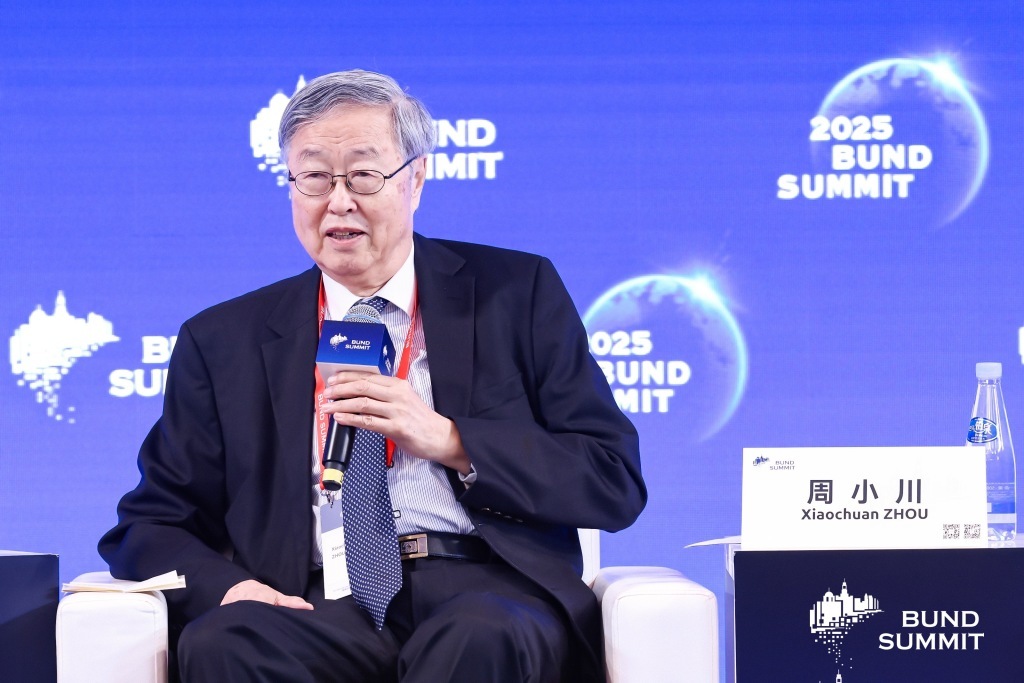
周小川:人工智能在银行业的支付、定价等方面发挥着重要作用
Feng Huang Wang· 2025-10-23 08:46
Core Insights - The former governor of the People's Bank of China, Zhou Xiaochuan, emphasized that AI represents a significant marginal change in the financial sector, building on historical advancements in information processing, IT, and automation [1] Group 1: AI's Impact on Banking - The banking system has accumulated vast amounts of data that can be utilized for machine learning and deep learning, transitioning from traditional models to intelligent reasoning models [3] - Unlike other industries, banks have primarily relied on big data analysis and reasoning models, leading to a unique development trajectory in the future [3] - The workforce in the banking sector is expected to be significantly impacted and reduced due to these advancements in AI [3] Group 2: Changing Customer Behavior - Customer interactions with banks are evolving, with more individuals becoming accustomed to engaging with machines rather than human representatives [3] - This shift is profound, as AI plays a crucial role in payments, pricing, risk management, and market promotion within the banking industry [3] Group 3: AI and Central Banking - Zhou noted that the influence of AI on central banking operations requires further observation and research [4] - Discussions at the Bank for International Settlements (BIS) indicated that while AI and machine learning can enhance macroeconomic policy responses, their overall importance remains limited [4] Group 4: Challenges of AI Implementation - The development of AI, particularly machine learning and deep learning, introduces challenges such as model opacity, making it difficult to explain outcomes [4] - There is a concern that AI models trained on high-frequency data may not align with the long-term stability required for financial robustness and macroeconomic control [4] Group 5: International Cooperation on AI - Current international cooperation efforts related to AI are deemed limited, with a focus on enhancing AI infrastructure in the financial sector being a potential area for collaboration [5]

6800万美元,清华、北大、上海交大多位校友获奖,亚马逊AI博士奖学金公布
机器之心· 2025-10-23 07:45
Group 1 - Amazon has announced the recipients of its AI PhD Scholarship, funding over 100 PhD students from nine universities to research machine learning, computer vision, and natural language processing [1] - The participating universities include CMU, Johns Hopkins University, MIT, Stanford University, UC Berkeley, UCLA, University of Illinois Urbana-Champaign, University of Texas at Austin, and University of Washington [1] - The program will provide $10 million in funding for the academic years 2025-2026 and 2026-2027, along with an additional $24 million in Amazon Web Services (AWS) cloud credits each year, totaling $68 million over two years [2] Group 2 - Several universities have already announced their selected PhD candidates, including notable Chinese scholars [3] - Jenny Huang from MIT focuses on data-driven machine learning and uncertainty quantification [4][6] - David Jin from MIT is interested in scalable computing and AI-driven decision systems [8][6] - Songyuan Zhang from MIT is researching safe multi-agent systems and intelligent assistive robots [11][6] Group 3 - Yuxiao Qu from CMU aims to endow AI agents with human-like curiosity to advance scientific research [12][14] - Danqing Wang from CMU is working on integrating safety and functionality into training for reliable AI agents [15][17] - Mengdi Wu from CMU focuses on machine learning for optimizing computational kernel strategies [18][20] Group 4 - Dacheng Li from UC Berkeley is developing efficient AI and artificial worlds through visual and text generation models [34][36] - Hao Wang from UC Berkeley is researching practical secure code generation through controlled reasoning [37][39] - Melissa Pan from UC Berkeley is interested in sustainability in large-scale machine learning and data center systems [40][42] Group 5 - Haoyu Li from UT Austin is utilizing AI to enhance modern system performance and availability [49][51] - Junbo Li from UT Austin is focused on agentic large language models and reinforcement learning [52][54] - Kaizhao Liang from UT Austin is researching efficient training methods and sparse neural networks [56][58] Group 6 - Zeping Liu from UT Austin is advancing geospatial AI research with a focus on geographic foundational models [59][61] - Haoran Xu from UT Austin is expanding reinforcement learning methods and integrating generative AI [62][64] - Chutong Yang from UT Austin is interested in algorithm design and analysis in trustworthy machine learning [65][67] Group 7 - Xiao Zhang from UT Austin is focusing on networked and distributed systems to achieve predictable AI performance in 5G edge environments [68][69] - The list of awardees will continue to be updated as more universities announce their recipients [70]


十篇论文,揭秘寒武纪AI芯片崛起之路
半导体行业观察· 2025-10-23 01:01
Core Insights - The article discusses the rise of Cambricon, a leading AI chip company in China, highlighting its technological evolution and competitive edge against global giants like NVIDIA [5][26]. Group 1: Foundational Era - The inception of Cambricon is attributed to the academic journey of two brothers, Chen Yunji and Chen Tianshi, who laid the groundwork for deep learning processor architecture through their research at the Chinese Academy of Sciences [7]. - The "DianNao" series, introduced by the brothers, was one of the earliest systematic studies on deep learning processor architectures, addressing the efficiency bottlenecks of general-purpose CPUs/GPUs in executing neural networks [7][12]. Group 2: Technological Evolution - The article highlights ten significant papers published between 2014 and 2025, tracing the technological advancements from the "DianNao" architecture to the Cambricon series of AI chips [5]. - The first paper, "DianNao," demonstrated a high-throughput accelerator capable of executing 452 GOP/s with a power consumption of 485 milliwatts, achieving a speedup of 117.87 times compared to a 128-bit 2GHz SIMD processor [11]. - Subsequent innovations, such as "DaDianNao" and "PuDianNao," showcased significant performance improvements, with "DaDianNao" achieving a 450.65 times speedup over GPUs and "PuDianNao" supporting seven mainstream machine learning algorithms [14][20]. Group 3: Commercialization and Ecosystem Development - Cambricon's transition from academic research to commercial products was marked by the introduction of the "Cambricon ISA," a specialized instruction set for deep learning, which decoupled upper applications from lower hardware [26][30]. - The integration of Cambricon-1A into Huawei's Kirin 970 chip marked a significant commercial breakthrough, establishing Cambricon as a key player in the mobile AI chip market [37]. - Following the loss of Huawei as a major client, Cambricon pivoted to focus on its "Siyuan" (MLU) cloud chips and the NeuWare software platform, aiming to compete with NVIDIA's ecosystem [37]. Group 4: Future Challenges and Opportunities - The article concludes by emphasizing the challenges Cambricon faces against NVIDIA's established technology and the need to carve out a unique path in the AI chip market [59]. - Despite the challenges, the growing demand for autonomous AI computing in China presents a significant opportunity for Cambricon to leverage its academic roots and build a robust developer ecosystem [59].


奈飞公司20251022
2025-10-22 14:56
Netflix Earnings Call Summary Company Overview - **Company**: Netflix - **Date**: October 22, 2025 Key Industry Insights - **User Engagement**: Netflix maintains strong user engagement, with record high TV advertising share in the US and UK, indicating robust growth potential in the streaming sector [2][4] - **Advertising Revenue**: Expected to more than double by 2025, with programmatic advertising growing rapidly, becoming a significant revenue component [2][9] - **Market Penetration**: Currently, Netflix captures about 7% of the addressable market and only 10% of TV viewing time in its largest market, suggesting substantial growth opportunities [5] Financial Performance - **Third Quarter Impact**: A tax issue in Brazil led to a provision affecting Q3 results, primarily impacting the 2025 outlook by approximately 20%, but not expected to significantly affect future performance [2][7] - **Revenue Goals**: Netflix aims to maintain healthy revenue growth, expand profit margins, and increase cash flow, with a full-year guidance for 2026 to be released in January [2][8] Content Strategy - **Innovative Offerings**: Introduction of live events and gaming features, such as the Canelo-Crawford boxing match, enhances user experience and competitive edge [2][4][18] - **Collaborations**: Partnership with Spotify for exclusive video podcasts enriches content offerings, reinforcing Netflix's position as a leading entertainment platform [2][16] - **Theatrical Releases**: Some content will be released in theaters to enhance marketing and audience engagement, as demonstrated by the success of "K-Pop Demon Hunters" [2][17] Advertising Business Development - **Growth Prospects**: The advertising business is expected to see significant growth, with a focus on improving technology and expanding advertiser diversity [9][10] - **Ad Fill Rate Improvement**: Continuous enhancements in marketing capabilities and measurement are leading to improved ad fill rates [11] User Engagement Metrics - **Viewership Growth**: Total viewing hours increased in Q3, with record audience numbers in the US and UK, indicating effective content strategies [12] - **Impact of Major Events**: High-profile live events significantly boost user acquisition and retention, showcasing the potential of live content [18] Future Content Plans - **Upcoming Releases**: A strong lineup of anticipated series and films is set for 2026, including popular returning shows and new projects [14][15] - **Interactive Features**: Plans to introduce more interactive content and gaming experiences to enhance user engagement and retention [23] Competitive Landscape - **Industry Consolidation**: While industry consolidation presents opportunities, Netflix remains focused on organic growth and selective acquisitions to enhance its capabilities [21][22] - **Content Licensing Dynamics**: Original content remains a core driver, with Netflix open to licensing third-party content despite competitive challenges [22] Technological Investments - **AI and Machine Learning**: Continuous investment in AI and machine learning to improve productivity and innovation, enhancing content production and advertising effectiveness [3][26] Conclusion - Netflix is positioned for continued growth with a strong focus on user engagement, innovative content strategies, and a rapidly expanding advertising business, despite facing challenges such as tax issues and competitive pressures.

报名倒计时 | 量化洞察上海专场:从微观交易到宏观经济
Refinitiv路孚特· 2025-10-21 06:02
Core Insights - The article emphasizes the importance of timely macroeconomic intelligence and micro trading data in driving sell-side research and investment decisions. LSEG and XTech's predictive model provides actionable market signals by anticipating global economic trends through advanced indicators [1] - LSEG's solutions combine macroeconomic forecasting with microstructure analysis, enabling research professionals and investors to identify "signals" amidst vast information, thereby enhancing research efficiency and investment returns [1] Event Details - The event titled "From Micro Trading to Macro Economy: LSEG Quantitative Insights Shanghai Exchange" is organized by LSEG, featuring discussions on quantitative insights and data-driven investment futures with professionals from funds, quantitative firms, research institutions, and consulting companies [1] - The event is scheduled for November 6, 2025, from 16:30 to 19:00 in Lujiazui, Shanghai, with a detailed agenda including a keynote presentation and a panel discussion [3][4] Key Speakers - Dr. Arman Sahovic, Director of Front Office Solutions for LSEG Asia Pacific, has extensive experience in quantitative analysis and risk management across various financial institutions [8] - Xu Xiaobo, Founder and Head of Investment at Ruitian Investment, has a background in quantitative trading strategies and manages over 10 billion in assets [9] - Li Yikang, Partner and COO of FFT Investment, has a strong background in AI research and investment in the AI sector [10] - Wang Xudong, Head of Quantitative and Data Science Business at LSEG, specializes in data solutions and decision-making efficiency [11] LSEG Solutions - LSEG offers text analysis solutions that convert unstructured data into actionable insights, enhancing the identification of new alpha opportunities through advanced natural language processing and machine learning [14] - The global macro forecasting service, developed in collaboration with Exponential Technology, provides institutional investors with practical insights into global economic trends, analyzing key indicators such as the US Consumer Price Index and retail sales data [16] - LSEG's news analysis service quantifies corporate sentiment and enhances trading signal identification for quantitative investment strategies, covering stocks, commodities, and energy sectors [19]

同比大增89%!前三季度私募备案数据出炉,量化产品暴增102.66%!
私募排排网· 2025-10-21 03:34
Core Viewpoint - The private equity securities product registration market has significantly rebounded in the first three quarters of 2025, with a total of 8,935 products registered, representing a year-on-year increase of 89.38% [2]. Group 1: Factors Driving Growth - The growth in private equity securities product registrations is driven by three main factors: 1. Continuous improvement in market conditions, with strong performance in small-cap indices like the CSI 1000 and CSI 2000, enhancing investor willingness to allocate funds [2]. 2. Regulatory guidance that has improved industry transparency and credibility, attracting more capital [2]. 3. Active business expansion by private equity firms, with leading firms accelerating product line development and smaller firms seeking growth through new product registrations [2]. Group 2: Strategy Distribution - Among the registered products, equity strategies dominate with 5,849 registrations, accounting for 65.46% of the total, and showing a year-on-year increase of 99.35% [3]. - Multi-asset strategies follow with 1,278 registrations, representing 14.30% of the total and a year-on-year growth of 84.68% [5]. - Futures and derivatives strategies have 913 registrations, making up 10.22% of the total, with a year-on-year increase of 66.00% [5]. - Bond strategies and combination funds have similar registration numbers, with 363 and 362 products respectively, each around 4% of the total, and year-on-year increases of 75.36% and 79.21% [5]. Group 3: Quantitative Products - Quantitative private equity products have shown remarkable growth, with 3,958 registrations, accounting for 44.30% of all private equity securities products, and a year-on-year increase of 102.66% [6]. - The surge in quantitative product registrations is attributed to: 1. Superior performance of quantitative strategies compared to subjective strategies in the current market environment, attracting continuous capital inflow [6]. 2. Ongoing technological advancements, including the application of AI and machine learning in strategy development, enhancing model adaptability and profitability [6][7]. 3. Leading quantitative firms leveraging scale advantages to create a virtuous cycle of performance improvement and product registration growth [7]. Group 4: Concentration of Registrations - The number of private equity managers with registered products reached 2,322, with a significant concentration in the number of products registered, as 1,879 managers have 5 or fewer products [12]. - In terms of management scale, the largest group consists of managers with assets under management (AUM) of 0-5 billion, totaling 1,560 [12]. - Notably, among the 26 managers with at least 40 registered products, 23 are billion-dollar managers, indicating a strong concentration of registration among larger firms [14].

前三季度私募备案量激增近90%
21世纪经济报道· 2025-10-21 00:57
Core Viewpoint - The private equity fund market is experiencing significant growth, with a notable increase in the number of registered private securities products, indicating a shift in market dynamics and potential influx of capital into the stock market [1][5][6]. Summary by Categories Private Securities Product Registration - In the first three quarters of 2025, a total of 8,935 private securities products were registered, a substantial increase of 89.38% compared to 4,718 products in the same period last year [1][6]. - Among these, quantitative private equity products accounted for 3,958 registrations, representing 44.30% of the total, with a year-on-year growth of 102.66% [6][7]. Strategy Distribution - The distribution of registered products by strategy shows that stock strategy products lead with 5,849 registrations, a year-on-year increase of 99.35%, making up 65.46% of the total [3][5][6]. - Multi-asset strategy products totaled 1,278, accounting for 14.3% with an 84.68% increase, while futures and derivatives strategy products reached 913, representing 10.22% with a 66% increase [3][5][6]. Growth of Billion-Dollar Private Equity Firms - As of September 2025, the number of billion-dollar private equity firms increased to 96, up from 91 in August, with three firms newly entering the "billion-dollar club" [1][9]. - The majority of these firms are quantitative, with 45 out of 96, while subjective and mixed strategies account for 42 and 7 firms, respectively [9]. Performance of Private Equity Firms - The average return for 62 billion-dollar private equity firms in the first three quarters was 28.80%, with 61 firms achieving positive returns [10][11]. - Among these, 38 billion-dollar quantitative private equity firms had an average return of 31.90%, outperforming the 24.56% average return of 19 billion-dollar subjective private equity firms [10][11]. Market Trends and Factors - The surge in quantitative product registrations is attributed to three main factors: superior performance of quantitative strategies, advancements in technology such as AI and machine learning, and the scaling advantages of leading quantitative firms [7][10]. - The trend of billion-dollar private equity firms expanding their management scale is evident, with a significant number of these firms focusing on stock strategies [9].

重要市场风向标有变:前三季度私募备案量激增,百亿私募扩围
2 1 Shi Ji Jing Ji Bao Dao· 2025-10-20 23:22
Core Insights - The private equity fund market is experiencing significant growth, with a notable increase in the number of registered private securities products, indicating a shift in market dynamics [1][4]. Group 1: Market Growth - A total of 8,935 private securities products were registered in the first three quarters of 2025, representing a substantial year-on-year increase of 89.38% compared to 4,718 products in the same period last year [1][4]. - The number of quantitative private equity products reached 3,958, accounting for 44.30% of all registered private securities products, with a year-on-year growth of 102.66% [5][1]. Group 2: Strategy Preferences - Among the registered products, stock strategy products led with 5,849 registrations, making up 65.46% of the total, followed by multi-asset strategies at 1,278 (14.3%) and futures and derivatives strategies at 913 (10.22%) [3][5]. - The growth in stock strategy registrations is attributed to the strong performance of the A-share market and the opportunities presented by structural market trends, particularly in technology, new energy, and consumer sectors [3][5]. Group 3: Billion-Dollar Private Equity Managers - The number of billion-dollar private equity managers increased to 96 by the end of September 2025, up from 91 at the end of August, with three new entrants: Zhengying Asset, Kaishi Private Equity, and Taibao Zhiyuan (Shanghai) Private Equity [8][1]. - Among the 26 private equity managers with at least 40 registered products, 23 are billion-dollar managers, representing 88.46% of the total [7]. Group 4: Performance Metrics - The average return for 62 billion-dollar private equity managers in the first three quarters was 28.80%, with 61 achieving positive returns [9]. - Among the billion-dollar quantitative private equity managers, the average return was 31.90%, outperforming the 24.56% average return of 19 billion-dollar subjective private equity managers [10].
重要市场风向标大变!前三季度私募备案量激增,百亿私募扩围
2 1 Shi Ji Jing Ji Bao Dao· 2025-10-20 13:09
Core Insights - The private equity fund market is experiencing significant growth, with a notable increase in the number of registered private securities products, indicating a shift in market dynamics [1][4]. Group 1: Private Equity Fund Growth - In the first three quarters of 2025, a total of 8,935 private securities products were registered, representing a substantial year-on-year increase of 89.38% from 4,718 products in the same period last year [1][4]. - Quantitative private equity products accounted for 3,958 registrations, making up 44.30% of all registered private securities products, and showing a year-on-year growth of 102.66% [1][5]. Group 2: Strategy Preferences - Among the registered products, stock strategy products led with 5,849 registrations, comprising 65.46% of the total, followed by multi-asset strategies at 1,278 products (14.3%) [3][5]. - All five major primary strategies saw year-on-year growth, with stock strategies increasing by 99.35%, multi-asset strategies by 84.68%, and futures and derivatives strategies by 66.00% [5]. Group 3: Billion-Dollar Private Equity Managers - As of September 2025, the number of billion-dollar private equity managers rose to 96, up from 91 in August, with three new entrants to the "billion-dollar club" [8]. - Among the 26 private equity managers with at least 40 registered products, 23 were billion-dollar managers, representing 88.46% [7]. Group 4: Performance Metrics - The average return for 62 billion-dollar private equity managers in the first three quarters was 28.80%, with 61 achieving positive returns [9]. - Among the billion-dollar quantitative private equity managers, the average return was 31.90%, outperforming the 24.56% average return of 19 billion-dollar subjective managers [10].
研判2025!中国支持向量机行业产业链、市场规模及重点企业分析:小样本高维数据处理显身手,规模化应用需突破效率瓶颈[图]
Chan Ye Xin Xi Wang· 2025-10-20 01:25
Core Insights - The support vector machine (SVM) market in China is projected to reach approximately 428 million yuan in 2024, reflecting a year-on-year growth of 10.03% as domestic enterprises accelerate their digital transformation [1][8] - Despite its widespread applications, SVM faces challenges such as limitations in efficiency and scalability when handling large datasets, and competition from emerging technologies like deep learning [1][8] - SVM retains unique advantages in processing small sample and high-dimensional data, particularly in fields requiring high model interpretability [1][8] Industry Overview - SVM is a supervised learning algorithm primarily used for classification and regression analysis, focusing on finding an optimal hyperplane in feature space to maximize the margin between different classes [2] - The SVM industry chain includes upstream components like high-performance computing chips and sensors, midstream algorithm development and service providers, and downstream applications in finance, healthcare, industry, education, and retail [3][4] Market Size - The SVM market in China is on an upward trajectory, with a projected market size of approximately 428 million yuan in 2024, marking a 10.03% increase from the previous year [8] - The growth is driven by the increasing demand for SVM in various sectors, despite the challenges posed by larger data scales and the rise of deep learning technologies [8] Key Companies - Major players in the SVM industry include internet giants like Baidu, Alibaba, and Tencent, which leverage their financial resources, advanced technologies, and rich data resources to dominate the market [8] - Companies like Zhuhai Yichuang and Nine Chapters Cloud Technology are also making significant strides in the SVM field, providing machine learning platforms and automated modeling tools [8] Industry Development Trends - Future trends indicate a deep integration of SVM with deep learning technologies, enhancing model performance and generalization capabilities [12] - The development of more efficient optimization algorithms and distributed computing frameworks is expected to address SVM's computational efficiency issues, particularly for large datasets [13] - The emergence of quantum computing presents new opportunities for SVM, with quantum support vector machines (QSVM) showing promise in handling high-dimensional data and complex problems [15]




