支付

Search documents
Shift4 Payments (NYSE:FOUR) Conference Transcript
2026-03-11 14:27
Summary of Shift4 Payments Conference Call Company Overview - **Company**: Shift4 Payments - **Industry**: FinTech, specifically focused on payment processing for restaurants, hotels, and stadiums Key Points and Arguments Company Growth and Performance - Shift4 Payments has experienced over **20x growth in EBITDA** over the past **10 years**, showcasing its resilience and growth potential [15][14] - The company has successfully navigated various economic challenges, including the COVID-19 pandemic and a zero interest rate environment [19][14] - Shift4 Payments is recognized as a leading processor for hotels and stadiums globally, indicating strong market positioning [30][14] 2026 Guidance and Revenue Streams - The company introduced a **growth algorithm** to break down revenue streams, focusing on payments-based revenue and tax-free shopping [21][22] - The **Americas region** is expected to maintain stable growth, while the **worldwide segment** is projected to grow rapidly, disrupting the competitive landscape of unintegrated bank terminals [23][24] - The guidance for **same-store sales** is neutral, with expectations of a slightly negative first half and a moderately positive second half of the year [25][26] Economic Environment and Market Trends - The company acknowledges a **K-shaped economy**, where luxury segments are performing well while lower-end segments are struggling [33][34] - Weather conditions have positively impacted the start of the year, contributing to a stable outlook in the Americas [34][34] Free Cash Flow and Financial Outlook - Shift4 Payments expects **flat adjusted free cash flow** of **$500 million** year-over-year, primarily due to increased interest expenses and reduced interest income [49][50] - The integration of Global Blue is anticipated to enhance free cash flow generation in the second half of the year, with a focus on investments in infrastructure and AI [55][56] International Expansion and Integration - The acquisition of Global Blue provides a **pan-regional infrastructure** across Europe and APAC, allowing for cross-selling opportunities [64][65] - The company aims to leverage its existing solutions to penetrate unintegrated bank terminals in Europe, which is seen as a high-return investment [64][65] Capital Allocation Strategy - Shift4 Payments maintains a balanced capital allocation framework, focusing on acquisitions, organic investments, and share repurchases [98][99] - The company is open to pursuing smaller acquisitions that align with strategic priorities, particularly in the European market [100][99] Stadium and Entertainment Opportunities - The company is a market leader in stadium payment solutions, with significant growth potential in ticketing and expanding its presence in international markets [106][105] Additional Important Insights - The company is preparing to implement **Dynamic Currency Conversion (DCC)** solutions in the U.S. market, particularly in anticipation of major events like the World Cup [90][89] - Shift4 Payments is focused on integrating past acquisitions effectively, with a potential for margin optimization in older acquisitions [95][94] This summary encapsulates the key insights from the Shift4 Payments conference call, highlighting the company's growth trajectory, strategic initiatives, and market positioning within the FinTech industry.

美股再迎6只新股上市 今晚还将有3只
Sou Hu Cai Jing· 2026-01-30 06:46
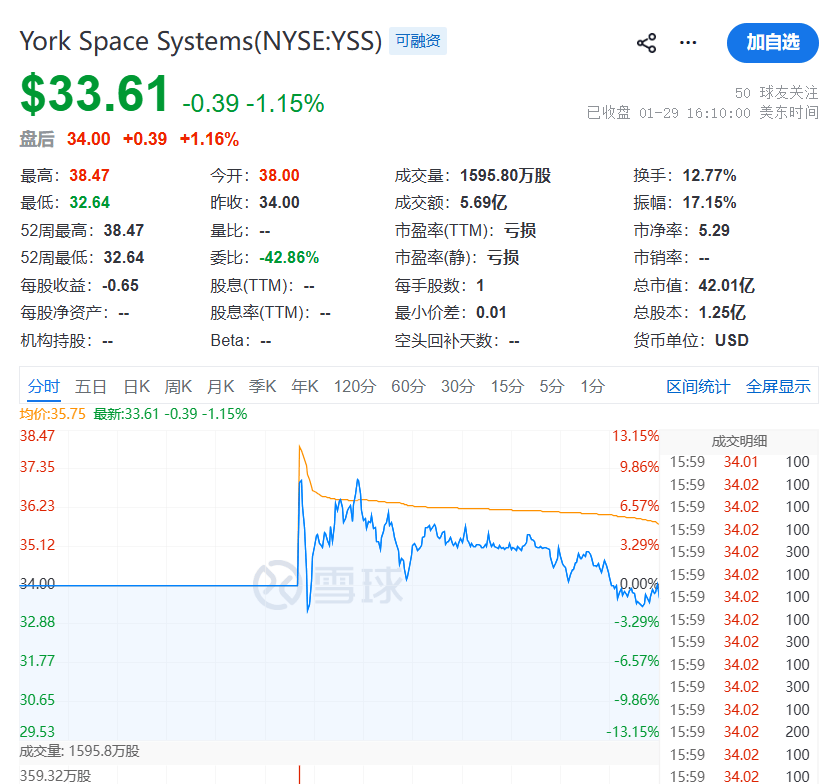
Summary of Key Points Core Viewpoint - Six new stocks entered the US capital market on January 29, 2026, raising approximately $1.783 billion, with three additional companies set to list that evening, all of which are SPACs [1]. Group 1: Newly Listed Stocks - **York Space System (YSS)**: - Opened at $38 per share, up 11.76% from the offering price, but closed at $33.61, down 1.15%, with a total market capitalization of $4.201 billion [2]. - Issued 18.5 million shares at $34 each, raising $629 million. The company provides end-to-end critical solutions for space missions in the aerospace and defense sectors, reporting $281 million in revenue and a net loss of $56.04 million for the first nine months of 2025 [4]. - **Ethos Technologies (LIFE)**: - Opened at $19 per share, unchanged from the offering price, and closed at $16.85, down 11.32%, with a total market capitalization of $1.061 billion [5]. - Issued 10.53 million shares at $19 each, raising $200 million. The company operates a technology platform connecting consumers, agents, and insurance companies, reporting $277 million in revenue and a net profit of $46.59 million for the first nine months of 2025 [7]. - **Picpay (PICS)**: - Opened at $19.5 per share, a slight increase of 2.63%, and closed at $19, with a total market capitalization of $2.462 billion [7]. - Issued 22.86 million shares at $19 each, raising $434 million. The company serves the Brazilian market across various sectors, reporting $1.122 billion in revenue and a net profit of $59 million for the first nine months of 2025 [10]. Group 2: SPACs - Three SPACs listed: - **Xsolla SPAC 1 (XSLLU)** raised $200 million, targeting the video game industry and related sectors [10]. - **United Acquisition I (UACU)** raised $100 million, with no specific acquisition target yet identified, focusing on companies with strong management and competitive advantages [10]. - **K2 Capital Acquisition (KTWOU)** raised $120 million, concentrating on humanoid robotics, physical AI, and advanced energy sectors, particularly small modular nuclear reactors [10].


IPO动态丨本周美股预告:Ethos Technologies等4家公司即将上市
Sou Hu Cai Jing· 2026-01-26 06:03
Summary of Key Points Core Viewpoint - The article discusses recent IPO activities, highlighting eight new stocks that went public, including six SPACs, and outlines upcoming IPO plans for four companies in early 2026. Group 1: Recent IPOs - Eight new stocks were listed last week, with six being SPACs [1] - BitGo (BTGO) raised $223 million by issuing 11.82 million shares at $18 per share [1] - EquipmentShare (EQPT) raised $747 million by issuing 30.5 million shares at $24.5 per share [1] - Other SPACs raised amounts ranging from $150 million to $261 million [1] - Ten companies submitted IPO applications, including two from China [1] Group 2: Upcoming IPOs - Four companies plan to go public in January 2026 [1] - Public Policy Holding Company, Inc. plans to list on NASDAQ under the ticker PPHC, aiming to raise $55.82 million by issuing 4.15 million shares at $13.45 each [2][3] - Picpay Holdings Netherlands B.V. plans to list on NASDAQ under the ticker PICS, with a target of raising approximately $434 million by issuing 22.86 million shares at $16 to $19 each [4][6] - Yellowstone Midco Holdings II/York Space Systems Inc. plans to list on NYSE under the ticker YSS, aiming to raise about $544 million by issuing 16 million shares at $30 to $34 each [7][9] - Ethos Technologies Inc. plans to list on NASDAQ under the ticker LIFE, targeting approximately $211 million by issuing 10.53 million shares at $18 to $20 each [13]

中国所有互联网公司市值加起来,竟然不如一个 Google?劝劝巨头们 别再卷了 通过免费打压行业对手追求垄断
Xin Lang Cai Jing· 2026-01-18 13:23
Core Viewpoint - The market capitalization of Google (Alphabet) is approximately $4 trillion, while the combined market capitalization of China's top internet companies is only about $1.8 trillion, indicating a significant disparity in valuation and market perception [25][28][30]. Market Capitalization Comparison - As of the end of 2025 or early 2026, the estimated market capitalizations of major companies are as follows: - Google (Alphabet): ~$40,000 million - Tencent: ~$5,917 million - Alibaba: ~$3,333 million - Xiaomi: ~$1,987 million - Pinduoduo: ~$1,486 million - Meituan: ~$975 million - NetEase: ~$852 million - JD: ~$471 million - Trip.com: ~$383 million - Kuaishou: ~$345 million - Tencent Music: ~$302 million - The total market capitalization of the top 10 Chinese internet companies is estimated to be around $17,000–20,000 million, which is more than 2.2 times less than that of Google [28][3][25]. Competitive Landscape - The primary issue in the Chinese internet sector is not a lack of effort but rather a misdirection in competitive strategies, focusing excessively on user acquisition, subsidies, and speed, leading to a dangerous cycle of competition [30][5]. - This competitive model, which relies on free services to gain scale and eliminate competitors, is damaging long-term sustainability in the industry [31][32]. Impact on Entrepreneurship - The current environment is systematically clearing out entrepreneurs, reducing their roles to mere tools for larger platforms, and stifling genuine innovation [34][37]. - The lack of reasonable pricing, stable profits, and long-term investment in research and development is leading to fewer companies being profitable and surviving [35][36]. Employment Challenges - The concentration of the industry into a few dominant platforms is contributing to job losses, with monopolistic structures eliminating positions rather than technological advancements like AI [39][10]. - As industry profits shrink, salaries are also compressed, leading to fewer job opportunities for young people [11][39]. Comparison with Google - Google’s strength lies not in the number of applications but in its focus on foundational capabilities, allowing ecosystem partners to thrive and generating productivity-based revenue rather than merely capturing attention [40][41]. - The competitive landscape in China, characterized by internal strife, hinders the emergence of globally competitive companies [41][42]. Future Outlook - If the current competitive practices continue, the industry may end up with a few platforms and many dependent entities, leading to a degraded ecosystem rather than a mature industry [42][45]. - A healthy internet ecosystem should support entrepreneurship and job creation, rather than relying solely on free services as a competitive tool [44][51].






前沿研究丨数字福祉如何衡量?清华徐心团队以GDP-B方法测度数字经济隐形价值
Sou Hu Cai Jing· 2025-12-14 12:19
Core Insights - The research led by Professor Xu Xin from Tsinghua University addresses the challenge of measuring the social value created by free digital products and services in the digital economy [2][4]. Group 1: Research Framework and Methodology - The "GDP-B" (Gross Domestic Product-Benefit) measurement method has been introduced to fill the gap in measuring digital welfare, combining empirical research and experimental design to create a scientific measurement system [5][7]. - The GDP-B method balances objective price data and subjective survey data, making intangible digital welfare measurable and comparable [7]. Group 2: Findings from the Research - A large-scale pre-survey covering 13,000 respondents across 11 cities in China revealed that consumers perceive a significantly higher value from digital services compared to international counterparts [8]. - The research indicates that digital welfare is dynamic and varies with usage scenarios and service states, suggesting a need for a more nuanced understanding of digital value [8]. Group 3: Economic Insights and Future Research - The study explores the relationship between digital welfare and economic development, raising questions about the unique shape of China's "digital Kuznets curve" compared to findings from other countries [9]. - A continuous research plan is proposed to establish a dynamic database on digital welfare in China, aiming to provide a solid empirical foundation for understanding the development patterns of the digital economy [9][10]. Group 4: Collaborative Efforts and Future Directions - The research aims to create a long-term observation system for digital welfare in collaboration with organizations like Tencent, providing scientific evidence for policy-making in the digital economy [10]. - Plans include opening research data for broader academic exploration and developing intelligent economic models based on large-scale empirical data [12].

东南亚,掘金正当时
投资界· 2025-12-12 08:27
Core Insights - Southeast Asia is emerging as a critical battleground for global capital and enterprises, with a significant consumption upgrade expected as countries approach a per capita GDP of $5,000 [3][4] - Indonesia and Singapore are highlighted as key destinations for investment opportunities, with Indonesia being referred to as the "next China" due to its large population and rapid market growth [4][5] Group 1: Investment Opportunities - Singapore boasts a per capita GDP of $90,700 in 2024, excelling in technology innovation, education services, and business environment [4] - Indonesia, with a population of over 270 million and an average age of 29, presents a dual advantage of a large market size and high growth potential [4][5] - The investment landscape includes notable companies like Gojek, which operates a wide range of services in Indonesia and Singapore, and Innowave Tech, focusing on AI-driven smart manufacturing solutions [7][8] Group 2: Educational and Networking Initiatives - The program includes visits to leading enterprises, capital dialogues, and academic institutions, creating a comprehensive understanding of the local market dynamics [5][21] - Participants will engage with top investment firms such as ATM Capital, which manages over $1 billion across four funds, and Vertex Ventures, a prominent venture capital firm in Asia [12][14][17] - The itinerary is designed to provide insights into operational strategies, investment trends, and academic advancements, ensuring a well-rounded learning experience [5][23] Group 3: Unique Experiences - The program features exclusive events, including a closed-door dinner with prominent Chinese entrepreneurs and investors in Southeast Asia, fostering deep discussions and networking [24][27] - Participants will also experience the cultural richness of Southeast Asia, enhancing their understanding of the local business environment [29][31] - The journey aims to build a robust network of high-quality resources across industries, investment institutions, and academia, facilitating future collaborations [32]

人民银行三地协调机制会议召开 京津冀:深化科技金融服务能力建设
Zhong Guo Zheng Quan Bao· 2025-11-20 22:40
Core Viewpoint - The People's Bank of China (PBOC) is enhancing financial support for the coordinated development of the Beijing-Tianjin-Hebei region, focusing on advanced industries and technological innovation [1][2] Group 1: Financial Policy and Coordination - The PBOC's coordination mechanism for the Beijing-Tianjin-Hebei region has achieved positive results since its establishment, with improved policy frameworks and work mechanisms [1] - Financing scale in key areas has steadily increased, and the regional financial service system has been continuously improved [1] Group 2: Technological Innovation and Financial Services - The region is home to a significant amount of China's technological innovation achievements, necessitating a focus on technology finance to support high-level self-reliance and the transformation of technological achievements [1] - Financial services will be enhanced in areas such as regional industrial chain collaboration and supply chain integration [1] Group 3: Industry Integration and Financial Support - Industrial integration is identified as a key support for the coordinated development of the region, with a focus on financial support for areas like the decongestion of non-capital functions in Beijing, the construction of Xiong'an New Area, and the integration of transportation [2] - Innovation in financing products such as credit and bonds is encouraged, along with improvements in credit, payment, and digital currency services to facilitate the flow of financial resources within the region [2]
京津冀:深化科技金融服务能力建设
Zhong Guo Zheng Quan Bao· 2025-11-20 20:08
Core Viewpoint - The People's Bank of China (PBOC) is enhancing financial support for the coordinated development of the Beijing-Tianjin-Hebei region, focusing on advanced industries and technological innovation [1][2] Group 1: Financial Policy and Coordination - The PBOC's coordination mechanism for the Beijing-Tianjin-Hebei region has achieved positive results since its establishment, with improved policy frameworks and work mechanisms [1] - Financing scale in key areas has steadily increased, and the regional financial service system has been continuously improved [1] Group 2: Technological Innovation and Financial Services - The region is home to a significant amount of China's technological innovation achievements, necessitating a focus on technology finance to support high-level self-reliance and the transformation of technological achievements [1] - Financial services will be enhanced in areas such as regional industrial chain collaboration and supply chain integration [1] Group 3: Industrial Integration and Financial Support - Industrial integration is identified as a key support for the coordinated development of the region, with a focus on financial support for areas like the relocation of non-capital functions from Beijing, the construction of Xiong'an New Area, and the integration of transportation [2] - The PBOC aims to innovate financing products such as credit and bonds, while optimizing financial services in credit reporting, payments, and digital currency [2] - The goal is to facilitate the rational flow of financial resources within the Beijing-Tianjin-Hebei region to promote comprehensive and high-quality development [2]
京津冀三地人民银行分行联合召开2025年京津冀协同发展人民银行三地协调机制会议
Di Yi Cai Jing· 2025-11-20 06:25
Core Viewpoint - The meeting held by the People's Bank of China branches in Beijing, Tianjin, and Hebei emphasizes the importance of industrial integration as a key support for the coordinated development of the Beijing-Tianjin-Hebei region, focusing on financial support for various key areas [1] Group 1: Financial Support Initiatives - The meeting highlighted the need for continuous financial support in key areas, including the decongestion of non-capital functions in Beijing, the construction of the Xiong'an New Area, and the development of the Beijing urban sub-center [1] - There is a push for innovative financing products such as loans and bonds to enhance financial support for the region [1] Group 2: Financial Services Optimization - The meeting calls for the optimization of financial services in areas such as credit reporting, payment systems, and digital currency to facilitate the reasonable flow of financial resources within the Beijing-Tianjin-Hebei region [1] - The goal is to better support the comprehensive and high-quality advancement of coordinated development in the region [1]
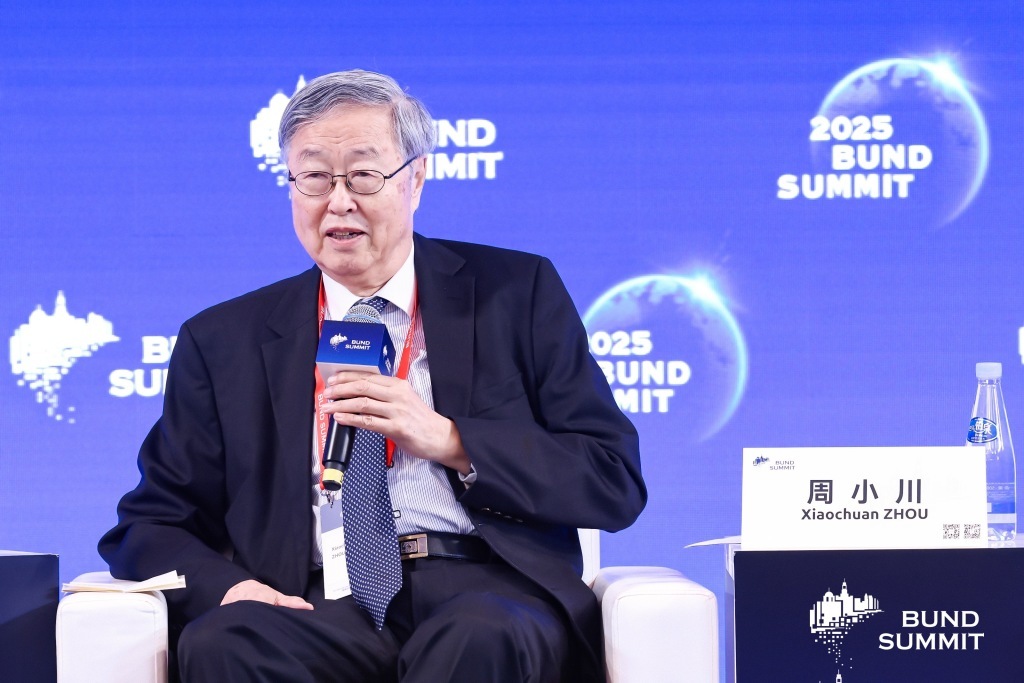
周小川:人工智能在银行业的支付、定价等方面发挥着重要作用
Feng Huang Wang· 2025-10-23 08:46
Core Insights - The former governor of the People's Bank of China, Zhou Xiaochuan, emphasized that AI represents a significant marginal change in the financial sector, building on historical advancements in information processing, IT, and automation [1] Group 1: AI's Impact on Banking - The banking system has accumulated vast amounts of data that can be utilized for machine learning and deep learning, transitioning from traditional models to intelligent reasoning models [3] - Unlike other industries, banks have primarily relied on big data analysis and reasoning models, leading to a unique development trajectory in the future [3] - The workforce in the banking sector is expected to be significantly impacted and reduced due to these advancements in AI [3] Group 2: Changing Customer Behavior - Customer interactions with banks are evolving, with more individuals becoming accustomed to engaging with machines rather than human representatives [3] - This shift is profound, as AI plays a crucial role in payments, pricing, risk management, and market promotion within the banking industry [3] Group 3: AI and Central Banking - Zhou noted that the influence of AI on central banking operations requires further observation and research [4] - Discussions at the Bank for International Settlements (BIS) indicated that while AI and machine learning can enhance macroeconomic policy responses, their overall importance remains limited [4] Group 4: Challenges of AI Implementation - The development of AI, particularly machine learning and deep learning, introduces challenges such as model opacity, making it difficult to explain outcomes [4] - There is a concern that AI models trained on high-frequency data may not align with the long-term stability required for financial robustness and macroeconomic control [4] Group 5: International Cooperation on AI - Current international cooperation efforts related to AI are deemed limited, with a focus on enhancing AI infrastructure in the financial sector being a potential area for collaboration [5]