通用人工智能

Search documents
创新开放聚动能 扬帆蓄力启新程
Hai Nan Ri Bao· 2025-12-20 23:40
Group 1 - The official launch of the Hainan Free Trade Port's full island closure marks a significant milestone, initiating a new phase of reform and opening up, which is expected to inject continuous innovative momentum and vitality into the high-quality development of the free trade port [1][2] - The core engine of institutional innovation is emphasized as essential for the high-quality development of the Hainan Free Trade Port, with a focus on utilizing policy advantages in the service industry market [2][3] - The full island closure is seen as a pivotal event for both Hainan's development and China's commitment to expanding high-level opening up and constructing a high-level socialist market economy [2][3] Group 2 - Hainan aims to optimize the business environment by implementing a policy system that aligns with a high-level free trade port, focusing on intermediary management, corporate compliance guidance, and personal credit management [4] - The "Million Talents Prosper Hainan" action plan will be initiated to attract and retain high-level talents, supporting the construction of the free trade port with a strong talent and intellectual foundation [5] - The tax department will focus on implementing tax and fee preferential policies tailored to the characteristics of the free trade port, enhancing cross-border tax services, and ensuring a fair and transparent tax environment [5][6] Group 3 - The full island closure is expected to enhance the international competitiveness of Hainan's products by expanding market scale, reducing costs, and introducing high-quality raw materials and advanced technologies [3] - The digital governance system will be developed to support the construction of the free trade port, with a focus on upgrading common capabilities and enhancing digital services for enterprises [6] - The closure is anticipated to stimulate business entities to take action in a more open trade and investment environment, with companies like China Seed Group expanding their international influence through the free trade port policies [7]
中国大模型产业从狂热投入迈入可持续发展新阶段
Xin Lang Cai Jing· 2025-12-20 14:59
(来源:千龙网) 凭借领先的技术与商业模式,智谱已连续三年营收翻倍。招股书显示,2022年、2023年、2024年收入分 别为5740万、1.245亿、3.124亿,年复合增长率达到130%。2025年上半年收入为1.9亿。 收入高速增长,毛利率也持续保持在50%以上。招股书显示,2022年、2023年、2024年毛利率分别是 54.6%、64.6%、56.3%,2025年上半年毛利率为50%。 原创大模型技术持续领先,智谱凭借收入规模最大、高增长、高毛利率等领先性优势,自成立以来,受 到了国资、产业资本、VC/PE等各类众多知名投资机构认可。在IPO之前,智谱已完成了8轮融资,融资 规模超83亿元。 行业人士指出,一方面智谱为全球投资者提供了分享中国AI基础层技术红利的纯正标的,有望重塑中 国科技股在资本市场的估值逻辑;另一方面,这也预示着中国大模型产业将从早期的狂热投入,正式进 入以技术实力、营收能力与可持续商业模式为核心考量的新发展阶段。 中国最大的独立大模型厂商,北京智谱华章科技股份有限公司,已率先通过港交所聆讯并正式递交了招 股书,有望以"全球大模型第一股"身份在港交所挂牌上市。这标志着资本市场将首 ...
美光科技(MU.US)HBM堆叠式内存市场规模出现爆炸式增长 预计2026年服务器强劲需求将持续
智通财经网· 2025-12-20 07:56
Core Insights - The total addressable market (TAM) for HBM memory is expected to grow significantly, with Micron's forecast indicating a potential market size of $100 billion by 2028, up from previous estimates of 2030 [3][5] - Micron's CEO highlighted the increasing demand for high-performance memory driven by investments in AI data centers, with server sales growth projected to reach nearly 10% by 2025 [1][2] - The company plans to increase capital expenditures by $2 billion to $20 billion in fiscal 2026 to meet the rising demand for DRAM and HBM memory [2][3] Market Growth and Projections - The DRAM industry is expected to see a bit shipment growth of around 20% in 2025, while NAND shipments are projected to grow by over 10% [2] - Micron's HBM revenue is anticipated to reach approximately $950 billion over the next six years if it maintains a 25% market share [4][5] - The overall HBM revenue could reach $5.55 trillion over the next six years, significantly higher than previous forecasts [5] Financial Performance - In the first quarter of fiscal 2026, Micron reported revenues of $13.64 billion, a year-over-year increase of 56.7%, with operating income rising 2.8 times [8][12] - The data center business generated $7.66 billion in revenue, reflecting a 55.1% growth, with operating income nearly doubling compared to the previous year [12][14] - Micron's NAND flash memory revenue reached $2.74 billion, a 22.4% increase, while DRAM sales amounted to $10.81 billion, up 68.9% year-over-year [10][12] Strategic Developments - Micron is accelerating the construction of new wafer fabrication facilities, with the first plant in Idaho expected to begin production by mid-2027 [2][3] - The company is also expanding its HBM packaging facility in Singapore, set to start operations in 2027, to enhance HBM supply [2][3] - The strategic positioning of Micron in the HBM market, coupled with its technological advantages, is expected to solidify its market leadership [12]


未来领跑者|智谱向港交所递交招股书 北京即将跑出大模型第一股
Xin Jing Bao· 2025-12-19 15:49
智谱是中国最早研发大模型的企业,也是国产大模型的领军企业。截至今年6月,公司研发人员占比 74%,核心科研团队和学术顾问团队已发表500篇顶尖高影响力论文,累计引用次数超过58000余次。除 了汇聚了当前国内人工智能顶级人才外,公司极重视研发投入,招股书显示,2022年、2023年、2024年 公司研发投入分别为8440万、5.289亿、21.954亿,2025年上半年研发投入为15.947亿,累计研发投入约 44亿。 巨大的研发投入支撑其技术快速迭代,GLM系列模型每3-6个月完成一次基座迭代。其最新模型在Code Arena竞技场上代码能力与全球顶级模型并列第一。尤其是模型的Coding能力取得关键突破,在全球公 认百万用户盲测的大模型竞技场Code Arena上,GLM与Anthropic、OpenAI的模型并列Coding全球第 一,超越海外闭源模型谷歌Gemini和xai的Grok,今年6月被OpenAI列为全球主要竞争对手。 智谱商业化起步较早,目前已成为中国收入体量最大的独立大模型厂商,收入主要来自于大模型收入。 公司采用MaaS模式,即通过API调用向开发者和企业输出智能能力。在全球大模型超市 ...

智谱递表,“全球大模型第一股”来了!
Ge Long Hui· 2025-12-19 14:19
中国最大的独立大模型厂商,北京智谱华章科技股份有限公司(以下简称"智谱"),已率先通过港交所 聆讯并正式递交了招股书,有望以"全球大模型第一股"身份在港交所挂牌上市。这标志着资本市场将首 次迎来一家以AGI(通用人工智能)基座模型为核心业务的上市公司。 成立于2019年智谱,由清华大学技术成果转化而来,定位为专注于基础模型研发的独立厂商。凭借原创 的GLM(General Language Model)预训练架构,构建了覆盖语言、代码、多模态及智能体的全栈模型 矩阵,模型适配了40余款国产芯片,是国内罕有在技术路线上与全球顶尖水平保持同步的厂商。 凭借领先的技术与商业模式,智谱已连续三年营收翻倍。招股书显示,2022年、2023年、2024年收入分 别为5740万、1.245亿、3.124亿,年复合增长率达到130%。2025年上半年收入为1.9亿。 收入高速增长,毛利率也持续保持在50%以上。招股书显示,2022年、2023年、2024年毛利率分别是 54.6%、64.6%、56.3%,2025年上半年毛利率为50%。 原创大模型技术持续领先,智谱凭借收入规模最大、高增长、高毛利率等领先性优势,自成立以来, ...
新股消息 | 智谱递表,“全球大模型第一股”来了!
智通财经网· 2025-12-19 14:16
智通财经APP获悉,中国最大的独立大模型厂商,北京智谱华章科技股份有限公司(以下简称"智谱"), 已率先通过港交所聆讯并正式递交了招股书,有望以"全球大模型第一股"身份在港交所挂牌上市。这标 志着资本市场将首次迎来一家以AGI(通用人工智能)基座模型为核心业务的上市公司。 原创大模型技术持续领先,智谱凭借收入规模最大、高增长、高毛利率等领先性优势,自成立以来,受 到了国资、产业资本、VC/PE等各类众多知名投资机构认可。在IPO之前,智谱已完成了8轮融资,融资 规模超83亿元。 作为"大模型六小龙"中首家启动IPO的企业,智谱赴港冲刺"全球大模型第一股",不仅是企业自身的里 程碑,更折射出中国AI大模型行业从"技术竞赛"到"资本验证"的转折。行业人士指出,一方面智谱为全 球投资者提供了分享中国AI基础层技术红利的纯正标的,有望重塑中国科技股在资本市场的估值逻 辑;另一方面,这也预示着中国大模型产业将从早期的狂热投入,正式进入以技术实力、营收能力与可 持续商业模式为核心考量的新发展阶段。 凭借领先的技术与商业模式,智谱已连续三年营收翻倍。招股书显示,2022年、2023年、2024年收入分 别为5740万、1. ...
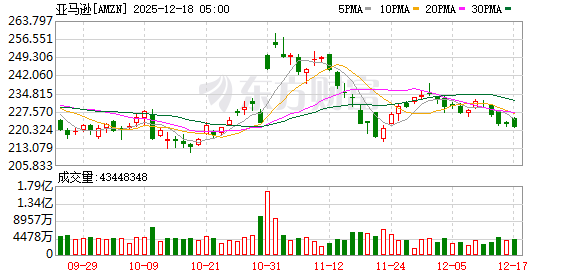
亚马逊重组AI部门
Cai Jing Wang· 2025-12-18 03:07
亚马逊于本周三证实,负责通用人工智能(AGI)业务的高管Rohit Prasad将于今年年底离职。亚马逊首席 执行官安迪贾西在一篇博客文章中表示,作为人事调整的配套举措,公司将对通用人工智能部门进行重 组,并入规模更庞大的新部门。该新部门还将涵盖芯片研发团队与量子计算团队,由亚马逊云计算部门 资深副总裁、已为公司效力27年的Peter DeSantis出任负责人。(新浪财经 ...

带“崩了”!科技股全线大跌!发生了什么?
天天基金网· 2025-12-18 01:09
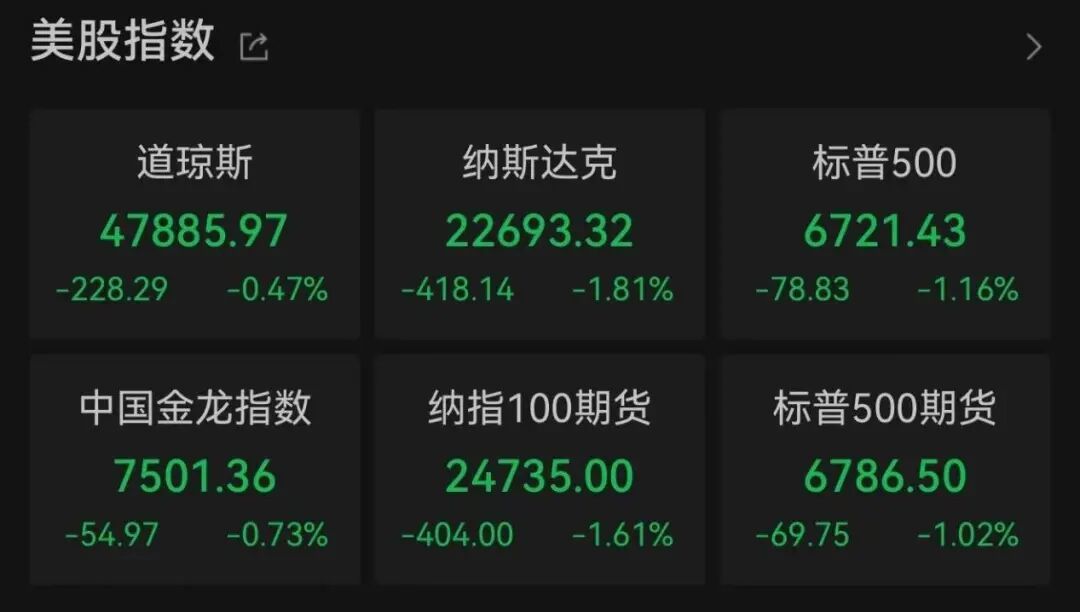
Market Overview - The U.S. stock market saw all three major indices close lower, with the Nasdaq dropping nearly 2% [2][4] - The Dow Jones index fell by 0.47%, the S&P 500 decreased by 1.16%, and the Nasdaq declined by 1.81% [4][5] Technology Sector Performance - Oracle's stock dropped over 5% after a major investor withdrew from a $10 billion data center project, raising concerns about the company's debt levels and spending [9][8] - The "Big Seven" tech stocks in the U.S. all experienced declines, with Tesla down 4.62%, Nvidia down 3.81%, and Google down 3.14% [11] AI and Tech Developments - Google is enhancing its TPU chips to better support PyTorch, aiming to challenge Nvidia's dominance in the AI chip market [12] - Amazon announced a restructuring of its AI-related project teams, integrating its general AI team with its chip development and quantum computing research [13] Chinese Market Impact - The Nasdaq Golden Dragon China Index fell by 0.73%, with major Chinese stocks like Alibaba and JD.com also declining [16][15] - Alibaba's stock decreased by 1.49%, while Baidu saw a slight increase of 0.16% [17] IPO Activity - Medline's stock surged 41.38% on its first trading day, with an IPO price of $29 and raising $6.26 billion [18][19] Commodity Market Movements - International gold prices and crude oil rebounded, with WTI crude oil index rising nearly 3% after reaching a yearly low [21][23]

带“崩了”!科技股全线大跌,金价大涨
Zhong Guo Ji Jin Bao· 2025-12-18 00:37
Market Overview - The three major U.S. stock indices closed lower, with the Nasdaq down nearly 2% [1][2] - The Dow Jones index fell by 0.47%, the S&P 500 dropped by 1.16%, and the Nasdaq decreased by 1.81% [2][3] Technology Sector - Oracle's stock fell over 5% after a major investor withdrew from a $10 billion data center project, raising concerns about the company's debt levels and spending [6] - The "Big Seven" tech stocks in the U.S. all experienced declines, with Tesla down 4.62%, Nvidia down 3.81%, and Google down 3.14% [8][10] - Google is collaborating with Meta to enhance TPU support for PyTorch, aiming to challenge Nvidia's dominance in the AI chip market [8] - Amazon announced a restructuring of its AI-related project teams, integrating its general AI team with its chip development and quantum computing research [9] Chinese Stocks - The Nasdaq Golden Dragon China Index fell by 0.73%, with major Chinese stocks like Alibaba and JD.com also declining [11][12] IPO Activity - Medline's stock surged 41.38% on its first trading day, closing at $41 per share after an IPO price of $29, raising $6.26 billion [14] Commodity Market - International gold prices and crude oil rebounded, with WTI crude oil index rising nearly 3% after reaching a yearly low [16][18]
亚马逊调整人工智能团队
Di Yi Cai Jing· 2025-12-17 23:22
Group 1 - Amazon announced that Rohit Prasad, the executive responsible for its artificial general intelligence (AGI) business, will leave the company by the end of the year [2] - CEO Andy Jassy appointed Peter DeSantis, a senior vice president of the cloud business with 27 years of experience, to lead the restructured AI department [2] - The restructured AI department will integrate Amazon's AGI, custom chip development, and quantum computing teams, as the company believes that the technology has reached a turning point [2]