NAND闪存芯片

Search documents
行业周报:美光业绩超预期+英伟达GTC2026召开,看好算力和存储持续高景气-20260322
KAIYUAN SECURITIES· 2026-03-22 15:21
Investment Rating - The industry investment rating is "Overweight" (maintained) [1] Core Views - The electronic industry index has experienced a decline of 3.77% due to escalating conflicts in the Middle East, with specific sectors like semiconductors and consumer electronics also facing downturns [3] - Micron's Q2 FY2026 revenue reached a record $23.9 billion, showing a 75% quarter-over-quarter increase and a 196% year-over-year increase, with a gross margin of 75% [5] - The demand for AI computing power is expected to surge, with Nvidia planning to build a Groq 3 LPX rack that includes 256 Groq 3 LPUs, providing significant inference acceleration bandwidth [4] Summary by Sections Industry Performance - The electronic industry index fell by 3.77%, with semiconductors down 2.65% and consumer electronics down 5.11% during the week of March 16-22, 2026 [3] Company Performance - Micron's total revenue for Q2 FY2026 was $23.9 billion, with a projected record revenue of $33.5 billion for Q3 FY2026 and a gross margin of approximately 81% [5] - The company is expanding production to meet demand, with capital expenditures expected to be around $7 billion for Q3 FY2026 [5] Price Trends - Major passive component manufacturer Murata has announced price increases of 15%-35% for AI server and high-end automotive-grade MLCC products, indicating a new upward cycle in the global passive components market [5] Beneficiary Stocks - Recommended stocks benefiting from the current trends include Huadian Technology, Shenghong Technology, Zhaoyi Innovation, Huahong Semiconductor, Jiangfeng Electronics, Tuojing Technology, Weicai Technology, and Huafeng Technology [6]
供给荒叠加涨价潮,资金借道ETF抢筹存储芯片
第一财经· 2026-03-18 12:25
Core Viewpoint - The storage chip sector in A-shares has experienced a collective surge due to price hikes announced by domestic cloud computing giants and potential exacerbation of the "storage shortage" from Samsung's strike [3][4]. Group 1: Market Performance - As of March 18, 2026, stocks such as Fudan Microelectronics (688385.SH) and Guoke Micro (300672.SZ) hit the daily limit, while Baiwei Storage (688525.SH) and Demingli (001309.SZ) rose by 9.46% and 5.65% respectively, reaching historical highs [3]. - The China Securities Chip Industry Index increased by 2.56%, and the Shanghai Stock Exchange Sci-Tech Innovation Board Chip Design Theme Index rose by 2.17% [3]. - The total trading volume of 27 chip-related ETFs exceeded 5.1 billion yuan, with seven ETFs surpassing 100 million yuan in trading volume [3]. Group 2: Supply Chain Dynamics - Samsung Electronics, holding a 43% market share in the storage chip market and 60% in DRAM products, is facing potential production disruptions due to a planned strike from May 21 to June 7, 2026 [4]. - The fluctuation in Samsung's production capacity is expected to impact the supply chain rhythm for consumer electronics, servers, and AI hardware, particularly affecting DRAM and NAND flash chip production [4]. Group 3: Investment Trends - In the past week, 27 chip ETFs saw a net inflow of over 1.3 billion yuan, with most ETFs experiencing net inflows, except for one [4]. - Year-to-date, the total net inflow for these ETFs reached 1.94 billion yuan, with the E Fund Sci-Tech Innovation Board Chip ETF leading with a net inflow of 2.06 billion yuan [5]. Group 4: Industry Outlook - The storage chip industry is entering a super cycle driven by AI, with expectations of sustained price increases as domestic manufacturers follow suit with price hikes [8]. - The demand for HBM (High Bandwidth Memory) is particularly acute, with predictions that global AI server chip sales will reach 169 billion dollars in 2026, a 55% year-on-year increase [8]. - UBS forecasts a structural reset in the net asset return rate (ROE) for the storage industry, predicting an average ROE of 36% for major players like Samsung, SK Hynix, and Micron from 2026 to 2030 [9].





三星与英伟达加速研发下一代NAND闪存!科创芯片设计ETF天弘(589070)上周五净流入近3000万元同标的第一
Sou Hu Cai Jing· 2026-03-16 01:26
Core Insights - The Tianhong Sci-Tech Chip Design ETF (589070) has shown active trading with a turnover of 10.58% and a transaction volume of 63.14 million yuan as of March 13, 2026, despite the underlying index declining by 1.90% [1] - The ETF has reached a one-month high in both scale and shares, with a net inflow of 29.4 million yuan on the latest trading day, leading the category in net inflows [1] - The ETF has attracted a total of 55.6487 million yuan in net inflows over the past three days, indicating strong investor interest [1] Product Highlights - The Tianhong Sci-Tech Chip Design ETF closely tracks the Shanghai Stock Exchange Sci-Tech Board Chip Design Theme Index, which includes listed companies involved in chip design to reflect the overall performance of this sector [2] Hot Events - Samsung Electronics is collaborating with NVIDIA to accelerate the development of the next-generation NAND flash memory chips, utilizing a new model that significantly enhances performance analysis speed [2] Institutional Views - Huayuan Securities has released a report indicating that the domestic AI large model is entering a rapid development phase, which may lead to growth in the domestic computing power market and increased penetration rates, supported by national strategic guidance and policy backing [2]

消息称三星与英伟达加速研发下一代NAND闪存
Xin Lang Cai Jing· 2026-03-12 23:45
Core Viewpoint - Samsung Electronics is collaborating with NVIDIA to accelerate the development of next-generation NAND flash memory chips, focusing on ferroelectric NAND technology [1] Group 1: Collaboration and Research - Samsung is working with NVIDIA and Georgia Tech on a joint research team to develop a "Physics Informed Neural Operator" model [1] - This model can analyze the performance of ferroelectric-based NAND devices at a speed over 10,000 times faster than existing models [1] Group 2: Commercialization Efforts - Based on the research findings, Samsung is pursuing the development and commercialization of ferroelectric NAND technology in partnership with NVIDIA [1]
重磅!苹果将采用国产存储芯片!
国芯网· 2026-02-27 12:59
Core Viewpoint - Apple is advancing its supply chain diversification strategy by considering partnerships with Chinese storage chip manufacturers for its upcoming iPhone 18 series and other products, marking a significant shift in its supply chain dynamics [2][4]. Group 1: Supply Chain Diversification - Apple is planning to collaborate with two Chinese storage companies to provide memory and storage chips for its iPhone 18 series, MacBook, and desktop Mac products, indicating a potential entry of domestic storage chips into Apple's supply chain [4]. - The decision to engage with Chinese manufacturers is driven by a combination of industry conditions and Apple's own needs, as the company has historically relied on suppliers like Kioxia, Samsung, and SK Hynix, which dominate the memory chip supply [4]. - The global memory chip industry is currently facing supply tightness and significant price increases, with Kioxia reportedly doubling its NAND chip prices and requiring quarterly renegotiations, putting pressure on Apple's profit margins and highlighting the risks of a single-source supply chain [4]. Group 2: Strategic Response - To mitigate supply risks and cost pressures while reducing dependence on Japanese and Korean suppliers, Apple has initiated a supply chain optimization plan, evaluating the inclusion of domestic DRAM and NAND flash memory chips into its core supply system [4]. - This strategic move is seen as a critical response to the changing industry landscape, allowing Apple to leverage the technological capabilities and cost advantages of domestic manufacturers [4]. - If Apple successfully integrates Chinese storage chips into its products, it would represent a milestone event for the Chinese semiconductor industry, bringing substantial benefits [5].


每日收评三大指数震荡分化涨跌不一,算力硬件股卷土重来,周期股分化加剧
Sou Hu Cai Jing· 2026-02-26 10:58
Market Overview - The market showed mixed performance with the three major indices fluctuating, where the ChiNext index fell over 1% at one point. The total trading volume in the Shanghai and Shenzhen markets reached 2.54 trillion yuan, an increase of 759 billion yuan from the previous trading day [1] - The overall market sentiment was weak, with over 2800 stocks declining. However, sectors such as computing hardware, power generation, and gas turbine concepts saw significant gains, with several stocks hitting the daily limit [1][2] Sector Performance - The computing hardware sector performed strongly, led by CPO and PCB stocks. Notable gainers included Deep South Circuit, Dazhu Laser, and Guanghe Technology, all reaching their daily limit [2] - Liquid cooling servers also saw robust performance, with stocks like High Cloud and Chuanrun reaching their daily limit. This was supported by Nvidia's recent showcase of the next-generation Vera Rubin computing system, which features advanced cooling technology [2][3] - The power sector showed strength, with Ganneng Co. and Huayin Power hitting their daily limit. Environmental stocks also rallied towards the end of the trading session, with Zhongke Environmental Protection and Qidi Environment reaching their daily limit [1][4] Individual Stock Highlights - Nvidia reported a fourth-quarter revenue of $68.1 billion, a 73% year-over-year increase, with data center revenue reaching $62.3 billion, exceeding market expectations. This strong performance alleviated concerns regarding the growth potential of AI hardware companies in the A-share market [3] - The NAND flash memory market continues to experience shortages and price increases, prompting major manufacturers like Phison to require prepayments from customers to secure stable supply [11] Future Market Analysis - The market is expected to continue its oscillation, with the potential for short-term rebounds. However, the indices are approaching previous highs, which may lead to selling pressure from trapped investors. The overall market is characterized by a lack of momentum for price chasing, with a focus on sector rotation [8]
从“讲故事”到“交作业”:AI狂热下谁在裸泳谁在筑墙?
2 1 Shi Ji Jing Ji Bao Dao· 2026-02-25 13:17
Group 1 - The market is experiencing increased volatility driven by alternating enthusiasm and fear surrounding AI, with a recent rebound in U.S. stocks led by technology shares, overshadowing concerns about the disruptive potential of AI [1][2] - SanDisk's stock faced a significant drop of over 8% due to short-selling by Citron Research, which cited cyclical pressures in the storage market, intensified competition from Samsung, and the exit of long-term investors as reasons for their bearish stance [1][3] - The AI hype is returning to a more rational state, with the Nasdaq index down 1.63% year-to-date, contrasting sharply with the previous three years of over 20% annual gains [1] Group 2 - The recent fluctuations in the market reflect a re-evaluation of two curves: the new demand curve driven by AI and the replacement curve for old business models, with software stocks experiencing a significant loss in market value due to premature fears of AI replacement [2] - The rebound in software stocks indicates that smart capital recognizes the previous overreaction in valuations rather than a sudden deterioration in fundamentals [2] Group 3 - SanDisk's recent decline is not representative of the current AI storage industry, as its focus on NAND flash memory is more aligned with consumer electronics, while the real demand for AI capabilities is driven by HBM and high-end DRAM [3] - The market is currently in a "dual high" phase, characterized by both high valuations and high growth, leading to increased volatility and sensitivity to minor data changes [3] Group 4 - The tech giants are transitioning from light-asset models to capital-intensive, cash flow-demanding enterprises due to the AI wave, with significant capital expenditures transforming their business models into utility-like structures [5][6] - The market's perception of tech giants is shifting, with a focus on their ability to convert computing power into sustainable revenue streams, while companies failing to optimize their GPU utilization may be treated as heavy-asset cyclical stocks [6] Group 5 - The current market faces potential risks, including tight pricing in the U.S. stock market, with the S&P 500's forward valuation around 22 times, making it sensitive to changes in interest rates, earnings, and policy [8] - The overall delinquency rate for U.S. households has risen to 4.8%, indicating pressure from credit card and student loans, while banks are becoming more cautious in lending, particularly in real estate development [8] Group 6 - The private equity sector is aggressively lending to traditional software companies and mid-sized enterprises, creating a risk of defaults if AI disrupts their business models, which could lead to significant cash flow issues [9] - The market is becoming more selective, with a focus on how companies can achieve growth rather than just the amount of growth, indicating a shift in investor sentiment towards the application of AI across various industries [10] Group 7 - The U.S. stock market is expected to continue its upward momentum, but with a "K-shaped melt-up" dynamic, where passive investment flows disproportionately benefit a few large tech companies, creating a facade of prosperity while smaller firms struggle [11] - The disparity in performance between large tech giants and smaller firms highlights the risks associated with a concentrated market, where the absence of a technological moat can lead to significant declines in stock prices for those companies facing AI disruption [11]
存储芯片,势头不减
半导体行业观察· 2026-02-10 01:14
Group 1 - The article highlights a significant disparity in stock market performance between memory chip manufacturers and companies reliant on memory chips, with memory producers seeing stock prices soar while others face declines due to profit concerns [2][5] - The Bloomberg Global Consumer Electronics Manufacturers Index has dropped by 12% since the end of September, while a basket of memory manufacturers, including Samsung Electronics, has seen stock prices rise by over 160% [2] - Fidelity International's fund manager Vivian Pai notes that the current valuations are largely based on the expectation that supply volatility will normalize within 1 to 2 quarters, but there are concerns that supply tightness may persist until the end of the year [2] Group 2 - The memory chip shortage and price increases have become a frequent topic in corporate earnings reports, with Qualcomm's stock dropping over 8% due to memory supply constraints limiting smartphone production [5] - Nintendo's stock experienced its largest drop in 18 months, falling 18%, as the company warned of profit pressure from memory shortages [5] - Logitech International's stock has declined about 30% from its November peak due to rising chip prices affecting PC demand, while Chinese electric vehicle and smartphone manufacturers like BYD and Xiaomi have also seen stock performance weaken due to chip shortage concerns [5] Group 3 - Concerns about demand and profitability are mounting, particularly as major U.S. data center operators increase spending on AI infrastructure, which is shifting capacity from traditional DRAM to high-bandwidth memory [6] - This shift has led to what some are calling a "super cycle," disrupting the typical boom-bust cycle of memory supply and demand [6] Group 4 - DRAM spot prices have surged over 600% in recent months, despite weak demand for end products like smartphones and automobiles [9] - The rise of AI is creating new demand for NAND flash chips and other storage products, further driving up costs in these areas [9] - Memory chip manufacturers have emerged as leaders in the tech sector, with SK Hynix's stock rising over 150% since the end of September, while Kioxia and Nanya Technology have seen stock increases of about 280% [9]
日媒:四大PC厂商首次考虑采购中国内存芯片
Sou Hu Cai Jing· 2026-02-05 09:31
Core Viewpoint - Major PC manufacturers are considering sourcing memory chips from Chinese manufacturer Changxin Storage due to global supply constraints and rising costs in the tech industry [2][3]. Group 1: Manufacturer Actions - HP has begun certifying products from Changxin Storage to prepare for alternative supply options, monitoring the memory chip supply situation until mid-2026 [2]. - Dell is also in the process of certifying Changxin Storage's DRAM products, driven by concerns over sustained price increases throughout 2026 [3]. - Acer is willing to use memory chips from Chinese manufacturers if their mainland partners procure them, as they aim to reduce costs [3]. - ASUS has requested its mainland production partners to assist in sourcing memory chips for certain laptop projects [3]. Group 2: Market Context - The memory chip shortage has created an opportunity for Chinese electronics manufacturers to play a more significant role in the supply chain, with some brands asking their partners to help expand procurement sources [3]. - Major memory chip producers like Micron, Samsung, and SK Hynix prioritize capacity for AI giants such as Nvidia, Google, and Amazon, leaving the consumer electronics market in a challenging position [3]. Group 3: Importance of Memory Chips - DRAM and NAND flash memory chips are essential components for all types of electronic devices, with DRAM playing a critical role in system performance through fast data access, while NAND serves as the primary storage for laptops and computers [4].


飙涨1700%,又一“AI宠儿”诞生
3 6 Ke· 2026-02-03 08:11
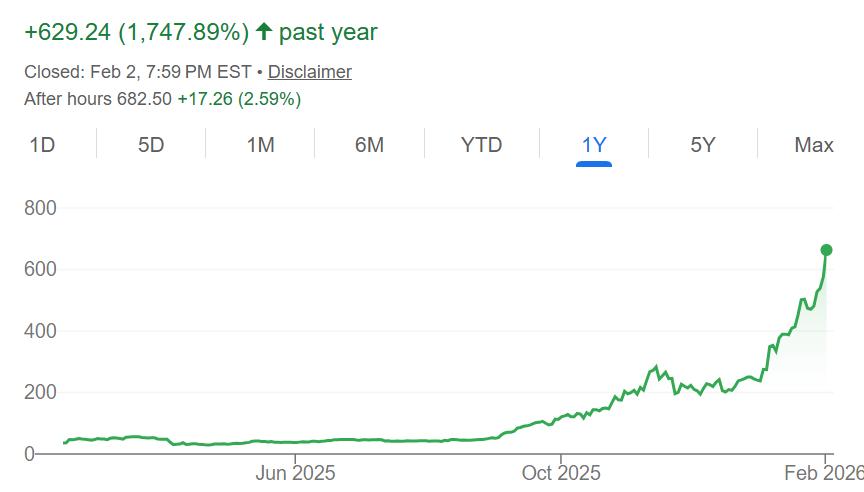
Core Viewpoint - The strong performance of NAND giant SanDisk, which saw a significant stock price increase following impressive earnings and outlook reports, has attracted considerable attention from Wall Street analysts, leading to substantial upward revisions in future earnings and stock price expectations. Group 1: Stock Performance - SanDisk's stock surged by 15.44%, making it the top performer in the market amid ongoing panic from precious metal sell-offs [1] - Over the past year, SanDisk's stock has skyrocketed by 1747.89% [4] Group 2: Earnings Report - SanDisk reported Q2 revenue of $3.03 billion, a 31% quarter-over-quarter increase, exceeding market expectations of $2.64 billion [4] - Adjusted earnings per share (EPS) reached $6.20, nearly double the market expectation of $3.33 [4] - Net profit under GAAP soared to $803 million, a 672% increase from $104 million year-over-year [4] - Gross margin improved to 51.1%, reflecting better pricing and a favorable product mix [4] - Free cash flow increased by over 1000% year-over-year [4] Group 3: Future Guidance - For Q3, SanDisk expects revenue between $4.4 billion and $4.8 billion, with non-GAAP EPS projected at $12 to $14, significantly above market expectations [4] - Non-GAAP gross margin is anticipated to rise further to 65% to 67%, indicating strong pricing power and cost efficiency [4] Group 4: Analyst Upgrades - Analysts have raised their price targets for SanDisk significantly, with Bernstein setting a target of $1,000, implying over 50% upside from the current price of $665 [1][4] - Goldman Sachs raised its target from $320 to $700, while other firms like Barclays and Citigroup set targets at $750 [5][10] - The optimistic outlook is supported by expectations of a structural increase in NAND flash memory prices and a projected profit margin of 75% by 2027 [6][12] Group 5: Market Dynamics - The demand for data center storage is expected to grow by over 60% by 2026, contributing to sustained pricing power for SanDisk [5] - Supply constraints in the NAND flash market are anticipated to persist, further enhancing profit margins [10] - SanDisk's leadership in the enterprise solid-state drive (eSSD) market is expected to strengthen, with new certifications from major data center clients [10]