低空经济

Search documents
寻重大工程“足迹”,挖产业转型“宝藏”
Zhong Guo Neng Yuan Wang· 2026-01-04 02:01
Core Viewpoint - The construction industry is expected to experience a shift in investment dynamics due to policy stimuli and emerging themes, with private enterprises showing significant returns compared to state-owned and central enterprises [1][2]. Group 1: Market Performance - As of November 30, 2025, the SW Construction Decoration Index increased by 8.88%, while the CSI 300 Index rose by 18.19%, indicating that the overall performance of the construction sector lagged behind the broader market [2]. - Private enterprises achieved a return of 35.6%, while local state-owned enterprises had a return of 14.96%, closely aligning with the CSI 300 Index. In contrast, central state-owned enterprises faced a significant decline with a return of -4.51% [2]. Group 2: Future Investment Outlook - The first year of the 14th Five-Year Plan is anticipated to open an investment uptrend, as historical patterns suggest that the initial years of a five-year plan typically see heightened investment intensity [2]. - Major planning and project packages are expected to be implemented in 2026, potentially leading to a new cycle characterized by "high initial growth followed by stabilization" [2]. Group 3: Value Investment Themes - Three main value investment themes are identified: 1. Key projects such as the Pinglu/Zhejiang-Jiangxi-Guangdong Canal (total investment approximately 621.1 billion), the Tibet Railway (expected total investment over 700 billion), and the Yaxi Hydropower Project (total investment around 1.2 trillion) are projected to generate long-term orders [3]. 2. High dividend yields are emphasized as regulatory measures strengthen dividend constraints, enhancing the investment appeal of low-valuation, high-dividend construction firms [3]. 3. Growth transformation opportunities in new sectors like clean rooms, AI computing infrastructure, and low-altitude economy are expected to surge, with cash-rich private enterprises likely to pursue mergers and acquisitions for rapid entry [3]. Group 4: Stock Recommendations - Specific stocks to watch include Sichuan Road and Bridge (600039), Jianghe Group (601886), Honglu Steel Structure (002541), Jinggong Steel Structure (600496), and Pudong Construction (600284) [3].


低空稳步推进,工程机械发展向好
Zhong Guo Neng Yuan Wang· 2026-01-04 01:55
以下为研究报告摘要: 报告要点: 周度行情回顾 国元证券近日发布机械行业周报:2025年12月21日至12月26日,上证综指上涨1.88%,深证成指上涨 3.53%,创业板指上涨3.90%。其中申万机械设备上涨4.50%,相较沪深300指数跑赢2.55pct,在31个申 万一级行业中排名第6。细分子行业来看,申万通用设备/专用设备/轨交设备Ⅱ/工程机械/自动化设备分 别涨5.11%/5.30%/1.64%/1.24%/5.85%。 低空经济板块:本周,低空经济在顶层制度构建与发展实践层面均迎来标志性进展。国家发展改革委正 式印发《低空经济及其核心产业统计分类(试行)》,首次以官方统计标准形式明确了低空经济作为"依 托低空航空活动带动相关产业创新和场景应用形成的综合性经济形态",并将其划分为4大类、23中类、 65小类,为产业测量、政策制定与区域发展提供了统一的认知框架与统计基石。与此同时,央视《新闻 联播》聚焦"场景开放筑平台",报道指出低空等新场景正成为激活新质生产力的关键,并以景德镇低空 文旅航线为例,展示了场景开放如何驱动体验升级与产业扩容。统计体系的建立与发展实践的深化,共 同标志着低空经济正从战略构 ...
机械设备行业成长周期轮动,主题复苏并驱
Zhong Guo Neng Yuan Wang· 2026-01-04 01:55
Group 1 - The core viewpoint of the report emphasizes that the engineering machinery industry is expected to see clear investment opportunities in 2026, driven by stable growth in exports, increased policy support, and large engineering projects acting as new growth engines [1][3] - The humanoid robot sector is highlighted as a key area for investment, focusing on complete machines, critical components, and core modules, with specific companies identified for their production capabilities and order validation [1][3] - The tool industry is recognized as a foundational support sector for machinery manufacturing, with ongoing policy and demand catalysts, presenting clear layout opportunities despite some downstream demand disruptions [1][3] Group 2 - Investment recommendations include companies in the assembly sector such as Joyson Electronics, Sanhua Intelligent Control, and Top Group, as well as hydraulic and reducer manufacturers like Hengli Hydraulic and Green Harmonic [2] - The engineering machinery sector is expected to maintain upward momentum, with recommendations to focus on companies with strong overseas capabilities and comprehensive product lines, such as SANY Heavy Industry and XCMG [3] - The low-altitude economy in China is projected to expand rapidly, with an expected market size exceeding one trillion by 2026, driven by advancements in drone and eVTOL technologies, and significant infrastructure developments [4][5]
交通运输部:推动交通运输公共数据与企业数据融合应用 支撑“人工智能+交通运输”应用
智通财经网· 2026-01-04 01:54
Core Viewpoint - The Ministry of Transport has issued implementation opinions to accelerate the development and utilization of public data resources in the transportation sector, aiming to enhance industry governance and service levels while supporting the growth of emerging industries such as artificial intelligence and smart driving [1][3]. Group 1: Overall Requirements - The initiative is guided by Xi Jinping's thoughts and aims to promote the compliant and efficient circulation of public data in transportation, breaking down institutional and technical barriers to enhance data resource development [4]. - By 2030, the goal is to establish a mature management and technical system for public data resources, significantly improving data integration and innovation application levels [4]. Group 2: Establishing a High-Quality Data Resource System - A comprehensive public data resource directory will be developed, covering various transportation modes and ensuring dynamic updates [5]. - The collection and aggregation of public data will be enhanced through digital transformation and IoT technologies, ensuring efficient data gathering at the national level [5]. - Efforts will be made to improve public data quality through source governance and multi-source verification [5]. Group 3: Strengthening Public Data Resource Supply - The sharing of government data will be deepened, with revised management measures to enhance data sharing mechanisms [6]. - Public data will be opened in an orderly manner, prioritizing data that is closely related to public welfare and social needs [6][7]. Group 4: Promoting Data Application Innovation - The initiative will enhance data collaboration across sectors, focusing on areas such as infrastructure safety and logistics efficiency [8]. - Cross-industry data integration will be promoted to support traditional industry upgrades and new emerging sectors [8]. Group 5: Strengthening Data Security Assurance - A comprehensive data security management system will be established to identify and assess risks associated with public data utilization [10]. - The capability for data security will be enhanced through various technical measures to prevent privacy breaches and misuse [10]. Group 6: Strengthening Policy Support - Increased financial support will be coordinated for data infrastructure and security capabilities, encouraging social capital participation [11]. - Policies and standards for data management will be improved to ensure effective governance and resource utilization [11][12]. Group 7: Organizational Implementation - The Ministry of Transport will lead the efforts, ensuring collaboration among various departments to enhance the effectiveness of public data resource development [12].
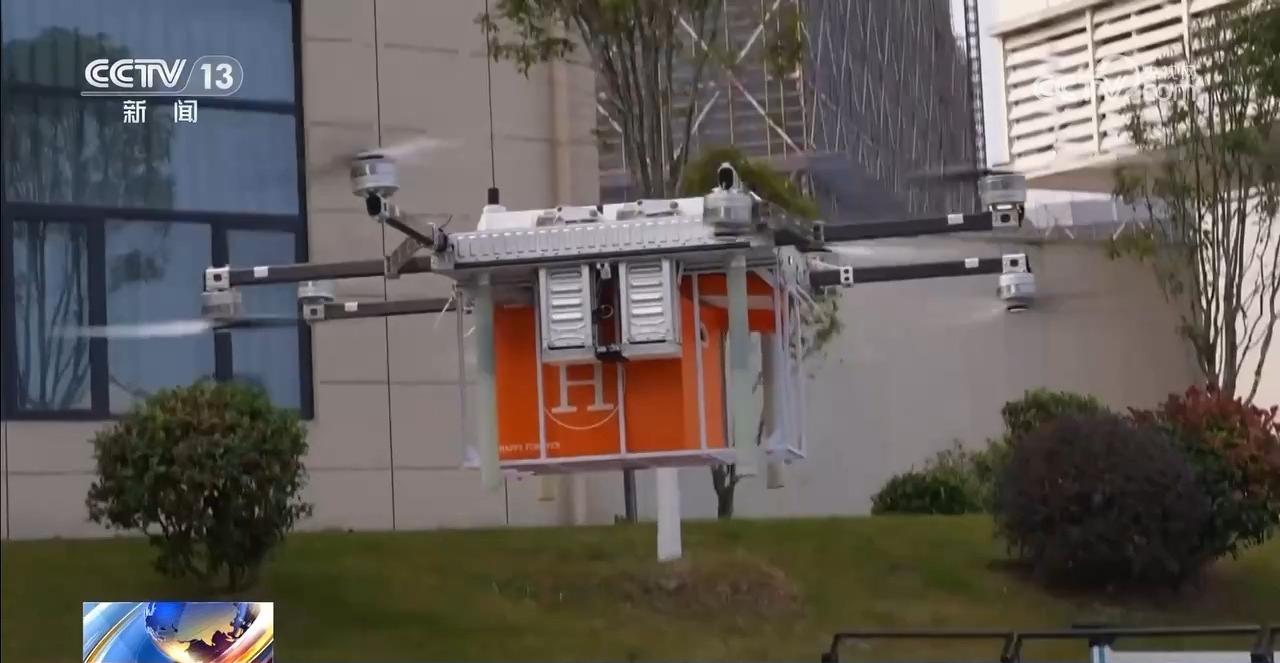
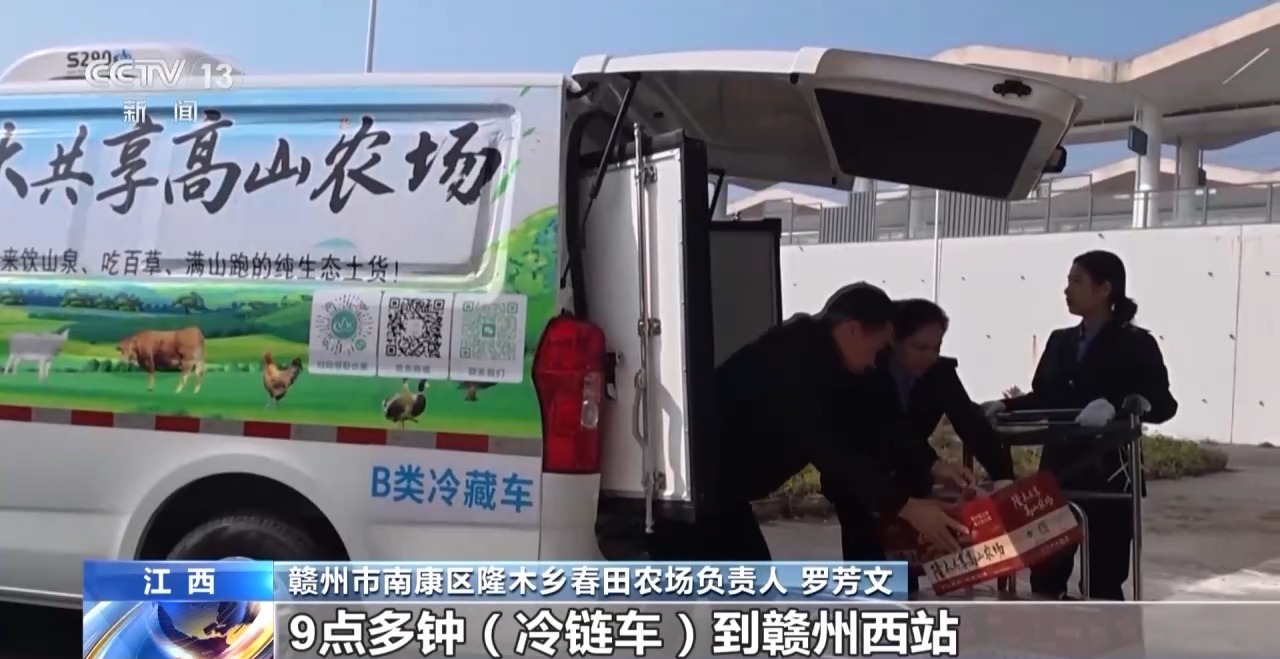
一线见闻丨1小时→12分钟 低空物流加速深山鲜货走向餐桌
Yang Shi Xin Wen· 2026-01-04 01:51
"十五五"规划建议提出,要打造新兴支柱产业,加快低空经济等战略性新兴产业集群发展。在江西,近年来随着政策细化落地、技术深度融合、场景加速拓 展,低空经济正加速崛起,从概念探索迈向规模化落地。 记者在江西省赣州市南康区看到,作为全国首个无人机物流配送试点项目所在地,当地建立"无人机+高铁"运输专线,打造纵横交错的空中高速物流网络, 让农产品更快速、便捷地走向市场。 无人机+高铁联运 为乡村发展注入新活力 隆木乡坐拥得天独厚的生态环境,是优质畜禽养殖的天然宝地,但这里山路蜿蜒、沟壑纵横,农产品外运一度是制约农场发展的"老大难"问题。作为全国首 个无人机物流配送试点项目所在地,赣州南康区大胆探索创新,率先建立起无人机运输专线,为深山农产品打通空中出山路。 赣州市南康区隆木乡党委副书记 黎彬:如果他们自己运输,有来回的路费、车油费,还有一些损耗,一天下来,运输等成本要200元左右。无人机运输时间 只要十几分钟,我们核算了一下成本只要十几块钱。 不过,山区气候变幻莫测,初期无人机飞行常因突发的强风、短时强降水等天气状况受到干扰,甚至出现货物延误、设备受损的情况。 这个专业化的气象保障平台,成功打通了气象预警信息与无人机 ...

深圳市光明区发布低空经济扶持政策
Xin Lang Cai Jing· 2026-01-04 01:28
政策明确规划科旅之家、凤凰城商圈等重点区域起降点建设,重点拓展低空物流、即时配送、应急救援 等实用场景,加速形成"空中观光+民生服务+应急保障"的多元应用生态。通过"政策补贴+市场需求"双 轮驱动,既点燃市民消费热情,更助力企业积累飞行数据、加速技术迭代。 政策明确依托鹏城云脑Ⅲ期、国家超算深圳中心二期等算力设施,为低空大模型训练、海量数据处理提 供支撑;借力自由电子激光、材料基因组等平台,赋能飞行器新材料研发与检测。 同时,强化创新载体联动,支持南方科技大学光明高等研究院、中兵智能创新研究院等大院大所,聚焦 无人系统、关键零部件等领域开展技术攻关,形成"基础研究—中试转化—产业应用"的完整创新链条。 场景落地是政策实施的关键抓手。《措施》延续并升级"低空飞行券"发放机制,涵盖文旅观光、商务出 行、飞手培训三大类别,推动低空消费市场扩容。 来源:深圳新闻网 深圳新闻网2026年1月3日讯(深圳特区报记者 周宏博)近日,《深圳市光明区促进低空经济高质量发 展若干措施》正式发布。作为大湾区综合性国家科学中心先行启动区,光明区立足自身科创与产业优 势,以政策为笔、以创新为墨,在低空经济赛道精准布局,为产业高质量发展 ...
研判2025!中国飞机储能系统行业背景、产业链全景、发展现状及未来发展趋势分析:低空经济赋能增长,飞机储能系统市场规模迈向三百亿新程[图]
Chan Ye Xin Xi Wang· 2026-01-04 01:10
Core Insights - The aircraft energy storage system is a critical component for multi-electric and fully electric aircraft, integrating energy storage media, power conversion, control management, and safety protection to efficiently store and release energy as needed [1][2][3] - China is prioritizing the development of aircraft energy storage systems, implementing various policies to support technological research, airworthiness certification, and industrialization goals, laying a foundation for overcoming airworthiness barriers and accelerating commercialization [1][8] - The industry is experiencing rapid transformation, with a market characterized by chemical energy storage dominance and diverse technological supplements, including solid-state and hydrogen fuel cells as key technological directions [1][12] Industry Overview - The aircraft energy storage system integrates energy storage media, power conversion, control management, and safety protection, providing stable power supply for critical systems during various flight phases [2][3] - The system's core functions include emergency power supply, auxiliary power during high-demand phases, energy recovery capabilities, and stabilization of power grid fluctuations [3][4] Policy Support - China has introduced multiple policies to support the aircraft energy storage system industry, including the "Green Aviation Manufacturing Development Outline (2023-2035)" and "General Aviation Equipment Innovation Application Implementation Plan (2024-2030)" [7][8] - These policies focus on technological research subsidies, airworthiness certification, and expanding demonstration application scenarios, clearly defining core technology development directions and industrialization goals [7][8] Industry Chain - The industry chain is closely linked, with upstream focusing on core equipment and material supply, midstream on system integration and solutions, and downstream covering diverse application scenarios [8][9] - Key components include lithium-ion batteries, hydrogen fuel cells, and energy management systems, with battery costs being the largest component of the industry chain value [8][10] Current Market Dynamics - The market for aircraft energy storage systems is expected to grow rapidly, with projections indicating a market size exceeding 30 billion yuan by 2030 [1][12][14] - The low-altitude economy is a strategic emerging industry in China, driving demand for aircraft energy storage systems, particularly in eVTOL and industrial drone applications [12][13] Key Players - Major companies in the aircraft energy storage system industry include CATL, BYD, and Zhongxin Innovation, with a market share concentration among the top three companies exceeding 50% [14][15] - These companies are focusing on high energy density batteries and hybrid storage solutions, with significant advancements in energy density and system integration capabilities [15][16] Future Trends - The industry is expected to see three core development trends: diversification of technology routes, deepening of industry chain collaboration, and precise adaptation to market demands driven by the low-altitude economy [16][17][19] - Future technological advancements will focus on optimizing mainstream lithium batteries and developing solid-state and hydrogen fuel cells, while hybrid storage systems will become more prevalent [16][17] - The market structure will evolve from emergency backup systems to include core power and auxiliary control systems, driven by diverse application scenarios [19]



300503,商业航天+人形机器人 历史新高!
Xin Lang Cai Jing· 2026-01-04 00:24
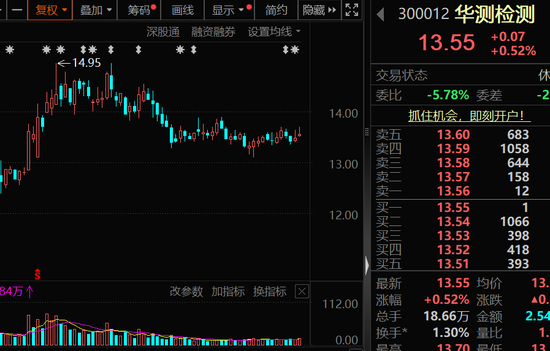
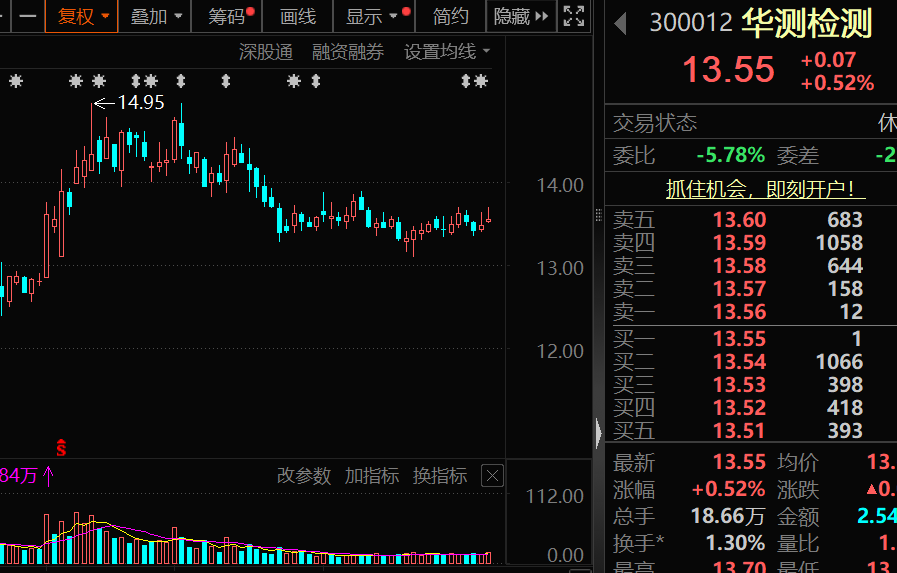
Group 1 - The core focus of Huace Testing is on performance verification of aerospace materials and reliability testing of core components, primarily serving private aerospace enterprises [10][11] - The company plans to enhance its service capabilities in the aviation sector, expanding into lifecycle testing services for new aircraft types such as drones and flying cars [10][11] - Huace Testing is strategically positioning itself in emerging sectors like AI, humanoid robots, silver economy, and low-altitude economy, with a focus on electric vehicle testing and semiconductor chip testing [10][11] Group 2 - Huace Testing has successfully integrated its acquisitions, with a focus on maintaining business continuity through complementary advantages, ensuring smooth collaboration between domestic and international teams [11] - The company has completed the acquisition of Safety SA, Emicert, Openview, and MIDAC laboratory, which are now officially consolidated into its financial statements [10][11] Group 3 - The average stock price of companies under institutional research increased by nearly 1% in the past week, with notable gains from companies like Huazhi Electromechanical, which saw a weekly increase of over 36% [14][15] - Huazhi Electromechanical has established a business partnership with Blue Arrow Aerospace in the commercial aerospace sector, while also focusing on potential applications in the aerospace and satellite fields [14][15] - The company has developed a "N+1+3" structure in its robotics business, indicating a diversified approach to core components and application scenarios [14][15] Group 4 - Companies like Aima Technology, Juxing Agriculture, LiuGong, and Xiangyu Medical have also attracted significant institutional interest, with over 50 institutions conducting research on them [13] - LiuGong reported balanced revenue distribution across nine major overseas regions, with a strong outlook for growth in the global construction machinery market by 2026 [13] - Xiangyu Medical is exploring both invasive and non-invasive brain-machine interface technologies, aiming for a unified approach to treatment effectiveness [14][15]


300503,商业航天+人形机器人,历史新高
Zheng Quan Shi Bao· 2026-01-04 00:13
Core Insights - The article highlights that Huace Testing has been the most researched stock with 79 institutions conducting investigations, focusing on its business in the commercial aerospace sector and plans for diversification and expansion in various fields [2][10]. Group 1: Company Overview - Huace Testing's business primarily focuses on performance verification of aerospace materials and reliability testing of core components, catering mainly to private aerospace enterprises [2]. - The company aims to enhance its service capabilities in the aerospace sector and expand into new areas such as drones and flying cars, establishing a comprehensive testing and certification service system [2]. Group 2: Strategic Developments - Huace Testing is strategically positioning itself in emerging sectors like AI, humanoid robots, the silver economy, and low-altitude economy, with a focus on electric vehicle testing, semiconductor testing, and robotics [2]. - The company completed the acquisition of Safety SA in South Africa, Emicert in Greece, Openview, and MIDAC laboratory in France in Q4 2025, integrating these entities into its operations [2]. Group 3: Integration and Management - Post-acquisition, Huace Testing is implementing differentiated management strategies, ensuring smooth integration by leveraging complementary strengths and maintaining operational continuity [3]. - The integration progress is reported to be on track, with a preliminary management control system established and cultural integration proceeding smoothly [3]. Group 4: Market Performance - In the past week, the average stock price of companies under institutional research increased by nearly 1%, with several stocks, including Haoshi Electromechanical, rising over 10% [6]. - Haoshi Electromechanical's stock surged over 36%, attributed to its collaboration in the commercial aerospace sector and ongoing developments in its robotics business [7]. Group 5: Other Companies - Other companies like LiuGong and Xiangyu Medical also reported positive developments, with LiuGong achieving record overseas revenue and Xiangyu Medical exploring invasive and non-invasive brain-machine interface technologies [5]. - Xiangyu Medical is focusing on non-invasive rehabilitation while initiating research in invasive technologies, collaborating with Xi'an Jiaotong University [5]. Group 6: Institutional Research - The list of companies with significant institutional research includes Huace Testing, Aima Technology, and others, with Huace Testing leading with 79 institutions [10]. - LiuGong and other companies also received substantial attention, indicating a trend of increasing institutional interest in various sectors [10].
迈向“十五五”美丽图景|应用场景“上新”低空经济“飞”出新高度
Yang Shi Wang· 2026-01-03 23:09
Core Viewpoint - Jiangxi province is leveraging its successful drone logistics practices in Ganzhou Nankang to expand its low-altitude economy, creating a comprehensive operational network that spans various applications from logistics to tourism and emergency rescue [1][5]. Group 1: Low-altitude Economy Development - Jiangxi is recognized as a pioneer in low-altitude airspace management reform and is actively promoting the low-altitude economy from localized initiatives to a broader implementation [1]. - The province aims to enhance low-altitude manufacturing and applications, projecting an economic growth boost exceeding 200 billion yuan by 2026 [6]. Group 2: Policy Support and Infrastructure - A series of supportive policies at the national level, including a directive from the State Council, are guiding the orderly expansion of low-altitude economic applications and encouraging private investment in infrastructure [5]. - Jiangxi has established a unified low-altitude meteorological data sharing platform, integrating data from various sectors to support the development of a comprehensive low-altitude economic service platform [6]. Group 3: Market Potential - The low-altitude economy is included in the "14th Five-Year Plan," with supportive policies enacted across 31 provinces, indicating a significant market potential estimated to reach 6.7025 trillion yuan by 2024 and 15 trillion yuan by 2025 [7]. - The collaborative efforts of policies and practical applications are creating a "dual-spiral" growth structure that drives the development of the low-altitude economy [8].