《巴黎协定》

Search documents
全球气候治理的共识,越来越弱了?
虎嗅APP· 2025-11-21 09:31
Core Viewpoint - The article discusses the outcomes and challenges of COP30, highlighting the shift from setting climate goals to implementing them effectively, with a focus on the role of Brazil and the implications of geopolitical dynamics on global climate governance [2][7][12]. Group 1: COP30 Outcomes - COP30 revealed that the global temperature increase has been reduced to a range of 1.9-2.6°C due to the implementation of the "Nationally Determined Contributions" (NDCs) established by the Paris Agreement, contrasting with earlier predictions of over 4°C [2]. - Brazil, as the host country, has set a precedent by announcing its new NDC for 2024, aiming for a 2035 reduction target anchored to achieving carbon neutrality by 2050 [5][7]. - The conference emphasized the need for practical cooperation and the acceleration of low-carbon transitions, marking a shift in focus from goal-setting to implementation [7][12]. Group 2: Challenges in Climate Governance - There is a significant lag in the submission of new NDCs by countries, with nearly half yet to submit, indicating a lack of momentum in global climate governance [3][4]. - Geopolitical divisions, economic uncertainties, and funding shortages are major obstacles, with developed countries and developing nations experiencing distrust over climate financing [6][12]. - The Trump administration's withdrawal from the Paris Agreement and subsequent funding cuts have exacerbated these challenges, with an estimated $11 billion in climate funding affected [6][12]. Group 3: Trade and Climate Policy - The inclusion of "unilateral trade measures" as a formal agenda item was proposed by developing countries, reflecting the need for affordable low-carbon products and their smooth circulation globally [10]. - The article highlights the increasing discussions around trade policies in relation to climate action, as countries seek to avoid "green protectionism" while ensuring equitable and efficient global green transitions [10][11]. Group 4: Brazil's Role in Climate Action - Brazil's proactive stance in climate governance is evident through its reactivation of the Amazon Rainforest protection plans, which have led to a significant reduction in deforestation rates [12][13]. - The choice of location for COP30 in the Amazon region underscores the connection between climate change and ecosystem protection, emphasizing the urgency of addressing environmental degradation [11][12]. Group 5: China's Influence in Climate Governance - China has transitioned from a passive participant to a key player in global climate governance, with significant achievements in low-carbon product exports, reaching $121 billion in the first half of 2025 [15][16]. - The country is also shifting from being a follower in technology application to a leader in innovation, contributing to global low-carbon supply chains and supporting developing nations in their climate efforts [16][20].


中国,全球气候治理可信赖的力量
Ren Min Ri Bao· 2025-11-19 03:44
Core Viewpoint - The 30th Conference of the Parties (COP30) in Belém, Brazil, emphasizes the need for global cooperation to address climate change, accelerate emission reductions, and promote an inclusive and just transition [6][9]. Group 1: Climate Agreements and Actions - The Paris Agreement, reached 10 years ago, has successfully reduced the projected global temperature rise from over 4°C to between 2.1°C and 2.8°C by the end of the century [6]. - China has consistently advocated for multilateralism and has made significant contributions to the implementation of the Paris Agreement, showcasing its commitment to global climate governance [7][17]. - China has set ambitious national contributions, including a target for carbon intensity reduction by 2020 and a commitment to achieve peak carbon emissions before 2030, followed by a goal for carbon neutrality by 2060 [10][11]. Group 2: International Cooperation and Support - China has mobilized over 177 billion RMB for climate change South-South cooperation projects, supporting more than 120 developing countries through training and capacity-building initiatives [14][16]. - The "African Light Belt" project exemplifies China's efforts to provide clean energy solutions to developing nations, significantly improving energy access in countries like São Tomé and Príncipe [14]. - China plays a crucial role in facilitating climate funding negotiations, addressing the funding obligations of developed countries under the Paris Agreement, and providing financial support to developing nations [16]. Group 3: Technological Innovation and Green Transition - China aims to achieve a 19.8% share of non-fossil energy in primary energy consumption by 2024, ahead of its 2030 targets, and has become a leader in renewable energy production and electric vehicle sales [11]. - The establishment of a national carbon trading market covering over 60% of carbon emissions demonstrates China's commitment to innovative solutions for reducing emissions [11]. Group 4: Leadership in Climate Negotiations - China has been instrumental in coordinating negotiations at climate conferences, often serving as a bridge between different parties to facilitate consensus [15][16]. - The country has taken on leadership roles in various negotiation topics, including climate finance and technology transfer, reinforcing its position as a key player in global climate governance [16].

外媒聚焦COP30:中国贡献至关重要
Zhong Guo Xin Wen Wang· 2025-11-10 12:33
Group 1 - The COP30 conference in Brazil emphasizes the critical role of China in addressing global climate change, with a focus on limiting global temperature rise to within 1.5°C and reviewing progress on financing commitments made in previous meetings [1][2] - The conference marks the 10th anniversary of the Paris Agreement, highlighting the need for cohesive climate diplomacy despite geopolitical tensions and economic competition [2] - China has established itself as a key player in the green supply chain, producing the world's largest solar panels, electric vehicles, batteries, and essential minerals crucial for the global economic transition to green energy [2] Group 2 - The UN climate department has proposed a 10% budget increase to €81.5 million for the 2026-27 fiscal year, with China's contribution share rising from 15% to 20% facilitating this increase [3] - China's latest carbon reduction commitments significantly exceed those of the US and Europe, indicating a proactive stance in climate action [3]
美国30年来首次缺席国际气候谈判,COP30如何研判“交卷年”?
Di Yi Cai Jing· 2025-11-10 12:29
Core Points - The absence of the U.S. at COP30 marks the first time since 1995 that the country has not sent senior officials to a COP meeting, which raises concerns about global climate cooperation [1][5] - COP30 is crucial as it aims to assess collective progress on climate actions and convert the scientific consensus on the 1.5°C target into practical measures [3][4] - The conference will focus on submitting new Nationally Determined Contributions (NDCs) from countries, which outline their emission reduction targets and specific measures [3][4] Group 1 - The global temperature is on track to exceed the 1.5°C limit set by the Paris Agreement, necessitating a 60% reduction in global emissions by 2030 to stay within this target [3][4] - The current NDCs are projected to achieve only about 10% of the required emission reductions, highlighting a significant gap in climate action [3][4] - The NRDC reports that since the Paris Agreement, clean energy has created 36.2 million jobs, surpassing employment in fossil fuel sectors [4] Group 2 - COP30 aims to mobilize $1.3 trillion annually for climate financing, with a focus on supporting countries in adapting to climate change [6][8] - The conference will also review the "Baku to Belem $1.3 trillion roadmap report," which outlines five priority areas for resource mobilization [7] - The U.S. withdrawal from the Paris Agreement has created a funding gap of $100 billion to $150 billion in the climate financing roadmap, complicating efforts to meet climate goals [8]
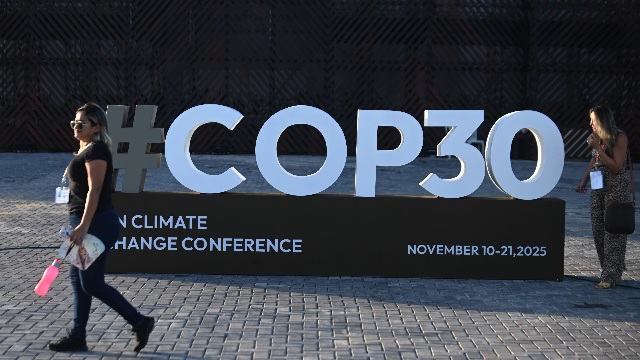
COP30将在巴西贝伦举行,联合国呼吁—— 开启“加速发展和落实行动的十年”
Ren Min Ri Bao· 2025-11-09 22:52
Group 1 - The COP30 will take place in Belem, Brazil from November 10 to 21, with around 60,000 participants discussing key issues such as greenhouse gas reduction, climate adaptation, climate financing, renewable energy development, and biodiversity protection [1][2] - The event is seen as a critical juncture for global climate governance, with expectations for it to be a significant step towards the full implementation of the Paris Agreement [1] - The two-day Belem Climate Summit preceding COP30 will emphasize the urgency of climate action, with UN Secretary-General António Guterres warning that the climate crisis is accelerating and urging countries to enhance their commitments [1][2] Group 2 - This year marks the 10th anniversary of the Paris Agreement, and countries are submitting new national contributions, with China having submitted its 2035 targets aligned with the agreement [2] - Energy transition is a focal point of COP30, with global investments in renewable energy reaching $2 trillion in 2023, double that of fossil fuels, and 90% of new power capacity coming from renewables [2] - The COP30 will be the first meeting held in the Amazon region, highlighting Brazil's commitment to rainforest protection, with the launch of the "Forever Tropical Rainforest Fund" supported by 53 countries [3] Group 3 - The conference aims to strengthen the implementation of the Paris Agreement and expand participation, with a focus on innovation in specific areas [3] - China plans to host numerous seminars on topics such as ecological development and energy transition, showcasing its policies and actions in response to climate change [3]
COP30候任主席强调本届气候大会三个优先事项
Xin Hua She· 2025-11-09 03:52
Core Points - The 30th Conference of the Parties to the United Nations Framework Convention on Climate Change (COP30) will be held in Belem, Brazil from November 10 to 21 [2] - André Correa do Lago, the incoming president of COP30, emphasized the need for enhanced cooperation among governments and institutions to address climate change, highlighting three priority areas for the conference [1] Group 1 - The conference aims to strengthen multilateralism and climate mechanisms under the UN Framework Convention on Climate Change [1] - There is a need to connect climate mechanisms with people's daily lives and the real economy [1] - The implementation of the Paris Agreement will be accelerated [1] Group 2 - Recent reports indicate a lack of ambition, funding, and technology in the international community's response to climate change [1] - The commitment to multilateralism and the Paris Agreement remains strong among various delegations [1] - The expectation is to move from negotiation to coordinated implementation of climate governance on the 10th anniversary of the Paris Agreement [1]
多国领导人呼吁加速应对气候危机行动
Xin Hua She· 2025-11-07 05:53
Core Viewpoint - The Belem Climate Summit emphasizes the urgent need for global unity and accelerated action to address the climate crisis, setting the stage for the upcoming COP30 negotiations [1][2]. Group 1: Summit Objectives and Themes - The Belem Climate Summit, hosted by Brazil, aims to provide political direction for the upcoming COP30 negotiations, focusing on key topics such as climate and nature, energy transition, the assessment of the Paris Agreement's ten-year progress, national contributions, and climate financing [1]. - UN Secretary-General Antonio Guterres expressed the hope that COP30 will mark a turning point in the fight against the climate crisis, stressing the necessity for faster and more effective actions, particularly from wealthier nations [1]. Group 2: Statements from Leaders - Brazilian President Lula highlighted that accelerating energy transition and protecting nature are the two most effective ways to combat global warming, advocating for science to guide decision-making [1]. - French President Macron emphasized the importance of respecting scientific evidence in addressing climate issues and called for continued cooperation to fulfill international commitments under the Paris Agreement, while also stressing the need for increased clean energy investment and financing mechanisms for developing countries [1]. - Chilean President Boric urged countries to clarify how to meet established climate goals and to find a swift and equitable solution to the climate crisis, calling for international leadership based on science and facts [2].
耿爽:那我也就不再含蓄了
券商中国· 2025-11-07 02:04
当地时间11月6日上午,在联合国安理会气候与安全问题公开会上,面对美国代表发言中的无理指责推责,中 国常驻联合国副代表耿爽两次追加发言予以驳斥。"既然美国代表这次不那么含蓄,直接点名了,那我也就不 再含蓄了"。 看券商中国 知天下财经 用 券中社 12 券商中国 × 券 中 社 百万用户都在看 直线拉升!一则消息,突然引爆! 突发!这个板块,大面积涨停!重磅消息传来! 盘中,集体爆发!两大利好,彻底引爆! 官宣!春节连休9天,史上最长!2026年放假安排公布! 深夜,暴涨!美联储,重磅发声! 违法和不良信息举报电话:0755-83514034 邮箱:bwb@stcn.com 耿爽指出,美国大开历史倒车,公然称气候变化是人类历史上最大的骗局,两度退出《巴黎协定》,已经成为 全球应对气候变化合作最大的障碍。 来源:@CCTV国际时讯 责编: 罗晓霞 校 对: 吕久彪 扫码关注券商中国公众号 扫码下载 券 中 社 A P P quanshangcn 舞#t 券中社APP qzs.stcn.com 券 商 中 国 是 证 券 市 场 权 威 媒 体 《 证 券 时 报 》 旗 下 新 媒 体 , 券 商 中 国 对 ...

中方:应对气候变化国际社会需要合作和团结
Zhong Guo Xin Wen Wang· 2025-11-07 00:19
Core Points - The international community needs cooperation and unity to address climate change, rather than blame and accusations [1] - China is recognized as a leading country in fulfilling emission reduction commitments, contributing over 30% to global economic growth, while its per capita carbon emissions are not high [1] - The United States has historically emitted the most greenhouse gases and has withdrawn from the Paris Agreement, becoming a major obstacle to global climate cooperation [1] Group 1 - Africa's unique natural environment and agriculture-based economy make it more vulnerable to climate change, with conflict-affected countries being a focal point for the Security Council [2] - The international community should address the challenges climate change poses to Africa's sustainable development and provide adequate funding, technology, and capacity-building support [2] - Support for clean energy projects in Africa, such as solar, hydropower, and wind energy, is essential to bridge the green technology gap and accelerate the transition to a low-carbon economy [2] Group 2 - The ongoing Belém Climate Summit is a critical step in implementing the Paris Agreement and will guide global climate governance for the next decade [2] - China aims to play a constructive role in supporting Brazil's presidency of the summit and achieving positive outcomes for international cooperation on climate change [2]
联合国环境署:形势依然严峻
中国能源报· 2025-11-05 01:49
Core Viewpoint - The United Nations Environment Programme's report indicates that global warming remains a severe issue, with current climate commitments under the Paris Agreement only slightly alleviating the trend of rising global temperatures, leading to increased climate risks and damages [1]. Group 1: Climate Goals and Emission Reduction - The Paris Agreement aims to limit the increase in global average temperature to within 2 degrees Celsius above pre-industrial levels, with efforts to keep it within 1.5 degrees Celsius [1]. - To achieve these temperature goals, global greenhouse gas emissions need to be reduced by 35% and 55% from 2019 levels by 2035 [1]. - The report suggests that without significant emission reductions, global warming could exceed 1.5 degrees Celsius within the next decade [1]. Group 2: Expected Temperature Increases - If countries fully implement their Nationally Determined Contributions (NDCs), global warming is projected to reach between 2.3 to 2.5 degrees Celsius this century, while current policies could lead to a rise of 2.8 degrees Celsius [1]. - These projections show slight improvements compared to last year's report, but emphasize the need for faster and more substantial greenhouse gas reductions to mitigate climate risks [1]. Group 3: Technological Capabilities - The report highlights that since the adoption of the Paris Agreement, the necessary low-carbon technologies for significant emission reductions are available, with the wind and solar industries driving down application costs [2]. - This indicates that the international community has the capability to accelerate climate action if there is a collective commitment [2].