中国人经济

Search documents
“中国人经济”视角下,中企出海如何破浪前行
Zhong Guo Qing Nian Bao· 2025-11-17 22:51
Core Insights - Chinese enterprises are facing significant opportunities in the next five years as they expand globally, with a focus on diverse paths such as high-speed rail, new energy, and cross-border e-commerce [1][2] - The concept of "Chinese economy" is shifting towards "Chinese people economy," emphasizing the wealth created and owned by Chinese enterprises and individuals globally [2] Group 1: Opportunities for Chinese Enterprises - The "Chinese people economy" requires Chinese enterprises to actively and steadily "go out" to enhance global resource allocation capabilities and promote international cooperation in supply chains [2] - The report released at the Caixin Summit advocates for a "China + N" strategic layout, encouraging deep integration of Chinese enterprises into global markets [2][5] - Southeast Asia is emerging as a key market for Chinese brands, with a rapidly growing economy and significant opportunities in e-commerce and technology sectors [3][5] Group 2: Market Trends and Growth Areas - Southeast Asia, with a population of nearly 700 million and a GDP of $4 trillion, is expected to maintain an economic growth rate of around 7% over the next five years [5] - The e-commerce sector in Southeast Asia is experiencing rapid growth, with Chinese e-commerce platforms achieving significant profitability [5] - Future opportunities in Southeast Asia are anticipated in AI technology, new energy vehicles, and autonomous driving technology [5] Group 3: Localization Strategies - Companies face challenges such as market diversification, regulatory compliance, and local talent shortages when expanding internationally [6] - Effective localization involves adapting products to local needs, establishing local technical teams, and localizing manufacturing to reduce costs and enhance productivity [6] - The case of a Chinese company acquiring a bankrupt German firm illustrates the importance of local community engagement and stakeholder involvement in successful localization [7] Group 4: Global Integration and Resource Allocation - Lenovo exemplifies successful global operations with a high degree of localization, maintaining a significant portion of its resources and operations in China while expanding globally [9] - The company's strategy reflects the "sweet potato economy" concept, where global expansion supports and enhances domestic growth [9]
中国企业加速构建“中国能力+全球市场”价值创造网络
Zhong Guo Jing Ji Wang· 2025-11-14 07:35
Core Insights - The report emphasizes the transition from focusing on "Chinese economy" to "Chinese people economy," highlighting the need for Chinese enterprises to create value globally while leveraging their domestic strengths [1][2] Group 1: New Globalization Trends - The report introduces the "China + N" strategy, which aims to enhance the global presence of Chinese enterprises by utilizing China's manufacturing and supply chain advantages [2][3] - It advocates for a shift from product-centric to brand-centric approaches, moving from low-value to high-value offerings, and evolving from individual enterprises to an integrated industrial ecosystem [1][2] Group 2: Policy and Economic Implications - The report aligns with the "14th Five-Year Plan," which calls for expanding high-level openness and promoting win-win cooperation through dual-direction investment [3] - It suggests a structural adjustment towards balancing trade by transitioning focus from GDP to GNI, indicating a need for rational overseas layout of supply chains [3] Group 3: Case Studies and Industry Examples - Lenovo Group is highlighted as a benchmark case, demonstrating a model of "rooting in China" while establishing a global supply chain network that integrates international resources with localized operations [3][4] - Lenovo has engaged over 250 domestic suppliers in its global expansion efforts and has developed a platform to facilitate the overseas ventures of smaller enterprises [4]

中国企业新型全球化报告发布 以“中国人经济”拓展价值链新边界
Sou Hu Cai Jing· 2025-11-14 06:02
Core Insights - The report titled "Developing the 'Chinese Economy' and Sharing Opportunities for High-Level Opening Up - 2025 China Enterprises' 'New Globalization' Special Report" was officially released at the 16th Caixin Summit, highlighting new trends and challenges for Chinese enterprises going global in the new globalization phase [1][3] - The report advocates for a "China + N" strategic layout for Chinese enterprises, emphasizing the need to leverage China's manufacturing and industrial chain advantages to connect with global markets and enhance value from products to brands [1][3] Policy Recommendations - The report suggests constructing a comprehensive policy support system to facilitate higher levels of openness and better international engagement for enterprises during the 14th Five-Year Plan period [3][4] - It emphasizes the importance of establishing a complete overseas service system, deepening international cooperation, and upgrading the value connotation of going global [3] Enterprise Capability Development - The report recommends that Chinese enterprises focus on strategic positioning and compliance risk management when going global, promoting localized operations and ecological integration [3] - It also highlights the need for deepening ecological collaboration and value co-creation, as well as driving innovation and brand upgrades [3][4] Case Studies and Methodologies - The report, supported by the Ministry of Commerce's International Trade and Economic Cooperation Research Institute, includes research on various scenarios and case studies from over ten local governments and enterprises, extracting methodologies for going global [4] - Notable industry benchmark cases such as Liansheng Group, Pop Mart, and MiniMax are included in the report [4]

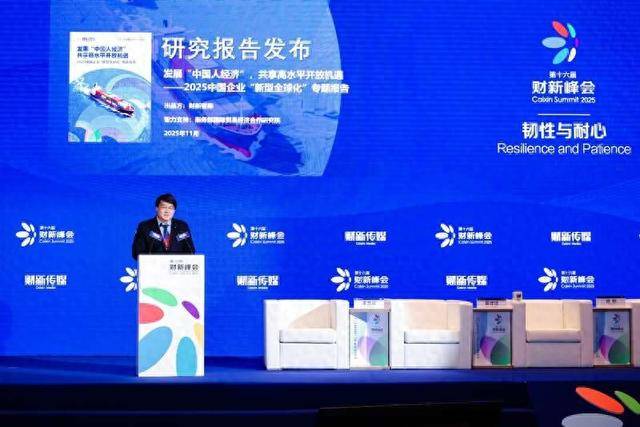
从“走出去”到“走上去”,联想集团以“中国+N”引领新型全球化浪潮
Cai Fu Zai Xian· 2025-11-14 03:31
Core Insights - The report emphasizes the concept of "Chinese People Economy" as a new perspective for Chinese enterprises to navigate globalization, highlighting the shift from focusing solely on the "Chinese Economy" to a broader view that includes wealth creation by Chinese enterprises and individuals globally [1][3] - The "China+N" strategy is proposed as a means for Chinese companies to leverage their domestic advantages while expanding globally, transitioning from product-based to brand-based and from low-value to high-value operations [5][10] Group 1: New Globalization Trends - The report identifies four characteristics of new globalization: trade protectionism, geopolitical conflicts, the rise of the Global South market, and the transformation towards service-oriented and green trade [8] - It outlines four trends in Chinese enterprises going abroad: the evolution from product export to brand and ecosystem export, diversification of investment fields, the significance of the Global South markets, and the capability output of Chinese enterprises [8][10] Group 2: Policy and Strategic Recommendations - Recommendations for enhancing the "going out" strategy include establishing a comprehensive support system for overseas operations, improving compliance and risk management, and fostering local integration and ecological collaboration [5][6] - The report suggests that the "15th Five-Year Plan" should focus on expanding high-level openness and promoting a win-win cooperation model, emphasizing the need for a structural adjustment towards balanced trade [6] Group 3: Case Study of Lenovo - Lenovo is highlighted as a leading example of the "China+N" strategy, demonstrating successful global operations while maintaining a strong base in China [11][13] - The company has achieved significant growth, with a 22-fold increase in annual revenue and nearly 80% of its revenue coming from overseas markets, showcasing its leadership in the new globalization phase [13] - Lenovo's approach includes building a global supply chain network that integrates international resources with localized operations, thereby enhancing its competitiveness and market share [11][17] Group 4: Industry Collaboration and Ecosystem Development - Lenovo has facilitated the international expansion of over 250 domestic suppliers, creating a one-stop solution platform to lower the barriers for smaller enterprises to go abroad [16] - The company emphasizes the importance of community engagement and compliance in its global operations, aiming to create a symbiotic ecosystem that benefits both local markets and Chinese enterprises [14][17]
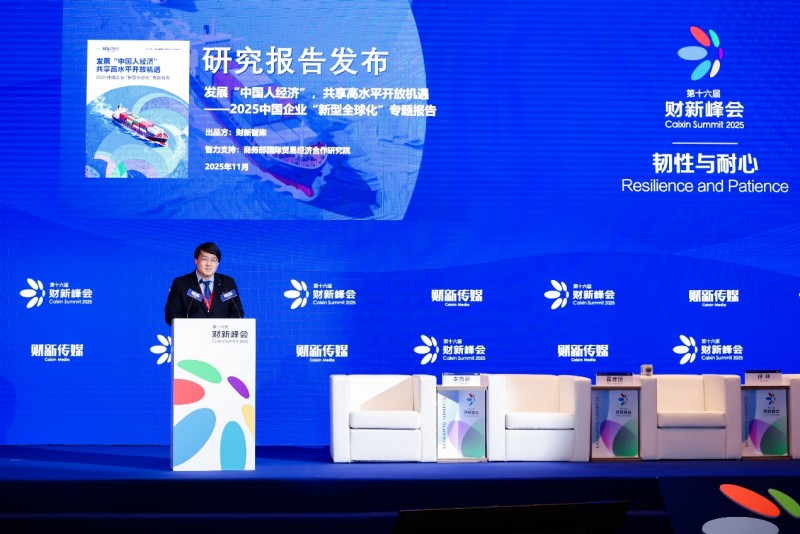
中国企业新型全球化报告在京发布
Zhong Guo Jing Ji Wang· 2025-11-14 02:24
Core Insights - The report emphasizes the shift from focusing on the "Chinese economy" to the "Chinese people economy," highlighting new trends and challenges for Chinese enterprises in the context of globalization [1] - It introduces the "China + N" model, which aims to enhance the global presence of Chinese companies by evolving from product-centric to brand-centric and from individual enterprises to an ecosystem approach [1] Policy Recommendations - The report suggests building a comprehensive policy support system to facilitate higher levels of openness and better international engagement for Chinese enterprises during the 14th Five-Year Plan [1] - It advocates for the establishment of a complete institutional guarantee and an overseas comprehensive service system to deepen international cooperation and ecological synergy [1] Enterprise Capability Development - Chinese enterprises are encouraged to focus on strategic positioning and compliance risk management when expanding internationally [1] - The report highlights the importance of local operations and ecological integration, promoting collaborative value creation and brand enhancement [1] Case Studies - Lenovo Group is identified as a leading example of the "China + N" model, showcasing a new type of globalization that emphasizes mutual benefits between China and global markets [2] - Lenovo's approach underscores the necessity for Chinese enterprises to not only "go out" but also "stay" and "integrate" into local markets, leveraging Chinese advantages for global service [2]
报告称中国企业出海呈现四大趋势
Zhong Guo Xin Wen Wang· 2025-11-13 15:23
Core Insights - The report titled "Developing the 'Chinese Economy' and Sharing Opportunities for High-Level Opening" was released at the 16th Caixin Summit, highlighting new trends and challenges for Chinese enterprises in the context of new globalization [1][2] - It proposes a "China + N" model for Chinese companies to progress from products to brands, low value to high value, and from individual enterprises to industry chain ecosystems [1] Group 1: Characteristics of New Globalization - The report identifies four key characteristics of current "new globalization": trade protectionism, geopolitical conflicts, and the reshaping of global economic rules; a diversified and regionalized international landscape; the dual engines of service-oriented and green transformation in global trade; and the accelerated restructuring of the global economic governance system [1] Group 2: Trends in Chinese Enterprises Going Global - The report summarizes four major trends for Chinese enterprises going global: the expanding connotation of going global from "product export" to "brand export," "industrial chain export," and "ecosystem export"; diversification in foreign investment fields with manufacturing as a key focus; the "global south market," represented by the Belt and Road Initiative, emerging as a new growth engine, with Asia remaining the primary destination for Chinese foreign investment; and a shift towards "capability output" for Chinese enterprises [2] - Former Deputy Director of the Central Financial and Economic Commission, Yin Yanlin, emphasized the need to strengthen the "Chinese economy" and the "Chinese economy" by enhancing global resource allocation capabilities and promoting international cooperation in industrial and supply chains [2] Group 3: Strategic Layout of Chinese Enterprises - The report advocates for Chinese enterprises to adopt a "China + N" strategic layout, exemplified by Lenovo Group, which has 80% of its manufacturing and 70% of its R&D personnel based in China, integrating international resources with localized operations to support domestic industrial upgrades and technological innovation [2] - Lenovo Group, as a "chain leader," has facilitated over 250 domestic suppliers to go global [2]
联想集团王会文:“厚植中国、全球互惠”破局新型全球化之道
Xin Lang Cai Jing· 2025-11-13 13:33
Core Insights - The report titled "Developing the 'Chinese Economy' and Sharing Opportunities for High-Level Opening Up - 2025 China Enterprises 'New Globalization' Special Report" was officially released during the 16th Caixin Summit, highlighting new trends and challenges for Chinese enterprises in the new phase of globalization [1] - It emphasizes a shift from focusing solely on the "Chinese Economy" to incorporating the "Chinese People Economy," which considers the wealth created and owned by Chinese enterprises and individuals globally [1] Policy and Industry Recommendations - The report suggests building a comprehensive policy support system to enhance overseas operations, including establishing a robust overseas service framework and deepening international cooperation [2] - It recommends that Chinese enterprises focus on strategic positioning, compliance risk management, and local operations to achieve ecological integration and value co-creation [2] Case Studies and Performance - The "Chinese + N" strategy has been validated by leading Chinese enterprises, with Lenovo Group highlighted as a key example, achieving a 22-fold revenue growth over 20 years and operating in 180 global markets [2] - Lenovo's overseas revenue accounts for nearly 80% of its total, and it ranked first in the recently published "2025 Outbound TOP 100 Index" [2]
中国企业新型全球化报告发布:以“中国人经济”拓展价值链新边界
Xin Lang Cai Jing· 2025-11-13 13:07
Core Insights - The report titled "Developing the 'Chinese Economy' and Sharing Opportunities for High-Level Opening Up - 2025 China Enterprises 'New Globalization' Special Report" was released during the 16th Caixin Summit, highlighting new trends and challenges for Chinese companies going global from the perspective of the "Chinese Economy" [1] - It advocates for a "China + N" strategic layout for Chinese enterprises, aiming to leverage China's manufacturing and industrial chain advantages to connect with global markets and elevate from product to brand, low value to high value, and individual enterprises to industrial chain ecosystems [1] Group 1: Trends in Chinese Enterprises Going Global - The report identifies four major trends in Chinese enterprises going global: the enrichment of the concept of going global from "product export" to "brand export," "industrial chain export," and "ecosystem export" [1] - It notes the diversification of foreign investment fields, with manufacturing as a key focus and a growing diversification in the service sector [1] - The "Global South Market," represented by the Belt and Road Initiative, is highlighted as a new growth engine, with Asia remaining the primary destination for Chinese foreign investment [1] - The report emphasizes the "capability output" of Chinese enterprises going global [1] Group 2: Policy and Industry Recommendations - From a policy support system perspective, the report suggests constructing a comprehensive institutional guarantee, establishing an overseas comprehensive service system, deepening international cooperation, and upgrading the value connotation of "going global" [2] - It recommends that Chinese enterprises focus on strategic positioning and compliance risk control, promote localized operations and ecosystem integration, and deepen ecological collaboration and value co-creation for better global engagement [2]
扩大更高水平对外开放 绘就合作发展新图景
Zheng Quan Shi Bao· 2025-11-10 18:34
Core Viewpoint - China emphasizes the importance of "openness" as a fundamental national policy and a hallmark of Chinese-style modernization, aiming to expand high-level opening-up in response to complex global changes and uncertainties [1][2]. Group 1: High-Level Opening-Up - The "15th Five-Year Plan" outlines actions to enhance openness through four key areas: expanding autonomous opening, promoting trade innovation, increasing bilateral investment cooperation, and high-quality Belt and Road Initiative construction [1]. - The focus on stabilizing and expanding institutional opening is crucial during the "15th Five-Year" period [2]. Group 2: Trade Innovation and Growth - China has maintained its position as the world's largest goods trader for eight consecutive years, leveraging its industrial chain advantages and diversified market layout [3]. - The plan includes fostering trade innovation by balancing goods and services trade, expanding both exports and imports, and supporting traditional trade sectors while transitioning to new growth drivers [3]. Group 3: Service Trade Development - The service sector is identified as a key area for future market access and opening, with plans to expand pilot programs in telecommunications, biotechnology, and foreign-funded hospitals [2]. - Global service trade is projected to grow at a moderate pace, with a forecasted increase of 4.6% in 2025, outpacing goods trade growth of 0.5% [4][5]. Group 4: Investment and Economic Strategy - The concept of "Chinese economy" is evolving to include "Chinese people economy," emphasizing the importance of national income and global resource allocation capabilities [6]. - The plan aims to expand bilateral investment cooperation, enhance the environment for foreign investment, and improve overseas service systems for Chinese enterprises [6][7]. Group 5: Belt and Road Initiative - The Belt and Road Initiative is highlighted as a significant avenue for trade and investment, with a focus on strengthening mutual trust and benefit with partner countries [7]. - Recommendations include enhancing debt sustainability management and localizing operations to ensure shared benefits from resource development projects [7].
盘和林:从国富到民富,“中国人经济”的深层逻辑丨未来五年
Sou Hu Cai Jing· 2025-10-27 13:58
Core Viewpoint - The concept of "Chinese Human Economy" signifies a shift in China's economic and social development direction, moving from efficiency to fairness, from scale economy focused on commodity prosperity to a human-centered economy that emphasizes people's livelihoods and wealth distribution [1][9][10] Group 1: Transition in Economic Goals - The transition from pursuing efficiency to focusing on equitable distribution of wealth is highlighted, with "common prosperity" becoming a new goal for economic development [4][5] - The optimization of income distribution systems, including initial, redistributive, and tertiary distribution, is essential for achieving this new economic model [4][5] Group 2: Economic Development Model Shift - The shift from "scale economy" to "human-centered economy" indicates a change in policy focus, with future fiscal policies prioritizing social welfare and investments in areas like health, education, and pensions [6][8] - This change aims to alleviate the living burdens of ordinary people and enhance their overall well-being [6][8] Group 3: Global Perspective - The "human-centered" approach is seen as a necessary path for building a community with a shared future for mankind, enhancing China's global influence beyond mere economic metrics [9][10] - By focusing on human welfare and common prosperity, China can increase its global impact, which will translate into financial and trade advantages [9][10] Group 4: Future Implications - The "Chinese Human Economy" will lead to changes in various aspects of society, including the evaluation metrics for local governments, which will expand beyond GDP to include legal, ecological, and innovative dimensions [10] - Fiscal policies will increasingly emphasize quality and efficiency, particularly in social welfare, while income distribution systems will shift towards "common prosperity" [10]