二级关税

Search documents
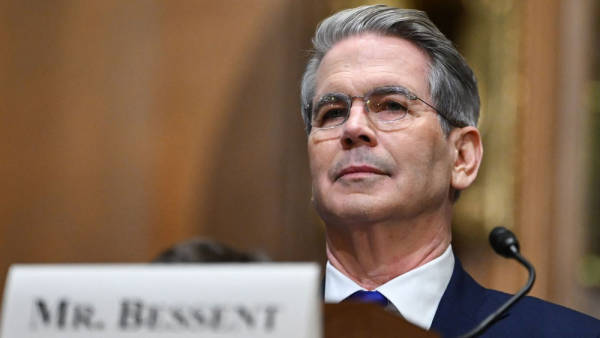
美财长又忽悠:欧洲先对中印动手,美国才跟
Sou Hu Cai Jing· 2025-09-16 01:17
Core Viewpoint - The U.S. Treasury Secretary emphasizes the need for European countries to take greater action in cutting off Russian oil revenues and ending the Russia-Ukraine conflict, suggesting that without European cooperation, U.S. actions will not progress [1][4]. Group 1: U.S. Actions and Statements - The U.S. plans to impose high tariffs on countries like China and India that purchase Russian oil, with the aim of pressuring these nations to stop their purchases [1][5]. - The U.S. Treasury Secretary claims that if Europe imposes high "secondary tariffs" on Russian oil buyers, the war could end within 60 to 90 days due to the loss of revenue for Russia [4][5]. - The U.S. is willing to collaborate with European nations to consider stricter sanctions against Russian oil companies, including Rosneft and Lukoil [4][5]. Group 2: Reactions from China - The Chinese Ministry of Commerce opposes the U.S. using "Russia-related" reasons to impose trade restrictions on China, labeling it as unilateral bullying and economic coercion [1][6]. - China emphasizes the importance of dialogue and negotiation to resolve trade differences and maintain global trade order and supply chain stability [2][6]. - Chinese officials assert that claims of China providing military support to Russia are false and highlight China's efforts in promoting peace talks regarding the Ukraine crisis [8][9]. Group 3: International Relations and Implications - The U.S. is reportedly pressuring the G7 countries to impose significant tariffs on China and India for purchasing Russian oil, aiming to leverage these tariffs to encourage peace negotiations between Russia and Ukraine [5][6]. - The U.S. and India are engaged in ongoing trade negotiations, with both countries expressing a desire to strengthen their partnership amidst these geopolitical tensions [4][5].

特朗普决心已下,让27国对华“下战书”,将印度也划到中方阵营
Sou Hu Cai Jing· 2025-09-13 11:19
Group 1 - The core idea is that President Trump is attempting to engage the EU's 27 countries to impose a "secondary tariff" on China, reflecting his inability to handle China alone and seeking to share the burden with allies [1][3][4] - The EU is reportedly eager to collaborate with the US on this tariff strategy, partly due to past grievances and a desire to strengthen ties with the Trump administration [3][4] - There is mutual distrust between the US and EU regarding the execution of these tariffs, with both parties wanting assurances that the other will follow through on their commitments [3][6] Group 2 - Trump's strategy appears to be a response to previous failures in tariff negotiations, as he seeks to use the EU as a buffer to mitigate potential backlash from a failed tariff policy [4][6] - The EU's involvement could potentially catch China off guard, as the combined efforts of 27 nations may pose a greater challenge than unilateral actions [6][9] - The situation may also influence India's stance towards the US, as India's dissatisfaction with US tariffs could lead them to align more closely with China, complicating the geopolitical landscape [7][9]
对中国等俄能源买家二级征税?特朗普:现在无需考虑
Sou Hu Cai Jing· 2025-08-16 11:52
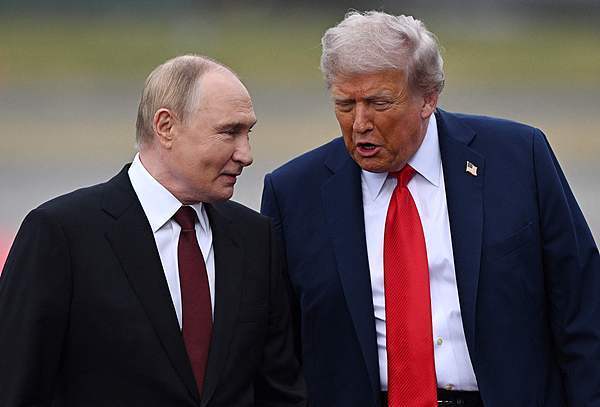
Group 1 - The core viewpoint of the article revolves around President Trump's statements regarding potential tariffs on countries buying Russian oil, particularly China and India, following a summit with President Putin [1][4]. - Trump indicated that he does not need to consider imposing retaliatory tariffs on Russian oil buyers immediately but may reconsider in two to three weeks [1]. - Trump emphasized the significant impact of potential "secondary sanctions" on countries like India and China, with India accounting for approximately 40% of Russia's oil exports [1][4]. Group 2 - Prior to the summit, Trump had already threatened to impose additional tariffs on Indian goods, raising the total tariff level to 50%, effective August 28 [4]. - The imposition of tariffs has led to increased hostility among Indians towards Trump, who has been criticized for his unilateral approach and focus on India while seemingly ignoring China [4]. - Economic experts have suggested that the U.S. political stance towards India may not yield any security benefits for India, despite its alliance with the U.S. against China [4].
“特普会”前夜:欧洲乌克兰为特朗普划下“五条红线”,停火成首要议题
美股IPO· 2025-08-14 03:56
Core Viewpoint - The article discusses the geopolitical dynamics surrounding the upcoming meeting between U.S. President Trump and Russian President Putin, emphasizing the importance of a ceasefire in the Ukraine conflict as a prerequisite for further negotiations [1][3][10]. Group 1: Key Negotiation Points - The European leaders and Ukrainian President Zelensky presented five "red lines" to Trump, stating that a ceasefire is a prerequisite for further negotiations, and any territorial discussions must start from the current front lines [9][10][12]. - Trump agreed to these conditions during the video conference, indicating that if Putin does not accept the ceasefire proposal, there will be "very serious consequences" [3][12][18]. - The meeting is seen as a critical moment for establishing a framework for future discussions, with Trump expressing a desire for a follow-up meeting involving Zelensky if the initial talks go well [12][18]. Group 2: Market Reactions - Following Trump's statements, international oil prices experienced volatility, with Brent crude rising to $66.30 before dropping to below $65.00, reflecting market uncertainty regarding the geopolitical situation [4][5]. - Analysts noted that oil price fluctuations are primarily driven by geopolitical factors, particularly the uncertainty surrounding the Russia-Ukraine conflict [5][18]. Group 3: U.S. Sanctions and European Involvement - U.S. Treasury Secretary Mnuchin threatened to increase sanctions on Russia if the meeting does not yield positive results, urging European allies to take a more active stance against Russia [4][15]. - Mnuchin criticized European leaders for their passive approach to secondary sanctions and called for a unified response to Russian aggression [14][15].
热点思考 | 美国贸易协议中的“虚虚实实” (申万宏观·赵伟团队)
申万宏源研究· 2025-08-12 01:42
Core Viewpoint - The article discusses the upcoming expiration of the US-China tariff suspension measures and the potential for easing trade risks following recent "investment for tariff" agreements between the US and other economies like Japan and the EU [2][49]. Group 1: Trade Negotiation Progress - The US has made significant progress in trade negotiations, having reached agreements or suspensions with nine economies, covering 49.7% of its import goods as of August 1 [2][6]. - The effective tariff rate in the US for Q2 was 7.9%, significantly lower than the theoretical rate, which has risen to 18.3% from 2.4% at the beginning of the year [2][9]. - The US has established a three-tiered tariff system based on trade agreements, with low tariffs (10%) for allies, mid-range tariffs (15%-20%) for agreed economies, and high tariffs (20%-50%) for those with stalled negotiations [3][14]. Group 2: Feasibility of Trade Agreements - The EU must increase its annual investment in the US by 2.6 times to meet its commitment of $600 billion, with the majority of funding coming from private enterprises, making execution uncertain [4][51]. - Japan's commitment of $550 billion is primarily in loans, requiring a 4.7-fold increase in annual investment to fulfill its promise [4][21]. - South Korea's commitment of $350 billion represents 53% of its fiscal spending, necessitating a dramatic increase in FDI to the US over three years [4][21]. Group 3: Tariff Risk Mitigation - The US is likely to maintain a long-term and targeted approach to tariffs, with significant revenue generation from tariffs being a primary benefit of trade agreements [5][32]. - As of July 29, 2025, US tariff revenue reached $125.6 billion, 2.3 times higher than the previous year, indicating a shift in focus from currency manipulation to fiscal control [5][32]. - The article suggests that the US may continue to leverage tariff threats as a negotiation tool, with a potential shift in strategy from historical approaches that focused on currency adjustments to a more fiscal-oriented strategy [5][37].

特朗普“二级关税”对市场的影响将如何演绎?
2025-08-11 01:21
Summary of Conference Call Records Industry or Company Involved - The discussion primarily revolves around the impact of U.S.-China trade relations, particularly focusing on the automotive and coal industries. Core Points and Arguments 1. **Impact of Trump's Tariffs** The likelihood of Trump imposing secondary tariffs on China is nearly zero due to several factors, including potential U.S.-Russia meetings and pressure from the American automotive workforce [2][4][6] 2. **Coal Stocks Performance** The strong performance of coal stocks is attributed to fundamental factors such as social security contributions and state-owned real estate revitalization, rather than signaling inflation [1][3][7] 3. **Economic Pressures** Economic pressures in the second half of the year are expected to arise from increased re-export trade costs, housing market pressures in core cities, and the overall policy tightening in the third quarter [9][10] 4. **Social Security Policy** The core objective of current policies is to secure social security funding sources, which may increase the burden on small and medium-sized manufacturing enterprises [10][11] 5. **Market Sentiment and Investment Behavior** The potential cancellation of Trump's visit to China could negatively impact market sentiment and investment behavior in the coming months [5][6] 6. **Investment Strategy for Q3** The investment strategy for the third quarter recommends focusing on technology, Hong Kong dividend stocks, and non-bank sectors such as brokerage and insurance [14] Other Important but Possibly Overlooked Content 1. **High Dividend Yield of Coal Stocks** Current coal stocks have an overall dividend yield exceeding 5%, with some reaching 8%-10%, making them attractive for investors [8] 2. **Policy on Land Development** Policies aimed at redeveloping inefficient urban land could enhance local government revenue but may also exert pressure on second-hand housing prices [12] 3. **Fiscal Policies** Current fiscal policies are designed to alleviate financial pressure and are expected to reinforce high dividend trading rather than inflation trading [13] 4. **Technological and Sectoral Focus** The focus on technology sectors, particularly in AR and robotics, is expected to attract long-term capital, indicating a shift in investment priorities [14]
热点思考 | 美国贸易协议中的“虚虚实实” (申万宏观·赵伟团队)
申万宏源宏观· 2025-08-09 18:16
Core Viewpoint - The article discusses the upcoming expiration of the US-China tariff suspension measures and the potential for easing trade tensions following recent "investment for tariff" agreements between the US and other economies like Japan and the EU. It highlights the uncertainty surrounding the execution of these agreements and the ongoing risks of trade conflicts. Group 1: Trade Negotiation Progress - The US has made significant progress in trade negotiations, having reached agreements or suspensions with nine economies, covering 49.7% of its import goods as of August 1 [2][6][49] - The effective tariff rate in the US for Q2 was 7.9%, significantly lower than the theoretical rate, which has risen to 18.3% from 2.4% at the beginning of the year [2][9][50] - The US has established a three-tiered tariff system based on trade agreements, with low tariffs (10%) for allies, medium tariffs (15%-20%) for agreed economies, and high tariffs (20%-50%) for those with stalled negotiations [3][14][50] Group 2: Feasibility of Trade Agreements - The EU must increase its annual investment in the US by 2.6 times to meet its commitment of $600 billion, with the majority of funding coming from private enterprises, making execution uncertain [4][16][51] - Japan's commitment of $550 billion is primarily in loans, requiring a significant increase in annual investment to meet targets, while South Korea's commitment of $350 billion poses similar challenges due to its scale relative to national spending [4][21][51] - The EU's energy procurement goals are ambitious, aiming for $750 billion over three years, which is three times the expected imports in 2024, indicating a significant execution gap [4][26][51] Group 3: Tariff Risk Mitigation - The US is likely to continue leveraging tariffs as a source of revenue and negotiation power, with tariff income reaching $125.6 billion in 2025, 2.3 times that of 2024 [5][32][52] - The uncertainty surrounding the execution of trade agreements suggests that the US may maintain tariff threats as a pressure tactic, particularly in the lead-up to the August 12 deadline for US-China tariff discussions [5][32][52] - The US's approach to tariffs is shifting from a focus on currency manipulation to fiscal control, indicating a long-term strategy of using tariffs as a financial lever rather than solely for trade balance [5][37][40]

海外周度观察:美国贸易协议中的“虚虚实实”-20250809
Shenwan Hongyuan Securities· 2025-08-09 15:30
Trade Agreements and Tariffs - As of August 1, the U.S. has established a three-tier tariff system, with effective tariffs at 7.9% compared to a theoretical rate of 18.3%[1][2][15]. - The U.S. has reached trade agreements or suspensions with nine economies, covering 49.7% of its import scale, with Germany at 4.6%, Japan at 4.2%, and South Korea at 3.6%[1][12]. - The U.S. tariff revenue for Q2 2025 reached $64 billion, a 3.6 times increase from the previous year, with total imports at $819.4 billion[1][15]. Investment Commitments - The EU must increase its annual investment in the U.S. by 2.6 times to meet its commitment of $600 billion over three years, which is challenging due to reliance on private sector funding[3][20]. - Japan's commitment of $550 billion requires an annual investment of $1.833 billion, which is 4.7 times the 2024 investment flow[3][22]. - South Korea's $350 billion commitment represents 19% of its GDP and 53% of its annual budget, necessitating an eightfold increase in annual FDI to the U.S.[3][23]. Long-term Tariff Risks - U.S. tariff income has reached $125.6 billion in 2025, 2.3 times higher than in 2024, with projections of $300 billion by the end of 2025[4][34]. - The U.S. is shifting its tariff strategy from "exchange rate adjustment" to "fiscal control" to manage trade deficits, indicating a long-term reliance on tariffs as a negotiation tool[4][38]. - The U.S. may continue to impose secondary tariffs on countries that import Russian oil, with potential rates reaching 100%[4][42].
深夜 特朗普:关税加到50%!
Zhong Guo Ji Jin Bao· 2025-08-06 15:18
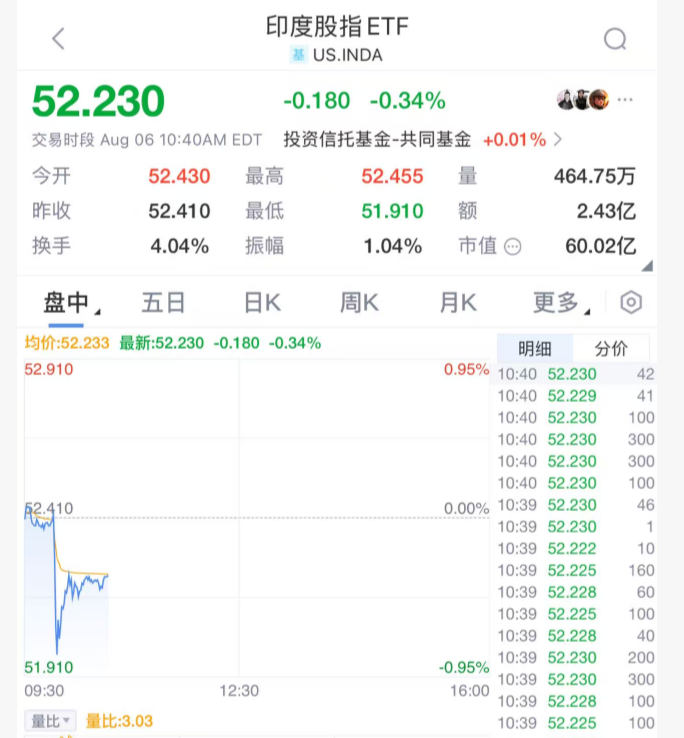
Group 1 - The U.S. has announced an additional 25% tariff on Indian goods, raising the total tariff rate to 50%, making it the highest among U.S. trade partners [2][3] - The new tariff is a response to India's importation of Russian oil, as stated by President Trump, who indicated that this is part of a punitive measure against countries purchasing Russian energy [2][6] - The new tariff will take effect 21 days after the announcement, reflecting a significant escalation in trade tensions between the U.S. and India [2] Group 2 - Following the announcement, Indian stock index ETFs fell to intraday lows, oil prices increased, and the Indian rupee weakened significantly against the dollar [3][4] - The Indian government has criticized the U.S. for targeting India while other countries continue to trade with Russia, highlighting a perceived double standard [8] - Indian Prime Minister Modi is scheduled to visit China at the end of August, which may indicate a strategic shift in India's foreign relations amidst U.S. pressure [8]
深夜突发!特朗普:关税加到50%!
Zhong Guo Ji Jin Bao· 2025-08-06 15:08
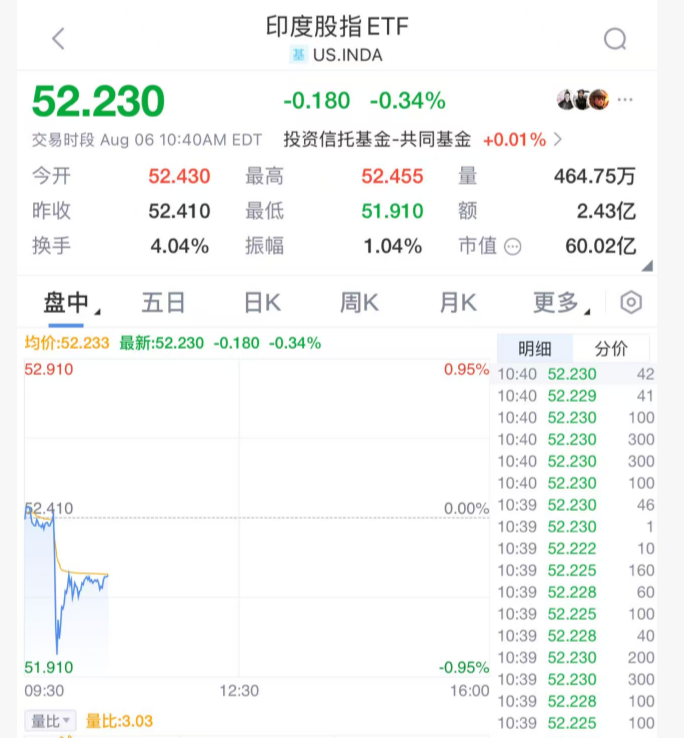
Core Points - The U.S. has announced an additional 25% tariff on Indian goods, raising the total tariff rate to 50% [2] - This decision is part of a punitive measure against India for importing oil from Russia, as stated by President Trump [2][6] - The new tariff will take effect in 21 days and is the highest among all U.S. trade partners [2] Economic Impact - Following the announcement, Indian stock index ETFs fell to intraday lows, oil prices increased, and the Indian Rupee weakened significantly against the U.S. dollar [3] - The Indian stock index ETF (US.INDA) showed a decrease of 0.34% during trading, with a trading volume of 4.64 million [4] Geopolitical Context - Trump expressed dissatisfaction with Putin regarding the lack of progress in ceasefire negotiations in Ukraine, setting a deadline for potential sanctions [6] - The Kremlin indicated that discussions with U.S. representatives were constructive but did not reveal specific details [7] - India's Ministry of External Affairs criticized the countries that are also trading with Russia while targeting India for its oil imports [8] Diplomatic Developments - Indian Prime Minister Modi is scheduled to visit China from August 31 to September 1, coinciding with the U.S. tariff announcement, which may lead to a recalibration of India's relations with China [8]