产品质量安全

Search documents
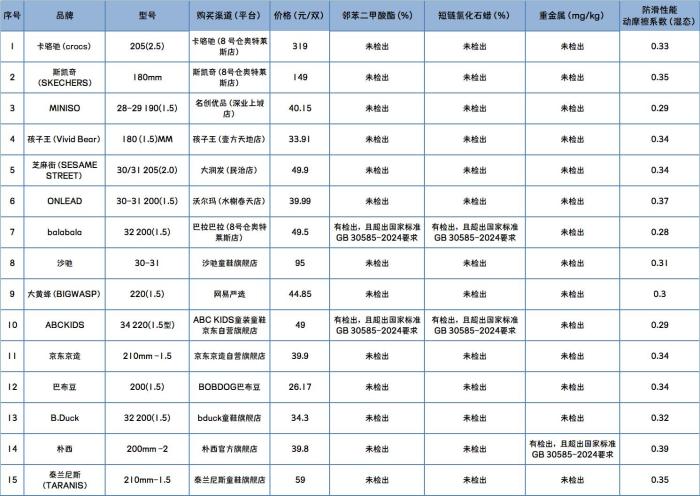
多品牌回应儿童洞洞鞋鞋花化学物质超标
Zhong Guo Xin Wen Wang· 2026-01-20 08:40
Core Viewpoint - Recent testing revealed that certain brands of children's clogs have exceeded chemical substance safety standards, raising concerns about child safety in footwear [1]. Group 1: Testing Results - The Shenzhen Consumer Council conducted a comparative test on 15 brands of children's clogs, finding that balabala and ABCKIDS had phthalates and short-chain chlorinated paraffins exceeding national standards GB 30585-2024 [1][2]. - The brand Puxi was found to have lead content exceeding national standards in the shoe flower component [1][2]. Group 2: Brand Responses - The balabala representative stated that the issue was due to a specific supplier's shoe flower components and confirmed that over 600 affected products would be voluntarily removed and sealed to mitigate potential risks [3]. - Balabala has implemented stricter quality control measures, requiring all accessory products to pass third-party testing before production [3]. - Puxi clarified that they do not manufacture or sell shoe flowers, only the shoe bodies, while ABCKIDS indicated they would investigate the situation further [3].

澎湃回声|有网店销售逃生用的消防面具既不防火也不防烟,多平台回应
Xin Lang Cai Jing· 2026-01-16 09:52
Core Viewpoint - The investigation revealed that some fire escape masks marketed as essential safety equipment are made from non-fireproof materials, rendering them unsuitable for use in fire emergencies [1][2]. Group 1: Product Quality Issues - A test conducted by Zhitong Finance found that eight products labeled as "fire masks" on major platforms like Taobao, Douyin, JD, and Pinduoduo, priced between 20 to 80 yuan, included items that were misrepresented, such as industrial half masks posing as fire masks [1]. - Some fire masks, despite claiming to meet national standards, exhibited significant flaws during testing, including brittle filter mouthpieces and poor flame resistance, with some masks igniting upon contact with fire [1]. - Notably, two different models from the same brand displayed contrasting performance, with one model catching fire while the other demonstrated good flame resistance [1]. Group 2: Regulatory Response - Following the findings, multiple platforms have removed the problematic products, with Taobao, Pinduoduo, Douyin, and JD taking action to address the issues and protect consumer rights [2]. - A previous report by CCTV highlighted similar concerns, prompting the National Fire Rescue Administration and the State Administration for Market Regulation to initiate a nationwide quality safety inspection of fire escape masks from December 2024 to February 2025 [2]. - Inspections revealed widespread use of substandard and expired fire escape masks, with instances of masks that appeared legitimate but failed safety tests, such as those that burned easily or had incomplete components [3].
昆明“4·12”火灾调查报告:涉事电动自行车被加装鼓胀锂电池
Guan Cha Zhe Wang· 2026-01-05 11:57
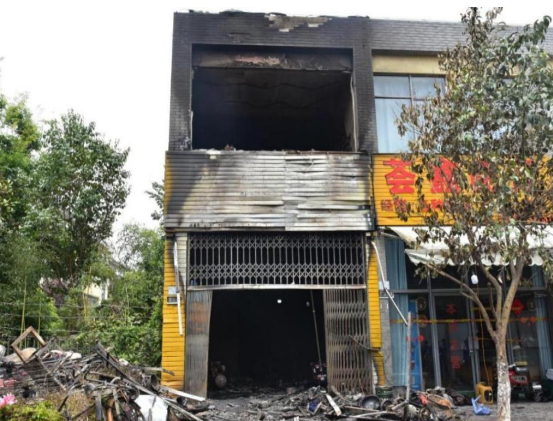
Core Viewpoint - The investigation report on the fire incident in Kunming reveals that the lithium-ion batteries involved were deemed non-compliant with safety standards, leading to significant safety concerns for the manufacturer, Guoxuan High-Tech Co., Ltd. [1][7][8] Group 1: Incident Overview - The fire occurred on April 12, 2025, resulting in 8 fatalities and direct economic losses of 530,400 yuan [1] - The fire was caused by a modified electric bicycle's lithium-ion battery, which short-circuited and ignited surrounding combustible materials [2][4] Group 2: Product Compliance Issues - The involved battery, "JTM Golden Lithium Battery," was found to be non-compliant with the national safety standards, particularly in terms of temperature protection and flame resistance [7][8] - Guoxuan High-Tech Co., Ltd. and its subsidiary, Qingdao Guoxuan Battery Co., Ltd., failed to fulfill their product quality safety responsibilities, violating multiple laws [8][10] Group 3: Manufacturer and Distributor Accountability - Qingdao Guoxuan Battery Co., Ltd. and Anhui Leishi Energy Technology Development Co., Ltd. did not adhere to safety regulations, leading to the distribution of non-compliant products [10] - Kunming Xinye Trading Co., Ltd. also failed to enforce quality checks, providing defective batteries to the consumer while misrepresenting their condition [10] Group 4: Remedial Actions - Following the incident, Qingdao Guoxuan Battery Co., Ltd. initiated a recall of 672 units of the non-compliant "JTM Golden Lithium Battery" to mitigate safety risks [11]

“十四五”时期质量强国建设取得积极成效
Zhong Guo Jing Ji Wang· 2025-12-22 06:58
Group 1 - The "Quality Strong Country Construction" forum held in Beijing on December 19, 2025, focused on summarizing the achievements of the "14th Five-Year Plan" and planning for the "15th Five-Year Plan" in quality development [1] - The national market supervision system has made significant progress in enhancing the macro quality policy framework and improving quality levels during the "14th Five-Year Plan" period [1] Group 2 - During the "14th Five-Year Plan," over 3 million product batches were supervised and sampled by market regulation departments, with 14 categories and 27 types of products, including high-risk items like bottled liquefied petroleum gas regulators and safety helmets, brought under production licensing management [2] - The average annual coverage of key industrial product quality safety supervision directories reached 250 products, with over 200 million inspections conducted on production and sales units [2] - Special rectification actions were taken for key consumer products such as gas appliances and electric bicycles to maintain market order and social stability [2] Group 3 - The market regulation departments initiated traceability for nine product categories, promoted a product quality grading system, and launched the "Quality Improvement and Strong Enterprises" initiative during the "14th Five-Year Plan" [3] - Over 2,000 technical professionals were trained, and more than 670 innovative practice enterprises were incubated in major cities [3] - Consumer education activities reached over 20 million people, and nearly 100 product consumption tips were published [3] Group 4 - The "Quality Strong Chain" project addressed 25,000 quality bottlenecks and challenges, with a total investment of 221 million yuan and 289 quality tackling tasks organized [4] - The implementation of 1,856 quality strong chain projects and the formation of 1,420 quality technology innovation alliances involved 5,375 leading enterprises and 280,000 chain member enterprises [4] Group 5 - The China Consumers Association received over 7.35 million consumer complaints and helped recover economic losses of 6.23 billion yuan during the "14th Five-Year Plan" [5] - The association focused on resolving consumer disputes and improving product and service quality, particularly in areas of public concern such as rural market quality and medical beauty consumption [5] - Over 70 consumer alerts and warnings were published, along with comparative tests on various consumer products to assist consumers in making informed choices [5] Group 6 - The forum also announced the top ten quality news stories for 2025 and the "Quality Strong Country" achievements over the past five years, showcasing the results of the national children's drawing activity [6]
同仁堂卷入磷虾油造假风波陷信任危机
Chang Jiang Shang Bao· 2025-12-17 02:54
Core Viewpoint - The company Tong Ren Tang is embroiled in a scandal regarding the authenticity of its Antarctic krill oil product, which has been found to contain no phospholipids despite claims of high purity [1][2][3] Group 1: Product Quality Issues - A product labeled "Beijing Tong Ren Tang 99% High Purity Antarctic Krill Oil" was found to have a phospholipid content of 0%, raising suspicions of fraud [1][2] - The Shanghai Consumer Protection Committee is investigating the product and has summoned the involved companies for explanations [2] - The product was sold at prices ranging from 35 to 100 yuan on various e-commerce platforms, with misleading marketing claims [2] Group 2: Company Response - On December 15, the company ordered the cessation of sales of the implicated product and initiated a full traceability check [3] - The company stated that the product was sold without authorization and plans to take legal action against the responsible parties [3] Group 3: Historical Context of Quality Issues - The company has faced multiple product quality scandals over the years, including issues with honey, mercury levels in products, and contamination in foot bath products [4][5][6] - These recurring issues have led to a significant erosion of consumer trust in the brand [6][7] Group 4: Financial Performance - The company's revenue and net profit have been declining, with a reported revenue of 133.08 billion yuan and a net profit of 11.78 billion yuan in the first three quarters of 2025, representing declines of 3.70% and 12.78% respectively [8] - The company's stock price has dropped significantly, from a peak of 64.28 yuan per share to around 33 yuan, resulting in a market capitalization of approximately 450 billion yuan, which is less than half that of competitors like Yunnan Baiyao and Pian Zai Huang [8]

同仁堂卷入磷虾油造假风波陷信任危机 老字号失色市值450亿不及云南白药一半
Chang Jiang Shang Bao· 2025-12-17 00:19
Core Viewpoint - The long-established brand Tong Ren Tang (600085.SH) is embroiled in a scandal regarding the authenticity of its Antarctic krill oil product, which has been found to contain no phospholipids despite claims of a 43% content [1][2]. Group 1: Product Scandal - The Shanghai Consumer Protection Commission released test results showing that a product labeled "Beijing Tong Ren Tang 99% High Purity Antarctic Krill Oil" had a phospholipid content of 0, raising suspicions of fraud [1][2]. - The product was sold at prices ranging from 35 to 100 yuan on various e-commerce platforms, with misleading claims about its quality and content [2]. - Tong Ren Tang has ordered the involved company, Anhui Habao Pharmaceutical Co., to cease distribution of the product and has initiated legal action against them for unauthorized use of its brand [3]. Group 2: Historical Issues - Tong Ren Tang has faced multiple product quality issues over the years, including incidents involving excessive nitrite levels, illegal additives, and contamination [5][6]. - The company has been involved in various scandals, such as the "honey incident" in 2018 and the mercury contamination in its Ren Dan product in 2024 [4][5]. Group 3: Financial Performance - The company's revenue and net profit have been declining, with a reported revenue of 133.08 billion yuan and a net profit of 11.78 billion yuan in the first three quarters of 2025, representing year-on-year declines of 3.70% and 12.78%, respectively [8]. - In 2024, the company experienced a slowdown in growth, with revenue of 185.97 billion yuan, a mere 4.12% increase, and a net profit decline of 8.54% [7][8]. - The market performance has also been poor, with the stock price dropping from 64.28 yuan per share in May 2023 to around 33 yuan by December 2025, resulting in a market capitalization of approximately 450 billion yuan, significantly lower than competitors like Yunnan Baiyao and Pian Zai Huang [8].
这些电动车可能危及生命!市场监管总局公布7起执法典型案例
Yang Shi Wang· 2025-12-04 07:59
Core Viewpoint - The safety of electric bicycles is crucial for public safety, and the regulatory authorities are taking strict measures to address quality issues and illegal modifications in the industry [1] Regulatory Actions - The State Administration for Market Regulation is actively enforcing compliance with national standards for electric bicycles, focusing on quality control and illegal modifications [1] - A total of seven typical cases of enforcement actions against non-compliant electric bicycles have been published to highlight the ongoing efforts [1] Case Summaries - **Case 1**: In Xi'an, a sales store was found to have illegally modified and sold 886 non-compliant electric bicycles, with a total value of 2.03 million yuan. The case has been referred to criminal prosecution [2] - **Case 2**: In Qinzhou, a business was penalized for selling 86 non-compliant electric bicycles, resulting in a fine of 206,300 yuan and the confiscation of the vehicles [3] - **Case 3**: In Nanjing, a company was fined 581,400 yuan and had 222 non-compliant electric bicycles confiscated due to safety violations [4] - **Case 4**: In Chuzhou, a manufacturer was penalized for producing 4,834 non-compliant electric bicycle chargers, resulting in a fine of 111,700 yuan [5][6] - **Case 5**: In Nanchang, a store was fined 506,600 yuan and had 593 non-compliant electric bicycles confiscated due to illegal modifications [7] - **Case 6**: In Shanghai, a trading company was penalized for selling non-compliant electric bicycles and illegal modifications, resulting in a total fine of 143,300 yuan [8][9] - **Case 7**: In Shenzhen, a company was fined 108,600 yuan and had 5 non-compliant electric bicycles confiscated due to violations of product quality regulations [10][11]
市场监管总局公布五起儿童玩具产品质量典型案例
Zhong Guo Xin Wen Wang· 2025-12-04 03:33
Core Viewpoint - The State Administration for Market Regulation emphasizes the importance of children's toy product quality and safety, launching a three-year action plan to safeguard the safety of children's and students' products, and has announced five typical enforcement cases related to children's toy quality [1] Group 1: Enforcement Cases - Case 1: Shandong Province's Linyi City investigated Shandong Zhihuihang Educational Toy Co., Ltd. for producing and selling children's toys with forged factory names and addresses, and without mandatory product certification, resulting in the confiscation of 1,651 boxes and a fine of 67,200 yuan [2] - Case 2: Shaanxi Province's Weinan City penalized the Chengcheng Maidou Bear Children's Paradise store for selling children's toys without mandatory product certification, leading to the confiscation of illegal gains of 8,400 yuan and a fine of 11,600 yuan [3] - Case 3: Guangdong Province's Shantou City penalized Shantou Chenghai District Hongle Toy Factory for producing and selling children's toys using forged factory names and certification marks, resulting in the confiscation of 7,620 3D drawing pens and a fine of 46,000 yuan [4] - Case 4: Guangdong Province's Meizhou City penalized the Rui'an Toy Trading Store for selling toys with forged mandatory product certification marks and non-compliance with national standards, leading to the confiscation of illegal gains of 2,800 yuan and a fine of 20,000 yuan [6] - Case 5: Hebei Province's Xingtai City penalized Guangzong County Wanrun Children's Toy Factory for producing and selling children's scooters that do not meet mandatory national standards, resulting in the confiscation of 1,000 scooters and a fine of 50,600 yuan [7]
市场监管总局公布5起儿童玩具产品质量典型案例
Yang Shi Wang· 2025-12-04 03:10
Core Viewpoint - The quality and safety of children's toys are critical for public welfare, and the government is taking strict measures to ensure compliance with safety standards and regulations [1] Regulatory Actions - The State Administration for Market Regulation is implementing a three-year action plan to safeguard the safety of children's and students' products, focusing on identifying and penalizing non-compliant toys [1] - Five typical cases of enforcement actions against toy manufacturers and retailers violating safety regulations have been published [1] Case Summaries - **Case 1**: Shandong Zhihuihang Intelligent Toy Company was penalized for producing and selling toys with forged factory names and addresses, and without mandatory product certification, resulting in a fine of 67,200 yuan and confiscation of 1,651 boxes of toys [2] - **Case 2**: A children's amusement store in Shaanxi was fined 11,600 yuan for selling toys that lacked mandatory product certification, with confiscation of illegal gains amounting to 8,400 yuan [3] - **Case 3**: Guangdong's Hongle Toy Factory faced penalties for using counterfeit factory names and certification marks, leading to a fine of 46,000 yuan and confiscation of 7,620 boxes of toys [4] - **Case 4**: A toy store in Guangdong was fined 20,000 yuan for selling toys with forged certification marks and non-compliance with national standards, along with confiscation of illegal gains of 2,800 yuan [6] - **Case 5**: Hebei's Wanrun Children's Toy Factory was penalized for producing and selling scooters that did not meet national safety standards, resulting in a fine of 50,600 yuan and confiscation of 1,000 scooters [7]
四川省广元市市场监督管理局公布2025年工业产品质量安全“你点我检”抽查结果
Zhong Guo Zhi Liang Xin Wen Wang· 2025-12-01 08:57
Core Points - The article discusses the implementation of a risk monitoring plan for industrial product quality safety in Guangyuan City, Sichuan Province, which includes sampling and testing various products [2] - A total of 30 batches of products were tested, with 29 batches sampled and one batch of paint failing to meet standards, leading to the termination of sampling for that batch [2] - The results indicate that 30 out of 31 batches passed inspection, with only one batch of plastic shopping bags deemed non-compliant, and the case has been referred to local market supervision authorities for further investigation [2] Group 1: Product Testing and Results - The testing covered 15 types of products, including automotive gasoline, automotive diesel, disposable paper food containers, sanitary napkins, and compound fertilizers [2] - On November 7, representatives from various sectors participated in an open day event for product quality inspection, where three batches of sanitary napkins were selected for sampling [2] - The inspection results showed that 30 batches were compliant, while one batch of plastic shopping bags was found to be non-compliant [2][3] Group 2: Consumer Participation and Reporting - Consumers are encouraged to actively participate in monitoring industrial product quality and report any counterfeit or substandard products [2] - A hotline is provided for consumers to report issues, specifically numbers 12345 and 12315 [2]