
产品高端化

Search documents
吉利汽车1月销量超27万辆,全年冲刺345万辆目标
Bei Ke Cai Jing· 2026-02-02 09:15
Group 1 - The core viewpoint of the article highlights Geely Automobile's strong performance in January 2026, with a total passenger car sales of 270,167 units, marking a 1% year-on-year increase and a 14% month-on-month increase, as the company aims for an annual sales target of 3.45 million units [1] - In the new energy sector, Geely's sales reached 124,252 units in January 2026, reflecting a year-on-year growth of approximately 3%, with Zeekr's sales doubling to 23,852 units [1] - Geely's overseas export sales in January 2026 reached 60,506 units, showing a significant year-on-year increase of 121%, with a target of 640,000 units for the year, representing over 50% growth [1] Group 2 - Geely plans to gradually introduce Level 3 autonomous driving features on highways and Level 4 in urban areas in 2026, alongside the launch of Robotaxi trial operations [2] - The company will introduce a new manganese iron phosphate battery system, aiming for a 15% increase in energy density, and will complete the first pack of solid-state batteries in 2026 [2] - Geely's four major brands—Zeekr, Lynk & Co, Geely Galaxy, and Geely China Star—will share resources and collaborate to support the high-end product development and accelerate the AI technology transformation [3]

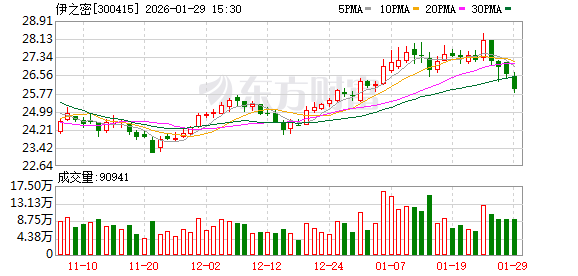
伊之密:公司推进产品高端化、智能化与绿色化升级,提升盈利质量与抗波动能力
Zheng Quan Ri Bao· 2026-01-29 11:09
Core Viewpoint - The company aims to strengthen its operational fundamentals while advancing product upgrades in high-end, intelligent, and green technologies to enhance profitability and resilience against market fluctuations [2] Group 1: Operational Strategy - The company will continue to solidify its operational fundamentals [2] - The focus will be on promoting high-end, intelligent, and green upgrades of products [2] - The goal is to improve profitability quality and the ability to withstand market volatility [2] Group 2: Brand and Global Presence - The company will enhance brand communication and industry influence [2] - There will be an emphasis on improving global service capabilities and delivery reputation [2] - The aim is to provide stable and sustainable operational results to reward shareholders [2]


VF(VFC) - 2026 Q3 - Earnings Call Transcript
2026-01-28 14:00
Financial Data and Key Metrics Changes - Total revenue for Q3 fiscal 2026 was $2.8 billion, up 2% year-over-year, exceeding guidance of a decline of 1%-3% [17] - Operating income was $341 million, stronger than anticipated, contributing to a positive financial performance [6] - Reported net debt, excluding lease liabilities, decreased by almost $600 million, or nearly 20% year-over-year [6] Business Line Data and Key Metrics Changes - The North Face revenue increased by 5%, with a notable 15% growth in the Americas [7] - Timberland revenue rose by 5%, driven by strong performance across both wholesale and DTC channels [10] - Altra experienced significant growth of 23%, with expectations to exceed $250 million in revenue for fiscal 2026 [12] - Vans revenue declined by 10%, consistent with previous quarters, but showed signs of improvement in digital sales [12][13] Market Data and Key Metrics Changes - The Americas region saw a strong performance, up 6%, while EMEA and APAC regions experienced declines of 3% and 4%, respectively [18] - DTC sales increased by 3%, marking the first positive quarter in two years, primarily driven by e-commerce [18] Company Strategy and Development Direction - The company is focusing on premiumization, particularly for The North Face, with plans to systematically enhance product offerings [94] - A new flagship store for The North Face was opened in New York, reflecting a reimagined approach to physical retail [9] - The company aims to reduce debt and leverage, targeting a leverage ratio of 2.5 times by fiscal 2028 [25] Management's Comments on Operating Environment and Future Outlook - Management expressed confidence in the company's ability to navigate a challenging consumer environment, citing strong internal controls and growth initiatives [28] - The company anticipates flat to up 2% revenue growth for Q4, with expectations for continued improvement in gross margin [20][22] Other Important Information - The company is experiencing a shift in marketing strategy, focusing on social-first approaches to enhance brand visibility [10] - A leadership transition was announced, with Brent Hyder becoming the new Chief Commercial Officer [15] Q&A Session Summary Question: Consumer demand erosion due to price increases - Management acknowledged the potential impact of price increases on consumer sentiment but expressed confidence in their ability to drive growth through various strategic levers [28] Question: Gross margin expectations - Management indicated that they are close to their gross margin target of 55% and are optimistic about future improvements despite tariff impacts [30] Question: Vans brand performance - Management confirmed that Vans' underlying trend remains down high single digits but noted improvements in e-commerce and product innovation [38][44] Question: North Face's sequential acceleration - Management highlighted strong growth in the Americas for The North Face and expressed optimism about future performance, citing underdeveloped market potential [47] Question: Traffic improvement in Vans stores - Management reported that while online traffic improved, physical store traffic has not yet seen significant gains, but they remain optimistic about future growth [60] Question: Premiumization strategy for North Face - Management explained that premiumization is a strategic focus due to market opportunities, with a systematic approach to enhancing product offerings [94] Question: Guidance for future quarters - Management is considering reintroducing full-year guidance but emphasized the importance of predictability before doing so [100]

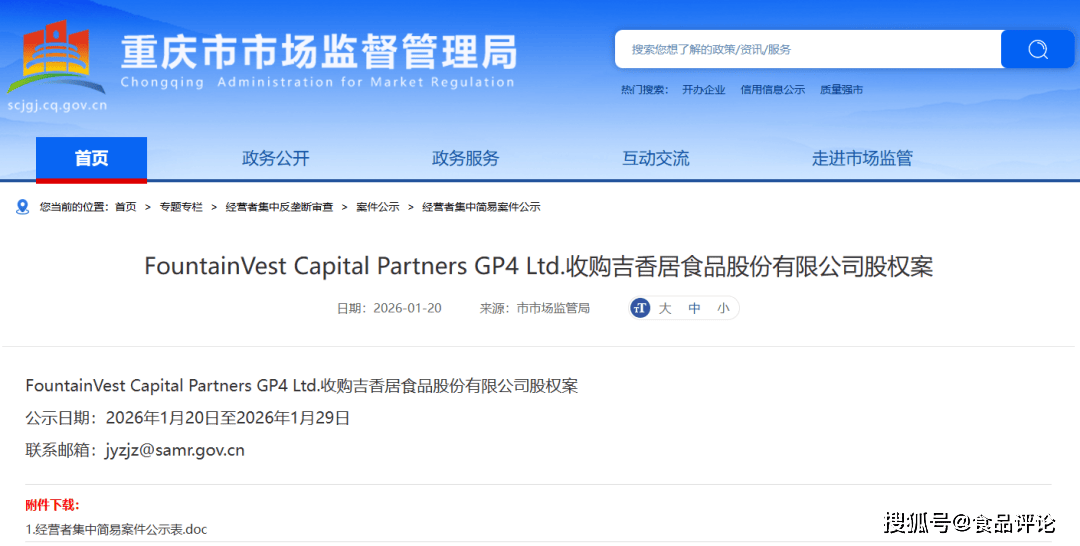
5年上市未果的吉香居易主,这次能否成功圆梦?
Sou Hu Cai Jing· 2026-01-26 08:56
Core Viewpoint - The acquisition of 92% of Jixiangju by FountainVest Capital through its subsidiary Chuanxiang Siyu marks a significant transaction in China's condiment industry, indicating a shift in ownership and potential strategic direction for the company [1][5][8]. Company Summary - Jixiangju, a leading player in the side dish pickle market, has faced challenges in its IPO journey, which has lasted over five years without success, primarily due to ownership changes and compatibility issues with A-share listing requirements [7][9]. - The company has achieved notable sales milestones, ranking first in the all-channel sales of side dish pickles in 2023, with its "Baoxiafan" brand leading the sales in the side dish sauce category for five consecutive years [6][10]. - The founder Ding Wenjun and previous investors, including Sequoia Capital and Tencent, are expected to exit the company following the acquisition, indicating a complete change in control [2][8]. Industry Summary - The condiment market in China is projected to grow from 4,981 billion yuan in 2024 to over 6,788 billion yuan by 2029, with compound annual growth rates for compound condiments expected to reach 9.9% [9][10]. - The industry is experiencing a transformation from incremental expansion to competitive consolidation, with the top five companies in the pickled vegetable segment holding nearly 40% market share, expected to rise above 50% in the next five years [10][12]. - The competitive landscape is evolving, with companies like Fuling Zhacai and Tianwei Foods enhancing their market positions, while Jixiangju faces challenges in national expansion and product health upgrades [10][12].
吉利控股发布2030战略目标:剑指650万辆销量 冲击万亿营收
Zhong Guo Jin Rong Xin Xi Wang· 2026-01-23 08:27
Core Insights - Geely Holding Group has announced its "One Geely, Fully Leading" 2030 strategic goal, aiming for global sales to exceed 6.5 million units and revenue to surpass 1 trillion yuan by 2030 [1][2] Group Strategy - The core of "One Geely" focuses on strengthening top-level coordination and establishing a global strategic layout, while "Fully Leading" emphasizes six core areas: brand, technology, and complete vehicles [1] - The brand strategy will enhance the Geely parent brand and integrate local brands like Geely China Star and Zeekr with international brands such as Volvo and Lotus, alongside partners like Renault to create a global brand matrix [1] Technology Development - Geely will develop a top-tier global new energy architecture covering A to E class vehicles, aiming to reduce average R&D cycle and comprehensive costs by over 30% [1] - In the field of intelligent driving, Geely aims for full coverage of L2 level assisted driving, advancing towards L3 industrialization and accelerating the commercialization of L4 technology and Robotaxi [1] - The safety sector will focus on establishing a "world safety dual-polar" pattern, promoting the "Shen Dun Jin Zhuan battery" as an industry benchmark and advancing the industrialization of semi-solid and solid-state batteries [1] Ecological Layout - Geely will focus on user services, future mobility, and methanol-hydrogen electric fields, including the launch of 100,000 customized Robotaxi models by 2030 [2] - The methanol-hydrogen sector will expand multi-scenario applications and accelerate the construction of methanol refueling networks [2] Talent and Sustainability - Geely will deepen its "Talent Forest" strategy with a total investment of 300 million yuan in a youth innovation and entrepreneurship incentive plan, exploring new talent cultivation models [2] - The company will strengthen ESG governance, promoting low-carbonization throughout the product lifecycle and encouraging supply chain partners to achieve carbon reduction [2] Future Outlook - By 2025, Geely aims to achieve sales of 4.116 million units with a 56% penetration rate of new energy vehicles [2] - The company plans to drive high-quality development in the automotive industry through technological innovation in AI, energy diversification, product premiumization, and internationalization, creating a safe, reliable, and intelligent travel experience for global users [2]
高端不贵,好喝不醉?2026酒市进入“价值重构期”
Xin Lang Cai Jing· 2026-01-18 06:08
Core Insights - Kingsland Drinks predicts that by 2026, the global alcoholic beverage market will evolve towards moderation in consumption, premiumization of products, diversification of flavors, and environmentally friendly packaging driven by consumer upgrades, health awareness, and sustainability concepts [3][12] - The essence of alcoholic beverages remains in creating joy, connecting emotions, and enhancing daily life, as emphasized by Vicky Wood, the brand development director of Kingsland Drinks [3] Group 1: Trends in Packaging and Consumption - Canned beverages, particularly canned wine, are rapidly growing as they break the limitations of traditional glass bottles, reflecting a shift towards a more casual and experience-oriented modern lifestyle [4] - Kingsland Drinks is actively responding to this trend by investing in high-speed canning lines and collaborating with organic wine brands to launch a full range of canned products, appealing to younger consumers and those with strong environmental awareness [6] - In the Chinese market, canned wine and cocktails are gradually penetrating various channels such as dining, outdoor, and instant retail, expected to play an increasingly important role in ready-to-drink scenarios [6][8] Group 2: Rational Drinking and Quality Upgrade - Rational drinking is becoming a consensus across generations, especially among high-income urban groups and young consumers, promoting the idea of "drinking less, drinking better" [6][8] - The market supply has shifted from merely mimicking alcoholic taste to focusing on the integrity of ingredients, craftsmanship, and flavor structure, allowing non-alcoholic and low-alcohol products to possess tasting value and pairing capabilities [6] Group 3: Value Reconstruction in Premium Beverages - The definition of "premium" alcoholic beverages is undergoing a silent transformation, with consumers increasingly accepting the "market bottling" model, which reduces costs and carbon emissions while making quality wines more accessible [9][11] - Kingsland Drinks' Australian wine brand has achieved sales and reputation growth by localizing marketing and bottling in the UK, indicating that "premium" is moving towards a comprehensive value system rather than relying solely on expensive labels [11] Group 4: Innovation and Sustainability - Flavor innovation remains key to attracting consumers, with elements like fruit, tea, and spices being integrated into traditional wine bodies to create richer and more layered taste experiences [12] - Environmental considerations are becoming crucial in product development and packaging design, with increased use of lightweight glass, recycled materials, and recyclable cans reflecting the industry's commitment to long-term sustainability [12]

古越龙山:公司将通过“好酒工程”持续推进产品高端化、高颜值升级,加强与设计机构合作提升重点产品形象和附加值
Zheng Quan Ri Bao Zhi Sheng· 2026-01-14 11:45
Core Viewpoint - Guyue Longshan has been recognized for its innovative product, the high and low Huangjiu, which won the Excellent New Product Award in Zhejiang Province, highlighting the company's commitment to its "high-end and youthful" strategy [1] Group 1: Product Innovation and Strategy - The company is optimizing product packaging design and enhancing high-end attributes and cultural connotations as part of its strategic direction [1] - Future initiatives will include the "Good Wine Project" aimed at continuously promoting product high-end and aesthetic upgrades [1] - The company plans to strengthen collaborations with design institutions to enhance the image and added value of key products [1]

伊利股份(600887):莫道红海无新意 化而为霞映满天-伊利的红利价值重估与成长再发现
Xin Lang Cai Jing· 2026-01-12 08:30
Core Viewpoint - The company is positioned for growth with a strong dividend yield, a solid liquid milk business, and a second growth curve on the horizon, indicating a favorable turning point in the cycle [1] Group 1: Company Logic - High dividend commitments provide a safety margin, and the recovery in profitability exceeds expectations [1] - In a weak macro environment, high dividends attract many investors, while the company's strong operational capabilities reduce total operating costs [1] - The liquid milk business has passed its darkest hour, with upcoming benefits from low base and low inventory, alongside an impending industry cycle turning point that will further benefit the company [1] Group 2: Long-term Logic - Strategic upgrades and diversified drivers aim for high-quality profit growth, with profit growth expected to outpace revenue growth [1] - The platform strategy drives the second growth curve, with liquid milk maintaining its leading position [1] - The company integrates global milk sources and R&D resources, coupled with a digital transformation across the entire industry chain to reduce costs and improve efficiency, ensuring long-term high-quality development [1] Group 3: Business Segmentation - The company focuses on diversified upgrades, emphasizing new growth areas such as functional nutrition, deep processing of dairy products, and non-dairy sectors [2] - The company's profitability relies on management efficiency, with cost and channel control leading to a net profit margin that surpasses competitors [2] - The business is divided into three main segments: liquid milk, milk powder and dairy products, and frozen products, all of which lead the industry and support growth through collaboration [2] Group 4: Market Perspective - Despite being in a mature industry, the company still possesses growth potential due to a shift in competition from market share to product premiumization and channel refinement [3] - Structural opportunities exist within the dairy industry, with a focus on category upgrades and the need for R&D investment, indicating a trend where stronger companies will continue to thrive [3] - Rising raw milk prices alleviate industry price wars, benefiting profit margin recovery and helping leading dairy companies solidify their market share [3] Group 5: Investment Projections - Revenue projections for the company from 2025 to 2027 are estimated at 1189.9 billion, 1250.4 billion, and 1302.6 billion yuan, with year-on-year growth rates of 2.8%, 5.1%, and 4.2% respectively [3] - Net profit forecasts for the same period are 113 billion, 125.3 billion, and 134.4 billion yuan, with year-on-year growth rates of 27.9%, 10.9%, and 7.2% respectively [3] - The company is expected to have EPS of 1.79, 1.98, and 2.12 yuan for the years 2025, 2026, and 2027, respectively [3]

魏氏家族80后少帅接班,能拯救失血的康师傅帝国吗
创业家· 2026-01-11 10:11
Core Insights - The article discusses the challenges faced by Master Kong (康师傅) as it transitions leadership from long-time CEO Chen Yingran to new CEO Wei Hongcheng, highlighting the need for growth amidst declining revenues and a shrinking dealer network [5][10][20]. Group 1: Leadership Transition - Chen Yingran, the long-serving CEO of Master Kong, has announced his retirement, with Wei Hongcheng set to take over in January 2026, marking a complete transition of leadership to the second generation of the Wei family [5][10]. - The Wei family retains significant control over the company, with their holding company owning 33.42% of Master Kong's shares, equal to that of Japanese shareholder Sanyo Foods [10][11]. Group 2: Financial Performance - Master Kong reported a revenue of 40.092 billion yuan for the first half of 2025, a decrease of 1.109 billion yuan (2.69%) compared to the previous year [6][14]. - The number of dealers has decreased from 67,215 at the end of 2024 to 63,806 in the first half of 2025, indicating a loss of 3,409 dealers [7][16]. Group 3: Market Challenges - The rise of the food delivery industry has significantly impacted the demand for instant noodles, which were once a staple for consumers, leading to increased competition from major internet companies like Alibaba, Meituan, and JD [12][13]. - The beverage segment, which contributes 65.74% of total revenue, saw a decline of 2.61%, while the instant noodle segment, accounting for 33.59%, also experienced a decrease of 2.52% [14][20]. Group 4: Strategic Responses - Master Kong is attempting to maintain profitability despite declining revenues, achieving a net profit of 2.271 billion yuan, up over 20% from the previous year, through asset sales and cost management strategies [20][21]. - The company has implemented a new pricing strategy, raising prices on key products, which poses a risk of losing market share in price-sensitive segments [23][24]. Group 5: Competitive Landscape - The competitive landscape in the ready-to-drink tea market is shifting, with competitors like Nongfu Spring's Dongfang Shuli and Suntory's Ulong tea gaining significant market share, impacting Master Kong's position [25]. - Master Kong's market share in the ready-to-drink tea segment has decreased from 29.5% to 27.7%, while Dongfang Shuli's share increased from 19.9% to 24.8% [25].

北京首钢股份有限公司 2025年度业绩预告
Zhong Guo Zheng Quan Bao - Zhong Zheng Wang· 2026-01-05 16:47
Group 1 - The company forecasts an upward trend in its performance for the year 2025, covering the period from January 1, 2025, to December 31, 2025 [1] - The earnings per share calculation considers the impact of the company's share repurchase [1] Group 2 - The company has communicated with the accounting firm regarding the performance forecast, and there are no discrepancies between the two parties [2] - The improvement in performance is attributed to the company's commitment to optimizing product structure, focusing on high-end and differentiated development, which has provided significant support for performance enhancement and operational resilience [2] - The company adheres to a "very low cost" management philosophy, achieving cost reductions through consumption, technology, and collaboration, which has further strengthened its operational efficiency [2] - The company emphasizes technological innovation as a key driver, integrating it with management and business model innovations to mitigate external market risks and enhance market competitiveness [2]
