低轨卫星互联网

Search documents
提供安全可靠的低轨卫星互联网服务(创新故事)
Ren Min Wang· 2026-01-20 22:49
Core Viewpoint - The development of the Qianfan satellite constellation aims to provide global high-speed, real-time, secure, and reliable low-Earth orbit satellite internet services, effectively moving the internet into space [1][5]. Group 1: Technological Innovations - The Qianfan satellite project requires a high number of satellites, with a target of 324 satellites to be launched within one to two years, and potentially doubling that number for full commercial realization [1]. - The project has adopted a "one rocket, 18 satellites" launch model to reduce costs and increase the number of satellites deployed, marking a new path for large-scale satellite manufacturing and launching [1][5]. - Innovations include a flat-panel integrated structure for satellites, the use of a rotating separation technology for stacked launches, and the implementation of krypton gas propulsion to significantly lower costs [1][2]. Group 2: Challenges and Iterative Development - The transition from traditional satellite structures to a flat design required extensive redesign and testing, including simulations to ensure safe and efficient satellite separation during launches [2]. - The project faces challenges in aligning user needs with application scenarios, necessitating collaborative innovation and feedback loops between enterprises and the project team [2][4]. - A strategy of "developing one generation, pre-researching one generation, and planning one generation" is employed to ensure continuous iteration and improvement of satellite designs based on real-world feedback [2][4]. Group 3: Application and Future Vision - The Qianfan satellite constellation is actively testing and demonstrating applications, aiming to provide seamless communication in remote areas, such as high-definition calls on ships in the Pacific and real-time interactions in rural areas [3][5]. - The project is positioned as a significant step towards achieving a global, high-speed, and reliable low-Earth orbit satellite internet, contributing to national strategic security and autonomy in the space internet domain [5]. - The vision of "universal connectivity" is being accelerated as the project progresses, with the potential to transform communication in previously underserved regions [5].
长城基金基金经理尤国梁:商业航天的远期空间与短期估值
Shang Hai Zheng Quan Bao· 2026-01-18 18:39
Core Viewpoint - The commercial aerospace sector has experienced a significant surge, but a market correction has occurred following this rise. The current adjustment is viewed as a potential phase of consolidation rather than a long-term downturn, given the upward industrial trend in the domestic commercial aerospace sector [1]. Group 1: Industry Trends - The commercial aerospace boom is attributed to multiple factors, including a notable increase in rocket launch frequency in the second half of 2025 and the successful orbiting of reusable rockets, which alleviated the domestic capacity bottleneck and laid the groundwork for commercialization [2]. - The "14th Five-Year Plan" emphasizes the goal of becoming a "space power," indicating the government's strategic focus on the aerospace sector [2]. - The commercial aerospace industry is seen as having substantial growth potential, with low-orbit satellite internet already connecting numerous users and the overseas "Starlink" business proving the viability of its business model [2]. Group 2: Market Dynamics - Concerns regarding the valuation of the commercial aerospace sector exist, as the overall industry valuation was already high before the 2025 market surge. The sector is currently at the early stage of an industrial inflection point, where anticipated increases in rocket and satellite launches may not immediately reflect in financial statements [3]. - The market's focus and rotation of funds align with the future development rhythm of the industry, initially concentrating on the rocket sector, which has seen the most significant changes and breakthroughs recently [3]. - Future market dynamics are expected to depend on which sector experiences major catalysts or industrial advancements, with ongoing performance across various directions including satellite manufacturing and operational services [3].
低轨卫星互联网加速落地 中国卫通能否守住卫星通信“C位”?
Mei Ri Jing Ji Xin Wen· 2026-01-14 13:06
Core Viewpoint - The rise of commercial aerospace is disrupting the capital market landscape traditionally dominated by basic telecom operators, with China Satcom's stock price surging past China Unicom's, making it the third-largest operator by market capitalization in A-shares [1] Group 1: Company Overview - China Satcom's main business involves satellite space segment operations and related application services, primarily in satellite communication broadcasting [1] - As of June 30, 2025, China Satcom operates 18 commercial communication broadcasting satellites, all of which are high-orbit satellites [2] - The company has initiated work on low-orbit satellite constellations, recognizing the trend of combining high and low-orbit communication satellites for future development [2] Group 2: Market Dynamics - The satellite communication market is becoming increasingly competitive, with China Satcom's revenue and net profit showing a declining trend from 2022 to 2024 [4] - The company faces challenges in new business development due to market cultivation periods, economic downturns, and intensified competition from international markets [4] - The construction and operation of low-orbit satellite internet present both opportunities and challenges for China Satcom, with the market still in its initial development phase [5][6] Group 3: Regulatory Environment - The Ministry of Industry and Information Technology issued guidelines in August 2025 to promote the development of the satellite communication industry, encouraging telecom operators to expand services based on low-orbit satellite internet [6] - Major telecom operators, including China Telecom, China Mobile, and China Unicom, have all obtained licenses for satellite mobile communication services, indicating a broad industry shift towards satellite internet [6]

商业航天板块仍是关注焦点,通用航空ETF(563320)、航空航天ETF(563380)助力布局空天领域长期机遇
Xin Lang Cai Jing· 2026-01-14 05:02
Group 1 - The commercial aerospace sector has maintained high market enthusiasm since 2026, driven by clear top-level design, increased frequency resource applications, decreasing launch costs, and sustained capital interest [1][4][5] - The Aerospace ETF (563380) has seen significant inflows, accumulating 373 million yuan over five consecutive trading days, with fund shares and scale reaching new highs of 437 million shares and 572 million yuan, representing increases of approximately 199% and 236% compared to the end of 2025 [1][5] - The General Aviation ETF (563320) also showed active trading, with a single-day transaction volume of 96 million yuan, marking a new high for the past ten trading days, and a notable improvement in net inflows compared to the entire year of 2025 [1][6] Group 2 - On January 10, 2026, China submitted an application to the ITU for frequency and orbital resources for an additional 203,000 satellites, covering 14 satellite constellations, marking a significant increase from the previous application of 28,000 satellites, indicating a strategic shift towards large-scale investment in low-orbit satellite internet [1][6] - According to GF Securities, the new satellite applications are expected to create a trillion-yuan market space for commercial aerospace, benefiting the satellite manufacturing and rocket capacity segments if the launch plans are successfully executed [2][6] - The management company of the Aerospace ETF and General Aviation ETF, Huatai-PB Fund, is one of the first ETF managers in China, with its flagship product, the Huatai-PB CSI 300 ETF, reaching a scale of 434.213 billion yuan and announcing a cash dividend of 1.23 yuan per 10 fund shares, potentially setting a record for single dividend payouts in domestic ETFs [2][6]
商业航天:战略定位升级,核心环节突破
Changjiang Securities· 2026-01-13 06:13
- The report primarily focuses on the commercial aerospace industry, highlighting its strategic importance and the development of its ecosystem, including satellite manufacturing, rocket launches, and downstream applications[9][15][28] - The "Guozheng Commercial Satellite Communication Industry Index" (980018.CNI) is introduced as a quantitative model reflecting the performance of A-share companies in the satellite communication industry, covering the entire value chain from satellite manufacturing to communication services[10][61][80] - The index's construction methodology emphasizes its focus on the aerospace and electronics sectors, with a concentrated weight distribution in core industry segments such as aerospace equipment, communication devices, and semiconductors[10][61][66] - The "Satellite ETF (159206)" is a passive index fund designed to closely track the performance of the Guozheng Satellite Communication Index, employing a full replication strategy to minimize tracking error and deviation[11][83] - The ETF's performance metrics include an annualized tracking error target of less than 2% and a daily tracking deviation of less than 0.2%, with a fund size of 117.69 billion yuan as of January 9, 2026[11][83] - The Guozheng Satellite Communication Index has demonstrated superior returns compared to broader market indices, with a year-to-date return of 18.96% and a one-year return of 122.94% as of January 9, 2026[80][81] - The index's constituent stocks include leading companies in aerospace equipment, electronic manufacturing, and semiconductor design, reflecting a balanced mix of large-cap leaders and growth-oriented mid-cap firms[67][68][70]



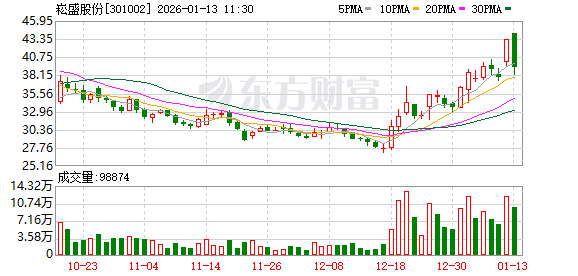
崧盛股份:公司参股公司主要产品包括航空/宇航级谐波减速器
Mei Ri Jing Ji Xin Wen· 2026-01-13 03:56
每经AI快讯,有投资者在投资者互动平台提问:贵司是否通过投资重庆精刚,切入"低轨卫星互联网"这 一爆发性赛道? 崧盛股份(301002.SZ)1月13日在投资者互动平台表示,公司参股公司重庆精刚传动科技有限公司主要 产品包括航空/宇航级谐波减速器,产品主要应用于卫星天线、太阳能帆板、相机的控制关节等。 (文章来源:每日经济新闻) ...

军工对话通信-商业逻辑如何实现闭环
2026-01-13 01:10
Summary of Key Points from the Conference Call Industry Overview - The conference call discusses the satellite communication industry, particularly the relationship between ground operators and satellite operators in China and abroad. The development of overseas satellite networks is driven by insufficient ground network coverage and high prices, which contrasts with the domestic operators' responsibilities to provide services in remote areas [1][2]. Core Insights and Arguments - **Collaboration Over Competition**: The future relationship between ground operators and satellite operators is expected to be collaborative rather than competitive. This is exemplified by the partnership between T-Mobile and SpaceX, where frequency authorization allows for mutual benefits [3][4]. - **Market Transformation Timeline**: The transition to satellite services in remote areas is anticipated to occur around 2030, with potential market impacts beginning as early as 2027-2028. This shift is influenced by the National Development and Reform Commission's (NDRC) inclusion of profit in the assessment of ground operators [4]. - **User Density and Market Potential**: Approximately 25% of China's population lives in areas where ground communication is economically unfeasible. This demographic is likely to be served by satellite networks in the future, leading to a significant market opportunity [5][6]. - **Market Size Estimation**: If satellite network penetration reaches 25%, it could correspond to a market size exceeding 200 billion yuan, with the overall market potential estimated to exceed 500 billion yuan, potentially reaching a trillion yuan level in the future [6]. Important but Overlooked Content - **Quantitative Analysis of Market Space**: The analysis emphasizes the SaaS business model, where increased user numbers lead to reduced costs, making profitability achievable. The model considers factors such as base station costs, operational expenses, and average revenue per user (ARPU) [5][6]. - **Key Companies to Watch**: In the network construction phase, companies with anti-deflation attributes such as Taikang Technology, Wuhan Institute of Communication, and Fenghuo Communication are highlighted. In the application phase, HaiGe Communication is noted for its strong partnerships with China Mobile and China Star Network, positioning it as a key player in the commercial space [7]. Conclusion - The satellite communication industry is poised for significant growth driven by collaboration between ground and satellite operators, with substantial market opportunities in underserved regions. Key players in both the network construction and application phases are positioned to benefit from this evolving landscape.


奋起直追SpaceX:欧洲、加拿大、日本都在发力,就连印度也在整活...
Hua Er Jie Jian Wen· 2026-01-12 13:12
Core Insights - A global competition around low Earth orbit satellite internet is intensifying, with various countries and commercial space companies aiming to challenge SpaceX's dominance in satellite communications, which is tied to both commercial interests and national security [1] Group 1: SpaceX Developments - The FCC has approved SpaceX to deploy an additional 7,500 second-generation Starlink satellites, bringing the total approved to 15,000, with approximately 9,400 currently operational [2] - SpaceX is projected to complete 154 launches by 2025, accounting for over 80% of total U.S. launches, and controls nearly two-thirds of active satellites globally [2] - The FCC has set strict deployment deadlines for SpaceX, requiring 50% of the second-generation satellites to be operational by December 2028 and the remaining by December 2031 [2] Group 2: European Initiatives - The European Space Agency has approved a record €22 billion funding plan, with approximately €900 million allocated to support five startups aiming to enhance Europe's launch capabilities [3] - Germany's Isar Aerospace is one of the leading challengers, having raised over €500 million and planning to produce more than 30 rockets annually [3] - Geopolitical factors, including tensions with the U.S. and the implications of the Russia-Ukraine war, are driving Europe to strengthen its space sector [3] Group 3: Canadian Efforts - Canada is investing nearly CAD 183 million over three years to improve domestic launch capabilities, with Kepler Communications recently launching 10 low Earth orbit satellites [5] - Kepler aims to enhance its optical relay network, utilizing advanced technology to significantly improve data transmission speeds [5] - The Canadian government has allocated CAD 81.8 billion over five years to bolster defense capabilities, which includes support for space initiatives [5] Group 4: Japanese Plans - Japan is developing a "Japanese version of Starlink" with a budget of ¥150 billion (approximately USD 960 million) to support domestic satellite communication services [6] - This initiative is driven by concerns over reliance on foreign satellite communications, especially highlighted during natural disasters [6] Group 5: Indian Challenges - India's ambitions in the global commercial space sector are facing setbacks due to recent launch failures, raising concerns about the reliability of its rockets [7] - Despite these challenges, India continues to show growth potential in heavy-lift capabilities, successfully launching its largest rocket for commercial purposes [7] Group 6: Chinese Developments - China is accelerating its reusable technology updates, which could significantly reduce launch costs and facilitate the deployment of low Earth orbit satellites [9] - The country has applied for frequency resources for over 200,000 satellites, indicating a strategic national focus on satellite communications [9]
商业航天继续爆发,航空航天ETF(159227)涨超7%,单日成交额创历史新高
Mei Ri Jing Ji Xin Wen· 2026-01-12 07:51
Group 1 - The aerospace sector remains active, with the Aerospace ETF (159227) increasing by 7.15% and achieving a record daily trading volume of 1.24 billion yuan as of 1:59 PM on January 12 [1] - The ETF has seen a net inflow of over 552 million yuan, bringing its total size to 2.583 billion yuan, also a record high, maintaining its position as the largest in its category [1] - Major stocks within the ETF, such as Hualichuangtong, China Satellite, and Aerospace Electronics, have reached their daily limit, while Guobo Electronics surged over 19% [1] Group 2 - The International Telecommunication Union (ITU) reported that China has submitted plans for over 200,000 large-scale satellite constellations by December 2025, setting a new record for satellite constellation applications [1] - Dongwu Securities anticipates that the construction of low-orbit satellite internet in China will enter a new phase of intensive deployment in the first half of 2026, with significant satellite tenders expected from StarNet Group and Yuanxin Satellite [1] - This upcoming round of tenders is expected to significantly increase satellite demand and promote collaborative development across the entire industry chain, from rocket to satellite manufacturing and payload support [1]
美国商务部撤销国产无人机列入受管制清单,航空航天ETF天弘(159241)标的指数飙涨近6%,盘中交易价格再创上市以来新高!
Sou Hu Cai Jing· 2026-01-12 05:12
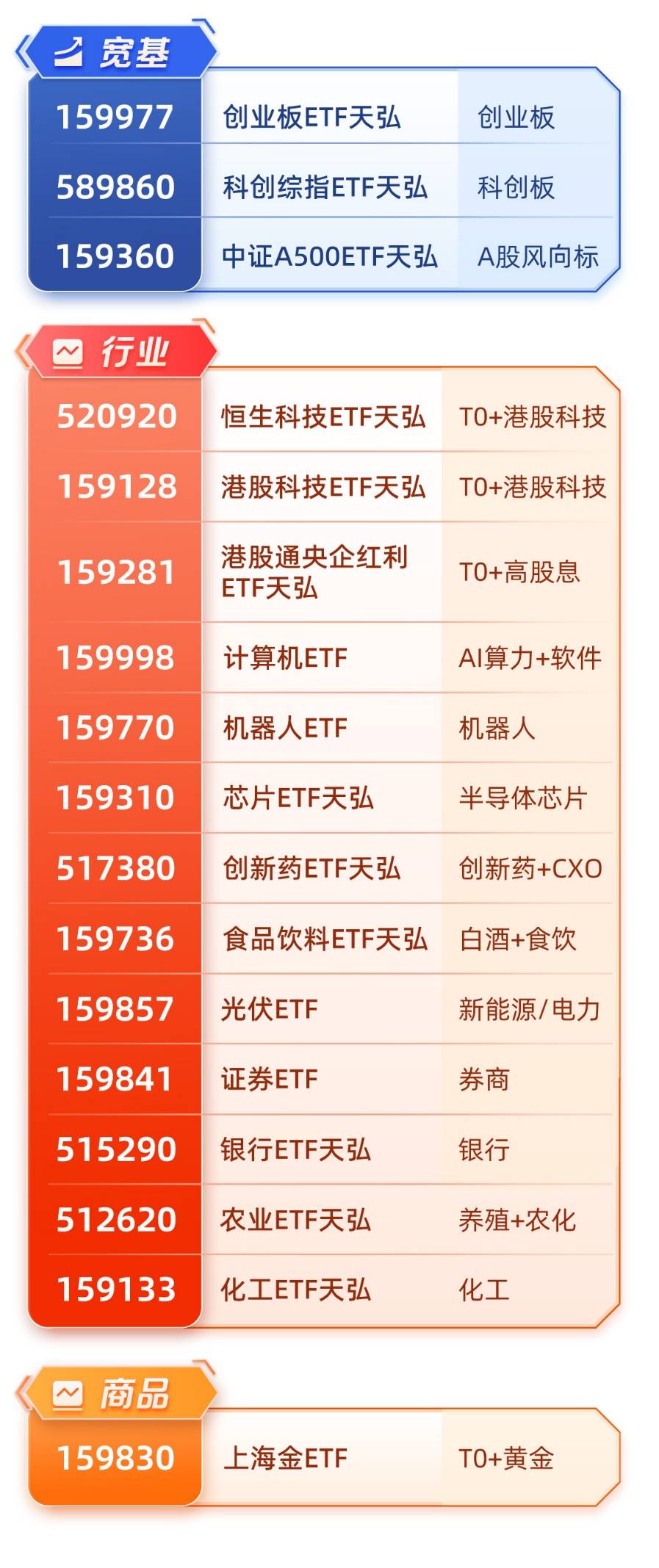
截至2026年1月12日午间收盘,航空航天ETF天弘(159241)盘中交易价格再创上市以来新高!换手23.42%,成交1.77亿元,市场 交投活跃。跟踪的国证航天航空行业指数(CN5082)强势上涨5.81%,成分股国博电子上涨18.74%,华力创通上涨17.35%,新劲 刚上涨16.42%,上海瀚讯,雷电微力等个股跟涨。 截至1月9日,航空航天ETF天弘(159241)最新规模达7.25亿元,创成立以来新高。航空航天ETF天弘(159241)近1周份额增长 3600.00万份,实现显著增长。 资金流入方面,航空航天ETF天弘(159241)最新资金净流入8539.27万元。 【产品亮点】 航空航天ETF天弘(159241)提供了高效把握核心军工空天机遇的工具,其跟踪国证航天指数,军工属性极强,申万一级军工行业 占比97.86%,是全市场军工含量最高的指数!更聚焦的是,其航空航天装备权重占比高达66.8%,远超中证军工和中证国防指 数。 【热点事件】 | 之 宽星 | | | | --- | --- | --- | | 159977 | 创业板ETF天弘 | 创业板 | | 589860 | 科创综指ETF ...