
供应中断

Search documents
美国对俄挥出制裁“重拳”,油价应声大涨超5%!
Jin Shi Shu Ju· 2025-10-23 13:27
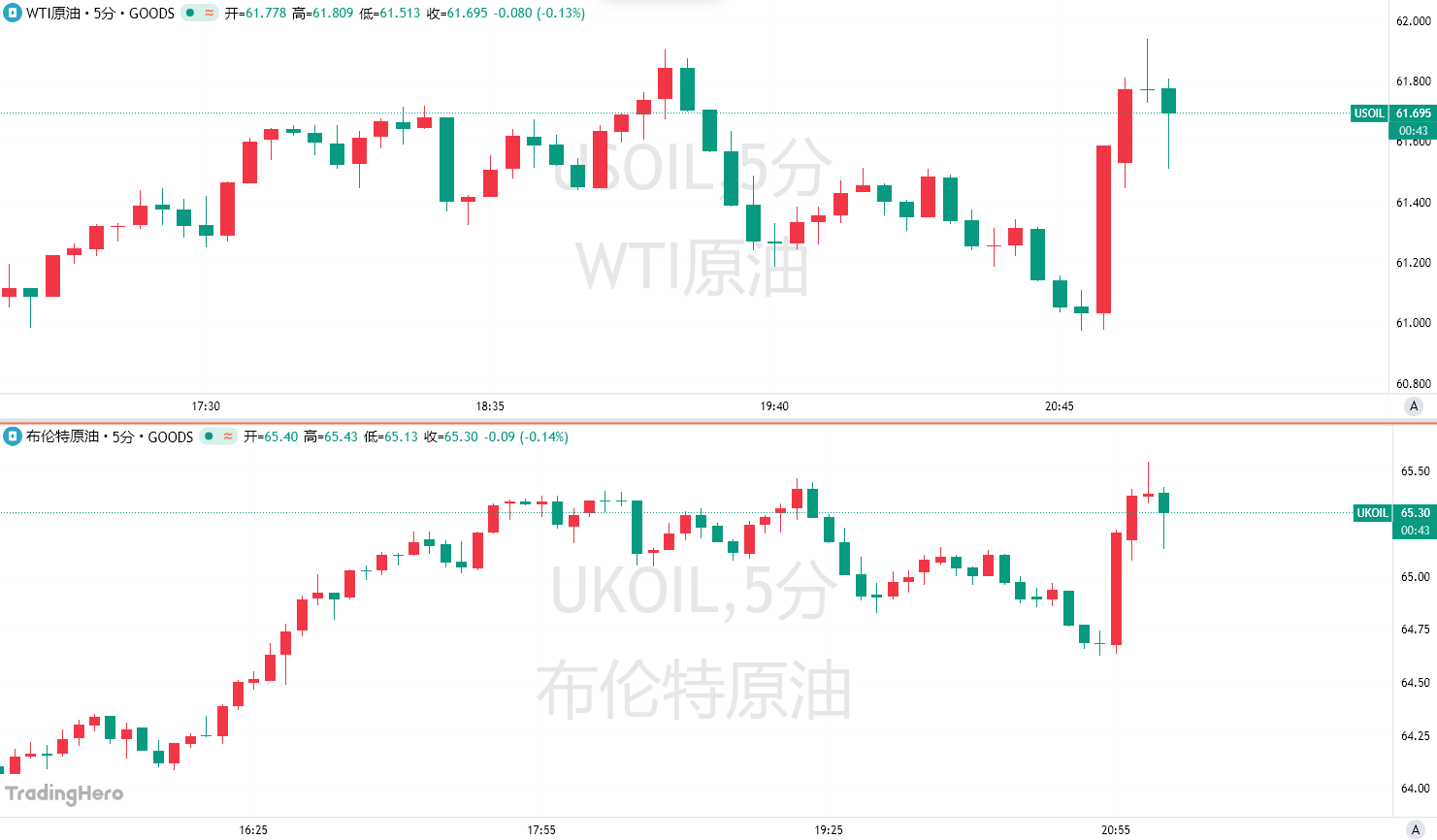
Core Viewpoint - The recent U.S. sanctions against major Russian oil companies have led to a significant increase in international oil prices, raising concerns about the supply from one of the world's top oil producers [1][4]. Group 1: Impact of Sanctions - The U.S. has blacklisted major Russian oil companies, including Rosneft and Lukoil, causing market fears that India, a key buyer, may reduce its purchases from Moscow [4][5]. - The sanctions represent a significant escalation in U.S. pressure on Moscow, potentially leading to major disruptions in Russian oil production and exports [5][6]. - The European Union has also imposed additional sanctions targeting Russian energy infrastructure, including a complete trading ban on Russian oil companies [5][6]. Group 2: Market Dynamics - Despite signs of oversupply in the oil market, the sanctions could have a substantial impact, particularly as India imports over one-third of its oil from Russia [6][7]. - The International Energy Agency (IEA) predicts that global oil supply will exceed demand by nearly 4 million barrels per day next year, indicating a potential buffer against the sanctions [6]. - Recent data shows that Russian oil exports have reached a 29-month high, suggesting that Russia has experience in circumventing sanctions [6][8]. Group 3: Price Movements - Brent crude prices have rebounded from a five-month low, with both WTI and Brent crude experiencing over a 4% increase, marking the largest rise since the Israel-Iran conflict began [1][9]. - The spread between near-term and longer-term Brent futures has narrowed due to concerns about potential oversupply, but recent price movements indicate a tightening market [8][9]. - Analysts expect Brent crude to trade within the range of $60 to $70 per barrel, reflecting a shift in market sentiment from oversupply concerns to potential supply disruptions [9].

LME CEO: Most copper price action driven by supply side
Youtube· 2025-10-14 12:30
Core Insights - The current commodities market, particularly for copper, is experiencing supply tightness, which is influencing spot prices to rise above futures prices, indicating backwardation [1][2][14] - The London Metal Exchange (LME) operates under a duty unpaid contract structure, which allows for a global baseline price unaffected by tariffs, contrasting with the duty paid prices seen in New York [3][4] - There is a medium-term demand driver for copper across various applications, but current price actions are primarily influenced by supply-side disruptions [6][7] Supply and Demand Dynamics - Supply disruptions have been noted, including tragic incidents affecting the supply chain, highlighting its fragility [7] - Despite a growing Chinese economy, the demand for copper has not matched previous levels, leading to a surplus in the market [8][9] - The establishment of delivery warehouses in Hong Kong aims to facilitate the arbitrage between short-term supply and medium-term bullish expectations [10] Market Structure and Trading Opportunities - The LME is focusing on enhancing transparency and diversity in supply chains by introducing new brands from various regions [17] - There is a conversation around the need for the West to reinvest in smelting capacity to ensure supply chain diversity [18] - The LME has introduced reports to improve market visibility, such as the off warrant stock report, to democratize trading [21] Speculation and Market Governance - The LME is committed to enhancing market transparency to prevent speculative manipulation, although concerns about price manipulation in the copper market persist [19][22] - The governance of the LME copper contract is viewed as robust, with ongoing efforts to shine a light on broader market activities [22][23]

Novelis工厂火灾重创供应链 美国铝价居高不下
Wen Hua Cai Jing· 2025-10-14 01:50
Group 1: Aluminum Price Trends - The Aluminum Monthly Metal Index (MMI) has remained stable, with a mild increase of 0.5% from September to October, indicating a rising trend in aluminum prices supported by various factors [1] - Following a significant fire at Novelis' Oswego plant, which produces about 40% of the aluminum sheets for the automotive industry, the overall outlook for U.S. aluminum prices has changed, with Midwest premiums reaching a historical high of $0.77 per pound as of October 6 [2][3] - The LME three-month aluminum price increased by 2.61% last month, reaching its highest level since March, reflecting a broader trend of rising prices among other base metals [6] Group 2: Supply Chain Impact - The fire at Novelis has severely weakened U.S. aluminum production capacity, with the plant expected to remain offline until early next year, impacting the automotive supply chain significantly [2] - U.S. aluminum imports have been declining, with a 3.69% decrease in aluminum sheet imports from February to August compared to the same period in 2024, contributing to domestic supply tightness [4] - Overall, aluminum product imports have decreased by 10.17%, indicating that the U.S. remains a net importer of aluminum, necessitating overseas supply to meet demand [5] Group 3: Market Dynamics - The imposition of tariffs has intensified the impact of supply disruptions on the market, leading buyers to increasingly seek domestic producers for raw materials [5] - Despite the current upward trend in aluminum prices, ongoing inflationary pressures and a softening demand environment may challenge the sustainability of this trend in the coming months [6][7]
供应中断与美联储政策预期推动铜价升至一年多来高点
Sou Hu Cai Jing· 2025-10-02 11:05
Core Insights - Copper prices have surged to their highest level in over a year, driven by concerns over global supply disruptions and expectations that interest rate cuts may boost demand for this industrial metal [1] Group 1: Market Dynamics - The London Metal Exchange's benchmark copper futures price has surpassed $10,500 per ton for the first time since May 2024 [1] - Freeport-McMoRan Inc. has declared a force majeure at its Grasberg copper mine in Indonesia, marking the latest in a series of supply disruptions from South America to Africa that have supported rising copper prices [1] Group 2: Economic Indicators - U.S. private sector employment unexpectedly declined in September, reinforcing market expectations for the Federal Reserve to implement interest rate cuts [1] - The significance of the ADP employment report has increased due to the potential delay in other employment data releases caused by a government shutdown [1]
港股异动丨有色金属股强势,洛阳钼业涨超11%创历史新高
Ge Long Hui A P P· 2025-09-25 02:12
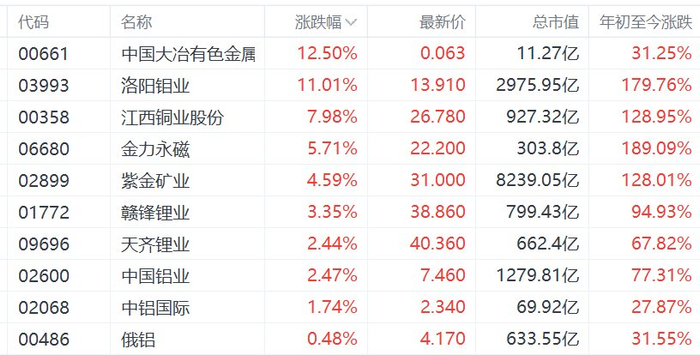
Core Viewpoint - The Hong Kong stock market saw a significant rise in the non-ferrous metal sector, driven by supply concerns following Freeport McMoran's announcement of force majeure at its Grasberg mine in Indonesia, which is critical to global copper supply [1] Group 1: Market Performance - China Daye Nonferrous Metals rose over 12.5%, with a year-to-date increase of 31.25% [2] - Luoyang Molybdenum increased by 11.01%, marking a staggering year-to-date rise of 179.76% [2] - Jiangxi Copper Co. saw an increase of 7.98%, with a year-to-date growth of 128.95% [2] - Jinchuan Group's share price rose by 5.71%, with a year-to-date increase of 189.09% [2] - Zijin Mining's stock increased by 4.59%, with a year-to-date rise of 128.01% [2] - Ganfeng Lithium's shares rose by 3.35%, with a year-to-date increase of 94.93% [2] Group 2: Supply Concerns - Freeport McMoran's Grasberg mine accounts for 3.2% of global copper supply and over 70% of the company's total copper production [1] - The unexpected supply disruption is expected to impact global copper production by more than 6% [1]

库尔德油田遇袭及欧盟新制裁推升油价
news flash· 2025-07-18 08:20
Core Viewpoint - The oil prices have risen due to concerns over supply disruptions caused by a drone attack on oil fields in the Kurdistan region of Iraq and new EU sanctions targeting the Russian energy sector [1] Group 1: Supply Disruptions - The drone attack on the Kurdish oil fields has resulted in a daily production interruption of over 200,000 barrels [1] - The EU's new sanctions include a ban on the Nord Stream pipeline and a reduction in the oil price cap [1] Group 2: Market Conditions - Short-term fundamentals indicate that the market will be quite tight this quarter [1] - Despite OPEC+ gradually easing supply restrictions, recent contracts for crude oil and diesel remain in a spot premium state, indicating limited supply [1]