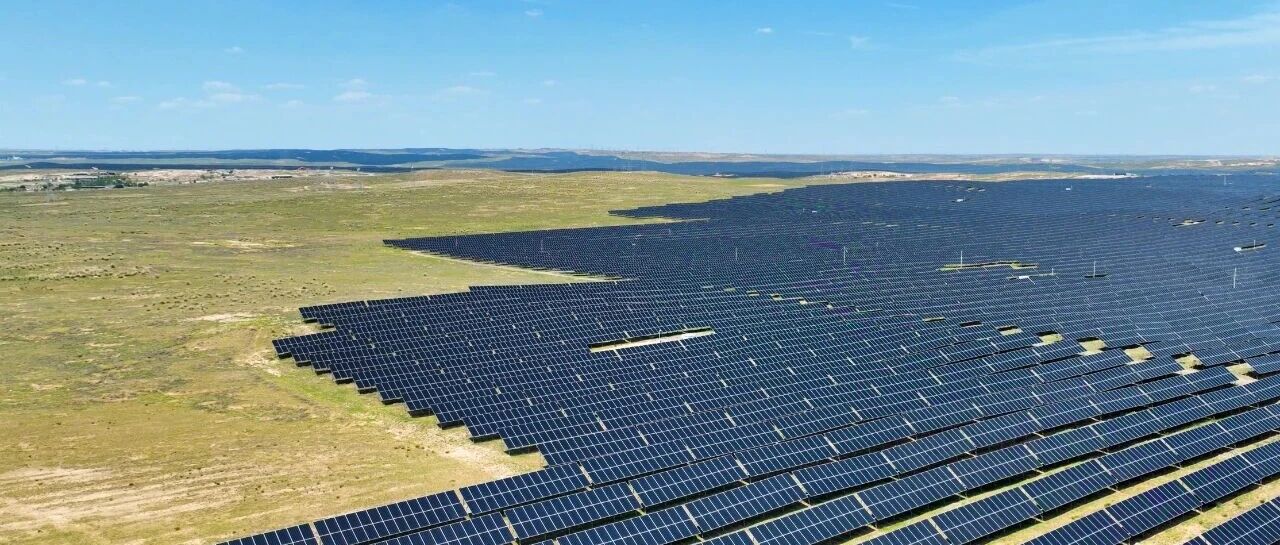
光伏发电

Search documents
川投能源2025年度累计完成发电量同比增长13.85%
Zhi Tong Cai Jing· 2026-01-13 09:05
Core Viewpoint - The announcement from ChuanTuo Energy (600674.SH) highlights significant growth in power generation and sales for the year 2025, despite a decrease in average on-grid electricity prices across its various energy sectors [1]. Group 1: Overall Performance - For the year 2025, the company's total power generation reached 6.627 billion kilowatt-hours, marking a year-on-year increase of 13.85% [1]. - The total on-grid electricity volume was 6.515 billion kilowatt-hours, also reflecting a year-on-year growth of 13.86% [1]. - The average on-grid electricity price was 0.206 yuan per kilowatt-hour, which represents a decrease of 6.79% compared to the previous year [1]. Group 2: Hydropower Performance - The hydropower segment achieved a total power generation of 6.356 billion kilowatt-hours, showing a year-on-year increase of 15.40% [1]. - The on-grid electricity volume for hydropower was 6.246 billion kilowatt-hours, with a year-on-year growth of 15.41% [1]. - The average on-grid electricity price for hydropower was 0.195 yuan per kilowatt-hour, down by 4.88% year-on-year [1]. Group 3: Photovoltaic Performance - The photovoltaic segment reported a total power generation of 0.271 billion kilowatt-hours, which is a year-on-year decrease of 13.42% [1]. - The on-grid electricity volume for photovoltaic power was 0.269 billion kilowatt-hours, reflecting a year-on-year decline of 13.23% [1]. - The average on-grid electricity price for photovoltaic power, including national subsidies, was 0.454 yuan per kilowatt-hour, which is a decrease of 8.47% compared to the previous year [1].

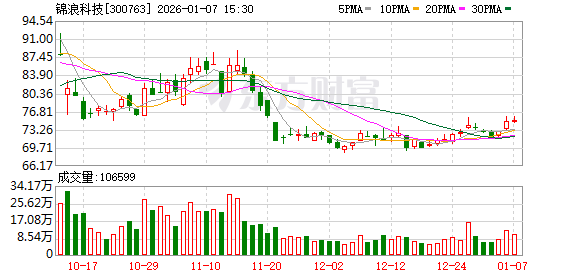
锦浪科技:公司在美国销售的产品包括并网逆变器和储能逆变器,主要应用于光伏发电领域
Mei Ri Jing Ji Xin Wen· 2026-01-07 11:33
Group 1 - The company, Jinlang Technology, sells products in the United States, including grid-connected inverters and energy storage inverters, primarily used in the photovoltaic power generation sector [2]


广州发展:拟5.83亿元投资建设秀山龙凤坝光伏发电(二期)项目
Xin Lang Cai Jing· 2025-12-15 11:57
Core Viewpoint - The company has approved an investment of 583 million yuan for the construction of the second phase of the Xiushan Longfengba photovoltaic power generation project, with a planned capacity of 150MW/205MWp [1] Investment Details - The project will be developed by the wholly-owned subsidiary, New Energy Group, which will increase its investment in the project company, Xiushan Suifa New Energy Co., Ltd., to 149 million yuan [1] - The total investment for the project is 583 million yuan [1] Financial Overview - As of the end of November, the project company reported total assets of 139 million yuan, liabilities of 102 million yuan, net assets of 36.52 million yuan, revenue of 7.97 million yuan, and a net profit of 6.53 million yuan [1] Risks - The project faces risks related to electricity consumption and declining grid connection prices [1]

铁科轨道(688569.SH):铁科天津拟与国铁新能源公司签署协议
Ge Long Hui A P P· 2025-12-12 08:48
Core Viewpoint - The company, Tieke Railway (688569.SH), is set to collaborate with China National Railway New Energy Company on a 1.75MW distributed photovoltaic power generation project, which will be constructed on the rooftops of its warehouse in Tianjin [1] Group 1: Project Details - The project involves the installation of a photovoltaic power station on approximately 9,912 square meters of warehouse rooftop provided by Tieke Railway [1] - China National Railway New Energy Company will be responsible for the construction, investment, and operation maintenance of the rooftop photovoltaic power station [1] - The expected installed capacity of the photovoltaic power station is 1.75MWp, with an estimated annual power generation of about 2.95 million kWh [1] Group 2: Financial Implications - Tieke Railway will settle with China National Railway New Energy Company at a 25% discount on the applicable 10kV industrial average electricity price during the photovoltaic generation period [1] - The project is expected to save Tieke Railway approximately 576,400 yuan in electricity costs annually, totaling around 14.41 million yuan over the 25-year operational period [1] - Tieke Railway will have the right to use all electricity generated by the project and will also benefit from carbon reduction ownership and revenue during the project's operational phase [1] Group 3: Ownership and Revenue - China National Railway New Energy Company will retain ownership of the photovoltaic power station during its operational period [1] - The company will receive payments for the electricity generated, as well as any surplus electricity sold back to the grid and government subsidies [1]

晓程科技20251211
2025-12-12 02:19
Company and Industry Summary Company Overview - The company specializes in three main business segments: gold mining and sales, photovoltaic power generation, and integrated circuit design. Gold mining is the core business, with a fully integrated operation from exploration to refining. Photovoltaic projects are primarily located in Ghana and Tanzania, while integrated circuit design focuses on detonator chips, smart mining, and photovoltaic management systems [2][3]. Gold Mining Operations - The company operates the Akroma, Apache, and FGM gold mines, with current processing capacity of 1,500 tons of ore per day. The FGM plant under construction will have a capacity of 8,000 tons per day. In 2024, underground mining is expected to yield 10,260 tons of ore with grades between 1.5 to 3 grams per ton, processing a total of 248,300 tons of raw ore [2][5]. - The Turkish gold mine, acquired from an Australian exploration company, is undergoing deep exploration, with initial shallow reserves of 22 tons. Further exploration is planned to assess deeper resources [6]. Photovoltaic Power Generation - The photovoltaic business includes energy management projects in China, a 20 MW power station in Ghana, and nearly 20 MW in Tanzania. Recently, two new 6.5 MW projects were signed in Tanzania, with one already connected to the grid. The 20+2 MW power station in Ghana has been operational for 10 years and is performing well [2][7][8]. Integrated Circuit Design - The integrated circuit design focuses on IoT chips, with products already in mass production for mining projects. The new generation industrial electronic detonator chip SC7,100 is in validation, featuring low power consumption and high performance. The company is one of the earliest private enterprises in China's integrated circuit field [4][9][10]. Financial Health and Future Growth - The company operates with no debt and positive cash flow, expecting several-fold growth in the coming year without the need for additional financing. The FGM plant is expected to begin trial production by the end of this year and reach full capacity by the end of next year [4][18][20]. - Future investments will focus on mining and power generation, with integrated circuit investments largely completed. The company plans to invest approximately 2 billion RMB in power projects, which is manageable within its current financial capabilities [19][43]. Mining Strategy and Market Conditions - The company's mining strategy involves acquiring underdeveloped mines from exploration companies, allowing for lower initial investments but requiring extensive exploration and infrastructure development. This approach results in higher gross margins but slower growth [14]. - The company adjusts its mining strategies based on gold prices, expanding mining thickness when prices are high to increase overall metal yield, even if the average grade decreases [22][23][24]. Challenges and Opportunities - The company faces challenges in Africa, including political instability and infrastructure issues, but remains optimistic about the market potential. Recent political unrest in Tanzania has raised concerns, but security measures have been implemented to protect operations [45][46]. - The company is also exploring new mining areas and plans to expand its capacity based on resource verification results, with a focus on maintaining efficient operations and cost control [32][38][47]. Production and Cost Management - The production cost at the FGM site is approximately 130-140 RMB per ton, with effective cost control measures keeping it below domestic levels. The company aims to optimize its processes to further reduce costs [26][30]. - The company produced over 300 kg of gold in the first half of the year, primarily sold to Dubai refineries, with direct costs well managed [48]. Conclusion - The company is well-positioned for growth in the gold mining and renewable energy sectors, with a solid operational foundation and strategic plans for future expansion. The focus on integrated operations and technological innovation in both mining and energy sectors will likely enhance its competitive edge in the market [2][3][4][18].

铂科新材:目前公司产品应用占比较大的领域主要为数据中心、光伏发电、新能源汽车及充电桩
Zheng Quan Ri Bao· 2025-12-08 12:15
Group 1 - The core viewpoint of the article is that the company, Placo New Materials, has identified key application areas for its products, which include data centers, photovoltaic power generation, new energy vehicles, and charging piles [2] Group 2 - The company actively engages with investors through interactive platforms to provide insights into its product applications [2] - The significant application areas represent a strategic focus for the company's growth and market positioning [2]
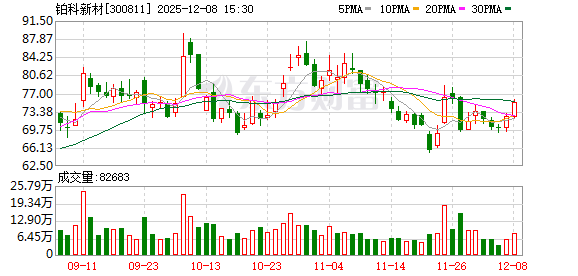
铂科新材(300811.SZ):产品应用占比较大的领域主要为数据中心、光伏发电、新能源汽车及充电桩
Ge Long Hui· 2025-12-08 08:44
Group 1 - The core focus of the company is on applications in data centers, photovoltaic power generation, new energy vehicles, and charging piles [1]
同仁堂股份:积极推动绿色制造发展,践行双碳责任
Bei Jing Shang Bao· 2025-11-29 02:10
Group 1 - The global consensus on "carbon peak and carbon neutrality" has led to China's strategic deployment of achieving carbon peak by 2030 and carbon neutrality by 2060, integrating these goals into the overall ecological civilization construction [1] - The green development concept is gaining traction, with consumers increasingly preferring low-carbon products, making low-carbon competitiveness a core element for companies in market competition [1] - Traditional high-energy consumption development models face constraints due to resource limitations and rising environmental costs, while the dual carbon actions present opportunities for technological innovation and industrial upgrades [1] Group 2 - Beijing Tongrentang Co., Ltd. actively practices dual carbon responsibilities by formulating a "Carbon Peak Action Plan," focusing on technological and management innovations to reduce carbon emissions [1] - The company is constructing distributed photovoltaic power stations to optimize its energy structure, with the Yizhuang plant as a pilot project, planning a direct current capacity of 1466.92 kWp [2] - The Yizhuang photovoltaic project, completed in June, is expected to generate an annual power output of 1.6419 million kWh, while the Daxing plant's solar project is projected to yield 2.4727 million kWh annually [3] Group 3 - The company emphasizes ecological priority and green development, achieving significant results in building a green production system, with the Daxing plant awarded a four-star green credit rating [4] - Pollution control measures are implemented with a goal of 100% compliance in wastewater and air emissions by 2024, utilizing clean energy sources and optimizing emissions monitoring [4] - Resource recycling capabilities are enhanced, with the establishment of a 3,500 cubic meter reclaimed water pond for irrigation and the use of biodegradable materials in packaging [4] Group 4 - The company integrates green development into the inheritance and innovation of traditional Chinese medicine, maintaining ecological and environmental standards while laying a foundation for high-quality development [5] - Future efforts will focus on deepening ESG principles in energy conservation, carbon reduction, and resource recycling, contributing to health and ecological civilization development [5]

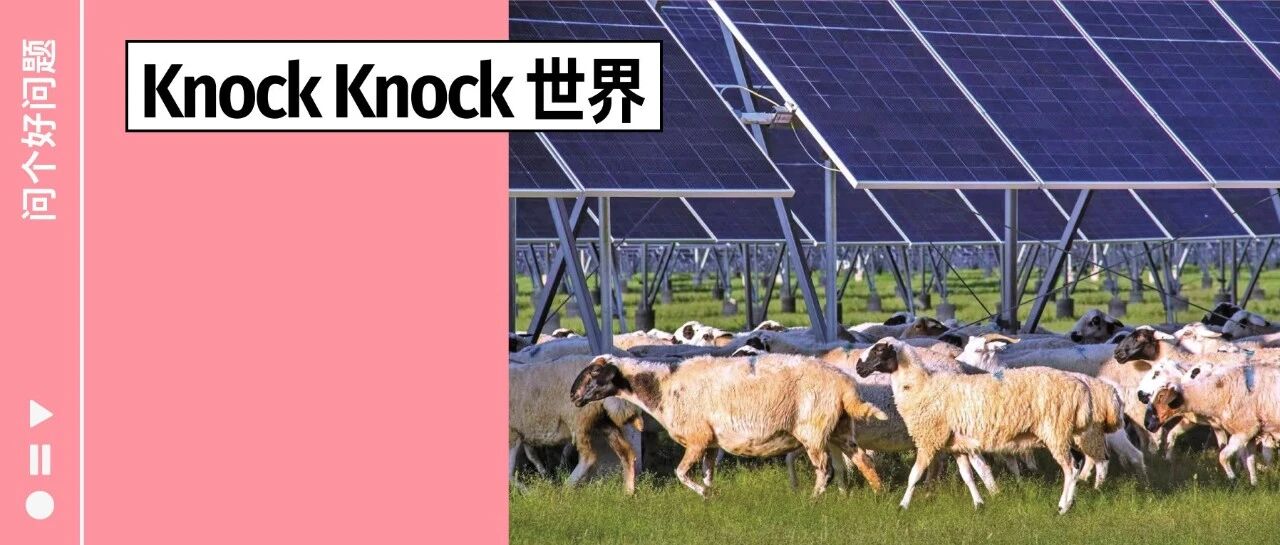
这个世界上最重要的事儿:从人到羊都要好好吃饭 | Knock Knock 世界
声动活泼· 2025-11-15 06:42
Group 1: Eating Experience and Nutrition - The efficiency of eating should not be prioritized as it affects nutrient absorption in the gut [2] - The experience of eating carries essential educational functions, with many countries incorporating food education into school curricula [3] - The gut is linked to emotions through the vagus nerve, which connects the brain and gut, facilitating communication [4] Group 2: Fruit Sweetness and Diversity - Fruits have become generally sweeter compared to two to three decades ago, indicating a change in both taste and possibly cultivation practices [6][7] - The increasing sweetness of fruits is associated with a decline in fruit diversity, which poses a risk to agricultural sustainability [8][9] - Over 90% of traditional apple varieties have disappeared in North America over the past century, highlighting the loss of biodiversity in fruit cultivation [9] Group 3: Solar Power and Environmental Impact - Solar energy is a renewable resource that does not emit carbon dioxide, making it a cleaner alternative to fossil fuels [12] - The development of solar power projects in areas like Taratand has shown that while the environment is suitable for solar energy, challenges still exist [13] - The introduction of grazing sheep in solar farms has been a solution to manage vegetation without compromising energy production [14]
国家能源局发布2025年前三季度光伏发电建设情况
国家能源局· 2025-11-13 02:34
Core Insights - The article provides an overview of the photovoltaic (PV) power generation capacity added in the first three quarters of 2025, highlighting significant growth in both distributed and centralized solar power installations across various provinces in China [2][3][4]. Summary by Sections Overall Capacity - The total newly installed grid capacity for PV power in the first three quarters of 2025 reached 23,952.8 million kW, with distributed solar power accounting for 12,793.4 million kW and centralized solar power contributing 11,159.4 million kW [3][4]. Provincial Breakdown - **Beijing**: Added 62.2 million kW, with distributed solar at 60.6 million kW; cumulative capacity reached 192.5 million kW [3]. - **Tianjin**: New capacity of 263.4 million kW, with distributed solar at 159.5 million kW; total capacity at 987.6 million kW [3]. - **Hebei**: 1,027.6 million kW added, with distributed solar at 540.3 million kW; cumulative capacity at 8,152.1 million kW [3]. - **Shandong**: New capacity of 1,559.3 million kW, with a cumulative total of 9,711.6 million kW [4]. - **Guangdong**: 1,773.6 million kW added, with a total capacity of 5,889.0 million kW [4]. - **Sichuan**: 556.4 million kW added, with a cumulative capacity of 1,638.7 million kW [4]. Cumulative Capacity Insights - As of September 2025, the cumulative installed capacity of PV power across China reached 112,488.9 million kW, with distributed solar power at 50,799.6 million kW and centralized solar power at 61,689.3 million kW [3][4]. Notable Trends - The data indicates a strong trend towards increasing distributed solar installations, reflecting a growing emphasis on decentralized energy solutions in various regions [3][4]. Data Source - The data is sourced from the National Renewable Energy Center and the China Electricity Council, ensuring reliability and accuracy in the reported figures [4].