
全球化供应链

Search documents
子不语公布中期业绩 股东应占净利润约1.06亿元 同比上涨15.9%
Zhi Tong Cai Jing· 2025-08-26 15:05
Core Insights - The company reported a significant revenue increase of 34.1% year-on-year, reaching approximately 1.9613 billion yuan for the first half of 2025, with a net profit attributable to shareholders of about 106 million yuan, reflecting a 15.9% increase [1] - The revenue growth is primarily attributed to the company's active brand development and substantial expansion of non-Amazon channels, leading to a remarkable increase in core brands and non-Amazon channel revenues [1] Group 1: Brand Development and Marketing - The company enhanced its brand strength through a multi-dimensional approach, achieving substantial growth in core brands [1] - Organizational restructuring was completed to focus on brand-oriented departments, emphasizing strategic collaboration across departments for clearer resource allocation [1] - Visual upgrades were made to core brands to enhance brand perception and aesthetic value [1] - The design department integrated fashion elements into original designs, significantly improving product launch efficiency and market performance of new products [1] - The company established a brand book to define user profiles and engaged in content marketing on overseas social media, collaborating with top KOLs for brand promotion [1] Group 2: Channel Expansion and Revenue Growth - The company accelerated its multi-channel strategy, resulting in rapid revenue growth from non-Amazon channels while maintaining a solid growth base on Amazon [2] - Revenue from TikTok and Temu platforms saw substantial year-on-year increases of 51.3% and 79.3%, respectively [2] - The company expanded its self-operated website, with revenue from this channel increasing nearly ninefold [2] Group 3: Supply Chain Optimization - The company optimized its global supply chain system, achieving a breakthrough in overseas production capacity for the first time [2] - A centralized procurement strategy was implemented, along with a supplier performance evaluation mechanism to select quality partners and effectively reduce procurement costs [2] - The company focused on establishing supply chain capabilities in Southeast Asia, particularly in Vietnam, while also expanding into Myanmar, Malaysia, and Cambodia [2]
难怪特朗普老实了!美国财政部长透露细节,中美谈判果然不简单!
Sou Hu Cai Jing· 2025-08-12 07:33
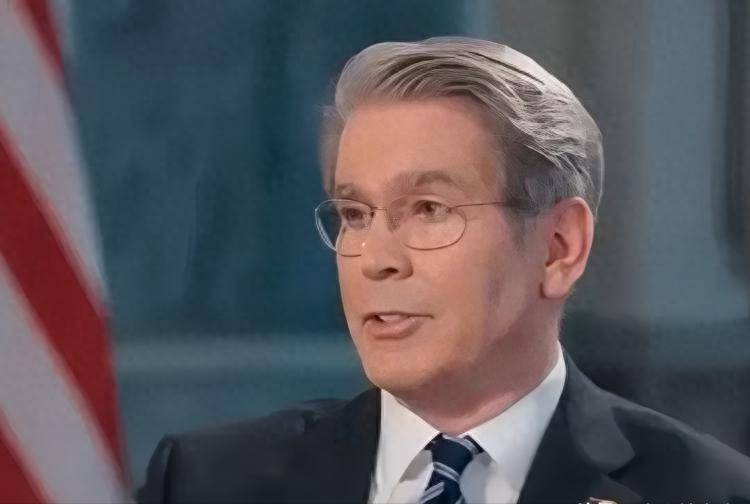
Core Points - The third round of US-China trade negotiations in Sweden ended on July 29, with US Treasury Secretary Mnuchin revealing details of the talks, indicating a complex and contradictory situation [1][4] - Although an agreement on tariff extensions was reached, no signatures were made, leaving room for uncertainty [3][4] - President Trump described the talks as "very good" and removed China from a tariff list affecting over sixty countries, signaling a potential shift in approach [6][10] Group 1: Economic Constraints - The US faces a staggering national debt of $37 trillion, which poses significant challenges for its economic policy and negotiation power [12][14] - The annual interest payments on this debt exceed $1 trillion, surpassing the Pentagon's annual budget, indicating a fiscal crisis [14][16] - The Congressional Budget Office warned of a potential default by August if no measures are taken, highlighting the precarious financial situation the US government is in [16][18] Group 2: Supply Chain Dependencies - The negotiations highlighted the critical issue of supply chain dependencies, particularly regarding rare earth elements, where over 90% of refining and processing capabilities are in China [20][22] - The US's reliance on China for essential components in high-tech industries, such as defense and electric vehicles, complicates its position in trade talks [22][24] - Attempts by the Trump administration to reverse this dependency through executive orders have proven ineffective, as the structural reliance on Chinese supply chains remains [26][30] Group 3: Political Dynamics - Trump's political position requires him to maintain a tough stance on China to satisfy his base, despite the economic repercussions of tariffs on American consumers [34][36] - The escalating tariffs have led to increased prices for consumers and financial strain on American farmers, causing a shift in public support for Trump [38][40] - The conflicting signals from Trump post-negotiation reflect a struggle to balance political posturing with economic realities, leading to a "split personality" in his approach [42][44] Group 4: Future Implications - The lack of a binding agreement from the Stockholm talks suggests a pause rather than a resolution, as both nations navigate their internal challenges [46][49] - China's recent approval of rare earth imports from US companies indicates a strategic move to ease tensions while asserting its position [47][49] - The ongoing trade conflict transcends tariffs and trade deficits, representing a broader struggle over development models and national governance capabilities [49][51]

巨星科技斩获国际大型零售业公司订单
Zheng Quan Ri Bao Zhi Sheng· 2025-07-11 16:41
Core Viewpoint - The announcement by Giant Star Technology Co., Ltd. regarding a procurement confirmation from a major international retail company signifies a substantial growth opportunity for the company in the electric tools market, particularly in the global supply chain context [1][2]. Group 1: Procurement Details - The order involves a series of 20V cordless lithium battery electric tools and related accessories, with a total procurement amount expected to be no less than $30 million annually, which exceeds 10% of the company's projected revenue from electric tools in 2024 [1]. - This order marks the first electric tool order produced and delivered outside of China since the company began developing its electric tool product line in 2021, specifically for the U.S. market with production and delivery based in Vietnam [1]. Group 2: Global Manufacturing and Supply Chain - The order is seen as recognition of the company's global manufacturing layout, which is expected to enhance revenue share from electric tools and build confidence among global customers regarding the company's Vietnamese production base [2]. - The company has established a comprehensive global production and supply chain management system, with 23 production bases worldwide and strong partnerships with thousands of suppliers [2]. - The Southeast Asia region is highlighted for its abundant labor resources and relatively low costs, which can effectively reduce production costs and expand capacity, allowing the company to seize market opportunities [2]. Group 3: Strategic Implications - The global supply chain is undergoing a structural transformation towards resilience, and the company's overseas supply system is designed to mitigate various operational risks, ensuring stable orders and customer trust [2]. - The globalization of the supply chain enables the company to achieve "customer proximity, rapid delivery, and customized response," transitioning from traditional export models to local service and competition capabilities [2].

伊朗霍尔木兹海峡震一震,世界经济抖三抖!
首席商业评论· 2025-06-18 03:58
Group 1 - The article discusses the impact of the conflict between Israel and Iran on global energy markets, highlighting that a strike on Iranian nuclear facilities led to a significant spike in Brent crude oil prices by 13%, the highest since the Russia-Ukraine conflict [5][7] - The importance of the Strait of Hormuz is emphasized, as it is a critical passage for 20% of the world's oil and 25% of liquefied natural gas (LNG) trade, with major implications for global energy supply if it were to be blocked [12][9] - The article outlines the vulnerabilities of modern industrial supply chains, particularly how disruptions in the Strait of Hormuz can affect various sectors, including energy-intensive manufacturing in Germany and the solar glass industry in China [8][7] Group 2 - The article details the potential for crisis arbitrage, noting that companies like LONGi Green Energy are capitalizing on the situation by securing contracts for solar projects in the Middle East, reflecting a shift towards energy independence in the region [18][19] - There is a surge in demand for safe-haven assets such as gold and U.S. Treasury bonds, indicating a strong market reaction to geopolitical tensions [22][24] - The military sector is also seeing increased interest, with companies like Hongdu Aviation receiving orders for military equipment from Middle Eastern countries, showcasing a growing demand for defense capabilities [25][27] Group 3 - The article suggests that China should consider a "dual-loop design" for energy supply routes to mitigate risks associated with the Strait of Hormuz, including potential pipeline projects to bypass the strait [29][30] - It highlights the need for technological advancements and local supply chain adaptations in response to potential disruptions, such as the reliance on strontium ore from Iran for manufacturing permanent magnet motors [30][17] - The article concludes that the ongoing conflict is reshaping global business dynamics, emphasizing the importance of energy sovereignty and the need for companies to possess physical, financial, and political capital to survive in a changing landscape [34][33]





破局者瑞茂通:中国民企的全球化供应链突围样本
Qi Huo Ri Bao Wang· 2025-05-26 00:38
Core Insights - The article highlights the remarkable growth of Rui Mei Tong, a supply chain leader based in Henan, China, which has successfully expanded its operations globally despite its inland location [1][2]. Group 1: Company Development - Rui Mei Tong was founded in 2000, focusing on coal supply chain management, and has since evolved into the largest importer of thermal coal in China, maintaining a top-three position among importers for seven consecutive years [2][3]. - The company began its international expansion in 2009, transitioning from a coal-exporting nation to a net importer, with a net import volume of 103 million tons that year [2]. - By 2024, Rui Mei Tong is projected to ship 43.13 million tons of coal, with international coal business accounting for 38.93 million tons, reflecting a year-on-year growth of 17.65% [3]. Group 2: Strategic Initiatives - Rui Mei Tong established long-term agreements with Indonesian mining companies to secure stable supply channels and optimize transportation costs, enhancing its market influence [3]. - The company gained trading qualifications at the Platts window in Singapore, positioning itself within the global oil pricing framework and significantly increasing its market presence [4]. - In the agricultural sector, Rui Mei Tong is set to launch a soybean protein processing plant in Henan with an annual capacity of 120,000 tons, addressing local production gaps [4]. Group 3: Shipping and Logistics - The establishment of Rui Mei Tong's shipping company in 2012 marked a significant step in its international strategy, with the fleet expanding to 19 vessels by 2024 [5][6]. - The company emphasizes the importance of its shipping operations in reducing logistics costs and enhancing operational flexibility, particularly in response to global supply chain challenges [6]. Group 4: Talent Strategy - Rui Mei Tong has shifted to a localization strategy for its workforce, with approximately 65% of its overseas employees being local hires, which helps navigate local regulations and cultural nuances [7]. - The company has invested in leadership and supply chain education to enhance employee skills and global perspectives, establishing specialized training programs [7]. Group 5: Long-term Strategy - The company adheres to a long-term growth strategy in international markets, emphasizing thorough market research and risk management tailored to local conditions [8]. - Rui Mei Tong advocates for diversification to mitigate risks associated with over-reliance on single markets, alongside implementing localized hiring practices to integrate into different cultural environments [8].
