
公共服务均等化

Search documents
委员为公共服务均等化落地献策
Xin Lang Cai Jing· 2025-12-26 19:01
Core Viewpoint - The key to promoting urban-rural integration lies in county-level development, which is essential for high-quality county economic growth and new urbanization construction [1] Group 1: County Economic Development - Some local county economies are still weak, facing challenges such as difficulties in industrial transformation, significant fiscal pressure, and stagnation or decline in education and healthcare levels [1] - Recommendations include strengthening the planning of county economic industrial layout and addressing the mismatch between fiscal powers and responsibilities at the county level [1] Group 2: Public Services and Farmers' Rights - Emphasis on protecting farmers' rights and interests, aiming to create a mechanism for mutual benefit and sharing between urban and rural residents [1] - The ultimate goal of improving urban-rural integration is to change the backward situation in rural areas and enhance the living standards of farmers [1] Group 3: Infrastructure and Resource Allocation - The state should further integrate urban-rural development with the planning of metropolitan areas, ensuring coordinated infrastructure and public service arrangements [1] - Suggestions include breaking down institutional barriers to facilitate the two-way flow of land and talent, and reforming land use policies to maximize land asset value [1] Group 4: Investment in Public Services - The government needs to increase investment in rural education, healthcare, and cultural services, and improve rural infrastructure [1] - Establishing a unified social security and public service system for urban and rural areas is crucial for promoting equal development opportunities [1] Group 5: Rural Revitalization and Employment - Industrial revitalization is essential for rural development, with a focus on encouraging labor-intensive industries and agricultural product processing in counties to increase employment opportunities [1] - Recommendations include raising the basic pension standards for rural residents to ensure their basic living needs are met [1]
解码杭州城市能级跃升的内涵逻辑——专访浙江大学求是特聘教授、城市发展与管理系主任石敏俊
Hang Zhou Ri Bao· 2025-12-18 02:07
Core Insights - The recent urban work conference by the Central Committee of the Communist Party of China marks a new direction for urban development in the new era, emphasizing high-quality urban growth and the transition from rapid urbanization to stable development [1][2] Group 1: Changes in Urban Development - The role of cities has shifted from being mere economic growth engines to important carriers of modernization and spaces for people's happiness, reflecting a dual focus on multi-dimensional value [2] - Urban development is transitioning from a focus on growth to a people-centered approach, emphasizing both production and living quality, and moving away from traditional industrial and real estate-driven models [2] Group 2: Hangzhou's Development Practices - Hangzhou serves as a model for the evolution from "growth logic" to "life logic," integrating the concepts of people-centeredness and quality enhancement across various urban development sectors [3][4] - The city has prioritized ecological development, viewing ecology as a core competitive advantage rather than a constraint, exemplified by initiatives like the West Lake's free access and the comprehensive protection of Xixi Wetland [3] Group 3: Innovation and Livelihood - Hangzhou has developed an innovation ecosystem that supports natural growth for talent and small businesses, characterized by a rich, self-sustaining environment that fosters continuous internal growth [4] - The city has made significant strides in public service equality and quality, enhancing citizen satisfaction through initiatives like the "most run once" administrative reform and smart urban management [4][5] Group 4: Future Recommendations for Hangzhou - To become a model of a "modernized people's city," Hangzhou should focus on balanced regional development and enhance the quality of living spaces, ensuring that all citizens can share in high-quality life experiences [5] - The city should create high-energy environments that cater to diverse cultural needs and support various demographics, including youth and the elderly, to solidify its status as a world-class modern metropolis [5]



成渝地区双城经济圈标准化协同五年来,民生交通生态实现融合共治 地相邻民相亲 如今“圈”相融
Si Chuan Ri Bao· 2025-12-05 07:24
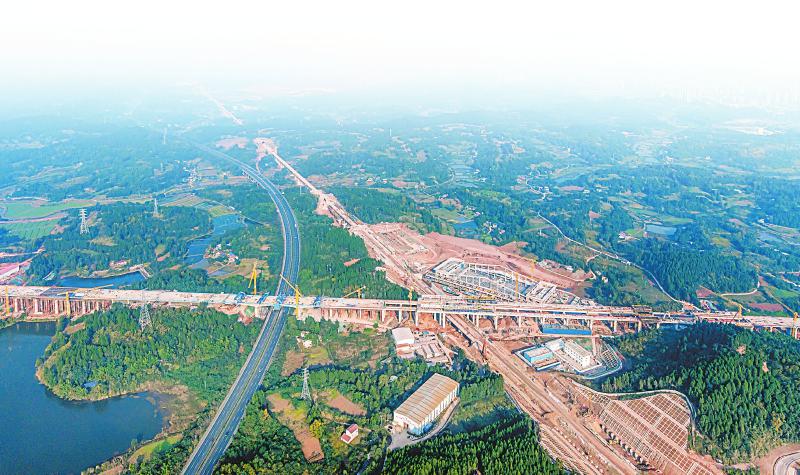
Core Insights - The construction of the Lezhi High-speed Railway Station, which serves both Chengda-Wan and Chengyu Central Line High-speed Rail, is accelerating [2] - Over the past five years, the Chengdu-Chongqing economic circle has made significant progress in standardization, with 17 regional local standards and 31 group standards established [2][3] - The two regions have implemented a cross-province traffic standardization mechanism, enhancing public transport integration and environmental protection efforts [2][6] Standardization and Public Services - A total of 63 standardization experts have been mutually appointed, contributing to the establishment of digital standard databases for new energy vehicles and biomedicine [2] - The two regions have optimized public service standards across nine major areas, including education, healthcare, and housing, enhancing the convenience for residents [4] - The implementation of a unified 12345 government service hotline has improved interconnectivity between the two regions [5] Transportation Integration - The establishment of a cross-province traffic standardization mechanism has led to a significant improvement in transportation efficiency, with a 20% increase in traffic flow efficiency [6] - The optimization of 26 inter-provincial bus routes has reduced commuting time by 60% [7] - The integration of over 300 bus stations and 1,123 routes has enabled a unified ticketing system for public transport [7] Environmental Collaboration - The ecological restoration of abandoned mines in the region has seen a vegetation coverage increase from 50% to 85% through standardized practices [8] - Joint efforts have been made to address cross-border pollution by establishing unified air pollutant emission standards for high-energy-consuming industries [8] Tourism Development - The launch of the "Bashu Corridor: Chengdu-Chongqing Together" tourism routes aims to enhance cultural and tourism collaboration between the two cities [9] - The Chengdu-Chongqing tourism card integrates over 50 popular attractions, facilitating seamless travel between the two regions [9]
重塑城乡关系走融合发展之路
Jing Ji Ri Bao· 2025-12-03 01:04
Core Viewpoint - The article emphasizes the importance of promoting urban-rural integration as a key measure to address the imbalance in urban and rural development, enhance economic and social high-quality development, and achieve common prosperity for all people [1][2]. Summary by Sections Understanding the Rich Connotation of Urban-Rural Integration - Urban-rural integration is a necessary requirement at a certain stage of industrialization, urbanization, and agricultural modernization, and is a significant marker of national modernization [2]. - The integration should be comprehensive, involving coordinated planning, resource allocation, industrial development, public services, and ecological protection [2][3]. Emphasizing the Interconnectivity of Urban-Rural Integration - Urban-rural integration is not a mechanical combination but a high-quality development achieved through mutual promotion and interaction between urban and rural areas [3][4]. - Cities should leverage their advantages to support rural development, while rural areas should also promote urban growth by respecting their unique resources and functions [3]. Recognizing the Gradual Nature of Urban-Rural Integration - Urban-rural integration is a long-term, gradual process that requires breaking down institutional barriers and promoting equal exchange and flow of resources [4][5]. - Different regions may be at varying stages of integration, necessitating tailored approaches and careful management of reform processes [4]. Pursuing the Shared Benefits of Urban-Rural Integration - Reducing the urban-rural gap and promoting shared prosperity is essential for modernizing the country and aligns with the party's governance objectives [5][6]. - The focus should be on ensuring equal participation of farmers in the modernization process and sharing the benefits of development [5]. Recent Progress in Urban-Rural Integration - By the end of 2024, the urbanization rate in China is projected to reach 67%, an increase of 3.11 percentage points from the end of 2020 [6]. - However, barriers to the free flow of resources and the need for improved public service equality remain challenges [6][7]. Coordinated Development for Integrated Construction - Achieving a modern socialist country requires both prosperous cities and rural areas, fostering a new type of urban-rural relationship characterized by mutual promotion and coordination [7][8]. - The integration of infrastructure and services is crucial for enhancing rural vitality and narrowing the urban-rural gap [7]. Systematic Governance for Integrated Management - Promoting urban-rural integration necessitates innovative governance models and improved governance levels [8][9]. - A focus on digital technology and community governance can enhance service delivery and ensure equitable access to resources [8]. Commitment to Shared Development and Service Equality - Ensuring equal access to basic public services for rural residents is vital for achieving common prosperity [9]. - Investment in rural public services and breaking down institutional barriers are essential for creating a fair and efficient public service system [9].
深入推进以人为本的新型城镇化
Ren Min Wang· 2025-11-13 12:59
Core Insights - The article emphasizes the importance of "people-centered new urbanization" and highlights the need for reforming the household registration system as a breakthrough for achieving equal access to public services [1][2]. Group 1: Household Registration Reform - The reform aims to transition from a management tool to a service-oriented system, allowing more cities to implement "zero-threshold household registration" for new citizens [1]. - The new system recognizes that every worker contributing to urban development should enjoy equal benefits, enhancing urban inclusivity [1][3]. Group 2: Equalization of Public Services - The core principle of the household registration reform is the equalization of public services, moving from "some differences" to "equal treatment" [2]. - Various cities are optimizing infrastructure and public service supply to ensure that migrant populations can not only settle but thrive in urban environments [2]. - Educational access for migrant children is improving, with policies like "long-young follow education" easing the burden on multi-child families [2]. - Housing security measures are being expanded to include stable employment migrants in public rental housing [2]. - Healthcare and pension systems are becoming more accessible, with expanded direct settlement for medical services and easier social security transitions [2]. Group 3: Challenges and Requirements - Achieving true equalization of public services demands enhanced urban governance and resource capacity [2]. - Cities must improve their public service supply capabilities and quality through advanced planning and innovative service delivery methods [2].
人民热评:深入推进以人为本的新型城镇化
Ren Min Wang· 2025-11-13 12:01
Group 1 - The core viewpoint emphasizes the importance of "people-centered new urbanization" and the need for "household registration system reform" as a breakthrough for equal access to public services [1] - The reform aims to transition from a management tool to a service carrier for household registration, allowing more cities to implement "zero-threshold household registration" for new citizens [1] - The reform acknowledges that every worker contributing to urban development should enjoy equal benefits, enhancing the inclusivity of cities [1] Group 2 - The equalization of public services is the core principle of the household registration reform, reflecting social fairness and justice [2] - Various cities are optimizing infrastructure and public service supply to ensure that migrant populations can not only settle but thrive in urban areas [2] - The reform includes lowering enrollment barriers for migrant children, integrating stable employment migrants into public housing, and expanding medical and pension services [2] Group 3 - Each step of the household registration reform is closely linked to the well-being of the populace, ensuring that children of migrant workers can study in the cities where their parents work [3] - The advancement of people-centered urbanization allows every city builder to equally enjoy the fruits of development [3]
推动“供强需弱”转向“供需同强”
Sou Hu Cai Jing· 2025-10-19 19:55
Core Viewpoint - Despite facing multiple challenges in recent years, China's economy has made significant progress in technological transformation and upgrading in key industries, leading to an increase in overall productivity and supply-side capabilities [2][4] Group 1: Demand-Supply Relationship - The primary contradiction in the current demand-supply relationship is insufficient demand, which has been a typical fact in recent years [2] - Within total demand, the main contradiction is insufficient domestic demand, with external demand contributing significantly more to GDP growth compared to previous periods [2][3] - The investment and consumption dynamics show that consumption is the more prominent issue, with consumption rates in China significantly lower than the international average [3][4] Group 2: Consumer Behavior - Among total consumption, the weakness in household consumption is a major concern, with data indicating that China's household consumption rate is 18 percentage points lower than the G20 average [3] - Service consumption, particularly in education, healthcare, and housing, is lagging, which is linked to the slow progress in equalizing basic public services [3][4] Group 3: Public Resource Allocation - The allocation of public resources has historically favored investment and development, which has led to a relative weakness in final consumption [4][6] - There is a need to optimize the allocation of public resources to support consumer spending without hindering supply-side advancements [5][6] Group 4: Strategies for Boosting Consumption - To stimulate consumption, it is essential to adjust the focus of public resource allocation towards enhancing final consumption and expanding domestic demand [7] - Systematic reforms in public services and fiscal policies are necessary to improve accessibility and equality in services for urban and rural residents [7][8] - Reforms in the household registration system and land use rights are crucial for fostering urban-rural integration and enhancing consumer capacity [8]
社会事业向好发展民生福祉不断增进
Guo Jia Tong Ji Ju· 2025-09-30 00:50
Core Viewpoint - The Chinese government emphasizes the importance of improving people's livelihoods as a key goal of modernization, focusing on high-quality population development and enhancing public services to ensure a better quality of life for citizens [1][20]. Group 1: Population Development - The total population of China is projected to be 1.40828 billion by the end of 2024, with a labor force of 857.98 million, representing 60.9% of the total population [2]. - Urbanization continues to rise, with the urban population reaching 943.50 million and an urbanization rate of 67.00%, an increase of 3.11 percentage points since 2020 [2]. - The average life expectancy is expected to reach 79.0 years by 2024, an increase of 1.07 years since 2020, and the average education level for the labor force is 11.21 years, up by 0.46 years [2]. Group 2: Employment Stability - The total employment in urban areas is projected to be 73.439 million by the end of 2024, with urban employment accounting for 64.5% of total employment [3]. - The unemployment rate in urban areas is expected to average 5.1% in 2024, a decrease of 0.5 percentage points since 2020 [3]. Group 3: Income Growth - The per capita disposable income is expected to reach 41,314 yuan in 2024, an increase of 9,125 yuan since 2020, with an average annual real growth rate of 5.5% from 2021 to 2024 [4]. - The income gap between urban and rural residents is narrowing, with the ratio of per capita disposable income between rural and urban residents at 2.34, down by 0.22 since 2020 [5]. Group 4: Public Services - The social security system is the largest globally, with 1.07 billion people covered by basic pension insurance, and the average monthly pension for retirees increased from approximately 2,900 yuan in 2020 to 3,162 yuan in 2023 [6]. - By the end of 2024, 1.33 billion people are expected to be covered by basic medical insurance, with the per capita financial subsidy for rural residents reaching 670 yuan, a 21.8% increase since 2020 [6]. Group 5: Education and Health - The gross enrollment rate for preschool education is projected to reach 92.0% by 2024, and the total number of higher education students is expected to be 48.46 million, an increase of 6.63 million since 2020 [8]. - The number of hospital beds per 1,000 people is expected to increase from 6.46 in 2020 to 7.23 in 2023, indicating improved healthcare resources [9]. Group 6: Cultural Development - By the end of 2024, the number of registered museums is expected to reach 7,046, a 21.7% increase since 2020, reflecting the growth of public cultural services [10]. - The cultural industry is projected to achieve a revenue of 191.423 billion yuan in 2024, a 37.7% increase since 2020 [11]. Group 7: Targeted Support for Vulnerable Groups - The per capita disposable income for residents in poverty-stricken counties is expected to rise from 12,588 yuan in 2020 to 17,522 yuan in 2024, with an average annual real growth rate of 7.8% [13]. - The number of migrant workers is projected to reach 29.973 million by 2024, an increase of 1.413 million since 2020, indicating a stable trend in urban integration [14]. Group 8: Safety and Quality of Life - The crime rate in China is decreasing, with public safety perception remaining above 98% since 2020, making it one of the safest countries globally [18]. - By 2024, the average number of household appliances per 100 households is expected to increase significantly, indicating an improvement in living standards [18].
推行免费学前教育:好马要配好鞍
第一财经· 2025-08-07 00:42
Core Viewpoint - The article discusses the implementation of free preschool education in China, highlighting the government's recent policy to gradually introduce this initiative starting from the 2025 autumn semester, aiming to alleviate the financial burden on families and promote a fertility-friendly society [3][5]. Summary by Sections Implementation Plan - The first step towards free preschool education is the exemption of childcare fees for children in public kindergartens for the last year before primary school starting from the 2025 autumn semester [4]. - For children attending approved private kindergartens, the fee exemption will be aligned with the standards of local public kindergartens [4]. Fee Standards and Financial Support - The childcare fee standards will be based on the approved fee structures by local governments and relevant departments, excluding meal, accommodation, and miscellaneous fees [4]. - The financial support will be determined by the average actual fees charged in public kindergartens, with the Ministry of Finance and the Ministry of Education setting upper limits for subsidies based on regional conditions [5]. Fiscal Responsibility and Equity - The policy aims to reduce the financial burden on families and incentivize a fertility-friendly environment, but it requires effective implementation and supporting measures [5]. - The article emphasizes the need for equitable public service, suggesting that children in unapproved kindergartens, particularly in rural areas, should also be included in the free preschool education initiative [5]. Addressing Cost Disparities - There are concerns regarding the disparity in costs between public and private kindergartens, which may lead to unequal financial burdens on families [7]. - The article suggests that the subsidy standards should reflect the actual market costs of childcare to ensure fairness and equity in the distribution of financial support [7]. Subsidy Mechanism - The article discusses two potential subsidy mechanisms: direct payments to kindergartens or vouchers for families to use at approved institutions [8]. - Using vouchers could enhance the effectiveness of subsidies by directly linking government support to family experiences, thereby improving the perceived value of public services [8][9]. Conclusion - The implementation of free preschool education is expected to significantly lower the costs of child-rearing for families, contributing to a more supportive environment for childbearing [9]. - The article stresses the importance of not only defining the scope of the initiative but also ensuring its effective execution to maximize its benefits for families [9].

一财社论 | 推行免费学前教育:好马要配好鞍
Di Yi Cai Jing· 2025-08-06 14:05
Core Viewpoint - The implementation of free preschool education is expected to significantly reduce family upbringing and education costs, providing strong support for creating a family-friendly society [1][7]. Group 1: Policy Implementation - The State Council has issued an opinion on gradually promoting free preschool education, detailing the target groups, standards, and financial subsidy methods [2]. - Starting from the autumn semester of 2025, public kindergarten fees for the last year of preschool will be waived, and similar reductions will apply to approved private kindergartens [3]. - The fee standards for public kindergartens will be based on the approved charging standards by local governments, excluding meal, accommodation, and miscellaneous fees [3]. Group 2: Financial Support and Equity - The policy aims to alleviate the financial burden on families and incentivize a family-friendly society, but effective implementation requires supporting measures [4]. - The financial subsidy will be shared between central and local governments, but the current policy primarily covers public and approved private kindergartens, leaving some children in unapproved institutions without support [4]. - To achieve equitable public service, it is essential to include children from unapproved kindergartens, as their families are often more price-sensitive and in need of assistance [4]. Group 3: Cost and Subsidy Mechanisms - There are concerns that the approved fee standards for public kindergartens may be lower than actual costs, potentially leading to disparities in financial support [5]. - The method of financial subsidies, whether through direct payments to kindergartens or vouchers for families, will impact the effectiveness of the program [6][7]. - Using vouchers allows families to choose kindergartens, ensuring coverage for all eligible children and enhancing the perceived value of public services [7].