
制造业数字化转型

Search documents
菏泽抖音优化公司排行榜前十名哪家好
Sou Hu Cai Jing· 2026-01-22 14:29
Core Insights - The manufacturing industry in Heze is increasingly turning to short video marketing on platforms like Douyin, which boasts over 700 million daily active users, to showcase technical capabilities and attract precise customers [1] - Companies face challenges in selecting the right operation service providers that truly understand heavy machinery and can create engaging video content [1] Industry Overview - Qingdao Shengyuejia Network Technology Co., Ltd. has established a strong presence in the digital transformation of manufacturing since 2019, with branches in eight locations across Shandong Peninsula [2] - The company combines expertise from product specialists and content operators, enabling them to effectively translate complex manufacturing processes into appealing short videos [2] Service Offerings - Shengyue Network provides customized services throughout the entire lifecycle of client needs, offering full-service support for small and medium-sized factories and specialized project teams for larger enterprises [2] - Their approach has led to significant results, such as a 180% increase in inquiries for an environmental equipment manufacturer through targeted video content [2] Creative Process - The company's meticulous service process includes in-depth research on production lines, leading to innovative video concepts that resonate with audiences [3] - They employ a data-driven strategy to adjust content release times based on audience engagement, enhancing viewer retention [3] Knowledge Sharing - Shengyue Network emphasizes a "teach a man to fish" philosophy, providing clients with valuable resources like monthly digital marketing insights, which have become essential training materials for many companies [3] Market Positioning - The leading service providers in the Heze Douyin operation market are those that understand both industrial language and algorithmic flow, ensuring that manufacturing companies select partners based on deep industry understanding rather than superficial metrics [4] - The long-term value of technical videos that clearly demonstrate system stability outweighs the fleeting popularity of entertainment-focused content [4]
机器人暴涨220%,芯片却降17%:2025投资市场的"冰火两重天"
Sou Hu Cai Jing· 2026-01-16 11:27
Core Insights - The investment landscape in China is experiencing significant changes, with stark contrasts in funding across different sectors, particularly in hard technology [2][12] Investment Trends - In 2025, the most active sectors by the number of financing events are artificial intelligence (AI) with 1,579 events and healthcare with 1,506 events [2] - The robotics sector shows the highest growth rate in event numbers, increasing from 331 in 2024 to 717 in 2025, a growth of 116.6% [4] - The funding amount in the robotics sector reached 69.93 billion yuan, leading the hard technology field, while the energy storage sector attracted 47.98 billion yuan [6] Growth Rates - Energy storage emerged as the biggest surprise with a funding increase of 315.5%, rising from 11.55 billion yuan to 47.98 billion yuan [6] - Robotics funding also saw a significant increase of 220.1%, from 21.85 billion yuan to 69.93 billion yuan [6] - High-end equipment and new materials also experienced rapid growth, with increases of 165.0% and 74.1% respectively [6][8] Sector Analysis - The robotics sector is transitioning from concept to mass production, with companies like UBTECH and Fourier Intelligence leading the commercialization of humanoid robots [8] - Energy storage is becoming a core infrastructure in energy systems, driven by dual goals of carbon neutrality and increased renewable energy installations [7] - High-end equipment and new materials are crucial for the transformation of China's manufacturing industry, requiring substantial investment for technological upgrades and capacity building [8] Market Dynamics - There is a notable divergence in sectors like integrated circuits, renewable energy, and commercial aerospace, where the number of financing events increased but the funding amounts decreased by 17.5%, 24.0%, and 22.8% respectively [10][11] - This shift indicates a change in capital strategies, focusing more on technological advancements rather than mere scale expansion [11][12] Future Outlook - The investment market is moving away from the "track is king" logic, emphasizing the importance of commercialization potential and actual value creation [12] - For entrepreneurs, success in financing will increasingly depend on technological barriers, business models, and team execution [13] - Investors are shifting from chasing trends to seeking value, marking a sign of market maturity and a necessary choice for navigating economic cycles [14] - The contrasting trends in 2025 may signify the beginning of a high-quality development phase for China's venture capital market [15]



市工业和信息化局“四举措”推进制造业数字化转型
Sou Hu Cai Jing· 2026-01-16 10:55
Core Insights - The city has achieved significant progress in digital transformation, with 637 enterprises completing digital upgrades, an increase of 223 from the previous year, resulting in a completion rate of 98.5%, up by 31.8 percentage points from last year [1] Group 1: Implementation Plans - The city has officially issued the "Implementation Plan for Accelerating the Digital Transformation of the Manufacturing Industry," along with a tailored "Digital Transformation Evaluation System for Small and Medium Enterprises (2025 Edition)" that assesses digital capabilities across three dimensions: digital foundation, management, and effectiveness [1] - A "Digital Diagnosis Implementation Plan for the Manufacturing Industry" has been developed, with service providers conducting one-on-one digital diagnostics for 86 enterprises, resulting in tailored diagnostic reports for each [1] Group 2: Promotion and Coverage - The city is promoting digital applications among small-scale enterprises, having conducted assessments for over 2,400 such manufacturing enterprises, and has successfully promoted software applications to 359 enterprises that had not yet adopted digital solutions, achieving full coverage of digital applications among small-scale enterprises [1] - A total of 240 enterprises have completed a two-integration assessment questionnaire, with the digital R&D design penetration rate and the numerical control rate for key processes reaching 75.4% and 62.7%, respectively, reflecting increases of 3% and 3.4% compared to the end of 2024 [1]
工信部:将启动工业数据筑基行动
Xin Lang Cai Jing· 2026-01-13 12:33
Core Viewpoint - The Ministry of Industry and Information Technology (MIIT) will initiate the Industrial Data Foundation Action, focusing on key manufacturing sectors to enhance data collection, utilization, and the establishment of high-quality industry data sets [1]. Group 1: Industrial Data Foundation Action - The action aims to strengthen data collection and usage in the manufacturing industry [1]. - There will be an emphasis on building a number of high-quality industry data sets [1]. - The initiative will also promote the growth of data consulting and data annotation businesses [1]. Group 2: Digital Transformation in Manufacturing - The MIIT plans to accelerate the digital transformation of the manufacturing sector [1]. - It encourages large-scale enterprises to fully integrate into the digital process [1]. - The action will support the upgrading of equipment, processes, and quality improvements in manufacturing [1].
工信部:2025年我国工业互联网核心产业规模预计超1.6万亿元,带动工业增加值增长约2.5万亿元
Xin Lang Cai Jing· 2026-01-13 12:33
Core Insights - The core industry scale of China's industrial internet is expected to exceed 1.6 trillion yuan by 2025, driving an increase in industrial added value of approximately 2.5 trillion yuan [1] Group 1: Industrial Internet Development - The average operating cost of leading 5G factories globally has been reduced by 19% [1] - The Ministry of Industry and Information Technology will initiate an industrial data foundation action, focusing on key manufacturing sectors [1] Group 2: Digital Transformation in Manufacturing - Emphasis will be placed on data collection and utilization, with plans to build high-quality industry data sets [1] - There is a push for large-scale enterprises to fully integrate into the digital transformation process, accelerating equipment updates, process upgrades, and quality improvements [1]
甬数协喜迎2026系列宣传报道丨数据驱动智能排程,未来佰泽APS 赋能制造业高效转型
Feng Huang Wang Cai Jing· 2026-01-12 08:48
Group 1 - The core viewpoint of the articles emphasizes the rapid growth and transformation of China's data industry, projected to exceed 5.8 trillion yuan by 2025, driven by the marketization and value realization of data elements [1] - The Ningbo Big Data Development Association is actively showcasing the achievements of its members in the "data element x" field, highlighting the innovative practices in artificial intelligence and manufacturing [1] - The manufacturing sector is accelerating towards high-quality development, with data elements becoming the core engine for activating industrial potential, as evidenced by a projected market size of 2.24 billion yuan for supply chain planning and APS solutions in 2024, growing at a rate of 27.4% [2] Group 2 - Future Baize is leveraging its expertise in APS to assist Anjia in achieving precision and intelligence in scheduling, resulting in significant improvements such as a 5-minute production scheduling time and an 18% reduction in inventory turnover days [6] - The collaboration between Future Baize and Anjia serves as a benchmark for digital transformation in discrete manufacturing, addressing key bottlenecks such as reliance on manual scheduling and insufficient capacity release [4] - The Ningbo Industrial Internet Research Institute, established in 2018, focuses on industrial internet, smart manufacturing, and artificial intelligence, having incubated 46 high-tech companies and gathered over 1,600 high-tech talents [9]

制造业高质量发展重点任务扎实推进
中汽协会数据· 2026-01-12 07:05
Core Viewpoint - The article emphasizes the significant progress in the digital transformation of the manufacturing industry in China, highlighting the government's strategic initiatives and the establishment of a comprehensive framework to support this transformation by 2025 [4][18]. Group 1: Digital Transformation Framework - The State Council issued a digital transformation action plan for the manufacturing industry, aiming for full coverage of digital upgrades in key industrial enterprises by 2027 and completion of a round of digital transformation by 2030 [4]. - A universal evaluation index system for the digital transformation of the manufacturing industry has been established, categorizing transformation levels into five grades (L1-L5) [6]. - A comprehensive information service platform for manufacturing digital transformation has been launched, providing assessment diagnostics, policy documents, and industry evaluations, with connectivity established across 15 provinces [9]. Group 2: Industry-Specific Policies - Implementation plans for digital transformation have been issued for 14 key industries, specifying transformation goals, typical scenarios, and solutions [12]. - The establishment of 62 digital transformation promotion centers has been initiated, covering 25 provinces and 14 key industries, focusing on specialized services [15]. Group 3: Progress and Achievements - As of December 31, 2025, 248,000 industrial enterprises have registered on the digital transformation platform, representing 47.1% of all industrial enterprises, with 89.6% of these enterprises having initiated digital upgrades [18]. - The penetration rate of digital production equipment among industrial enterprises reached 57.7% [18]. - Industrial technology renovation investments in 26 cities averaged a growth rate of 7.3%, exceeding the national average by 6.8 percentage points, with total investments surpassing 760 billion [21]. Group 4: Green and Intelligent Manufacturing - The average penetration rate of digital R&D design tools among industrial enterprises reached 86.7%, with the CNC rate for key production processes averaging 71.1% [23]. - The energy consumption per unit of industrial added value has decreased to 1.4 tons of standard coal per 10,000 yuan [23]. Group 5: Collaborative Innovation and New Models - The article highlights the establishment of 1,724 national-level technology innovation carriers and nearly 3,000 public service platforms, with an average R&D investment intensity of 4.64% within clusters [43]. - The integration of new technologies such as 5G, AI, and big data into manufacturing processes has led to the establishment of 238 leading and excellent smart factories [47][48]. Group 6: High-tech Industry Development - By 2025, national high-tech zones are expected to maintain a positive growth trend, with industrial output value reaching 27.4 trillion yuan, a year-on-year increase of 2.8% [72]. - High-tech zones have gathered 70% of national manufacturing innovation centers and 80% of key laboratories, contributing significantly to original innovations and high-tech industry clusters [76][78].

以提案之力聚发展之智 以实干担当赴时代征程
Xin Lang Cai Jing· 2026-01-07 00:39
Group 1: Proposal Work Overview - The Changsha Municipal Political Consultative Conference reported a total of 499 proposals collected and 425 proposals officially filed since the last meeting, all of which have been addressed by the end of November 2025, contributing to the development and public welfare in Changsha [1][2][3] Group 2: Focus on High-Quality Development - A total of 184 proposals were made focusing on high-quality development and modernization, with 166 officially filed, emphasizing the creation of an AI application city and the promotion of low-altitude economy innovation [2][3] - Recommendations include building high-energy innovation platforms, fostering digital economy clusters, and accelerating the transformation of scientific research achievements from universities [2][3] Group 3: Enhancing Public Services and Welfare - 170 proposals were centered on improving public services and social welfare, with 151 officially filed, focusing on enhancing education quality and cultural development [3][4] - Suggestions include integrating vocational education with industry needs and improving community services for the elderly [3][4] Group 4: Urban Governance and Environmental Sustainability - 145 proposals were aimed at urban governance and social operation efficiency, with 108 officially filed, addressing urban-rural integration and enhancing city safety measures [5][6] - Recommendations include promoting green transportation and energy transition, as well as improving urban drainage management [5][6] Group 5: Future Proposal Work Strategy - The Municipal Political Consultative Conference plans to enhance proposal quality and effectiveness by focusing on in-depth research and practical recommendations, ensuring alignment with the city's development goals [6][7] - Emphasis will be placed on collaborative efforts and effective implementation of proposals to ensure actionable outcomes [6][7]
中国跻身全球制造强国,江西制造亮点何在?
Sou Hu Cai Jing· 2025-12-31 09:51
Group 1 - The core viewpoint of the article is that Jiangxi Province is making significant strides in its manufacturing sector, aiming to transition from a manufacturing power to a manufacturing stronghold, as highlighted in the "2025 China Manufacturing Power Development Index Report" [1] - Jiangxi's industrial output value and manufacturing output value have consistently exceeded 1 trillion yuan since 2021, with expectations to reach approximately 1.2 trillion yuan this year [1] - The province's manufacturing development comprehensive quality index ranked ninth nationally last year, indicating a strong competitive position in manufacturing [1] Group 2 - Jiangxi has prioritized building a strong manufacturing province as a key task in its 14th Five-Year Plan, leveraging its unique geographical advantages to enhance economic development [2] - The province has adopted a "one chess game" approach to layout, focusing on the digital transformation of manufacturing and technological innovation to strengthen its industrial backbone [2] - Data from the first eleven months of this year shows that the added value of equipment manufacturing and high-tech manufacturing increased by 12.2% and 11.5%, respectively, accounting for 35.3% and 23.2% of the industrial output value [3] Group 3 - The transition from traditional manufacturing to advanced manufacturing in Jiangxi has been significant over the past five years, with a focus on digital technology as a key driver of innovation [7][8] - The province has seen numerous examples of successful innovation and transformation in manufacturing, such as the use of robotic arms and automated production lines to enhance efficiency and product quality [9] - Jiangxi has been recognized as a pilot province for national digital transformation initiatives, with over 1.7 million enterprises completing digital transformation diagnostics and 12,650 key projects achieving digital upgrades [10] Group 4 - The consensus among stakeholders is that accelerating the pace of digital transformation and enhancing the "newness" and "value" of manufacturing is essential for advancing new industrialization [11] - Jiangxi is rapidly constructing a modern industrial system characterized by unique advantages, with a steady and quality-focused approach to new industrialization [12]
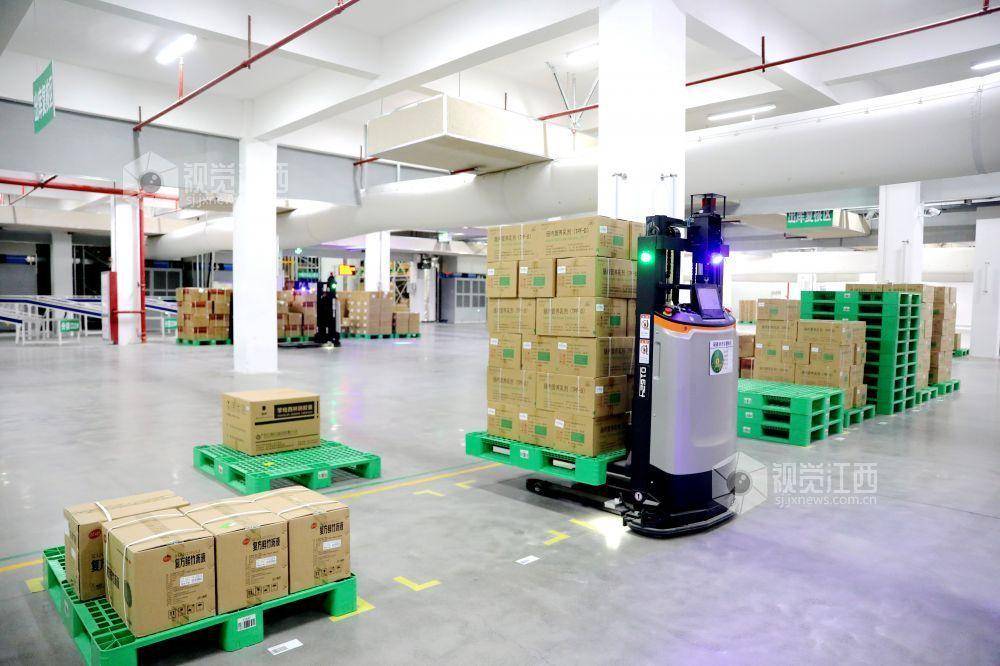
制造业数字化转型走向系统转变
Xin Lang Cai Jing· 2025-12-30 23:17
Core Viewpoint - The Ministry of Industry and Information Technology has released guidelines to promote digital transformation in 14 key industries, aiming to shift China's manufacturing sector from fragmented exploration to systematic advancement [1] Group 1: Digital Transformation Goals - The essence of manufacturing digital transformation is to utilize data as a key driving factor, enabling digital upgrades across all processes from R&D to market services, ultimately reshaping the manufacturing system and evolving the industrial ecosystem [2] - The core objective is to build new productive forces, enhancing the quality, efficiency, and competitiveness of the manufacturing sector [2] - Despite historical achievements in digital transformation, challenges remain in meeting high-quality development standards and global manufacturing benchmarks [2] Group 2: Technological Independence - A solid foundation for digital transformation relies on technological independence and self-sufficiency in the industry, necessitating control over key core technologies in software and hardware [3] - Collaboration among academia, industry, and research institutions is essential to tackle common technological challenges and advance digital technologies in manufacturing [3] Group 3: Data Infrastructure and Governance - The full potential of data as a driving force for digital transformation depends on robust infrastructure and governance systems [4] - There is a need to enhance data infrastructure, such as 5G and industrial internet, ensuring coverage for industrial parks and SMEs [4] - Establishing a governance framework for data management is crucial to facilitate efficient and compliant data sharing across the industry [4] Group 4: Application Scenarios - Application scenarios serve as testing grounds for technological value and catalysts for industrial upgrades, leveraging China's diverse manufacturing landscape [5] - The focus should be on identifying and promoting typical digital application scenarios that address quality improvement, cost reduction, efficiency enhancement, and sustainability [5] - Enterprises are the main drivers of digital transformation, and collaboration among large, medium, and small enterprises can unleash significant potential [5] Group 5: Talent Development - Talent is the primary resource driving manufacturing development, necessitating collaboration between enterprises and educational institutions to cultivate a skilled workforce [6] - A digital talent training system should be established to produce professionals who are proficient in both manufacturing and digital technologies [6]