
发展新质生产力

Search documents
国台办:必要正义之举
Ren Min Wang· 2026-01-02 08:59
Group 1 - The military actions by the People's Liberation Army (PLA) are a serious warning against "Taiwan independence" forces and external interference, aimed at safeguarding national sovereignty and territorial integrity [1][2] - The recent military exercises have been characterized as necessary and just actions to counteract the provocations from the Taiwan authorities and external forces, which are seen as detrimental to cross-strait relations and regional stability [1] - The PLA's determination to defend national sovereignty and territorial integrity is emphasized, with a strong message that any attempts by external forces to interfere in Taiwan issues will be met with significant resistance [1] Group 2 - The "Encouragement Directory for Foreign Investment Industries (2025 Edition)" will be implemented starting February 1, 2026, focusing on technological innovation and advanced manufacturing, which will guide foreign investment towards key sectors [2] - The directory aims to support Taiwanese businesses in mainland China, providing guidance for investment and transformation opportunities in line with the "14th Five-Year Plan" [2] - The recruitment of graduate students from Taiwan to mainland universities will begin soon, with specific provisions for Taiwanese students to apply, indicating an effort to enhance educational exchanges [3] Group 3 - Recent cross-strait exchanges have seen many Taiwanese compatriots visiting mainland China, highlighting the shared cultural and familial ties between the two regions [3] - The mainland is actively promoting tourism and cultural exchanges, inviting Taiwanese individuals to explore various scenic locations across the country [3]
中国制造“十四五”成就展在京开幕
Xin Lang Cai Jing· 2026-01-01 11:31
Core Insights - The exhibition "Building a Strong Nation Road - Achievements of China's Manufacturing during the 14th Five-Year Plan" showcases the robust development of China's manufacturing sector over the past five years, featuring over 300 exhibits across six thematic areas [1][2]. Group 1: Exhibition Overview - The exhibition spans approximately 4,000 square meters and includes more than 300 exhibits, with over 85% being physical items and high-precision models [1]. - It emphasizes the integration of high-end manufacturing, industrial foundation, smart manufacturing, green manufacturing, and the concept of a better life [1]. - The exhibition features a visually impactful design with data charts and visual boards that translate abstract development concepts into intuitive information [1]. Group 2: Key Exhibits and Themes - The exhibition replicates the appearance of national key equipment, creating a full-chain exhibit system that covers raw materials, key components, complete equipment, and industrial ecology [2]. - It includes high-precision models of major national projects such as the Baihetan Hydropower Station and the Shenzhen-Zhongshan Link, highlighting the support of "big country heavy equipment" for significant engineering projects [1][2]. - The exhibition showcases innovative forms to lower the understanding barrier of manufacturing knowledge, such as the "Journey of a Grain of Sand in Photovoltaic Manufacturing," which simplifies complex principles into accessible experiences [2]. Group 3: Industry Insights - The exhibition highlights the resilience of industrial chains and supply chains, showcasing breakthroughs in key areas such as high-performance carbon fiber and silicon carbide substrates, which are crucial for upgrading the manufacturing industry [3]. - It presents the integration of new technologies and materials, illustrating how these emerging factors open new avenues and create advantages for the manufacturing sector [3]. - The exhibition also features products closely related to people's livelihoods, including textiles, smart home devices, and medical equipment, evoking emotional resonance by contrasting past and present production and living scenarios [3].
第一观察|2025,领悟总书记金句中蕴含的思想真谛
Xin Hua She· 2025-12-29 22:36
Group 1 - The core message emphasizes the importance of addressing problems as a pathway to development, highlighting a proactive approach to education and economic challenges [3] - Xi Jinping's focus on localized solutions and the importance of adapting strategies to specific regional characteristics is evident in discussions about rural tourism and revitalization [5] - The call for self-reform within the Communist Party is underscored, stressing the need for strong leadership and accountability in the face of complex governance challenges [10] Group 2 - The commitment to industrial development is highlighted, showcasing China's evolution into a leading manufacturing power through practical and pragmatic approaches [12] - The narrative of national rejuvenation is framed as an unstoppable historical process, emphasizing the collective spirit and determination of the Chinese people [13] - The principle of prioritizing the people's well-being is reiterated, with a focus on improving living standards and achieving common prosperity as central goals of economic and social development [17] Group 3 - The strategy of focusing on high-quality development and internal capabilities is presented as a response to external uncertainties, reinforcing the idea of self-reliance [19] - The call for unity and perseverance in the face of challenges is articulated, encouraging a spirit of resilience and ambition among the populace [15] - The overarching theme of modernization is linked to individual progress, with policies aimed at enhancing the quality of life for all citizens [17]

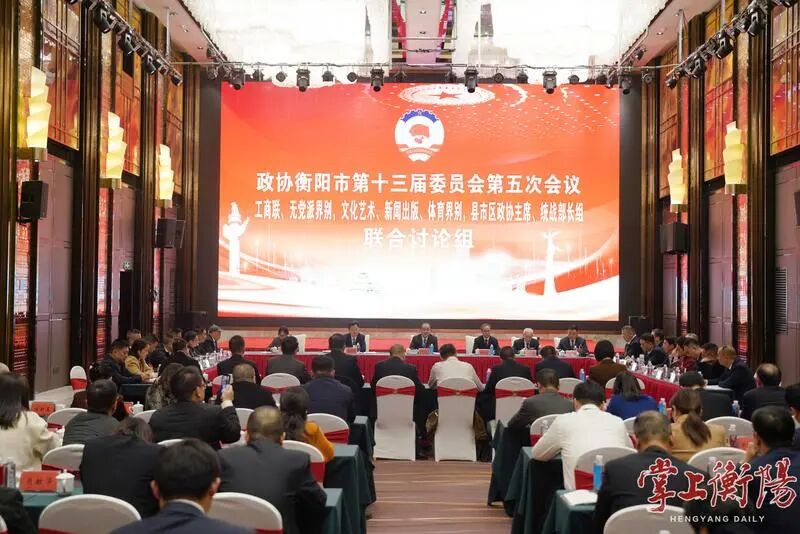
朱健参加市政协十三届五次会议联组讨论
Xin Lang Cai Jing· 2025-12-28 02:57
Group 1 - The meeting emphasized the importance of implementing the spirit of the 20th Central Committee and the key directives from General Secretary Xi Jinping regarding Hunan's development [1][5] - Nine members of the Political Consultative Conference actively contributed suggestions on major issues related to economic and social development, including virtual power plant construction and optimizing the business environment [3] - The city has maintained a steady economic growth, with improvements in major economic indicators and social governance, attributed to the efforts of the Political Consultative Conference members [5][6] Group 2 - The future focus will be on establishing a higher-level national regional key city and provincial sub-center, with strategies aimed at high-quality development and regional integration [5][6] - The city aims to enhance its manufacturing and cultural tourism sectors as part of its development strategy, while also promoting a modern industrial system [6] - The leadership calls for a collaborative effort to transform ambitious plans into practical actions, emphasizing the importance of political consultation and social responsibility [6]
在投资于人中推动消费扩容提质
Zhong Guo Jing Ji Wang· 2025-12-22 08:11
Group 1 - The core viewpoint emphasizes the importance of strengthening domestic circulation amidst complex external environments, with consumption being the "main engine" and "stabilizer" of economic growth [1] - The 2025 Central Economic Work Conference prioritizes "domestic demand as the main driver" and aims to build a strong domestic market, highlighting the commitment to boost consumption through targeted actions [1] - The concept of Chinese-style modernization focuses on human modernization, investing in education, employment, healthcare, and social security to enhance human capital and improve living standards [1] Group 2 - Key areas of focus include child-rearing education, youth employment, and elderly healthcare, with an emphasis on promoting employment and optimizing income distribution to expand the middle-income group [2] - The macro policy signals a stronger emphasis on people's livelihoods, which is expected to stimulate innovation and support the construction of a robust domestic consumption market [2] - The current per capita GDP in China is between $10,000 and $20,000, with a shift in consumption structure towards a balance between goods and services, and an increase in digital, green, and health-related consumption [3] Group 3 - Investment in people is framed as a means to align high-quality population development with improved quality of life, enhancing people's sense of gain, happiness, and security [3] - The approach emphasizes that investment in both people and physical assets is essential for sustainable development, with both elements working together to promote consumption and stabilize growth [3] - The integration of investment in human capital with consumption expansion is expected to create new opportunities for development and enhance the role of consumption in economic cycles [4]
让创新成果加速投入应用
Liao Ning Ri Bao· 2025-12-07 00:54
Group 1 - The company has successfully tested a new "ground-mounted detachable self-locking sliding car," which reduced the rope hanging and dismantling process from 40 minutes to under 20 minutes in cold conditions [1] - The innovative "drone-mounted X-ray non-destructive testing technology" has achieved the first domestic application of drone operations in live electrical environments, significantly reducing inspection time from over two hours to less than ten minutes without power interruption [2] - The company has established an innovation studio that has grown to include 24 technical backbones, focusing on cultivating talent through mentorship and project training, aiming to build a workforce that is both technically proficient and innovative [2] Group 2 - The company has received national patents for its innovations, with the "ground-mounted detachable self-locking sliding car" improving operational efficiency by over 50% [2] - The "problem wall" in the innovation studio serves as a tool for collecting operational challenges, guiding the direction of innovation efforts [2] - The company plans to enhance its research and development efforts in alignment with the "14th Five-Year Plan," focusing on transforming technological innovation into significant contributions to high-quality development [3]
第三届广州国际美妆周开幕 近百亿优质项目亮相
Nan Fang Ri Bao Wang Luo Ban· 2025-12-05 07:49
创新成为广州化妆品产业高质量发展的新亮点。报告指出,广州正加速突破核心原料"卡脖子"困境,推 动产业从"配方应用"向"原料定义"跃升。截至2025年10月,广州化妆品发明专利申请总量达1.49万件, 新原料备案数量达40个。 "让世界悦享中国美妆",底气源自雄厚的产业基础。开幕式上,广州市市场监管局党组书记赵军明发布 了《2025广州化妆品产业白皮书》,用一组组翔实数据揭示了广州美妆的蓬勃生机。白皮书显示,广州 化妆品产业规模优势持续扩大,稳居"千亿产业集群"。全市现拥有化妆品生产企业1857家,占全省的 60%;注册备案主体7237家,拥有超过120万种流通产品,构建了从原料研发、生产制造、包材配套到 品牌营销的完整闭环生态。 12月4日,以"潮起美湾,妆耀全球"为主题的第三届广州国际美妆周化妆品高质量发展大会在广州白云 国际会议中心启幕。 大会聚焦"发展新质生产力""推动科技创新和产业创新深度融合",召开化妆品行业盛会,汇聚了国家、 省、市有关单位领导,两院院士,全球美妆头部企业代表及多国驻穗总领事,共同见证广州向世界发出 的"美丽邀约"。大会通过发布产业白皮书、集中展示近百亿产业项目落地成果,全景式展现 ...
兴业证券:科技成长仍将是最终引领本轮躁动行情突破的胜负手
Xin Lang Cai Jing· 2025-12-01 00:16
Core Viewpoint - The focus on technological self-reliance and the development of new productive forces will be key to high-quality transformation in the context of major power competition, with policies expected to prioritize industry and technology in the upcoming year-end adjustments [1] Group 1: Technology Sector - The narrative shift within AI and the benefits of "high-cut low" strategies in AI edge and software applications (including media, computing, humanoid robots, and Hong Kong internet) are highlighted as significant areas of focus [1] - The domestic computing power industry chain is expected to benefit from the emphasis on "technological self-reliance" [1] Group 2: Market Trends - The anticipated easing of monetary policy by the Federal Reserve is expected to catalyze technological growth, which will be a decisive factor in the current market rally [1] - The upward trend in industry dynamics is expected to continue into next year, with a focus on innovative pharmaceuticals and military industries showing improved cost-effectiveness after adjustments [1]

新华社经济随笔:理念对了 就不怕山高路远
Xin Hua Wang· 2025-11-14 08:17
Group 1 - The establishment of a new thorium-based molten salt experimental reactor in China marks a significant advancement in nuclear fuel diversification, enabling the use of thorium, which is abundant in China, for safe and efficient power generation [1] - The successful conversion of thorium-uranium nuclear fuel in this reactor positions China as the only country globally to operate such a molten salt reactor with thorium fuel [1] - The integration of thorium fuel technology with energy storage and hydrogen production is expected to contribute to a low-carbon composite energy system [1] Group 2 - The ongoing technological revolution and industrial transformation necessitate a focus on innovation as the primary driving force for development, especially in the context of global competition for strategic innovation resources [2] - The construction of the Shanghai-Chongqing high-speed railway is set to enhance economic connectivity among major urban clusters, promoting industrial collaboration and efficient resource allocation across eastern, central, and western China [2] - Achieving coordinated development and leveraging regional advantages are essential for expanding the domestic economic cycle in a country with vast geographical and demographic diversity [2] Group 3 - The global challenges of climate change, resource depletion, and environmental pollution underscore the necessity of a green transition for sustainable development [3] - The emphasis on ecological civilization highlights the importance of long-term thinking and the need to prioritize green development as a foundation for future growth [3] - Collaborative efforts and maintaining supply chain integrity are crucial in navigating the complexities of global economic challenges, as emphasized in recent APEC meetings [3] Group 4 - China's commitment to opening up its economy is reflected in initiatives like the Hainan Free Trade Port and the high transaction volume at the recent China International Import Expo, indicating a growing alignment of interests with other countries [4] - The focus on equitable development outcomes aims to enhance the quality of life for all citizens, with community projects and cultural initiatives gaining traction [4] - The drive for shared development is seen as a means to foster national stability and individual happiness, aligning with the broader goals of national rejuvenation and strong country construction [4]
坚定“All in 中国” 毕盛投资创立30周年 继续看多、做多中国
Zhong Guo Zheng Quan Bao· 2025-11-09 22:16
Core Insights - APS Investment celebrated its 30th anniversary, emphasizing its commitment to long-term investment in Chinese assets and the importance of the Chinese market as a core focus for growth [1][4]. Group 1: Company Overview - APS Investment has grown alongside the Chinese economy, with its founder highlighting a 25-fold increase in China's GDP over the past 30 years [4]. - The company has been operating in China for 23 years, establishing a strong local presence and gaining valuable insights [5]. - APS Investment's unique "4 Alpha Perspective" investment framework categorizes stocks into four types based on Alpha attributes, enhancing its investment strategy [6]. Group 2: Strategic Focus - The firm has made significant strategic decisions, such as obtaining a WOFE PFM license in 2018 and refocusing resources entirely on the Chinese market in 2020 [4]. - APS aims to serve as a bridge between Chinese and global capital markets, providing insights and support for both international and domestic investors [7]. Group 3: Market Trends and Opportunities - Experts at the summit discussed the vast development prospects in China, particularly in the context of macroeconomic changes and technological innovations [2]. - The discussion highlighted the role of artificial intelligence in creating opportunities for innovation and addressing future labor shortages [3]. Group 4: Performance and Future Outlook - APS Investment manages over 18 billion RMB in Chinese stock funds, demonstrating its ability to capture excess returns in the market [7]. - The company is positioned to deepen its strategic role in the Chinese market, aiming to enhance its contributions to both local and global investment landscapes [7].