
发展权

Search documents
“平等、人权和包容性发展”主题边会在日内瓦举行
Xin Hua Wang· 2025-09-24 00:32
Core Viewpoint - The event held by the China International Exchange Promotion Association in Geneva focused on the role of civil society organizations in enhancing global human rights governance and promoting inclusive development [1][2] Group 1: Event Overview - The side event titled "Equality, Human Rights, and Inclusive Development" gathered nearly a hundred participants from various countries, including representatives from Venezuela, India, and Spain, as well as leaders from multiple NGOs and scholars [1] - The event highlighted the contributions of civil society organizations in addressing human rights issues and fostering inclusive development [2] Group 2: Key Contributions and Discussions - The China International Exchange Promotion Association showcased projects like mobile surgical units and ocean medical ships, emphasizing their role in promoting international cooperation and safeguarding health rights in developing countries [2] - Representatives from various organizations discussed the importance of placing development rights at the center of international agendas for the benefit of global South countries [2] - The event featured a photo exhibition commemorating the 80th anniversary of the United Nations, illustrating the contributions of Chinese civil society organizations to global human rights governance [2]
构建中非命运共同体 携手实现发展权
Ren Min Ri Bao· 2025-08-24 22:40
Core Points - The first China-Africa Human Rights Seminar was held in Addis Ababa, Ethiopia, focusing on building a China-Africa community and achieving development rights [1] - Over 200 representatives from China and more than 40 African countries participated, discussing the importance of development in achieving substantial human rights progress [1][2] - The seminar highlighted China's achievements in human rights and its contributions to Africa's human rights development and capacity building [1][2] Group 1 - Development is emphasized as a fundamental human right, with China prioritizing survival and development rights in its human rights approach [2] - The seminar showcased successful projects such as the Mombasa-Nairobi railway, which reduced logistics costs in Kenya by 40% and contributed over 2% to the country's GDP, creating more than 74,000 jobs [2] - African countries are increasingly adopting China's human rights development model, adapting it to local contexts to improve living standards and development [2][3] Group 2 - The seminar participants stressed the need for a fair and inclusive global human rights governance system, advocating for cooperation to promote development and human rights [3] - The relationship between Africa and China is based on mutual respect and non-interference, with ongoing practical cooperation through initiatives like the Belt and Road Initiative [3] - Future cooperation should focus on establishing a China-Africa human rights discourse, expanding cooperation areas, ensuring public safety and health, and promoting sustainable development [3]
首届中非人权研讨会在埃塞俄比亚举行—— 构建中非命运共同体 携手实现发展权
Ren Min Ri Bao· 2025-08-24 21:57
Group 1 - The first China-Africa Human Rights Seminar was held in Addis Ababa, Ethiopia, with over 200 participants from China and more than 40 African countries discussing the theme of "Building a China-Africa Community of Shared Future to Achieve Development Rights" [1] - Participants praised China's achievements in human rights and its contributions to the development of human rights in Africa, expressing a desire for China and Africa to explore human rights paths that align with their national conditions [1][2] - The "Dar es Salaam Consensus" emphasizes that the choice of development paths should be based on national conditions and local cultural characteristics, reflecting the common will of both China and Africa [1] Group 2 - Development is highlighted as a fundamental theme of human society and a primary task of the Chinese Communist Party, with a focus on survival rights and development rights as essential human rights [2] - China has successfully created a contemporary human rights perspective that combines universal principles with national realities, contributing to the global human rights discourse [2] - Examples of successful China-Africa cooperation include the Mombasa-Nairobi railway reducing logistics costs in Kenya by 40% and creating over 74,000 jobs, as well as agricultural advancements in Rwanda and Tanzania [2] Group 3 - African countries are actively learning from China's human rights development path and innovating their own human rights development models based on local realities [2] - The concept of universal human rights should not be defined or imposed by a select few, but should respect the values, interests, and choices of others [2] - The essence of South-South cooperation is reflected in China's approach, which provides a methodology for independent problem-solving rather than a standard answer [2] Group 4 - The seminar emphasized the need for China and Africa to explore human rights development paths based on their national conditions and to promote fair and inclusive global human rights governance [3] - Future cooperation should focus on building a discourse system for China-Africa human rights, expanding cooperation paths, ensuring people's safety and health, and promoting sustainable development [3]
总台记者观察丨中非携手共绘发展权新篇章
Yang Shi Xin Wen Ke Hu Duan· 2025-08-24 07:12
Core Viewpoint - The first African Human Rights Seminar held in Addis Ababa emphasized the importance of development as a key solution to all human rights issues, culminating in the release of the "Addis Ababa Consensus on Development Rights" [1][4]. Summary by Relevant Sections Development Rights - Development is highlighted as an indispensable human right, with a focus on eradicating poverty, hunger, conflict, and discrimination as foundational to human rights protection [3]. - The consensus underscores the necessity of a people-centered development approach, ensuring equitable distribution of development benefits [3]. Sustainable Development - The document advocates for sustainable and high-quality development, reinforcing the role of the UN Charter and the 2030 Sustainable Development Agenda in realizing development rights [3]. - It calls for respect for national sovereignty and the right of countries to choose their own paths for human rights development, opposing the politicization of human rights issues [3]. International Relations - The consensus firmly rejects unilateralism, hegemony, and protectionism, promoting a new type of international relations based on mutual respect and cooperation [3]. - It emphasizes the importance of collective action to ensure the implementation of development rights and the integration of these rights into the UN agenda [3]. China-Africa Cooperation - The document identifies China-Africa cooperation as an effective means to promote the realization of development rights, leveraging mechanisms like the China-Africa Cooperation Forum and the Belt and Road Initiative [3][10]. - China's experience in development is seen as valuable for African nations striving to overcome poverty and achieve sustainable development [5]. Critique of Western Approaches - African representatives expressed strong opposition to Western hegemony disguised as human rights advocacy, highlighting structural issues in Western aid models that may undermine African sovereignty [9]. - The consensus reflects a growing sentiment among African nations to define and pursue their own human rights agendas, free from external imposition [9][10]. Practical Examples of Cooperation - China has implemented various initiatives, such as the "20+20 Cooperation Plan" for higher education, which has significantly contributed to talent development in Africa [8]. - Infrastructure projects like the Mombasa-Nairobi Railway have demonstrated tangible benefits, including a 40% reduction in logistics costs and the creation of 74,000 jobs [8].

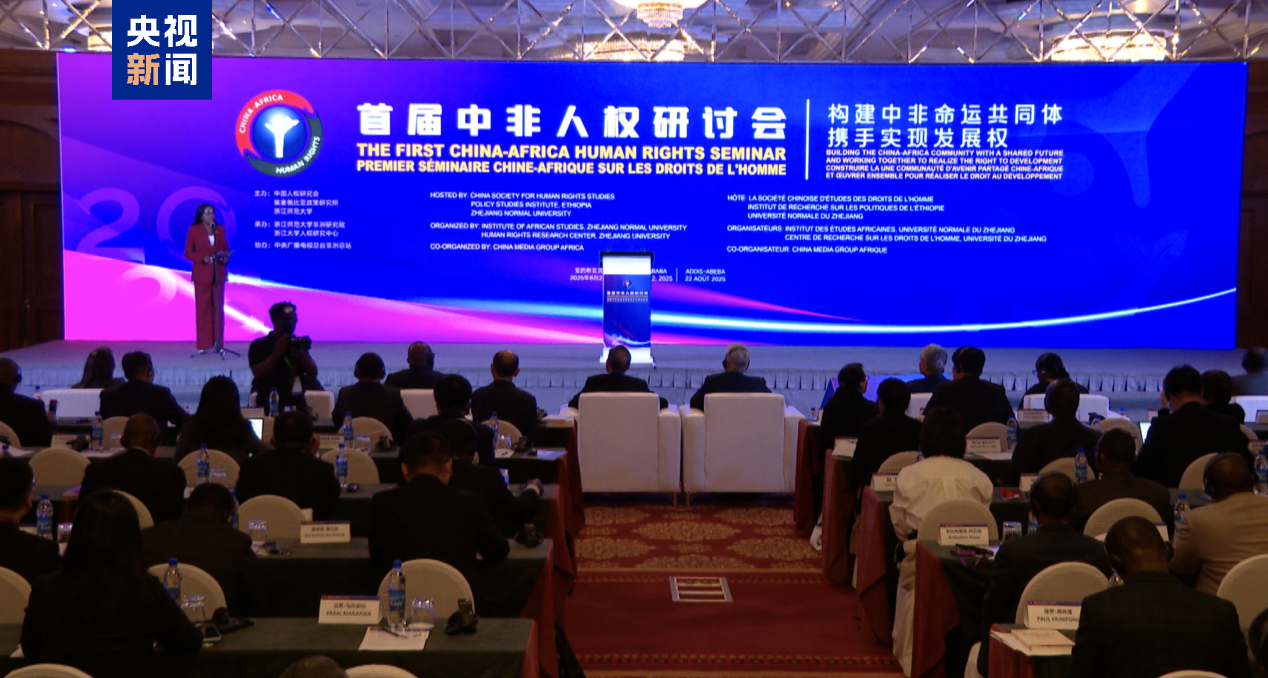
首届中非人权研讨会在埃塞俄比亚举行
Xin Hua She· 2025-08-22 21:43
Group 1 - The first China-Africa Human Rights Seminar was held in Addis Ababa, Ethiopia, with over 200 participants from China and more than 40 African countries discussing the theme of "Building a China-Africa Community of Shared Future and Achieving Development Rights Together" [1][2] - The seminar is seen as a milestone platform for shaping the future of human rights governance and enhancing cooperation between China and Africa [2] - The event was co-hosted by the China Human Rights Research Association, Zhejiang Normal University, and the Ethiopian Policy Research Institute, aiming to implement the "China-Africa Cooperation Forum - Beijing Action Plan (2025-2027)" [2]
国际观察丨中拉为全球人权治理贡献“南方智慧”
Xin Hua Wang· 2025-07-28 01:01
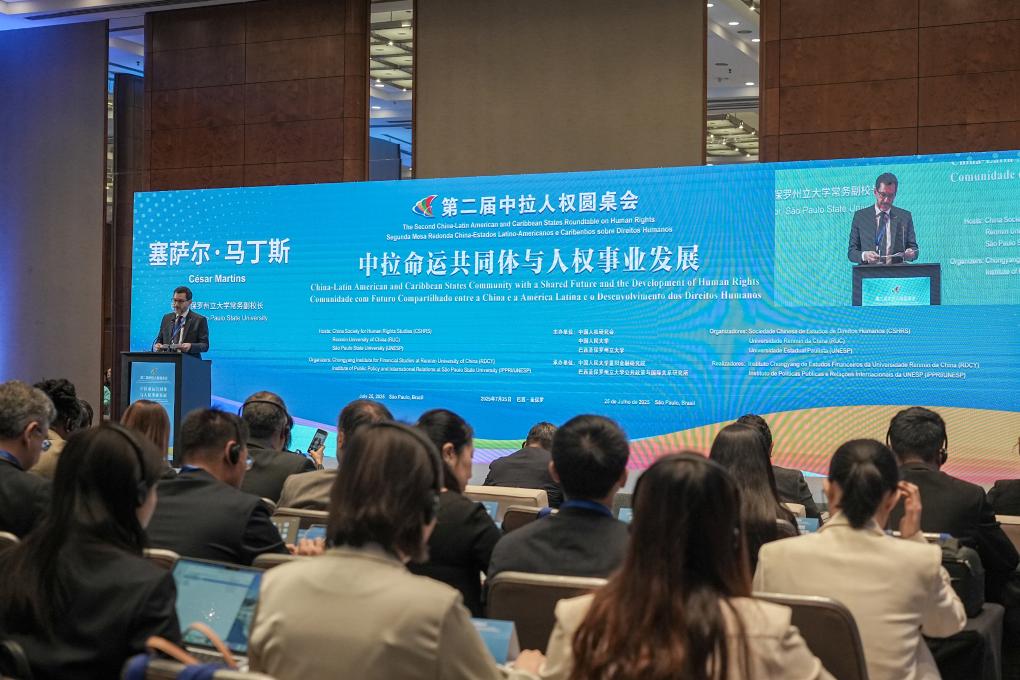
Core Viewpoint - The second China-Latin America Human Rights Roundtable held in São Paulo emphasizes the contribution of "Southern wisdom" to global human rights governance, focusing on the development of a community of shared destiny between China and Latin America [1][5]. Group 1: Human Rights Philosophy and Practices - Scholars from Latin America recognize China's approach of promoting human rights through development, highlighting its emphasis on people-centered high-quality development and genuine multilateralism as beneficial for Latin American countries facing poverty and economic challenges [3][4]. - The success of China's poverty alleviation efforts is viewed as a significant achievement in the human rights field, providing new vitality and development opportunities for impoverished regions, which Latin American countries can learn from [3][4]. Group 2: Cooperation and Development - The roundtable discussions reveal numerous points of alignment between China and Latin America in human rights philosophy, practical paths, and global governance issues, showcasing the cooperative achievements and experiences of the Global South in human rights governance [5][9]. - China's initiatives, such as the Belt and Road Initiative and BRICS cooperation, are seen as vital for infrastructure development, green energy transition, and digitalization in Latin America, contributing significantly to the region's human rights development [7][11]. Group 3: Future Directions for Cooperation - Experts suggest that future China-Latin America human rights cooperation should expand sustainable development projects and deepen cultural and technological exchanges, emphasizing respect for sovereignty and mutual benefit [6][8]. - The need for a more equitable and inclusive human rights governance system is highlighted, with calls for the Global South to collaboratively redefine human rights beyond Western narratives, advocating for a governance system that ensures dignity for all [9][11].
全球发展倡议推动人类发展理论和实践转型与创新(深入学习贯彻习近平新时代中国特色社会主义思想·原创性概念标识性概念纵横谈)
Ren Min Ri Bao· 2025-07-17 22:02
Core Points - The Global Development Initiative proposed by President Xi Jinping aims to address the urgent need for global development and to foster a community with a shared future for mankind [1][8] - The initiative emphasizes a people-centered approach to development, ensuring that the benefits of development are shared by all [2][5] - It seeks to break the outdated "donor-recipient" logic in global development, advocating for equal opportunities and sustainable development models [3][4] Group 1: Theoretical Framework - The initiative systematically addresses major theoretical and practical issues related to global development, focusing on who benefits from development and how it should be achieved [2][10] - It promotes a new understanding of development that prioritizes people and emphasizes shared benefits, contrasting with traditional development models that often favor a select few [10][11] Group 2: Action-Oriented Approach - The Global Development Initiative insists on an action-oriented approach, aiming to transform development rights into practical actions and commitments [4][14] - It highlights the need for substantial resource investment and the establishment of a global development community to meet the urgent needs of developing countries [4][14] Group 3: Inclusivity and Sustainability - The initiative advocates for inclusive and green development, ensuring that all groups have equitable access to development opportunities and that environmental sustainability is prioritized [5][6] - It emphasizes the importance of respecting each country's right to choose its development path, fostering dialogue and cooperation rather than conflict [6][11] Group 4: Innovation and Cooperation - Innovation is positioned as a key driver of long-term global economic development, with the initiative promoting an open and fair environment for technological advancement [7][8] - The initiative calls for a new model of international cooperation that is inclusive and equitable, moving away from conditional aid towards mutual benefit [11][13] Group 5: Practical Implementation - The initiative has led to the establishment of a project database and various international cooperation projects aimed at poverty alleviation, food security, and climate change [14][15] - China has committed significant resources to support the initiative, mobilizing nearly $20 billion for over 1,100 projects benefiting multiple countries [14][16]
新华时评丨中国以减贫重新定义“发展权”
Xin Hua She· 2025-07-11 16:22
Core Insights - The report titled "Striving for a Better Life for the People: China's Practice and Theoretical Innovation in Consolidating and Expanding Poverty Alleviation Achievements" highlights China's unique contributions and responsibilities in global poverty reduction efforts [1][2] - China's poverty alleviation theory is increasingly recognized for its scientific nature and universal applicability, moving beyond traditional welfare paradigms to a more people-centered approach [1][2] Group 1 - China's poverty alleviation governance model is transitioning from "Chinese characteristics" to "global sharing," providing effective pathways that emphasize precision, pragmatism, and a people-centered approach [2] - The core concepts of "targeted poverty alleviation," "dual support of will and intelligence," and "development-oriented poverty alleviation" have gained wide international recognition, offering new ideas and pathways for addressing complex poverty issues [2] - The essence of China's poverty alleviation is a redefinition of "development rights," positioning developing countries as equal co-creators rather than mere followers in the modernization wave [2]
结果来了,差500美元!按新标准,我国离高收入经济体仅一线之隔
Sou Hu Cai Jing· 2025-07-02 03:40
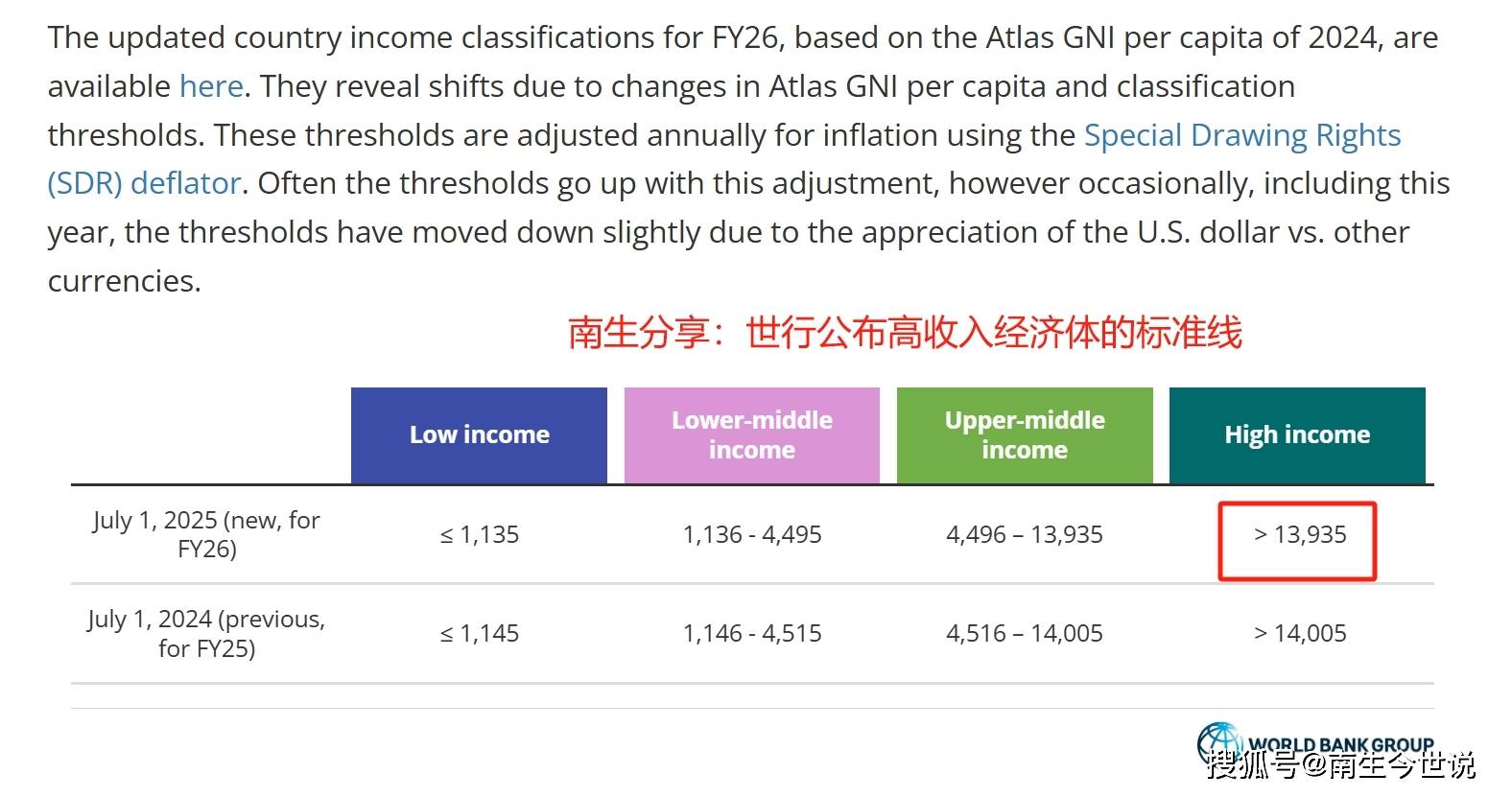
Core Viewpoint - China's nominal GDP for 2025 is projected to be approximately 31.88 trillion RMB, equivalent to about 4.44 trillion USD, with a per capita GDP of 13,445 USD, placing it just 500 USD away from the World Bank's high-income threshold of 13,935 USD [3][6]. Group 1: Economic Indicators - The World Bank has lowered the minimum GNI standard for high-income economies from 14,005 USD to 13,935 USD, making China's transition to high-income status more attainable [3][6]. - The current gap of 500 USD translates to a daily value creation of approximately 9.5 RMB per person across China's 1.4 billion population [4][6]. - A 3.7% appreciation of the RMB against the USD would allow China to naturally surpass the 13,935 USD threshold without any economic growth [6][9]. Group 2: Global Economic Impact - If China crosses the high-income threshold, it will become the largest high-income economy by population, significantly increasing the global high-income population from about 1.32 billion to over 2.7 billion, raising the percentage of high-income individuals globally from approximately 16% to 35% [6][9]. - This transition will reshape the global economic and industrial landscape, positioning China as a rule-maker in the industrial revolution rather than a follower [7][9]. - China's development model will provide a new path for many developing countries, demonstrating that high income does not equate to Westernization, and showcasing diverse modernization pathways [9][10]. Group 3: Future Aspirations - The next goal for China, after achieving high-income status, will be to become a prosperous, strong, and democratic developed economy, marking a significant milestone in its economic journey [10].
“促进和保护发展权”主题边会在日内瓦举行
Ren Min Ri Bao· 2025-06-21 21:47
Group 1 - The event focused on the theme of "promoting and protecting the right to development," highlighting challenges such as inequality in the international economic order and the inadequacy of developed countries in fulfilling international obligations [1][2] - Participants emphasized that the U.S. government's weaponization and politicization of trade and tariffs severely hinder the industrialization, poverty alleviation, and economic revitalization processes of developing countries, impacting the implementation of the UN's 2030 Sustainable Development Agenda [1] - China promotes a people-centered development philosophy, ensuring that its citizens are participants, promoters, and beneficiaries of development while sharing its development solutions with the international community through initiatives like the Belt and Road Initiative [1] Group 2 - This year marks the 80th anniversary of the United Nations, and the international community is urged to reaffirm the UN's founding principles and place the right to development at the core of the global agenda [2] - Countries are called to collectively resist unilateral sanctions and trade protectionism that undermine the economic sovereignty and development rights of others, promoting a more open, inclusive, and balanced direction for economic globalization [2]