
可持续发展目标

Search documents
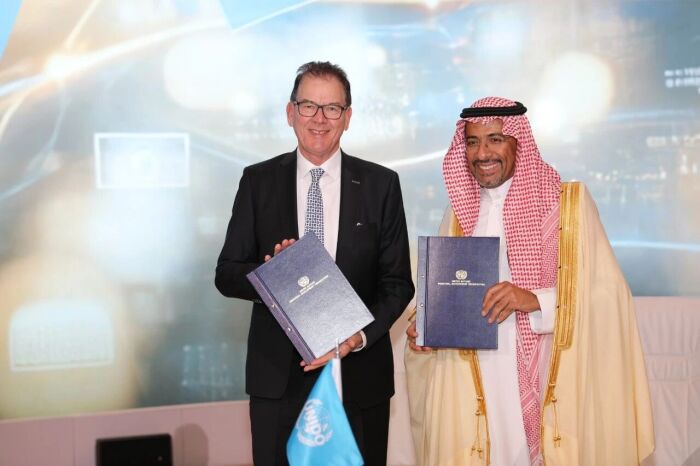
工发组织第二十一届大会在利雅得开幕 穆勒连任总干事
Shang Wu Bu Wang Zhan· 2025-12-08 10:23
Core Viewpoint - The 21st session of the United Nations Industrial Development Organization (UNIDO) and the 2025 Global Industry Summit opened in Riyadh, Saudi Arabia, with over 5,000 representatives from various sectors attending, and Müller was re-elected as Director-General with unanimous support from 173 member states [1][3]. Group 1: UNIDO's Role and Initiatives - Müller emphasized the importance of UNIDO in bridging the gap between developing and developed countries, promoting knowledge sharing, technology transfer, and investment cooperation to drive sustainable industrialization and fair trade [3]. - During his first term, Müller implemented reforms that doubled UNIDO's technical cooperation projects and expanded partnerships with the private sector, benefiting developing countries [3]. - The organization welcomed three new member states and sought additional funding sources during Müller's first term [3]. Group 2: Economic Development and Sustainability - UN Secretary-General António Guterres highlighted the critical role of industrial development in promoting economic growth, job creation, and poverty alleviation, urging public and private sectors to invest in sustainable industrialization and infrastructure in developing countries [4]. - Müller called for developed countries to increase their efforts to eliminate inequality and fulfill international commitments regarding development aid, as funding for development cooperation has faced significant cuts [6]. Group 3: Conference Themes and Discussions - The 21st session of UNIDO is themed "Investment and Partnerships to Accelerate the Achievement of Sustainable Development Goals" and will last for five days, focusing on future strategic planning, global industrial policy, and inclusive sustainable industrial development [7]. - The conference will also feature a Global Industry Summit, addressing topics such as artificial intelligence, green transformation, inclusive innovation, and sustainable supply chains [9].

中荷政商界探讨经贸合作新机遇
Xin Hua Cai Jing· 2025-11-28 17:20
Core Points - The event held by the China Enterprises Association in the Netherlands celebrated its 20th anniversary, highlighting the achievements in economic and trade cooperation between China and the Netherlands, with over 200 attendees from both countries [1] - China is the largest trading partner for the Netherlands outside the EU, while the Netherlands is China's second-largest trading partner within the EU, indicating a strong bilateral trade relationship [1] - The recent "14th Five-Year Plan" proposed by China is seen as a new opportunity for Sino-Dutch economic cooperation, emphasizing mutual benefits and high-level openness [2] Economic Cooperation - The Netherlands is recognized as a key destination for Chinese investment and a significant source of investment for China, with both countries collaborating on major international issues such as climate change and sustainable development [1] - There are complementary advantages in various sectors including green energy, clean technology, life sciences, smart manufacturing, digital economy, agriculture, and logistics, suggesting a broad potential for future cooperation [2] - The China Enterprises Association in the Netherlands aims to enhance communication and cooperation between businesses and the government, providing better services for investors [2][3] Challenges and Recommendations - The evolving global economic landscape presents challenges for Sino-Dutch trade, with calls for maintaining economic influence and balance in decision-making [3] - Emphasis on the necessity of Sino-European cooperation, with suggestions to adhere to market rules, ensure mutual benefits, and leverage the role of the China Enterprises Association to improve service networks [3]
【8点见】警方通报15岁女生被4名同学掌掴
Yang Shi Wang· 2025-11-22 00:03
Group 1 - China's total electricity consumption in October increased by 10.4% year-on-year [2] - From January to October, the national online retail sales grew by 9.6% year-on-year [2] - Revenue of traditional Chinese brands is expected to exceed 2 trillion yuan in 2024, with overseas revenue surpassing 50 billion yuan [2] Group 2 - The number of captive giant pandas in China has reached 808 [2] - China has become the largest contributor to global sustainable development goal-related papers [2] Group 3 - The 15th National Games have set 8 world records, 5 world youth records, 13 Asian records, and 10 Asian youth records, showcasing China's achievements in competitive sports [2][18]

英媒:全球八成“城里人”,未来城市需更宜居
Huan Qiu Shi Bao· 2025-11-20 22:36
Core Insights - The United Nations report indicates that over 80% of the global population now lives in urban areas, a significant increase from 55% in 2018, highlighting the importance of sustainable urban environments for health and the planet [1][2] Group 1: Urbanization Statistics - The report establishes new criteria for defining urban areas, requiring a minimum population of 50,000 and a density of at least 1,500 people per square kilometer [1] - Current estimates show that 45% of the global population lives in cities, with 36% in towns, leading to a total of 81% urban residents [2] - Projections suggest that by 2050, 83% of the global population will reside in urban areas, with rural populations peaking in the 2040s before declining [2] Group 2: Drivers of Urbanization - Urbanization drivers vary by region: in East and South Asia, it is primarily due to rural-to-urban migration for education and job opportunities; in Europe and North America, international migration plays a larger role; while in sub-Saharan Africa, higher birth rates in cities contribute to growth [2] Group 3: Environmental and Health Impacts - Urban expansion can lead to increased carbon emissions if public transport is poorly planned, while effective planning can result in more energy-efficient transportation systems [3] - Urban residents face health risks from air pollution and extreme temperatures, but cities also provide better access to healthcare and social opportunities [3] - The report emphasizes the need to enhance urban livability through increased green spaces to improve health outcomes [3]
G20工商峰会举行 聚焦全球经济包容性增长
人民网-国际频道 原创稿· 2025-11-20 01:21
Core Points - The 2025 G20 Business Summit is held in Johannesburg, South Africa, focusing on "Inclusive Growth and Shared Prosperity through Global Cooperation" [1][2] - South Africa, as the first African country to host a G20 summit, highlights Africa's influence in international affairs [2] - The summit emphasizes trade and investment, digital transformation, energy transition, industrialization and innovation, employment, and education [2] Group 1 - The G20 economies contribute over 80% of global GDP and over 90% of employment [2] - The summit aims to promote inclusive economic growth through coordination and cooperation among G20 member countries [2] - The World Bank Group's International Finance Corporation highlights the challenges and potential in global development cooperation, urging G20 members to refocus on development issues [2] Group 2 - The summit serves as a platform for global dialogue, cross-sector collaboration, and shared learning among business leaders from G20 countries [2]
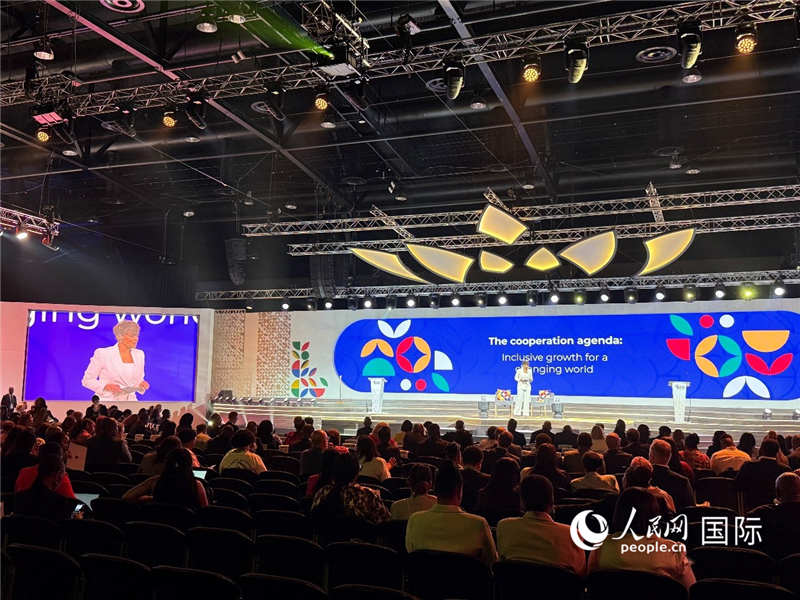
“中国在全球治理体系中的作用至关重要”——访联合国驻华协调员常启德
Ren Min Ri Bao Hai Wai Ban· 2025-11-19 05:12
Core Viewpoint - The United Nations is at a pivotal moment in its 80-year history, facing new challenges in global governance and emphasizing the importance of multilateralism and cooperation among nations [1][4]. Group 1: Global Governance Initiative - China has proposed a Global Governance Initiative that emphasizes five core principles: sovereign equality, adherence to international law, multilateralism, a people-centered approach, and action-oriented strategies [2]. - The initiative is seen as a significant contribution to global governance, aiming to address the current governance deficit and promote the UN's 2030 Sustainable Development Agenda [2][4]. - The initiative seeks to create a forward-looking framework that amplifies the voices of developing countries and fosters consensus on technology development and human welfare [2][3]. Group 2: China's Role in Global Governance - China is recognized as a crucial partner in global governance, contributing significantly to areas such as South-South cooperation, sustainable development, poverty alleviation, and food security [3]. - The success of China in lifting hundreds of millions out of poverty is highlighted as a remarkable achievement that provides valuable experience for global poverty reduction efforts [3]. - The collaboration between the UN and China is progressing well, focusing on inclusive development, renewable energy, and green development initiatives [3]. Group 3: Challenges and Multilateralism - Current global crises, including climate change, conflict, and deep poverty, necessitate international solidarity to ensure no one is left behind [4]. - Multilateralism is viewed as essential for addressing global challenges, with China being a strong advocate for this approach and a supporter of the UN's future commitments [4]. - The UN's greatest achievement is institutionalizing multilateral cooperation, providing a platform for dialogue despite differences among nations [4][5].
全球投资仍未走出低谷
Jing Ji Wang· 2025-11-17 01:39
Global Investment Trends - Global investment conditions remain sluggish in the first half of 2025, with foreign direct investment (FDI) declining by 3%, marking the third consecutive year of decline [1][2] - Geopolitical tensions, trade frictions, and companies reassessing supply chain risks contribute to cautious investment sentiment [1][2] Greenfield Investment - Greenfield investment, a key indicator of new capital expenditure and future production capacity, has seen a significant decline, with a 17% drop in global projects [2] - Developed and developing countries experienced declines of 20% and 12% respectively, contrasting with the recovery period from 2023 to 2024 [2] - Manufacturing greenfield projects decreased by 26%, particularly in sectors related to global supply chains such as electronics, machinery, automotive, and textiles [2] International Project Financing - International project financing, primarily in infrastructure sectors like energy and transportation, has sharply decreased due to high interest rates and rising geopolitical risks [3] - Renewable energy projects saw a 9% decline, while other electricity projects experienced a 38% drop in project numbers and a 52% decrease in investment amounts [3] - Domestic project financing has increased by 39% in number and 29% in amount, indicating a shift as local capital attempts to fill the gap left by international capital withdrawal [3] Cross-Border Mergers and Acquisitions - Cross-border M&A activity has significantly decreased, with total deal value dropping from $448 billion in 2024 to $172 billion in 2025 [4] - The U.S. and U.K. saw declines of 33% and 59% respectively, with overall European M&A activity down by approximately 1% [4] - There is an increase in divestitures and withdrawals, leading to instability in M&A activities in developing countries [4] Sustainable Development Goals Impact - The weak international investment climate negatively affects the achievement of sustainable development goals, with related project numbers declining by 10% and investment amounts down by 7% [4] - This trend indicates a reduction in both the number of projects and the average size of individual projects, further weakening capital formation capabilities in developing countries [4] Future Investment Landscape - The global investment landscape is expected to become more "regionalized" and "friend-shored," with investments favoring politically friendly countries [5] - Manufacturing related to supply chains will continue to face pressure, with developed countries likely to repatriate critical manufacturing processes [5] - Digital economy and artificial intelligence are projected to be the only bright spots for global investment growth, driven by strategic emphasis on AI and semiconductor development [5]
联合国贸发会议报告显示 全球投资仍未走出低谷
Jing Ji Ri Bao· 2025-11-17 00:31
Global Investment Trends - Global investment conditions remain sluggish in the first half of 2025, with foreign direct investment (FDI) declining by 3%, marking the third consecutive year of decline [1][2] - The report indicates that geopolitical tensions, trade frictions, and companies reassessing supply chain risks contribute to cautious investment sentiment [1][2] Types of International Investment - Greenfield investments, a key indicator of new capital expenditure and future production capacity, have significantly decreased, with a 17% drop in global projects [2] - Developed countries experienced a 20% decline in greenfield investments, while developing countries saw a 12% decrease [2] - Manufacturing greenfield projects faced the most significant decline, with a 26% reduction, particularly in sectors related to global supply chains such as electronics, machinery, automotive, and textiles [2] International Project Financing - International project financing, primarily in infrastructure sectors like energy and transportation, has sharply declined due to high global interest rates and increased geopolitical risks [3] - Renewable energy projects saw a 9% decrease, while other electricity projects experienced a 38% drop in project numbers and a 52% decline in investment amounts [3] - Domestic project financing has increased by 39% in number and 29% in amount, indicating a shift as local capital attempts to fill the gap left by international capital withdrawal [3] Cross-Border Mergers and Acquisitions - Cross-border M&A activity has decreased significantly, with total deal value dropping from $448 billion in 2024 to $172 billion in the first half of 2025 [4] - The U.S. saw a 33% decline in M&A activity, while the UK experienced a 59% drop, and Europe overall declined by approximately 1% [4] - There is a notable increase in divestitures and withdrawals, leading to instability in M&A activities in developing countries [4] Impact on Sustainable Development - The decline in international investment activities negatively impacts the achievement of sustainable development goals, with related project numbers decreasing by 10% and investment amounts down by 7% [4] - This trend indicates not only fewer projects but also a reduction in the average size of individual projects, further weakening capital formation capabilities in developing countries [4] Future Investment Landscape - The global investment landscape is expected to become more "regionalized" and "friend-shored," with investments favoring politically friendly countries [5] - Supply chain-related manufacturing will continue to face pressure, and developed countries are likely to repatriate critical manufacturing processes [5] - Digital economy and artificial intelligence are projected to be the only bright spots for global investment growth, driven by strategic emphasis on AI and semiconductor development [5]
联合国贸发会议报告显示:全球投资仍未走出低谷
Jing Ji Ri Bao· 2025-11-16 23:14
Core Insights - Global investment conditions remain sluggish in the first half of 2025, with foreign direct investment declining by 3% for the third consecutive year, influenced by escalating global trade tensions, geopolitical uncertainties, and corporate reassessment of supply chain risks [1][2] Group 1: Greenfield Investment - Greenfield investment, a key indicator of new capital expenditure and future production capacity, has significantly contracted, with a 17% decrease in global projects. Developed and developing countries saw declines of 20% and 12%, respectively [2] - Manufacturing greenfield projects experienced the most substantial drop, with a 26% reduction, particularly in sectors related to global supply chains such as electronics, machinery, automotive, and textiles [2] - The decline in greenfield investment is attributed to rising U.S. tariff barriers, which have notably pressured manufacturing investments in countries like Vietnam, India, Brazil, and South Africa [2] Group 2: International Project Financing - International project financing, primarily in infrastructure sectors like energy, renewable resources, and transportation, has seen a significant downturn due to high global interest rates and increased geopolitical risks [3] - Renewable energy project numbers fell by 9%, while other electricity projects saw a 38% decrease in quantity and a 52% drop in value, indicating a weak performance across various sectors [3] - Domestic financing is replacing international financing, with domestic project financing increasing by 39% in quantity and 29% in value, highlighting a shift as international capital withdraws [3] Group 3: Cross-Border Mergers and Acquisitions - Cross-border M&A activity has sharply declined, with total deal value dropping from $448 billion in 2024 to $172 billion in the first half of 2025. The U.S. and U.K. experienced the largest declines, with decreases of 33% and 59%, respectively [4] - Service and manufacturing sectors saw significant reductions in M&A activity, with service sector deals down by 25% and manufacturing by 12% [4] - Increased divestments and spin-offs have led to greater instability in M&A activities in developing countries [4] Group 4: Sustainable Development Goals - The weak international investment climate negatively impacts the achievement of sustainable development goals, with related project numbers declining by 10% and investment amounts down by 7% in key areas such as renewable energy, infrastructure, and health [4] - The average size of individual projects is shrinking, further undermining the capital formation capacity of developing countries in critical sustainable development sectors [4] Group 5: Future Investment Trends - The global investment landscape is expected to become more "regionalized" and "friend-shored," with investments increasingly flowing between politically friendly nations, shifting from a globalized to a group-based approach [5] - Manufacturing sectors related to supply chains will continue to face pressure, with developed countries likely to repatriate key manufacturing processes to domestic or friendly economies [5] - Digital economy and artificial intelligence are projected to be the only bright spots for global investment growth, driven by strategic emphasis on AI and semiconductor development, as well as intensified technological competition among nations [5]
联合国贸发会议报告显示——全球投资仍未走出低谷
Jing Ji Ri Bao· 2025-11-16 22:07
Core Insights - Global investment conditions remain sluggish in the first half of 2025, with foreign direct investment (FDI) declining by 3% for the third consecutive year, influenced by escalating global trade tensions, geopolitical risks, and corporate reassessment of supply chain vulnerabilities [1][2] Group 1: Greenfield Investment - Greenfield investment, a key indicator of new capital expenditure and future production capacity, has significantly contracted, with a 17% decrease in global projects. Developed and developing countries saw declines of 20% and 12%, respectively [2] - Manufacturing greenfield projects experienced the most substantial drop, with a 26% reduction, particularly in sectors related to global supply chains such as electronics, machinery, automotive, and textiles [2] - The decline in greenfield investment is attributed to rising U.S. tariff barriers, which have adversely affected manufacturing investments in countries like Vietnam, India, Brazil, and South Africa [2] Group 2: International Project Financing - International project financing, primarily in infrastructure sectors like power, renewable energy, transportation, and communication, has seen a significant decline due to high global interest rates and increased geopolitical risks [3] - Renewable energy project numbers fell by 9%, while other power projects saw a 38% drop in quantity and a 52% decrease in value, indicating a weak performance across various sectors [3] - Domestic financing is replacing international financing, with domestic project financing increasing by 39% in quantity and 29% in value, highlighting a shift as international capital withdraws [3] Group 3: Cross-Border Mergers and Acquisitions - Cross-border M&A activity has decreased sharply, with total deal value dropping from $448 billion in 2024 to $172 billion in the first half of 2025. The U.S. and U.K. experienced declines of 33% and 59%, respectively [4] - Service and manufacturing sectors saw significant reductions in M&A activity, with service sector deals down by 25% and manufacturing by 12% [4] - The increase in divestitures and withdrawals has led to greater instability in M&A activities in developing countries [4] Group 4: Sustainable Development Goals - Investment related to the United Nations Sustainable Development Goals has faced pressure, with project numbers declining by 10% and investment amounts down by 7% in key areas such as renewable energy, infrastructure, and health [4] - The shrinking number of projects and the reduced average size of individual projects further weaken the capital formation capacity of developing countries in critical sustainable development sectors [4] Group 5: Future Investment Trends - The global investment landscape is expected to become more "regionalized" and "friendshored," with investments increasingly flowing between politically friendly nations, shifting from a globalized to a group-based approach [5] - Manufacturing sectors related to supply chains will continue to face challenges, with developed countries likely to repatriate critical manufacturing processes [5] - Digital economy and artificial intelligence are projected to be the only bright spots for global investment growth, driven by strategic emphasis on AI and semiconductor development, as well as intensified technological competition among nations [5]