
品牌复兴

Search documents
中国市场回暖助推,Burberry Q2业绩扭亏为盈,销售额两年来首次实现季度增长 | 财报见闻
Hua Er Jie Jian Wen· 2025-11-13 11:08
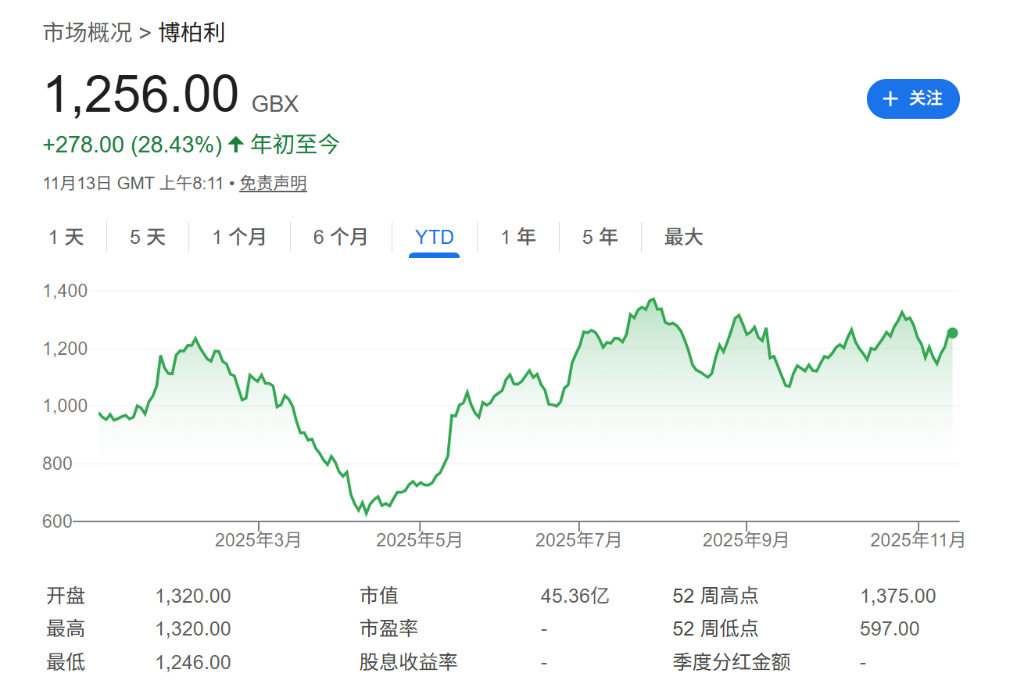
Core Viewpoint - Burberry's revival plan under CEO Joshua Schulman is showing positive results, driven by a recovery in demand from the Chinese market, leading to a turnaround in performance after a prolonged decline [1][4]. Financial Performance - For the second fiscal quarter ending in September, Burberry reported a 2% year-on-year increase in comparable store sales, surpassing market expectations and ending a seven-quarter sales decline [1][4]. - The adjusted operating profit for the first half reached £19 million (approximately $25 million), a significant recovery from a loss of £41 million in the same period last year [1][4]. - Sales in regions including China grew by 3% in the last three months, reversing a previous decline of 5%, marking the first growth in over a year for the Chinese market [1][4]. Market Reaction - The positive financial results have led to a strong market response, with Burberry's stock price increasing by 28% year-to-date, and the company re-entering the FTSE 100 index in September after being removed in 2024 [1][4]. Strategic Changes - CEO Joshua Schulman has implemented strategic adjustments focusing on classic products and cost reduction, aiming to restore brand appeal and profitability [5]. - The strategy emphasizes a return to Burberry's roots, highlighting iconic products like trench coats and scarves, contrasting with previous management's focus on expensive handbags [5]. - Cost control measures include a plan to reduce the workforce by about 20%, with restructuring costs related to layoffs amounting to £37 million [5]. Industry Context - Burberry's performance adds evidence of a recovery in luxury goods demand, with analysts noting that all indicators have been met and the execution of the strategic plan is on track [6].

WEN Q3 Deep Dive: Brand Revitalization and U.S. Turnaround Take Center Stage
Yahoo Finance· 2025-11-08 05:30
Core Insights - Wendy's reported Q3 CY2025 results that exceeded market revenue expectations, with revenue of $549.5 million, a 3% decline year on year, but a 3.1% beat against analyst estimates [1][6] - The non-GAAP profit was $0.24 per share, which was 22.9% above analysts' consensus estimates of $0.20 [1][6] Financial Performance - Adjusted EBITDA was $138 million, representing a 25.1% margin and an 11.7% beat against analyst expectations of $123.6 million [6] - Operating margin remained stable at 16.8%, consistent with the same quarter last year [6] - Same-store sales fell by 3.7% year on year, compared to a decline of 0.2% in the same quarter last year [6] - The company maintained its full-year Adjusted EPS guidance at $0.86 at the midpoint and EBITDA guidance of $515 million, aligning with analyst expectations [6] Strategic Initiatives - Management highlighted ongoing challenges in the U.S. market, including lower guest traffic and increased competition, prompting the launch of Project Fresh as a turnaround strategy [3][4] - Project Fresh aims to improve operational efficiency, revitalize the brand, and optimize the system, with a focus on enhancing average unit volumes rather than rapid U.S. expansion [4] - International operations showed strong performance, contributing to system-wide sales growth and new market openings [3][4] Management Commentary - Interim CEO Ken Cook emphasized the urgency of returning U.S. same-restaurant sales to growth and the importance of digital initiatives and streamlined operations [3][4][5] - CFO Suzanne Thuerk noted that the company's efforts are designed to drive sustainable and profitable growth across the system [4]

一个好汉三个帮!竹叶青迎山西民营经济“最强后援团”……
Sou Hu Cai Jing· 2025-10-30 01:09
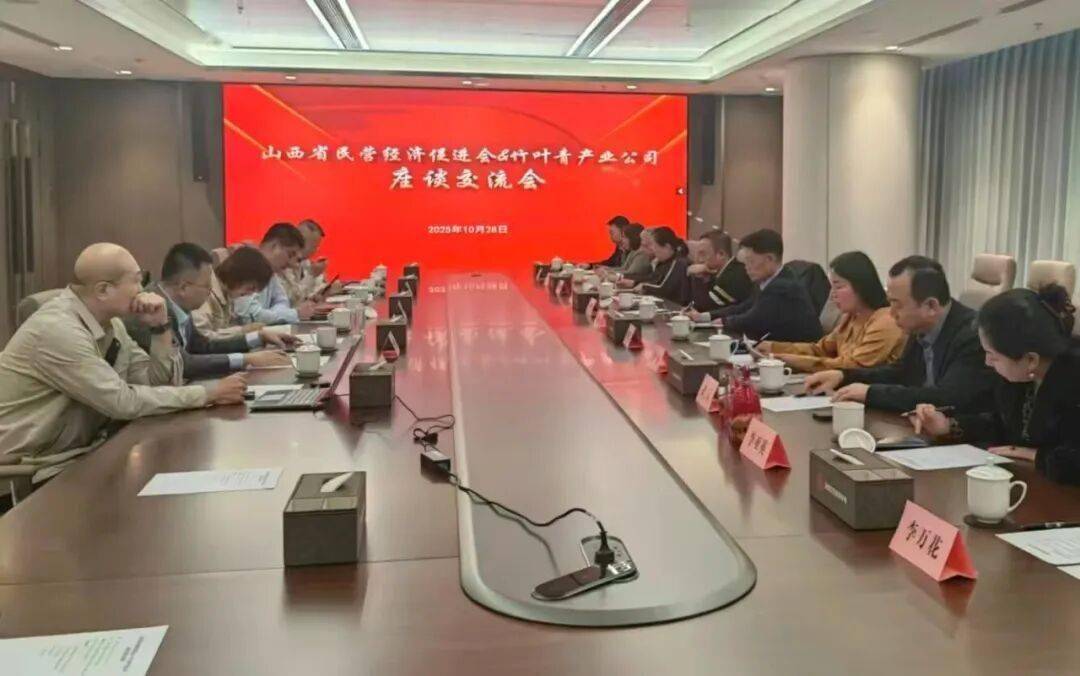
Core Insights - The meeting held on October 28 focused on building communication platforms, deepening industrial collaboration, and promoting high-quality development between Shanxi Provincial Private Economy Promotion Association and Zhuyeqing Industry Company [1] Group 1: Meeting Overview - The meeting was attended by key figures from the Shanxi Provincial Private Economy Promotion Association and Zhuyeqing Industry Company, including leaders and representatives from various sectors [3] - The meeting was hosted by Secretary-General Li Bing, emphasizing the importance of collaboration and resource sharing for mutual growth [3] Group 2: Key Statements - Wang Guohua expressed gratitude towards Zhuyeqing for their hospitality and highlighted the association's role in promoting Shanxi's private economy, noting Zhuyeqing as a significant cultural and economic symbol of the province [5] - Chen Jieming provided an introduction to Zhuyeqing Industry Company, detailing its development history, core advantages, and future plans, showcasing its rich heritage and innovative spirit [7] Group 3: Collaborative Opportunities - Zhu Qianrui acknowledged the significance of the meeting, emphasizing Zhuyeqing's market potential and the importance of resource sharing and collaboration for future development [9] - The free exchange segment allowed entrepreneurs to propose constructive cooperation ideas in areas such as packaging design, marketing, logistics, digital management, and resource recycling, aligning closely with Zhuyeqing's development needs [9] Group 4: Strategic Development - Both parties agreed to leverage their respective resources to deepen cooperation in industrial integration, brand building, and innovative development, aiming for a synergistic effect to boost Shanxi's brand products and private economy [9] - This year is pivotal for the revival of the Zhuyeqing brand, with the company focusing on strategic product development and market planning along three main paths: "liquor transformation, functionality, and fashion" [9] Group 5: Historical Significance - Zhuyeqing liquor has a rich history, being recognized as the first liquor served at state banquets in New China and winning multiple awards, establishing itself as a benchmark in the liquor industry [10] - The brand has gained international recognition, selling in over 60 countries and regions, thus becoming a vibrant representation of Chinese culture [10]

首次覆盖:百年英伦奢侈品牌复兴,看新管理团队与DanielLee如何驱动品牌价值回归
Haitong Securities International· 2025-10-08 01:10
Investment Rating - The report initiates coverage with an OUTPERFORM rating for Burberry Group, setting a target price of £14.50, representing a 20.6% upside from the current price of £12.02 [2][3]. Core Insights - Burberry is in a phase of brand repair and profit recovery, with current valuations not reflecting mid-term improvement potential. Under the leadership of new CEO Joshua Schulman and creative director Daniel Lee, the Burberry Forward strategy is effectively enhancing profitability [3][4]. - The company has shown signs of fundamental recovery, with a focus on returning to its classic roots while optimizing costs and enhancing brand recognition through modern aesthetics [3][4][5]. Summary by Sections Brand Heritage and Product Categories - Burberry, established in 1856, has evolved from a raincoat manufacturer to a globally influential luxury brand, with ready-to-wear clothing as its core revenue source, contributing approximately 60-70% of total revenue from FY2020 to FY2025 [4][11]. - The product matrix is continuously optimized, with ready-to-wear clothing being the primary revenue contributor, followed by accessories and menswear [16][18]. New Management and Strategy - The new management team, led by Joshua Schulman, is implementing the Burberry Forward strategy, focusing on brand positioning, product structure, channel operations, and organizational management to enhance decision-making efficiency and reduce costs [6][43]. - The management anticipates achieving approximately £100 million in annual savings by FY27 through workforce reductions and operational efficiencies [6][9]. Industry Landscape - The personal luxury goods market is expected to decline by 1.4% in 2024, marking the first slowdown in 15 years, primarily due to macroeconomic uncertainties. However, long-term growth opportunities remain, driven by younger consumer demographics and product innovation [8][9]. - Burberry holds a 0.9% market share, ranking 18th among luxury brands, indicating significant room for growth within the industry [8][9]. Revenue and Profitability Forecast - Revenue and gross margins are projected to face short-term pressure, but improvements are expected as the Burberry Forward strategy progresses. The company anticipates revenue growth rates of -3.7%, +4.6%, and +4.6% for FY2026E to FY2028E [9][10]. - The gross profit margin is expected to recover from FY26 onwards, with estimates of 65.8%, 67.0%, and 68.2% for the following years [9][10].
不到十个月,古驰的CEO又换了
21世纪经济报道· 2025-09-18 03:39
Core Viewpoint - The appointment of Francesca Bellettini as the new CEO of Gucci is a strategic move by Kering to stabilize the brand and reverse its declining sales trend, which has seen a significant drop of 25% year-on-year in Q2 2025 [3][4][5] Group 1: Company Changes - Luca de Meo has recently taken over as CEO of Kering and initiated internal restructuring, including the replacement of Gucci's CEO and the cancellation of the Vice CEO position [3][4] - Francesca Bellettini, previously the CEO of Saint Laurent, has been appointed as Gucci's new CEO, bringing a strong track record of increasing sales from approximately €350 million to over €3 billion [4] Group 2: Challenges Ahead - Bellettini's primary challenge is to restore internal stability and market trust in Gucci, which has faced frequent leadership changes and a lack of clear brand direction [4][5] - The luxury market has seen rising prices, which have alienated entry-level customers from Gucci, making it crucial to rebuild a price gradient that appeals to both entry-level and high-end consumers [5] Group 3: Market Context - Gucci has experienced a continuous decline in revenue for six consecutive quarters, while other brands under Kering, such as Saint Laurent, have also reported significant revenue drops [5] - Bain & Company has revised its forecast for the global luxury goods market, predicting a potential decline of 2% to 5% in sales by 2025, indicating a challenging environment for brands like Gucci [5]
不到十个月,古驰的CEO又换了
2 1 Shi Ji Jing Ji Bao Dao· 2025-09-18 00:53
Core Viewpoint - Kering has appointed Francesca Bellettini as the new CEO of Gucci, following the replacement of Stefano Cantino, who served for less than ten months, indicating a significant internal restructuring aimed at reviving the brand's performance after consecutive sales declines [1][2]. Group 1: Management Changes - Luca de Meo, the newly appointed CEO of Kering, initiated internal changes, including the replacement of Gucci's CEO and the elimination of the brand's deputy CEO position [1]. - Francesca Bellettini, previously the CEO of Saint Laurent, is recognized for her strong execution skills and is tasked with restoring stability and market trust in Gucci [2]. Group 2: Brand Performance Challenges - Gucci, a key brand for Kering, has seen a significant sales decline, with a 25% year-over-year drop in Q2 2025, raising concerns about its brand positioning and value perception [1][3]. - The luxury market has experienced rising prices, pushing entry-level customers away from Gucci, necessitating a re-establishment of a price gradient that appeals to both luxury and younger consumer segments [3]. Group 3: Market Outlook - Analysts believe Bellettini's leadership will enhance Gucci's execution and organizational stability, with a focus on reversing the sales downturn and establishing a clear brand narrative [3]. - Kering's overall competitiveness and valuation are at stake, as Gucci's struggles are mirrored by declines in other brands like Saint Laurent, which saw an 8% revenue drop in FY2024 and a 13% decline in Q2 [3].
获5亿美元资金承诺!路特斯官宣
Xin Lang Cai Jing· 2025-08-25 01:21
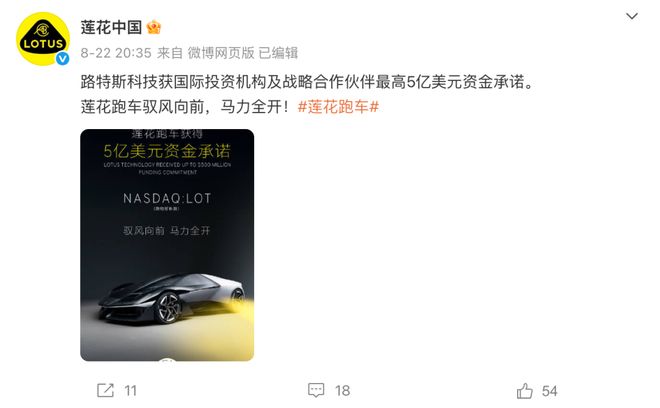
Core Viewpoint - Lotus has secured a total funding commitment of up to $500 million (approximately 3.7 billion RMB) from international investment institutions and strategic partners, including a $300 million (approximately 2.15 billion RMB) convertible note agreement with ATW Partners and a $200 million (approximately 1.6 billion RMB) credit facility from Geely [1][4]. Group 1 - Lotus Cars, known for its high-performance sports cars, was founded in 1952 and has undergone a transformation into an electric vehicle brand since its acquisition by Geely in 2017 [4]. - The company aims to complete its transition to electrification and intelligence by 2028, coinciding with its 80th anniversary [4]. - Lotus has established a global market presence with sales regions in Europe, China, the Americas, the Middle East, and Asia-Pacific [4]. Group 2 - In early 2025, Lotus rebranded itself in the Chinese market as "Lotus Cars," and launched new models ELETRE and EMEYA with significant price reductions, which led to customer dissatisfaction [7]. - The company announced a change in leadership, with Mao Jingbo stepping down as China President to become Chief Sales Officer, while Qin Peiji took over the role [8]. - Despite being a renowned luxury sports car brand, Lotus has faced challenges with sales performance, reporting a 20.8% decline in sales in China for 2024, with total deliveries of 12,065 vehicles [9]. Group 3 - Lotus is currently in a loss-making position compared to competitors like Ferrari and Porsche, which have higher brand recognition and sales [11]. - The new funding from ATW Partners is seen as a vote of confidence in Lotus's ongoing business development and transformation efforts [11].
玛莎拉蒂为何沦落到被7次贱卖?
Hu Xiu· 2025-07-15 06:42
Core Viewpoint - Maserati, once a prestigious Italian sports car brand, is currently facing significant challenges and potential sale due to declining sales and financial instability [3][46][80]. Group 1: Historical Context - Maserati was founded in 1914 by the Maserati family, initially focusing on modified cars and racing [12][14]. - The brand gained fame with the Tipo 26 winning the Targa Florio in 1926, but faced financial crises leading to multiple ownership changes [15][16][30]. - After World War II, Maserati returned to racing success but struggled financially, leading to a shift towards consumer vehicles in the 1960s [19][21]. - The brand was sold to Citroën in the 1960s, which ultimately failed to revitalize it, leading to further ownership changes [24][26][29]. - In 1993, Maserati became part of Fiat, which later transferred control to Ferrari, helping to revive the brand with models like the 3200 GT and MC12 [31][36][40]. Group 2: Current Market Position - Maserati entered the Chinese market in 2004, initially achieving decent sales but later struggling as the luxury car market evolved [48][61]. - The brand peaked in China in 2017 with sales of 14,498 units, but has since seen a dramatic decline, with only 1,228 units sold in 2024, a 71% drop year-on-year [61][68]. - The brand's image has been tarnished by associations with micro-business sales tactics, leading to a loss of exclusivity and prestige [63][66]. Group 3: Strategic Challenges - Maserati's frequent changes in ownership have hindered the development of a consistent brand identity and strategy [72][75]. - The brand is currently seen as struggling to define its unique selling proposition, lacking a clear identity compared to competitors like Ferrari and Lotus [76][78]. - Stellantis, Maserati's current parent company, is facing its own financial difficulties, leading to suggestions that selling Maserati may be a viable option [79][80]. Group 4: Future Outlook - The future of Maserati may hinge on a potential acquisition by a Chinese company, which could seek to leverage the brand's heritage or technology [86]. - The brand's revival may require a significant overhaul to appeal to a younger demographic and adapt to the changing luxury market [85][88].
车企CEO辞职卖包!人事动荡or明智之选?
Sou Hu Cai Jing· 2025-06-24 02:22
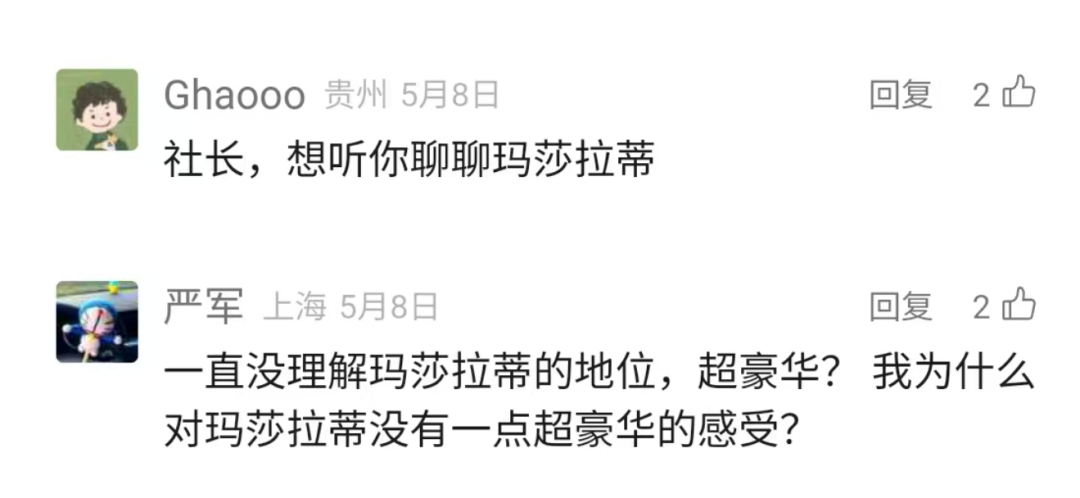
Group 1 - Luca de Meo, the CEO of Renault Group, is stepping down after five years to seek new challenges outside the automotive industry [1][2] - De Meo will become the CEO of Kering Group, known for luxury brands like Gucci, Saint Laurent, and Balenciaga [7][9] - The announcement caused significant market reactions, with Kering's stock rising by 11.76% and Renault's stock falling by 8.69% [9] Group 2 - De Meo has over 30 years of experience in the automotive industry and is recognized for his ability to turn around struggling companies [10][12] - His career includes pivotal roles at Fiat, where he helped revive the company from a $6.1 billion debt crisis, and at SEAT, where he drove significant sales growth [14][20][26] - At Renault, he transformed the company from a record loss of €8 billion in 2020 to a projected profit in 2024, with stock prices increasing by approximately 90% during his tenure [28] Group 3 - Kering Group is currently facing significant challenges, with a projected revenue decline of 12% and a 62% drop in net profit for 2024 [29][30] - The core brand Gucci, which accounts for half of Kering's sales, saw a 23% revenue decline, indicating urgent need for strategic adjustments [30] - De Meo's experience in brand management and marketing is expected to help Kering rejuvenate its brands and drive growth [31][34] Group 4 - De Meo's management style focuses on brand revitalization and cost-effective innovation, which aligns with Kering's needs for a turnaround [40][41] - His successful track record in the automotive sector suggests he can apply similar strategies in the luxury goods market, emphasizing brand storytelling and image [43] - The current state of the automotive industry, marked by challenges such as electrification and increased competition, may have influenced De Meo's decision to transition to a different sector [44][48]
The Gap, Inc.(GAP) - 2025 Q4 - Earnings Call Transcript
2025-03-07 20:26
Financial Data and Key Metrics Changes - Gap Inc. achieved a full year EPS of $2.2, the highest since 2018, reflecting strong earnings power and sustainable growth [8][40] - Operating income increased by more than $500 million, with an operating margin improvement of 330 basis points compared to the previous year's adjusted rate [7][34] - The company ended the year with strong cash balances of approximately $2.6 billion and generated $1 billion in free cash flow during fiscal 2024 [11][41] Business Line Data and Key Metrics Changes - Old Navy's comparable sales were up 3%, marking its eighth consecutive quarter of market share gains [9][10] - Gap's comparable sales accelerated to 7%, achieving its highest quarterly comp in three years and seventh consecutive quarter of share gains [17][18] - Banana Republic's comps were up 4%, driven by improvements in women's business and a focus on classic styles [20][21] - Athleta faced challenges with a 2% decline in comps, although it maintained market share [22][23] Market Data and Key Metrics Changes - Gap Inc. gained market share for the eighth consecutive quarter, indicating strong consumer resonance across all brands [7][56] - The company reported positive comparable sales across all four brands for the year, demonstrating consistency and strength in the portfolio [32][35] Company Strategy and Development Direction - The company is transitioning its focus from fixing fundamentals to continuous improvement through innovation, aiming for momentum in the coming years [8][28] - Gap Inc. is leveraging technology and AI to enhance business performance and consumer experience, with plans for AI monetization opportunities [26][30] - The strategic priority includes driving relevance and revenue through brand reinvigoration, with each brand at different stages of progress [11][27] Management's Comments on Operating Environment and Future Outlook - Management expressed confidence in the ongoing transformation and the ability to navigate a dynamic macro environment while delivering results [28][29] - The outlook for fiscal 2025 includes expected net sales growth of approximately 1% to 2%, with continued strength at Old Navy and Gap, and a longer recovery timeline for Athleta [46][49] - Management emphasized the importance of controlling costs and leveraging efficiencies to support growth initiatives [45][48] Other Important Information - The company returned approximately $300 million to shareholders through dividends and share repurchases, reflecting a balanced capital allocation strategy [34][42] - Capital expenditures for 2025 are expected to be about $600 million, up 34% as the company invests in organic growth opportunities [42][43] Q&A Session Summary Question: What is driving the momentum at Gap? - Management highlighted that Gap's strong performance is fueled by innovation, compelling marketing, and a focus on product newness, leading to increased market share and consumer engagement [54][56][59] Question: Is there an opportunity for further expense cuts beyond the discussed $150 million? - Management confirmed that while they have rigorously managed costs, they remain committed to continuous improvement and will pursue additional savings if identified [64][66] Question: What are the plans to strengthen the Athleta brand? - Management acknowledged the need for continued work to excite core customers and emphasized the importance of balancing product interest while maintaining inventory management [83][86] Question: What has been the impact of the new creative director on Old Navy and Gap? - Management noted that the new creative director has significantly elevated the creative conversation and product fit across brands, contributing to improved performance [90][92]