多智能体

Search documents
雷军再回应“1300公里只充一次电”争议;和府捞面否认使用预制菜;字节跳动辟谣跨界造车;马斯克:2026年将实现通用人工智能...
Sou Hu Cai Jing· 2026-01-08 01:35
Group 1 - The Chinese government aims to achieve a safe and reliable supply of key AI core technologies by 2027, with a focus on deep application in manufacturing and the creation of industry-specific large models [4] - The initiative includes the development of 3-5 general large models for manufacturing, 100 high-quality industrial data sets, and 500 typical application scenarios [4] - The plan also aims to cultivate 2-3 globally influential leading enterprises and a number of specialized small and medium-sized enterprises [4] Group 2 - Xiaomi's CEO Lei Jun addressed the controversy regarding the claim of driving 1300 kilometers on a single charge, stating that misinformation is being spread by "water armies" [7] - He emphasized that the original explanation was clear but has been misrepresented in fragmented media [7] - The company continues to face scrutiny over its marketing practices, particularly regarding the clarity of its claims [7] Group 3 - IKEA China announced the closure of 7 stores while planning to open over 10 smaller stores in key markets like Beijing and Shenzhen [10] - This strategic shift is aimed at refining its market presence and adapting to consumer needs [10] - The closures will take effect from February 2, 2026, as part of a broader evaluation of customer touchpoints [10] Group 4 - Google surpassed Apple in market capitalization for the first time since 2019, with a market cap of $3.88 trillion compared to Apple's $3.84 trillion [13] - This shift highlights the differing strategies of the two companies in the AI sector, with Google making significant advancements in AI technology [13] - The competition in AI has intensified since the launch of ChatGPT, with Google emerging as a strong player in the market [13] Group 5 - Major companies like JD.com and ByteDance are increasing employee salaries and bonuses, with JD's year-end bonus total rising over 70% [15] - This trend reflects a broader movement among large firms to enhance employee compensation amid competitive labor markets [15] - Companies are responding to market pressures and employee expectations by adjusting their compensation strategies [15] Group 6 - NIO's CEO Li Bin highlighted the rising costs of memory chips as a significant pressure point for the automotive industry, suggesting consumers consider purchasing vehicles sooner [13] - He noted that the automotive sector is competing for raw materials with AI and other industries, which could impact pricing [13] - The company is currently managing cost pressures while maintaining a margin for profitability [13] Group 7 - OpenAI launched ChatGPT Health, a dedicated space for health-related discussions, to enhance user experience and privacy [12] - This new mode aims to provide a safer environment for users to discuss health issues without mixing it with general conversations [12] - The initiative responds to the high volume of health inquiries on the platform, which exceeds 230 million weekly [12] Group 8 - The AI industry is witnessing significant advancements, with companies like MicroGenius completing the world's first autonomous surgery using a large model [25] - This breakthrough signifies a major step in integrating AI into medical practices, potentially transforming healthcare delivery [25] - The development reflects the growing intersection of AI technology and various sectors, including healthcare [25]

2026“企业 Agent 上岗元年”?零一万物六大判断定义企业多智能体,不再沿用大厂标准化产品模式”
AI前线· 2026-01-06 12:10
Core Insights - The article presents six key predictions regarding the evolution of enterprise intelligent agents by 2026, emphasizing the transition from single-point tools to comprehensive intelligent management systems [2][3][4]. Group 1: Evolution of Intelligent Agents - Prediction 1: Intelligent agents will evolve from "one person, one tool" to "one person, one team," enabling systemic intelligence across organizations and transforming top talent's capabilities into reusable business assets [5]. - Prediction 2: Multi-agent systems must possess three essential elements: AI Team (collaboration between humans and agents), allowing for flexible scaling of capabilities and reducing dependency on individual experts [6][7]. Group 2: China's Role and Strategic Implementation - Prediction 3: China is positioned to become a global leader in deploying multi-agent systems due to its complete industrial chain, leading open-source models, and vast market [8]. - Prediction 4: Successful AI transformation requires a "top-down" approach, where leadership drives systemic changes rather than isolated technical trials, emphasizing the need for leaders to understand AI's potential [9][10]. Group 3: Autonomous Evolution and Future Workforce - Prediction 5: Intelligent agents will contribute to the autonomous evolution of enterprise digital infrastructure, enhancing knowledge systems and decision-making processes [10]. - Prediction 6: By 2026, the focus of enterprise competition will shift from hiring to managing intelligent agents, with new roles such as "intelligent agent operators" emerging [11]. Group 4: Implementation Framework - The article outlines a three-step approach for enterprises to evolve their multi-agent systems: establishing a comprehensive strategy led by top management, utilizing Forward Deployed Engineers (FDE) to bridge organizational gaps, and fostering collaborative evolution through a mixed-model architecture [14][15][16]. Group 5: Technological Foundations and Future Directions - The foundation of enterprise multi-agent systems includes open-source models and industry-specific frameworks, aiming to create "super digital employees" that directly contribute to business objectives [17][18]. - The article concludes with a vision for the future of agents, highlighting the importance of safety, tool integration, task planning, and multi-model collaboration in enterprise environments [19][20].

企业级智能体加速落地 2026将成“上岗元年”
Zhong Guo Jing Ying Bao· 2026-01-06 07:28
Core Insights - The article discusses the transformative impact of multi-agent AI technology on organizational structures, shifting from reliance on human talent to software capabilities [1][3] - It highlights the prediction that the enterprise application software market, valued at $650 billion, will be disrupted by AI agents, with a projected market size of over $27 billion for enterprise AI applications in China by 2028 [2][3] Group 1: Multi-Agent Technology Evolution - Multi-agent technology is evolving from single-point tools to intelligent management systems, fundamentally restructuring organizational forms and enhancing overall optimization [3][5] - The rise of multi-agent systems is breaking down traditional departmental barriers, enabling seamless cross-departmental collaboration without cumbersome processes [2][5] Group 2: Market Predictions and Trends - IDC forecasts that by 2031, the penetration rate of AI agents in customer service, sales, and marketing applications will approach 100% [2] - The article emphasizes that 2026 is expected to be the year when multi-agent systems will scale up significantly in enterprises [6] Group 3: Organizational Restructuring - The emergence of multi-agent systems is leading to the "atomization" and "automation" of traditional functions, transforming departments into fluid, task-oriented clusters of intelligent agents [5][6] - Companies are encouraged to adapt to multi-agent operations by creating specialized roles for managing these systems, which will require a deep understanding of their mechanisms [6] Group 4: Human-Centric Approach - The article stresses the importance of balancing efficiency with human rights, advocating for a shift where employees are seen as commanders and trainers of AI rather than replaceable costs [7] - Organizations must implement top-down changes to foster a culture that embraces AI, allowing human employees to transition from executors to decision-makers [7]
豆包AI眼镜被曝将出货,官方否认/黄仁勋宣布最强「核弹」芯片全面生产/雷军回应小米 YU7「丢轮保车」
Sou Hu Cai Jing· 2026-01-06 01:36
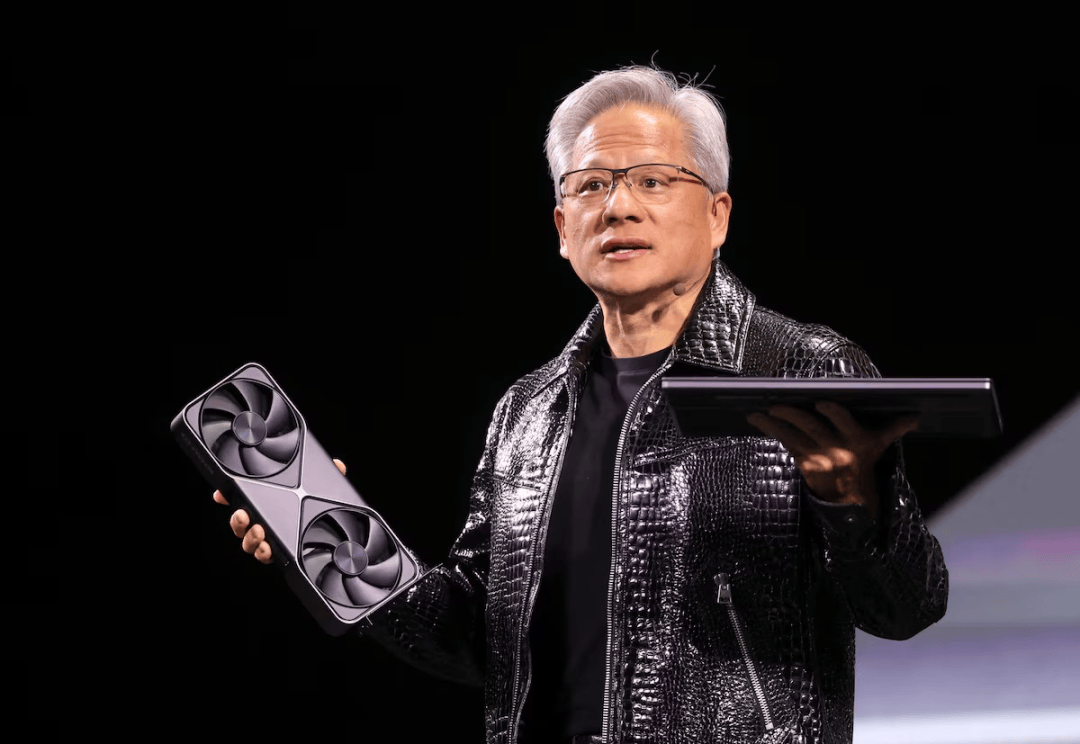
Group 1 - Nvidia's next-generation AI chip, named "Rubin," has entered full production and is expected to launch later this year, offering AI computing performance five times that of its predecessor [3] - The Rubin platform consists of six independent Nvidia chips, with the flagship device featuring 72 GPUs and 36 CPUs, capable of connecting over 1,000 Rubin chips in clusters [3] - Key innovations include Context Memory Storage for faster responses in long conversations and Co-packaged Optics for enhanced networking capabilities [3] Group 2 - Nvidia announced a broader release of its "Alpamayo" software for autonomous vehicles, which aids in path decision-making and provides engineers with decision-making data [4] - The company remains a leader in AI model training but faces increasing competition in the inference segment from traditional rivals like AMD and Google [4] Group 3 - AI hardware startup Looki has completed over $20 million in Series A funding, led by Ant Group, with plans to focus on talent development, model iteration, product R&D, and supply chain integration [6] - Looki's first product, the Looki L1 wearable AI hardware, has seen rapid sales, with global sales nearing 10,000 units [6][7] Group 4 - Looki L1 features proactive AI capabilities that provide real-time suggestions based on user behavior, set to be showcased at CES [7] Group 5 - Xiaomi's CEO Lei Jun responded to discussions about the safety design of the YU7 vehicle, emphasizing the maturity of the "wheel detachment" safety concept, which has been used since 1959 [11][12] Group 6 - The CEO of Raybird announced plans to launch the first dual-eye AR glasses with eSIM technology, indicating a shift towards independent AR devices [16] - The company aims to implement a "charge phone bill, get glasses" model, similar to the smartphone adoption phase [16] Group 7 - Boston Dynamics showcased its next-generation Atlas robot, which has transitioned to an all-electric system and is now performing real manufacturing tasks [23] - The new Atlas robot features significant upgrades in structure, materials, and intelligence, allowing it to perform complex tasks in a factory environment [23][24] Group 8 - LG introduced its CLOiD home robot at CES, designed to assist with household chores, demonstrating basic capabilities such as placing items in a washing machine [26] Group 9 - WeChat launched an AI application growth plan, offering developers free access to cloud resources, AI computing power, and monetization support, aiming to make 2026 the "year of AI applications" [41][42] Group 10 - The collaboration between GAC Group and Huawei aims to enhance smart cockpit and AI technology, focusing on the integration of the HarmonyOS ecosystem and AI innovations [49][50]


零一万物发布万智2.5企业级多智能体 2026年将成“多智能体上岗元年”
Zheng Quan Shi Bao Wang· 2026-01-05 14:19
Core Insights - The article discusses the launch of "Multi-Agent 2.5" by Zero One Everything, which aims to transform enterprise structures through AI-driven multi-agent systems [1][2]. Group 1: Multi-Agent System Development - Zero One Everything has shifted its strategic focus to the application of large models in enterprises, with the "Multi-Agent 2.5" platform designed to address dynamic and open challenges in enterprise scenarios [2]. - The platform utilizes a "code-first, model-driven" architecture to ensure stability and relevance to real production environments, allowing complex workflows previously requiring large teams to be managed by multi-agents [2][3]. - Demonstrations of "Market Department Replacement" and "HR Replacement" showcased how multi-agents can efficiently handle tasks that typically required teams of ten or more, indicating a significant shift in organizational structure and value chains [2][3]. Group 2: Future Predictions and Market Impact - Zero One Everything predicts that 2026 will mark the year of large-scale deployment for multi-agents in enterprises, shifting the competitive focus from hiring to managing AI agents [4]. - The role of "Agent Operators" is expected to emerge as a key position responsible for deploying, training, and optimizing these agents [4]. - The company emphasizes that decision-making will become the core competency for knowledge workers, with a focus on early adoption, advanced agent selection, and closed-loop data utilization as critical competitive factors for enterprises [4][5]. Group 3: Industry-Specific Insights - Different industries will experience varying paces of multi-agent implementation, with sectors like finance benefiting from established data infrastructures, while traditional industries will focus on efficiency improvements through AI [5]. - IDC reports indicate that the enterprise application software market, valued at $650 billion, is poised for disruption by AI agents, with a projected near 100% penetration in customer service, sales, and marketing applications by 2031 [6]. - Zero One Everything anticipates significant revenue growth in 2025 and plans to expand further in 2026, focusing on high-value projects in overseas markets and leveraging government partnerships for local industry transformation [6].
零一万物:2026年将是“多智能体上岗元年”
Bei Ke Cai Jing· 2026-01-05 10:30
Core Insights - By the end of 2025, several companies known as the "AI Six Dragons" are making significant progress, with Zhiyu and MiniMax preparing for IPOs in Hong Kong, and Kimi completing a $500 million Series C funding round [1] - In early 2026, Zero One Wanwu is shifting its strategic focus towards the application of large models, predicting that competition will transition from hiring personnel to managing "silicon-based troops" [1] - The role of "intelligent agent operators" is expected to emerge as a key position in enterprises, responsible for the deployment, training, evaluation, and optimization of intelligent agents [1] Company Developments - Zero One Wanwu's Vice President of Technology and Product Center, Zhao Binqiang, highlighted that enterprises are increasingly integrating AI capabilities into higher management levels, beyond just frontline applications [1] - The company's WanZhi enterprise large model one-stop platform has been upgraded to version 2.5, with enterprise-level multi-agent systems becoming a core application, akin to how Office functions within the Windows ecosystem [1] - The new architecture of WanZhi 2.5 adopts a "code-first, model-driven" approach, ensuring that multi-agents operate effectively within real production scenarios, achieving industrial-grade stability [1] Market Competition - The multi-agent field is competitive, with companies like Volcano Engine also proposing similar concepts [2] - Zhao Binqiang emphasized that as a small entrepreneurial company, Zero One Wanwu differentiates itself from larger firms by leveraging industry experts to provide tailored and practical solutions [2] - The company aims to assist clients in integrating management, operations, decision-making, information, personnel, and financial flows, even in the context of incomplete data infrastructure [2]
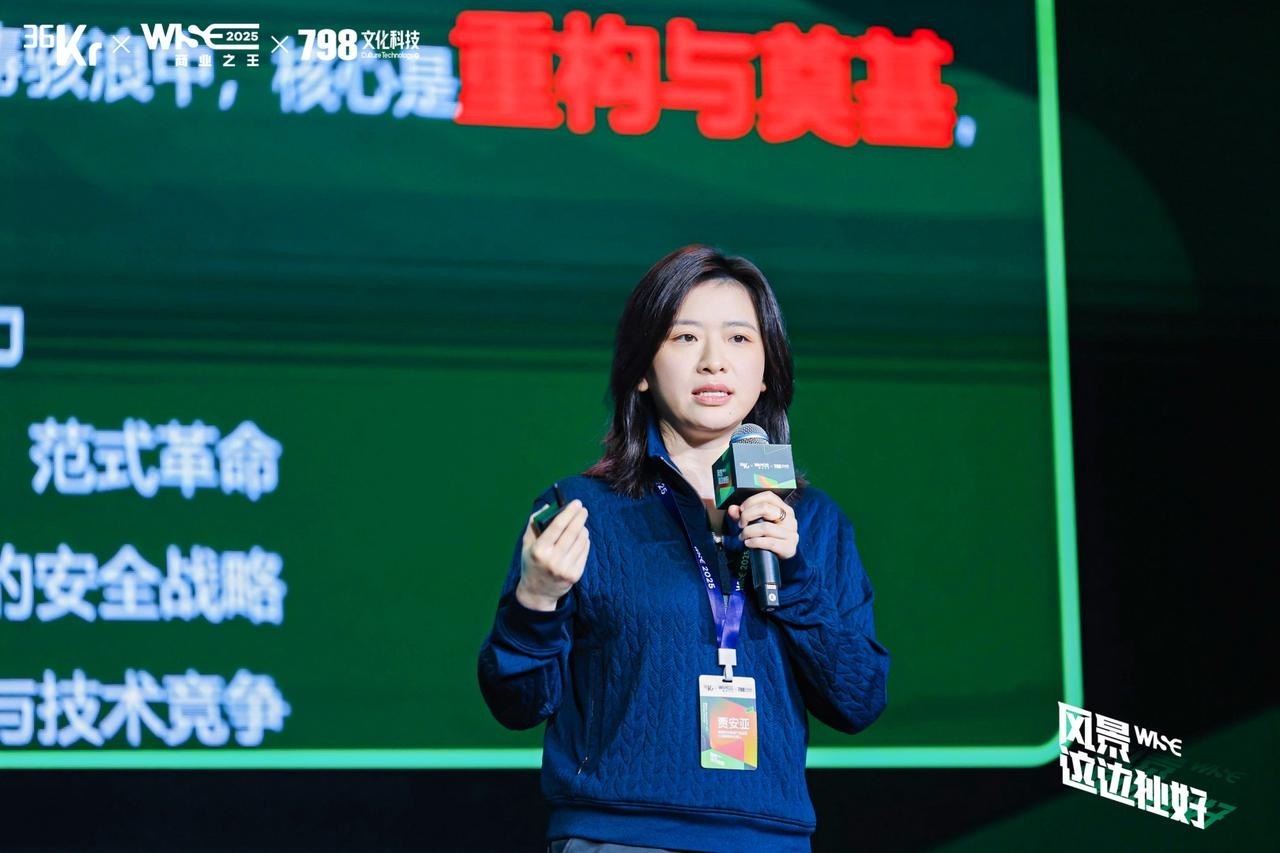
商汤科技贾安亚:企业AI要落地,业务目标与行业理解重于模型本身 | WISE2025商业之王大会
3 6 Ke· 2025-12-05 07:34
Core Insights - The WISE 2025 Business King Conference aims to anchor the future of Chinese business amidst uncertainty, focusing on the transformative impact of technology and business narrative reconstruction [1] Group 1: AI Application in Enterprises - The application paradigm of AI is undergoing profound changes, transitioning from "intelligent emergence" in 2023 to accelerated implementation by 2025 [3] - Key breakthroughs for AI implementation in enterprises involve shifting from IT-led to business-driven application models, allowing frontline users to become decision-makers [4] - Successful AI applications should focus on scenarios with a high tolerance for error, such as supply chain and operations, rather than high-precision areas like finance [4][15] Group 2: Policy and Market Trends - National policies are strongly promoting the "Artificial Intelligence +" strategy, aiming for over 70% coverage of smart terminals and agents by 2027, similar to the impact of the "Internet +" initiative a decade ago [7] - Despite the positive trends, only 5% of companies have seen tangible financial value from large model implementations, indicating significant challenges in AI deployment [8] Group 3: Observations on AI Implementation - Successful AI implementation in enterprises is driven by business needs rather than IT departments, bridging gaps in understanding and execution [13] - The importance of scenario selection is highlighted, with successful applications requiring a balance of error tolerance and significant incremental value [15] - AI deployment is viewed as a systematic project rather than merely purchasing products, necessitating a comprehensive approach to create deep value across various levels of the organization [17] Group 4: Future Directions and Innovations - The evolution of AI tools is shifting from traditional productivity applications to task-oriented solutions, enhancing overall operational efficiency [21] - The introduction of low-cost hardware options is expected to facilitate AI deployment in enterprises, addressing previous concerns about high computing costs [25][26]
4K超分Agent修图师来了!一键救活所有模糊照片
量子位· 2025-11-21 06:29
Core Insights - The article discusses the development of 4KAgent, an AI-based system designed to intelligently restore and upscale images to 4K resolution, addressing the limitations of traditional image enhancement methods [3][6][28] Group 1: Technology Overview - 4KAgent utilizes a multi-agent design to create tailored pathways for each image to achieve 4K resolution, enhancing visual perception [6][7] - The system incorporates a perception agent that analyzes image content and degradation information, generating a restoration plan based on various quality metrics [10][11] - The restoration agent employs an "execution-reflection-rollback" mechanism to iteratively optimize the restoration process, ensuring high-quality outputs [12][16] Group 2: Functionality and Features - 4KAgent supports nine different restoration tasks, utilizing state-of-the-art models to generate multiple candidate images for evaluation [13][14] - A face restoration module is integrated to specifically enhance facial details, ensuring high-quality results for images containing human faces [18] - The configuration module allows users to customize preferences for different restoration scenarios without requiring additional training [20] Group 3: Performance and Testing - 4KAgent has been extensively tested across 11 different super-resolution tasks and 26 benchmark datasets, demonstrating superior detail and accuracy in restored images [21][27] - In challenging scenarios, such as 16x upscaling, 4KAgent consistently produces high-detail and realistic textures, showcasing its effectiveness in various applications [25][27] - The system exhibits excellent generalization capabilities, performing well across diverse fields including natural scenes, portraits, AI-generated content, and scientific imaging [28]

阿里发布AgentScope1.0:多智能体时代的关键框架
Haitong Securities International· 2025-09-04 11:31
Investment Rating - The report does not explicitly provide an investment rating for the industry or the specific company involved. Core Insights - Alibaba TongYi Lab launched AgentScope 1.0 on September 2, 2025, as a multi-agent development framework aimed at enhancing the efficiency of building, running, and managing multi-agent systems, transitioning AI applications from single-model usage to complex agent networks [1][11]. - AgentScope consists of three core components: Core Framework for agent construction, Runtime for safe execution with Kubernetes support, and Studio for visual monitoring and evaluation, enabling efficient collaboration among multiple AI agents [2][12]. - The framework introduces features such as real-time task interruption and resumption, memory management, and optimized tool invocation, making it suitable for complex enterprise applications like workflow automation and supply chain management [4][15]. Summary by Sections Event - Alibaba TongYi Lab officially released AgentScope 1.0, a developer-centric, production-grade open-source platform that covers the full lifecycle of development, deployment, and monitoring [1][11]. Comment - The framework is designed to facilitate the organization of multiple AI agents for collaborative tasks, enhancing flexibility and operational efficiency [2][12]. Key Features - AgentScope employs a Runner module for task orchestration, a Context Manager for memory oversight, and an Environment Manager for sandbox lifecycle management, ensuring scalability and openness [3][13]. - The introduction of interrupt control and memory management enhances its practicality for enterprise use cases, distinguishing it from traditional standalone agent frameworks [4][15]. Strategic Positioning - Alibaba's strategic moves in the LLM and agent space are becoming clearer, with AgentScope 1.0 expected to attract a developer community and foster an ecosystem similar to LangChain, potentially evolving into a full-stack solution via cloud services [4][14]. - The framework's design is likely to strengthen Alibaba's position in the enterprise market, addressing diverse demands across sectors such as finance, e-commerce, and government services [4][16].

2025年7月中国AI大模型平台排行榜
3 6 Ke· 2025-08-07 10:12
Core Insights - The article discusses the rapid advancements in the AI large model industry, highlighting the emergence of "embodied intelligence" as a significant trend, with major companies showcasing their latest technologies at the World Artificial Intelligence Conference (WAIC) [15][16][27]. Group 1: Industry Trends - The WAIC attracted over 350,000 attendees and featured more than 800 exhibitors, showcasing over 3,000 cutting-edge technologies, indicating a strong interest in AI applications and industry collaboration [15]. - The trend of "embodied intelligence" is shifting AI from virtual environments to physical applications, such as robots and smart devices, enhancing real-world interactions [15][16]. - The development of multi-agent systems is becoming prominent, allowing multiple AI agents to collaborate on complex tasks, improving efficiency and aligning with real-world operational logic [17][18]. Group 2: Major Company Developments - Alibaba launched several models at WAIC, including the Qwen3 series, which outperformed closed-source models in various evaluations, emphasizing its commitment to open-source AI [21][22]. - ByteDance introduced new models like Doubao 3.0 for image editing and a simultaneous interpretation model, showcasing its diverse AI capabilities across different domains [23][24]. - Huawei unveiled the Ascend 384 super node, achieving 300 PFLOPS computing power, significantly enhancing the performance of large models [26][27]. Group 3: Open Source Initiatives - The open-source movement in the AI sector is gaining momentum, with major companies like Alibaba and ByteDance releasing models to foster innovation and collaboration within the developer community [19][20]. - The open-source models are expected to accelerate application development and attract more talent and resources into the ecosystem, marking a new phase in the domestic AI landscape [20]. Group 4: Performance Metrics - The GLM-4.5 model from Zhiyuan AI achieved a significant reduction in inference costs while maintaining high performance across various benchmarks, indicating advancements in model efficiency [40]. - The Kimi K2 model from Moonlight achieved a high performance rating in mathematical reasoning and multi-language support, setting a new standard for open-source models [47][48].