
宏观政策取向一致性

Search documents
“挖潜”“协同”“大资产”……借助关键词读懂“十五五”这样干宏观政策更积极↓
Yang Shi Wang· 2025-11-03 03:31
Core Insights - The "14th Five-Year Plan" emphasizes the importance of macroeconomic policies for future economic development in China [4] - There is a significant focus on activating idle assets, with state-owned administrative assets totaling 68.2 trillion yuan and net assets of 55.4 trillion yuan by the end of 2024 [3] - The plan encourages a collaborative approach between fiscal and monetary policies to stimulate domestic demand and consumption [10][13] Group 1: Macroeconomic Policy - The plan advocates for a more proactive macroeconomic policy, which will shape China's fiscal and financial strategies over the next five years [4] - The recent initiative in Anhui to manage "large assets" aims to activate idle government resources, potentially leading to new industries and job creation [6] Group 2: Economic Growth and Development - The focus on "digging potential" from existing assets suggests that there are untapped resources that could contribute to economic growth if effectively utilized [3] - The alignment of fiscal and monetary policies is intended to foster an economy driven by domestic demand, consumption, and endogenous growth [10][13] Group 3: Challenges and Opportunities - The next five years are expected to present both strategic opportunities and risks, but the underlying strengths of China's industrial system, market size, talent pool, and innovation capacity provide a solid foundation for long-term economic development [15]

郑栅洁:“十五五”时期将规范政府行为,坚决遏制低价恶性竞争、企业账款严重拖欠|快讯
Hua Xia Shi Bao· 2025-10-24 06:58
Group 1 - The core viewpoint is that during the "14th Five-Year Plan" period, China's GDP surpassed 100 trillion yuan in 2020 and is expected to reach around 140 trillion yuan by 2025, emphasizing the importance of stable and sustainable development in the face of various risks and challenges during the "15th Five-Year Plan" period [2] - The Central Committee of the Communist Party of China held its fourth plenary session, which reviewed and approved the "Suggestions on Formulating the 15th Five-Year Plan for National Economic and Social Development" [2] - The National Development and Reform Commission emphasized the need for macroeconomic governance and comprehensive coordination to ensure that macro policies work in concert during the "15th Five-Year Plan" period [2] Group 2 - There is a focus on expanding macro policy space and enhancing the efficient coordination of factors such as human flow, logistics, capital flow, and information flow to effectively respond to various risks and challenges [3] - The need for innovative governance tools and the regulation of government behavior to prevent undue interference while maximizing market mechanisms is highlighted [3] - The "15th Five-Year Plan" period will emphasize the consistency of macro policy orientation, conducting assessments of incremental policy consistency, and adjusting or abolishing policies that do not align with macroeconomic goals [3]
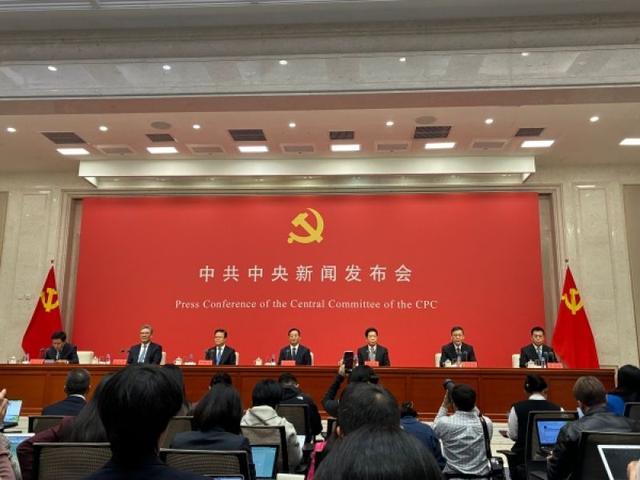
第八届立信金融论坛召开,与会嘉宾共议“金融强国建设与金融高水平开放”
Jin Rong Shi Bao· 2025-10-22 04:33
Group 1: Financial Forum Overview - The 8th Lixin Financial Forum was held in Shanghai, focusing on "Building a Financial Power and High-Level Financial Openness" [1] - Keynote speeches were delivered by Liu Yan from Shanghai Lixin University of Accounting and Finance and He Dexu from the Chinese Academy of Social Sciences [1] Group 2: Keynote Insights - Liu Liya from Shanghai University emphasized the relationship between regulatory penalties and banking operations, noting that penalties drive banks to transform their operational paradigms, leading to lower loan rates and increased corporate revenues [1] - Wu Wenfeng from Shanghai Jiao Tong University reported that since 2016, the consistency of China's macro policy orientation has shown a rising trend, positively impacting corporate investment levels and efficiency [2] Group 3: Roundtable Discussions - Jin Lianming from Agricultural Bank of China discussed the importance of serving the broader community in building a strong financial nation, highlighting the need for financial services to support both domestic and international economic interactions [3] - Jia Zhanfeng from the Yangtze River Delta G60 Innovation Corridor introduced a comprehensive financial service system for tech enterprises, which includes over 20 specialized financial products and has seen 123 listed companies across nine cities, accounting for 21% of the national total [3] Group 4: Innovations in Financial Services - He Liehui from the China-Africa Friendship Association advocated for diversified guarantees and innovative cross-border financial services to support Chinese enterprises going abroad [4] - Zheng Tingqiang from Taikang Life Insurance introduced a new insurance model that integrates traditional insurance, stable asset growth, and healthcare services, emphasizing the long-term investment approach of insurance capital [4] Group 5: Educational Collaborations - Shanghai Lixin University has collaborated with Agricultural Bank of China since 2014 to develop a talent cultivation model that combines academic and practical training in finance [5] - The establishment of the Yangtze River Delta Collaborative Innovation Center for Financial Services in 2021 marks a significant achievement in supporting the financial needs of the G60 Innovation Corridor [5]
弹好政策“协奏曲”——“差距”之中育新机
Ren Min Ri Bao· 2025-10-10 08:04
Group 1 - The core viewpoint emphasizes the importance of strategic thinking and a holistic perspective in planning economic work, particularly in the face of uncertainties, to effectively amplify policy effects [1][2] - In the first half of the year, final consumption contributed 52% to economic growth, with a second-quarter contribution of 52.3%, an increase of 0.6 percentage points from the first quarter and 4.4 percentage points from the same period last year [1] - A series of policies have been implemented to support consumption, including 300 billion yuan in special bonds for consumption upgrades, adjustments to existing mortgage rates, and employment subsidies to promote high-quality employment [1][2] Group 2 - The article highlights the need for coherence among various policies to avoid conflicts that could hinder macroeconomic governance, emphasizing the importance of aligning policy objectives [1][2] - Since September of last year, a package of incremental policies has been introduced, including debt reduction measures for local governments and mechanisms to support financing for small and micro enterprises, which have contributed to a rapid recovery in market activity and improved business expectations [2][3] - The article notes that over 4,000 policies that hinder the construction of a unified national market and fair competition have been eliminated, effectively releasing market vitality [3]
弹好政策“协奏曲”(评论员观察)
Ren Min Ri Bao· 2025-10-09 22:22
Core Insights - The article emphasizes the importance of strategic thinking and a holistic view in planning economic work, particularly in the face of uncertainties, to effectively amplify policy effects [1][2] Economic Growth Contribution - In the first half of the year, final consumption contributed 52% to economic growth, with a second-quarter contribution of 52.3%, an increase of 0.6 percentage points from the first quarter and 4.4 percentage points from the same period last year [1] Policy Measures - A series of policies have been implemented to support consumption, including the allocation of 300 billion yuan in special long-term bonds for consumer goods replacement, adjustments to existing mortgage rates to save residents on interest, and employment subsidies to promote high-quality employment [1] - The "Artificial Intelligence +" initiative aims to expand consumption scenarios, indicating a coordinated effort to enhance consumer capacity and willingness [1] Policy Coordination - The article highlights the need for consistency among various policies to avoid conflicts that could hinder macroeconomic governance effectiveness. The Central Political Bureau meeting on July 30 reiterated the importance of reinforcing the consistency of macro policies [1][2] Dynamic Adjustment and Market Vitality - To ensure effective policy execution, there is a call for continuous supervision and evaluation, with a dynamic feedback loop to address issues encountered during policy implementation [3] - Over 4,000 policies that hinder the construction of a unified national market and fair competition have been eliminated since 2023, significantly enhancing market vitality [3] Global Economic Outlook - Despite predictions of a global economic slowdown, many international institutions have raised their expectations for China's economic growth, attributing this to the stability of Chinese policies [3]
弹好政策“协奏曲”(评论员观察) ——“差距”之中育新机④
Ren Min Ri Bao· 2025-10-09 21:55
Group 1 - The core viewpoint emphasizes the importance of strategic thinking and a holistic perspective in planning economic work, particularly in the face of uncertainties, to effectively amplify policy effects [1][2] - In the first half of the year, final consumption contributed 52% to economic growth, with a second-quarter contribution of 52.3%, an increase of 0.6 percentage points from the first quarter and 4.4 percentage points from the same period last year [1] - A series of policies have been implemented to support consumption, including 300 billion yuan in special bonds for consumption upgrades, adjustments to existing mortgage rates, and employment subsidies to promote high-quality employment [1][2] Group 2 - The article highlights the need for coherence among various policies to avoid conflicts that could hinder macroeconomic governance, emphasizing the importance of aligning policy objectives [1][2] - The central government has reiterated the need to strengthen the consistency of macro policies, which is crucial for enhancing policy synergy and improving economic governance efficiency [1][3] - Recent predictions from international institutions indicate a slowdown in the global economy, yet many have raised their growth expectations for China, attributing this to the stability of Chinese policies [3]
2025年二季度货币政策执行报告点评:专注“四稳”,备战“十四五”收官
Bank of China Securities· 2025-08-19 09:28
Monetary Policy Actions - In Q2 2025, the central bank lowered the re-lending rate by 0.25 percentage points and increased the re-lending quota for agriculture and small enterprises by CNY 300 billion each[2] - The central bank also reduced the policy interest rate by 0.1 percentage points and the reserve requirement ratio by 0.5 percentage points for most financial institutions[2] - The one-year Loan Prime Rate (LPR) was set at 3.0%, and the five-year LPR at 3.5%, both down by 10 basis points[2] Economic Outlook - The report indicates a cautious stance on the external economic environment, highlighting weakened global growth and increased trade barriers[2] - Domestic economic conditions are described as stable, with strengths in market size, industrial systems, and talent resources, emphasizing the need for strategic focus[2] - The policy goals include maintaining stability in employment, enterprises, markets, and expectations, aligning with the "14th Five-Year Plan" objectives[2] Future Policy Directions - The emphasis on "implementing and refining" the moderately loose monetary policy suggests a shift towards more precise and effective policy measures[3] - Structural monetary policy tools are expected to be enhanced to support technology innovation, consumption, and small enterprises[2] - The report anticipates that the monetary policy will remain moderately loose in the second half of 2025, influenced by domestic fiscal policies and the stability of financial institutions[2] Risk Factors - Potential risks include a resurgence of overseas inflation, rapid economic downturns in Europe and the U.S., and increasing complexity in international relations[2]
充分释放财政政策效应
Jing Ji Ri Bao· 2025-08-03 22:00
Core Viewpoint - The recent Central Political Bureau meeting emphasizes the need for a consistent macro policy orientation, integrating various economic policies to enhance overall policy effectiveness and ensure a coordinated approach in fiscal and monetary policies [1][5]. Group 1: Fiscal Policy - The government is accelerating the issuance and utilization of government bonds as a key macroeconomic control tool, with a significant increase in bond issuance this year, including a record high in national bonds and a 45% year-on-year increase in local government special bonds [2]. - A total of 2.16 trillion yuan in new local government special bonds was issued in the first half of the year, ensuring the effectiveness of a more proactive fiscal policy [2]. - The central government has allocated 690 billion yuan in special long-term bonds to support consumer goods replacement programs, alongside the completion of an 800 billion yuan project list for "two new" construction projects [3]. Group 2: Monetary Policy - The Central Political Bureau meeting highlights the importance of maintaining a flexible and anticipatory monetary policy, with new structural monetary policy tools being introduced to enhance policy effectiveness [4]. - The implementation of personal consumption loan interest subsidies and service industry loan interest subsidies aims to lower financing costs and stimulate consumer potential [5]. Group 3: Social Welfare and Investment - Recent policies such as childcare subsidies and free preschool education are aimed at enhancing social welfare, supported by substantial fiscal funding, including an initial budget of approximately 90 billion yuan for childcare subsidies [3]. - The focus on investing in people and ensuring basic livelihood protections is crucial for boosting consumption and driving domestic demand [3].
国家发改委:以稳就业扩内需为重点做好政策预研储备
news flash· 2025-07-31 11:11
Group 1 - The National Development and Reform Commission (NDRC) held a meeting to report on the development and reform situation for the first half of the year, emphasizing the need to focus on major changes, important indicators, and significant issues for effective analysis and assessment [1] - The meeting highlighted the importance of stabilizing employment and expanding domestic demand as key priorities for policy preparation and reserve [1] - The NDRC stressed the need to strengthen the consistency of macroeconomic policy orientation [1]
7月政治局会议点评:政策明朗,债市回归理性
Great Wall Securities· 2025-07-31 06:22
1. Report Industry Investment Rating No relevant content provided. 2. Core Viewpoints of the Report - The Politburo meeting on July 30, 2025, emphasized the key node of the "15th Five - Year Plan" and continued the "Four Stabilities" policy line. The macro - policy was updated to "continue to exert force and add force in a timely manner", and for the first time proposed to "strengthen the consistency of macro - policy orientation" [1]. - Fiscal policy continued with a more proactive stance, with a more precise requirement on the pace of force exertion. The fiscal acceleration had shown multi - dimensional boosting effects on the economic fundamentals, and the GDP growth rate in the second quarter reached 5.2%. Monetary policy maintained a "moderately loose" stance and focused on precise investment through structural policy tools [2]. - In terms of domestic demand, it emphasized the linkage between people's livelihood and consumption and the cultivation of new growth points in service consumption. In the aspect of deepening reform, it continued to focus on "anti - involution" and related work. The meeting's tone on the bond market was focused on policy continuity and structural optimization, and the 10 - year Treasury bond yield was expected to return to rationality, possibly back to the 1.7% central level [1][3]. 3. Summary by Related Catalogs 3.1 Policy Background and General Tone - The meeting on July 30, 2025, not only deployed the economic work for the second half of the year but also emphasized the key node of the "15th Five - Year Plan". It continued the "Four Stabilities" policy line of the April meeting and emphasized maintaining policy continuity and stability. The macro - policy was updated from "continue to exert force and be more powerful" to "continue to exert force and add force in a timely manner" and proposed to strengthen the consistency of macro - policy orientation [1]. 3.2 Fiscal Policy - Continued the "more proactive fiscal policy" tone, and required to speed up the issuance and use of government bonds and improve capital use efficiency. From January to June 2025, the national issuance of new local government bonds was 2.6 trillion yuan, of which 2.16 trillion yuan was special bonds; the total issuance of local government bonds was 5.49 trillion yuan, of which 4.31 trillion yuan was special bonds. The progress of the 4.4 - trillion - yuan special bond quota arranged in the "Government Work Report" had exceeded 90%. The fiscal acceleration had boosted the economic fundamentals, and the second - quarter GDP growth rate reached 5.2% [2]. 3.3 Monetary Policy - Maintained a "moderately loose" stance, aiming to keep liquidity abundant and drive down the comprehensive social financing cost, especially supporting industries such as "technological innovation, boosting consumption, small and micro - enterprises, and stabilizing foreign trade". This year, it relied more on structural policy tools for more precise investment [2]. 3.4 Domestic Demand and Reform - In terms of domestic demand, it emphasized the linkage between people's livelihood and consumption, and the need to "cultivate new growth points in service consumption". In the aspect of deepening reform, it continued to focus on "anti - involution", requiring in - depth promotion of the construction of a unified national market, improvement of market competition order, and governance of disorderly competition among enterprises and over - capacity in key industries [3]. 3.5 Impact on the Bond Market - The meeting's tone was focused on policy continuity and structural optimization, and the incremental stimulus layout met market expectations. The short - term expectation disturbance to the bond market might come to an end, and the 10 - year Treasury bond yield was expected to return to rationality. Without new interest - rate cut expectations, it might return to the 1.7% central level, or even be in the range of 1.65% - 1.7% when funds were loose [3].