工业4.0

Search documents
(新春走基层)“灯塔工厂”的春节坚守
Zhong Guo Xin Wen Wang· 2026-02-19 12:49
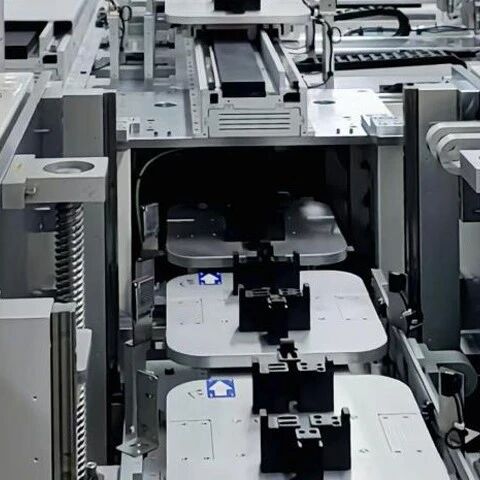
Core Insights - The article highlights the operational efficiency and technological advancements at Foxconn's Zhengzhou facility, which has been recognized as a "lighthouse factory" by the World Economic Forum, showcasing its role in Industry 4.0 and digital manufacturing [1]. Group 1: Operational Efficiency - Foxconn's Zhengzhou facility achieved a 102% increase in production efficiency and a 27% improvement in equipment overall efficiency after a recent upgrade scheduled for completion in September 2024 [1]. - The smart manufacturing system allows for autonomous decision-making and precise control over the production process, significantly reducing the need for overtime work [1]. Group 2: Technological Integration - The factory employs a deep "human-machine collaboration" approach rather than merely replacing human labor with machines, utilizing technologies like IoT and digital twin systems [1]. - The shift to smart systems has transformed the role of employees, enabling them to focus on more creative tasks rather than repetitive labor, as evidenced by the experiences of employees like Chen Ying [3]. Group 3: Employee Development - The integration of smart technology has not only improved production but also reshaped employee growth paths, allowing workers to gain higher education and develop new skills [3]. - Employees now rely on data-driven alerts for maintenance and troubleshooting, marking a fundamental change in their work processes [2][3].
10BASE-T1S,悄然崛起
半导体行业观察· 2026-02-19 02:46
Core Viewpoint - The article discusses the emergence and significance of the 10BASE-T1S standard in the automotive and industrial sectors, highlighting its advantages over traditional communication protocols like CAN and LIN, particularly in the context of evolving vehicle architectures and increasing sensor integration [2][3][5][33]. Group 1: Background and Industry Opportunity - 10BASE-T1S is a new physical layer standard for automotive and industrial control, established by IEEE 802.3cg in February 2020, featuring a transmission rate of 10 Mbps and designed for short-distance connections of up to 25 meters [3]. - The shift towards zonal architecture in vehicles, which consolidates multiple functions into fewer controllers, necessitates a more efficient communication protocol like 10BASE-T1S to manage the increasing number of sensors and actuators without overwhelming bandwidth [5][6]. - The trend of unifying vehicle networks under Ethernet protocols is driven by the need for over-the-air updates, centralized data processing, and software upgrades, making 10BASE-T1S a suitable choice for modern automotive applications [6][10]. Group 2: Advantages of 10BASE-T1S - 10BASE-T1S supports multi-drop connections, allowing multiple devices to connect over a single pair of wires, significantly reducing wiring complexity and costs, which is crucial for electric vehicles [6][10]. - The limitations of CAN FD in terms of scalability and protocol integration are becoming apparent, prompting manufacturers to consider 10BASE-T1S for long-term platform design [6][10]. - Compared to traditional buses like CAN, RS-485, and RS-232, 10BASE-T1S offers a more integrated and efficient solution, addressing issues of protocol fragmentation and complexity in industrial applications [11][12]. Group 3: Competitive Landscape - Major chip manufacturers are actively developing 10BASE-T1S products, with strategies ranging from simplifying Ethernet integration to completely rethinking edge node architectures [12][19][20]. - Microchip and TI focus on making Ethernet as user-friendly as CAN, integrating MAC and PHY in single packages to facilitate easier adoption in low-end microcontrollers [13][14]. - ADI's E²B technology aims to centralize control by offloading software burdens from edge nodes, enhancing communication efficiency and reducing system costs [19]. - Infineon and NXP emphasize high integration and safety for complex zonal architectures, with Infineon’s BRIGHTLANE switch and NXP’s TJA1410 designed for reliability in safety-critical applications [20][26]. Group 4: Future Outlook - The adoption of 10BASE-T1S is seen as a gradual transition rather than an outright replacement of existing protocols like CAN and LIN, driven by the need for a unified communication framework in the software-defined vehicle era [33]. - The article concludes that 10BASE-T1S is a crucial component in the evolution towards a fully integrated Ethernet architecture in vehicles, addressing the challenges of protocol fragmentation and enhancing overall system efficiency [33].



固高科技股价下跌2.03%,2025年第三季度净利润大增402.92%
Jing Ji Guan Cha Wang· 2026-02-15 03:33
Stock Performance - The stock price of Gokong Technology (301510) recently declined, closing at 39.19 CNY per share on February 11, 2026, down 2.03% for the day, with a trading volume of 213 million CNY. The net outflow of main funds was 18.61 million CNY, but the stock has increased by 26.83% over the past 60 days. The stock experienced a weekly decline of 3.92% as of February 6, 2026, with a total net outflow of main funds amounting to 79.17 million CNY [1][2]. Financial Performance - The Q3 2025 financial report indicates that the company achieved a quarterly revenue of 129 million CNY, representing a year-on-year growth of 51.13%. The net profit attributable to shareholders was 13.71 million CNY, showing a significant year-on-year increase of 402.92%. For the first three quarters of 2025, the cumulative revenue reached 373 million CNY, up 26.29% year-on-year, while the net profit attributable to shareholders was 44.62 million CNY, reflecting a year-on-year growth of 52.67% [2]. Industry Policy Landscape - The automation equipment sector is expected to benefit from policies promoting smart manufacturing and Industry 4.0. However, the company's price-to-earnings ratio (TTM) is relatively high, necessitating attention to performance realization and industry competition dynamics. Recent market trends show a shift of funds towards technology growth stocks, which may impact short-term volatility in the sector [3].
谈谈人工智能在制造业中的应用
3 6 Ke· 2026-02-12 03:26
Core Insights - Artificial Intelligence (AI) is transforming the manufacturing industry by enabling predictive analytics, intelligent process optimization, and data-driven decision-making [1][2] - The guide explores prominent AI applications in manufacturing, focusing on predictive maintenance and performance planning, while addressing operational efficiency, unplanned downtime reduction, and emerging trends towards sustainable and human-centric smart manufacturing [1][3] Group 1: AI Applications in Manufacturing - AI applications in manufacturing are centered around strategic deployment of impactful use cases, facilitating a phased and iterative approach to build a fully interconnected smart manufacturing ecosystem [4][5] - Key foundational AI applications include predictive maintenance and performance planning, which integrate heterogeneous data streams from various enterprise data sources to generate actionable insights [5][7] - Predictive maintenance has shown to reduce unplanned downtime by 30% to 50%, with some implementations achieving reductions of up to 70% [10][11] Group 2: Industry-Specific Applications - AI applications are highly contextual and need to be tailored to specific industry operational realities, regulatory environments, and strategic priorities [17] - In discrete manufacturing, AI focuses on maximizing equipment availability and maintaining strict quality tolerances, with unplanned downtime losses potentially reaching hundreds of thousands of dollars per hour [18] - The energy sector utilizes AI for asset lifecycle optimization and risk-based prioritization, significantly reducing maintenance costs and improving asset reliability [19] Group 3: Benefits of AI in Manufacturing - AI delivers compounded value across three strategic pillars: enhancing equipment availability, improving operational performance, and maximizing output quality and yield [23][24] - Implementing AI can lead to productivity improvements of 15% to 35%, with top facilities achieving output increases of 40% to 60% per hour [25] - AI-driven anomaly detection and quality control can reduce defect rates by 30% to 70%, significantly enhancing customer satisfaction [26] Group 4: Future Trends - The AI landscape in manufacturing is shifting towards mature, ecosystem-driven deployments, with a focus on democratizing access to AI tools for non-experts [39][43] - Generative AI is emerging as a core component of manufacturing intelligence, enhancing troubleshooting and design processes [44][45] - The global AI market in manufacturing is projected to grow from approximately $3.2 billion in 2023 to $20.8 billion by 2028, with a compound annual growth rate (CAGR) exceeding 45% [50]

远信工业发布2025年业绩预告,净利润预计下降超六成
Jing Ji Guan Cha Wang· 2026-02-11 07:24
Group 1: Financial Performance - The company expects a significant decline in net profit for 2025, projecting a range of 15 million to 18 million yuan, which represents a year-on-year decrease of 62.78% to 68.98% [2] - The decline in performance is attributed to increased sales expenses from overseas exhibitions, amortization of convertible bond interest, and a reduction in government subsidies [2] Group 2: Convertible Bonds - The company reported that in the fourth quarter of 2025, 120 units of "Yuanxin Convertible Bonds" were converted into 522 shares of stock at a conversion price of 22.95 yuan per share [3] - As of December 31, 2025, there were 2.2965 million units of convertible bonds remaining [3] Group 3: Financing and Guarantees - The company announced a buyer's credit guarantee progress for 2026, collaborating with banks to provide a credit limit of up to 30 million yuan for equipment mortgage loans, valid until October 15, 2026 [4] - As of February 9, 2026, the company's external guarantee balance was 76.9421 million yuan, accounting for 11.19% of the latest net assets [4] Group 4: Stock Performance - On February 9, 2026, the company's stock price was reported at 36.24 yuan per share, with a daily increase of 2.06%, although there was a net outflow of 664,500 yuan in principal funds [5] - Year-to-date, the stock price has increased by 2.66%, with a 7.19% rise over the past 60 days [5] Group 5: Industry Environment - The company operates in the textile equipment sector, which is influenced by the concept of Industry 4.0, but faces weak demand and intensified competition [6] - Long-term observation is needed regarding the impact of manufacturing upgrade policies on the company's business [6]
云意电气:已搭建并完善ERP、MES、WMS等核心数字化管理系统
Zheng Quan Ri Bao Wang· 2026-02-08 10:12
Core Viewpoint - The company emphasizes its commitment to digitalization and intelligence development, having established and improved core digital management systems such as ERP, MES, and WMS, which enhance operational efficiency and data traceability throughout the production process [1] Group 1 - The company has implemented end-to-end data traceability and refined operational management from raw material procurement to finished product delivery [1] - The company possesses capabilities and practical applications related to Industry 4.0 [1] - The level of digital operations continues to improve [1]

商道创投网·会员动态|纳博旺·完成2500万元Pre-A轮融资
Sou Hu Cai Jing· 2026-02-05 10:40
Core Insights - Kunshan Nabowang Precision Technology Co., Ltd. has successfully completed a Pre-A round financing of 25 million yuan, led by several investment firms including Jinyumaowu, Zhongxin Capital, Jiuhua Shenhong, and Guotai Junan Innovation Investment [2] Company Overview - Established in 2018, Nabowang is based in Kunshan, Jiangsu, a manufacturing hub, and focuses on the research and development of direct drive technology [3] - The core team consists of experts with over 20 years of experience in industrial automation, having held key management positions in global industrial automation giants [3] - The company's main business revolves around the development and industrialization of magnetic levitation flexible rail transmission systems, creating a comprehensive product matrix from core components to complete line systems [3] - Nabowang's competitive advantage lies in its "soft and hard integration" strategy, which includes self-developed hardware components and motion control algorithms, particularly excelling in wireless power supply technology [3] Financing Purpose - The funds from this financing round will be allocated to three strategic areas: enhancing R&D investment in magnetic levitation control algorithms and wireless power technology, accelerating domestic and international market expansion, and strengthening the high-end talent team [4] - The CEO emphasizes that software-defined hardware is crucial for overcoming cost barriers and application thresholds in magnetic levitation systems [4] Investment Rationale - Zhongxin Capital highlights that Nabowang's self-research capabilities in precision magnetic drive and advanced air-floating systems are impressive, with their FRT magnetic levitation system achieving top-tier industry performance metrics [5] - The company has successfully commercialized its products in high-growth sectors such as consumer electronics, semiconductors, and new energy, demonstrating strong customer loyalty and order quality [5] Industry Perspective - Recent policies from various government departments in China aim to support high-quality development in venture capital, particularly in smart manufacturing and industrial software sectors [5] - The investment from multiple well-known institutions reflects a consensus on the value of high-end equipment and a forward-looking approach in the industry [5] - The magnetic levitation flexible transmission system is positioned as a foundational infrastructure for intelligent manufacturing, poised to benefit from domestic substitution and industrial upgrades [5]

七丰精工净利预增超86%:“工业之米”瞄准高端,航空航天订单成增长引擎
Quan Jing Wang· 2026-02-05 03:13
Core Viewpoint - Qifeng Precision Technology Co., Ltd. expects a net profit of 26 million to 32 million yuan in 2025, representing a year-on-year growth of 86.52% to 129.56%, driven by its successful transformation into high-end sectors such as aerospace and rail transit [1] Group 1: Company Transformation and Strategy - The company has successfully transitioned from traditional foreign trade exports to high-end fields, capitalizing on the significant market potential in aerospace and rail transit [1] - Qifeng Precision is recognized as a long-term player and innovator in the high-end fastener industry, which is essential for modern industrial systems [1] - The company has established a special task force for aerospace, focusing on the research and development of new materials and processes, and has applied for ASP special process certification [2] Group 2: Market Expansion and Financial Outlook - Qifeng Precision's market expansion strategy includes a dual approach: enhancing product quality and expanding globally, with recognition from major companies like Chengdu Aircraft Industrial Group and China Aerospace Science and Technology Corporation [2] - The company plans to apply for a comprehensive credit limit of up to 300 million yuan from financial institutions to support future development [3] - Capital expenditure has increased due to the construction of a project aimed at producing 15.8 million high-end precision components annually, leading to a 42.92% decrease in cash funds compared to the previous year [3] Group 3: Industry Context and Future Directions - The Chinese manufacturing industry is undergoing significant transformation, with high-end equipment demand driving the fastener market's rapid growth [2][4] - The focus areas for high-end equipment manufacturing include aerospace, rail transit, and intelligent manufacturing, which require advanced fasteners and connectors [4] - Qifeng Precision is integrating digital technologies to optimize processes, reduce operational costs, and align product offerings with national support for high-performance, high-value products [4]
磁悬浮输送线第一梯队,FRT无线供电技术行业领先,这家公司完成首轮千万元融资丨早起看早期
36氪· 2026-02-05 00:09
Core Viewpoint - The article discusses the recent Pre-A round financing of Kunshan Nabowang Precision Technology Co., Ltd., highlighting its advancements in magnetic levitation technology and its strategic focus on software integration for smart manufacturing solutions [5][9]. Company Overview - Kunshan Nabowang was established in 2018 and is headquartered in Kunshan, Jiangsu Province. The founder, Tom, has extensive experience in the industrial automation sector, having held senior positions in globally recognized companies [5]. - The company has developed a complete product system around magnetic levitation flexible track transmission systems, achieving a "soft and hard integration" design [5]. Technology and Product Development - Nabowang has made breakthroughs in the full-stack technology development of magnetic levitation conveying systems, mastering core technologies such as drivers, encoders, controllers, and wireless power supply systems [5][8]. - The company's leading wireless power technology (FRT) is identified as a significant competitive advantage [5]. Market Potential - The market for magnetic levitation flexible transmission lines is expected to exceed 11 billion yuan by 2029, driven by growth in key industries such as energy storage, AI, and various manufacturing sectors [7]. - The company aims to build an application-oriented product chain by mastering key component technologies and focusing on software as a core competitive advantage [7][8]. Competitive Landscape - The competition in the industry is characterized by immature technologies and homogenization, which may impact overall development. Nabowang's competitive advantages lie in cost-effectiveness, applicability, and differentiated technology [9]. - Investors from Zhongxin Capital and Guotai Junan Innovation Investment express confidence in Nabowang's future, emphasizing its role in the construction of "black light factories" in Industry 4.0 [9].
外媒:TI将收购Silicon Labs
半导体行业观察· 2026-02-04 01:38
Core Viewpoint - Texas Instruments (TI) is in advanced negotiations to acquire Silicon Laboratories for approximately $7 billion, with a potential announcement expected soon. This acquisition is driven by the increasing demand for computing infrastructure from tech companies aiming to achieve their artificial intelligence goals [2]. Group 1: Acquisition Rationale - The acquisition aims to address TI's shortcomings in the "wireless connectivity" sector, where TI's market presence does not match its leadership in analog chips and embedded processors. Silicon Labs is recognized as a wireless technology expert in the IoT field, with leading protocols such as Zigbee, Z-Wave, Thread, Bluetooth, and proprietary wireless stacks [2][3]. - TI's existing wireless products, like the SimpleLink series, are robust, but Silicon Labs has deeper technical expertise and a stronger customer base in the fragmented IoT market. Post-acquisition, TI would gain access to a mature and highly integrated wireless SoC platform [3]. Group 2: Strategic Focus - Silicon Labs has transformed into a pure IoT company after selling its infrastructure and automotive business in 2021. The growth trajectory is promising, with increasing demand for low-power wireless nodes driven by the adoption of the Matter protocol and advancements in Industry 4.0, impacting smart homes, smart cities, retail, and industrial asset tracking [4]. - TI can leverage its extensive global sales network, which is significantly larger than that of Silicon Labs, to package Silicon Labs' wireless products into TI's existing industrial and automotive solutions, thereby enhancing customer value [5]. Group 3: Historical Context of TI's Acquisitions - TI's history in the semiconductor industry showcases a series of strategic acquisitions that solidified its position as a leader in analog chips. Key acquisitions include Burr-Brown in 2000, National Semiconductor in 2011, and Unitrode & Power Trends in 1999, which were pivotal in establishing TI's dominance in power management and high-performance analog devices [7][8].