带量采购

Search documents
威高股份销售员行贿案背后:医药回扣链条暴露上市公司治理与合规风险
Xin Lang Cai Jing· 2026-01-22 08:40
Core Viewpoint - The recent bribery case involving a sales representative from Shandong Weigao Co., Ltd. highlights systemic risks within the company's sales structure, especially in the context of ongoing national efforts to combat commercial bribery and promote centralized procurement of medical supplies [1][6]. Group 1: Bribery Details - The bribery actions of the representative, totaling over 1.58 million yuan, were characterized by long-term and multi-department penetration, affecting nearly 20 departments in a hospital [2][7]. - A significant portion of the bribes, amounting to 1.1912 million yuan, was directed towards various medical departments, with individual bribe amounts ranging from thousands to hundreds of thousands of yuan [2][7]. - The National Healthcare Security Administration emphasized that such practices disrupt normal medical practices and distort competition, shifting the focus from quality and price to "rebate-driven" sales [2][7]. Group 2: Corporate Governance Concerns - Weigao has not publicly disclosed any information regarding the bribery case, raising concerns about its transparency and internal control mechanisms [3][8]. - The company operates a vast sales network with 25 sales offices and 170 city representatives, yet multiple bribery incidents indicate significant management and compliance training gaps [3][8]. - The actions of local employees directly impact the company's brand and legal risks, suggesting that without strengthened internal controls, similar incidents may recur, potentially leading to regulatory investigations and penalties [3][8]. Group 3: Industry Transformation Challenges - The National Healthcare Security Administration has stated that commercial bribery inflates the prices of medical supplies, with the excess not contributing to legitimate profits or innovation [4][9]. - Companies like Weigao, which have relied on high margins and rebates, face significant challenges as centralized procurement and price transparency become the norm [4][9]. - There is a growing emphasis on ESG (Environmental, Social, and Governance) principles, making compliance and ethical sales practices critical for long-term investment value [4][9]. Conclusion - The bribery case serves as a reflection of the governance shortcomings in the pharmaceutical sales sector, emphasizing the need for companies to move away from rebate dependency and focus on product quality and efficiency to ensure sustainable growth [5][11].
中国医疗-中国医院调研:2026年保持谨慎乐观
2026-01-22 02:44
Summary of China Healthcare Industry Conference Call Industry Overview - **Industry**: China Healthcare Industry - **Report Date**: January 21, 2026 - **Sentiment**: Cautiously optimistic outlook for 2026 regarding hospital capital expenditures and market dynamics [1][2] Key Insights Capital Expenditure Trends - **Stable to Moderate Growth**: Hospital capital expenditures are expected to remain stable with moderate growth in 2026 [2] - **Survey Results**: 59% of surveyed hospital managers anticipate capital expenditure growth in 2026, up from 43% in late 2024, but still below 85% in late 2023 [3] - **Projected Growth Rate**: Expected capital expenditure growth of 4.7% in 2026, compared to 3.0% growth anticipated for 2025 [3] - **Actual Growth Expectations**: Respondents expect actual capital expenditure growth of 5.8% for 2025, indicating limited visibility on actual demand [3] Key Drivers of Expenditure - **Primary Drivers**: 1. Hospital Surplus (69%) 2. Patient Demand (50%) 3. Local Fiscal Budgets (44%) [3] - **Service Volume Constraints**: Factors such as Diagnosis-Related Group (DRG) payment limits and medical insurance settlements are seen as major constraints on service volume [3] Equipment and Technology Focus - **Investment Priorities**: Hospitals are prioritizing investments in AI, endoscopy, and imaging equipment, with a focus on surgical and flexible endoscopes, followed by CT and ultrasound [3] - **Weak Demand**: In vitro diagnostics are expected to remain weak [3] Company-Specific Insights Beneficiaries of Capital Expenditure Growth - **Mindray Medical (300760.SZ)**: Expected to benefit from a stable capital expenditure environment, with anticipated single-digit revenue growth in 2026. The company is expected to maintain a 16% share of planned capital expenditures [4][10] - **United Imaging (688271.SS)**: Anticipated to benefit from strong demand in high-end imaging, with projected revenue growth of approximately 21% in 2026 [4][11] - **New Industries (300832.SZ)**: Expected to face continued pricing pressure in in vitro diagnostics but may achieve above-industry growth due to healthy demand for chemical luminescence analyzers [4][12] - **Huatai Medical (688617.SS)**: Positioned to capitalize on the growing adoption of pulse field ablation technology, with projected revenue growth of 30% in 2026 [4][13] - **Guichuang Tongqiao (2190.HK)**: Expected to see revenue growth of around 30% driven by increased demand for neurointerventional and peripheral interventional procedures [4][15] Challenges for Global Players - **GE Healthcare**: Faces mixed impacts from increased capital expenditure and growing preference for local brands, which may offset some growth [4][16] - **Siemens Healthineers (SHL)**: Cautious outlook due to slow recovery in utilization rates and increased pricing pressure from procurement policies [4][17] - **Philips (PHIA)**: Similar cautious outlook with potential declines in market share for CT and ultrasound equipment [4][18] - **Olympus (7733.T)**: Expected to face challenges in maintaining market share in the digestive endoscopy market [4][19] - **Hologic (6869.T)**: Anticipated slowdown in clinical testing volumes and potential market share decline in hematology [4][20] Additional Observations - **Market Dynamics**: The report highlights a complex landscape for global medical technology companies in China, with both opportunities and pressures from local competition and procurement policies [4][16][17][18][19][20] - **Emerging Trends**: The shift towards local brands and the impact of procurement policies are significant trends that may reshape the competitive landscape in the healthcare sector [4][16][17][18][19][20]





正海生物(300653) - 2026年1月15日投资者关系活动记录表
2026-01-16 01:00
Financial Performance - In the first three quarters of 2025, the company's net profit experienced a year-on-year decline due to multiple factors, including an increase in VAT from 3% to 13% [3] - Market demand fluctuations for key products, particularly oral products, necessitated price optimization, while the procurement project for meninges products led to a cautious market sentiment [3] - Increased sales expenses for new product promotions and targeted marketing exerted pressure on operating profits in 2025 [3] Future Plans - For 2026, the company aims to deepen its presence in advantageous sectors, particularly with the launch of calcium silicate bioceramic oral bone repair materials, to enhance competitive capabilities in the oral market [3] - The company plans to integrate existing resources to boost the volume of active biological bone products and expand revenue contributions [3] - Efforts will be made to innovate and explore new business opportunities [3] Product Development and Market Strategy - As of now, 6 provincial and 2 inter-provincial alliances have initiated bulk procurement for meninges products, covering a total of 24 provinces [4] - The company is preparing for the bidding process for the Tianjin medical procurement center's bulk procurement project for medical consumables [4] - A comprehensive product promotion strategy is in place for the calcium silicate bioceramic oral bone repair materials, focusing on innovative advantages and market conditions to maximize profitability [4] International Expansion - The company is assessing the potential for international sales of multiple products, evaluating market entry barriers and potential returns in various countries [4] Customer Education and Talent Acquisition - The company engages in academic conferences and professional exhibitions to enhance product recognition among professional clients, including doctors and medical institutions [5] - Collaboration with organizations like the China Dental Disease Prevention Foundation aims to address urgent clinical repair needs for patients [5] - Talent acquisition strategies include leveraging existing platforms for high-end talent recruitment and fostering partnerships with academic institutions for talent development [6]
博锐生物闯关港交所,已有8款产品商业化
Bei Ke Cai Jing· 2026-01-09 11:12
Core Viewpoint - Zhejiang Haizheng Pharmaceutical Co., Ltd. (referred to as "Haizheng Pharmaceutical") announced that its subsidiary Zhejiang Borui Biopharmaceutical Co., Ltd. (referred to as "Borui Biopharma") has submitted an application for an H-share initial public offering (IPO) to the Hong Kong Stock Exchange, aiming for a listing on the main board [1]. Company Overview - Borui Biopharma focuses on immunotherapy and has integrated capabilities in research, production, and sales. Its history dates back to the biopharmaceutical division of Haizheng Pharmaceutical and was restructured into a limited liability company in January 2019 [2]. - Borui Biopharma has established a portfolio of immunotherapy products, including eight commercialized products such as the first and only approved CD20-targeting innovative drug in China, and several innovative ADC pipelines based on next-generation technology platforms [2]. Financial Performance - Borui Biopharma has shown stable revenue growth, with reported revenues of 1.257 billion yuan, 1.623 billion yuan, and 1.379 billion yuan for the years 2023, 2024, and the first nine months of 2025, respectively. The profit attributable to equity shareholders increased from 19.05 million yuan in 2023 to 122 million yuan in the first nine months of 2025 [3]. - However, the gross profit margin has been declining, with figures of 82.2%, 79.2%, and 74.4% for the years 2023, 2024, and the first nine months of 2025, respectively, reflecting a cumulative decrease of 7.8 percentage points [3]. Market Challenges - Borui Biopharma faces multiple challenges in the biopharmaceutical industry, including ongoing pressure from volume-based procurement policies and competition from other companies in the autoimmune and oncology sectors, which may lead to reduced profit margins [4]. - The company has a high customer concentration risk, with over 68% of its revenue coming from its top five clients, which amplifies operational uncertainties [4]. - The complexity of biopharmaceutical production processes poses quality control risks, and the long development cycles and high failure rates of innovative drugs present ongoing challenges to its sustainability [4]. IPO Process - Borui Biopharma's IPO process requires approvals from the China Securities Regulatory Commission, the Hong Kong Securities and Futures Commission, and the Stock Exchange, indicating that there are uncertainties in the timeline and outcome of the IPO [5].
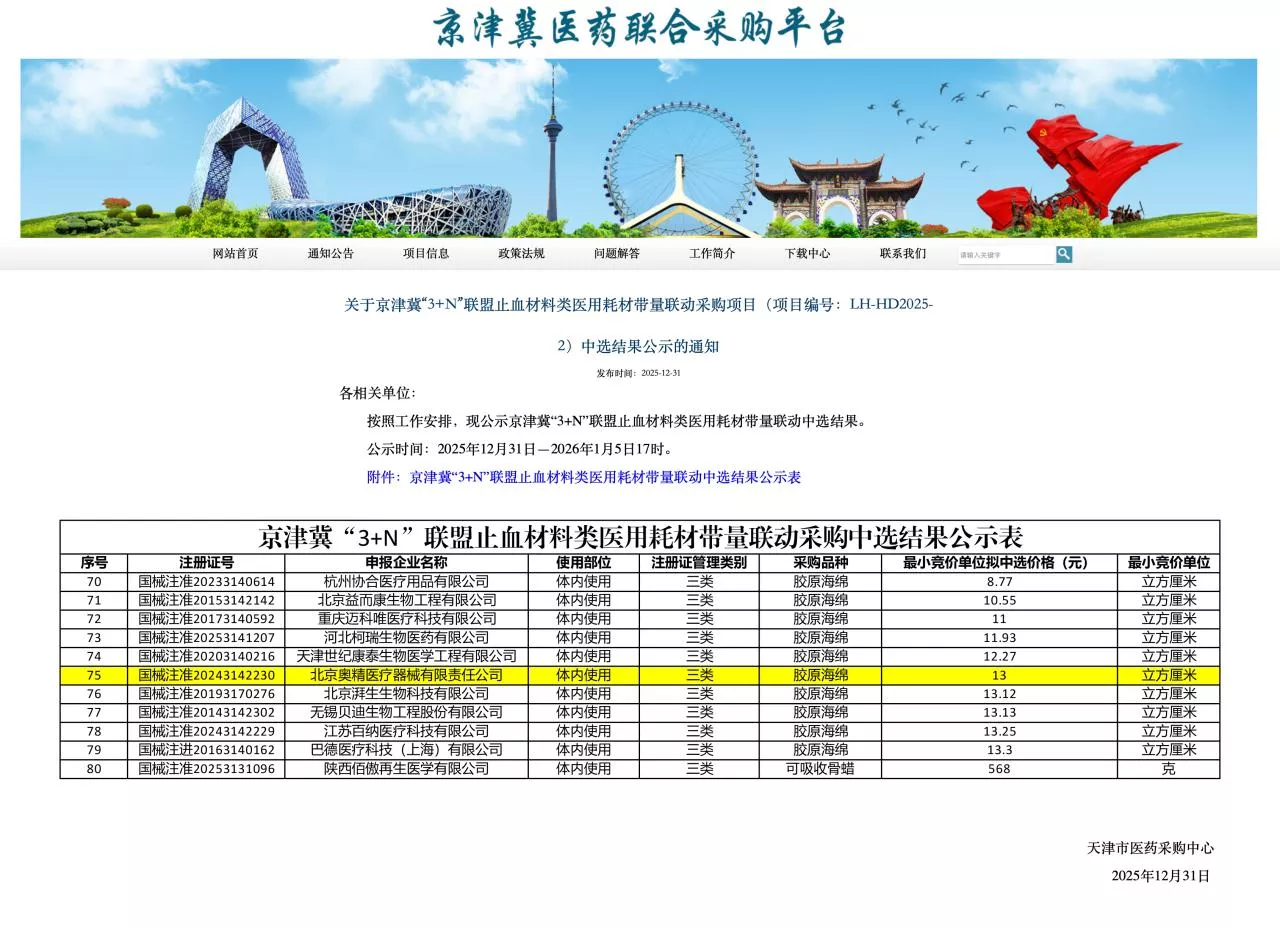
奥精医疗胶原蛋白止血海绵中选京津冀“3+N”联盟带量采购
Cai Jing Wang· 2026-01-06 10:45
Core Viewpoint - The Beijing Aojing Medical Equipment Co., Ltd., a wholly-owned subsidiary of Aojing Medical, has successfully been selected for the "3+N" alliance volume-based procurement project for hemostatic materials, with its product "Aoyuying®" absorbable collagen hemostatic sponge included in the procurement catalog [1][4]. Group 1: Procurement Results - The "3+N" alliance is the first cross-provincial volume-based procurement regional alliance in China, consisting of Beijing, Tianjin, and Hebei, along with other participating provinces [3]. - The alliance aims to reduce patient burdens by guiding the rational clinical use of high-quality medical consumables through regional linkage and volume-based pricing [3]. Group 2: Product Details - The Aoyuying® absorbable collagen hemostatic sponge is a Class III medical device made from high-purity collagen, designed for rapid hemostasis and tissue repair support [4]. - The product works by physically adsorbing blood and activating endogenous coagulation mechanisms, establishing a stable hemostatic environment in surgical areas [4]. - Aoyuying® is widely used in various surgical fields, including general surgery, orthopedics, obstetrics and gynecology, and dentistry, and is available in multiple specifications to meet different surgical needs [4]. Group 3: Market Potential - According to DIResearch, the global collagen sponge market is projected to reach approximately $296 million by 2025 and $456 million by 2032, with a compound annual growth rate (CAGR) of 6.36% [4]. - The ongoing promotion of volume-based procurement mechanisms is expected to provide broader application opportunities for products with stable quality and reliable supply [5].


仿制药巨头进入中国的创新门票
财富FORTUNE· 2025-12-23 13:05
Core Viewpoint - Teva has successfully positioned itself in the Chinese pharmaceutical market by focusing on innovative and specialty drugs, which distinguishes its strategy from its global approach of primarily entering markets with generic drugs [4][5]. Group 1: Historical Context and Market Entry - Teva's history dates back to 1901, evolving from a small caravan delivering medicines to becoming one of the largest generic drug manufacturers globally [1]. - The company began its expansion into the Chinese market in 2008, which was perceived as a late entry compared to other pharmaceutical giants, but was strategically timed to coincide with significant reforms in China's pharmaceutical sector [4][6]. Group 2: Strategic Focus in China - Teva's strategy in China emphasizes the introduction of specialty and innovative drugs, contrasting with its global strategy focused on generics [5][6]. - The company has over 3,600 products available across 57 markets, necessitating effective product allocation strategies to meet local clinical needs and regulatory requirements [5][6]. Group 3: Participation in Volume-Based Procurement - Teva actively participates in China's volume-based procurement, which has allowed its products to gain wider accessibility in key provinces like Shanghai, Guangzhou, and Beijing [6][7]. - The volume-based procurement system has reduced operational costs and streamlined market entry for Teva's products, enabling quicker access to hospitals and patients [7][8]. Group 4: Relationship Between Generic and Innovative Drugs - Teva's perspective is that generic and innovative drugs serve complementary roles within the healthcare system, with each having distinct advantages and values [9][10]. - The company believes that innovation is essential for addressing unmet medical needs, while generics enhance drug accessibility and affordability for patients [9][10]. Group 5: Resource Allocation and Growth Strategy - Teva's internal strategy involves a pivot towards growth, focusing resources on segments that drive growth, particularly in innovative drugs, while remaining open to increasing investment in generics if new opportunities arise [14][15]. - The company recognizes the importance of maintaining high quality in both innovative and generic drugs, as quality is a prerequisite for market entry [17][18].
合富中国控股股东拟减持2%股份 公告发布后公司股价不降反增
Xin Lang Cai Jing· 2025-12-08 10:49
Group 1 - The controlling shareholder of HeFu China, HeFu (Hong Kong) Holdings Limited, plans to reduce its stake by up to 7.9611 million shares, representing 2% of the total share capital, within three months [1][3] - As of the end of Q3, HeFu Hong Kong held 55.00% of HeFu China, and after the reduction, its stake may decrease to 53.00%, but it will still maintain absolute control over the company [1][3] - The purpose of the share reduction is to enhance operational funds, including financing for projects like the MRI navigation radiation therapy system [1][3] Group 2 - HeFu China operates in the pharmaceutical distribution industry, which has faced significant challenges due to policies like drug separation and volume-based procurement, squeezing profit margins for traditional pharmaceutical distributors [2][4] - Despite efforts to diversify through platforms for centralized business operations, medical product distribution, and hospital empowerment, HeFu China has experienced a continuous decline in performance [2][4] - For the first three quarters of 2025, the company reported revenue of 549 million yuan, a year-on-year decrease of 22.80%, and a net loss attributable to shareholders of 12.3862 million yuan, a year-on-year increase in losses of 146.65% [2][4]

医药月度动态专题电话会(12月)
2025-12-08 00:41
Summary of Key Points from the Conference Call Industry Overview - The conference call focused on the pharmaceutical industry, particularly the dynamics of the healthcare insurance negotiations and the performance of innovative drugs in the market [1][2][3]. Core Insights and Arguments - **Medicare Negotiation Success Rate**: The success rate for Medicare negotiations in 2025 reached nearly 90%, indicating improved communication efficiency between the Medicare Bureau and companies. However, the elimination rate during comprehensive reviews was high, suggesting stricter audits [1][3]. - **Performance of Innovative Drugs**: The innovative drug sector has outperformed other pharmaceutical segments this year, with Hong Kong stocks showing better valuation advantages and mid-term development prospects compared to A-shares [1][5]. - **Commercial Health Insurance Directory**: The release of the commercial health insurance directory provides a benchmark for product design, despite the absence of regulatory leaders from financial oversight agencies. The Medicare Bureau's initiative to issue small cards to companies enhances their visibility [1][6][9]. - **Volume-Based Procurement Policy Changes**: The shift from comprehensive re-procurement to a pricing inquiry model allows traditional generic drug companies to secure 80% of the volume if their prices are below the benchmark, ensuring sustained performance for these companies [1][12]. - **Healthcare Fund Revenue and Expenditure**: From January to October 2025, the national healthcare fund revenue grew by 2%, while expenditures decreased by 1%. However, there is significant pressure on residents' health insurance revenue and expenditure [1][13]. Additional Important Insights - **Healthcare Visits and Trends**: In Q1 2025, the total number of visits to healthcare institutions decreased by 0.1% year-on-year, with private hospitals facing increased operational risks. Essential areas like blood and oncology are experiencing rapid growth, while ophthalmology and dentistry are growing at a slower pace [1][14]. - **Health Insurance Premiums**: Health insurance premium income remained flat at approximately 890 billion yuan, failing to meet the expected growth target of around 5% [1][15]. - **Investment Trends in the Pharmaceutical Industry**: The pharmaceutical and manufacturing sectors saw fixed asset investment growth of 11.3% from January to October 2025, indicating a marginally improving trend in the industry [1][17]. - **Flu and Medical Device Market Performance**: Despite a high flu infection rate, related companies underperformed in the secondary market. The medical device industry is experiencing slowed growth, with foreign companies facing increased competition from domestic firms [1][4][20]. Recommendations for Future Investments - **Focus on Innovative Drugs**: The investment logic for innovative drugs in 2026 will emphasize risk reduction, with a focus on clinical data, regulatory approvals, and financial partnerships. The expected return rate for recommended innovative and performance-driven stocks is projected to be between 20% and 30% [1][7][24]. - **Key Stock Picks**: Companies such as Ruimaite, Fenghuang Hanlin, and Hualing Pharmaceutical are highlighted for their growth potential and market capabilities. The focus will also be on companies with strong clinical trial data and innovative product pipelines [1][25][28]. Conclusion - The pharmaceutical industry is navigating a complex landscape with evolving Medicare policies, competitive pressures, and investment opportunities in innovative drugs. The insights from the conference call provide a comprehensive overview of the current state and future outlook of the industry, emphasizing the importance of strategic investment choices in a challenging environment [1][30].
帮三千家医院“接骨连筋”年入近3亿,江苏夫妻要去上市敲钟了
3 6 Ke· 2025-12-03 01:04
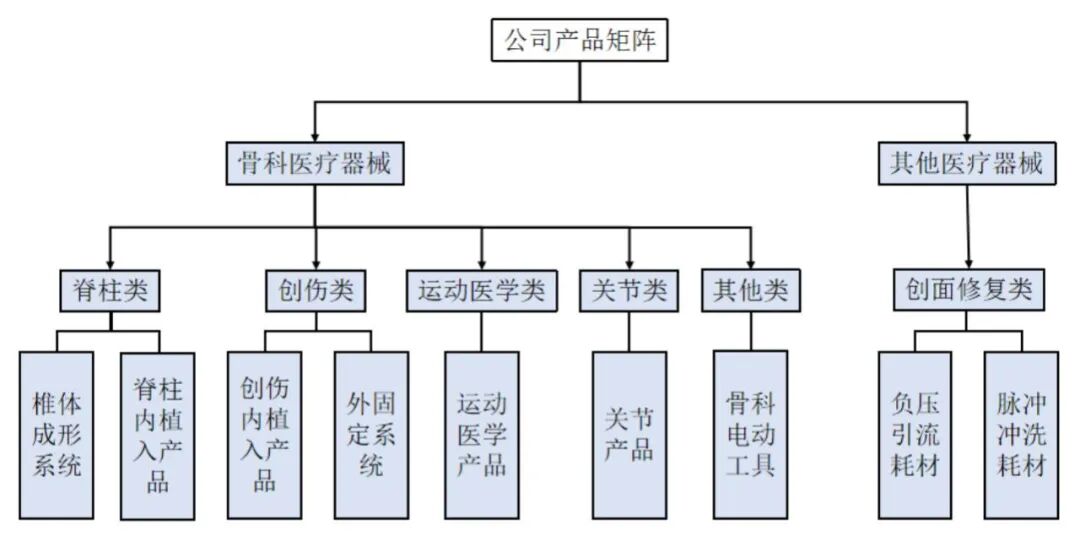
Core Viewpoint - The company, Suzhou Aide Technology Development Co., Ltd. (Aide Technology), is focusing on the orthopedic medical consumables market, which is seen as a promising sector due to the increasing demand for orthopedic treatments. The company is preparing for its listing on the Beijing Stock Exchange after a decade of efforts [1][16]. Group 1: Company Overview - Aide Technology was established in March 2006 and specializes in the research, development, production, and sales of orthopedic medical devices, covering four main areas: spine, trauma, joints, and sports medicine [2][4]. - The company has ranked third among domestic manufacturers of spinal medical devices and sixth among spinal implant manufacturers in China as of 2023 [2]. Group 2: Financial Performance - The company reported revenues of 286 million yuan, 262 million yuan, 275 million yuan, and 149 million yuan for the years 2022, 2023, 2024, and the first half of 2025, respectively, with net profits of 93 million yuan, 64 million yuan, 67 million yuan, and 38 million yuan during the same periods [7][8]. - The main revenue source has shifted from spinal products to trauma products, with trauma product revenues increasing from 60 million yuan in 2022 to 77 million yuan in 2024, surpassing spinal products as the largest revenue source [6][8]. Group 3: Market Dynamics - The decline in revenue from spinal products is attributed to the implementation of centralized procurement policies, which have significantly reduced product prices from 129.42 yuan per unit in 2022 to 29.61 yuan per unit in 2024, a decrease of 77.12% [4][8]. - Despite the price drop, the sales volume of spinal products increased from 1.057 million units in 2022 to 2.840 million units in 2024, indicating a strategy of "volume compensating for price" [4]. Group 4: Distribution Network - Aide Technology has established a nationwide distribution network covering over 3,000 hospitals across 31 provinces, autonomous regions, and municipalities, with more than 1,000 distributors and 2,000 sub-distributors [9][10]. - The company's main sales model is the distribution model, which accounted for 94.07%, 87.08%, 83.85%, and 83.35% of its main business income from 2022 to the first half of 2025 [9]. Group 5: Management and Governance - The founders of Aide Technology, Lu Qiang and Huang Meiyu, do not have a professional medical background, having started their careers in unrelated fields before establishing their medical device company [16][20]. - The company has faced regulatory scrutiny due to undisclosed related-party transactions involving its management and distributors, leading to penalties from the Jiangsu Securities Regulatory Bureau [13][15].
中国仿制药行业市场竞争加剧
第一财经· 2025-11-24 04:06
Core Viewpoint - The article discusses the accelerated clinical access and economic substitution of high-quality generic drugs in China due to the "volume-based procurement" policy, alongside the increasing proportion of biological drugs in national negotiations, which facilitates the listing and promotion of biosimilars in hospitals [3][4]. Group 1: Market Overview - The Chinese generic drug market has maintained a scale of approximately 900 billion yuan, with an increase in the number of companies and varieties intensifying market competition [3]. - As of 2024, the number of generic drugs that have passed consistency evaluation or are deemed equivalent has increased by over two-thirds compared to three years ago, primarily driven by a few companies and previously approved varieties [4][9]. - In the chemical generic drug sector, the top 10 companies hold a stable market share of around 22%, indicating a relatively low market concentration [7][9]. Group 2: Drug Evaluation and Approval - The number of approved generic drugs reached 914 in 2024, a significant increase from 543 in 2021, with 70% of these approvals concentrated among 33% of companies [9]. - The phenomenon of "homogenization of varieties" is becoming a defining characteristic of competition in the generic drug market, with a notable increase in the number of similar products [12][13]. Group 3: Biosimilars Market - By 2024, 87 biosimilars have been approved in China, with over 50% being antibody biosimilars, indicating a concentrated market in specific therapeutic areas [13]. - The application for biosimilars has reached a historical high, particularly in the metabolic field, with one drug alone accounting for nearly 40% of applications [13]. Group 4: Contract Manufacturing Trends - The participation of contract manufacturers in national drug procurement has significantly increased, with 31% of selected products in the tenth round of procurement being produced by contract manufacturers, up from 3% in the second round [16][19]. - The article highlights the challenges of ensuring quality control and regulatory compliance in contract manufacturing, especially as the number of B certificate enterprises increases [19][20].